
Three peripheral aspects of the new “AUKUS” deal between the U.S., Britain, and Australia stand out as almost as significant as the deal itself. No one saw it coming; once it had been announced, it seemed obvious, inevitable; and even as it’s being digested, it seems likely to change the global strategic picture as much as the Entente Cordiale, the Nazi–Soviet pact, and the foundation of NATO did in earlier days.
On paper, AUKUS itself is merely an agreement between the three traditional allies to share information, intelligence, and technology in a joint program to build and operate advanced nuclear-powered submarines (though not nuclear-armed in Australia’s case). Its origin was a drive by the Australians to strengthen their alliance with the U.S. in response to the growing naval threat from China made more threatening by Beijing’s attempt to dictate Australian domestic policies through trade sanctions. Wanting after Brexit to strengthen its own global role with old allies, Britain had the resources (technology, traditions of military interoperability, and trust) to be a welcome partner. And the U.S. was looking for ways to counter an increasingly bellicose China in what the Biden administration firmly denies is a new cold war. But everyone saw that AUKUS had a deeper significance than technology transfer. Its mere announcement was treated by Beijing as the first icy shot in such a war — though the first casualty to fall was France, which suffered the cancellation of its own $90 billion nonnuclear-submarine deal with Australia, which also produced hurt feelings in the European Union.
As the hostile reactions of both powers suggest, AUKUS is likely to be just the start of a major reordering of alliances in Europe, Asia, and especially the Indo-Pacific region — and as such the forerunner of a global geopolitical shift. It’s the most important result so far of Washington’s “tilt” to Asia that began under President Obama, continued more realistically under President Trump, and that today under President Biden has moderated its focus on Europe and its reliance on NATO as its main partner in collective-defense arrangements in a form that the president and the U.S. foreign-policy establishment almost certainly didn’t foresee. It chose to respond to a new challenge from China with a smaller, less rule-bound, and more effective military pact resting in part on civilizational sympathies with older allies. As several European writers have noticed, and as Samuel Huntington would have predicted, this new alliance is more or less the Anglosphere in arms.
But the Huntingtonian politics of culture is only one noteworthy aspect of AUKUS, since it will certainly keep open its doors to applicants from other regions (especially those shaped at least in part by Western civilization). That is because it also reflects a significant shift in our world’s primary geopolitical and geo-economic synergies. That process has been in motion since at least 1989, but it has reached a new stage in its self-actualization now. Yes, we’re talking about traditional Mackinderian geopolitics.
Halford Mackinder’s theory, published over a century ago, divided the world into three geographical mega-regions. On one side of the grand chessboard of our planet was the so-called Heartland — the great plains of Eurasia — while on the other was the Outer or Insular Crescent — the Americas, Africa, and Australia. Between these two sides, he identified a region of endless conflict, called Rimland or Inner Crescent (vaguely covering the shores of Eurasia from Western Europe all the way to Southeast Asia through the Middle East and India). Global geopolitical dynamics in the past couple of centuries, therefore, can be described as an endless struggle between the powers dominating the Heartland and those in the Outer Crescent — usually tellurocracies united by railways, versus thalassocracies united by ships. The scene of this struggle has been the Rimland over and over again. But the part of Rimland that becomes the pivot of history differs in each period.
During the world wars, for instance, this pivot was Eastern Europe, through which the German tellurocratic empires tried to gain access into the Heartland and to project their power from there outward. During the Cold War period, when the whole of the Heartland became unified under the Soviet Union, conflicts arose from Berlin to Korea, through Greece, Afghanistan, and Vietnam — throughout, in fact, the whole length of Rimland. Next, at least as far as the U.S. and its allies were concerned, the post–Cold War period meant shifting their focus to the Middle East. Thus began a series of “endless wars” and failed attempts at exporting democracy. And finally, the U.S. withdrawal from Afghanistan and the creation of AUKUS signal yet another shift like the previous ones, from the Middle East to the Indo-Pacific as the primary battleground for the next phase of global geostrategic competition between China and the U.S. and their respective allies.
(When we heard the announcement of AUKUS, we wondered idly whether this was a rapidly put together response to the shambles of America’s Afghan withdrawal to demonstrate that the U.S. retains its capacity for boldness and strategic surprise. In fact — and more reassuringly — it was finalized at the G-7 Summit in mid June 2021 in Cornwall, where the top-secret documents were exchanged and signed under President Macron’s nose. So AUKUS is a product of long-range strategic thinking prompted by Australian realism rather than of a timely panic.)
But the result in both cases is that the international situation is starting to resemble the late 1940s, when our post-war pro-Soviet illusions had evaporated and we were heading straight into a cold war. As in those years, when the West created NATO to defend its perimeters from the Soviet Union’s advancing, salami-style, in Europe, so the U.S. has created another defense pact in the Indo-Pacific region to keep China’s ever-growing influence in check and to protect its allies.
Two questions arise in reaction to this bold initiative: Who are the initial winners and losers as a result of AUKUS? And, more important, how can the AUKUS partners maximize the former and minimize the latter in the course of strengthening AUKUS as a force for deterring China, supporting its neighbors, and establishing a stable peace that a non-hegemonic Beijing might eventually join? (We should remember modestly, of course, that we haven’t yet fully pulled off that particular hat trick with Russia.)
First, however, the winners and losers.
China is plainly the big loser in relation to AUKUS, which is almost entirely the result of Beijing’s aggressive and expansionist policies in recent years, including the seizure and militarization of islands in the South China Sea, its military incursion into northeast India, the breaking of the international treaty guaranteeing Hong Kong’s democracy for 50 years, its oppression of the Uyghurs, and overall its extraordinary arrogance in dealing with other powers. Australia’s prime minister, Scott Morrison, told the writer Walter Russell Mead in a Wall Street Journal interview that Beijing had demanded that Canberra remedy 14 Chinese grievances. The demands included that it “stop funding ‘anti-China’ research, refrain from provocative actions like requesting a more thorough World Health Organization investigation of the origins of Covid-19, stop opposing strategic Chinese investments into Australia, and block private media outlets from publishing ‘unfriendly’ news stories about China.” That kind of arrogance defeats itself. Not only did Morrison successfully set about creating AUKUS to enable Canberra to reject such demands, but as a deterrent to Chinese adventurism the new alliance will likely embolden resistance even from those of China’s neighbors that would never think of joining it. In short, China has constructed a potent combination of powers against itself.
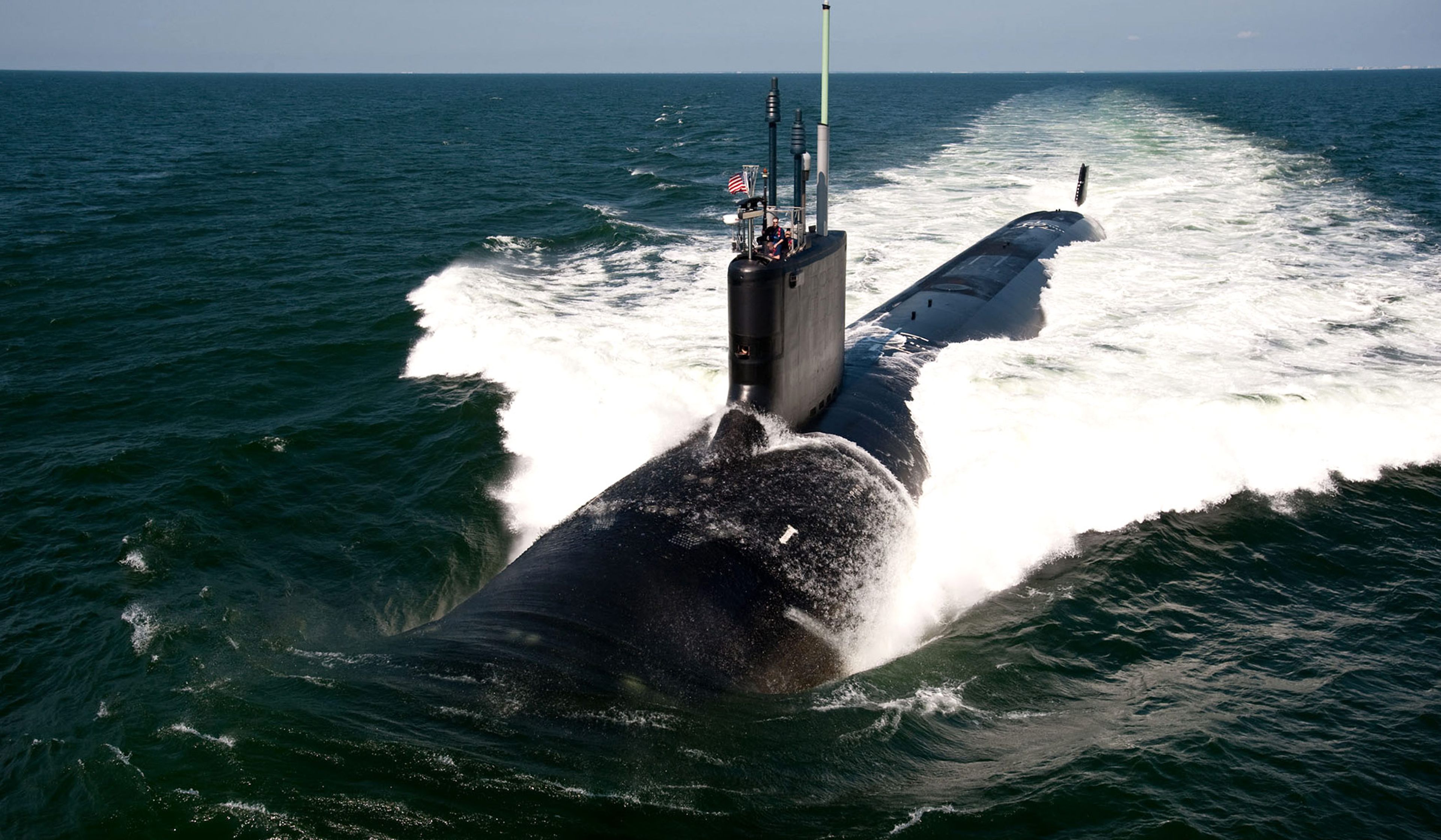
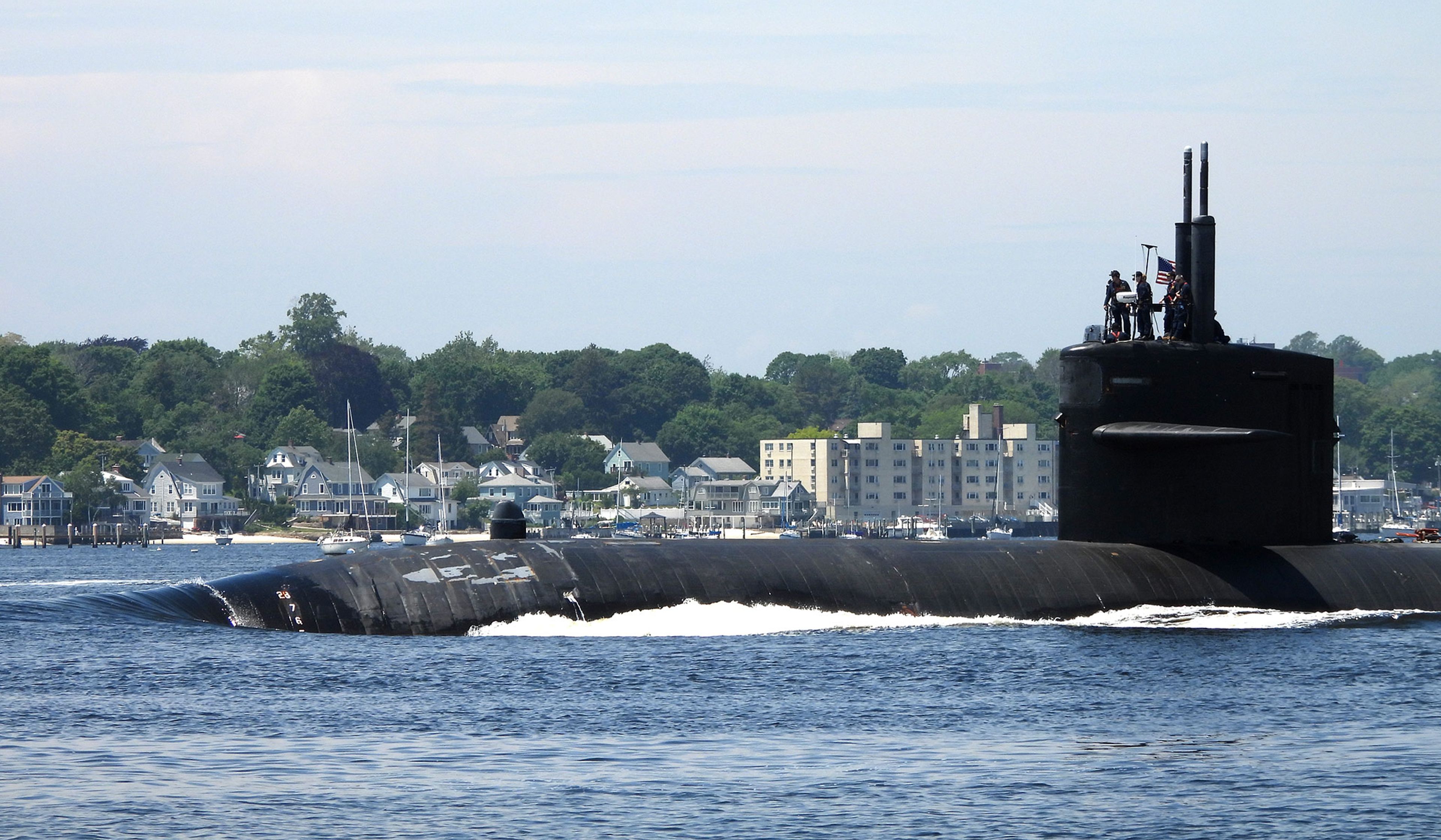
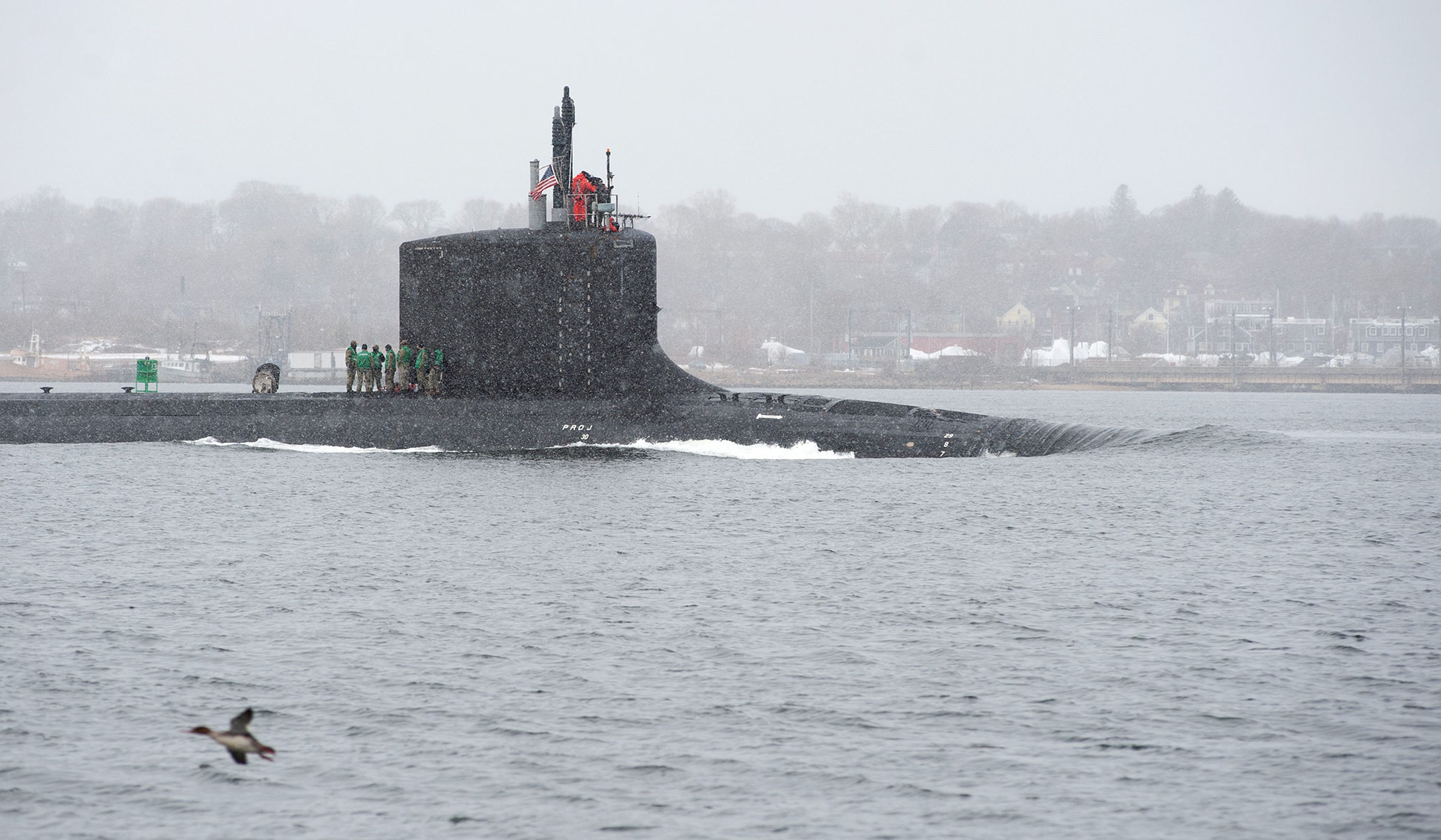
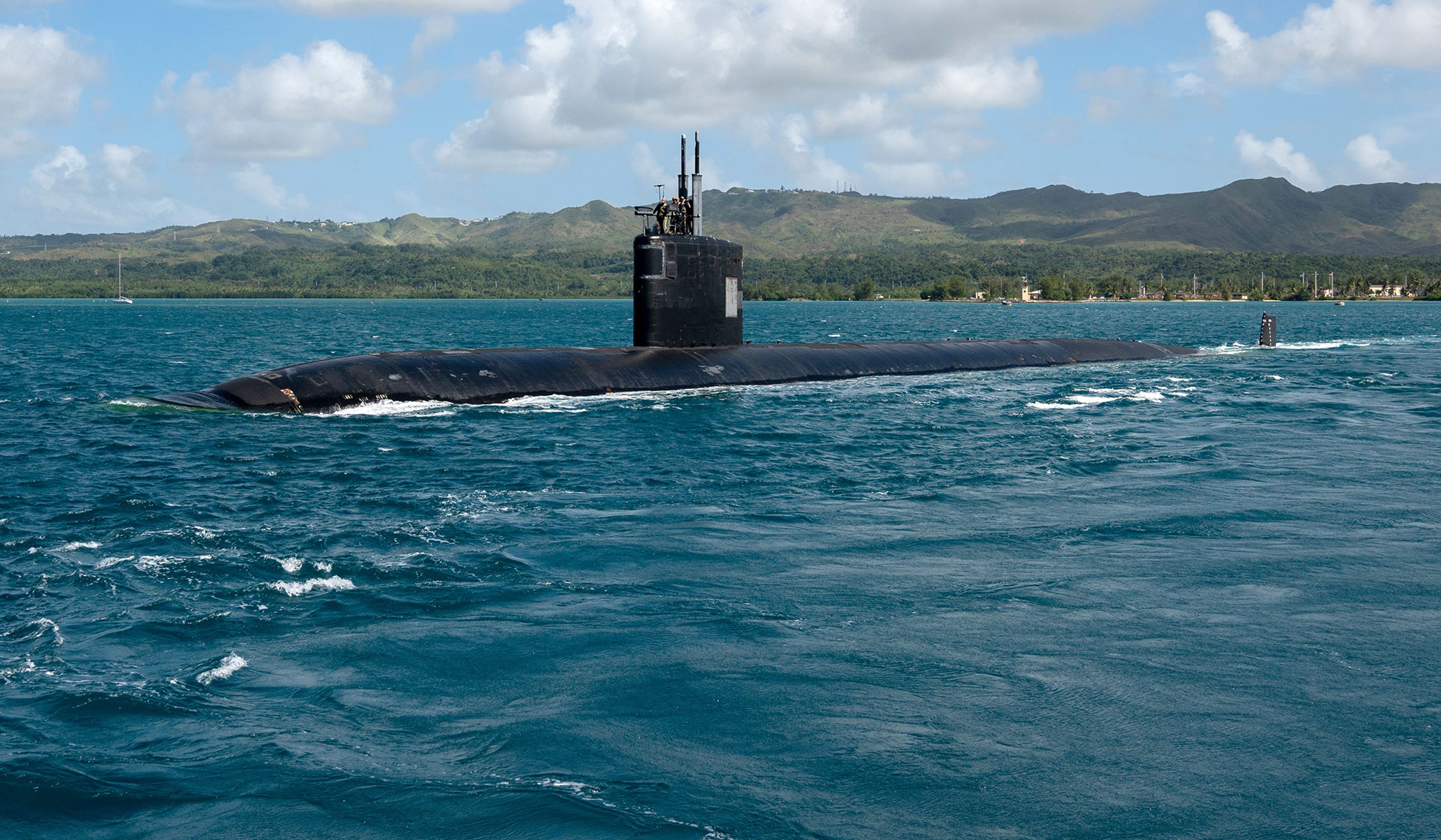
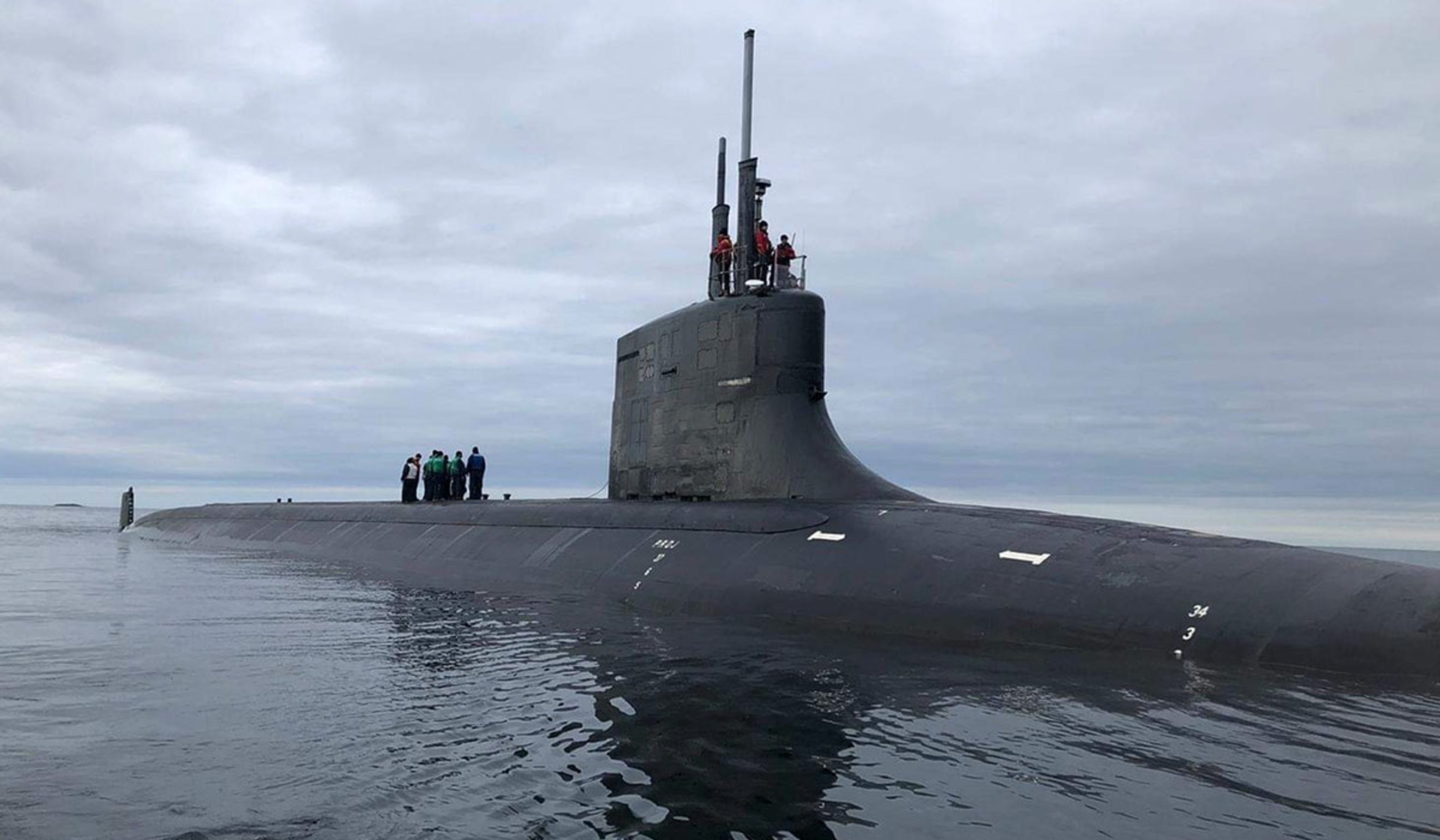
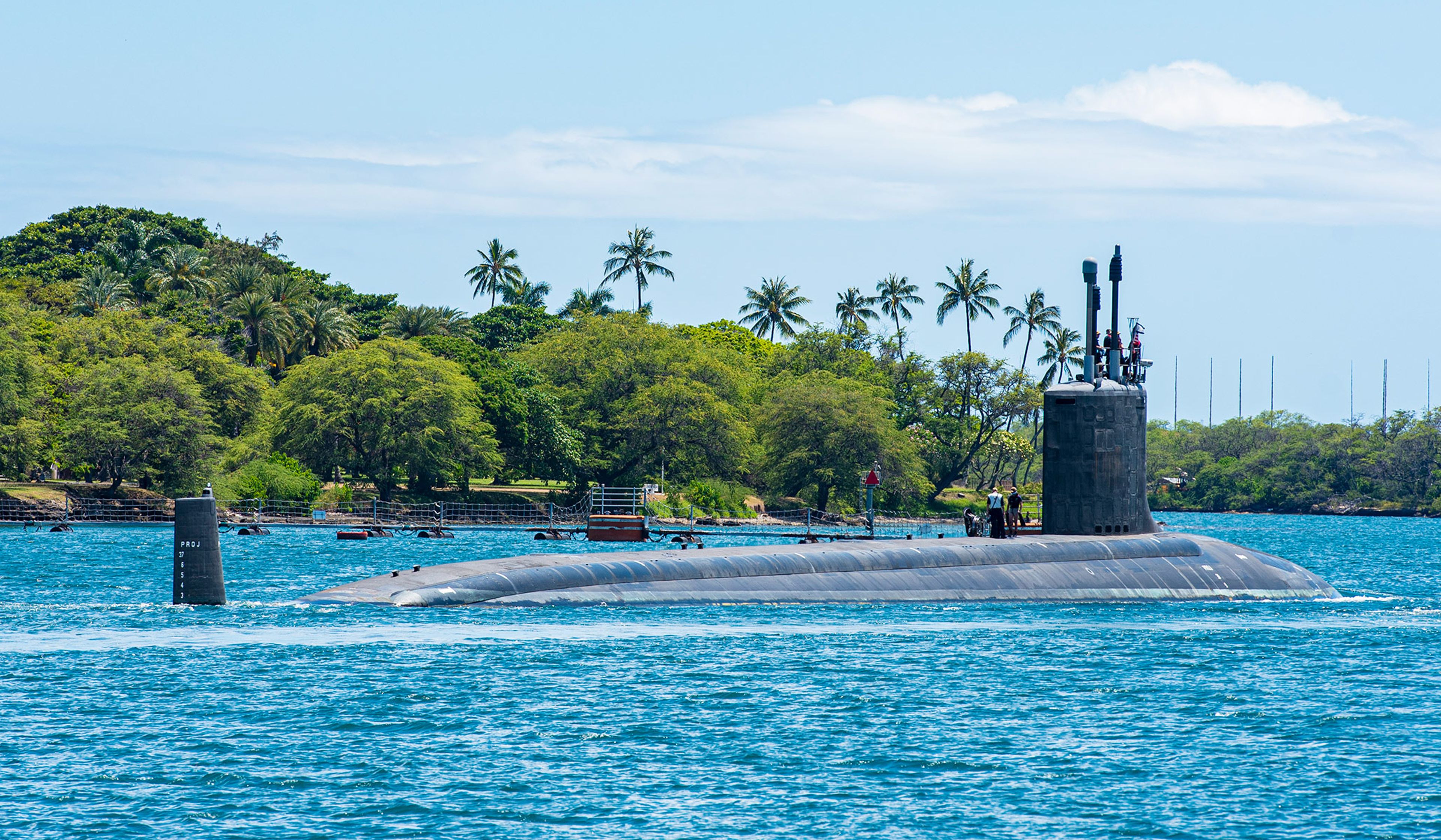
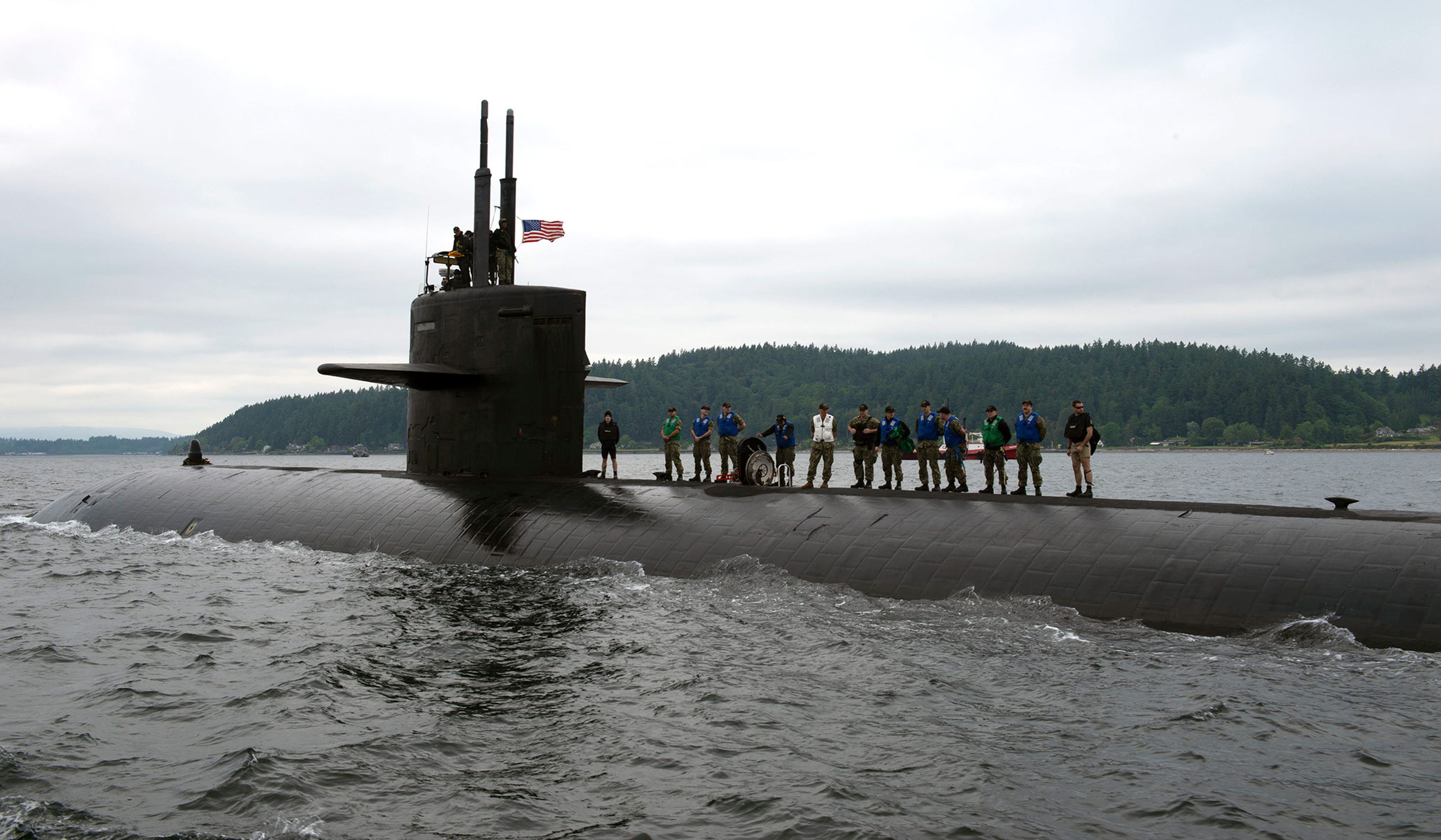
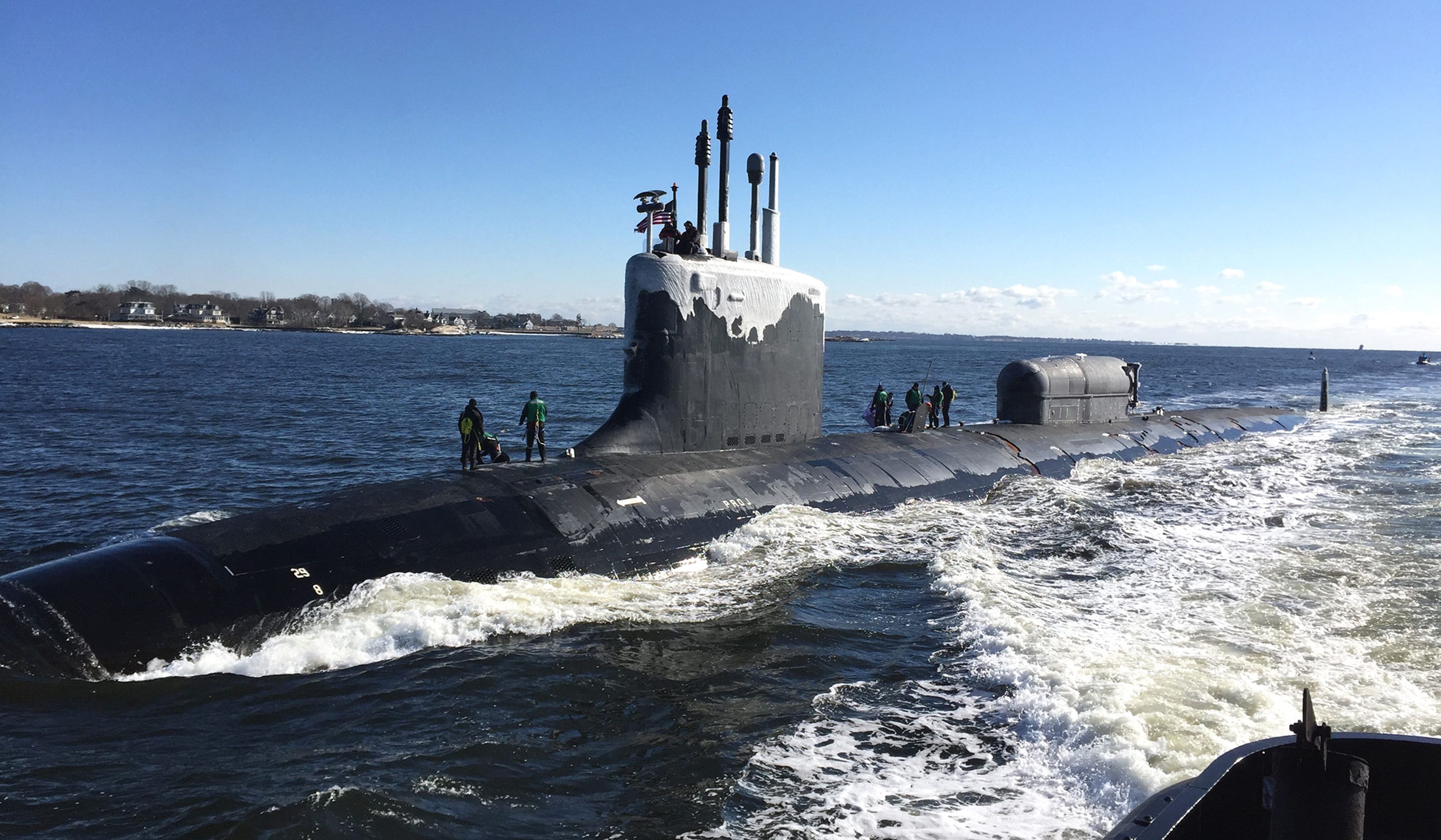
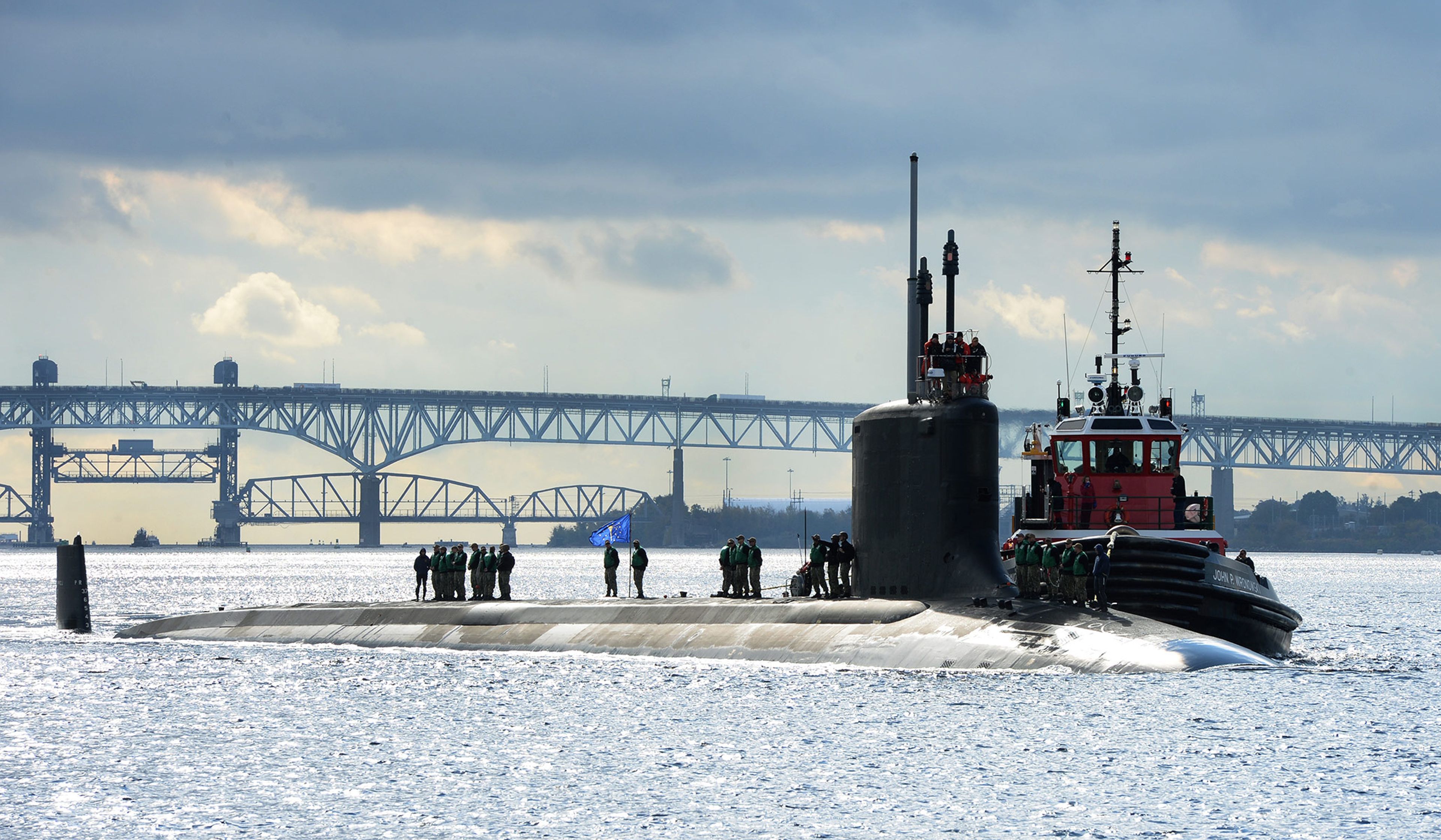
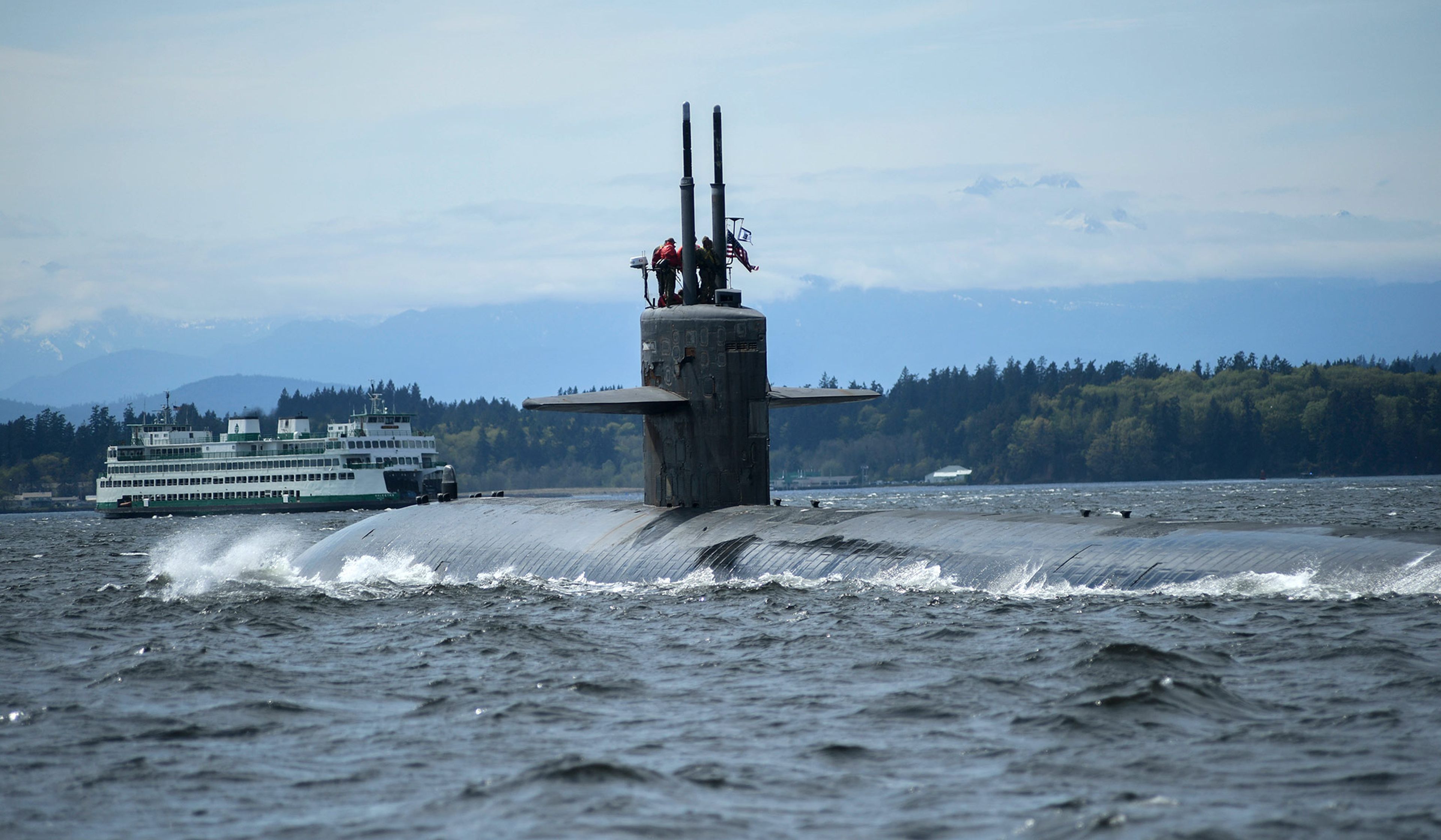
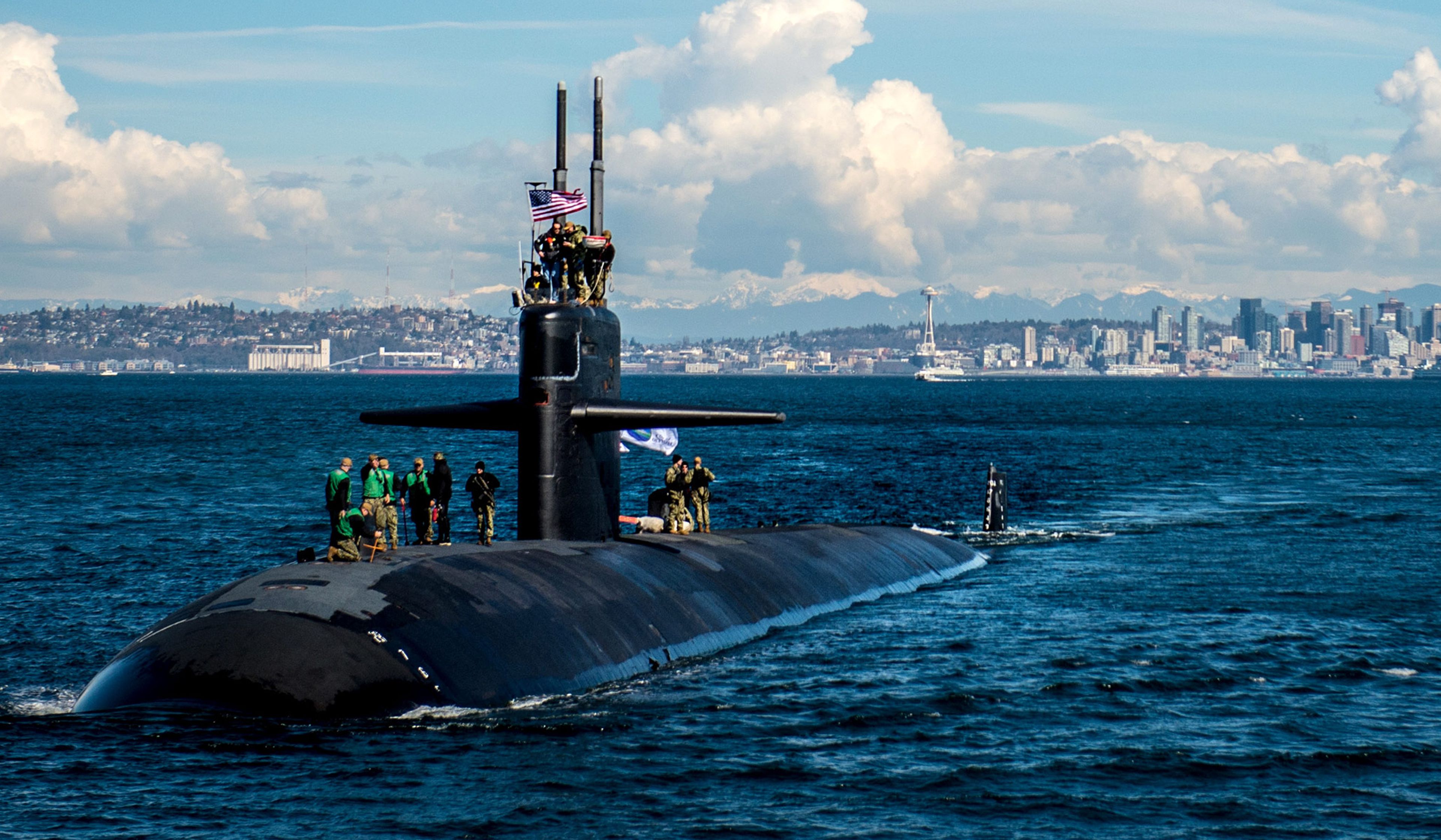
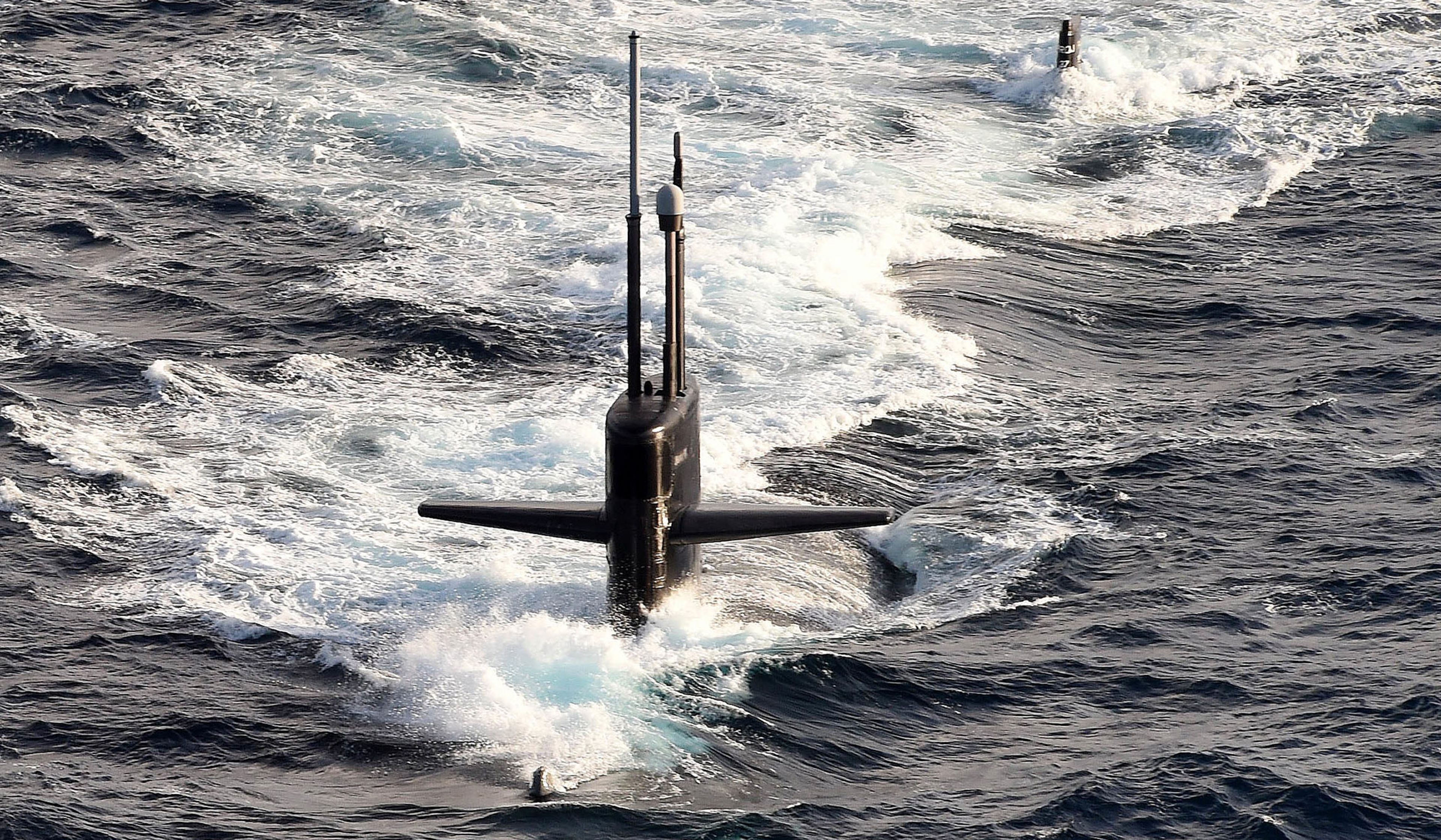
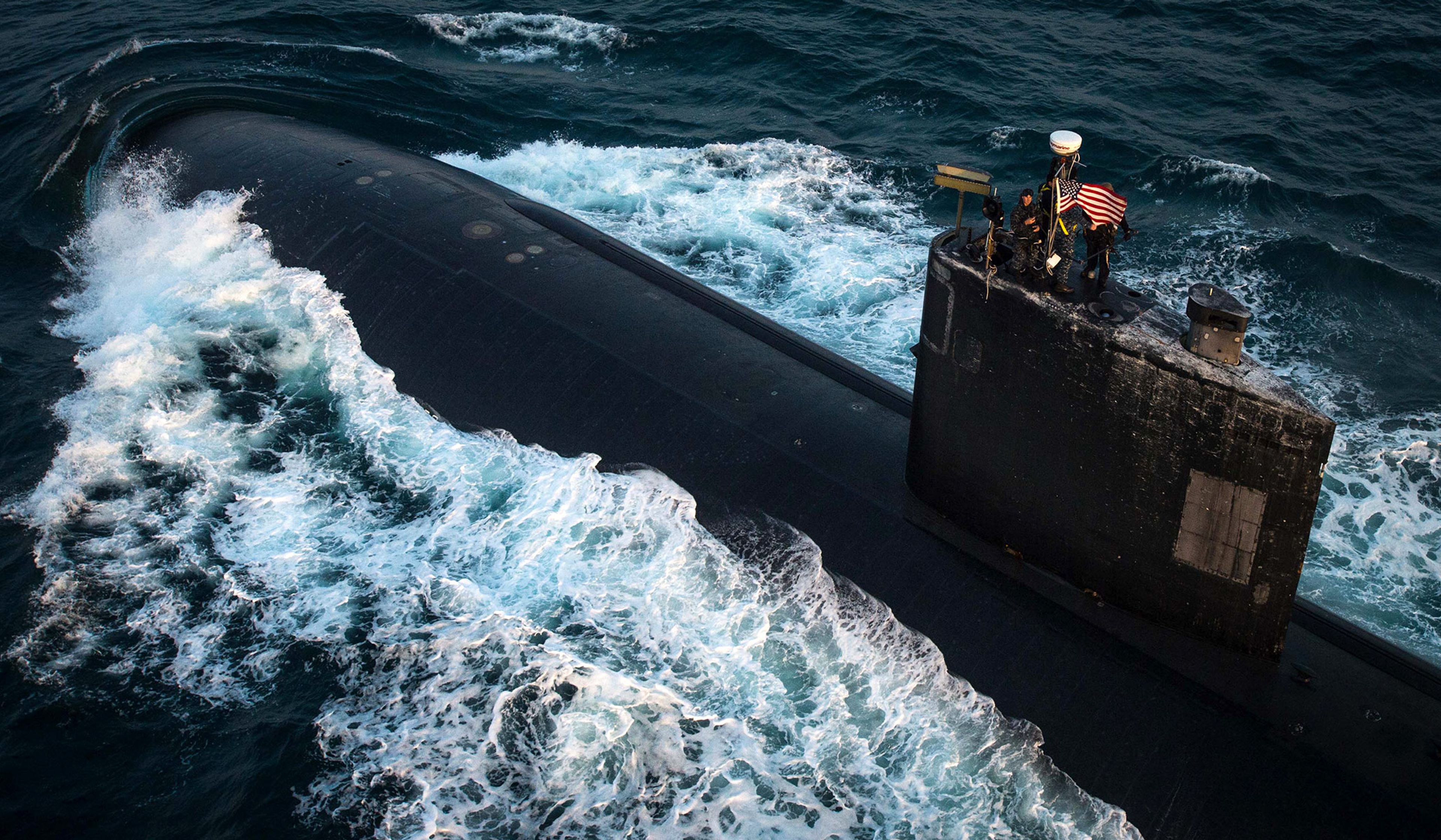
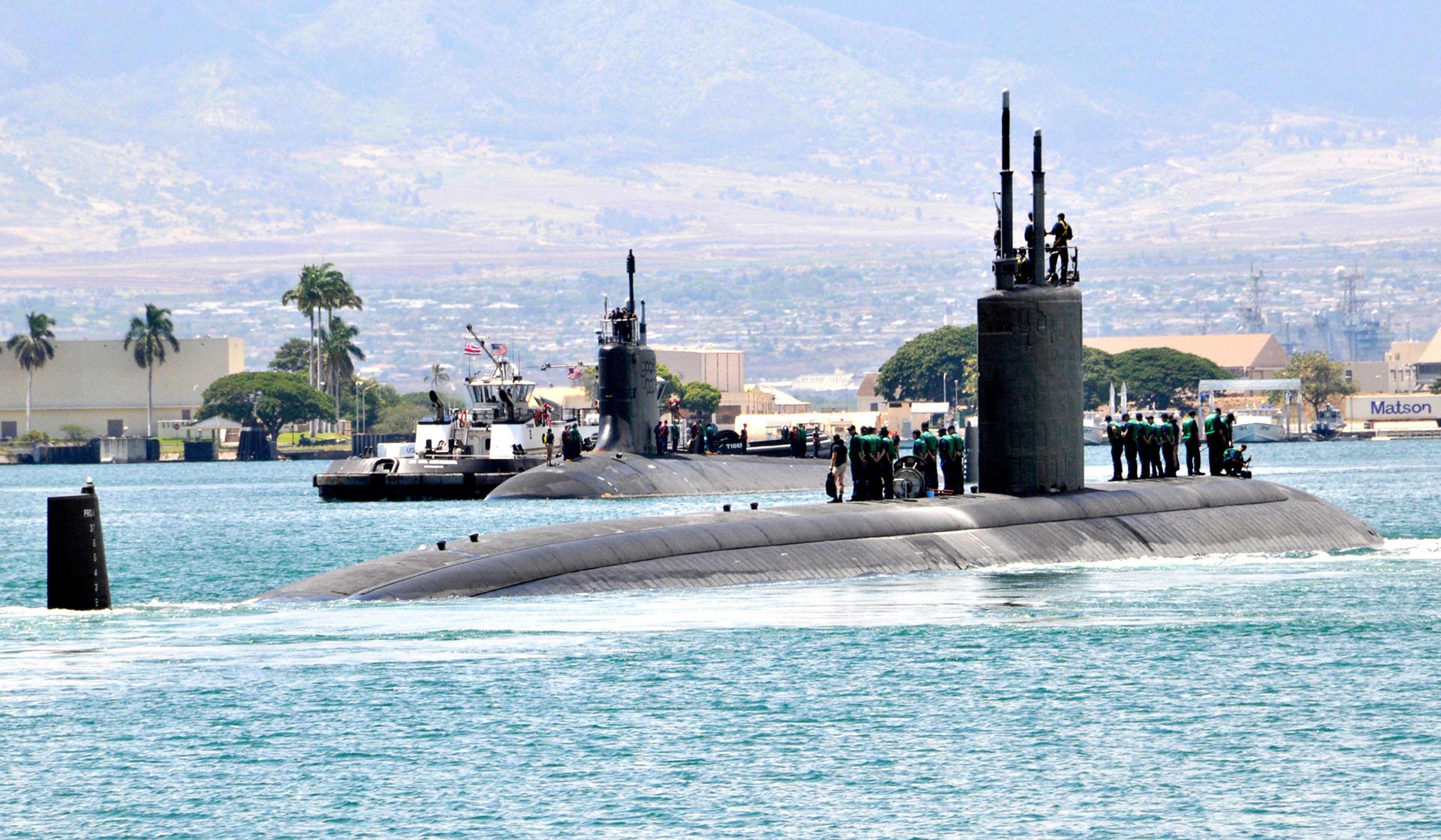
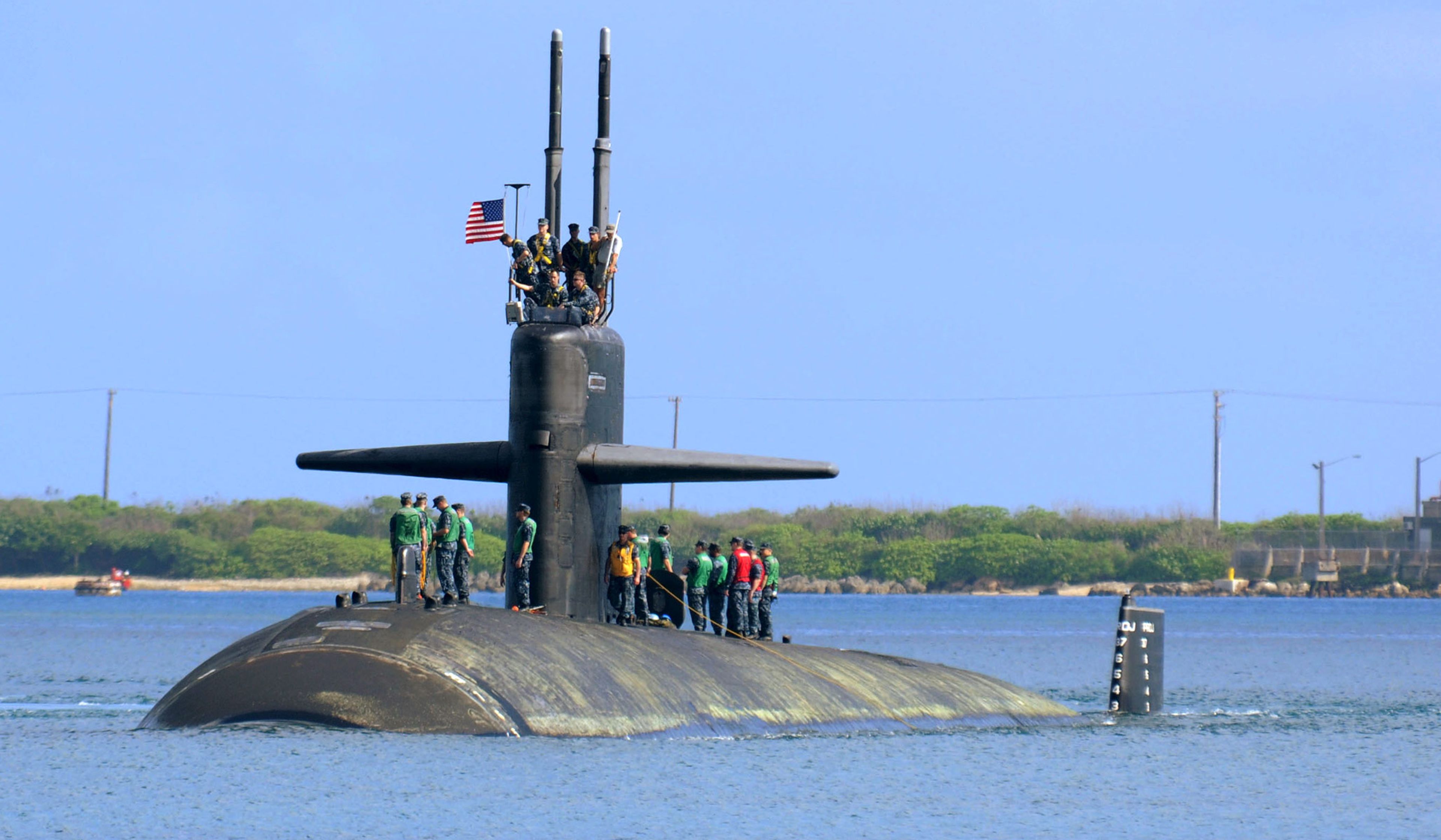
The Virginia-class fast-attack submarine USS California (SSN 781) underway during sea trials, June 30, 2011.
Chris Oxley/US Navy
That situation is better than the looming Chinese hegemony preceding it, but since China suffers from a growing list of internal problems — slowing growth, rising unemployment, a massive overinvestment in property, middle-class fears that their fortunes are at risk from Xi Jinping’s Maoist revivalism — it has its own risks. China-watchers from historian Niall Ferguson to former Aussie PM Tony Abbott warn seriously that the Communist regime, fearing its own declining authority, might be tempted to recover popular support by a military adventure abroad that in the event misfires. Caution: Here be a sick dragon.
The second big loser is France, and by extension the EU. France has good reason to feel slighted. It has territory, interests, 1.5 million citizens, and 8,000 members of its military in the South Pacific that deserve the sympathy of its allies, and though it will doubtless be compensated for losing the $90 billion submarine deal, Paris suffered a needless humiliation when its allies used the G-7 summit to seal the deal secretly. But as Wolfgang Münchau pointed out in the London Spectator, both the French and the EU have between them used brutal tactics against London — including an attempt to sever its constitutional link with Northern Ireland — in the Brexit and post-Brexit negotiations: “If you treat the UK as a strategic adversary, don’t be surprised when the UK exploits the areas where it enjoys a competitive advantage.”
And if France looks weaker today as a world power following AUKUS, that goes double for the EU, which has been constantly complaining about Washington’s inept handling of the West’s strategic interests while doing nothing in particular to improve them on its own account. It has now been caught napping by Uncle Sam. But because President Macron has been advocating a more autonomous European defense policy since he came into office, he will likely revisit the issue soon (and certainly no later than during France’s upcoming 2022 EU presidency). In that forthcoming debate, the real choices facing Brussels are, first, continuing with its existing but largely symbolic schemes (such as its “special reaction force”); second, deepening the EU’s overall legal and political integration in order to pursue the goal of Europe’s “strategic autonomy” — if it can decide what Europe’s interests are; and, third, swallowing its pride, keeping NATO under U.S. leadership as Europe’s main defense organization, and perhaps seeking a partnership with AUKUS outside the NATO area.
The second and third choices are real, if painful, for the EU, whereas the first is a decision to play at strategy while serving in a U.S.-led body that has other strategic priorities to consider. The second option, strategic autonomy, would be a tough sell for most members of the bloc. Though the French want strategic autonomy, the Germans don’t want to pay for it. Most member states of the EU, especially those closer to its eastern frontiers who see NATO as the only thing that keeps Russia away from them, would never agree to it. And since the EU is already split along the line between federalists and sovereigntists, pushing through such an initiative looks impossible for now and at best would take decades to achieve fully.
Suppose, however, what is possible: that the first steps happen and Europe embarks on a path toward strategic autonomy. That would soon drive an even deeper wedge between the western and eastern members of NATO, between the Anglosphere and the EU. The conflicting strategic interests that would then emerge would all but cripple the Atlantic organization at its core. We would eventually arrive at a point where NATO would be little but a shell, inside which both factions would soon be operating independently of each other, weakening the global positions of both.
The third option, of sticking with a U.S.-led NATO and seeking a partnership of sorts with AUKUS, has its drawbacks, too: Germany’s increasing drift toward a “commerce first” foreign policy built on closer economic and trading links with both China and Russia would be difficult to reconcile with the nature of AUKUS as an alliance to “contain” China. But Germany is an outlier here — as the row over the Nord Stream 2 pipeline has shown. Most European governments would clearly give greater weight to NATO and their defense links to the U.S. than to their economic links to the East. That is probably so even for France, despite her advocacy of a different diplomatic approach to China, since working with AUKUS is a real practical option only for the French — for whom it would be the abandonment of a long-held Europeanist strategic vision but also the single best prospect of retaining their status as a global power. If that were done, the EU would then have its only global military player as a full AUKUS member alongside the other European global player and NATO member, Britain. That surely offers a better prospect of strategic harmony within NATO than option No. 2.
Are we, however, presuming too much as to the success of AUKUS? It is as yet only a treaty with several obstacles to overcome — U.S. Senate and parliamentary ratification; the extension to Australia of nuclear- and submarine-technology intelligence shared until now only with the Brits; the awkward fact that since an earlier Australian government signed the Nuclear Non-Proliferation Treaty, Australia would become the first non-nuclear-weapon state to operate nuclear-powered submarines. That last obstacle would undoubtedly weaken the anti-proliferation regime that has been a multilateral feature of the long peace since 1989 and that, like the other obstacles, would provide the fodder for protest and debate in all three countries. Moreover, the deal has given precedent for a dangerous loophole as well, as other countries could opt to develop nuclear weapons under the false pretense of their future naval reactors, outside of all existing safeguards. Given the national-security imperatives of the new cold war, however, nonproliferation will be on life support. Above all, it is unlikely to delay the practical implementation of AUKUS seriously, since the submarines are not scheduled to be operational for another decade.
Between now and then, a great deal will likely happen. Beijing has made clear that it will campaign all it can to block AUKUS. That could even include a high-risk attempt to “resolve” the Taiwan problem. But the problem for Beijing is that the more aggressively it behaves, the more it encourages third parties to join or cooperate with AUKUS. Even without such encouragement, AUKUS will itself be expanding in two directions. The first is that, as Scott Morrison made clear in his conversation with Walter Russell Mead, both of America’s partners will be pressing the U.S. to share (and jointly develop) new technologies, “in fields ranging from quantum computing to artificial intelligence, electronic warfare, missiles and cyber,” which “could offer economic as well as military and diplomatic benefits.” Not all the items of Morrison’s ambitious program will be delivered, but because the U.S. also stands to benefit from such cooperation, some will get through the bureaucratic maze. And their results will make AUKUS attractive to other powers.
Indeed, as others have noted, AUKUS already rests on foundations laid by earlier cooperation between the U.S. and the U.K. — the “special relationship” differed from NATO in being a worldwide alliance rather than a regional one in military, diplomatic, and intelligence affairs throughout the Cold War. That expanded early into the “Five Eyes” worldwide electronic-eavesdropping intelligence network operated by the U.S., the U.K., Australia, Canada, and New Zealand — which is AUKUS without the last two countries. In recent years the U.S. has also established an important new relationship with Japan, India, and Australia, the Quadrilateral Security Dialogue, or “Quad,” which denies it is a defense organization but held its first naval maneuvers last year and which China deeply dislikes. Now AUKUS has been added to these friendly organizations in what Wolfgang Münchau, mischievously borrowing a concept from European debates on EU integration (which the EU largely rejected), calls Washington’s policy of “variable geometry” in the alliance politics of the Indo-Pacific area. In everyday terms this means that the U.S. would be at the center of several alliances, each dealing with a different issue, all members respecting the sovereignty of their partners but united by cultural sympathies for democracy and the rule of law as well as by common security interests. (If one were to add one other trait, it would be “a common language,” since almost all the countries on the list have English as their primary language or are comfortable using it.) Washington is thus able to choose an ally or even an entire alliance to suit the needs of any particular crisis. So are all the other alliance members. And as we describe this “deep but flexible” structure — a phrase that recurs in several commentaries and suggests an influential briefing — it reminds one of us how its advocates struggled to describe the then-unfamiliar concept of the Anglosphere. It is an Anglosphere-Plus set of alliances. And in addition to its present members it would almost certainly be able to recruit Singapore, Taiwan, and maritime countries in Africa and Europe to its flag.
Consider, now, how a bloc of countries and alliances that shares technology, coordinates defense policies, and includes Japan, India, Singapore, Taiwan, perhaps Vietnam, and the AUKUS members looks on the map. It looks very like Mackinder’s description of the Outer or Insular Crescent, which, as it happens, is facing two powers of varying degrees of hostility — Russia and China — that between them control the Heartland, a.k.a. the World-Island. We should therefore expect these two behemoths to be struggling for control of Rimland, which in this scenario would be the Middle East, Southeast Asia, and . . . Europe. For Europe is divided between its maritime and its land powers, between Britain, which is a leading force in AUKUS, and Germany, which is economically allied to Russia and China, and it could go either way.
In this counterfactual scenario, the swing power would be France. Which is why AUKUS should be sending Macron a Christmas card this year.
—Mr. O’Sullivan is an editor at large of National Review and the director of the Danube Institute in Budapest, where Mr. Orbán is a research fellow.











Comments