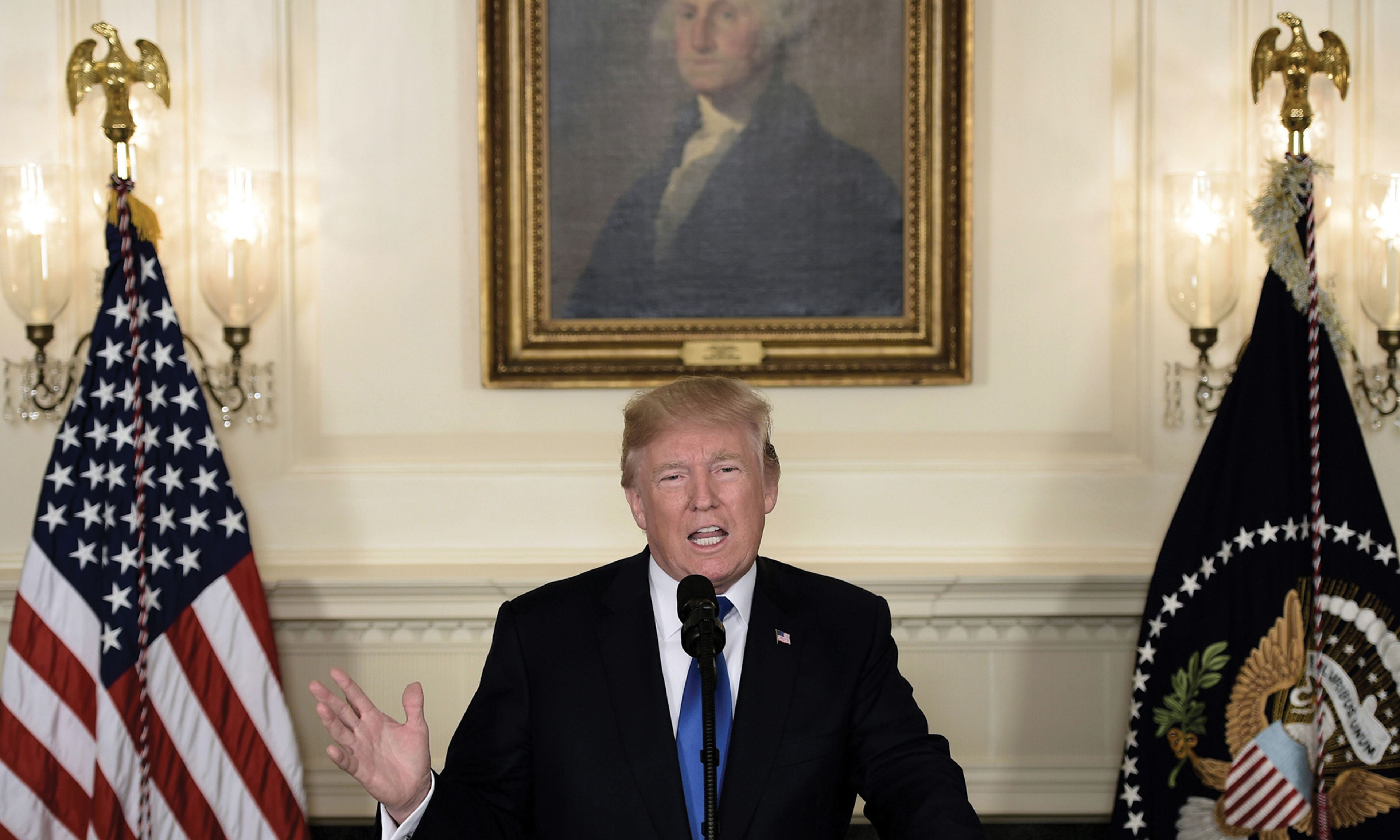
When he entered the Oval Office, Donald Trump must have been daunted by the Middle East situation he inherited. The Arab state system had largely collapsed, and a vicious theocracy in Iran was on the march, with its ambitions sharpened and its nuclear program essentially intact. President Barack Obama had been too preoccupied with his pivot to Asia to worry about the Mideast’s ancient blood feuds. He approached Iran through the prism of arms control and misunderstood the mullahs as reasonable men seeking a place in the community of nations. His lasting legacy, the Iran nuclear deal known as the Joint Comprehensive Plan of Action (JCPOA), is now Trump’s central problem — and, despite the howls of the commentariat and the consternation of European chancelleries, Trump and his generals are beginning to usher in a sensible Iran policy.
For centuries, Persian monarchs and mullahs have seen Iran as the center of the region’s politics, a natural hegemon for a disorderly Middle East. It was a role that the Occidental powers had once arrogated to themselves, but in the end neither the British nor the American empire discharged that obligation. They were too culturally distant, too infatuated with their Western paradigms of development, and too ignorant of the slippery politics of the Middle East. The sun has long set on the British Empire, and an America humbled in Iraq is wrestling with its own limitations of power. Barack Obama presented retreat as a grand strategy and was all too comfortable with the surge of Iranian power.











Comments