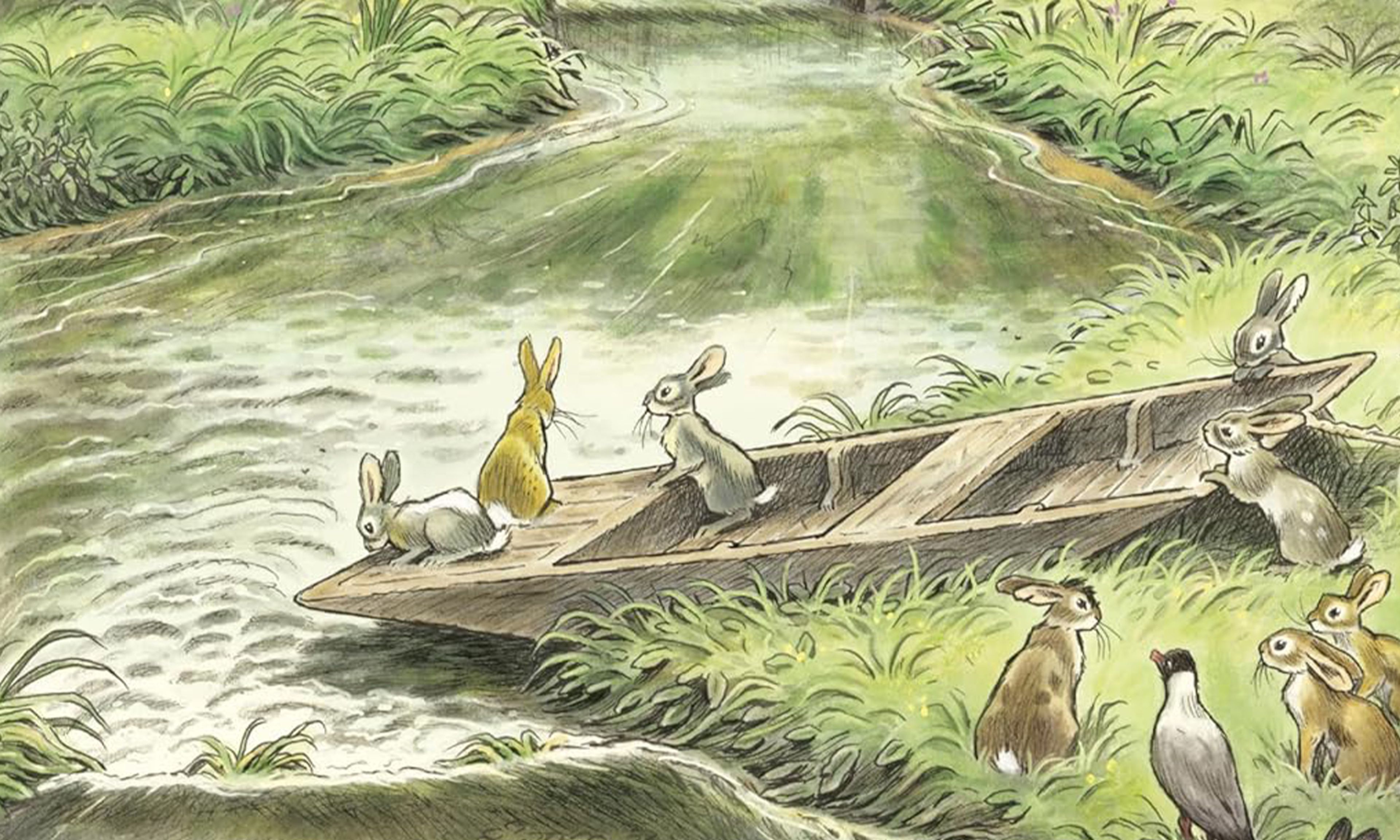
I made it well into my forties without reading Watership Down. For nearly half of those years, I was employed by a college English department, a position that theoretically entails knowing something about books. Yet such is the power (or weakness) of specialization that I would have said, if asked, that Richard Adams’s 1972 novel is a naval saga — something, surely, about Lord Nelson or some other wanderer of seas. The book was always on my list, but so were Finnegans Wake and the complete works of Heidegger. One’s list, let’s face it, is as often as not a self-reassuring lie.
Of course, Watership Down is not about cruisers and destroyers. Nor does it belong to that class of books that can be safely shunted down the lineup forever. It is instead, as readers of this article likely know, a work of political philosophy transposed to the animal kingdom. The title’s “down” is not an adverb but a noun: a rolling upland good for burrowing. Yes, the novel is about rabbits. And it is as brilliant an ideological treatise as anything this side of John Stuart Mill.











Comments