Sickly, half-lame little Josep Jughashvili grew up to be the terrible and terrifying Joseph Stalin — gangster, egomaniac, mass murderer, diabolical titan. His statues once dotted town squares throughout the Communist world, but these days his memory is burnished mostly in his hometown of Gori, Georgia.
That’s where the Stalin Museum is lovingly tended — at least it was a few years ago, when I visited it — by an elderly lady who is not current with revisionist history. When she gives you a tour of the Stalin Museum, she pronounces the word “Stalin” — I don’t speak Georgian, but the word “Stalin” sounds the same in every language — with a breathy, passionate voice and uplifted eyes. It’s clear that her Stalin and your Stalin are not the same Stalin.
But when she shows you around the perfectly preserved private rail car that Stalin used throughout his reign, and points out his favorite leather club chair — hair-oil stains still visible, small cigarette burn holes in the arms — you both instinctively shudder. He sat here and planned that, you think to yourself. Stalin, half a century later, is still a very scary guy.
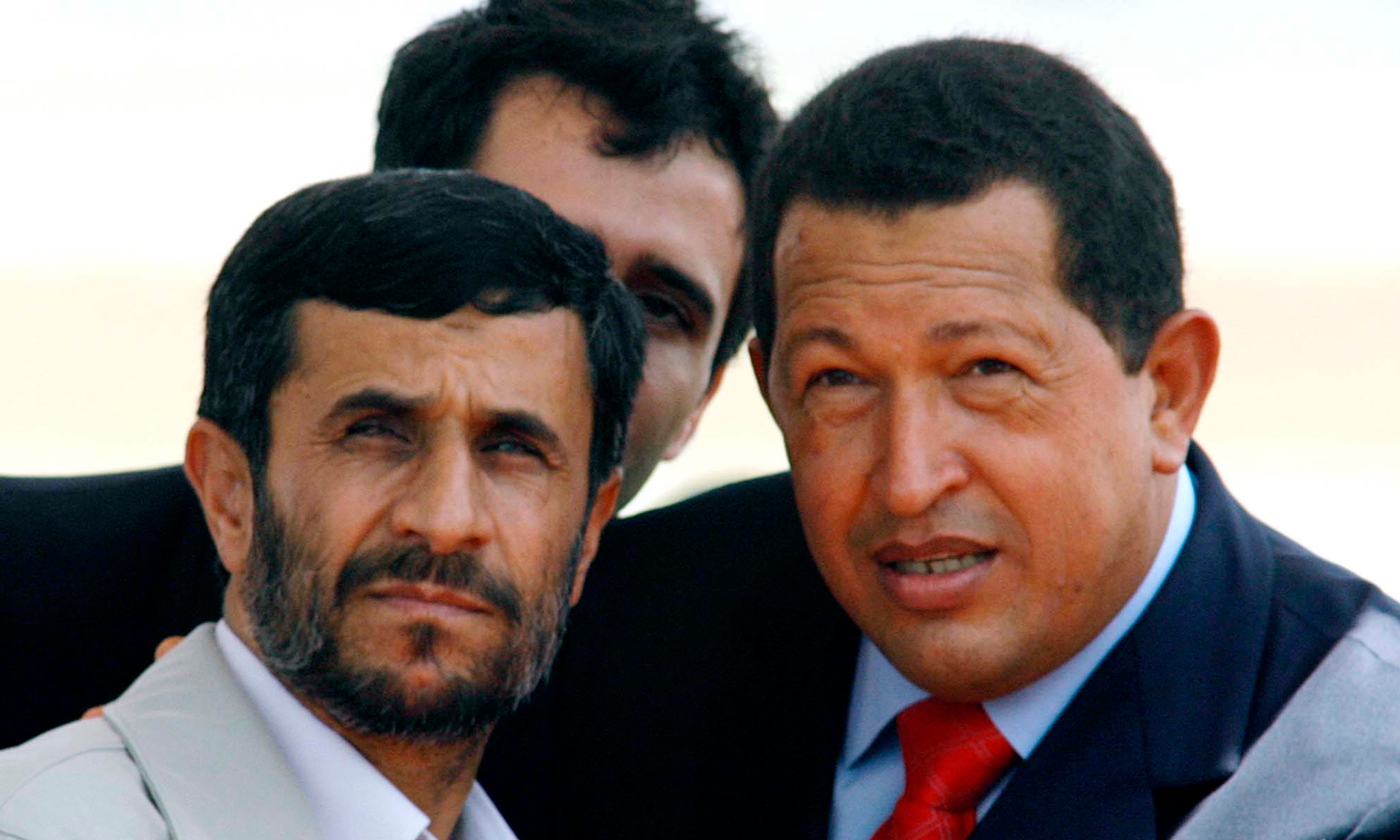
During the absurd pageant that is U.N. Week in New York, as rotund, pie-faced Venezuelan dictator Hugo Chávez waddled around the General Assembly room and creepy Iranian president Mahmoud Ahmadinejad strutted through the hallways, it was hard not to think back on that leather club chair and wonder, How scary are these new guys?
Modern dictators come in three basic flavors. The first, the Temporary Emergency type — your Pinochets, your Stroessners — are mostly colorless functionaries. They aren’t statue-building egomaniacs, but grim-faced military law-and-order guys who emerge to fill a power vacuum. High on secret police and discreet acts of torture, low on speeches to the throngs and specially commissioned epic poems.
There’s something almost admirable about this group, something efficient and comforting. When the former Yugoslavia exploded into ethnic violence in the 1990s, it was hard not to yearn for the drab leadership of Marshal Tito, who managed to thread the needle between joining the Eastern Bloc and becoming a client of the West. Not a nice guy, of course, but impressive.
Generalissimo Franco’s Spain lasted relatively intact until 1975 — a 36-year span! — which is an astonishing feat when you consider that he was personally acquainted with Adolf Hitler, Joseph Stalin, and Richard Nixon. In Spain today, the officially correct position on Franco is to mumble disapproving phrases while at the same time conveying a Well, you know, tough times, hard choices, gotta break a few eggs to make a tortilla de patatas.
For the most part, these are the most popular variety, and they’ve traditionally been the most pro-American. This has led to complicated moral arguments, in and around the Department of State, about “good” dictators and “bad” dictators, but the debate usually boils down to two basic points: One, good dictators recognize the temporary nature of their regimes and don’t have fat, loutish sons in the wings waiting to take over; and two, good dictators aren’t insane.
Which brings us to the second variety of dictator, what I call the Operatic Psychopath. These guys are the Howard Hugheses of the despot set: weird, impulsive, dangerous — it’s always their face on the (worthless) currency, always their statue in the main squares, looking resolute and defiant. The late crackpot Turkmenbashi, who ran the natural-gas-rich nation of Turkmenistan like some kind of deranged scoutmaster, is a perfect example of this type. He renamed the months of the year — one after his mother — and wrote a companion volume to the Koran, declaring it required reading for all Turkmens. He erected ludicrous statues of himself all over the country, the grandest of all in the capital, Ashgabat: a big gaudy golden thing that rotated atop a spaceship-like monument, following the sun. It looked like the main cathedral of the Church of Bob’s Big Boy.
The Duvaliers of Haiti, Nicolae Ceausescu of Romania — these guys fit the basic Operatic Psycho pattern of grandiose self-regard and opulent living quarters. When the revolution eventually comes and the presidential palaces are overrun with angry mobs, the papers are filled with the odd, off-putting details of their cushioned lives — fancy sheets and shoes, complicated toilets, harems, and worse. When the lunatic emir of Bokhara was eventually run out of power by the Red Army in the 1920s, he made his escape with most of his personal jewelry and all of his dancing boys. (His wives he left behind to the mercies of the Communist forces.) His plan was simple: Every few kilometers or so, he’d leave one of his dancing boys to distract and mesmerize the pursuing army. By the time he ran out of dancers, he’d be safely across the border and halfway to Cairo. Something tells me that Kim Jong Il has a similar plan.
The third category is the most worrisome. Call them The Troublemakers. Hugo Chávez with his oil money and his dreams of succeeding Fidel as America’s Closest Irritant; Mahmoud Ahmadinejad with his secret nuclear-weapons factory and energetic anti-Semitism — it’s hard to know exactly how dangerous these guys actually are. Chávez, with his grandiosity, his thuggishness, and his jumpsuits, may seem stylistically like an Operatic Psychopath. He’s a clown, of course, but clowns can be scary too. His big smile and his round face beg us all to underestimate him. He’s the fat kid with a secret — when the wheel turns, as it always does, and he feels the people of Venezuela trying to push him out, he’s not going to go quietly. He won’t die in dignified obscurity like Tito, or be hounded in retirement like Pinochet. He’ll fight and claw and do what it takes, like Ahmadinejad in Iran. They’re both going to be trouble.
Yet neither is really fit to sit in Stalin’s club chair. Neither has the diabolical self-restraint it takes to really do some serious evil. Chávez with his motor mouth and Ahmadinejad with his nutty superstitions — both of them seem so silly and harmless, so easy to mock and giggle at, that it’s easy to forget that one of them has built an atomic-bomb factory.
Maybe the most important question, then, isn’t what kind of dictator each one is, but what kind of leader sits in the White House to deal with them. Not so funny now, are they?










Comments