
• It turns out that the Democrats don’t fear that women will be put into red robes but that they will be put into black ones.
• Since Judge Amy Coney Barrett started being mentioned in reports as the leading candidate to replace late Supreme Court justice Ruth Bader Ginsburg, media outlets and progressives have zeroed in on her purported membership in a charismatic group called People of Praise. The organization is neither strictly Catholic nor affiliated with any denomination, but most of its members, like Barrett and her family, practice the Catholic faith. Several outlets rushed to publish underreported articles falsely asserting that People of Praise served as the inspiration for the totalitarian, misogynistic nation in Margaret Atwood’s The Handmaid’s Tale. Others featured claims that the group describes itself as “ultraconservative” (it does not) and insinuated that its members condone the abuse or subjugation of women. More evenhanded reporting has described the organization for what it is: a group of faithful Christians who attend the church of their choosing and who agree to follow common principles such as meeting regularly for spiritual and social gatherings and participating in service projects. These attacks on Judge Barrett and her faith reveal far more about her detractors than they do about her.
• The idea of term limits for Supreme Court justices is receiving new attention, as it often does when there’s a vacancy and the contentious political debate that nowadays attends one. The notion is that passions would be cooler if the stakes were lower, and an 18-year appointment every two years would accomplish that goal. The Constitution provides that federal judges “shall hold their offices during good behaviour.” Congress might be able, without a constitutional amendment, to create a new class of offices that include 18 years on the Supreme Court and additional years on lower courts. But the current justices would still be able to stay on the Court for life, which means that the new system of staggered nominations would take a long time to start. Our efforts would be better spent on lowering the stakes of judicial politics by returning the courts to their limited constitutional role.
• The first presidential debate was full of spitballs, and spittle. Both sides landed some punches. Trump was strong on energy production, the mismanagement of Democratic cities, and the strength of the pre-COVID economy. But Biden didn’t live down to the Trump campaign’s portrayal of him as severely cognitively impaired, while Trump leaned into the angry-bully image Biden wants for him. Trump is Trump, but sometimes he has been a more disciplined version of himself. He needs to find that guy again, or count on there being an awful lot of those “shy Trump voters.”
• Invited in September to reassure the country that he will preside over a “peaceful transfer of power” on whichever date he is bound to leave the presidency, Donald Trump refused to acquiesce. Instead, he gave an inchoate and meandering answer that seemed perfectly calculated to alarm his critics and to disappoint even the most apologetic of his supporters. That Trump is not going to remain president in violation of the Constitution — and, indeed, that the matter is not his to decide — is reassuring. But Trump is the president of the United States, and he is obliged to act like it, even when his refusal to do so is not immediately catastrophic. For 233 unbroken years, presidents have found it within themselves to respond to such inquiries with a simple “Yes.” It would be better for America, and for President Trump, if he followed suit.
• At a rally, President Trump was talking about Ali Velshi, a reporter for MSNBC, who covered protests in Minneapolis back in May. “I remember this guy, Velshi, he got hit on the knee with a canister of tear gas, and he went down. He was down. ‘My knee! My knee!’” The president continued in this vein before telling the crowd, “It was the most beautiful thing.” (Actually, Velshi was hit with a rubber bullet.) He reprised the act to another rally, and told other such tales. If there’s a happy medium between accepting media bias and vile buffoonery, Trump still hasn’t found it.
• Vladimir Putin is a ruthless, and anti-American, dictator. He imprisons, maims, and kills his critics. He invades foreign countries. He interferes in U.S. and other elections. He is a KGB man and mafia chieftain, both. To a rally, Donald Trump remarked, “I like Putin, he likes me.” If we got anything in return for comments like these, they might be tolerable. Barely.
• The New York Times revealed that in 2016 and 2017 Donald Trump paid $750 in taxes. (Time to grill the accountant who let that amount fall to Uncle Sam.) This is red meat for Democrats, who have long presented themselves as the party of populism, and a faux pas for Trump, who has successfully tugged the GOP in that direction. But the tax code indeed allows taxpayers (including fat-cat businessmen) who post losses to count them against their tax burden. The bigger the losses, the greater the relief. Trump’s losses indeed have been huge, which is a mark against his business acumen. Whether any of his behavior was illegal — e.g., inflating his losses by paying exorbitant consulting fees to family members — remains to be seen. We would not suggest it to our readers.
• In May, Republicans in Oregon nominated a QAnon believer for the U.S. Senate. She is Jo Rae Perkins. QAnon is a movement that believes roughly the following: Within the “deep state,” there is a cabal of pedophiles, sex traffickers, and cannibals, led by prominent Democrats such as Hillary Clinton. President Trump and the U.S. military are in a secret war against this cabal. One day, this will all come out in a great reckoning. Trump has welcomed the support of QAnon, refusing to utter any criticism of it. In Delaware, Republicans have now nominated a Q-friendly candidate for Senate: Lauren Witzke. She has campaigned in a “We Are Q” T-shirt. In a debate with the Democratic incumbent, Chris Coons, Witzke said of the movement, “From what I understand about QAnon, that’s just a bunch of people who want pedophiles held accountable. From what I understand, it’s absolutely harmless.” Coons responded by citing an FBI memo that identifies QAnon as a domestic-terrorism threat. The sooner the GOP and the American Right can separate themselves from QAnon, the better.
• On September 17, the Pennsylvania supreme court issued a series of election-related rulings widely thought to be beneficial to Democrats. Most notably, the court announced that mail-in ballots that arrive by November 6, three days after Election Day, must be counted. This is an alarming decision not because it may disadvantage Republicans but because it contradicts the plain language of the election statute signed by Democratic governor Tom Wolf less than a year ago, which states that mail-in ballots must be received by 8 p.m. on Election Day. To justify its ruling, the court cites the state constitution, which reads, “Elections shall be free and equal; and no power, civil or military, shall at any time interfere to prevent the free exercise of the right of suffrage.” No part of mandating that votes be cast by November 3 violates those requirements, but four activists in robes have nonetheless decided to issue an edict instead of interpreting the law. If the goal were to sow doubt about the fairness of election procedures, congratulations.
• It beggars belief. In repeatedly obtaining counterintelligence surveillance warrants on the representation that it suspected former Trump campaign adviser Carter Page was a Russian spy, the FBI knowingly relied on bogus claims by Igor Danchenko, who they believed was an actual Russian spy. The bureau concealed this fact from the Foreign Intelligence Surveillance Court, just as it concealed the facts that the purveyor of Danchenko’s purported claims, former British spy Christopher Steele, was working for the Clinton campaign, and that Danchenko told investigators Steele had misrepresented the information he’d passed along — mostly rumor and innuendo spouted by Danchenko’s drinking buddies, which Steele inflated into “intelligence” reports. Either the FBI was unusually derelict in this sensitive matter, or it performs this poorly as a matter of routine; it’s hard to know which would be worse.
• Police officers attempting to execute a drug-trafficking search warrant were fired on as they lawfully forced entry into Breonna Taylor’s Lexington, Ky., apartment. They returned fire, accidentally killing her. State attorney general Daniel Cameron announced that no charges would be filed against the two cops who shot her; a third was charged with wanton endangerment for firing wildly into the apartment house (fortunately, he did not strike anyone). Despite demands for murder charges led by Black Lives Matter, the state’s resolution was just. The grand jury pored over evidence indicating that Taylor was caught up in a narcotics-trafficking ring. She was not a suspect, but her former boyfriend was the apparent ringleader, using her apartment as his address and possibly stashing cash proceeds there. Police executed the warrant in the dead of night because they were hitting all relevant locations at the same time to make arrests. Taylor’s then boyfriend, a licensed gun carrier who feared intruders breaking in, fired first, severely wounding one officer. In the dark chaos, the cops fired back. A tragedy.
• The defense team for Kyle Rittenhouse, the 17-year-old facing charges for killing two and injuring one during the recent unrest in Kenosha, Wis., has released an eleven-minute video detailing its narrative of the event. Much of the included footage, showing that Rittenhouse fired only at individuals who charged at him or tried to take his rifle, was already public. But the video also raises some possibilities about how the confrontation got started. The first person Rittenhouse killed, Joseph Rosenbaum, had earlier had words with a different individual. The confrontation started when a civilian used a fire extinguisher to put out a fire that protesters had started in a dumpster — and the target of Rosenbaum’s ire, standing nearby, was, like Rittenhouse, wearing a green shirt and carrying a rifle. Rittenhouse was also seen with a fire extinguisher shortly before Rosenbaum started chasing him. There is, no doubt, a lot of information about this case that is not yet public, and we maintain that 17-year-olds should not arm themselves and stand guard in places where riots are expected. But any charges that cannot be proven should be dropped, and at this point Rittenhouse’s defense looks strong.
• The uproars of the summer just past, which historians may designate as the “BLM riots,” have backfired on the BLM movement. A Pew Research poll found that while a majority of Americans still supports BLM, it has shrunk from 67 percent in June to 55 percent. Whites and Hispanics led the drop-off. Black support remains strong, though even there the number of those who “strongly” support BLM has softened a bit, from 71 percent to 62 percent. Meanwhile even the vanguard of Woke America, the Minneapolis city council, is in retreat. Traumatized by the killing of George Floyd, the council pledged in May to defund the police department. Now several council members are trying to reframe their deed. Defunding, says one, is “up for interpretation.” Council president Lisa Bender admitted that “our pledge created confusion in our community.” Yes, when you go overboard on a matter as basic as public safety, you will create confusion. During the crime wave of the Eighties, pols called for harsh measures. The real difference was made by smarter policing. The goal now should be intelligent reform of policing, not the destructive fantasy of abolition.
• The 1619 Project, the New York Times’s effort to revise America’s understanding of its history, is itself being revised — by the Times. When it first published the package of essays in August 2019, the introductory note declared that “it aim[ed] to reframe our country’s history, understanding 1619” — the year the first black slaves were brought to the Jamestown colony — “as our true founding.” Later on, the essay added that “America was not yet America, but this was the moment it began.” These phrases have now been deleted from the online text, and Nikole Hannah-Jones, lead essayist of the package, even claimed on Twitter that it “do[es] not argue that 1619 was our true founding. We know this nation marks its founding at 1776.” These alterations came in response to an avalanche of criticism from historians. Good for the Times to amend the record. Better if it had admitted its error. Best if it had recast the entire project by dialing down the BLM hyperbole that inspired and frames it.
• President Trump has announced a “1776 Commission” to promote patriotic education. Good. Celebration of America’s exceptional past was once uncontroversial; think of the 1976 bicentennial. The 1987 Commission on the Bicentennial of the United States Constitution, chaired by Chief Justice Warren Burger, partnered with a battery of nonpartisan civic organizations to educate Americans on the history and blessings of our national charter. Ronald Reagan, in his Farewell Address in 1989, called for instructing the next generation in an “informed patriotism.” His call went unheeded. Students are today propagandized by the fact-challenged likes of the 1619 Project and Howard Zinn’s A People’s History of the United States. A proper American history does not mean feeding children Parson Weems’s whitewashed just-so stories, but no prior generation of American leaders would have been indifferent to whether our citizens know their own history and the founding ideals on which the nation rests. Parents should be the first teachers of patriotism and of the reasons we love America and its history. So long as children are educated by the government, however, what they are taught will also be a political issue. Conservatives are overdue to enter that essential fight. If it is now controversial to defend the United States of America, that is all the more reason why the lesson needs teaching.
• Republicans have said that they want to replace Obamacare, and have backed a lawsuit to end it, but they have also said they are committed to ensuring affordable care for people with preexisting conditions. There are two ways they could proceed. One would be to commit to keeping Obamacare’s regulation on the question, for example by reenacting them if the lawsuit succeeds. But because that regulation raises premiums, Republicans would also have to offer extensive subsidies to help people afford them. Essentially they would be re-creating parts of Obamacare. A second option would be to relax the regulation while making it easier for healthy people to purchase cheap, renewable catastrophic insurance, and providing high-risk pools to aid the small fraction of the population that would fall into gaps in coverage. Because Republicans have not been able to choose between these options, President Trump has instead issued a meaningless executive order that reiterates the promise of protection without explaining how it will be kept. Democrats who say the Republicans are dodging the question instead of presenting a plan are, unfortunately, correct.
• Democrats worried about executive overreach should turn their eyes to California, where Governor Gavin Newsom has handed down a batty executive order that would prohibit the sale of new gasoline- or diesel-powered cars in his state in 15 years. This is, very likely, one of those silly things that will not be enforced once the costs of it become apparent and have to be paid by someone who is facing reelection, but, surely, Elon Musk must be rethinking his recent Californiaphobia: There are something north of 2 million new vehicles sold in California each year, but there were fewer than 250,000 battery-powered vehicles sold in the entire country last year, 80-odd percent of them Teslas. It is reasonable to have emissions standards for cars, just as it is reasonable to have intelligent controls on air pollution from any other source. It is not reasonable for politicians with no particular expertise to dictate the technological solutions for meeting those requirements. What Newsom proposes is not a program to improve air quality but only the abolition of a politically unpopular technology, an ideological and aesthetic exercise. As for electricity itself, California already is suffering rolling blackouts, in part because the state’s signature blend of lifestyle liberalism and public-sector incompetence has left Californians unable to meet their current power needs. At the very least, the state legislature ought to have a chance to vote for or against such a radical proposal. And Californians who have had enough can continue to vote with their feet.
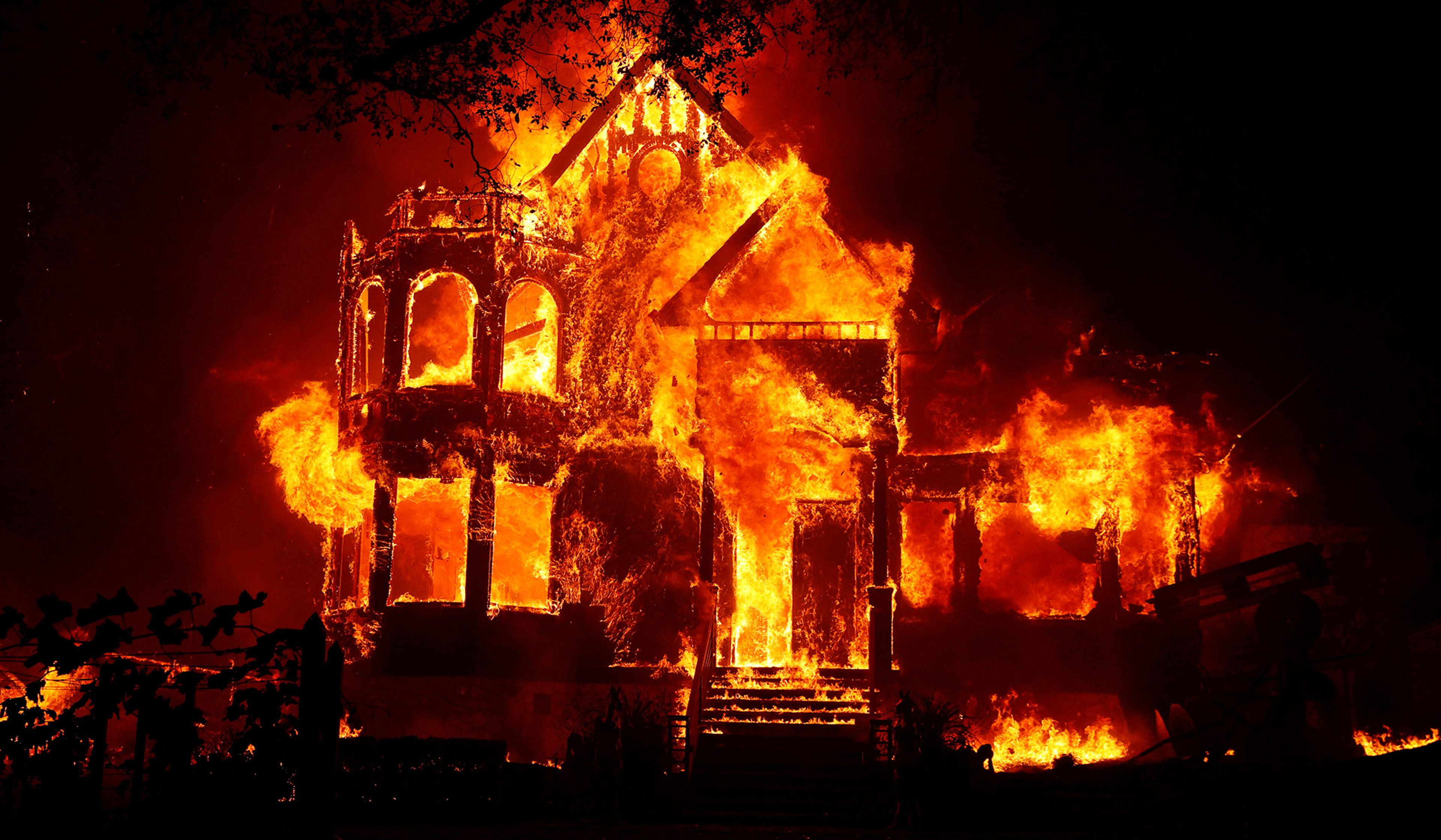
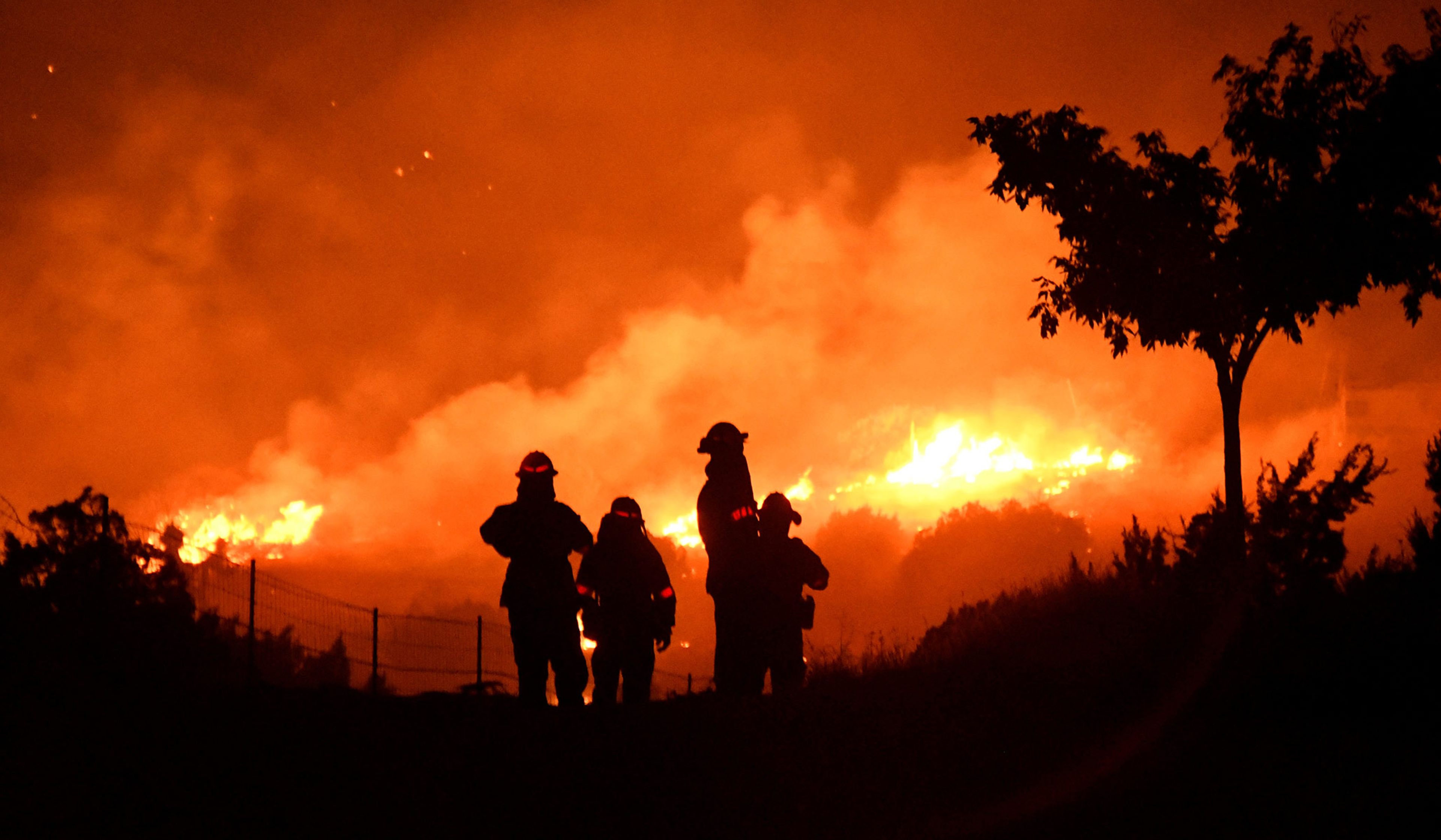
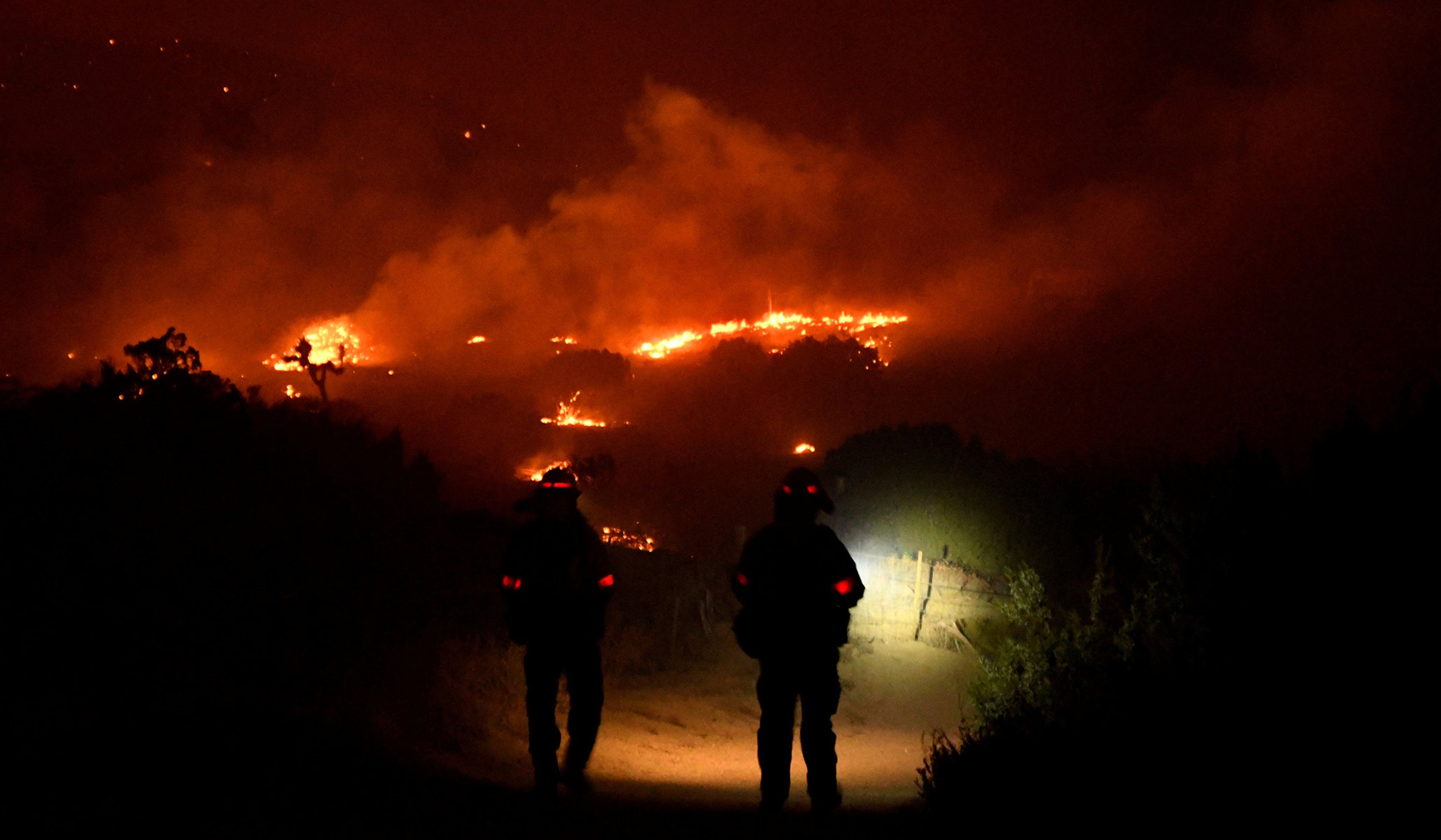


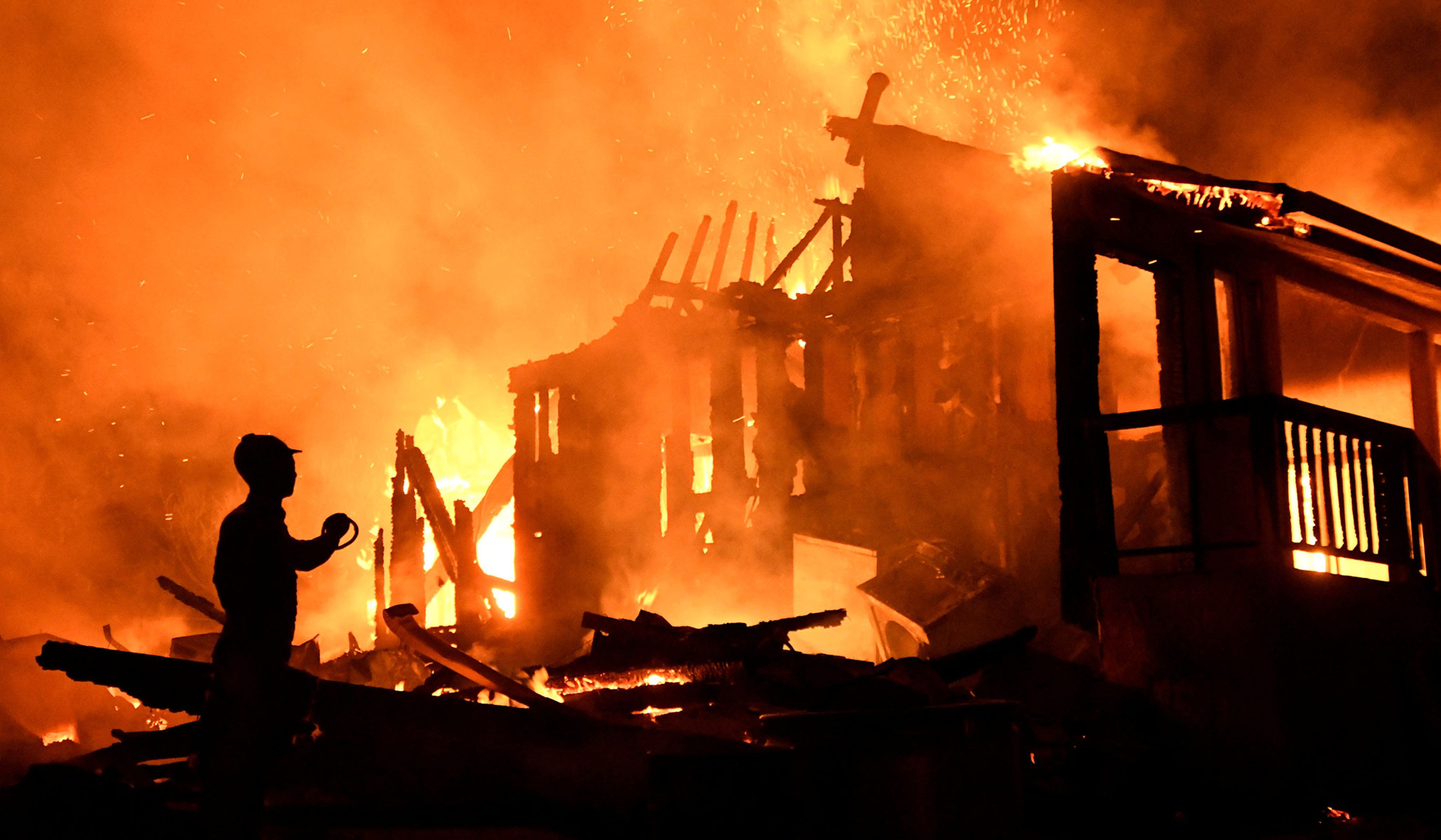
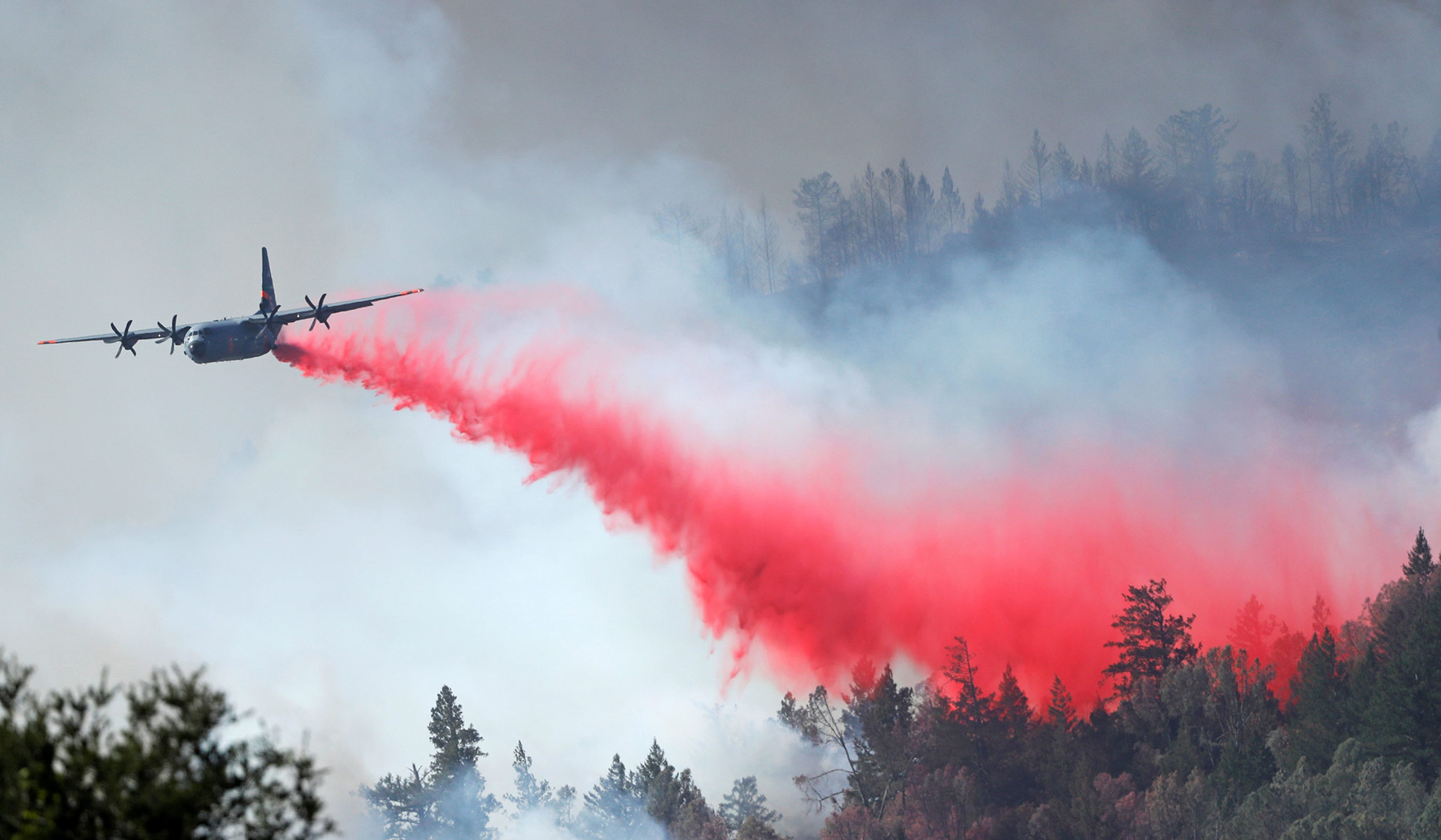

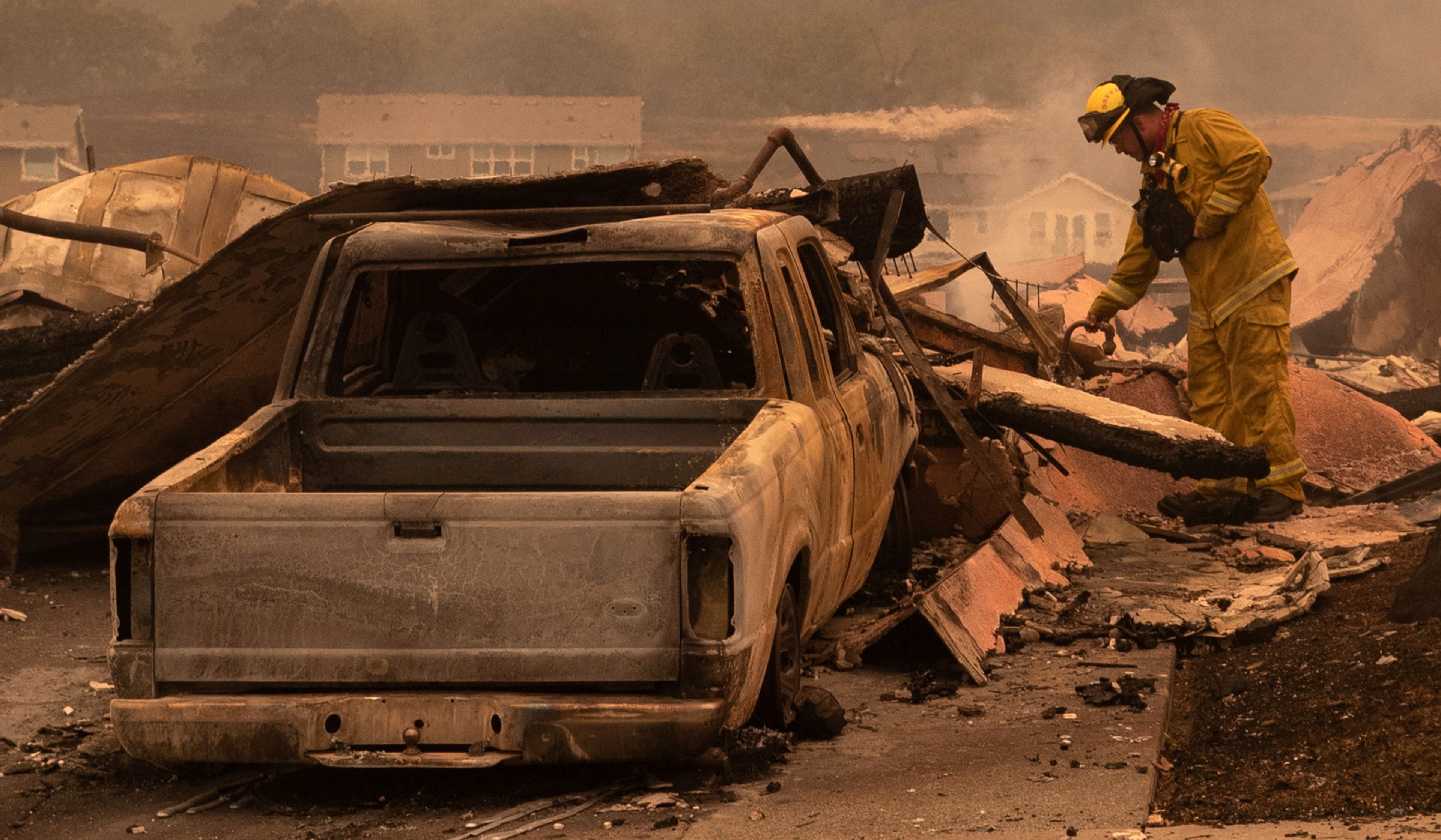


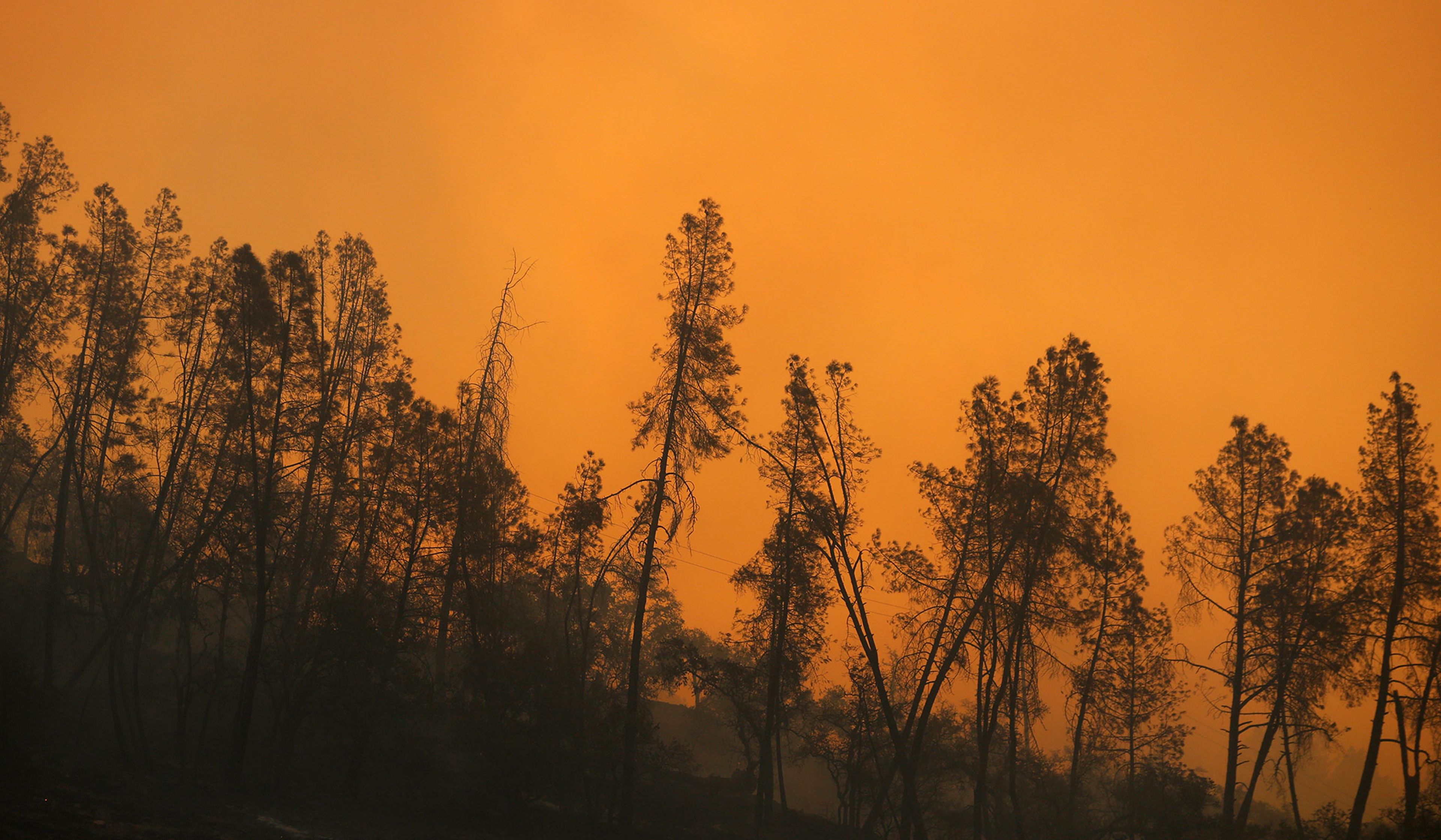
A home fully engulfed in flames by the Glass Fire in St. Helena, Calif., September 27, 2020.
Stephen Lam/Reuters
• Princeton University is racist. Don’t take our word for it: University president Christopher Eisgruber said so himself in a September 2 letter to the Princeton community, claiming that “racism and the damage it does to people of color persist at Princeton.” The Department of Education, bound by Title VI of the Civil Rights Act to ensure educational access for racial minorities, promptly launched an investigation into the university’s self-confessed discrimination. Eisgruber was, of course, wrong. Princeton must be among the best places to be a racial minority anywhere in world history. But under the logic of contemporary “anti-racism,” to which Eisgruber has acceded, every institution in American life is tainted by the legacy of slavery and Jim Crow. The redefining of racism as a kind of dark matter — nebulous, omnipresent, and immeasurable — renders the actual, tangible accomplishments of the civil-rights movement, such as the Civil Rights Act, toothless. How can we combat a crime of which everyone is guilty? In putting the emptiness of social-justice ideology on stark display, Education Secretary Betsy DeVos has done the nation a service.
• A D.C. district-court judge issued an injunction against the Trump administration’s ban on TikTok downloads, which was supposed to take effect on September 27. Judge Carl Nichols reasoned that the U.S. government has likely overstepped its economic-emergency powers. Other readings of the statute in question support Trump’s invocations of these authorities and will be addressed in future litigation. For now, it seems that Trump is serious about banning TikTok. (Although this changes by the day; he recently also approved “in concept” a flawed deal with Oracle that would have done nothing about the issue of Chinese-government interference with the app. The White House later cooled on the agreement.) Notwithstanding this legal setback, the download ban is not the only avenue through which the administration can act. A second, more comprehensive stage of the executive order takes effect on November 12. That date is also when an additional executive order forcing ByteDance to divest from TikTok comes into force. Expect litigation on these points, too. As if this weren’t confusing enough: Formal approval of the Oracle deal and a Chinese government order against it could also be in the offing.
• At a time of acute partisan rancor, it is heartening to see our political system produce consensus on an issue of consequence — and for that consensus to be right. The overwhelming late-September passage in the House of Representatives of the Uyghur Forced Labor Prevention Act deserves praise. But “celebration” seems the wrong word, given the impetus for the bill: The Chinese Communist Party’s campaign of cultural and, increasingly, unvarnished genocide against the Uyghur population in Xinjiang. The bill limits imports from the region, where Beijing hopes, in its now-familiar fashion, to combine political repression and economic benefit, and imposes sanctions on entities facilitating either. Xi Jinping, the CCP’s leader, has denied wrongdoing, calling these policies “totally correct,” and in fact doubling down on them. He has the adverb right, but the adjective is wrong: “Reprehensible” works far better.
• Be merciful, as your Father is merciful, Jesus says in the Sermon on the Plain (Luke 6). What does mercy look like in practice? For a vivid example, see John 8. Hoping to ensnare him in a controversy, Jesus’s enemies bring to him a woman caught in adultery. She should be stoned, according to the law. “What sayest thou?” they ask. “Let him who is without sin cast the first stone,” he answers. They walk away, one by one, leaving him and the woman alone. He condemns her not, he tells her: “Go and sin no more.” An Asian Catholic news agency reports that this glorious New Testament passage is mangled and turned upside down in a Chinese textbook on professional ethics and law. There Jesus is said to have stoned the woman himself after declaring, “I too am a sinner, but if the law could be executed only by men without blemish, the law would be dead.” The only way the translation could be worse is if Jesus then joined the Chinese Communist Party.
• The Trump administration says that U.N. sanctions lifted under the Iran nuclear deal have, as of September 20, snapped back into place. Under the agreement, a series of U.N. sanctions preventing the sale of arms and other sensitive technologies to Iran were lifted. The U.S. left the agreement in 2018 — but in Resolution 2231, which lifts the sanctions, it is still defined as a participant, allowing it to trigger this snapback. The other parties to the agreement, four of whom sit on the Security Council, disagree with that reading of the resolution and maintain that snapback has not occurred. Russia and China, unsurprisingly, want to sell Tehran arms. But the European parties to the agreement — who agree that these arms sales to this vicious sponsor of international terrorism would be a disaster — have not done anything to prevent this outcome, prioritizing the nuclear agreement (which Iran has routinely flouted) over international security. Trump has stepped into the breach with an executive order authorizing action against people and entities in violation of U.N. sanctions against the Islamic Republic. While President Obama’s Iran deal was a failure, it did one thing right in leaving snapback as an option.
• In the wake of the Novichok attack on Alexei Navalny — the latest of such attacks — a joke is going around in Russia: “Did you hear Putin has been nominated for a Nobel Prize?” “No. In chemistry?”
• The film director and comedian Judd Apatow has spoken out about the undue influence of the Chinese government in Hollywood. During an interview with MSNBC’s Ari Melber, Apatow criticized studios and executives across Tinseltown for turning a blind eye to China’s human-rights abuses in order to safeguard access to the lucrative Chinese movie market. “Instead of us doing business with China and China becoming more free, what has happened is a place like China has bought our silence with their money,” Apatow said. He went on to observe that “while we’re going, ‘Can we say this joke, can we not say that joke,’ on a much bigger level they have just completely shut down critical content about human-rights abuses in China, and I think that’s much scarier.” Calls for moral integrity in Hollywood from more of its insiders would be most welcome.
• Prince Harry and Meghan Markle courted controversy again when, in a video for Time magazine’s list of 100 influential people, Markle appeared to endorse Joe Biden. In the same video, Prince Harry complained that he had never been able to vote while living in the U.K. and called on Americans to “reject hate speech, misinformation, and online negativity” this November. When asked about the intervention at a press conference, President Trump said he was “not a fan” of Markle’s and wished Prince Harry “a lot of luck,” since “he’s going to need it.” He’s not the only one worried about Harry’s future. According to senior royal aides, the couple’s latest stunt was a “violation” of their “Megxit” deal with the queen. Elizabeth II already stripped her grandson and his American bride of their royal titles, after they publicly announced in January that they wanted to take a “step back” from royal life and work toward financial independence. Now the Sunday Times of London reports that “Prince Harry’s hopes of resuming his links with the Royal Marines and other military posts are now under threat, according to those familiar with the discussions in the royal household.” Additionally, Vanity Fair reported a source close to Markle as saying that she may herself run for president as early as 2024. We may soon be longing for a sequel to Megxit.
• Like Andrei Sakharov, Yuri Orlov was a brilliant physicist who sacrificed his scientific career to stand for human rights. He was born in 1924, seven years after the Soviet Union. During World War II, he served in the Red Army as an officer. Over the years, he was increasingly bold as a dissident. He was arrested in 1977 and spent nine years in prison, labor camp, and internal exile. He endured terrible physical and mental ordeals. In 1986, he was released to the United States in a prisoner swap. At JFK Airport, he said, “Oh, dear friends, I think you can understand I experience very complicated feelings. I have left my homeland. I’ve left behind people who are still in prison. In fact, I probably feel guilty in regards to them. Why am I here, and they’re there? On the other hand, I am very glad I have begun a free life.” He taught at Cornell University. He has now died at 96. Yuri Orlov was a great man, the kind on whom freedom and dignity depend.
• “Liberal racism,” Stanley Crouch called it, the belief that the “cultural memory” of black Americans was inscribed in their genes rather than acquired, that “the blood knows and remembers.” A black nationalist in his youth in Los Angeles, he read widely, wrote poetry, taught literature, and learned from the novelist Ralph Ellison and the essayist Albert Murray. By middle age Crouch had soured on black nationalism and isms in general. He sparred with Amiri Baraka in the Village Voice, which he joined for a stint in the 1980s. After Notes of a Hanging Judge (1990), a collection of essays, Crouch won several big awards, including a MacArthur Foundation “genius” grant. With the trumpeter Wynton Marsalis, he promoted a revival of classical jazz styles and founded Jazz at Lincoln Center. Crouch’s candid social and political commentary angered many, but even his detractors recognized “his brilliant jazz criticism” (Cornel West’s description), for which he may be best remembered in the long run. He helped rehabilitate Louis Armstrong’s artistic reputation. Affirming whatever was “both inspirational and unsentimental,” Stanley Crouch sought to reason “across the categories of false division and beyond the decoy of race.” Dead at 74. R.I.P.
• “I love you to the moon and back” is one of the sweetest sayings from a child’s lips, and we have Irish author Sam McBratney to thank for its enduring popularity. A native of Northern Ireland, McBratney graduated from Trinity College, Dublin, and began his career as a teacher before becoming a full-time writer and published over 50 books. McBratney’s most popular work remains Guess How Much I Love You, which depicts two nutbrown hares — one small, one large — trying to outdo each other in declarations of their love. Paired with the soft, delightful artwork of Anita Jeram, this charming little story has become a bedtime staple around the world. Since its 1994 publication, it has sold over 50 million copies worldwide and been translated into 57 languages — a popularity its author never dreamed it would reach. Colleagues were quick to describe McBratney as a wonderful storyteller who was kind, gentle, and caring. McBratney passed away at home on September 18, and he leaves behind six grandchildren, three children, and his wife of 56 years. R.I.P.
A Worthy Nominee
While we did not agree with many of Justice Ruth Bader Ginsburg’s views about the Constitution or the judicial function, we never doubted her industry, dedication, gumption, civility, or patriotism. We send our condolences to all who mourn her passing.
Justice Ginsburg almost certainly had more fans than any other justice in U.S. history, with her great friend Justice Antonin Scalia in second place. The wide acclaim, and wide opprobrium, for these justices is a sign of something that has gone wrong in our political culture, in which the Supreme Court looms entirely too large. Her death therefore led not just to mourning but to the start of a political convulsion.
For some commentators, mostly Democrats, the onus was on Republicans to bring calm by refraining from advancing a nominee to replace Ginsburg. They said it was especially important because, four years ago, Republicans had said that the Senate should leave Justice Scalia’s seat unfilled until after the 2016 election. The most careful articulations of the Republican position in 2016, however, held that when a Supreme Court vacancy arose while the White House and Senate were controlled by opposite parties and a presidential election was coming soon, the vacancy should be filled by the winner of that election. In short, the voters should be asked to break the deadlock between two branches they elected. That condition does not apply today, as Republicans have won a Senate majority in three consecutive elections and a Republican is president.
Some Republicans were less cautious in 2016, and can reasonably be charged with inconsistency now. So can numerous Democrats, who said, absurdly, that the Constitution imposed an obligation to take up a president’s nominee.
Our own view then was that the Republicans’ point about acting in an election year was secondary to the imperative to advance constitutionalism on the Court — which is also, in the final analysis, the right way to achieve peace in the confirmation wars. The reason they are so vicious, after all, is that the Supreme Court has made the stakes too high.
President Trump’s nomination of Judge Amy Barrett may in the long run help remedy that deformation of American governance and political culture. She is an intelligent and thoughtful conservative who has demonstrated a career-long commitment to the rule of law, which includes limits on judicial power.
Judging from the criticisms she has been receiving from Democrats, there is no compelling case against her. When she was up for her current appellate judgeship in 2017, Senator Dianne Feinstein (D., Calif.) attempted, notoriously, to portray her as a religious extremist who could not be trusted to apply the law without bias. At that time, Barrett said, “I see no conflict between having a sincerely held faith and duties as a judge. I would never impose my own personal convictions upon the law.” As a law student more than 20 years ago, she co-authored an article arguing that a judge who opposes the death penalty on religious grounds might have to recuse himself in certain cases. Note, however, that even in that theoretical case her view was that the judge should not try to force the law to comply with the dictates of her faith. And she has not seen any need to recuse herself from death-penalty (or abortion or immigration) cases.
Some progressives are trying to portray Barrett’s views on the force of precedent as radical, but this effort depends on willful misreadings of her work. Justice Clarence Thomas has made a strong case that the Supreme Court is too stubborn in sticking with mistaken precedents. Judge Barrett has not said that she agrees with him, that she thinks the Court has it right, or that her view lies somewhere in between.
Finally, some Democrats are resorting to the claim that Judge Barrett has too little experience for the Supreme Court, having spent only three years on the federal bench. Never mind that it’s three years more than Justice Elena Kagan had spent on it when President Barack Obama and a Democratic Senate put her on the Court.
Perhaps the Democrats will find something more potent in the days ahead; they will certainly look. But if the case against Barrett they have made so far were a lawsuit, it would be thrown out of court as frivolous.










Comments