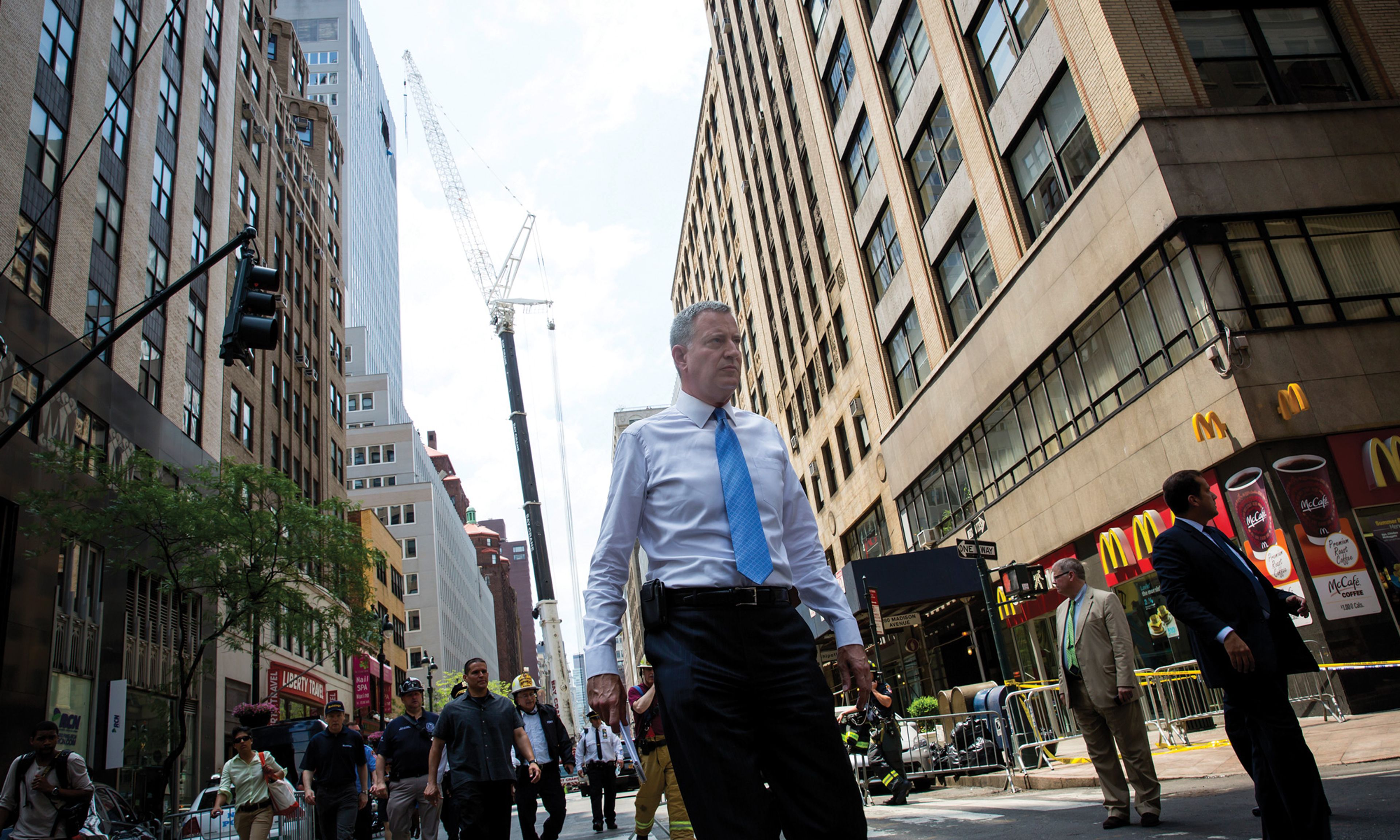
New York City’s mayor, Bill de Blasio, was elected with 73 percent of the vote, and on November 7 he’ll probably be reelected in a comparable landslide. On September 12 he faced token opposition in the Democratic primary, to be followed by token opposition in the general election. (Staten Island assemblywoman Nicole Malliotakis is the GOP’s sacrificial lamb, while celebrity private detective Bo Dietl is running as an independent.)
Employment is up. Crime is down. The New York City economy and Wall Street are in bloom. In the grumbliest city in America, New Yorkers have little to kvetch about, except the trains, which, everyone knows, aren’t run out of City Hall. Yet in a fiercely progressive city, the progressive mayor’s approval rating hovers around 50 percent and has been underwater for much of his first term. In a City Hall that still rings with echoes of the footsteps of outsized personalities — Ed Koch, Rudy Giuliani, Mike Bloomberg — de Blasio barely makes a sound. No one credits him with engineering New York’s current state of ease. When the history of the period is written, he’ll be a footnote to the two-decade revolution that was the Giuliani–Bloomberg period. He’s a six-foot-five-inch dwarf.










Comments