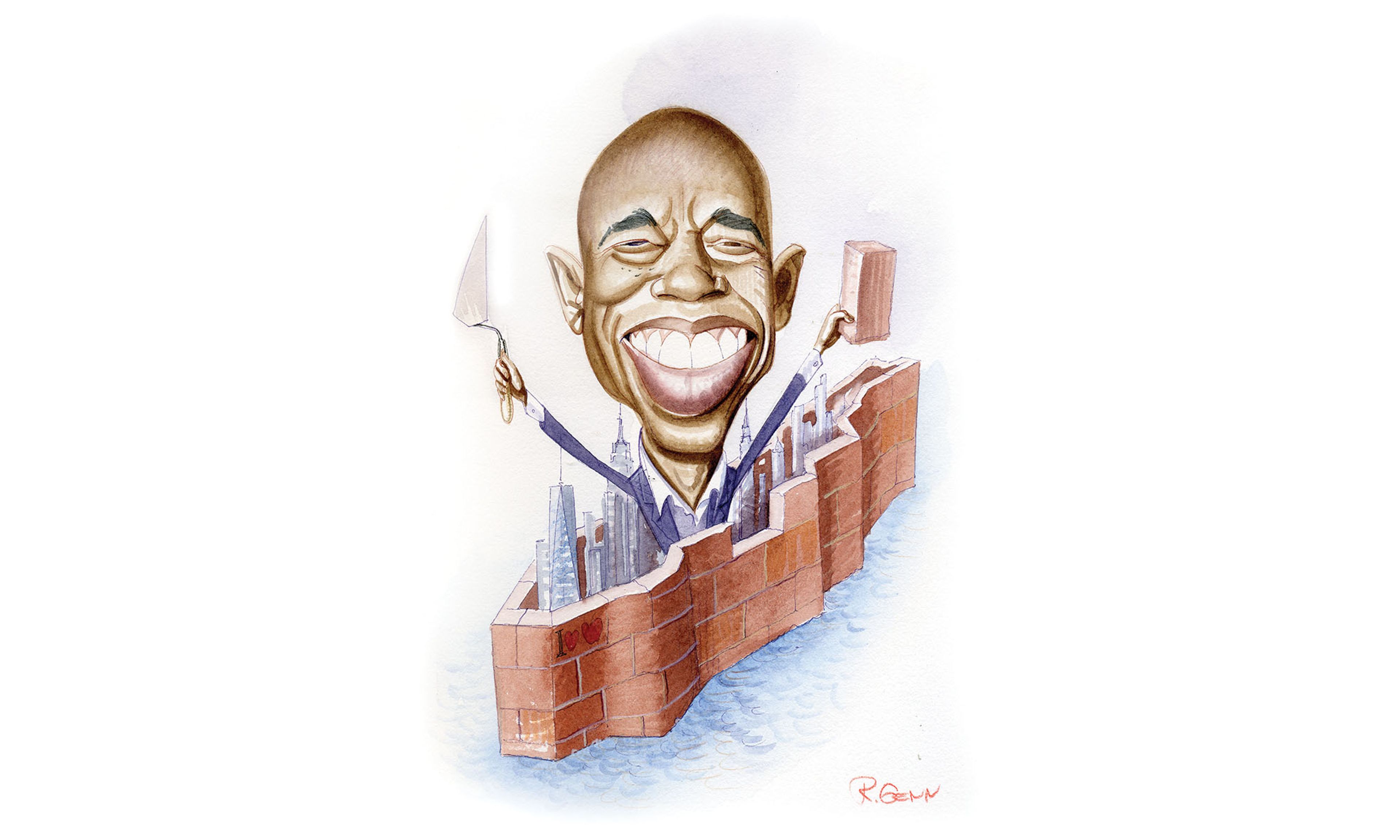
• Biden remembers going to Ground Zero the day after 9/11. He also remembers his time in the White House as successful.
• For a long time, Democrats deflected concerns about an unsecured border and illegal immigrants by denouncing xenophobia and avoiding specifics. “Give me your tired, your poor, your huddled masses yearning to breathe free,” they would repeat, invoking Emma Lazarus’s sonnet, “The New Colossus,” which is engraved on the base of the Statue of Liberty. But then Republicans started busing migrants from border states to New York City. It took only about a year to get some Democrats to start sounding like Lou Dobbs. New York City mayor Eric Adams lamented to constituents, “This issue will destroy New York City.” Across the Hudson in New Jersey, Governor Phil Murphy declared his state was full and couldn’t accept any more migrants. They were perfectly fine with illegal immigration as long as its attendant burdens were shouldered by border states. The moment it strained services in their own states and cities, they had no problem talking about it in the terms they had once condemned. You might say this new perspective is bordering on common sense.
• Mitch McConnell is a legend of the U.S. Senate. He has been one of the most effective leaders in memory, he deeply understands and cares about the institution, and he has had an outsized influence on his party for decades now. He has visibly aged since a bad fall earlier this year, though, and it’s time for him to make the decision to step aside from leadership. This is not an urgent matter, but the wheels should be turning. The discussion of McConnell’s age was catalyzed by two incidents when he froze up in the middle of press conferences. His doctor says it was just dehydration and the aftereffects of a concussion, and McConnell’s colleagues have been satisfied with that. He deserves a lot of deference. But prudence and realism have been hallmarks of his leadership and now are called for in considering his own future.
• At the Federal Reserve’s monetary-policy conference in Jackson Hole, Wyo., Fed chairman Jerome Powell sounded the right notes about inflation. Though inflation has come down, it still remains too high, and he promised that the Fed remains committed to its 2 percent target for the PCE price index. He thus ignored misguided calls for a higher inflation target. Dig deeper into his speech, though, and there are significant shortcomings. He still considers the war in Ukraine to have been a “primary driver” of inflation. No doubt it had effects on energy and food prices, but that ignores the Fed’s overexpansion of the money supply as the culprit. As Fed historian Robert Hetzel has written, the Fed always wants to portray itself as the inflation firefighter but is more often than not the inflation arsonist. Powell also made no mention of China, whose economy is in freefall at the moment. China’s collapse is one of the biggest macroeconomic stories in the world right now, and its effects on global markets must be on the Fed’s radar. But the greatest long-term threat to the U.S. economy is the federal government’s profligate spending. Powell made no mention of deficits contributing to inflation or harming the government’s ability to borrow at lower interest rates. Fiscal policy continues to work against monetary policy, making the Fed’s job much harder than it needs to be. Powell is somewhat constrained in what he can say about that, given the Fed’s independence from elected politics and budget-making. But it’s possible to warn about deficits in a generalized, nonpartisan way since both parties are guilty of overspending when it suits them. Quashing inflation, the correct and desirable goal for the Fed, will be harder as long as it continues to misunderstand inflation’s causes.
• The first Republican presidential primary debate included some worthwhile agreements (the party, at the presidential level at least, is now unified in support of school choice) and disagreements (it is split on foreign policy and on tactical issues related to abortion). The debate notably lacked two things: the front-runner, Donald Trump, and rivals who were willing to say that he lost in 2020 and is now ducking debates. As for January 6, Ron DeSantis said he wants to “move on.” But Trump won’t move on, because he still won’t concede he lost in 2020. Democrats won’t move on either, because the public still rejects Trump’s false claim. The country will move on from January 6 only if Republican voters are willing to move on from Trump — and that certainly won’t happen if the other candidates won’t make the case for it.
• Mike Pence gave a speech attacking populism that failed to quite bell the cat. The basic problem is that the key term resists definition. Is populism an emotive, anti-elitist mode of politics or a set of substantive beliefs? It can be both. Both, moreover, can be difficult to disentangle from conservatism. Prior to the rise of Donald Trump, successful Republican presidential candidates from Richard Nixon to Ronald Reagan to George W. Bush had integrated populism into their political appeal for decades. That said, there’s currently a strong impulse in the party, largely associated with the GOP’s populists, to disdain markets, to expand government power to try to achieve favored ends without heeding any of the dangers, to diminish the U.S. leadership role around the world, and to blithely accept ever-expanding government debt. The former vice president is right to call this out. The party could do worse than be led by someone with the character and convictions of Mike Pence, and probably will.
• Georgia governor Brian Kemp has been trapped for years in the crossfire between Donald Trump’s 2020 election delusions and Democrats’ slandering Kemp as an election-stealing peddler of “Jim Crow 2.0” bent on “human sacrifice” for his Covid policies. Through all the turmoil he has resolutely done his duty. Now he is taking a firm stand against demands that he remove Fulton County district attorney Fani Willis. While her indictment of Trump and 18 alleged co-conspirators raises legitimate concerns, the Georgia governor lacks any power to remove her. “The bottom line is that in the state of Georgia, as long as I’m governor, we’re going to follow the law and the Constitution, regardless of who it helps or harms politically. . . . Over the last few years, some inside and outside of this building may have forgotten that. But I can assure you that I have not,” Kemp insisted at a press conference. “In Georgia, we will not be engaging in political theater that only inflames the emotions of the moment,” he added. He also labeled a Trump-backed proposal to call a special legislative session “some grifter scam.” His reelection in 2022, defeating the sour grapes of a Trump-backed primary challenger and of media darling Stacey Abrams, proved that Kemp’s principled stance is a winning formula in the hands of a leader with the guts to stick to his guns. If the nation had more like Brian Kemp, we would be in a better place.
• Former Proud Boys leader Enrique Tarrio was sentenced to 22 years in federal prison for his role in the January 6 riot at the Capitol. Tarrio’s sentence was twice what the government had offered him in a plea deal. It was the longest January 6 sentence yet handed down, exceeding the 18-year sentence for Oath Keepers founder Stewart Rhodes. Tarrio was not present at the riot because of a recent arrest but was convicted of seditious conspiracy for continuing to direct his group, which was much larger than the Oath Keepers. Other Proud Boys leaders got 17- and 15-year sentences. There is understandable concern that this Department of Justice has thrown the book at some nonviolent individuals in January 6 cases and has not sought similar sentences for left-wing riots in 2020. A man who set a fatal fire, for example, got ten years. But the Proud Boys and Oath Keepers were not merely individuals led astray by Donald Trump’s election lies; they were organized groups whose concerted actions presented a unique threat of disruption to the joint session of Congress. A government that did not fight back against such combinations would soon be no government at all.
• Upon learning that a white supremacist had murdered three African Americans at a Dollar General store in Jacksonville, Fla., Governor Ron DeSantis took every appropriate step. He called the shooter a “racially motivated” “scumbag” and a “coward,” who had been “targeting people based on their race.” He made it clear such behavior was “totally unacceptable.” He suspended his presidential campaign, returned to Florida, and pledged funds to protect a historically black college in North Florida that the killer had targeted. For this, DeSantis was blamed by the press for the actions of the killer. This was a disgrace. Per the media, DeSantis was guilty of rhetoric that was never quoted, of policies that did not intersect with the crime, of an attitude that was widely implied but narrowly sourced. The state’s new slavery curriculum was mentioned, but never connected to anything concrete. So, too, were the governor’s opposition to DEI, his contention that critical race theory teaches people to hate one another, and his disdain for racial gerrymandering. A handful of political entrepreneurs sought to magnify political tensions for personal gain. This disreputable behavior was far outclassed by the general reaction to the tragedy. Americans can say without doubt or hesitation that their country is better than the racist loser from Jacksonville, whose grotesque worldview did not have a constituency.
• Donald Trump’s trade policies were bad when he was president, and they would be much worse if he becomes president again. He is proposing a minimum tariff on all imports, with aides floating a rate of 10 percent. His specific tariffs on washing machines, steel, and aluminum failed to protect jobs at any reasonable price. The trade deficit over which he obsessed expanded on his watch. A universalized version of his failure is in nobody’s best interest — except trade lawyers in Washington, D.C. Despite its description as universal, if actually implemented, it would not be. Every lobbyist from every company with international trading partners (which is basically all the big ones, and the small-business lobby wouldn’t be happy about it either) would march on Washington demanding exemptions. Protectionism has a way of turning into a protection racket, where political support is exchanged for favorable treatment by the government. Trump’s proposal would be a significant tax increase on Americans, and its application to imported inputs to production would harm American workers, undermining his greatest legislative accomplishment, the Tax Cuts and Jobs Act. Trump is, in essence, shouting, “True tariffs have never been tried!” They have, they didn’t work, and they should be reduced, not increased.
• Sometimes, they just come out and say it. New Mexico governor Michelle Lujan Grisham announced that she would enact a temporary 30-day ban on the carrying of firearms in any public space in Bernalillo County. By what authority she was issuing this order, Lujan Grisham did not say. She referred to no statute, alluded to no constitutional principle or provision, and cited no court. She merely waved her hands at a phantom “emergency,” insisted that she had “to take a tough direct stand,” and proposed that “no constitutional right, in my view, including my oath, is intended to be absolute.” Which, of course, is not her call. The state’s constitution requires the governor to promise to “support the constitution of the United States and the constitution and laws of this state,” and to “faithfully and impartially discharge the duties of his office.” Which part of that is not “absolute”? As for the scope and limits of concealed and open carry: Those have been determined locally by New Mexico’s legislature, which has passed legislation laying them out, and, nationally, by the Supreme Court. Lujan Grisham’s function is to enforce those decisions, not to second-guess or obviate them. If she cannot do that, then she, not the rule of law, must go.
• In tones that convey more sorrow than glee, the public-health apparatus has returned from its brief post-pandemic exile to warn of the need for a revitalized masking regime. “You should be wearing masks in crowded areas, especially during a surge,” University of Texas epidemiologist Katelyn Jetelina told PBS NewsHour. Indeed, we should all “consider masking when you’re around people,” Los Angeles Times assistant editor Jessica Roy observed, because “they’re more effective when everyone wears one.” When pressed by ABC News host Jonathan Karl this weekend, Dr. Anthony Fauci said that new “federal mandates” around masking were unlikely but that future masking “recommendations” were foreseeable. “If the cases go up,” he said, “there may be recommendations, not mandates. There’s a big difference there.” Not really. The masking “guidelines” from the Centers for Disease Control and Prevention were only ever suggestions. But they were taken as gospel by the institutions most attuned to federal guidance, such as public schools. Today, in response to unmistakable environmental cues, some educational facilities are already rebuilding the mid-pandemic status quo. In Maryland, kindergartners were sentenced to mandatory masking following the discovery of several Covid-19 cases. A junior high school in Alabama mandated masking for all students, staff, and visitors amid the disease’s resurgence. Morris Brown College in Atlanta revealed that it would enforce 2020-style restrictions including social distancing, universal masking, isolation and quarantining protocols, and even the cancellation of social events. Republicans have been accused of pouncing on the return of Covid-related mitigation measures or seeking to exploit this development for crass political gain. Democrats would do better to admonish their overzealous allies on the left than attack Republicans for merely noticing the contours of their environment.
• California’s attorney general, Rob Bonta, sued a Southern California school district over its policy requiring schools to inform parents if their child requests to be treated as the opposite (or neither) sex. Bonta alleges in his filing that the Chino Valley Unified School District “singled out an especially vulnerable group of children and youth for discriminatory treatment.” But requiring that children’s parents are kept abreast of significant changes related to their mental health is the same standard applied to all children. In fact, it is a commonsense safeguard for minors, regardless of their self-declared identity. Polling across states and political parties demonstrates that most voters support parental-notification laws. This isn’t complicated. Adults shouldn’t keep secrets with other people’s children.
• Montgomery County, Md., is home to one of the country’s largest parental uprisings — one that could go all the way to the Supreme Court. Montgomery County Public Schools introduced a gender and sexuality curriculum last year, which requires teachers to read and discuss more than 20 “inclusive” storybooks about human sexuality and gender identity. The ultra-blue county allowed parents to opt their children out of the lessons until March of this year, when the district abruptly banned opt-out. Coalitions of Muslim, Christian, and Jewish families joined together and have protested the board since. They don’t intend to stop until opt-out is restored. Represented by Becket Law, families brought their case to a federal appeals court after a district judge claimed that parents do not have a “fundamental right” to opt their children out of lewd curriculum. The district’s instruction, parents say, clearly undermines their right to pass on religious faith to their children. The Supreme Court has said that citizens shouldn’t be forced to choose between participation in public life and free exercise of religion. The district isn’t hiding its goals. Whether sexuality lessons that detail transgenderism, pronoun usage, sexual acts, and gender confusion are necessary for a “diverse” society, as its lawyers claim, isn’t the question. The question is: Who has primary responsibility for raising children — parents, or the government? The Fourth Circuit will issue its ruling this fall.
• It is safe to assume that Yevgeny Prigozhin, the presumed founder of Russia’s notorious Wagner mercenary group, was killed, along with some senior associates, when the jet in which they were flying crashed following an explosion. It is also safe to assume that Vladimir Putin arranged for that explosion. After the failure of Prigozhin’s still somewhat mysterious mutiny in June, it would have been a dangerous sign of weakness to let him live. And so, despite a show of forgiveness, Russia’s president did not. Prigozhin had been a close associate of Putin since the turn of the century. A former convict turned businessman, he rose within Putin’s opaque power network, becoming sufficiently trusted to be tasked with building up Wagner, which first saw action in Ukraine in 2014. Subsequently it was used as a not-too-secret military force to pursue Russian interests in Africa and Syria. It did so with appalling cruelty, a Wagner trademark. Wagner returned to Ukraine in 2022 to help Russia fight what Prigozhin increasingly viewed as a bungled war, a view he took ever more public. He died as he lived, amid the lawless violence and deceit of a corrupt regime.
• Supporters of foreign military aid are shills for the military-industrial complex who don’t care about the problems Americans face. That’s a common smear we’re used to hearing from the left, but now we’re hearing it from the Heritage Foundation. The think tank, which has been a stalwart defender of a strong national defense, attacked NR’s Dominic Pino and National Review as a whole, labeling the magazine “pro-war” for its support for military aid to Ukraine. Pino had taken exception to a Heritage social-media post that said Biden took $900 from each American household and sent it to Ukraine (which is not true), but victims of the Hawaii wildfires only got $700 from the government, as though these two events are related in any way. The rotten cherry on top of this grotesque sundae was side-by-side images of a pleasant-looking Kyiv and the destruction from the wildfires. A big part of the reason Kyiv looks so nice these days is the military aid Ukraine received from Western countries, the U.S. chief among them, that helped beat back Russia’s attempts to take it. The U.S. isn’t “pro-war,” its allies aren’t “pro-war,” Ukraine isn’t “pro-war,” and supporters of Ukraine aren’t “pro-war.” Russia is “pro-war.” It started the war, and it could end the war any time it wants by withdrawing from its sovereign neighbor. But Russia isn’t doing that, and Ukraine has proven itself able and willing to fight. Providing military support to smaller countries that are effectively fighting American adversaries, especially in response to unprovoked aggression, is in the U.S. national interest, something that the Heritage Foundation used to understand better than it does today.
• There are reports of Russian war crimes in Ukraine almost every day. A recent report from the Associated Press begins, “The Russian missile that struck Wednesday in eastern Ukraine turned an outdoor market into a fiery, blackened ruin where weeping civilians looked for loved ones among the mangled, burned bodies scattered across the ground.” The market was in the town of Kostiantynivka. At the latest count, 17 were killed and 32 wounded. A citizen of Kostiantynivka, Stefan Slovak, said, “There was no military target here. This is a peaceful neighborhood in the city center.” The AP reported that he said this “in a trembling voice.” These war crimes are dog-bites-man — routine; expected. Nonetheless, we should never get numb to them, and we should acknowledge that Russia is a full-blown terror-state.
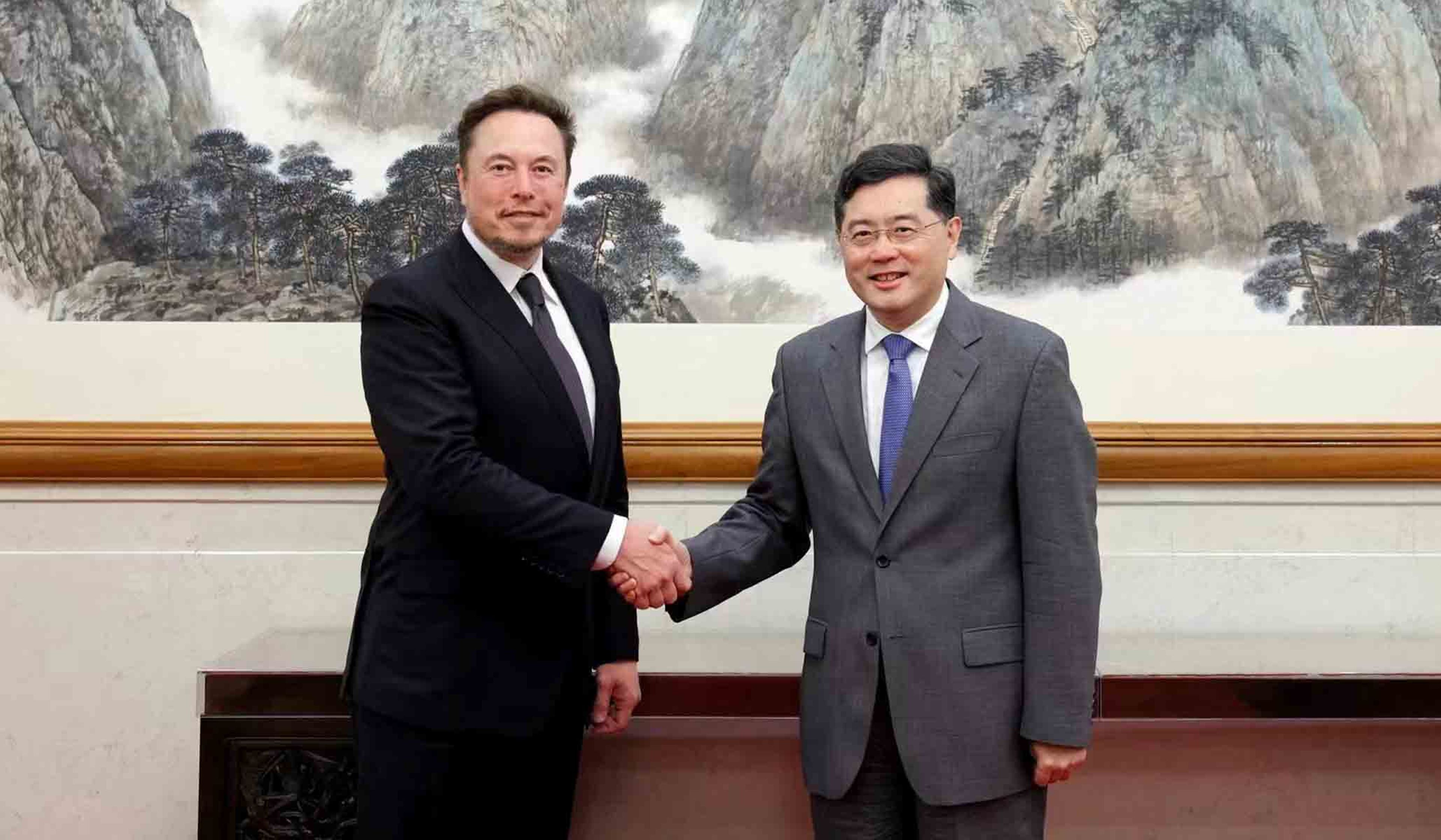
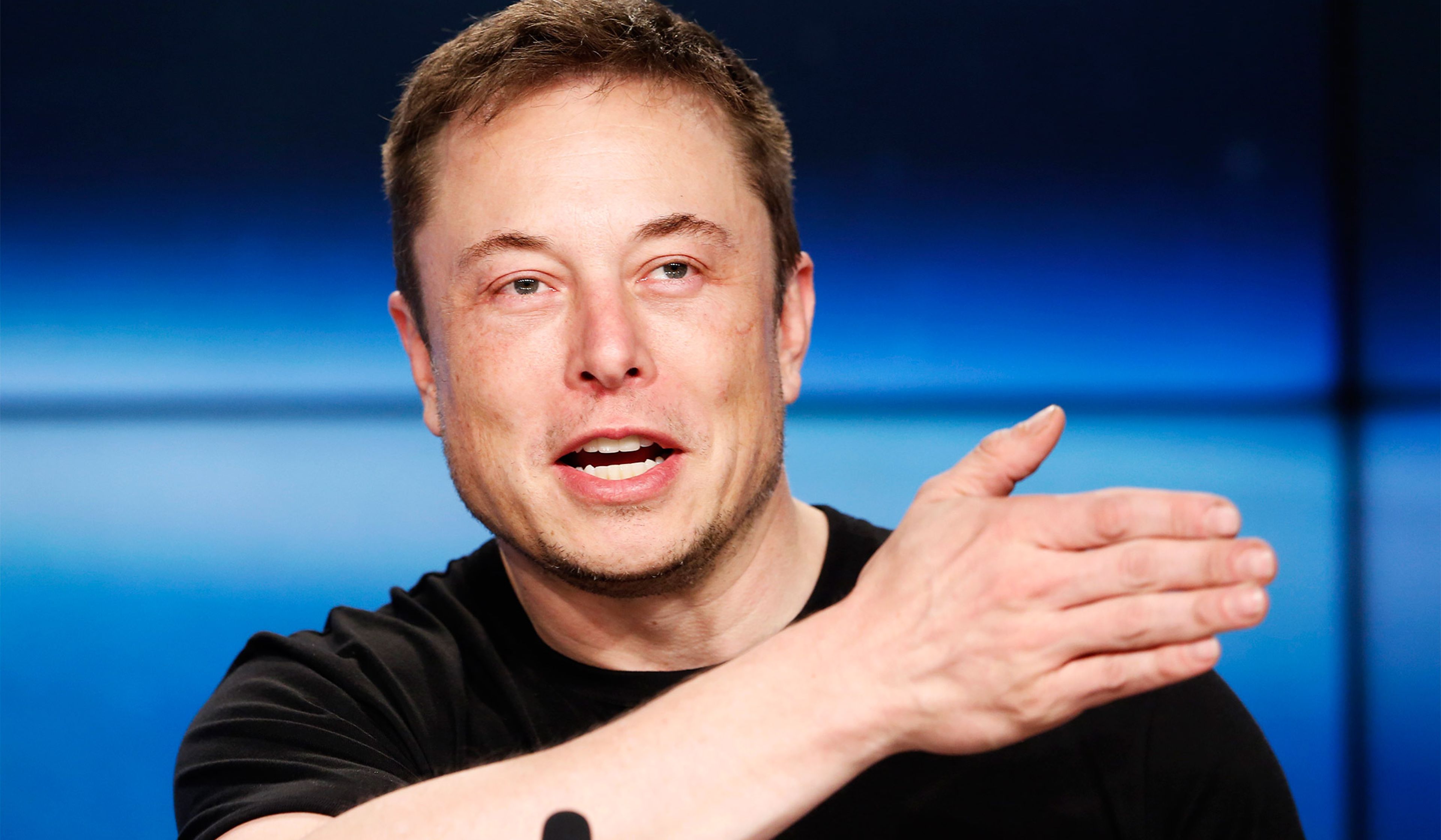
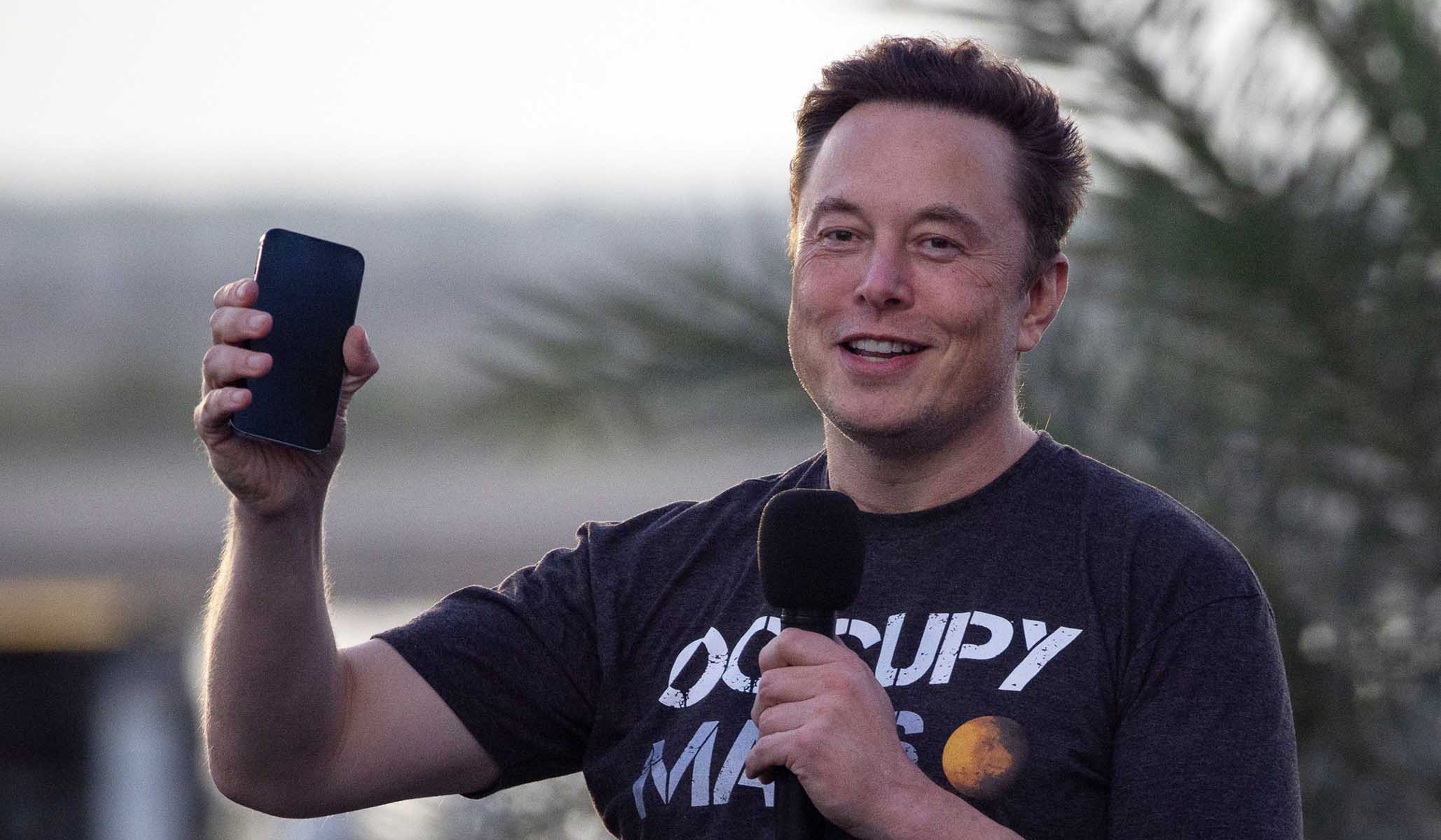
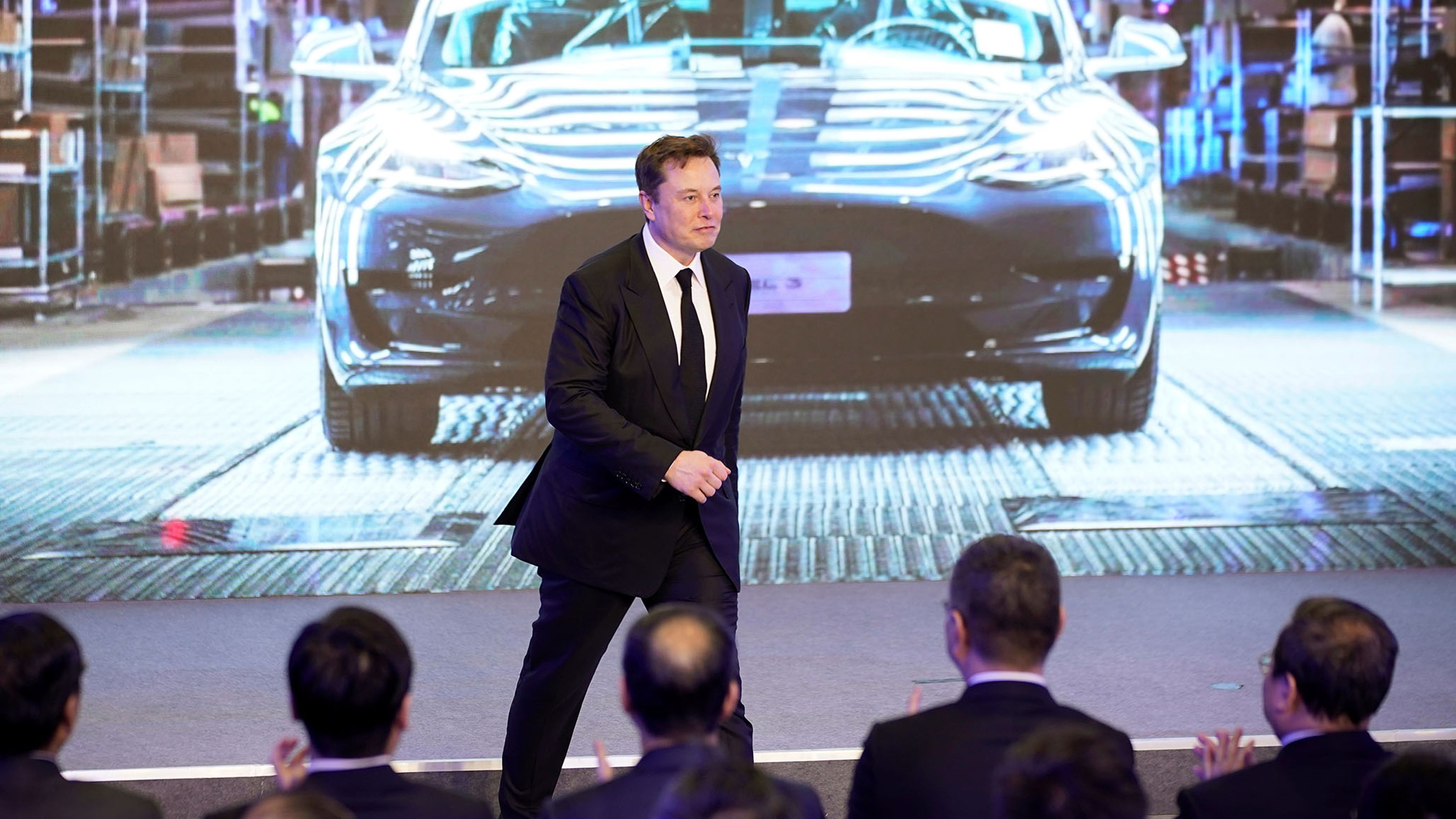
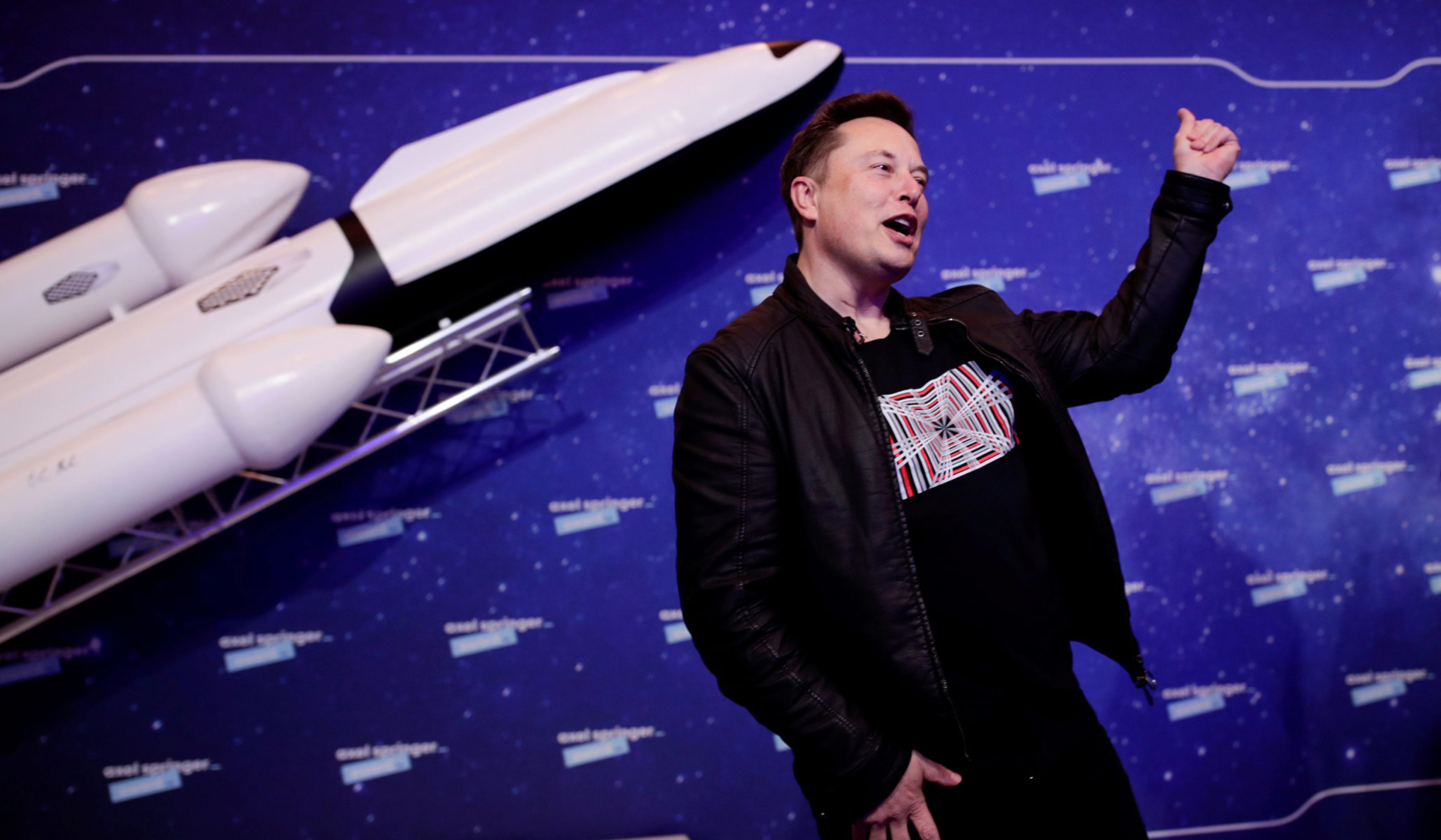
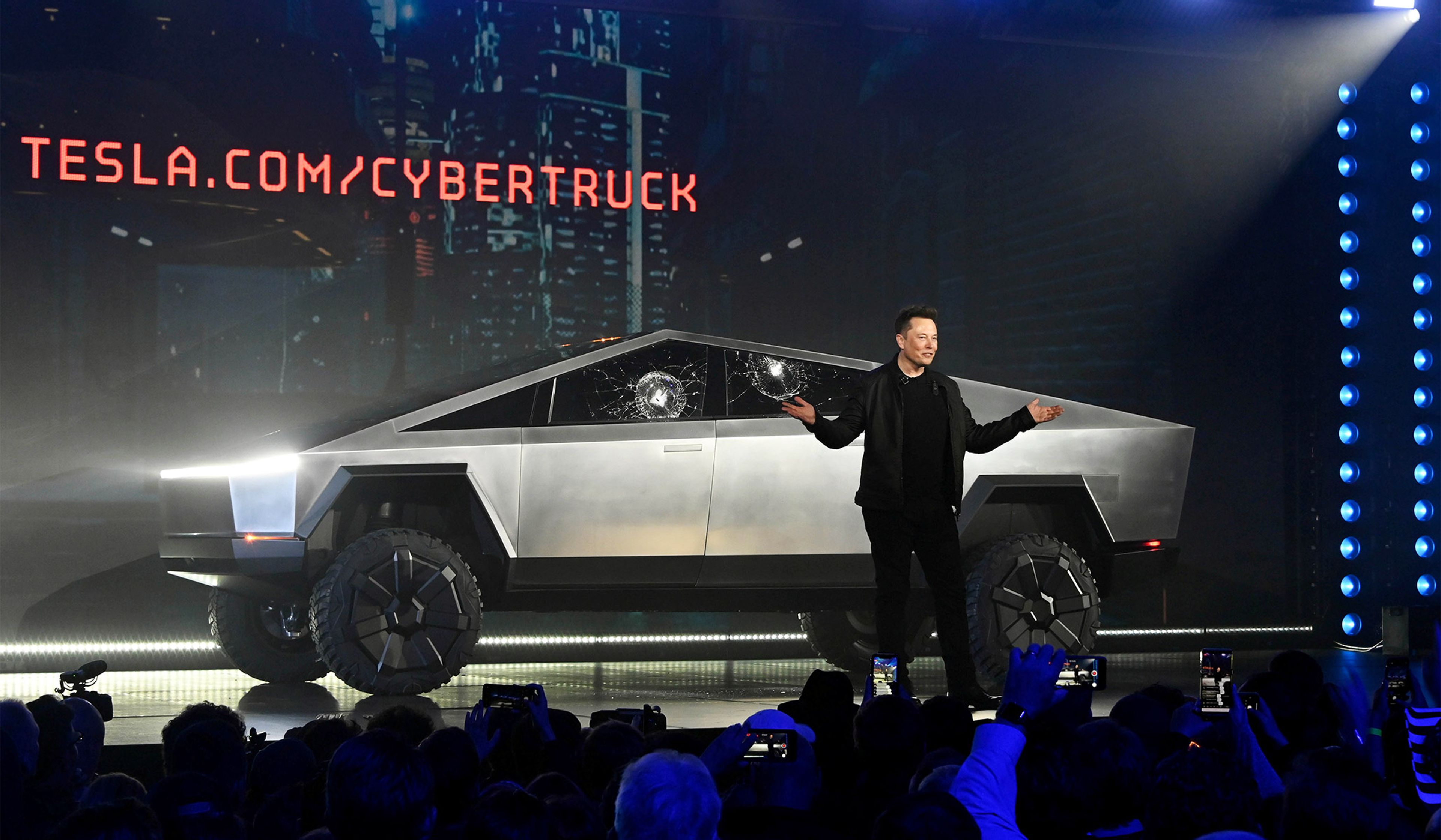
• The Washington Post published excerpts of a new Walter Isaacson biography of Elon Musk that claimed Musk had personally thwarted a Ukrainian drone attack on the Russian fleet anchored at Sevastopol. The Ukrainians had planned to use the satellite-based internet service Starlink — which is operated by Musk’s company SpaceX — in their operation. But according to Isaacson, Musk intervened to turn off or “geofence” the Starlink service within 100 kilometers of the Crimean coast out of concern that the Kremlin would respond to the attack with nuclear weapons. After setting off an international furor, Isaacson and the Post revised the biography’s account. Isaacson wrote on social media that “the Ukrainians THOUGHT coverage was enabled all the way to Crimea, but it was not,” adding that the Ukrainian government “asked Musk to enable it for their drone sub attack on the Russian fleet” but that request was denied. Musk later posted that “our terms of service clearly prohibit Starlink for offensive military action, as we are a civilian system.” Setting aside the question of whether Ukrainian military operations against Russian forces in occupied Crimea can be credibly called “offensive” military actions, Musk’s position is troubling. Since the Russian invasion, Musk has at times generously provided free Starlink services to Ukraine. At others, he’s demanded back payments and imposed arbitrary restrictions on its use. The U.S. government should think hard about counting on infrastructure owned and operated by an individual known for his inconstancy.
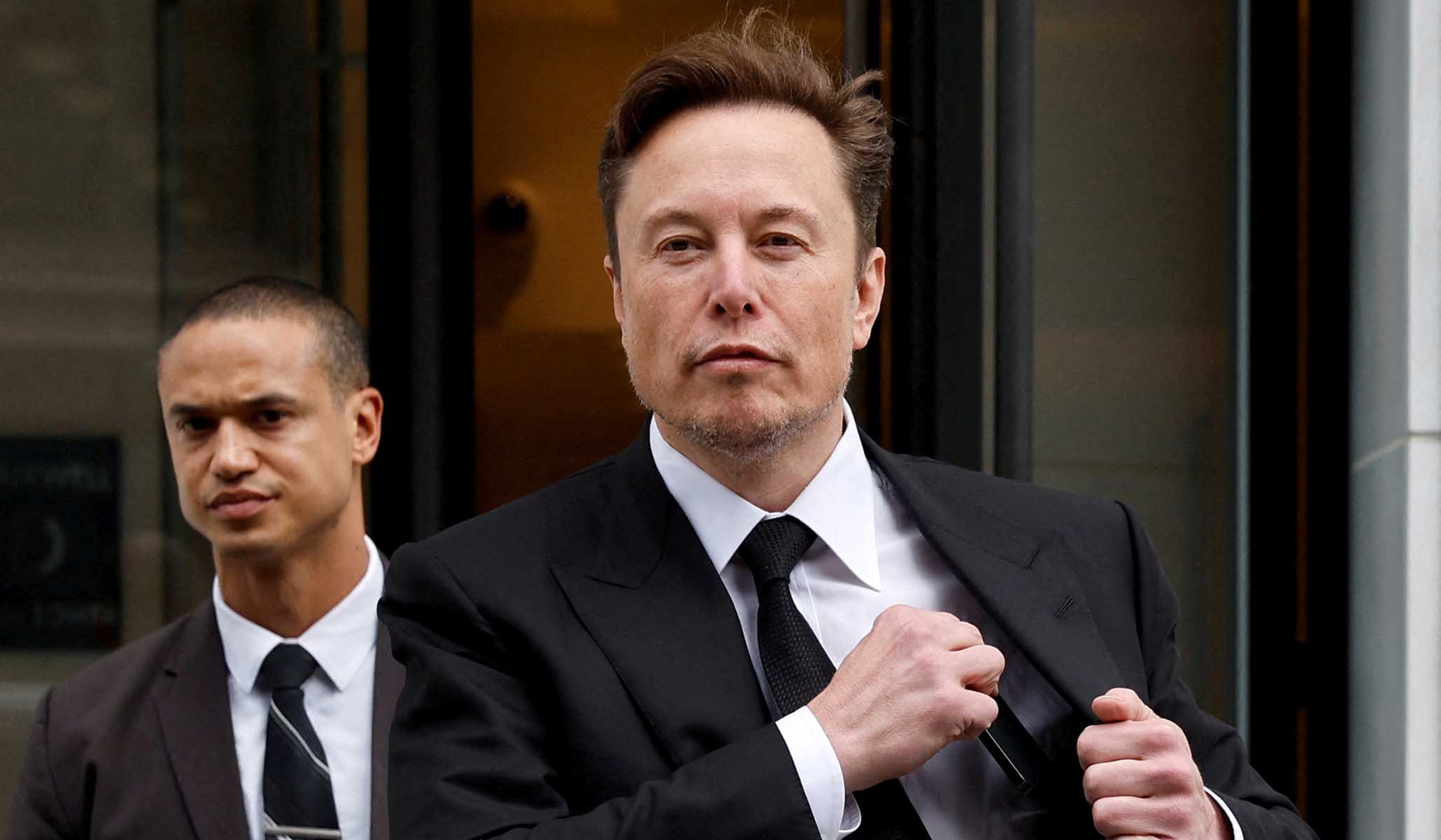
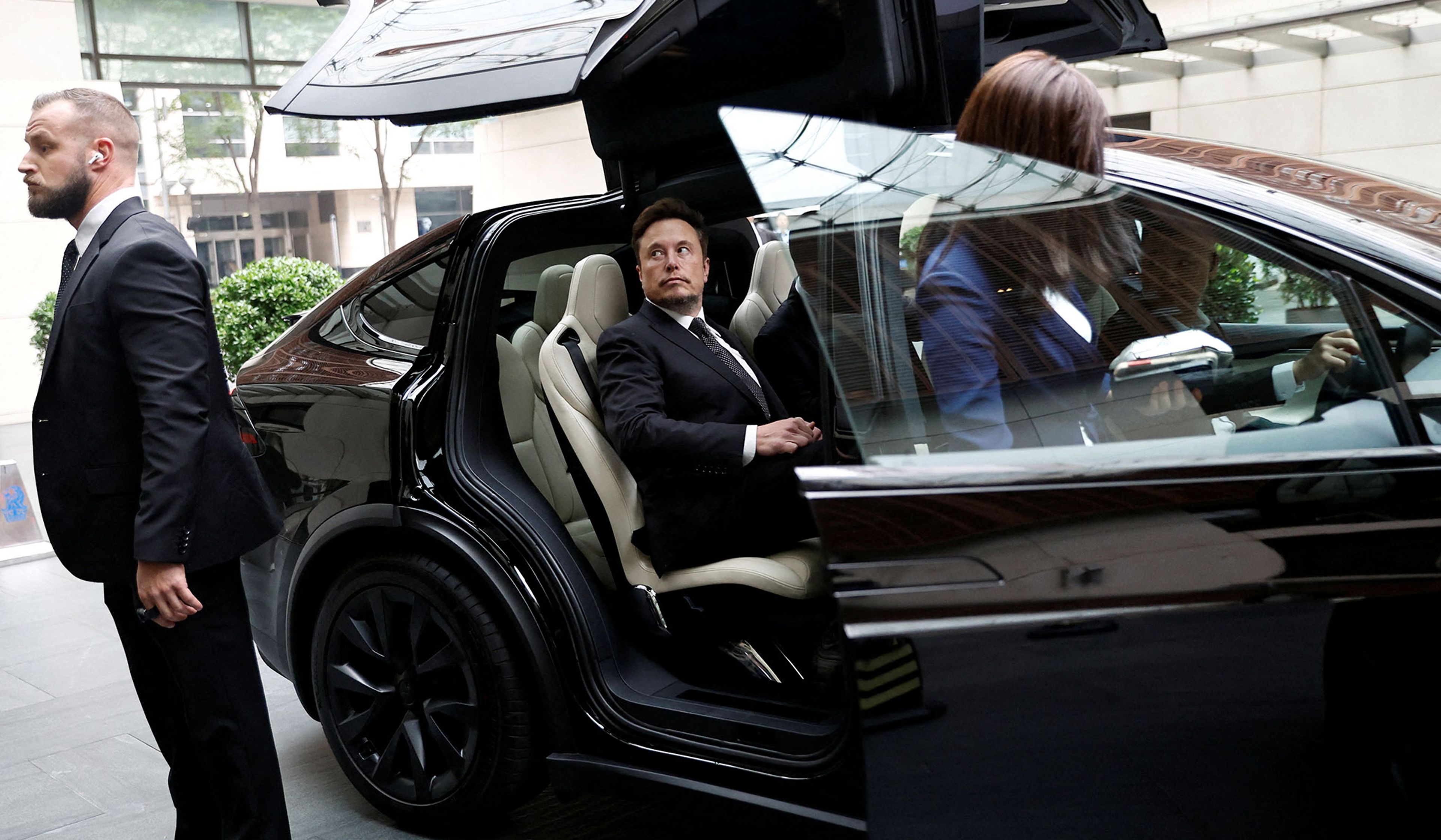



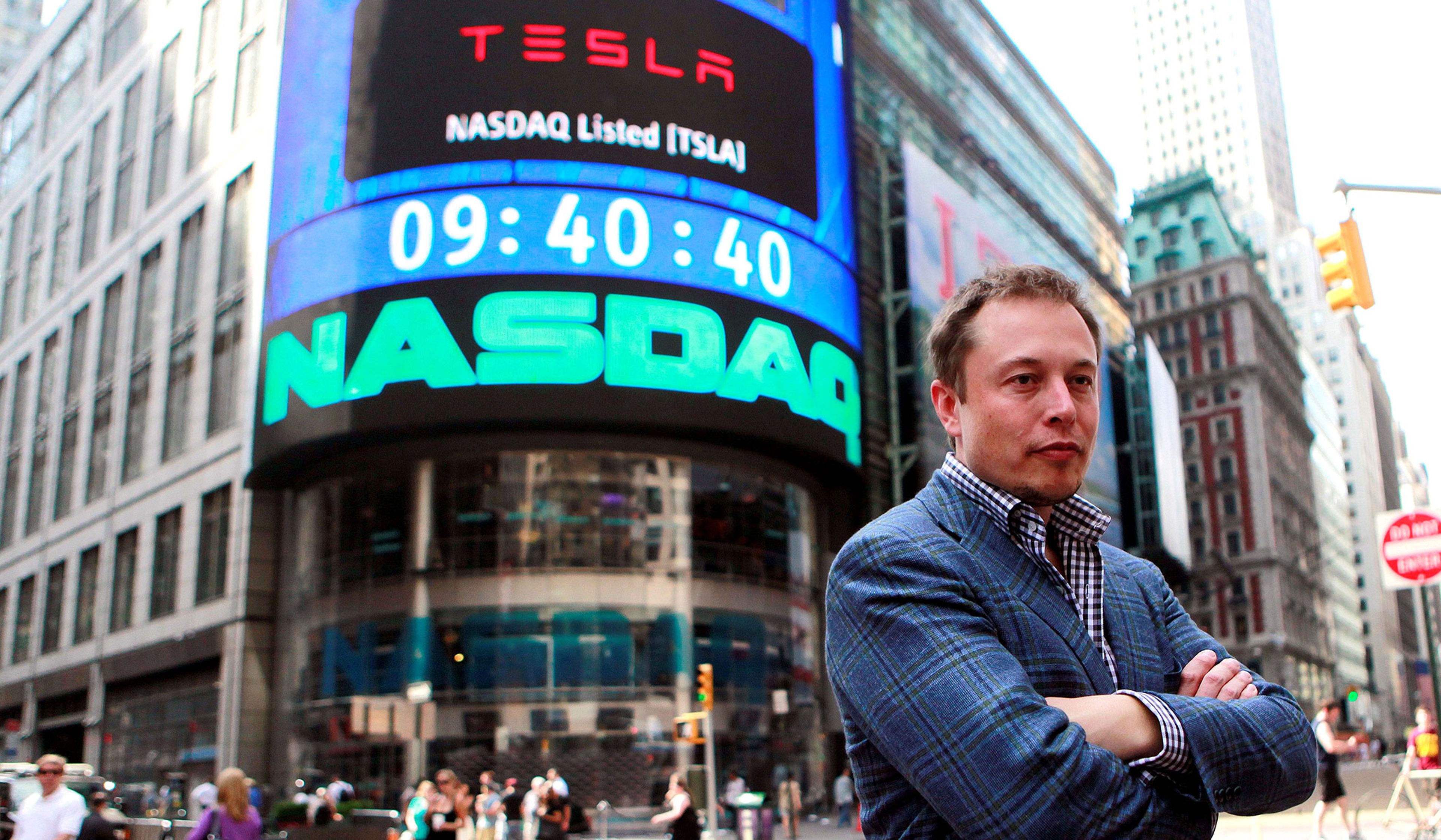
Tesla CEO Elon Musk and his security detail depart the company’s local office in Washington, D.C., January 27, 2023.
Jonathan Ernst / Reuters
• A Saudi, Muhammad al-Ghamdi, had two accounts on X, the website formerly called Twitter. They had a total of ten followers. Ghamdi wrote some tweets critical of the government. He has now been sentenced to death. Other Saudis, too, have been imprisoned and tortured for critical remarks on the social-media site. Saudi entities are the second-biggest investor in X, after Musk. Saudis helped Musk finance his purchase of the platform last year. When he bought Twitter, Musk tweeted, “the bird is freed.” (The symbol of Twitter was a bird.) What he meant was that speech would no longer be restricted on the platform. Saudi prince Alwaleed bin Talal replied warmly to his “friend,” as he called Musk, saying, “Together all the way.” He also included an emoji of a handshake. Remember Muhammad al-Ghamdi, scheduled to be murdered.
• The BRICS group has its origins in BRIC, an acronym (for Brazil, Russia, India, and China) dreamt up by a canny investment banker as a marketing device to peddle stocks. Realizing they had interests in common, the four, joined later by South Africa, began to cooperate more closely. Up to now, their most substantive achievements have been the establishment of a pooled $100 billion currency facility — the BRICS Contingent Reserve Arrangement — which its members can draw upon in case of emergency, and setting up the New Development Bank, a kind of mini–World Bank. Underpinning both projects is the desire of the BRICS countries to act together as a counterweight to the U.S., in this case financially. This pushback may, however, take increasingly political form. The group agreed to induct Saudi Arabia, Iran, Ethiopia, Egypt, Argentina, and the United Arab Emirates in 2024, and numerous other countries appear to want to join. Although there are certainly tensions between some of the members (India and China, for example), the former BRIC may be evolving into something akin to a bloc. An updated version, perhaps, of the Cold War’s nonaligned movement, but with less pretense of neutrality.
• Pope Francis spoke by video to young Catholics in St. Petersburg. “You are heirs to the great Mother Russia,” he told them, invoking the “great and cultured” Russian empire of “Peter the Great, of Catherine the Second.” He came close to touting Ruskii Mir (Russian world), a slogan for those who, like Putin, nurse nostalgia for the geopolitical sweep of the Soviet Union. Francis may have intended only to offer gracious words to his audience. But he must have known that his remarks would travel the world, including Ukraine and the nations that support it against the Russian army invading it. Ukrainian bishops met with Francis for two hours several days later and then issued a diplomatically worded statement, balancing their loyalty to the pope with their concern about “misunderstandings that have arisen between Ukraine and the Vatican since the beginning of the full-scale war.” Pro-Russian sentiment is widespread in much of the Global South, where the church is growing and where Francis is from. But the spiritual leader has a duty to call out the enormity, without prevarication. Coraggio, Santo Padre.
• Yoel Inbar, a psychology professor at the University of Toronto, was on the fast track to a faculty position at the University of California, Los Angeles, when the hiring committee received a letter from more than 60 indignant graduate students. They cited remarks that he made on a podcast years ago. He favored affirmative action but questioned the effectiveness of DEI statements. He called them “value-signaling” and noted that “it’s not clear that they lead to better results for underrepresented groups.” He supported abortion rights but argued that professional societies should remain neutral on contentious social issues about which their members are liable to have strong disagreements. This textbook example of a principled liberal proved too much for the illiberals of the Left, who pressured UCLA’s psychology department to sink his candidacy. Shortly afterward, the department’s chairwoman informed him that he was out of the running. “Professions of fealty to D.E.I. ideology are so ubiquitous as to be meaningless,” said Berkeley professor Daniel Sargent, commenting on the insult to academic integrity down in L.A. “We are institutionalizing a performative dishonesty.”
• Recently, Politico canvassed the Republican presidential hopefuls for a list of their 20 favorite and/or most meaningful songs. Although not everyone responded, something was gleaned about those who did. Larry Elder, vanity candidate that he is, has rock-solid tastes in classic R & B and soul. Nikki Haley’s refreshing “Generation X American girl” list stacked with ’80s girl-group hits reflects her traditional Reaganite appeal. Chris Christie served up exactly the selection you would have expected. (Springsteen’s “Thunder Road” opens only because selecting “Born to Run” as a candidate would have earned eye rolls.) And Vivek Ramaswamy, with only eight songs (one by Fall Out Boy, two by Imagine Dragons), should be sent to remedial education — or, at the very least, to the Libertarian Party.
• Voltaire once said that “if God did not exist, it would be necessary to invent Him.” One might say the same about the New York Jets. Why bad things happen to good people remains a fascinating question. Why bad things happen to the Jets is less so. At this point, it is a tradition, a norm, a touchstone of the Republic. At kickoff time in the Jets’ opening game, the future looked positive for once: The defense was getting rave reviews, the receiving corps was stronger than usual, and the team had a new quarterback: the four-time MVP and guaranteed Hall of Famer Aaron Rodgers. By the end of the team’s first drive, it had fallen apart: On just the fourth snap, Rodgers tore his Achilles and was ruled out for the season. To help him decide whether he wanted to move to New York, Rodgers spent four days in total darkness at a retreat nicknamed “The Black Hole.” Which, it turns out, was a perfect metaphor for his tenure. Once again, Jets fans have been thrust into ineluctable despair. Balance, at last, has been restored.
• Terry Eastland was a southern gentleman — and, simply, a gentleman. He was also an excellent representative of a thoughtful, humane, principled American conservatism. A few items on his résumé: editor of the Virginian-Pilot; Department of Justice spokesman; publisher of the Weekly Standard; senior fellow at the Center for Equal Opportunity. At the Department of Justice, he was willing to be fired rather than cross what he considered to be important lines. (He was indeed fired.) He made a specialty of writing against race preferences. He was a champion of the idea of color-blindness, whether it was in or out of style. He was prized by colleagues wherever he worked. This “gentleman and a scholar,” Terry Eastland, dead at 73. R.I.P.
• Seeking out then-candidate Barack Obama at an Ohio event during the 2008 presidential campaign, Samuel Joseph Wurzelbacher chastised the future president for wanting to raise taxes on some businesses and individuals. Obama’s defense — “I think when you spread the wealth around, it’s good for everybody” — became as infamous as Wurzelbacher, dubbed “Joe the Plumber,” became famous. He was discussed at a presidential debate and campaigned for the McCain-Palin ticket. This attracted inevitable media scrutiny, but the degree was unwarranted, and particularly galling given the way the press was treating Obama. Besides, Wurzelbacher was more complicated than he seemed. He disliked McCain and voted for him as the lesser of two evils. As the Tea Party emerged, he lamented the failure of both parties to control spending, becoming a prototype of the more general antiestablishment sentiment that would soon dominate our politics. He ran as a Republican for House in Ohio (he lost) and became a mainstay of Tea Party–era events. His belief in the American dream is what motivated him to question Obama in the first place. As an avatar of aspiration, he worried about America because he believed in it. “The only thing I have to say is that he was a true patriot,” his son Joey Wurzelbacher told Politico. “His big thing is that everyone come to God.” May Wurzelbacher, dead at 49 of pancreatic cancer, come to God peacefully. R.I.P.
The Impeachment Risk
When Democrats impeached Donald Trump the first time, it seemed nearly inevitable that Republicans would return the favor if they had the chance against a Democratic president. And now, Speaker Kevin McCarthy has announced an impeachment inquiry into President Joe Biden.
There is no doubt that Biden’s connection to his son Hunter Biden’s shady foreign business dealings is a serious matter that deserves a serious investigation and accountability to the public. The only question is how best to go about it.
The media have proven that they have no real interest in pursuing a story that could hurt Biden and help Trump’s prospects and instead have tried to act as a collective flak jacket for the president. Under the leadership of Attorney General Merrick Garland and prosecutor David Weiss, the Department of Justice has bungled the investigation of Biden’s son in a way that has served to shield the big guy.
Since taking office in January, Republicans have stepped into the breach and unearthed some gravely concerning behavior through bank records, various other documents, and witness testimony. What they have found is that the Biden family and associates raked in millions of dollars from foreign entities that were funneled through various shell companies. The product for sale was access to and influence with then–vice president Biden. The sources of the funds were located in sensitive parts of the world (including Ukraine and China) where U.S. policy was in flux at a time when Biden had significant influence over it. While Biden repeatedly denied knowledge of or involvement in his son’s business dealings, Republicans have since shown that he spoke to his son’s business associates dozens of times and, according to a witness account, had dinner with an executive from Burisma, the Ukrainian energy firm, after that executive had asked Hunter Biden, point-blank, to “use your influence” to shield Burisma from investigations. It is further alleged that Biden himself communicated with his son and his son’s associates through a pseudonymous email account.
But McCarthy’s decision to pursue an impeachment inquiry is risky. If, after more investigation, Republicans don’t end up having the votes to pursue actual articles of impeachment, it will be touted by Biden as a full exoneration. If they do manage to impeach Biden, the Democratic Senate would never vote to convict him. And the recent experience with failed impeachments is that they are dismissed by voters as partisan exercises. This was true when Republicans impeached Bill Clinton and when Democrats impeached Trump the first time.
There is evidence that thanks to the methodical approach Republicans have been pursuing so far, the Hunter Biden scandal is breaking through with the public. Now that the issue has entered the realm of impeachment, it will be much easier for Democrats to sweep the charges away as mere retribution for the impeachments and indictments of Trump, and the details could be lost.
The speaker argues that having an open impeachment inquiry will provide more power to investigators to get more answers, but it also creates more pressure to produce a smoking gun and, potentially, to proceed further down the impeachment track regardless.











Comments