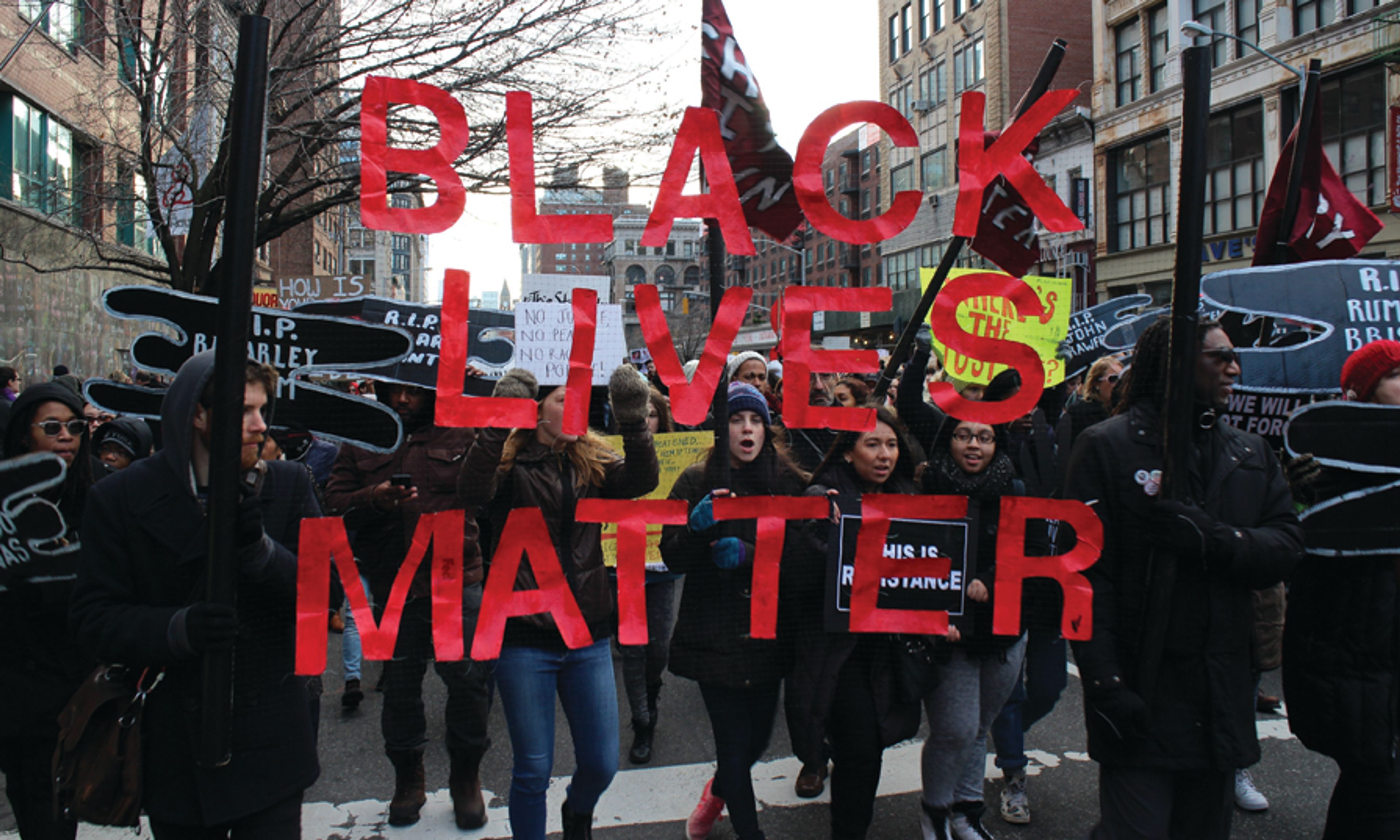
Since the shooting death of Michael Brown in the St. Louis suburb of Ferguson just over a year ago, Americans have been engaged in a spirited dialogue, to put it mildly, about the status of black people in our country. The main result of this dialogue so far appears to have been an alarming rise in what we might call racial pessimism. In August, Gallup released a survey that found that the share of whites satisfied with how African Americans are treated in the United States has fallen from 67 percent in 2013 to 53 percent in 2015, a quite striking decline. The share of blacks who feel the same way, meanwhile, fell from 47 percent to 33 percent over the same period, which is to say from low to dismally low.
There has been no similarly dramatic change in the material condition or the legal status of African Americans over this short interval, so what has been the source of this growing dissatisfaction? It is very simple: A rising generation of intellectuals has been offering an unremittingly bleak interpretation of the black experience in American life, and this interpretation has gained a great deal of purchase in the news media. Following the death of Brown, social-media activists, most of them young and black, have been rallying under the banner of #BlackLivesMatter, a Twitter hashtag devised by the activists Patrisse Cullors, Alicia Garza, and Opal Tometi to draw attention to the (alleged) epidemic of police violence against African Americans. Because Black Lives Matter is a diverse, decentralized movement, one hesitates to say that it speaks with a single voice. But I’d say that if there is a preoccupation shared by the leaders of the movement, it’s the idea of white supremacy as the chief obstacle to black progress.










Comments