Herndon, Va.
Here in Fairfax County, located in Northern Virginia near the nation’s capital, restaurants have been seating people indoors for three months. Daycares and preschools are open. Private K–12 schools are running, too. There are restrictions in place, including a mask mandate and social-distancing rules, but we’re open, and waiters and cooks and child-care professionals are expected to go to work.
All this makes sense, not only because we’re half a year into the pandemic and can’t afford to keep everything shut down forever, but also because this part of the state never saw a second wave of COVID-19 cases. And also, in the case of schools and daycares, because children, especially the youngest children, have an incredibly low risk of suffering severe cases even if they do get infected.
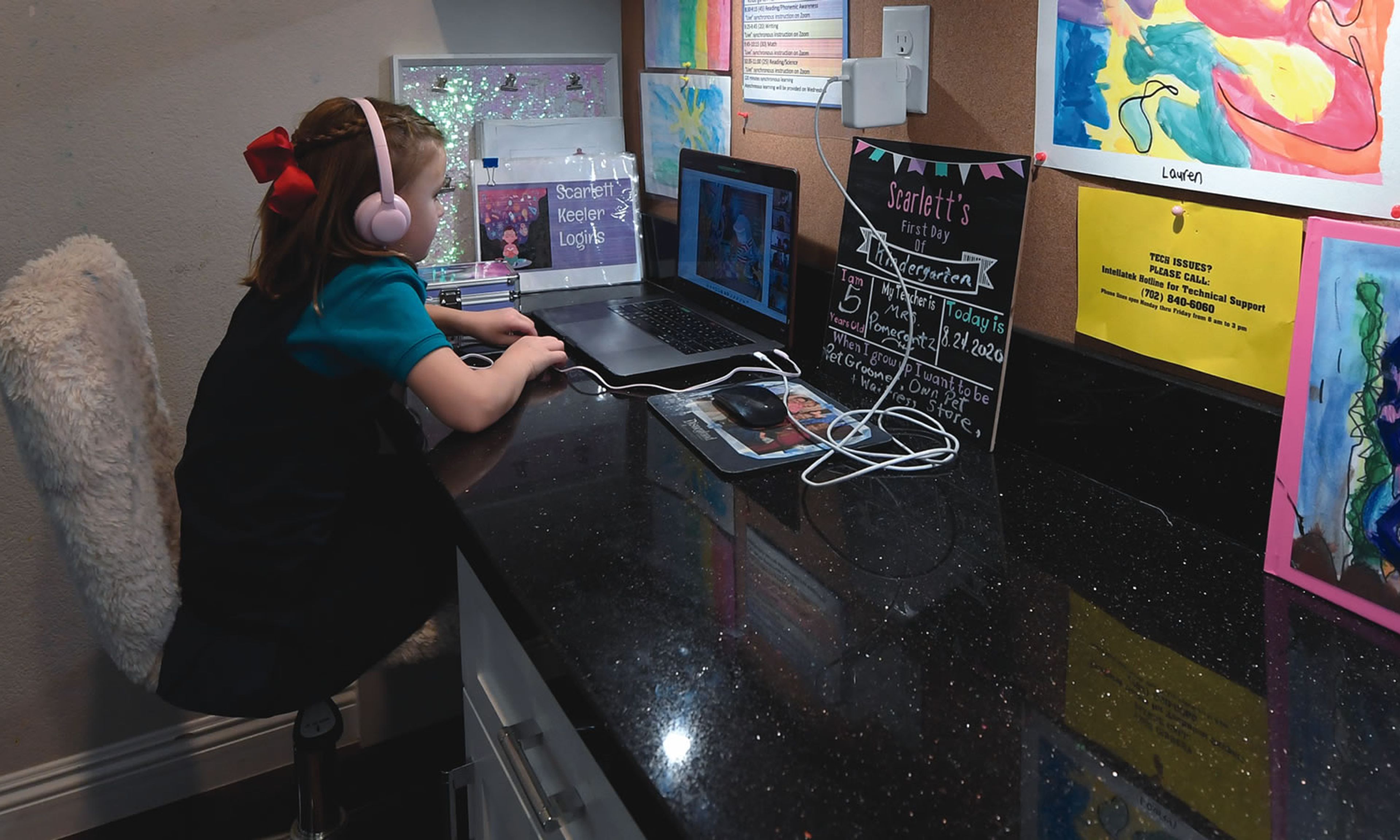
Nonetheless, the public schools are operating online only — and just four days a week, except for kids with special needs. A plan to let parents choose between fully online instruction and two days a week of real school was scrapped in July, despite the fact that about half of parents, and nearly half the staff as well, had picked the in-person option. Perplexingly, parents can still bring their kids to school buildings and have them do their online instruction there under a new child-care program, but this costs anywhere from $80 (for those making less than $52,400) to $1,472 (for those making more than $131,000) per month.
The same outrageousness is unfolding in districts, especially urban districts, throughout the country. Montgomery County, Md., another area in the D.C. orbit, has kept its public schools closed — and it even tried to prevent its private schools from reopening until a backlash forced a change of plans. In my home state of Wisconsin, Milwaukee schools are starting the fall online only; so are the schools out west in Los Angeles. And Fairfax County isn’t the only place arranging child care in the very school buildings that have been closed to normal classroom work: Numerous California districts are doing this too, often charging hundreds of dollars a week, as SFGate recently reported; and Montgomery County has $1,275-a-month “distance-learning hubs” run out of schools by the child-care chain Bar-T. In places where schools are reopening, teachers are protesting and sometimes even threatening to strike.
There has never been a better argument for giving parents vouchers and letting them fund their kids’ education as they please, rather than giving taxpayer money directly to public school districts — because this nonsense would never fly in the private sector. A company can’t refuse to provide the service it exists to provide, still expect to be paid in full, and launch a separate venture charging customers extra for a warped version of what it was supposed to do to begin with. That happens only in government — especially parts of the government with strong unions: A study from Corey A. DeAngelis and Christos A. Makridis unsurprisingly finds — even after accounting for COVID-19 cases and deaths, as well as local demographics — that schools are more likely to reopen in places with weaker unions.
My son is in kindergarten this year, and the difference between public and private schools has never been more obvious to me in my life. Before the school year began, the public schools gave us a string of bad news about their reopening plans, plus a few inconveniently timed online meetings to prepare for the impending catastrophe. Meanwhile, we received a barrage of emails and online ads from private options tempting us with the chance to give our kid a normal experience where he could learn from teachers in person, provided we were willing to pay private tuition on top of all the taxes we cough up to support public schools.
As I get ready to file this piece to my editors, the little guy is on his second day. Tuesdays through Fridays, his public school is in session from 8:50 a.m. to 3:35 p.m. (Monday being an “asynchronous workday”) — but there’s a ten-minute break every hour, plus an hour of free time in the morning, an hour for lunch, and 25 minutes of “family-choice time” before school lets out. It’s too much and not enough school at the same time: too much because a five-year-old can’t focus on a screen that long; and not enough because, even when he does focus, the constant breaks interrupt anything else I might try to accomplish, from writing to working with my other two kids (ages three and ten months). The classes themselves are chaotic, as you’d expect of a video conference among small children. The one upside is that my three-year-old likes doing school with her brother, so this occupies two kids at once for much of the day.
And my family is lucky, in that the public schools’ dereliction of duty probably won’t harm our finances or our son’s academic development. Late last year, well before the pandemic hit, I decided to stay home with the kids full-time and write on the side, so my wife and I don’t have to take turns watching the kids and working simultaneously. As a bonus, her work is remote-only thanks to COVID-19, so she can sometimes, for instance, keep an eye on our eldest while I take the other two to a park. Further, we’re both college-educated, albeit with journalism degrees — and my wife briefly taught middle school through Teach for America — so we’re equipped to make sure the kids are learning what they’re supposed to for their ages, even if they don’t learn it through the schools. While we’ve decided to give online learning a go, we’ll pull our son out and homeschool him if things don’t work.
Other well-off parents in the area have hired professional teachers to run “tutoring pods.” Some requested that the schools put all the kids from a given pod into the same virtual classroom, but the district declined, pointing out in a blog post that “tutoring pods are not part of the public school system”; that “schools go to great pains to develop schedules that consider teacher and parent input and balance classes for gender, race, home language, academic strengths, learning goals, and special learning needs”; and that the district has “concerns that [pods] may widen the gap in educational access and equity for all students.”
The post set off some outrage online, but the concerns about inequality, at least, were well founded. Single parents, poorer couples where both parents work, and parents who are less focused on academics all have it much worse than the pod people or my wife and I do. The less fortunate simply don’t have as many resources to invest in their kids’ education when the schools refuse to do their job. Plenty of parents can’t even get their kids to log in: Each month during the spring shutdowns, Education Week asked teachers what share of their kids were truant, and the answers averaged 20–25 percent.
Opportunity Insights, a research group based out of Harvard, has been tracking the pandemic’s effects on learning using data from Zearn, an online math program that many schools use to supplement classroom instruction and measure progress. When the schools closed in the spring, students everywhere made less progress than they had previously — for a little while. After that, classrooms in higher-income zip codes caught up to their previous rate of completing these lessons. But progress in middle- and lower-income areas remained well below its previous rate through the end of the school year.
If parents had the option of using the government money that’s supposed to educate their children any reasonable way they wanted, this entire situation would look different. My wife and I would have enrolled our son in a private school that teaches safely but in person, which would have been better for his education and easier on the family. This arrangement would be even more beneficial to families that entered the pandemic less well-situated to handle their kids’ education with less help from the schools.
More fundamentally, I suspect that if parents could walk out of public schools anytime they wanted and take their kids’ government funding with them, these schools would not have dreamed of staying closed into the fall to begin with. That’s the kind of power play that works only if the other party has limited options.
The threat of losing such incredible leverage, perhaps, is one reason that public schools and their teachers’ unions so vociferously oppose school choice.











Comments