Arlington, Va.
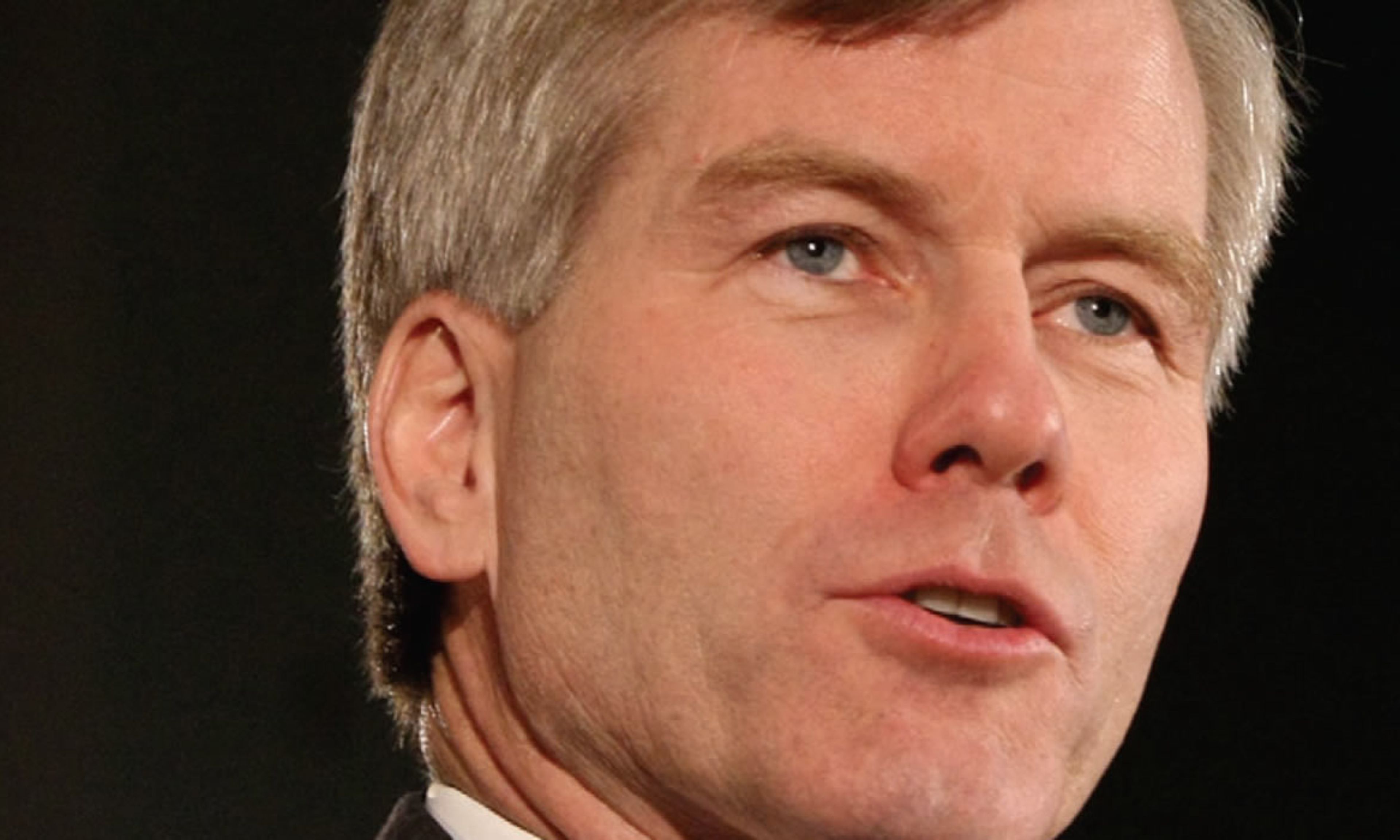
Sheila Johnson isn’t just any Virginia Democrat. Co-founder of Black Entertainment Television and part owner of three professional sports franchises, Johnson campaigned robustly for Barack Obama and, according to the Washington Post, has donated more than $600,000 to Virginia’s Democratic governor, Tim Kaine, since 2000, “making her the governor’s second-largest individual donor.” Yet on July 20, the self-described “lifelong Democrat” publicly endorsed Republican gubernatorial candidate Bob McDonnell, touting his experience in the business world and lauding “the strength of his character.”
Johnson made clear that her support for McDonnell, who served as Virginia attorney general from 2006 until this past February, stems from practical considerations rather than from ideology. While McDonnell, 55, is a pro-life conservative who spent 14 years representing a staunchly Republican district in the Virginia house of delegates, he has run a decidedly non-ideological campaign, tailoring his message to attract the suburban moderates who have spurned the GOP in recent statewide elections. The day after Johnson announced her endorsement, McDonnell released an ambitious 19-page transportation plan designed to mitigate the commonwealth’s traffic and infrastructure woes, which are particularly severe in Northern Virginia (outside Washington, D.C.) and in the Hampton Roads area (around Virginia Beach, Norfolk, and Newport News). Whatever its flaws, McDonnell’s transportation blueprint captures the essence of his gubernatorial bid: The former prosecutor has focused his campaign on the everyday concerns that animate voters in the suburbs.
“He has mastered that suburban approach,” says Larry Sabato, director of the University of Virginia’s Center for Politics. Indeed, McDonnell, an Army veteran and former business manager of a Fortune 500 company, is casting himself as “Mr. Suburbia,” says Bob Holsworth, a longtime Virginia political analyst and founder of the nonpartisan website VirginiaTomorrow.com. The GOP candidate grew up in suburban Fairfax County (near D.C.) and later settled his family in suburban Virginia Beach. He knows full well that gubernatorial races hinge on the populous suburbs of Washington, Richmond, and Hampton Roads. In his efforts to woo suburbanites, McDonnell talks about issues such as jobs, business development, government spending, education, traffic, crime, and gang activity. In a telephone interview on August 28, he described his agenda as “practical solutions based on conservative principles.” If McDonnell prevails in November, he “is really going to get the spotlight,” says Sabato, because “Virginia is now the ultimate swing state.”
Standing in his way is Democratic nominee Creigh Deeds, 51, a state senator from rural, mountainous Bath County, which borders West Virginia. (Virginia governors are limited to a single four-year term, so Kaine cannot pursue reelection.) Deeds opposed McDonnell in the 2005 attorney general’s race and wound up losing by just a few hundred votes. He won the 2009 Democratic gubernatorial nomination after a late burst (fueled in part by a surprising Washington Post endorsement) carried him past his two rivals, former Democratic National Committee (DNC) chairman Terry McAuliffe and former Virginia state delegate Brian Moran.
The pro-gun Deeds was regarded as a less liberal alternative to McAuliffe and Moran. But now he must energize the Democratic base, especially black voters. This has been difficult, and Deeds is trailing McDonnell by a wide margin. As of August 31, the latest RealClearPolitics polling average showed McDonnell leading by 12 percentage points. A mid-August Washington Post survey gave McDonnell a 15-point advantage among likely voters.
A McDonnell victory would end a lengthy string of Democratic triumphs in the Old Dominion. Over the past eight years, Democrats have won two gubernatorial races, captured both of Virginia’s U.S. Senate seats, and gained a majority in the state senate. From the election of Dwight Eisenhower in 1952 through the reelection of George W. Bush in 2004, Virginia went for the Republican presidential candidate all but one time (in 1964, when it backed LBJ over Goldwater). But in 2008, Obama carried the state by 6 percentage points.
On the other hand, while Virginia was always a relatively conservative state, it was never a Republican bastion — far from it. Like many ex-Confederate states, it became a Democratic stronghold following Reconstruction. After the Democrats cemented their grip on power, Virginia did not have another GOP governor until 1970, and Republicans did not control both chambers of the legislature until 2000. Since 1970, Virginia has had five Republican governors and five Democratic governors, with the party of the incumbent U.S. president losing eight consecutive gubernatorial elections starting in 1977.
“Each party has put together winning streaks,” says Frank Atkinson, who served as counselor and policy director under former GOP governor George Allen and has written two books on Virginia’s modern political history. At the gubernatorial level, Republicans dominated the 1970s and much of the 1990s, while Democrats won three straight elections in the 1980s and thus far have captured two straight in the new millennium. Not since 1973 — when Richard Nixon was president and newly minted Republican Mills Godwin, who had governed Virginia as a Democrat from 1966 to 1970, was the GOP gubernatorial nominee — has the president’s party won a governor’s race.
Based on this history, we would expect a GOP victory in 2009. The challenge for Deeds has been made even more daunting by the national political environment. Whereas the “enthusiasm gap” aided Democrats in the past few election cycles, this year it is helping Republicans. “That’s the fundamental dynamic in this race,” says Sabato. The disproportionate enthusiasm among GOP voters reflects their opposition to the policies being promoted in Democratic Washington.
McDonnell knocks congressional Democrats for their “assault on the free-enterprise system,” arguing that soaring federal spending and costly initiatives such as pro-union “card-check” legislation and the Waxman-Markey climate bill “have created angst in the suburbs.” Yet while he openly criticizes Democratic leaders Nancy Pelosi and Harry Reid, McDonnell seems more cautious about disparaging President Obama. In fact, during our recent interview, McDonnell went out of his way to note that he agrees with Obama about expanding charter schools and implementing merit pay for teachers.
This is savvy politics. McDonnell has no need to castigate Obama directly. The GOP base is already galvanized, so he can concentrate on voters in the center. Unlike Deeds, he did not face a primary challenger and has effectively been running a general-election campaign from the start. McDonnell enjoys solid support among conservatives, which has freed him to target moderates, who accounted for 46 percent of the Virginia electorate in 2008. (Conservatives were 33 percent and liberals 21 percent.)
As for Deeds, he is still struggling to excite urban blacks and suburban white liberals about his candidacy. Former Virginia Democratic governor Doug Wilder, America’s first elected black governor, has refused to endorse Deeds, just as he refused to endorse him in the 2005 attorney general’s race. Wilder is still bitter that Deeds voted against a controversial gun-control measure during his governorship in the early 1990s. (McDonnell backed that measure at the time, and in 2005 the NRA endorsed Deeds over McDonnell.)
In a somewhat desperate gambit, Deeds is now trying to link McDonnell with George W. Bush. In late August, his campaign released an ad blasting the “McDonnell-Bush approach” to economic policy, which was summarized as “tax breaks for the super-wealthy, job losses and foreclosures for the rest of us.” As of July, Virginia’s unemployment rate (6.9 percent) was well below the national rate (9.4 percent) but still much higher than it had been a year earlier (4 percent). Governor Kaine, who in January became the new DNC chief, has seen his popularity decline.
His travails obviously haven’t helped Deeds, who is busy plugging his “pro-business” credentials and calling himself a “Mark Warner–style” Democrat, referring to the popular former governor who won election to the U.S. Senate in 2008. Meanwhile, Deeds is assailing McDonnell’s record on abortion and painting him as outside the mainstream. This is a curious ploy. As Holsworth observes, “Abortion hasn’t been a big issue in Virginia campaigns since 1989.” (That was three years before the Supreme Court reaffirmed Roe v. Wade in its Casey decision.) But Deeds apparently reckons that he can use social issues to secure his liberal base and also to frighten suburban moderates.
Deeds got fresh ammunition on August 30, when the Washington Post reported on the master’s thesis that McDonnell completed at Regent University, an evangelical Christian school founded by Pat Robertson. In the course of explaining how Republicans could bolster traditional families, McDonnell’s 1989 thesis expressed a dim view of women in the workplace, and argued that “every level of government should statutorily and procedurally prefer married couples over cohabitators, homosexuals, or fornicators.” When asked about his thesis, McDonnell told the Post that “my views on many issues have changed as I have gotten older,” adding that his discussion of working women “was simply an academic exercise and clearly does not reflect my views.” (He has a working wife and two working daughters; his daughter Jeanine served with the U.S. Army in Iraq.) McDonnell insisted that he should be judged on his lengthy political career and his current campaign, “not on a decades-old academic paper I wrote as a student during the Reagan era and haven’t thought about in years.”
It’s unclear whether the thesis story will dent McDonnell’s standing in the suburbs. Holsworth says that his strength among independents is “pretty remarkable.” As former Bush speechwriter Michael Gerson wrote in a recent column, McDonnell has eschewed the sort of “us against them” populism that many suburbanites find distasteful. He has not abandoned his conservative social beliefs, but he has soft-pedaled them while embracing practical policy recommendations aimed at addressing quality-of-life and cost-of-living issues. It is a smart strategy — and, with the assistance of favorable political winds, it seems to be working.











Comments