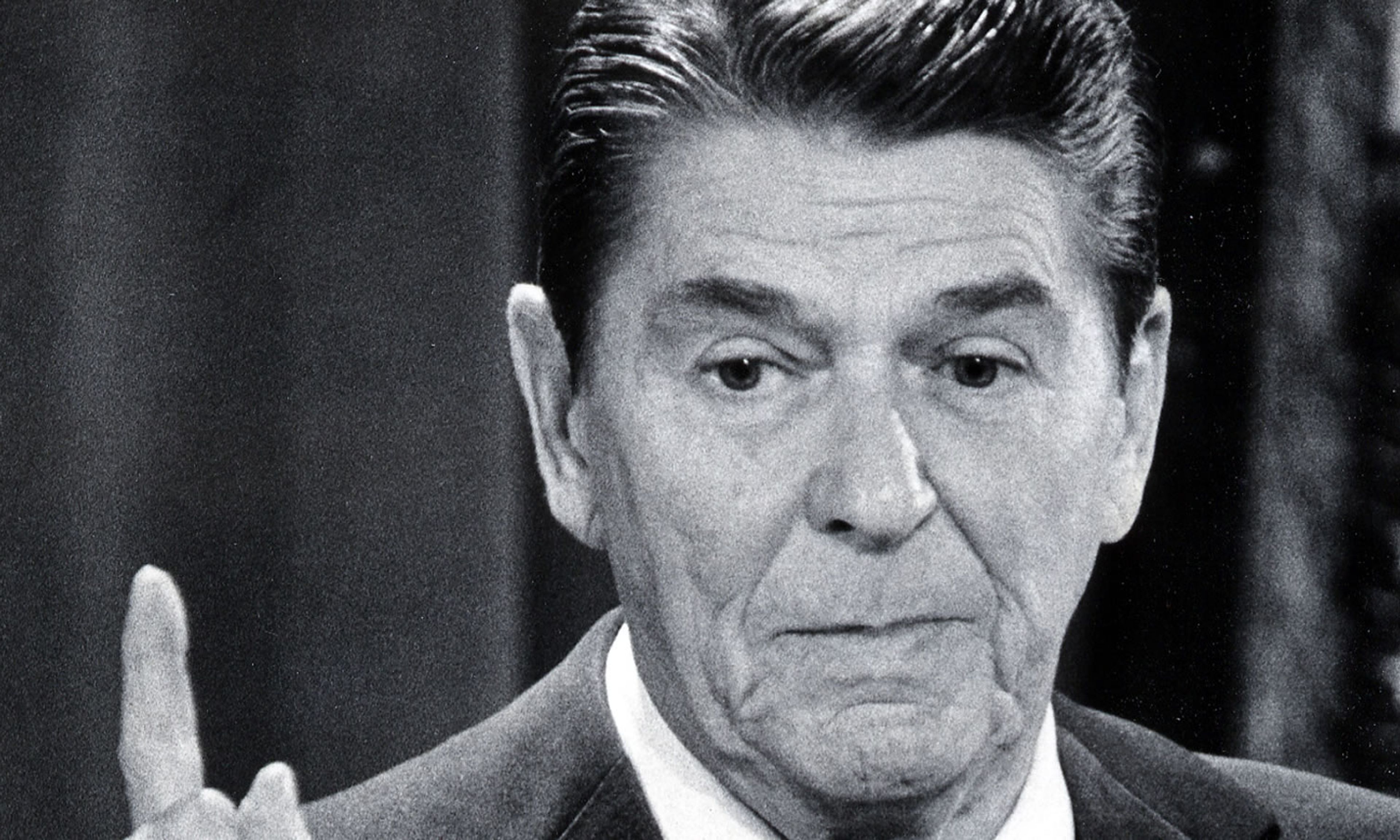
It is the thesis of Rick Perlstein’s book that the United States, circa 1970, was on the verge of a moral and political breakthrough. Perlstein compares the nascent revolution in sentiment to the French Enlightenment, that “sweeping eighteenth-century intellectual-cum-political movement,” he writes, which saw “all settled conceptions of society thrown up in the air, which introduced radical new notions of liberty and dignity, dethroned God, and made human reason the new measure of moral worth — a little like the 1960s and ’70s.”
In Perlstein’s telling, the advocates of the new American enlightenment stood ready to rouse their fellow citizens from their dogmatic slumbers and teach them to “think like grown-ups.” Under so luminous a tuition, Americans would embrace a better patriotism: They would put away childish things and master the grown-up arts of “questioning authority” and “unsettling ossified norms.” But like the evil djinn in a fairy tale, Ronald Reagan appeared, and foreclosed the happy possibility of a “new, higher patriotism.” Instead of encouraging Americans to grow up, Reagan insisted on keeping them in a state of perpetual infancy, and taught them “to think like children waiting for a man on horseback to rescue them: a tragedy.”











Comments