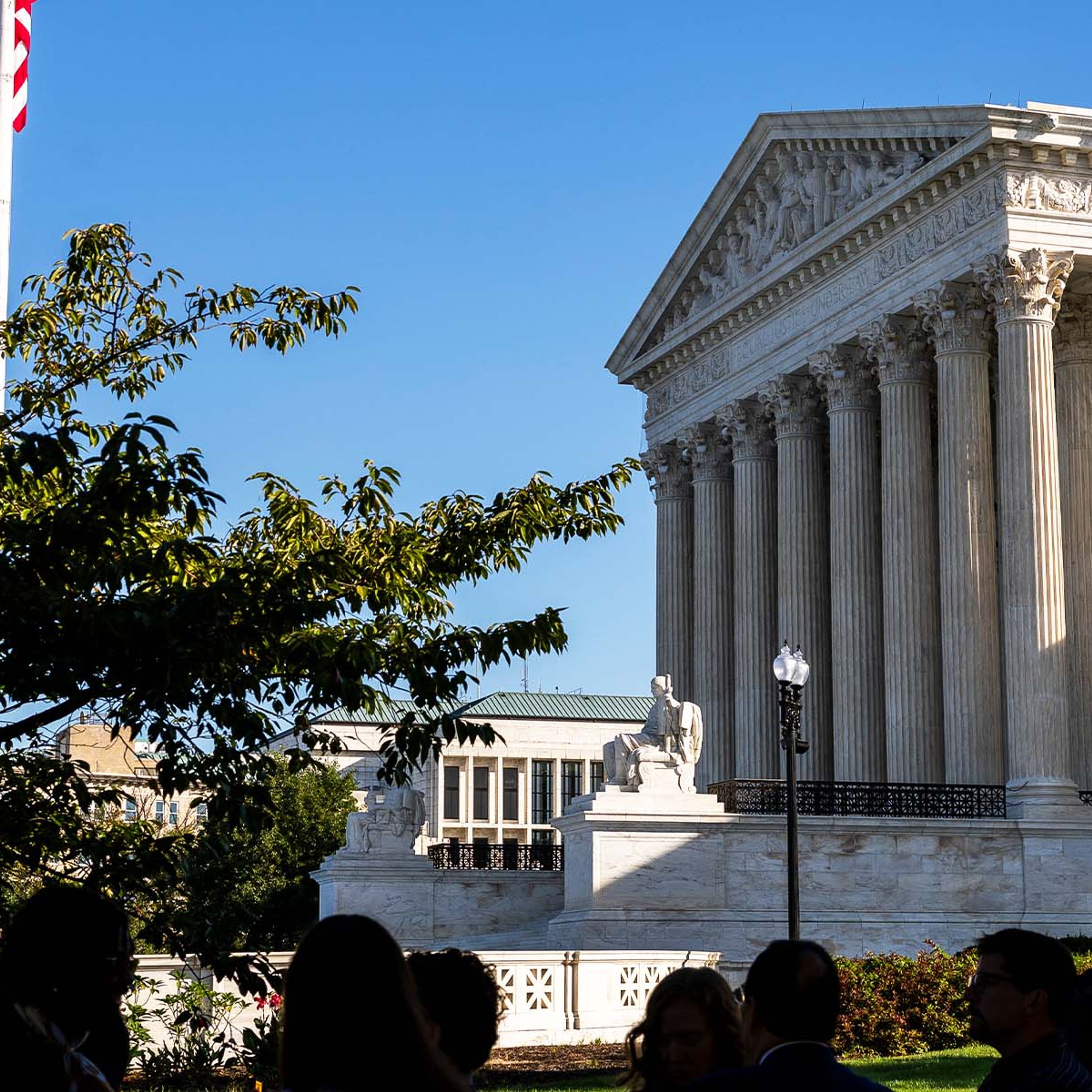
As everyone who’s taken a look at the front pages of the major papers knows by now, the Supreme Court ruled yesterday that he EPA has the power to regulate CO2 as a pollutant. Jonathan Adler has a summary and response to the case in NRO today:
Congress has discussed and debated the issue of global warming for years, consistently refusing to adopt regulatory controls on the emission of carbon dioxide and other greenhouse gases. Despite this fact, a divided Supreme Court decided Monday that the Environmental Protection Agency has untapped authority to regulate greenhouse-gas emissions from new motor vehicles under the Clean Air Act. The Court’s decision in Massachusetts v. EPA makes federal regulation of carbon emissions a near-absolute certainty, and not just from cars and trucks. It also ensures that federal courts will retain a hand in climate-change policy for many years to come.
The legal controversy began in 1999 when a handful of environmentalist groups petitioned the EPA to regulate emissions of carbon dioxide and other greenhouse gases from new motor vehicles. The Clinton administration accepted the argument that the EPA had such authority, but declined to act on it. At the time, I speculated that the EPA was hoping a federal court would force its hand, thereby reducing and political costs to initiating new emissions regulations unilaterally. Ever since a Democratic Congress had rejected the Clinton-Gore energy-tax proposal, the administration was reluctant to address global warming head on.
After the Bush administration took over, the environmentalist groups repeated their call for action. Joined by several state attorneys general, they prepared to sue. In response, the Bush EPA formally rejected the initial petitions on the grounds that the EPA lacked the legal authority to regulate greenhouse gases without express approval from Congress. Although there is language in the Clean Air Act that could be applied to greenhouse gases, these provisions were designed to address conventional air-pollution problems, such as soot and smog, rather than control global atmospheric pollutants. Even if it the EPA such authority, the Bush EPA argued, it would be unwise to do so given scientific uncertainty and the need for coordinated international action on climate change.
Read the whole thing.
Also, it should be noted that the name of the writer who wrote the front page story on the case for the New York Times today is Linda Greenhouse…





Comments