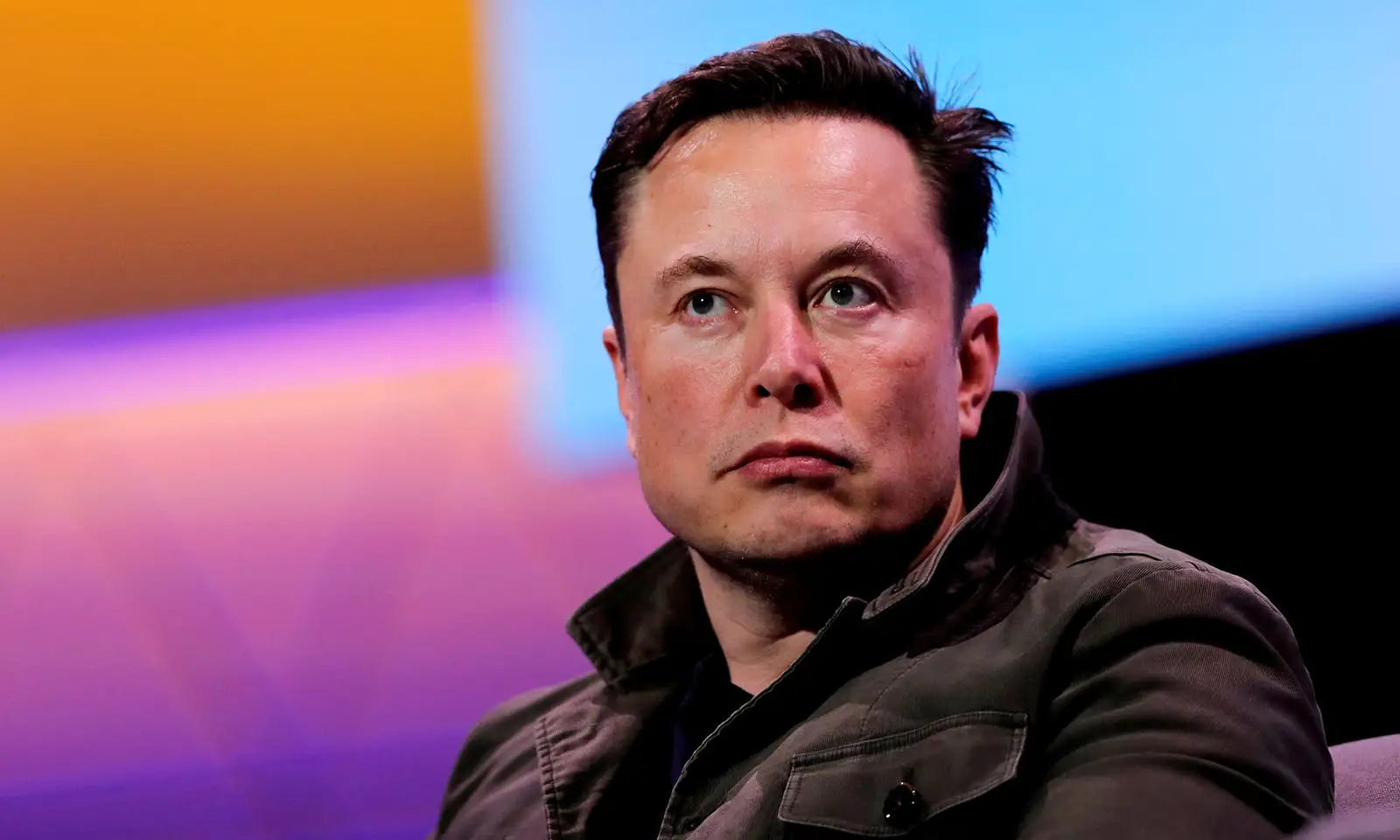
What’s going to happen next in the Musk–Twitter saga? ¯\_(ツ)_/¯
What I do know is that, given the stock-market declines since Elon Musk agreed to buy Twitter at $54.20, the stakes have risen. If he walks now, the gap between where the stock may well settle and $54.20 will almost certainly be far wider than it would have been at the time the deal was cut. That increases the pressure on Twitter’s board to do everything it can to see that the sale goes through at that price. The stock closed Friday at $38.29, a price that signals either (1) that the deal won’t close, (2) that Musk will secure a deep price cut (according to Bloomberg on Tuesday that was the market’s bet, and it’s something that Musk has mentioned: “It’s not out of the question”), or (3) that the prospects and timing of any litigation forcing Musk to go through with the deal are too uncertain for speculators to stay around for now. Take your pick.
The Financial Times has a good explainer on the legal background here. Here’s an extract (but you really need to read the whole thing to put it into proper context):
Twitter could sue Musk to enforce the agreement, and a person close to the company described the contract as “bulletproof”. Alternatively, it could choose to sue him for damages related to the failed deal. However, under the merger agreement, the amount of damages Musk could pay would be capped at $1bn.
That’s so, but only under certain circumstances, although how many circumstances is hard to say.
There are three clear scenarios in which this could happen, and possibly more. If regulators try to block the deal or the debt financing falls through, he would likely have an out. The third is if he can show Twitter has significantly changed for the worse since the deal was agreed upon, under a concept known as a “material adverse effect.”
If Mr. Musk believes Twitter’s accounting of spam accounts [the infamous bots] was inaccurate when he signed the deal, his lawyers could attempt to litigate that issue in various ways, including as a material adverse effect, or possibly by alleging that Twitter misrepresented information in its filings. It is unclear whether they would succeed, though it could open the door to settlement discussions.
The FT:
Another option, experts say, is for Twitter to first threaten to force Musk to close and then settle for damages greater than $1bn in order to avoid messy litigation . . . [or]
Twitter’s board could decide to accept a lower price from Musk to avoid the risk of trying to enforce the existing agreement — and the risk of remaining a standalone public company at a challenging time for tech companies.
Were the board to agree to the latter, it runs (I reckon) a clear risk of being sued by disgruntled shareholders. That said, courts are extremely unwilling to replace their judgment for that of a board. But that doesn’t mean that writs won’t fly.
However, a read of Bloomberg’s Matt Levine (a must-follow on this saga, and no Musk fan) suggests that a successful suit to enforce the agreement (“specific performance,” to use the technical term) might be less straightforward than even a “bulletproof” agreement might suggest (although to arrive at that conclusion, which is not necessarily his conclusion, Levine relies on the judge being guided by thinking that goes outside any conventional “legal” interpretation of the document). If Levine is right, that points to a trade, although whether on a lower price or on the amount of damages, is anyone’s guess.
Levine’s bold conclusion — “I don’t know what will happen here” — mirrors my own. Where Levine is more decisive (and, en passant, particularly Musk-unfriendly) is on the question of the spam bots, which he regards as nothing more than an excuse by Musk to get out of the deal, and not a particularly good one at that. Nevertheless, the issue of materiality cannot be wished away. If the bots accounted for more than 5 percent of Twitter’s active users (Twitter has maintained that the number was lower), would that be material enough a reason (to a court) for Musk to walk?
Words like “material” (“reasonable” is another) are words that lawyers stick into a contract when they cannot face attempting the impossible task of identifying every future eventuality but nevertheless want to agree some sort of basis for interpreting the provision in question should an agreement start to break down or have to be litigated. Would a figure of more than 5 percent be material? That rather depends on how much more, but, even in if it is deemed not to be material, it might be enough to get a case going, and there is always a price to be paid to avoid litigation.
What makes this all the more dangerous for Musk is that he has sailed into a swamp — no, the swamp (or a significant part of it) — by proposing to take over “a massively important [social] media company.” Twitter wields disproportionate influence because of who uses it and how they use it, and how it is “moderated.” Put another way, Twitter has been establishing itself as a gatekeeper of sorts (an echo of old media clout) into a significant social-media enclave, with the intention that that gate also be used (openly or otherwise, and to a greater or lesser extent) to screen opinions deemed inappropriate. The idea that Musk will tear down much of that gate has not been well received by those who you would not expect to take such news well, and the fight back against him will be varied . . . and extensive. To take one example, the authors of a recent New York Times piece drew attention to Musk’s childhood and youth in apartheid-era South Africa, in a way that was by no means a hit job (sometimes indeed the contrary) but that was possibly intended to sow a seed or two: Most readers won’t remember much about the article, but they may remember something about a privileged South African childhood.
Then there was this:
Mr. Musk’s current views on free speech seem to reflect the philosophies students were exposed to at Pretoria Boys, said Mr. Beney, the classmate — like that of the English philosopher John Stuart Mill, a champion of unchecked expression.
“I think his ideas about free speech are very classic liberal and not nuanced,” Mr. Beney said of Mr. Musk.
Ah, nuance.
Compounding the risks that he is running, Musk has become notably more political of late, and he has now tweeted that he has switched his vote from Democrat to Republican, albeit with qualifications: “A party more moderate on all issues than either Reps or Dems would be ideal.” And he clearly expected (or knew) that trouble was coming, tweeting that “political attacks on me will escalate dramatically in coming months,” and later that “the dirty tricks attacks will be next-level.”
An old accusation of sexual harassment surfaced shortly thereafter, resolved, so it is claimed, with a pay-off and an NDA. Musk has denied the allegation, and there is not enough I know to make any sensible comment about the allegation or, for that matter, the timing of its release, something to which Musk was presumably referring when he tweeted that
the attacks against me should be viewed through a political lens – this is their standard (despicable) playbook – but nothing will deter me from fighting for a good future and your right to free speech.
That some of Musk’s companies work for and with the government adds another area of vulnerability. It shouldn’t, but it will. And it must be said that his cavalier way with SEC regulations — whether relating to supposed funding he had secured for Tesla, or the way he handled the paperwork disclosing his acquisition of shares in Twitter — may also come back to haunt him.
As if all this were not enough, Musk is now involved in a controversy over ESG — that is, the variant of “socially responsible” investment in which portfolio companies are measured against various environmental, social, and governance benchmarks. In early April, Musk tweeted that he was “increasingly convinced that corporate ESG is the Devil Incarnate.” Had he already been informed that S&P was going to delist Tesla from its S&P 500 ESG index?
The credit agency S&P delisted Tesla from its environmental, social and governance (ESG) 500 index, blaming alleged racism at one of its factories and deaths linked to its Autopilot driver assistance tech. Mr Musk hit back on Twitter by saying oil company Exxon was “rated top 10 best in world for environment” in the same list Tesla has been removed from.
Exxon, one of the world’s biggest oil companies, was accused in 2015 of withholding information from investors on the financial risks of climate change and conspiring to manipulate the public debate on greenhouse gases over a period of 40 years. Mr Musk added: “@SPGlobalRatings has lost their integrity”.
Predicting that “political attacks on me will escalate dramatically in coming months”, the billionaire also posted an image saying ESG scores show “how compliant your business is with the Leftist agenda”.
He added: “ESG is a scam. It has been weaponised by phony social justice warriors.” . . .
Margaret Dorn, of S&P, said: “While Tesla may be playing its part in taking fuel-powered cars off the road, it has fallen behind its peers when examined through a wider [environmental, social and governance] lens.”
The electric car manufacturer’s share price dipped 5pc on the news.
S&P accused Tesla of lacking a formal low-carbon strategy and said the firm was more exposed to risks from a future “controversial incident” when compared with similar companies.
S&P also cited alleged racial discrimination and “poor working conditions” at the company’s factory in Fremont, California. Tesla did not respond to a request for comment.
The New York Times responded to Musk’s complaints in even-handed fashion. Musk had “railed” against ESG.
“Some of the E.S.G. pushback,” wrote the authors of the NYT piece “falls along predictable political lines” (Mike Pence was cited). This is hardly surprising as ESG is itself a socio-political agenda, and one structured, to borrow, the NYT’s phrase “along predictable political lines” (predictably progressive in ESG’s case). But, as ESG is primarily being advanced by activists, powerful elements within the investment industry, and regulators, it has managed to dodge both the democratic process and thus the political scrutiny it deserves. That’s now changing, as it should.
The Times continued:
A core principle is that businesses whose managers care broadly about issues like the environment and diversity will produce solid investment returns. That explains how Exxon can end up in an E.S.G. index, if its leaders are seen to be taking serious steps to reduce its environmental impact, and how Tesla might not, despite the millions of gallons of gas its cars are not burning. The nuance there is easily lost on, say, Twitter, where in a later tweet Musk called Tesla’s removal “a clear case of wacktivism.”
That’s a fair description of how Exxon could make it to an ESG index when Tesla does not, although it was revealing that the NYT also repeated the claim that a core principle [underlying ESG] “is that businesses whose managers care broadly about issues like the environment and diversity will produce solid investment returns.” A core principle? Maybe. It’s certainly how ESG is sold, but how much of that claim (that investors can do well by doing good) actually stands up to examination can be challenged, whether as a matter of fact or theory. ESG has also had a rough time of late, although not too much of a conclusion should be drawn from that, however tempting, even if one of ESG’s key selling points has been that it would see a portfolio through a turbulent period.
Back to the Times:
Part of the problem is that E.S.G. is not well defined. Shortly after Russia invaded Ukraine, two Citigroup stock analysts argued that weapons manufacturers and defense contractors should qualify as E.S.G. investments, because their products helped defend democracy and preserve peace. Others called that absurd.
The advantage that ESG has given, whether in energy or, in this case arms manufacturing, to the West’s enemies, is something discussed here, here, and here.
But the underlying issue — whether ESG should be standardized — stands. Part of the reason that Musk attacked ESG as a scam was that he simply did not see why Exxon would make the grade and Tesla would not, something that, of course, hit the Tesla stock, not a development he needed at the moment. On an intuitive level, it’s not hard to understand why Musk felt that way. That’s why many — including, sensing an opportunity to extend their reach, regulators — would like to design a “standard” ESG methodology, whether it’s of scoring, definition, or both. But to try to do so would be to attempt to make the subjective objective or set fluid in stone.
The absence of standardization may make it easier for ESG consultants to peddle wares of questionable merit, but the alternative is worse. In the case of arms, the case can be argued either way (and may also depend on to whom they are sold). Or take vapes. Should they be treated as a tobacco product, and thus merit a very low score on the “S” in ESG, or should they be treated as a harm-reduction device, which surely will do well on the “S”? Opinions can reasonably differ, and a one-definition-fits-all standard is clearly not appropriate. Equally, opinions can differ on the relative weightings to be given to E, S, and G, and there are occasions where, say, the E and the S may conflict.
The answer to such problems is to insist that each fund marketing itself as an ESG fund sets out in its marketing documents how it determines E, S, and G, the relative weightings it applies, and for it to stick by those rules. For regulators to fix one single standard for the definition of ESG and its scoring would to be put the central planner over the consumer, and to politicize, discourage, or slow down both the pace of innovation and the ability to shift a definition in light of changing circumstances, such as the increased willingness to see nuclear power as green in the wake of the current energy crisis.
Such decisions are best pushed downwards to the fund or, in S&P’s case, to the index level. The consumer can then make his or her choice. The role of the regulator should be confined to making sure that investment managers have accurately described their investment criteria in their marketing, and whether those, in the very broadest sense, can fit somewhere within the idea of an ESG product.
Some of the claims made about ESG’s performance are dubious, but the real reason that ESG is, as Musk would put it, a “scam,” is not (necessarily) because of the way that its scoring systems are arranged, or even because of the higher fees charged by the managers of many ESG funds, but because of how ESG has been used to create an enormous revenue-and-jobs generating machine that has created an ecosystem all its own, a rich pastureland that feeds herds of (and I’m only naming a few species of fauna out of many) investment managers, investment bankers, consultants of countless but dubious areas of expertise, lawyers, accountants, regulators, sustainability directors, innumerable bureaucrats in both the private and public sector, well, the list goes on. What they have in common is how little they do for at least some of their causes and how much, directly or indirectly, they cost the investors who have unwittingly fallen into their clutches. The magic word there is “unwittingly.” Where an investor, and by “investor,” I mean the underlying investor in a fund that has actively chosen to invest in ESG and has genuinely understood that this discipline might hit returns, then that’s his or her right. There is nothing wrong — there’s no scam — with companies that try to satisfy that demand, which is, incidentally, real enough.
The other principal scam is the way in which ESG and its sibling, stakeholder capitalism, are hijacking shareholder money in a way that bypasses democratic control in the interests of an agenda that, whether as a side effect or an objective, will leave us living in something close to a corporatist state.
So that’s enough about Musk for now, as exhausted readers may well agree, although this piece touches only on some of the issues he has stirred up, all of which seem to be coming together at once. By taking on Twitter in the way that he has, is there a danger that a truly remarkable entrepreneur might be swallowed up by the swamp into which he has now sailed? We’ll see, but if this meme represents his true thoughts, his confidence, at least, remains intact.
The Capital Record
We released the latest of our series of podcasts, the Capital Record. Follow the link to see how to subscribe (it’s free!). The Capital Record, which appears weekly, is designed to make use of another medium to deliver Capital Matters’ defense of free markets. Financier and NRI trustee David L. Bahnsen hosts discussions on economics and finance in this National Review Capital Matters podcast, sponsored by National Review Institute. Episodes feature interviews with the nation’s top business leaders, entrepreneurs, investment professionals, and financial commentators.
In the 67th episode David is joined this week by Andrew Crapuchettes, the past CEO of leading labor-economics firm EMSI and the founder and CEO of RedBalloon.Work. Their discussion ranges from what has escalated the present DEI insanity in corporate America to how all of this will play out. Hint: You will be encouraged by where they see this going, as labor and capital share a destination of the most rational application.
The Capital Matters week that was . . .
Energy
The Biden administration last week canceled a large oil and gas lease sale — over 1 million acres — in the Alaska Cook Inlet as well as two sales in the Gulf of Mexico. The Interior Department argued that the Alaska cancellation was “due to lack of industry interest in leasing in the area,” but that is obvious balderdash, as “industry interest” cannot be measured until the extent and value of the actual bids are made clear.
Could that asserted “lack of industry interest” have anything to do with the larger context of official hostility to investment in fossil-fuel discovery, production, and such ancillary infrastructure development as pipeline expansion and modernization? For oil and gas producers to lack interest despite high prices is the opposite of what elementary economics would predict, so it’s reasonable to wonder why . . .
Why isn’t more investment going into refining? One reason is regulatory hostility. Investing in refining equipment is extremely expensive, and projects take many years to complete. It’s not smart business to put billions of dollars into refinery expansion if you think there’s a chance that the presidential administration (or the next presidential administration) will do its best to shut it down.
Another reason is the ESG trend, which frowns upon investment in anything fossil-fuel related. Despite the recent energy struggles worldwide, ideological pressure on the financial industry to avoid fossil fuels continues. Ideologically motivated investment may feel good to those who are doing it, but it can throw a wrench into the economic system by preventing money from going to where it is most needed . . .
The reality is that in order for either wind or solar power to be a key source of the EU’s power supplies, a reliable backup energy source is needed, until far better storage technology is developed. Until then, both solar and wind are going to be hobbled by the immutable facts that the wind doesn’t always blow, and the sun doesn’t always shine.
The options to provide that backup essentially boil down to either nuclear, gas, or coal. Germany and the EU have been conducting hostile policies toward nuclear and coal, meaning that they thereby have been indirectly favoring gas — Russian gas. It should be noted that the EU is actually tasked to promote nuclear, as a result of the Euratom Treaty, but it has declined to do so with enthusiasm and is even discriminating against nuclear power when it comes to state aid. In practice, Germany has simply continued with burning coal . . .
You can’t fix this by blaming “greedflation.” You can’t fix this by blaming Vladimir Putin. You can’t fix this by releasing oil from the Strategic Petroleum Reserve – which, by the way, is at its lowest level since 1987. (The U.S. also ended the winter with the least natural gas in storage in three years.)
No, the only way you can get prices to come down is to increase the supply of refined gasoline getting to the gas stations, and the only way to do that is to increase refinery capacity. Oil producers are starting to increase capital expenditures – a 60 percent increase from the third quarter of 2021 to the fourth quarter. After a steep drop in early 2020 because of the pandemic, U.S. domestic oil production is increasing; the U.S produced 11.3 million barrels per day in February – the most recent month that Energy Information Administration figures are available –which is around the production levels of the first few months of 2019 . . .
Free Enterprise — A Good Thing!
Free enterprise is under attack from across the political spectrum. Socialists and their allies regard it a source of corruption and as antithetical to democracy. Some even regard it as racist. Many conservatives — some of them erstwhile believers in free markets — regard it as plutocratic and destructive: the source of our various economic troubles. For classical liberals and Burkean conservatives, it can become dispiriting to witness relentless attacks on a system that has given us all so much.
I was delighted, then, to come across this rousing defense of free enterprise from Margaret Thatcher in 1975 . . .
Defending the Administration’s Economic Record
Today, in the first press briefing since that tweet went up, Peter Doocy of Fox News read the tweet and asked the most straightforward question possible: “How does raising taxes on corporations reduce inflation?”
There’s only one correct answer to this question: “It doesn’t.” But the press secretary is not in the business of giving correct answers. The press secretary’s job is to give politically advantageous answers, which often bear little resemblance to correct answers . . .
Infrastructure
The Infrastructure Investment and Jobs Act delivers $550 billion of funding to improve our nation’s infrastructure, and the construction industry stands ready to deliver on the law’s promised revitalization of America’s roads, schools, bridges, utilities, and transportation systems.
Unfortunately, this investment could not happen at a worse time for taxpayers. The construction industry currently faces supply chain disruptions, unprecedented materials-cost inflation, declining investment in structures, and a skilled-labor shortage of 650,000 people in 2022. To make matters worse, the Biden administration proposed controversial new regulations in March that will needlessly increase construction costs and discourage small businesses from bidding on taxpayer-funded projects . . .
China
China’s ascension to world domination may not be as inevitable as many of us think and fear. Events of the last year have revealed significant vulnerabilities within the country, which could foreshadow a period of economic stagnation, reminiscent of what Japan began to experience in the 1990s. If that happens, American pundits may need to rethink their admiration of China’s decisive form of technocratic closed-loop governance.
Those of us who were around in the 1980s will recall the literature celebrating Japan’s economic might and projecting that the “Land of the Rising Sun” would soon eclipse America as the world’s dominant economy . . .
Working from Home
Working from home is not infrequently described as a revolution in the way that we work, an assertion of the individual, no longer sentenced to the drudge (and the expense) of his or her daily commute, now better positioned to live a more balanced life, and all the rest of it.
But revolutions have a way of devouring their own children, and (even though the real meaning of the phrase is rather different from what I am about to describe) something akin to that unpleasant fate is likely to feature in the future of a good number of those now WFH, especially those who spend more time during the work week at home rather than in the office. Even if we ignore the importance of seeing and be seen in many office environments, at least the more competitive ones, it will be no great surprise if employers, one way or another, try to grab a share of the savings that the employee is making by avoiding the daily commute. Best guess: WFH will, in one way or another, translate into wages lower than they might otherwise have been. Looking further out, it’s not hard to predict the rapid growth of a piece-work economy, where people WFH, effectively providing “office” space at their own expense, are paid only by what some algorithm has calculated they have produced.
And as for those potential tech workers abroad, well, once a company has discovered that those workers can do their work from home, there will (assuming the wage differential is great enough) rarely be much incentive to bring them over to the U.S. . . .
Inflation
The wicked profiteers over at Walmart seem to have missed a trick. Doubtless, the greedflationists will explain in due course how this is all part of some deeper scheme, a feint perhaps to trap the unwary.
CNBC:
Walmart on Tuesday reported quarterly earnings that missed Wall Street’s expectations by a wide margin, as the nation’s largest retailer felt pressure from rising fuel costs and higher levels of inventory . . .
Walmart’s numbers yesterday were hard to square with the conspiracist narrative that attempts to link inflation to corporate “greed.”
Now this (via Reuters):
“Wall Street’s stock indexes tumbled more than 3% on Wednesday as a growth share rally reversed amid concerns about economic growth highlighted by a 26% plunge in Target Corp shares after the retailer became the latest victim of surging prices.”
Instead, Democrats have decided to simply shift blame by scapegoating and demagoguing “greedy corporations” that somehow decided in early 2021 to begin gouging consumers with steep price increases. Senator Elizabeth Warren (D., Mass.) asserts that “giant corporations are making record profits by increasing prices, and CEOs are saying the quiet part out loud: they’re happy to help drive inflation.” Senator Bernie Sanders (I., Vt.), with characteristic subtlety, blames “Greed. Greed. Greed. . .. The problem is not inflation. The problem is corporate greed.” The White House chimed in, too, blaming “Big Meat” for greedy industry consolidations that are supposedly worsening inflation.
Even some of the White House’s own economists are privately embarrassed by this absurd populist pandering, but they are overruled by the political advisers who brag that such a strategy polls well. In short, the Biden administration sees inflation more as another messaging problem to solve with talking points than as an economic challenge to solve with smart policies . . .
Public Transport
So why don’t more people ride public transit? Because it stinks. Government agencies gorge themselves on taxpayer dollars way out of proportion with how many people actually use public transit. They prove, over and over again, that they don’t care about providing high-quality (or even decent) transportation services to people who just want to get to work on time . . .
Baby Formula
On The Editors podcast, my friend Michael Brendan Dougherty observed that one possible way to mitigate the baby-formula shortage would be for the FDA to speed up certification of overseas factories.
That’s a great idea. An even better idea would be to agree on standards and protocols for such certification years before there is any such crisis — which is what free-trade deals are for.
The FDA’s overly stringent regulation of baby formula — which mirrors its overly cautious approach to everything it regulates and costs American lives by denying safe treatments to patients who need them — is part of the reason the baby-formula market is so brittle in the first place. The other reasons involve the WIC program, which is administered by the Department of Agriculture and is unrelated to the FDA. Rewarding one of the agencies that contributed to the current crisis with more funding as a response to that same crisis is how you guarantee more crises in the future.
Republicans have a superior alternative available. Senator Mike Lee (R., Utah) has proposed the FORMULA Act, which (cheesy name aside) is a much better approach to the problem. It would waive baby-formula tariffs from friendly countries with high health standards (e.g., Australia, Japan, the U.K., and the European Union). It would also waive FDA regulations on labeling and facility approval that have made it nearly impossible to import safe baby formula from those friendly countries. It would make the newly available imported baby formula eligible for WIC beneficiaries to purchase. Those provisions are excellent. They would expire in six months under Lee’s proposal, but Congress should strongly consider making them permanent . . .
There aren’t any fundamental problems with producing baby formula. How do we know? Europeans, Japanese, and Australians are producing it just fine. There’s only a baby-formula shortage in the United States, and it’s because the United States government has adopted policies that allowed what should have been a relatively minor market disruption to turn into a widespread, prolonged shortage.
Instead of allowing parents to buy foreign formula as they would buy any other good, the Biden administration is making a big show of airlifting it here with specially contracted flights. The United States of America should not be dependent on airlifts for an adequate supply of baby formula. As Eric Boehm pointed out for Reason, if foreign brands of baby formula are safe to be airlifted now, they should be available for purchase all the time. It’s clear that the 98-percent-domestic baby-formula market leaves Americans vulnerable to supply shocks that the rest of the world doesn’t face. (You’ll notice that the domestic-production “resiliency” crowd is awfully quiet on this issue.)
Insofar as there’s an emergency in the baby-formula market, it’s of the government’s own making . . .
Woke Capital
In antitrust law, however, bundling is what happens when a company with monopoly power over one product takes advantage of the demand for that product to get its customers to also buy a second product — the bundled product — by selling the two together. That creates two types of harm. For consumers, bundling can mean that they are forced to buy something they don’t want in order to get a thing they can buy only from one seller. For competitors, bundling allows the monopolist to dominate the market for the bundled product. The Justice Department’s theory in its antitrust lawsuit against Microsoft two decades ago, for example, was that Microsoft was using the market power of the Windows operating system to cause Internet Explorer to dominate the competitive market for web browsers. In that case, the market took care of it over time.
Bundling is precisely what is happening with woke politics, and why it is so insidious: It is regularly bundled with things that have particular value and are not easily replaced, in order to force it upon unwilling buyers. If you offered people the choice to buy a visit to Disney World with or without the company’s woke politics, most people would choose “without.” The same would be true if you offered them a Harvard education, a pair of Nike sneakers, a job at J. P. Morgan, a can of Coca-Cola, a coffee at Starbucks, or a ticket to the NBA playoffs . . .
Carbon Taxes
Amid bipartisan climate negotiations, Senator Mitt Romney (R., Utah) made ripples when he reiterated his support for a carbon price imposed on imports as well as domestically produced goods. Though they attract controversy, carbon taxes deserve to be taken seriously, especially when compared with other climate-policy options on the table. But the details matter greatly, both in terms of how the tax is designed and how the revenue is used.
The “Econ 101” argument for a carbon tax goes like this: Carbon emissions create problems (namely, climate change) for the rest of the economy, therefore the government should tax carbon emissions so that the market reflects their full social cost. The tax, in turn, incentivizes businesses to reduce their emissions.
Student Loans
The regressive redistribution of federal funds toward high-income graduates such as lawyers, who make an average salary of $148,000, and physicians, who make an average salary of $252,000, comes on the shoulders of hard-pressed taxpayers, many of whom chose not to go to college. It’s hard to believe such a policy comes from an administration that prides itself on being “progressive.” . . .
Conservatives and Unions
Organized labor’s demonstrations of complete alignment with the left-progressive social agenda illustrate the scale of the problem labor conservatives have yet to confront. Labor unions big and little, private-sector and public-sector, blue-collar and white-collar alike are enmeshed in a system known as “social-justice unionism,” in which economic social democracy is but one component of a wider left-progressive agenda on matters as divergent as abortion, transgender activism, environmentalism, and gun control. Those who would increase labor unions’ power in the name of conservatism owe other conservatives some sort of practical plan to ensure that their honorable concern for worker welfare will not lead to a strengthening of conservatives’ enemies.
Supply Chains
Unlike Asian demographic trends, the ESG wounds are self-inflicted. The U.S. must stop letting environmentalists have a heckler’s veto on economic growth, and investors must stop letting green ideology obstruct prudent investment in energy and transportation. Access to cheap and abundant energy has been another reliable predictor of economic prosperity throughout human history. The U.S. has it and cannot squander it.
That’s especially true because the U.S. has the advantage in Fuller’s last bullet point: technology and capital. The demand for improved supply-chain technology has exploded, and systems that have been outdated for years are finally getting attention. Venture-capital investment in supply-chain technology began taking off last year. The U.S. has the right combination of technical know-how and wealth to make the supply-chain improvements the world needs, but those improvements aren’t inevitable. Actual people have to use actual money to actually make them happen. That will be America’s supply-chain challenge over the next decade.
China
How Russia’s invasion of Ukraine will eventually turn out remains anyone’s guess, but one thing does seem clear, which is that Russia’s semi-detachment from much of the world’s economy is not only firming up the Russo–Chinese entente but clearly establishing Russia as the junior partner in that relationship, something that would have been seen by Putin’s predecessors, whether czarist or Soviet, as a humiliation, and one that has doubtless given rise to a few smiles in Beijing — and probably not just for economic reasons. . .


Comments
On “Musk Sails into the Swamp”