For a gun-rights supporter, Patrick J. Charles’s Vote Gun can be a grating read.
The author, a senior historian and archivist for the Air Force, is on the “other side” where the meaning of the Second Amendment is concerned. He received a $5,000 grant from Everytown for Gun Safety to help fund research for this book, though the Second Amendment Foundation also let him use some historical Gun Week cartoons for free. Whenever Charles’s subjective judgment enters the narrative, it leans in the expected direction. Adding another layer of irritation, Charles suffers from a bizarre allergy to the term “gun control,” which is what normal people would use to refer to the subject of his book. Instead he employs “firearms control” — or even worse, the double-plural “firearms controls” — hundreds of times throughout the text.
But believe it or not, Vote Gun is worth reading anyway. It explores the 20th-century fight over gun rights in a way no one has before, compiling a wealth of important historical facts in the period from New York’s 1911 Sullivan Act to Ronald Reagan’s election in 1980. These developments are mostly 50 to 100 years old, but the modern reader will recognize a whole lot that’s familiar.
Why start with the Sullivan law, which required licenses to own concealable guns — and also, until last year’s intervention by the Supreme Court, gave law enforcement wide discretion to decide which individuals were allowed to carry guns in public? Because this was what kicked the gun-rights movement into gear. The story of “how gun rights became politicized” (to borrow some words from Vote Gun’s subtitle) is thus at root incredibly simple: Politicians passed some restrictive gun laws, those who disagreed joined the political fray in response, and over time the argument grew heated and polarized.
The initial reaction, led by the U.S. Revolver Association (USRA), was to push states and localities to implement “uniform” laws based on moderate model legislation, which was seen as a way to head off more-aggressive policies and make it easier for gun owners to comply with laws that were rapidly diversifying. A USRA proposal in 1923, for example, would have required police to be notified of pistol and revolver sales and required a police permit to carry a gun publicly.
Over the next decade, though, the NRA joined the effort and ultimately commandeered it — as Charles puts it, it was something the group “kind of fell into.” Open advocacy was a somewhat uncomfortable fit for the organization, which had been chartered in New York after the Civil War; had traditionally focused on marksmanship, hunting, education, and military readiness rather than politics; and had close ties to the government. (A 1916 law, for example, allowed the War Department to sell discounted surplus military guns and ammo only to NRA members and affiliated clubs, and also established a civilian-marksmanship office in part staffed by NRA officials.) But the NRA’s advantages over the USRA included a much larger membership, a network of affiliated gun clubs around the country to serve as on-the-ground eyes and ears, and a widely read magazine, American Rifleman.
Before long the NRA was pioneering some of the tactics and talking points it’s still known for today. It messaged aggressively about slippery slopes to gun confiscation, good guys with guns, and shadowy forces seeking to disarm patriotic Americans rather than punish the criminals who misuse weapons. It sent hyperventilating mailings to its members about current gun legislation and covered such bills the same way in American Rifleman. The NRA established a legislative division in 1933 in large part to better monitor and respond to legal developments.
At a time when politicians received little constituent mail, which remained the case into the 1950s, an angry barrage on a specific issue could be particularly effective. These early years, though, were a “balancing act” among the need to stir up its members to donate money and write letters, the need to broker compromises in state capitals and Washington, D.C., and the NRA’s traditional priorities.
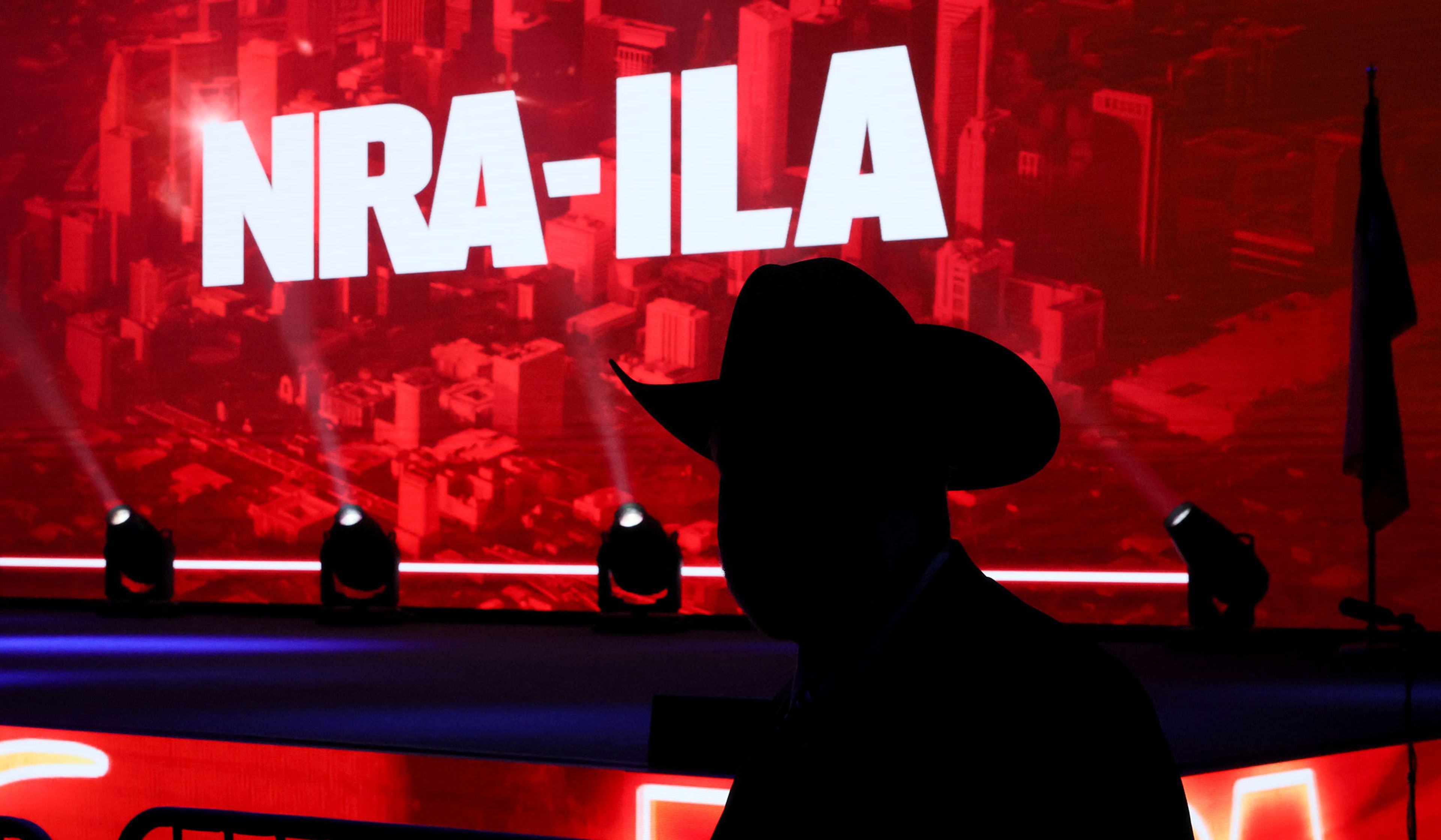
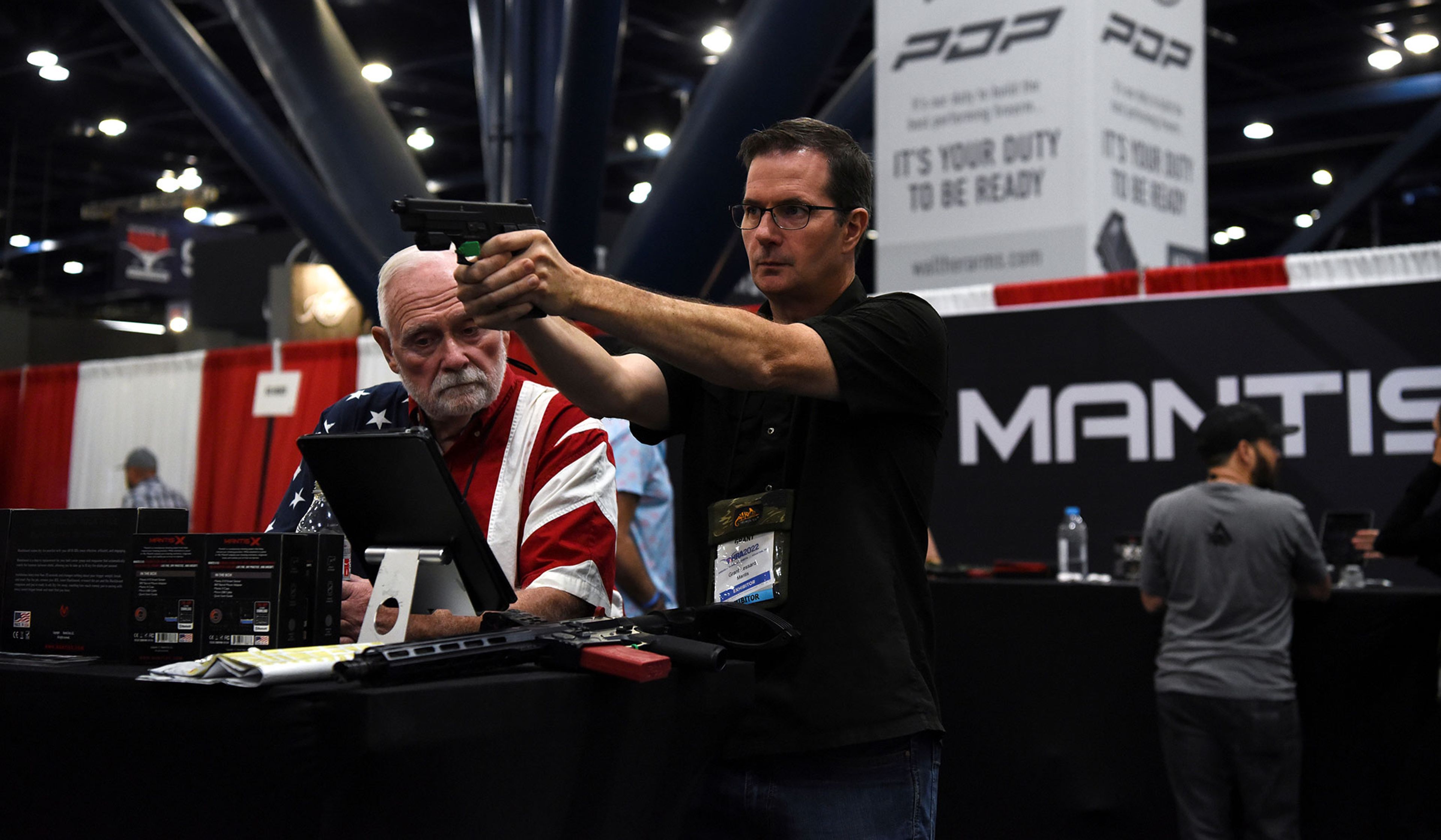
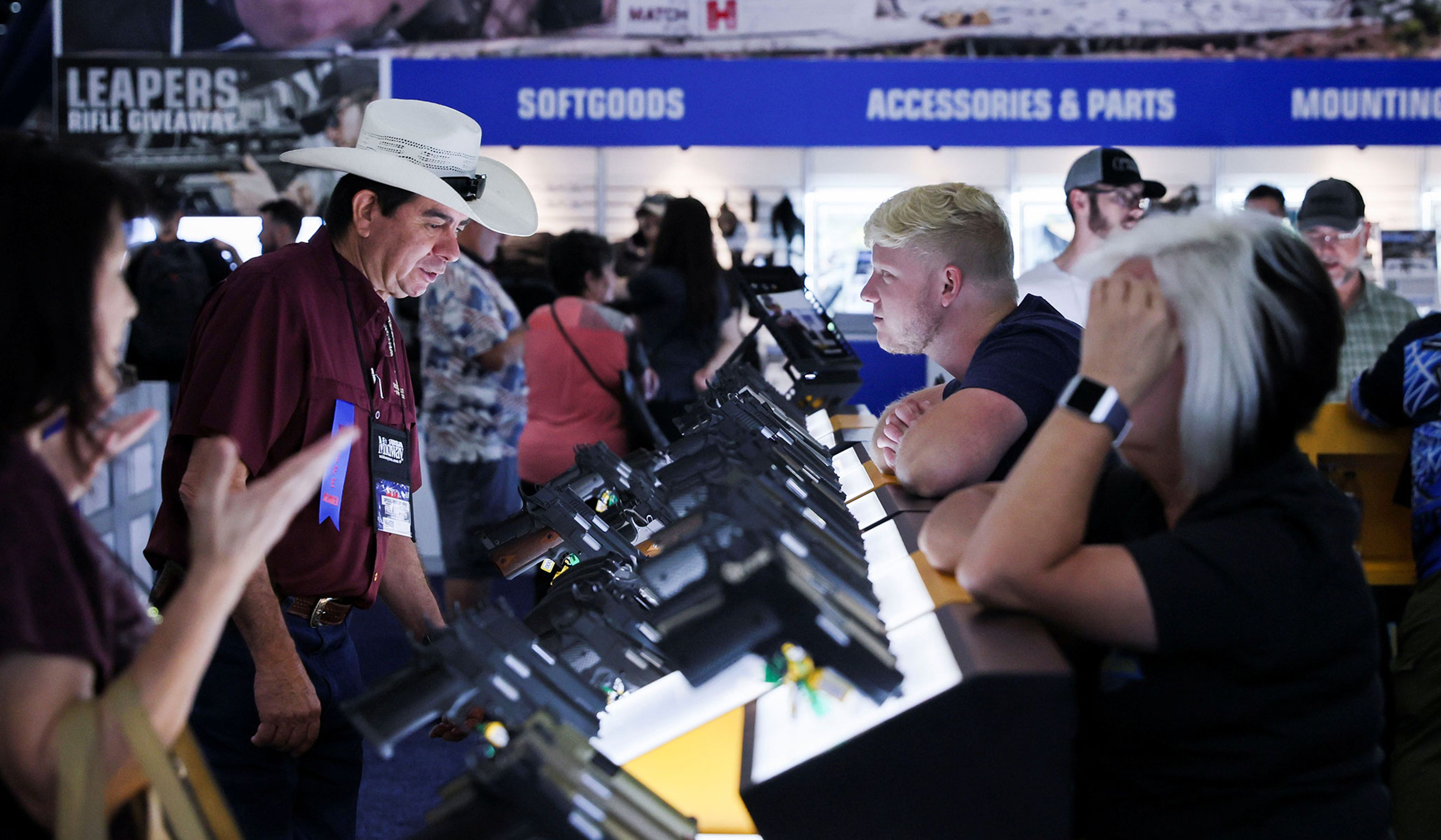
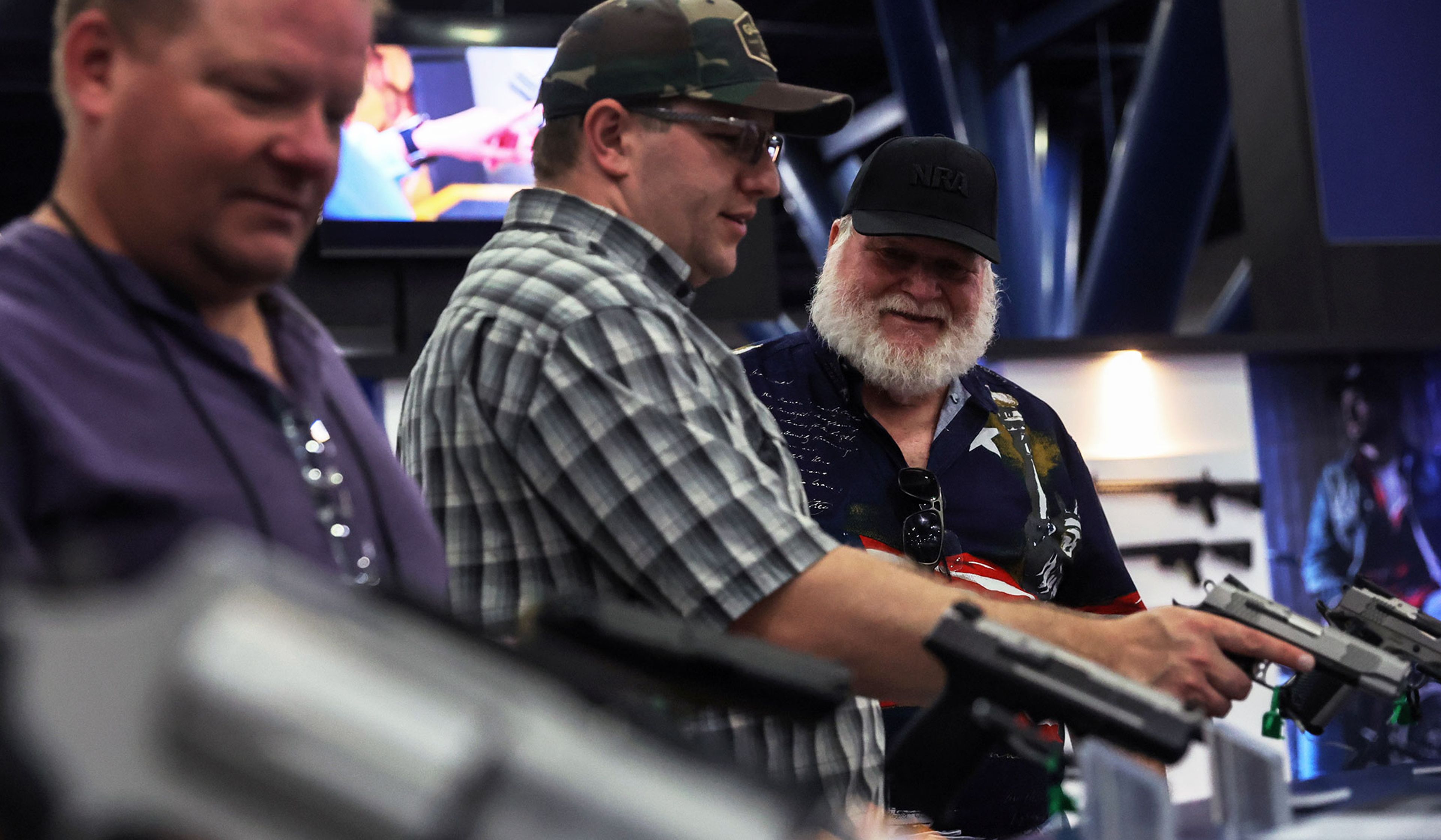
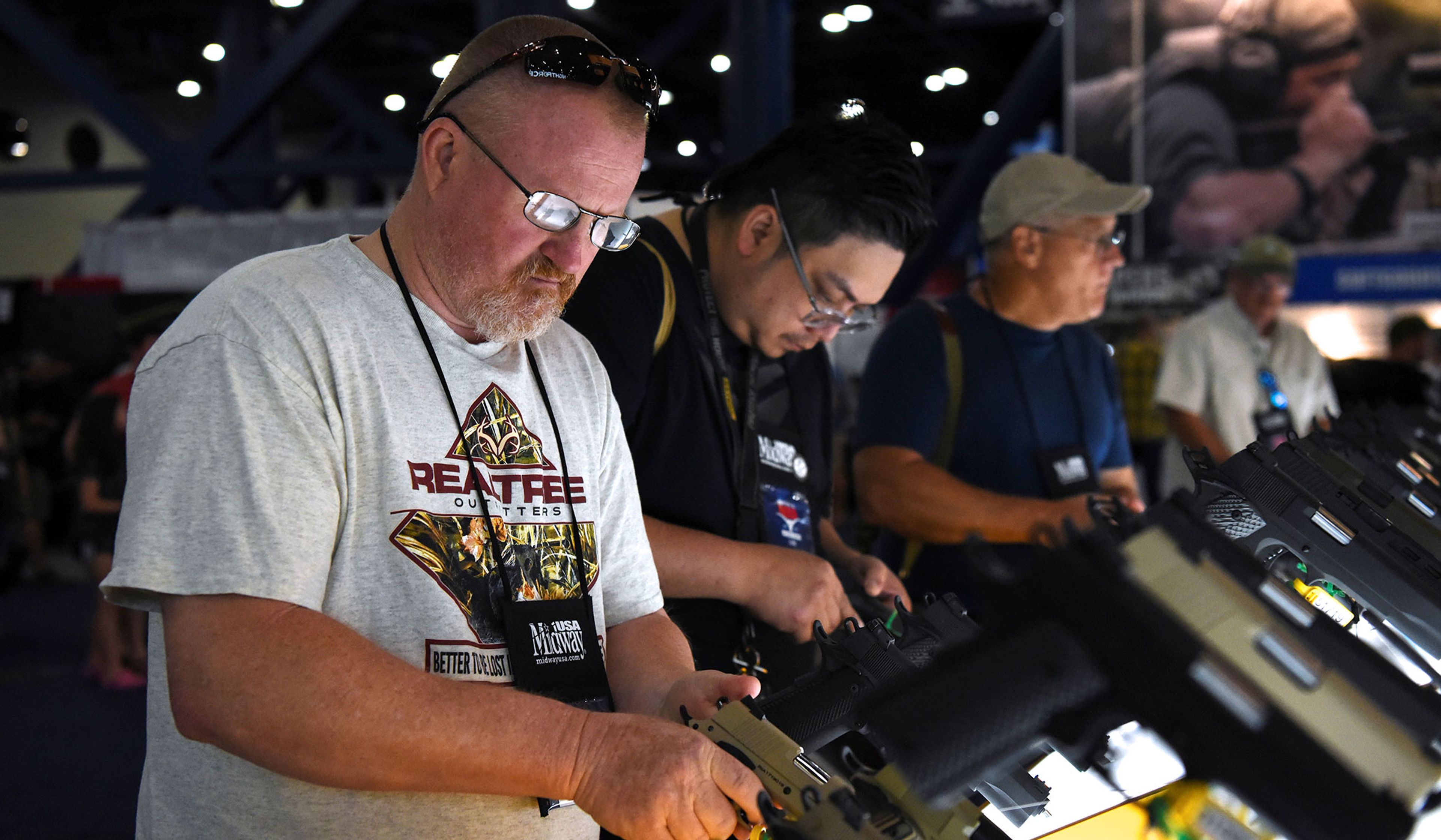
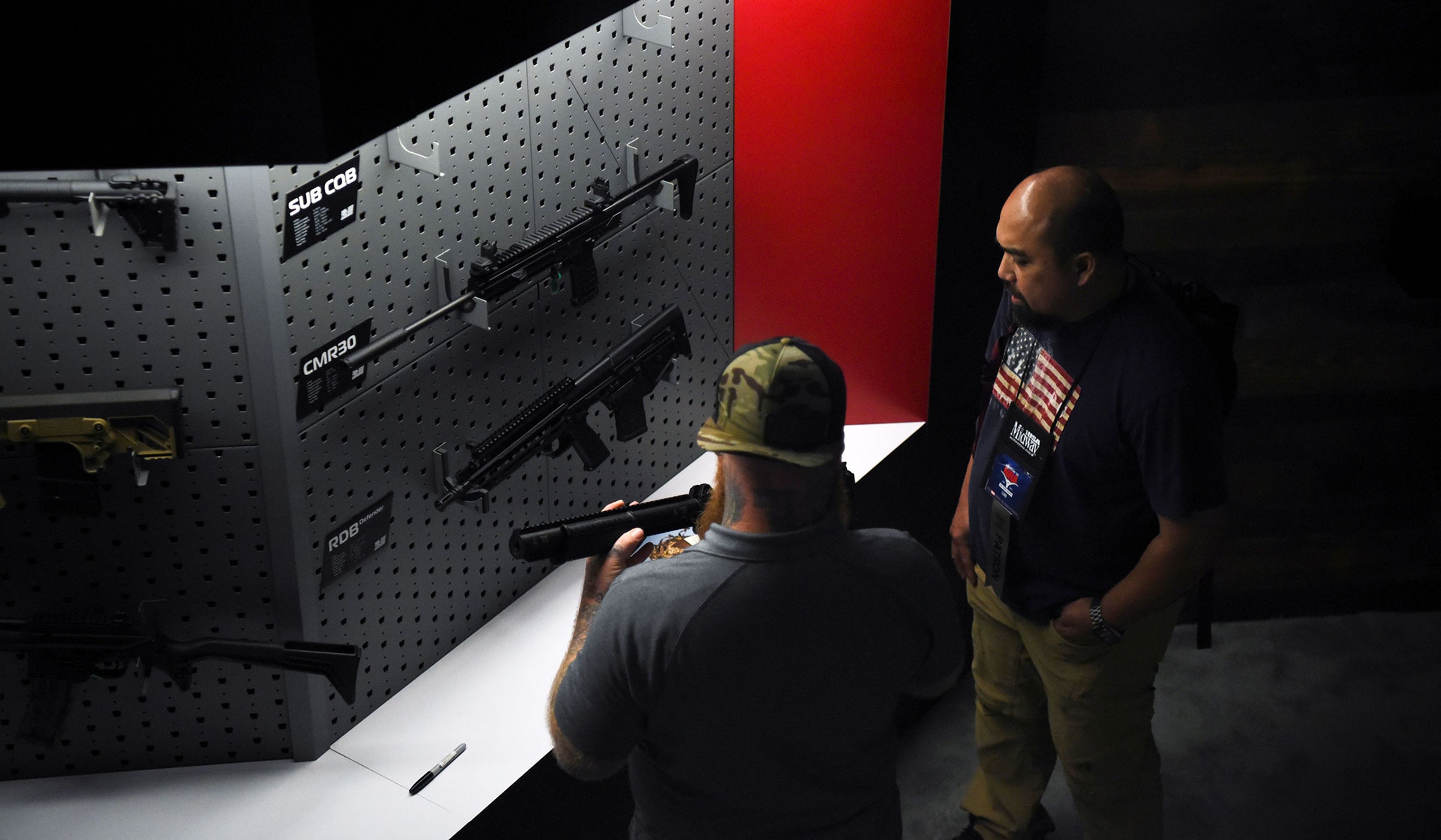
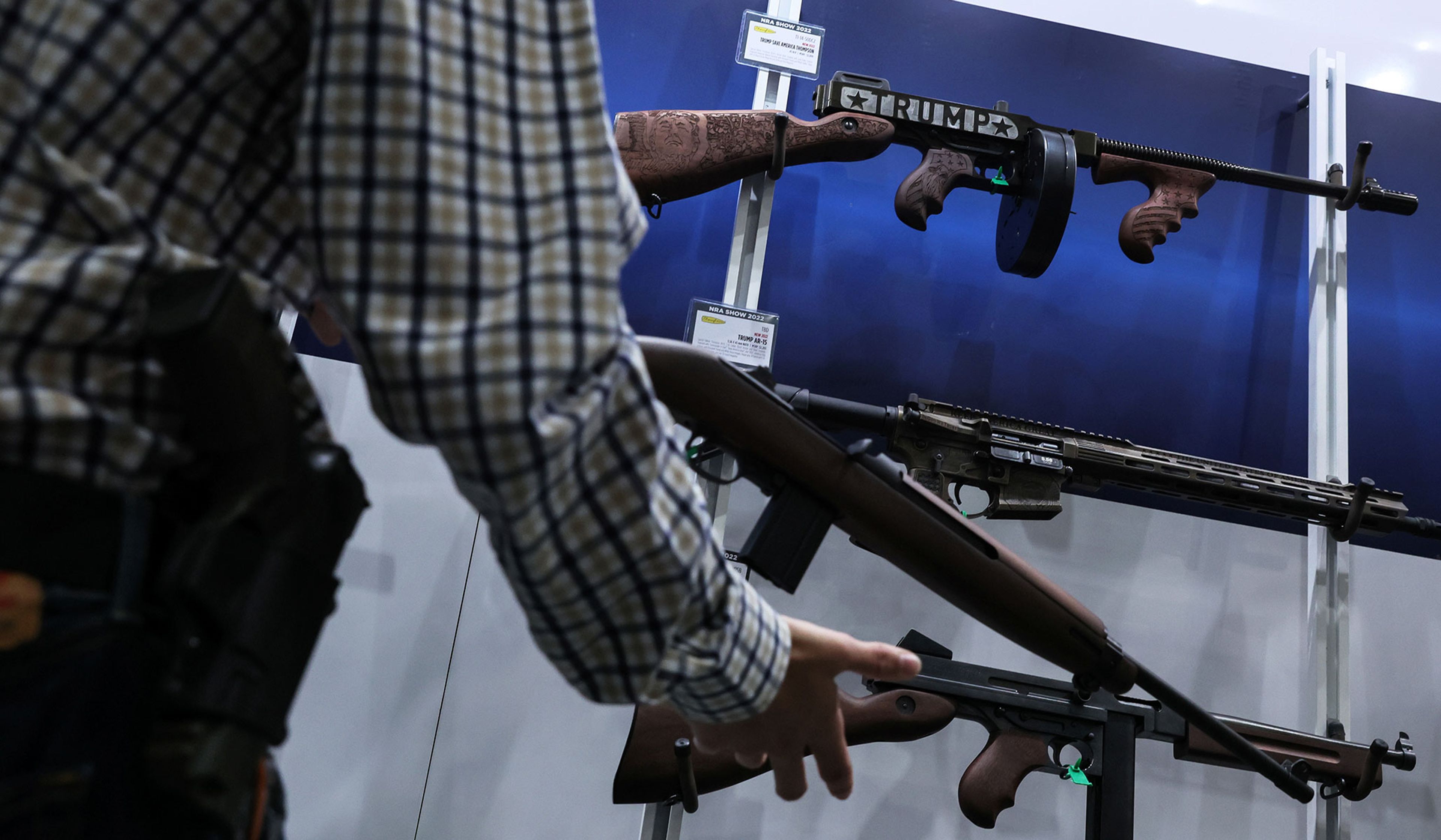
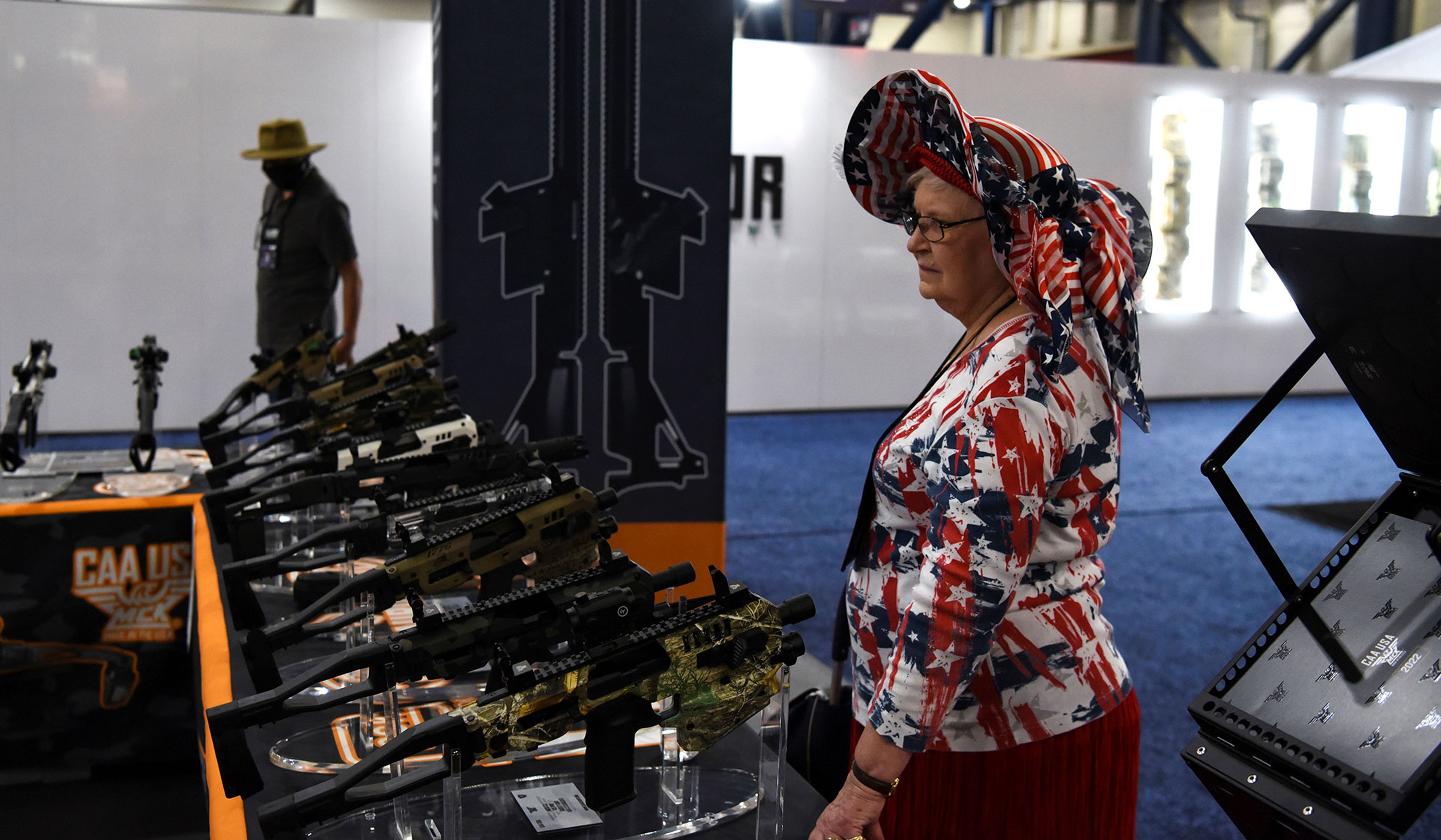
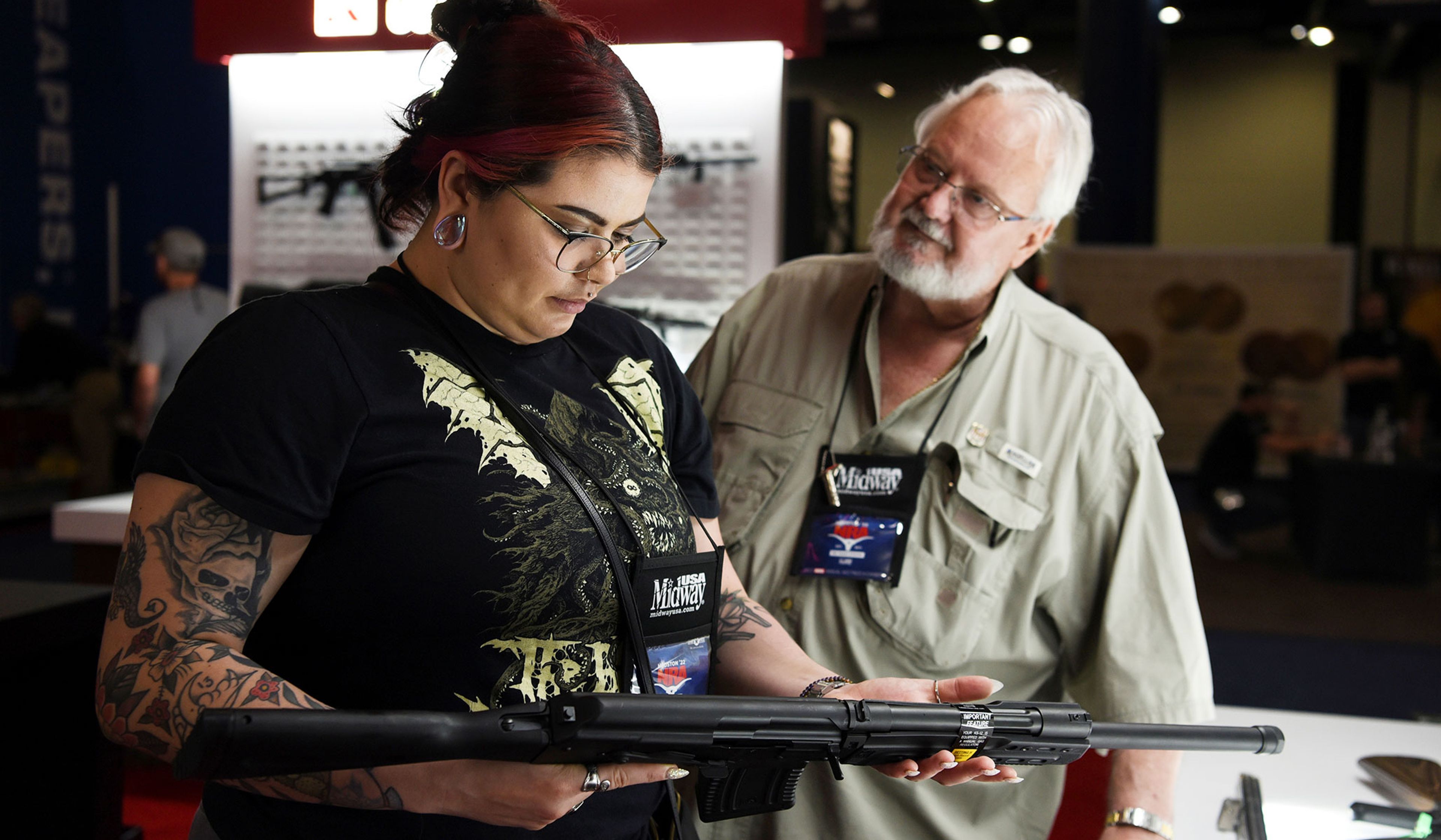
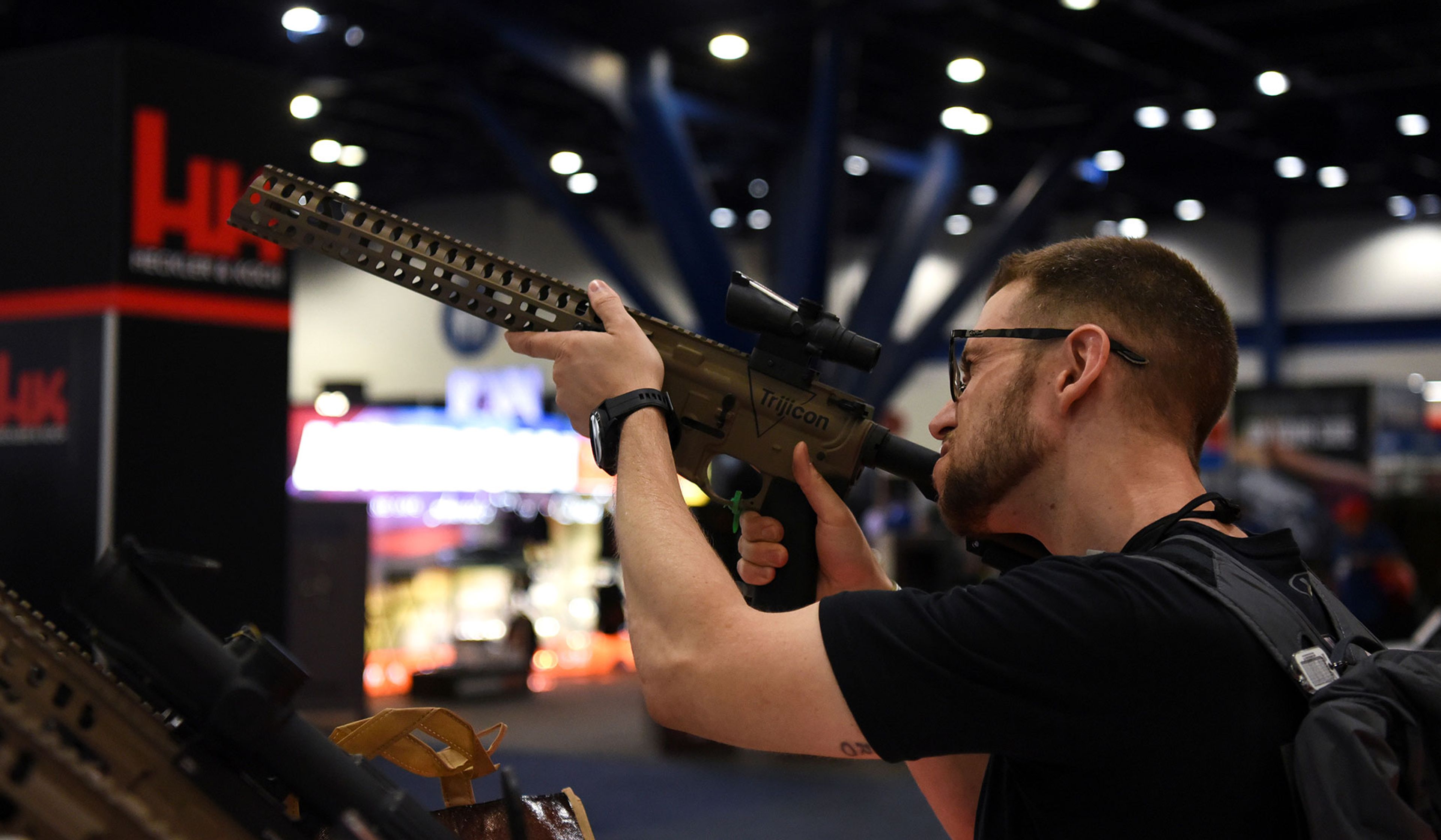
A person walks in front of the stage at the NRA-ILA Leadership Forum during the National Rifle Association annual convention in Houston, Texas, May 27, 2022.
Shannon Stapleton/Reuters
The 1930s provided an early test of the NRA’s abilities. It was then that Congress, at the behest of the Department of Justice, first contemplated serious federal gun laws. The NRA accepted the need for restrictions on fully automatic machine guns (such as the “Tommy guns” in vogue at the time). Then as now, however, handguns were much more commonly used in everyday gun crime, and the Justice Department wanted them regulated too; one bill would have taxed pistols and revolvers and required (in Charles’s words) “new purchasers to provide the Internal Revenue Service (IRS) with personal information, fingerprints, and a photograph.”
Flooding Congress with both intemperate constituent letters and in-person testimony from eloquent representatives, the NRA won. As signed into law, the National Firearms Act heavily regulated machine guns but left handguns alone. The Justice Department continued to push handgun-registration bills in subsequent years, with polls suggesting the public was on board, but these efforts never succeeded. Politicians rapidly grew to fear the NRA, its letter campaigns, and its command of the “sportsmen’s vote,” though Charles argues that this last element was more myth than reality in terms of election results.
The NRA’s political activities in these decades were not a secret; they were regularly touted in the group’s own materials and certainly known to every lawmaker who received a flood of letters. But these practices became more of a public issue in the 1960s and 1970s. Following the JFK assassination — in which Lee Harvey Oswald used a rifle he’d mail-ordered from an ad in American Rifleman — the media thoroughly covered the group’s role in defeating previous gun-control measures, and the federal government looked into the question of whether the NRA had crossed the line into illegal lobbying as a nonprofit. In 1968, the group’s executive vice president registered as a lobbyist as part of a deal with the Justice Department.
That same year, the MLK and RFK assassinations forced the issue, and Congress enacted both an omnibus crime bill and the Gun Control Act. The new laws banned the mail order of long guns, increased the minimum age for handgun sales to 21, required greater record-keeping, and prohibited various high-risk individuals from buying firearms, among many other provisions.
The ultimate effect of all this scrutiny, publicity, and gun-control legislation, though, was an NRA with boosted membership rolls, a base increasingly dedicated to opposing gun control, and a risk of being outflanked by other Second Amendment groups less willing to compromise. In the mid and late 1970s, the group rolled out new divisions explicitly geared toward lobbying and winning elections (and set up to work in these areas legally) and began its now-famous practice of “grading” lawmakers. At the 1977 NRA convention came the “Cincinnati Revolt”: The previous leadership planned to relocate the organization’s headquarters from D.C. to Colorado and seemed preoccupied with its new shooting center in New Mexico; opponents saw these as signs of misordered priorities and wanted the organization focused on defeating gun control. At the meeting, they changed the group’s bylaws and installed new leaders.
The Cincinnati Revolt is sometimes described as the point at which the NRA shifted its focus from hunting, marksmanship, and conservation to pro-gun political activism. Given the history outlined above, this is obviously untrue. But the revolt made clear that opposing gun regulation was core to the NRA’s mission.
It was also around this time that the gun-control issue solidified into its current partisan divide, with Republicans opposed and Democrats for. Richard Nixon and Gerald Ford had tried to stay on good terms with the gun-rights movement but had waffled at times, in particular considering regulations on cheap “Saturday-night special” handguns. But by the time he ran for president, Reagan loudly opposed gun control and was the first presidential candidate to earn an official NRA endorsement. And so ends our story.
Pro-gun readers of Vote Gun might cheer on the NRA and its political allies; the book’s author clearly sees a sad history in which “firearms controls” are held back by a small minority with bad opinions, dubious facts, loud voices, and an exaggerated sense of their own ability to sway elections. Yet either way, the story put together here is an important one.












Comments