Are Public-Sector Unions Constitutional?
Philip K. Howard aptly lists the ill effects of public-sector unions (“Raiders of the Delegated Treasury,” March 20) yet misdiagnoses the root problem and prescribes the wrong medicine. Any supposed “delegation” of power from the executive to unions is really just a manifestation of their political influence — as mobilizers of money and votes — and not a formal grant of authority to them. It’s quite democratic. Hence, there is no way the Constitution can be employed for courts’ intervention to “reassert” executive power over unions. Apart from inviting judicial activism, it likely wouldn’t persuade the current Supreme Court. So far as textualism goes, only Congress can pass laws that prevent the executive from bargaining with unions. It’s also unwise to bring in the courts on questions of policy, including the policy of public administration, which are proper to the political branches. Using, as a legal arrow aimed at nondelegation to defang the unions, the “guarantee clause” (in Article IV) of a “Republican form of government” to the states would only misfire. Good luck convincing Congress.
Arjun Singh
Philip K. Howard responds: All the issues raised in this letter are addressed in my book, Not Accountable. For example: Congress lacks the constitutional authority to remove the president’s “executive power” under Article II. The fact that unions have used political power to secure their stranglehold over the operating machinery of government does not make it lawful. Under the nondelegation doctrine, no elected official or body can delegate official authority to a private group such as unions.
Parents Choose, Taxpayers Save
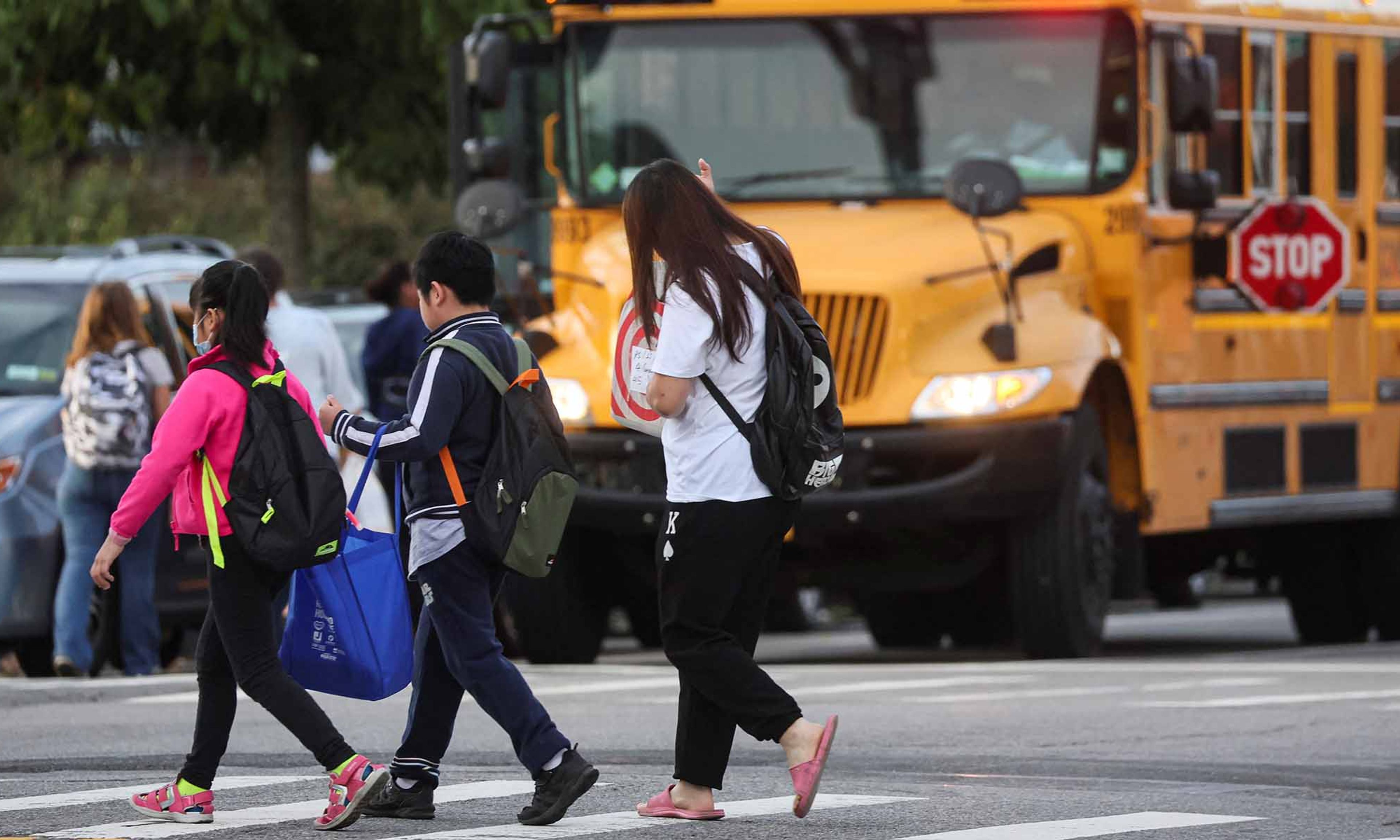
NR mentioned that a school-choice “revolution is afoot” (The Week, March 6). Besides benefiting students by improving educational quality with competition and giving parents freedom to choose values they want taught, there’s another key advantage of school vouchers that is rarely mentioned: It’s very likely that taxpayers also benefit from school choice.
Some think the opposite is true because they’ll be paying for private schools already picked by parents. But all voucher programs give parents a smaller amount for the private schools selected than is spent per student now in our public schools. If vouchers are set at 50 percent of the average public-school cost per student, then roughly the first 10 percent of public-school students shifting to private schools will offset the costs for existing private-school students. But with shifts beyond 10 percent or so, there are net savings to the taxpayers. If 30 percent of our public-school students switched to private schools with vouchers set at 50 percent of the public-school cost per student, there would be a savings of 10 percent overall (50 percent of 20 percent), which nationally would amount to about $75 billion per year (10 percent of $15,000, times 50 million) in educational savings. In states such as New York, the savings per student would be especially large because the cost per student is far higher than the national school cost of about $15,000 per student. A study by Ron Lauder in 1991 showed that the savings in New York would be $4 billion per year. Today those savings would be about $10 billion per year in New York alone. School choice would help taxpayers, students, and parents.
Frank J. Russo Jr.











Comments