I occasionally joke that, when I’m with the Italian side of my extended family, the main thing we discuss at the dinner table is what we’re planning to eat the next day. It’s only sort of a joke.
Every culture has its venerated culinary traditions, but we Italians savor ours with unique fervor and defend them with particular intensity. Most of my memories of holidays and family gatherings are anchored, in large part, by memories of what we ate: leg of lamb with garlic and rosemary for Easter, the Feast of the Seven Fishes on Christmas Eve, big outdoor celebrations around the grill for the Fourth of July.
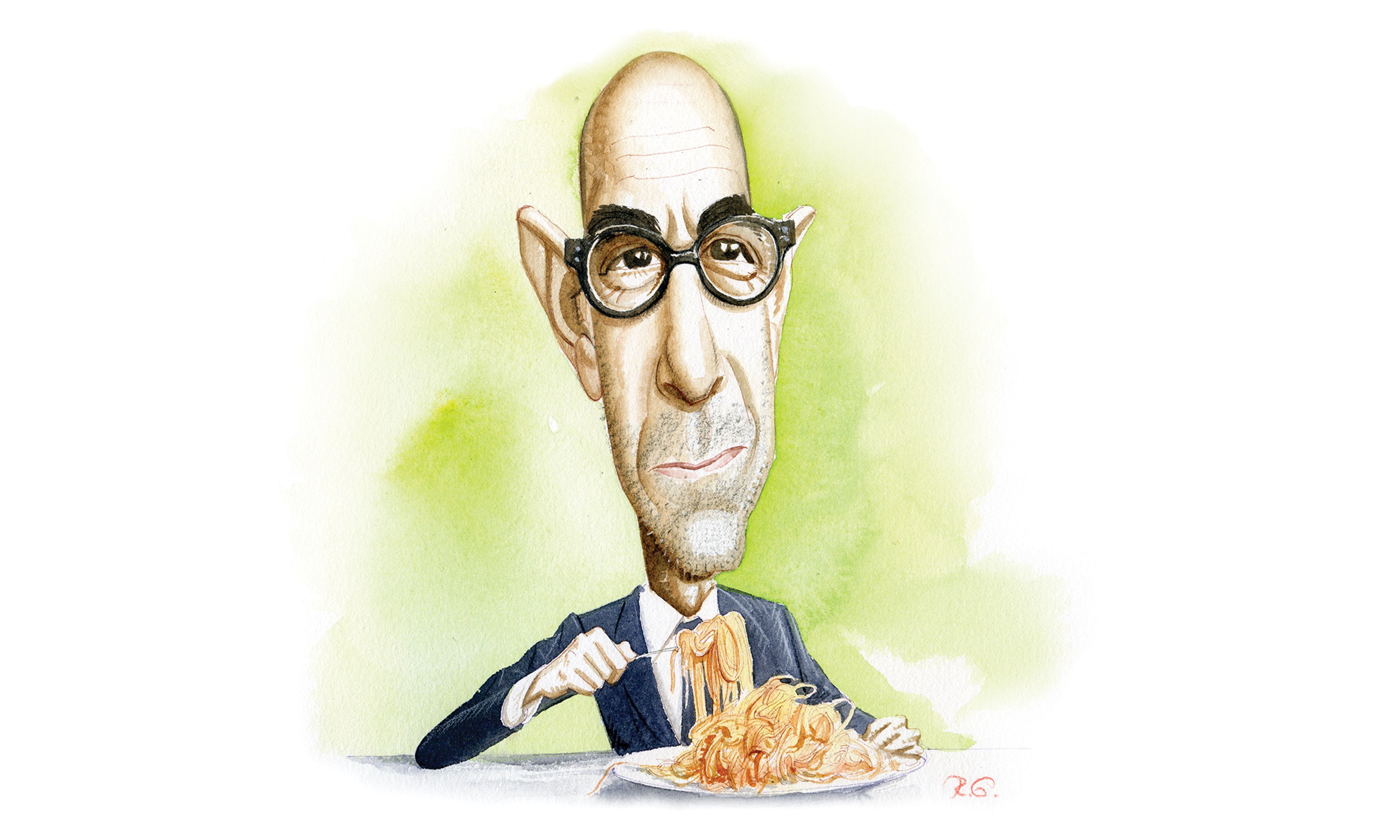
Raised this way, I felt right at home reading Stanley Tucci’s new memoir, Taste. “In Italian families, nothing is discussed, ruminated on, or joked about as much as food (except death, but I’ll save that subject for another book),” Tucci writes early on. Reading that sentence made me feel as though I’d pulled up a chair at his kitchen table, or at my own.
The talented film actor, known for several prominent roles in recent decades, certainly delivers on the book’s title. Taste is in some ways more of a love letter to good food and skillful cooking than it is a story about his life. We do learn plenty about him along the way, though, and he illustrates precisely what has been my own experience: Reflecting on a lifetime often involves remembering a lifetime of food. Tucci weaves together engaging anecdotes about his life with ruminations on the food he’s come to love — and in almost every instance, it is the food of Italy.
Growing up just north of Manhattan, Tucci had that most valuable childhood blessing: a mother who not only loved to cook but was excellent at it. Incredibly, she worked full-time yet most evenings produced complex dinners, which Tucci describes in mouthwatering detail: breaded veal cutlets, chicken cacciatore, several kinds of fish — always served with no fewer than three sides.
“It should be obvious by now that when I was young, my mother spent most of her waking time in the kitchen, and she still does to this day,” Tucci writes in a moving passage on what might be described as his cooking philosophy. “Cooking for her is at once a creative outlet and a way of feeding her family well. Her cooking, like that of any great cook or chef, is proof that culinary creativity may be the most perfect art form. It allows for free personal expression like painting, musical composition, or writing and yet fulfills a most practical need: the need to eat. Edible art. What could be better?”
This is not to say that things were always gourmet in the Tucci household. As each week wore on and the budget became thin, the food became simpler; sometimes Tucci’s father made pasta with garlic and oil, or eggs poached in marinara sauce made extra sweet with onions. But in describing these meals, Tucci makes a crucial observation: “Given the innate Italian facility to create something substantial out of practically nothing, we hardly suffered.”
I can attest to the existence of this facility. Many a time, I’ve witnessed my father, from whom I get my Italian heritage, pull a few handfuls of nothing from the pantry and produce a snack fit for a king. Though I might run the risk of bragging, I’m fairly confident that I was lucky enough to inherit this culinary Midas touch. Washington Examiner columnist Salena Zito, also an Italian American, wrote recently of having last-minute dinner guests and turning basic pantry supplies into a meal of gravy (how some Italians describe tomato sauce), pasta, ricotta balls, charcuterie, rolls, an apple-maple cake, and salad — that innate gift for making a lot out of a little.
In a tantalizing passage, Tucci describes a meal that he says “might have been the simplest dish of pasta” that he’d “ever eaten.” It is spaghetti, mixed with thinly sliced sautéed zucchini, olive oil, garlic, and a handful of pepperoncini. The result? “Out of all the meals I have eaten it still remains one of my favorites, . . . the perfect balance of five simple ingredients.” He adds, “As I travel, research, and cook more over the years, I find this culinary equilibrium is realized with the most humble ingredients time and time again in the Italian kitchen.”
Tucci’s description of his school lunches — often repurposed from the previous night’s dinner — is another highlight. Reminding me again of my father, he tells of trading his exotic sandwiches, such as an eggplant-parmigiana “wedge,” to obtain marshmallow fluff on white bread from a friend. Each boy thought the other possessed a treasure.
Throughout Taste, Tucci shares a number of simple recipes, offering readers the chance to enter the delicious world to which he’s introduced them. “Perhaps the most precious heirlooms are family recipes,” he writes. “Like a physical heirloom, they remind us from whom and where we came and give others, in a bite, the story of another people from another place and another time.”
Taste is difficult to put down from the start, but its final chapters are particularly gripping, as Tucci relates his recent battle with oral cancer and the way it affected that most essential faculty: his taste. In heart-wrenching, vulnerable detail, he recounts making a discovery to which all of us can relate — in temporarily losing that which he loved, he came to value it all the more. It was only through his battle with cancer that Tucci fully realized why food has always meant so much to him. The art of cooking and the pleasure of eating are real, to be sure. But the fundamental joy we find in food is through its connection to family, to memory, to the things we hold most dear. As Tucci puts it: “Love can and does enter through the mouth.”











Comments