Time was news came three ways. The newest way was television, one network anchored by the Voice of God, a second by a tag team, one of whom was witty. The anchor of the third left no impression. The next newest way news came was radio, although the only news I ever learned from the stations I listened to was which British invader was No. 1 that week. The oldest way — old as the republic, in fact — was newspapers. My hometown, a middling upstate city, had two dailies, morning and evening, owned by the same corporation. The news they recounted was essentially the same, not because of some corporate conspiracy but because everyone, including the men on television, agreed what the news was.
This pre-established harmony broke about the same time as my voice. There was a war abroad and riots at home. The British invasion was about much more than music, and most of it was as all-American as hillbillies, transcendentalists, and black people. I never saw anything like an alternative newspaper, but the views expounded in such places began to seep in on album covers, corners of TV shows, all the little venues that those with curiosity or some other itch resorted to, and that made the rest of us, when we stumbled upon them, say, “Look at that!” Counterculture then generated its own counters, hence my discovery of this magazine.
Technology did not bring change, change preceded technology. It came from ideas and will. Then technology, and a few legal tweaks, poured gasoline on it. First came more channels: 24-hour news. At the same time radio became interesting: 24-hour views. Finally, the DOD-funded program enabling computers to talk to each other became everybody talking to each other. The daily newspaper was left to be the equivalent of the weekly, or monthly, magazine, recapping what you already knew.
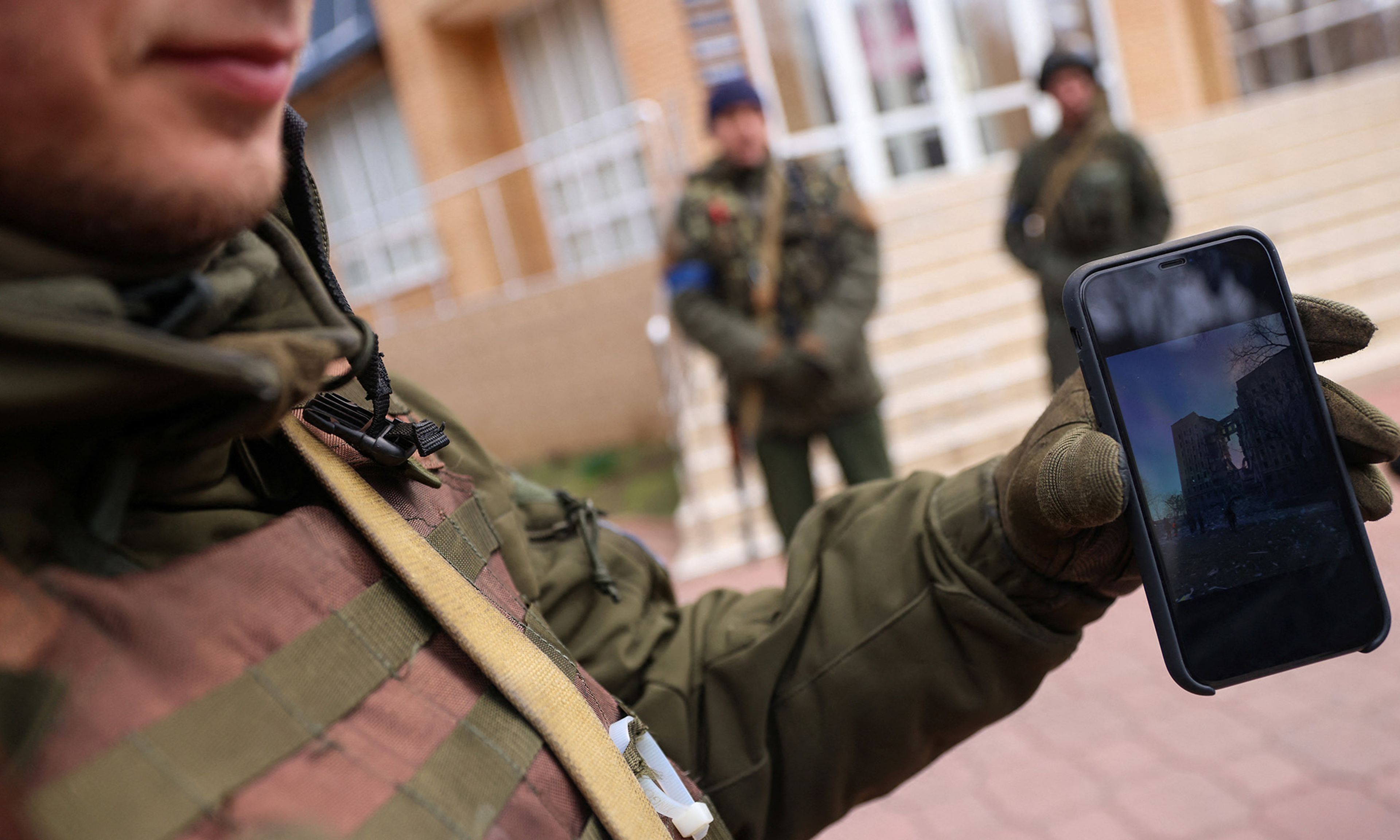
I follow the war by war scrolling. Here is what pops up.
Propaganda. Both sides blast it out. The Ukrainians do a better job, because they have a sense of humor (best so far, Zelensky and Putin supposedly having a phone conversation: —Hey Vovo, wanna hear a joke? —Go ahead. —Kyiv. —I don’t get it. —You won’t, b****) and because theirs has a highish truth quotient: Their country was actually invaded, their president has actually stayed in his capital, etc. But all things are relative. The blasted matériel, displayed like hunters’ kills, is all the other side’s, not theirs. And it repeats: I have seen the same strike on an invader’s tank creeping up a road reported as new two or three times. The Russians seem by contrast obvious, slow-footed. Zelensky is a billionaire. Here is a Nazi flag we found. See the Putin rally. It recalls my days reading the Daily Worker, whose cartoons were the last place in the world, besides get-out-of-jail-free cards in Monopoly, to depict rich men in striped pants and cutaways. War maps are the psyops of both sides. The Ukrainian ones show the enemy controlling only filaments of highways, the Russian ones show broad arrows swooping every which way.
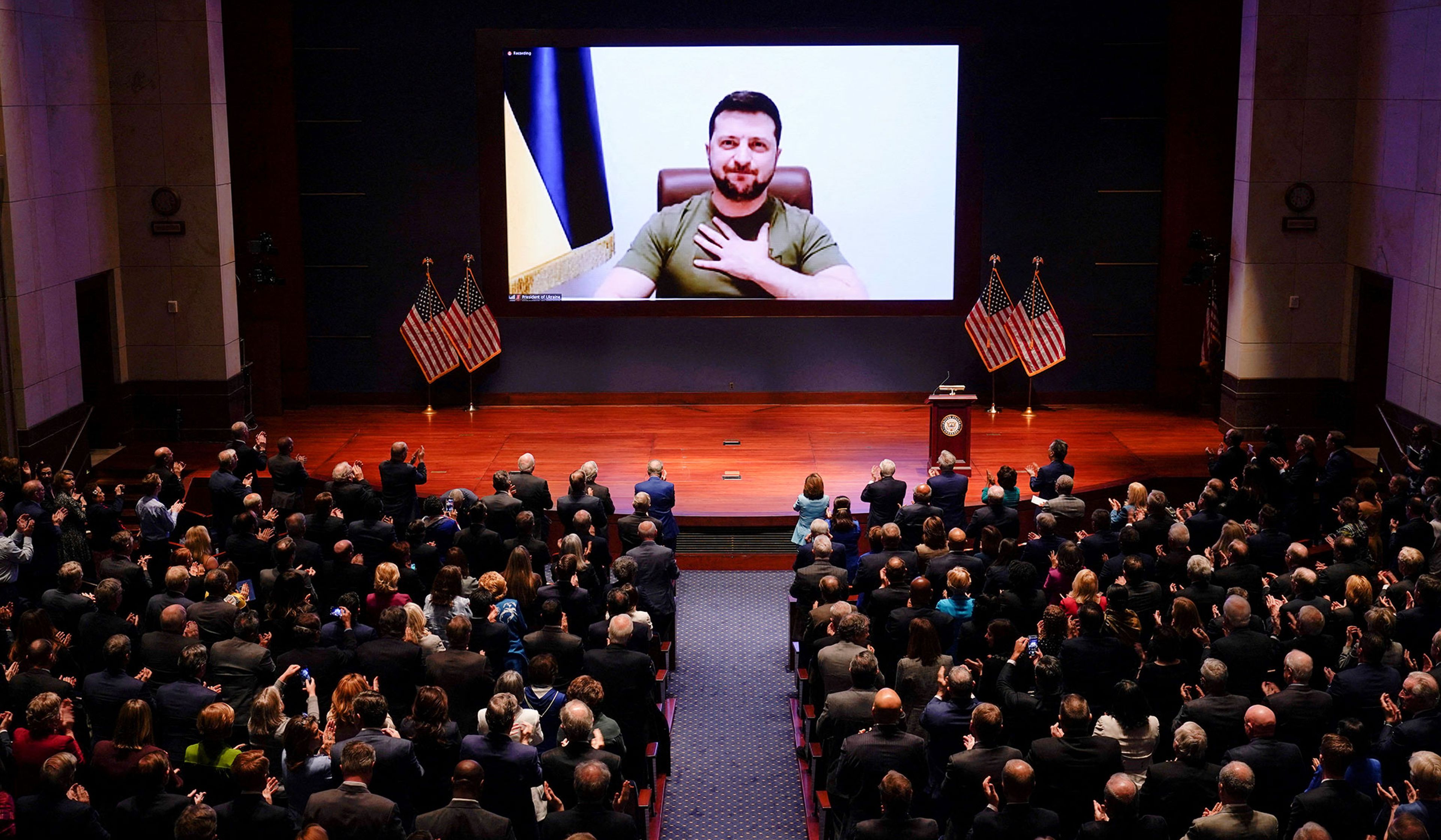
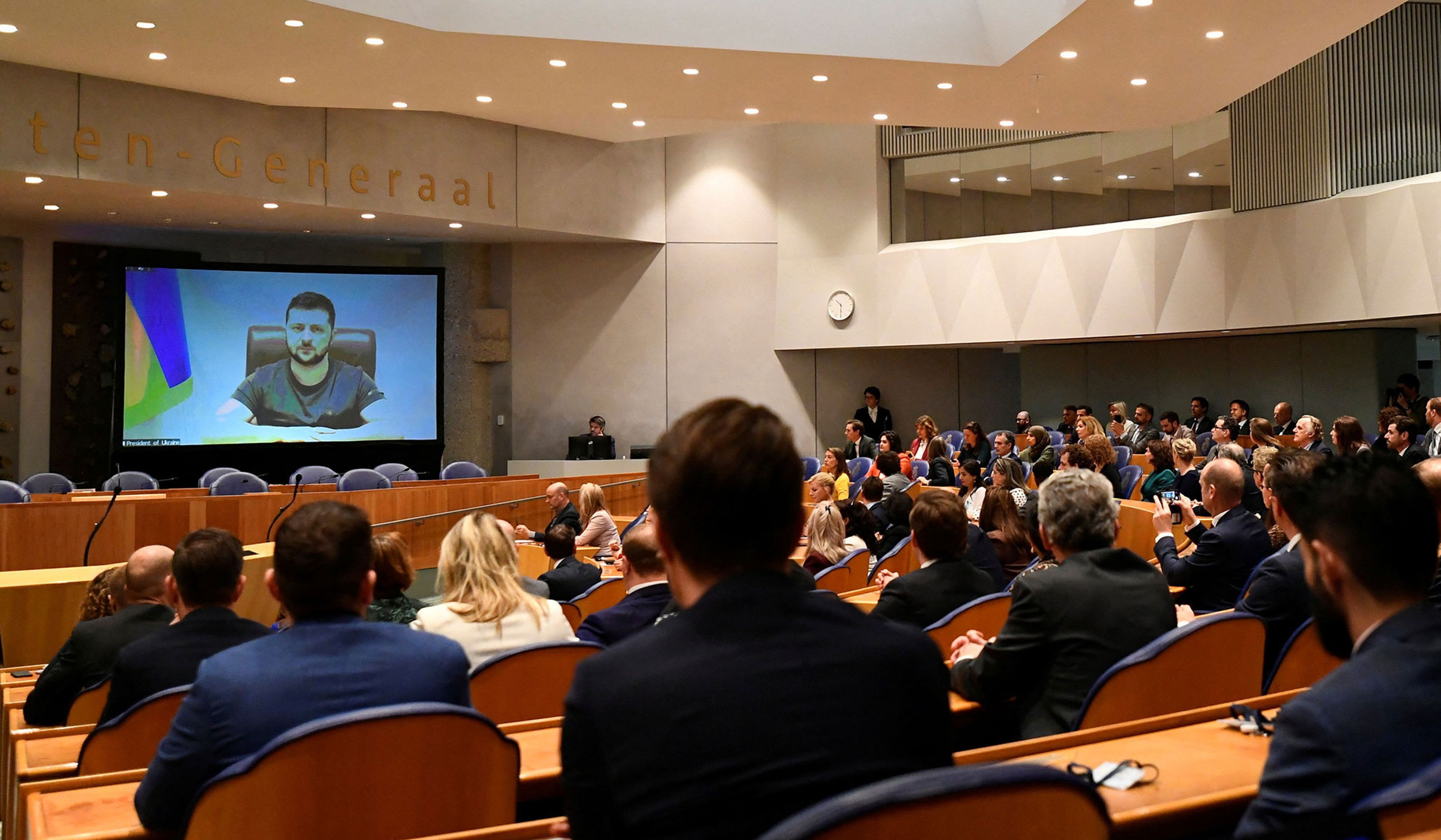
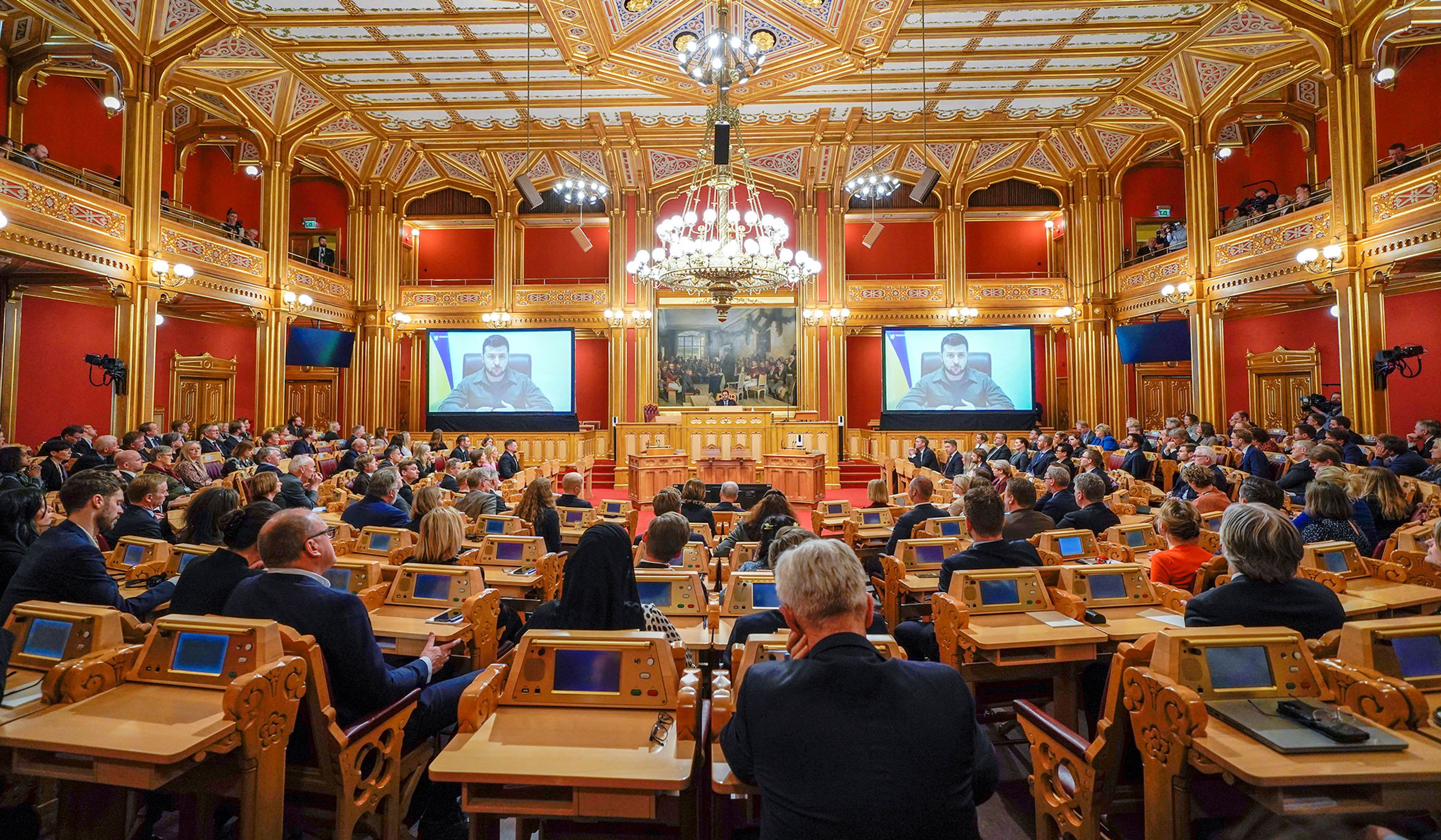
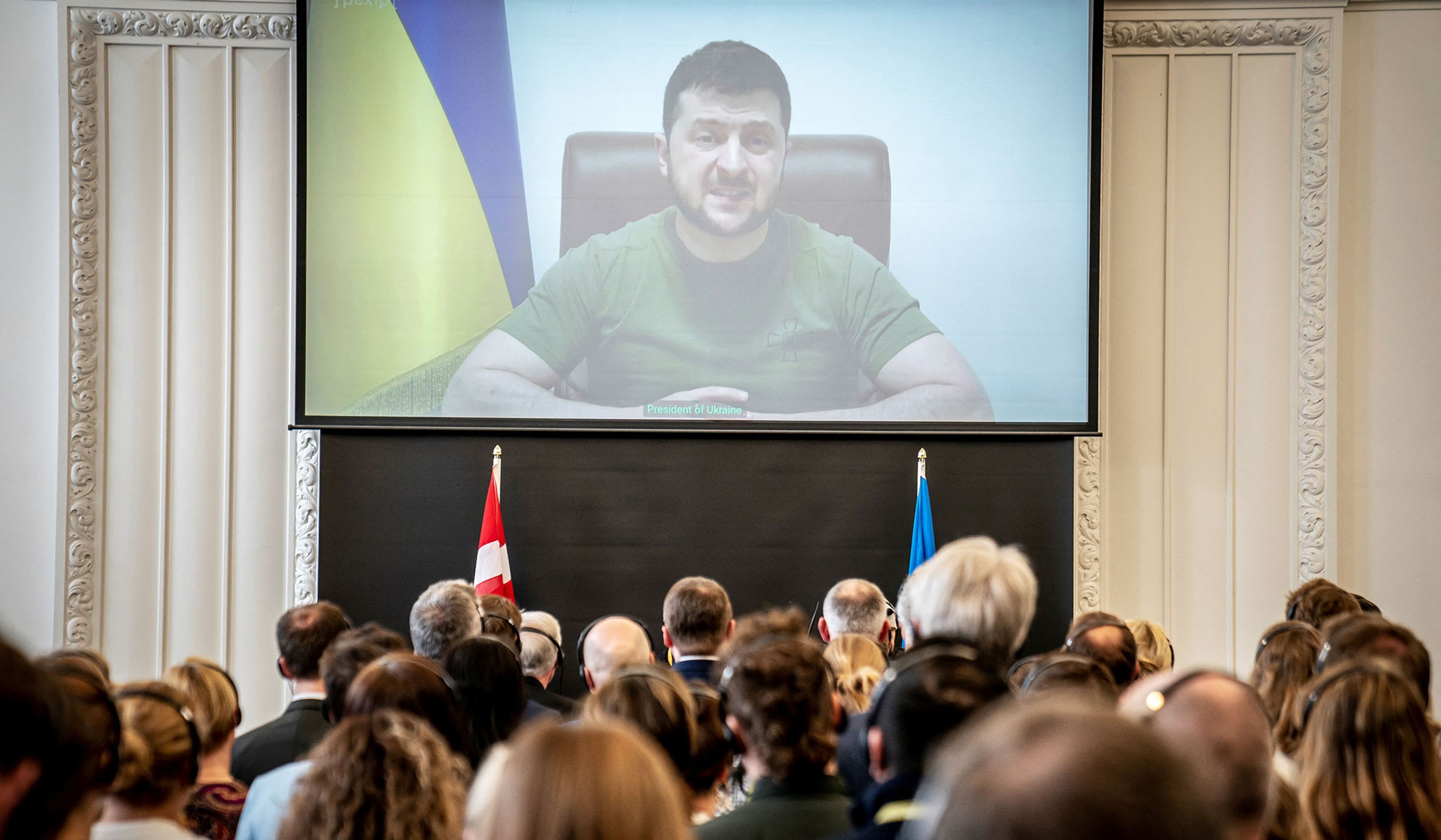
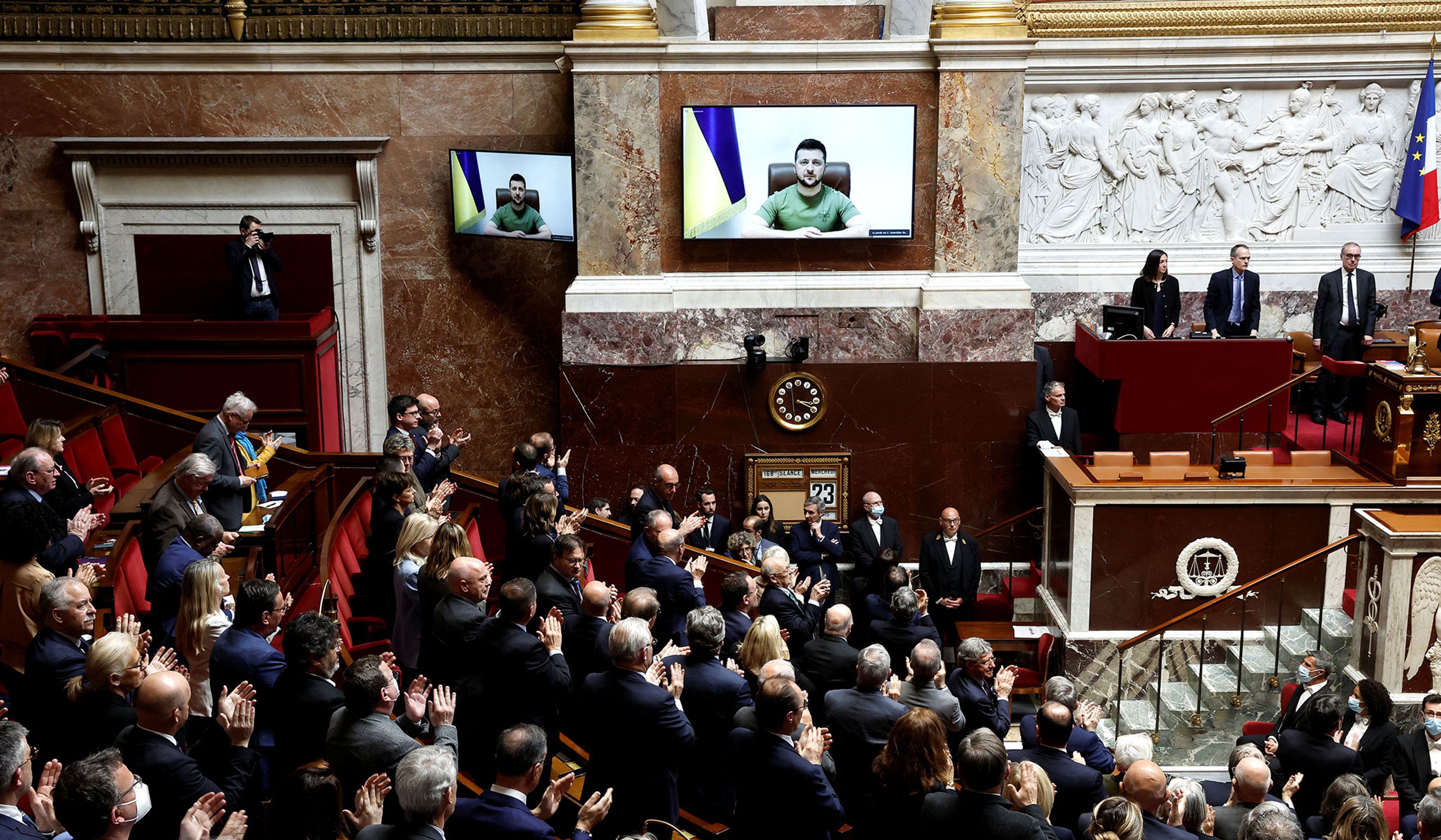
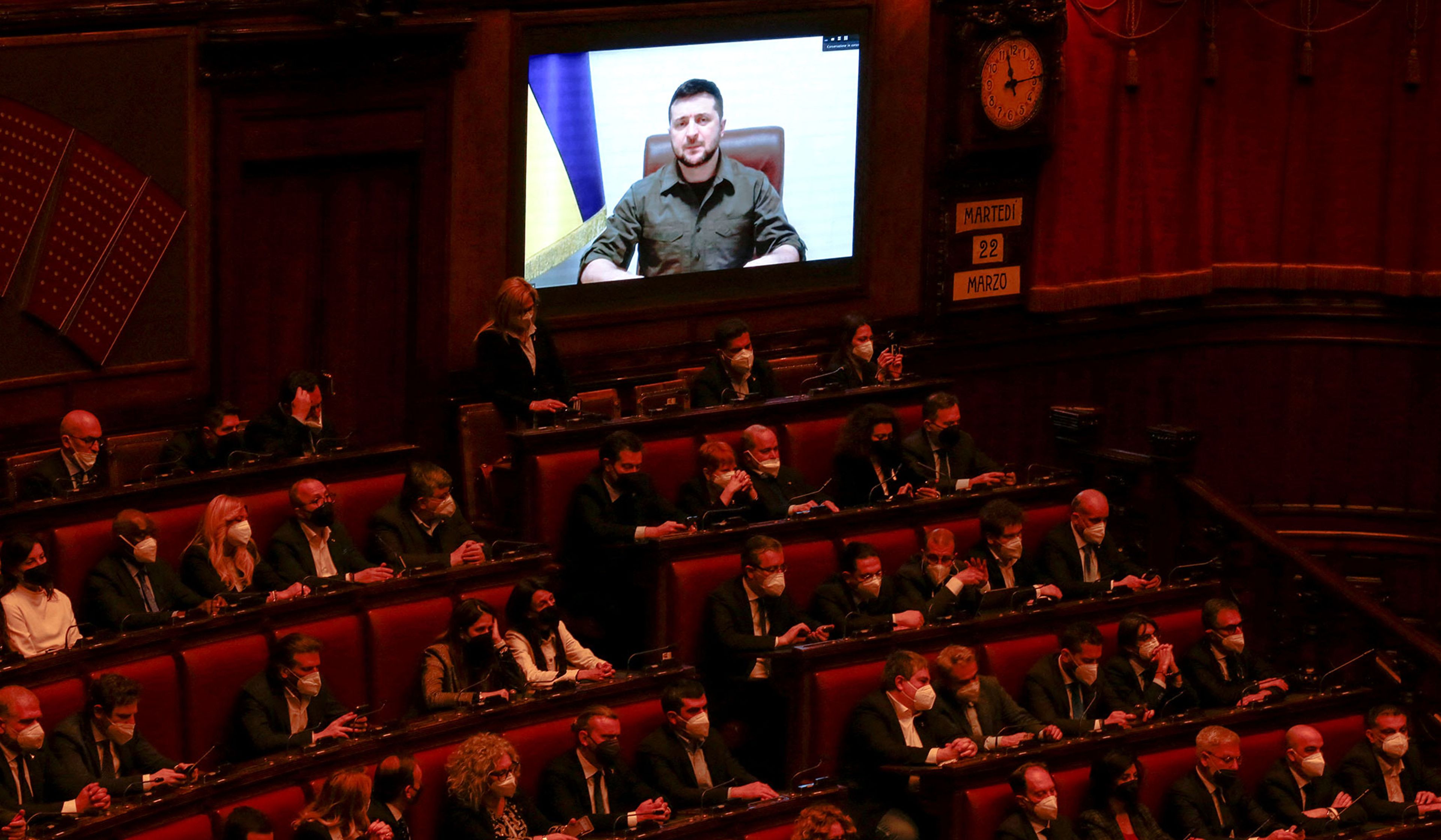
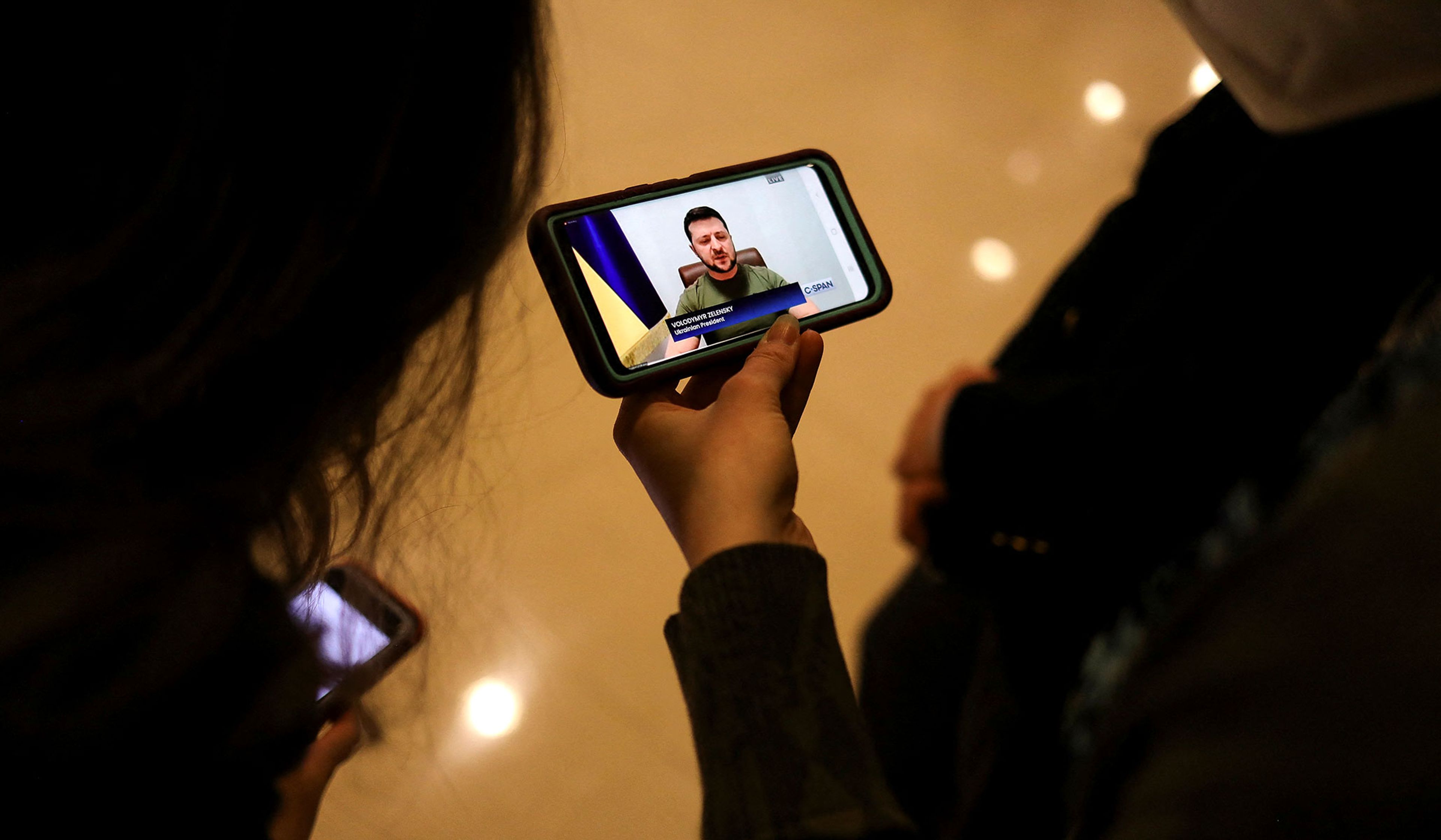
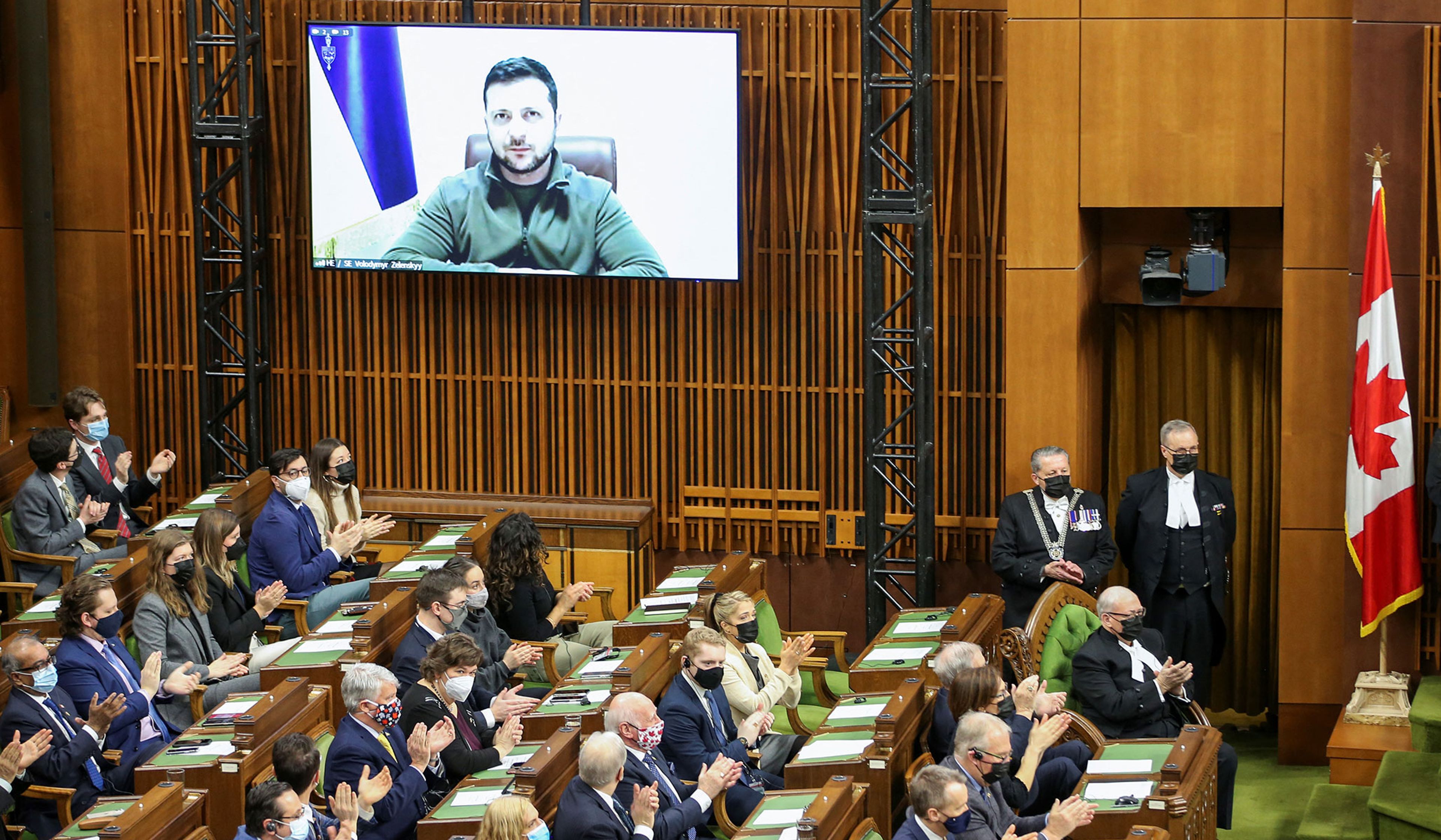
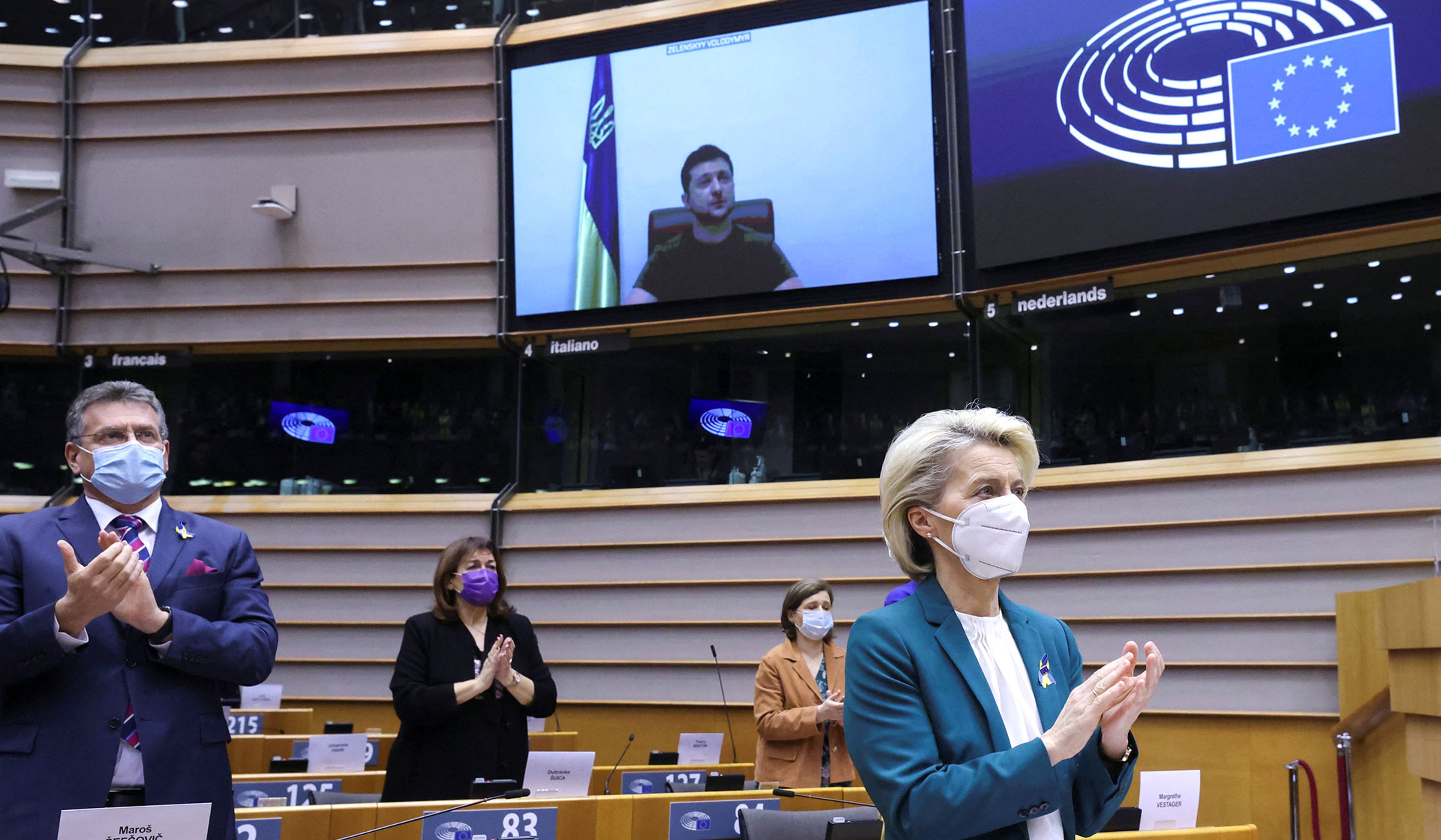
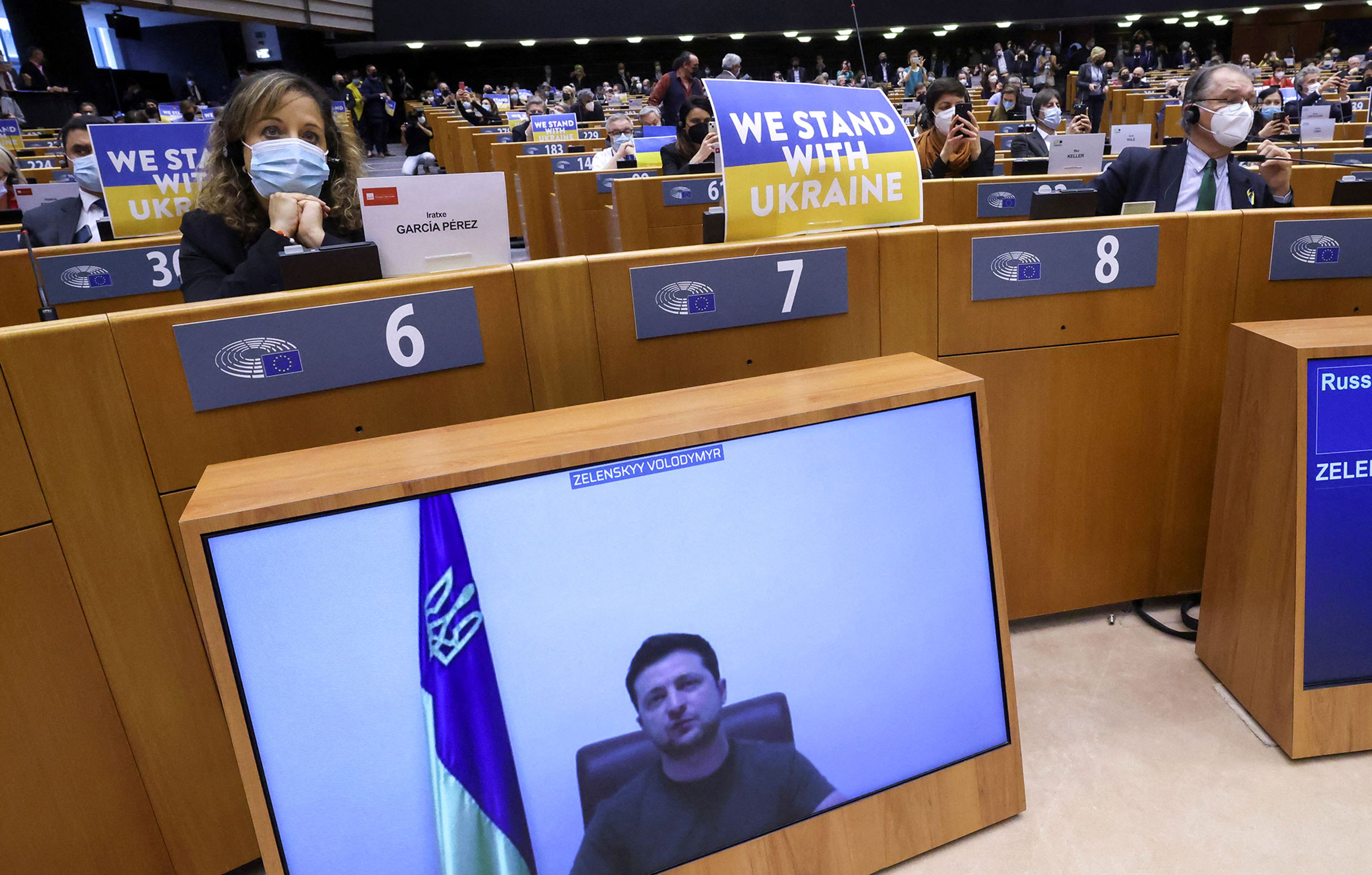
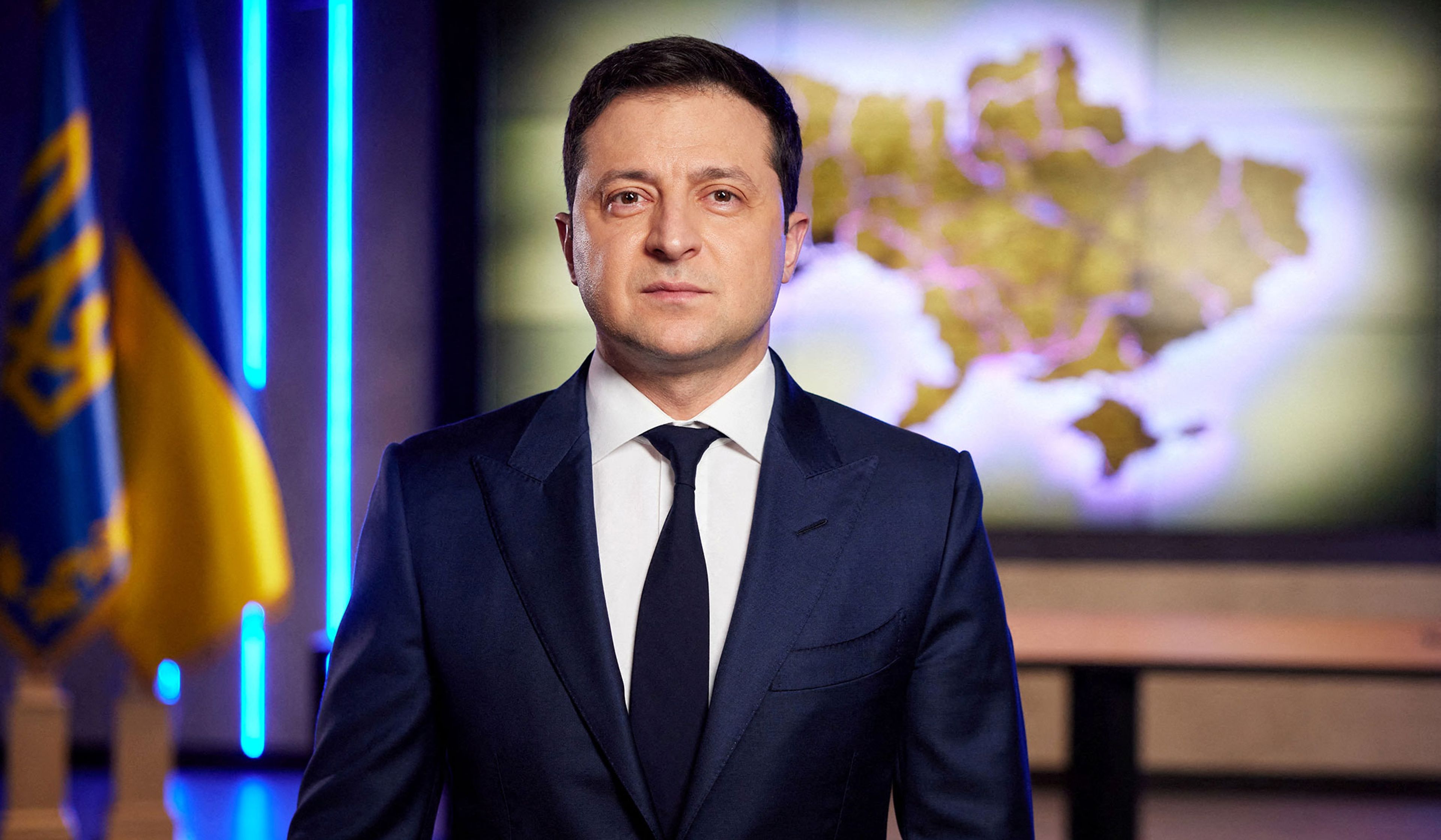
Ukrainian President Volodymyr Zelensky delivers a video address to senators and members of the House of Representatives at the U.S. Capitol in Washington, D.C., March 16, 2022.
J. Scott Applewhite/Pool via Reuters
American reax. Americans have a long history of screwing everything into our own binoculars. During the Reign of Terror the supporters of Thomas Jefferson displayed little guillotines at their public dinners, not that they ever dreamed of erecting them, but as a way of owning the Federalists. So now the struggle for democracy is the campaign to reelect the president, and Trump threatened Zelensky because Putin told him to (it’s the new pee tape). On the other side, Ukraine harbors Fauci’s biolabs, or the war is all a distraction from the Freedom Convoy. Is every political junkie so self-centered and hateful? No. But there are always some such, and sometimes many such.
Analysis. Some posters try to take an objective view, or at least a long one. When this takes the form of analyzing each other, it rapidly becomes worthless. Mearsheimer, threat or menace? Discuss. But I have seen an interesting thread on tire maintenance, and Russia’s lack thereof; another, endorsed by a French general, on what Putin might actually achieve: All I took was your right shoulder and rib cage, give peace a chance.
Cheering. General Badenov is reported KIA — news greeted with clapping emojis, and hopes that he may rest in pieces. I know war is meant to do this, and each side is always as happy when the other loses as when its own wins. Their destruction is as good as our triumphs. And there are cases when it would be better for one side to prevail than the other. But to sit like spectators in a digital Colosseum cannot be good.
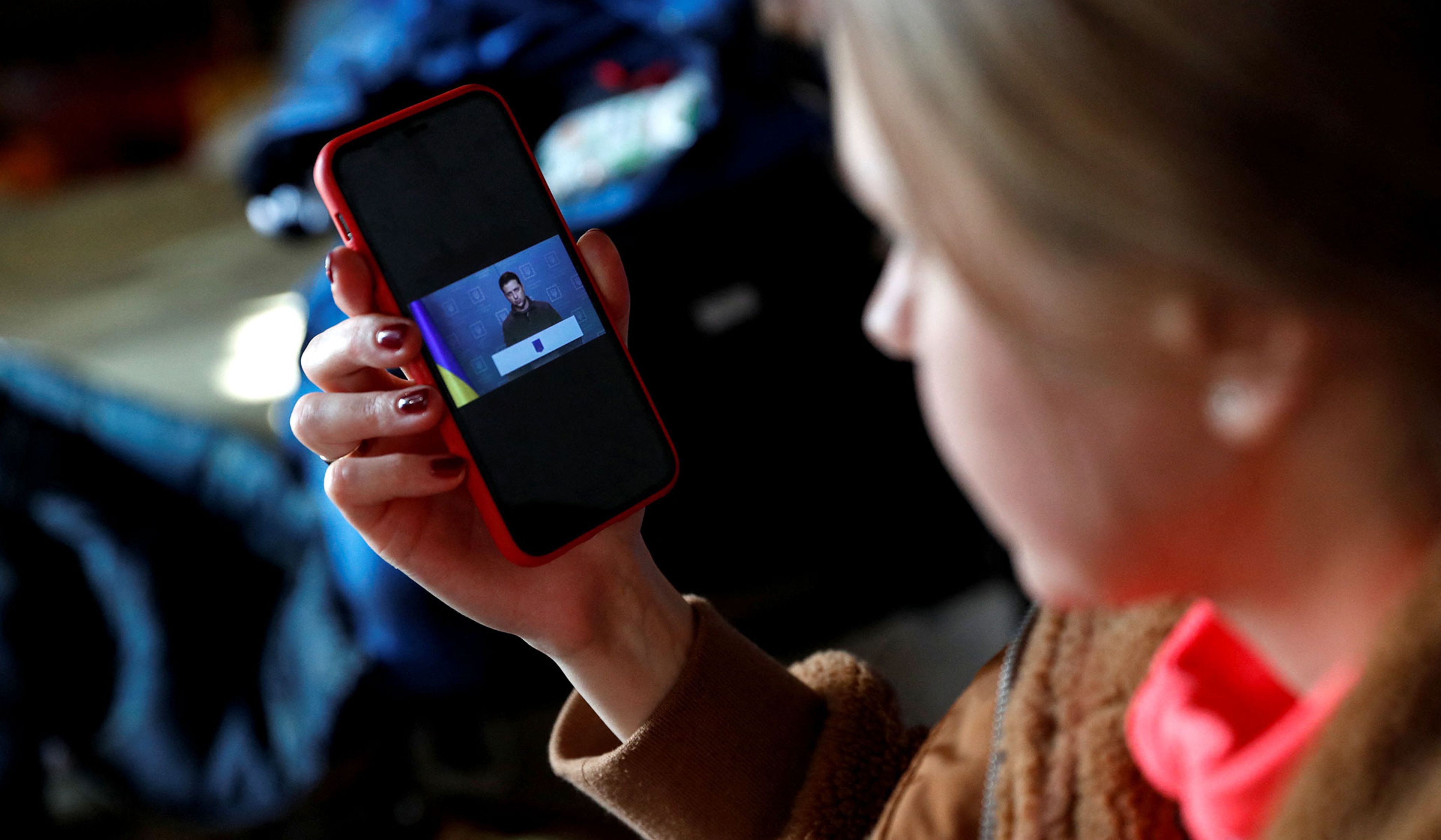
The dead, the wounded, the displaced. Bodies lying on a sidewalk, in a street, like bags the garbagemen forgot to pick up. The checkerboard pattern made by blasted-out windows in an apartment building. Train-station platforms, solid with people. The odd evacuee carrying a cat. These images all show urban environments, infrastructure, or pets with which we are familiar. But they should also make us consider the people, differently housed and dressed, who were erased or expelled in the Congo; by the Saudis in Yemen; by us in Iraq; by us years ago in Japan. Pacifism fails the test of effectiveness, so we keep going to war, we always say, of necessity. But do we also like it? Or at least like to read about, or look at it? A car is wrecked alongside a highway. Everybody cranes. A country is wrecked in our smartphones. Everybody scrolls.
Thomas Hardy ended a mediocre poem about naval gunfire in the English Channel with a stanza that suddenly goes into overdrive.
Again the guns disturbed the hour,
Roaring their readiness to avenge,
As far inland as Stourton Tower,
And Camelot, and starlit Stonehenge.
The music of the last two lines is seven “t”s. The meaning is: King Alfred; King Arthur; druids . . . all the way down.











Comments