
• Who knew that the Bank of Crypto and Tech Start-ups could be risky?
• President Biden’s budget, like all presidential budgets, was a messaging document that will not become law. The message it sent was nonetheless notable. He does not want ever to return to pre-pandemic levels of spending, planning $6.9 trillion for next year and $10 trillion by 2033. He wants roughly $5.5 trillion in tax increases, partially repealing the Trump tax cuts and increasing taxes on business and investment. Even giving him the benefit of several doubts, deficits would still be $4.4 trillion higher under his budget than they were projected to be when he took office. And he kept his promise from the State of the Union address to ignore the looming insolvency of entitlement programs. Rising interest rates are making government borrowing less affordable, but the president plans to keep overspending while doing little to remove barriers to private-sector production. Defense spending, meanwhile, gets cut in inflation-adjusted terms. The president’s priorities are consistently the reverse of what the federal government’s should be.
• When the U.S. House of Representatives votes 419 to 0, it’s usually over something innocuous (such as renaming a post office). But that was the vote tally for the Covid Origins Act, introduced first in the Senate by Josh Hawley (R., Mo.), which requires the director of national intelligence to “declassify any and all information relating to potential links between the Wuhan Institute of Virology and the origin of” Covid-19. The law permits redactions only when necessary to protect sources and methods. The unanimous vote suggests that everyone in Congress wants to know what new information prompted the Lawrence Livermore National Laboratory’s nonproliferation intelligence specialists — “Z Division” — to revise their assessment and conclude that a lab leak was the most likely origin of the disease. White House press secretary Karine Jean-Pierre was nonetheless noncommittal about whether Biden would sign the bill. A veto would fail to take advantage of a rare instance of unanimity on a matter of substance that could actually be beneficial.
• “President Trump was wrong,” former vice president Mike Pence said at the Gridiron dinner in Washington, D.C., on March 11. “I had no right to overturn the election and his reckless words endangered my family and everyone at the Capitol that day, and I know that history will hold Donald Trump accountable.” Pence’s forceful condemnation came days after Fox News host Tucker Carlson had tried to recast the Capitol riot as “mostly peaceful chaos.” That description of January 6 is a mirror image of CNN’s description of the August 2020 riot in Kenosha, Wis., as a “fiery but mostly peaceful protest.” Both descriptions are obtuse. No, the majority of those who illegally entered the Capitol in January 2021 — and the majority of those who broke Kenosha’s curfew in August 2020 — did not engage in violence, but the nature of mobs is that they are as dangerous as their most dangerous elements. Mobs do not stop and hold a vote to defer to the majority about whether to commit violence. “Tourists don’t injure 140 police officers by sightseeing,” Pence said. “Make no mistake about it, what happened that day was a disgrace, and it mocks decency to portray it in any other way.”
• Carlson gave his Fox News audience a look at some of the security footage from inside the Capitol Building during the January 6 riot given to him by House Speaker Kevin McCarthy. Carlson insisted that the footage upended the popular narrative about what happened that day, but it did no such thing. The video, the Fox News host maintained, “does not show an insurrection or a riot in progress,” which is true only insofar as the clips he played were not of the riot raging just outside that building. Indeed, one of the alleged bombshells included footage of the so-called QAnon Shaman, Jacob Chansley, being escorted by police through the building. But the officer involved had already told HBO documentarians about the de-escalatory tactics he and Capitol Hill police employed to talk down the protesters who outnumbered them. Chansley had already been in the building for 40 minutes before Carlson’s footage showed him being escorted to the Senate chambers (where he was joined by many other trespassers). We already knew that Chansley entered the building after his fellow rioters broke into the Capitol, and we had already seen him defacing the Senate chambers in a video shot by New Yorker reporter Luke Mogelson. All they got from Carlson was footage of the walk from point A to point B. Some bombshells turn out to be duds.
• Biden left many House Democrats seething after he agreed to a congressional resolution blocking a major rewrite of the District of Columbia’s criminal code. Even the Washington Post editorial board warned in January that the revised code could make D.C. “a more dangerous city” by decreasing “punishments for violent crimes such as carjackings, home invasion burglaries, robberies and even homicides.” But as House Republicans prepared a vote on the resolution disapproving of the new code in February, the White House issued a veto threat decrying the “denial of self-governance” in the federal district as “an affront to the democratic values on which our Nation was founded.” A few weeks later, Biden announced he would sign the House GOP’s resolution after all, but his about-face came too late for the 173 House Democrats who had already voted against it. Ensuring the safety of the seat of government is, of course, the most basic reason Congress has constitutional authority over the federal district. The dangerous law enacted by D.C.’s council is proof that Congress should not attempt to relinquish this authority.
• Biden nominated Deputy Labor Secretary Julie Su to take over as labor secretary from the departing Marty Walsh. Before being deputy, Su was labor secretary for the California state government. It’s rare for a cabinet nominee to have such directly comparable prior experience, and Su’s confirms she is unfit for the job. Under her watch in California, the state’s unemployment-insurance program paid billions to fraudsters while eligible recipients went on wait lists. Biden has said in the past that he wants to clean up pandemic fraud, but putting Su in charge of the Labor Department sends the opposite message. Su also supported California’s A.B. 5 and the FAST Act. A.B. 5 restricts independent contracting, and the FAST Act would create an unelected government board to micromanage the fast-food industry, with the power to raise the minimum wage to $22 per hour. A.B. 5 is strongly opposed by many truckers, and the association for owner-operator truckers called for Su to be rejected. With John Fetterman and Dianne Feinstein out, the GOP can defeat Su’s nomination with only one Democratic defection. The United States does not need to be more like California, and Republicans should make the case against Su, and progressive labor policies, in the strongest terms possible.
• Republican senators J. D. Vance (Ohio), Josh Hawley (Mo.), and Marco Rubio (Fla.) harshly criticized Secretary of Transportation Pete Buttigieg in the aftermath of the February 3 train derailment in East Palestine, Ohio, calling for his resignation and lambasting his incompetence. Those three senators have, however, endorsed a bill written by Democratic senator Sherrod Brown (Ohio) in consultation with organized labor to give Buttigieg more power. The Railway Safety Act contains ten “the Secretary shall” phrases in its 18 pages, and it implements parts of Buttigieg’s policy response to the accident into federal law. Buttigieg’s response was problematic, not least because no part of it addressed the causes of the East Palestine derailment and it largely consisted of granting long-standing union and environmentalist demands. The Railway Safety Act would at least address hotbox detectors, a failure of which helped cause the crash, but it would do so in an arbitrary, one-size-fits-all way, demanding they be placed every ten miles. The Federal Railroad Administration found only five derailments that were suspected to have been caused by overheating wheelsets (what the detectors should find) since 2021. A federal law establishing a national unfunded mandate for railroads to install new hotbox detectors to maybe prevent five derailments over two years seems like an overreaction, of the sort that could drive more chemical transports to trucks, which are more dangerous. Pete Buttigieg doesn’t need more power, and singular train accidents are not best addressed by national legislation.
• Silicon Valley Bank was taken over by the FDIC after it was threatened with a run and unable to pay back its depositors all at once. The bank was a go-to for tech start-ups, which had lots of money from venture capitalists to deposit and little need to take out loans. By marketing itself so exclusively to tech firms, SVB was unable to make money the normal way, by lending at interest. It instead used deposits to buy safe, long-term, government-backed securities. Rising interest rates mean declining market value for long-term securities, so while SVB was roughly solvent in the long run, it wasn’t solvent if many depositors wanted their money back at once. This was poor management by SVB. It’s not as though rising interest rates were a surprise, and other banks were able to plan around them. Diversification of depositors and assets is Banking 101, and SVB failed the test. But the collapse also raises questions about banking regulation. The unsoundness of SVB’s business model was apparent in public data available months ago. Now the government is disregarding the $250,000 cap on federal deposit insurance and promising 100 percent protection. One medium-sized bank in one region of the country doing business almost entirely in one sector of the economy has spurred instability of the kind that Dodd-Frank and increased Fed regulation post-2008 were supposed to prevent. What other obvious problems are lurking out there, with everyone expecting the regulators to fix them, only to be found out once it’s too late? There’s systemic risk for you.
• Much as the Inflation Reduction Act was really a health-care and climate law, the CHIPS Act seems to be a child-care and labor-standards law. To qualify for federal subsidies, chip-makers will have to provide child care to employees, either by building their own centers or paying workers’ costs at existing centers. And the supposedly urgent need for domestic chip-making will remain subordinated to progressive concerns, including environmentalism (see the onerous permitting process to build new factories and open new mines for raw materials). The trade group for chip-makers pointed out that delays from complying with environmental rules will diminish the impact of the government spending, but the government has yet to announce any plans to loosen the rules. Secretary of Commerce Gina Raimondo has, however, said that the CHIPS Act will be “transformational.” The bill was sold as a tightly focused national-security measure. The law is turning out to be a catchall for technocrats to try to engineer political outcomes. Maybe by the time companies jump through all the government’s hoops, they’ll be able to produce a few semiconductors on the side.
• After a year of dismal recruiting numbers, the U.S. Army is returning to the old “Be All That You Can Be” slogan used by the service between 1980 and 2001. Since then, the Army has used the short-lived “Army of One,” which sent the wrong message, before cycling through “Army Strong,” “Warriors Wanted,” and “What’s Your Warrior?” “Be All That You Can Be” is classic — an oldie but a goodie — but by itself it won’t be enough to attract young Americans back to military service. The Army’s own research has shown that its recruiting pool believes the Army just isn’t relevant to their lives. Young Americans are not, by and large, rejecting the Army; they’re not even considering it. Good pay, good benefits, and a path to a college education are all nice, but the Army would do better by leaning in to what has always attracted youths to military service: a sense of duty, an opportunity for adventure and martial comradery, and the self-actualization of facing and conquering immense challenges. If the Army can explain just what it means to “be all that you can be,” there are young Americans out there who will still seek to wear their nation’s cloth.
• Hannah Dreier wrote a remarkable story for the New York Times: “Alone and Exploited, Migrant Children Work Brutal Jobs Across the U.S.” Some of these children work twelve-hour days in dangerous, adult jobs. Some of the children manage to go to school for a bit; some of them are too exhausted. Dreier’s report caused shock waves, including in high places. Days after the report was published, another headline appeared in the Times: “Lawmakers Clamor for Action on Child Migrant Labor as Outrage Grows.” May the clamor continue, the outrage keep growing, and action — genuine, effective reform — take place.
• Dobbs freed states to regulate abortion without being vetoed by the federal courts. This has led to wins for the pro-life cause in Texas, Georgia, and elsewhere. But pro-life activists in other states have lost, lacking resources (especially compared with deep-pocketed pro-abortion forces) and attention (with much of the pro-life movement accustomed to national activism). Michigan was a particularly tough defeat. A confusingly worded measure on the 2022 ballot that proposed a radically permissive abortion regime passed by a greater margin than that by which Democratic governor Gretchen Whitmer won reelection. In neighboring Ohio, where a “heartbeat law” passed but is currently enjoined, language for a ballot measure that would amend the state’s constitution to guarantee that “every individual has a right to make and carry out one’s own reproductive decisions” was recently approved. If Ohioans for Reproductive Freedom and Ohio Physicians for Reproductive Rights succeed in gathering enough signatures, the measure will be placed on the November 2023 ballot for a vote, with a bare majority sufficing to amend the state constitution. The measure would enshrine Michiganesque laxity not only on abortion but also on sex-change surgeries and other “reproductive decisions” for minors — in both cases without parental-consent requirements. Pro-lifers will have to highlight the extremism of the proposal; we can be certain the media won’t.
• Michigan Democrats, newly controlling both chambers of the legislature for the first time in 40 years, have prioritized curtailing protections for workers in private-sector professions who decline to join a union or pay union dues. When Whitmer signs this bill, she will have violated her pledge to veto legislation that employs gimmicks designed to avoid subsequent voter referenda, and she will help unions again garnish the wages of nonmembers. Democrats are also teeing up giveaways to organized labor, hoping to rejuvenate unions’ function as well-heeled political PACs. The state’s Republicans, meanwhile, have shown more enthusiasm about relitigating the 2020 election than defending the conservative gains of the last decade. Michiganders deserve better than what they’re getting from Lansing.
• In the home stretch of the 2016 election, fixer Michael Cohen paid Stephanie Clifford (a.k.a. Stormy Daniels), a performer in pornographic films, $130,000 to say nothing about her affair with Donald Trump. Trump subsequently reimbursed him for “legal expenses.” Now Manhattan DA Alvin Bragg has been holding grand-jury hearings, evidently with the intention of prosecuting Trump for falsifying business records — a misdemeanor state crime that can rise to a felony if committed for the purpose of committing “another crime” — violating federal campaign-finance laws, perhaps, or money-laundering. Why has Bragg waited till now? He has been distracted by mismanaging Gotham’s crime problem. He may also feel shamed by Georgia prosecutors pursuing Trump for election-law violations there. Could this charge stick? Getting Trump on a felony requires a legal two-step, but such links have been made before. It would also require a jury to believe Cohen, already convicted for his role in the scheme. But many cases — e.g., mob prosecutions — rely on witnesses far dodgier than he is. Fiat justitia.
• Bar associations (mainly in blue states) have pursued disciplinary action against attorneys who represented Donald Trump in his efforts to overturn the results of the 2020 election. These include Rudy Giuliani, John Eastman, Jeffrey Clark, and Jenna Ellis. The precedent raises some questions: Many a lawyer has represented bad causes with integrity, while the bar is often too lax in punishing lawyers who abuse the system. Nonetheless, officers of the court should be above outright lies, which is why Bill Clinton had his law license suspended in Arkansas. Ellis, who was a senior legal adviser to Trump but not the lead lawyer in his court cases, agreed to a public sanction in a stipulated settlement with the bar in Colorado, where she is licensed to practice law. Ellis acknowledged claiming on Twitter and various cable news programs that Trump was the proper victor and “won by a landslide,” that there was “widespread fraud in this election,” that the election was provably stolen, and that the campaign had evidence of ballot manipulation. She now admits that these were untruths. The presiding disciplinary judge concluded that public censure was appropriate under American Bar Association ethical standards against “dishonesty, fraud, deceit, or misrepresentation . . . that adversely reflects on the lawyer’s fitness to practice law.” Indeed it does.
• Twenty years ago — on March 20, 2003 — the U.S. and Britain invaded Iraq. The war and its aftershocks are still with us. At immense cost in blood and treasure and to the domestic tranquility of our politics, the U.S. deposed the malign regime of Saddam Hussein and enforced an international prohibition on Iraq’s development of chemical, biological, and nuclear weapons. Then mistakes and mismanagement took the American effort to the brink of catastrophe amid an insurgency and an Iraqi civil war. Back home, opportunistic Democratic politicians, sensing the winds had changed, turned on the war, calling for a premature withdrawal. Finally, George W. Bush’s new strategy, “the Surge,” rescued a very unsatisfying victory from the jaws of utter defeat — a victory that was later fumbled by Barack Obama’s withdrawal of American forces, which necessitated a reinvasion to defeat ISIS. It’s not clear that from these many turns of events Americans have learned the correct lessons. In this issue’s special symposium, more than a dozen writers revisit the war and its consequences.
• Vladimir Kara-Murza and Alexei Navalny are two of the bravest people in Russia — indeed, in the world. Each has survived an attempt by the Russian state to murder him with poison. (In Kara-Murza’s case, two attempts.) Each is a political prisoner, kept in brutal conditions. Each is gaunt, with failing health. Their attorneys have sounded alarms about their condition. Kara-Murza is undergoing a closed-door trial for treason. (He criticized the Ukraine war.) Navalny faces a battery of charges, all designed to keep him harassed, legally, until he dies in prison. A documentary about him, by Daniel Roher, has just won an Oscar. Navalny’s wife, daughter, and son were on hand to accept. If these men are to die — to be killed, one way or another — let it not be without attention from people in the Free World who give a damn.
• Daniel Ortega’s socialist regime in Nicaragua continues its persecution of the Catholic Church. Most recently it seized the assets of two Catholic universities and the charity Caritas Nicaragua. This comes after a spate of expulsions of religious orders and priests and the imprisonment of Bishop Rolando Álvarez. The rector of one of the impounded universities, Father Ramiro Tijerino, was condemned to ten years in prison, stripped of his citizenship, and sent into exile in the United States. In recent years, the state has banned Easter processions and closed Catholic radio stations, all because the Catholic Church has occasionally sheltered citizens who protested the government. This persecution has prompted Pope Francis to condemn Nicaragua as an “obscene dictatorship,” comparing Ortega’s regime to “the communist dictatorship of 1917 or the Hitlerian dictatorship of 1935.” In turn Nicaragua has suspended diplomatic relations with the Holy See. In recent years Nicaragua has totally suborned or destroyed almost every institution that could be critical of the government except the Catholic Church. The government has for years purged the country of NGOs and charities that provided for poor Nicaraguans what the socialist government deprives them of. The Biden administration should join the pope in loudly denouncing Ortega’s capricious, unconstitutional, and ugly dictatorship, and should work with other Latin American allies to isolate the regime further.
• A new normalization agreement between Saudi Arabia and Iran doesn’t herald a new era of peace in the Middle East, but it does offer a glimpse of the region’s potential future as America fumbles. The announcement was light on specifics, but each nation will soon reopen its embassy in the other’s capital. The deal gives the Iranian regime breathing room as it stares down the existential threat at home of a savvy people who know they can do a lot better than Islamist autocracy. And it limits Israel’s military options, taking a possible partner in a strike on illicit Iranian nuclear facilities out of the picture. Long term, though, China’s growing clout in the Middle East is the most worrying aspect. Xi Jinping has clearly made his country’s overtures to the region a key priority. But China has not yet replaced the U.S. as the region’s preeminent security player. For all of this administration’s work to undermine the U.S.–Saudi alliance, and to pull back America’s military presence from the Middle East, the security architecture in place is too massive for any White House to dismantle in four years. But Washington sometimes appears to be trying.
• Once again, South Korea has broken its own record-low fertility rate. The average number of expected babies per South Korean woman over her reproductive life fell to 0.78 in 2022, down from 0.81 a year ago. South Korea is not alone. Japan reports a fertility rate of just 1.3. Conservative projections have South Korea losing 35 percent of its labor force between now and 2050. Taiwan faces similar projections. Japan had just 799,728 births in 2022, half of the 1.5 million it did in 1982. By comparison, in 2022, 1.58 million Japanese people died. Prime Minister Fumio Kishida warned that Japan is “on the brink of not being able to maintain social functions.” China, too, hobbled by decades of its barbaric one-child policy, now has a shrinking workforce, and the government is offering cash incentives to try to reverse the plunge of its below-replacement-level fertility. North Korea, facing yet another food shortage, is now using preferential food supplies to try to encourage women to have children. The future belongs to those who show up for it. East Asia’s fertility and cost-of-living crises are becoming a boon to younger nations such as Indonesia, Malaysia, Vietnam, and the Philippines, which have all been recipients of manufacturing investment from the region’s older nations. Soon, nearly every rich nation, and some very poor ones, will be experimenting with policies designed to encourage family formation and child-bearing.
• The British parliament passed legislation to establish buffer zones around abortion facilities, preventing any pro-life activity within a roughly 500-foot radius. The forbidden behavior even includes silent prayer. One pro-life campaigner, Isabel Vaughan-Spruce, has already been arrested twice under a local law in Birmingham that bars engaging in any “attempted act of approval or disapproval” in relation to abortion, including through “verbal or written means, prayer or counseling.” Abortion advocates have hailed the nationwide legislation as a victory for women everywhere. In reality, for those women being coerced into abortion, for those interested in alternatives, for the freedoms of speech and assembly, and above all for unborn children, it is a resounding defeat.
• The Norwegian Healthcare Investigation Board (UKOM) has ruled in favor of revising national guidelines for gender-distressed youth to reflect the lack of sufficient medical evidence to support puberty blockers, cross-sex hormones, and reassignment surgeries. UKOM advises that medicalized gender transitions, both hormonal and surgical, be restricted to research settings. As with other Western countries, Norway has seen an unprecedented uptick in referrals for gender dysphoria in recent years, with disproportionate representation among females and patients with autism. Like those of Sweden, Finland, and England, its health-care authorities are right to recognize the dangers of rushing a vulnerable patient population through experimental treatment. Just this once it would be nice if America could catch up with Europe.
• The Synodal Way gathering of German Catholic laity and bishops voted 176–14, with twelve abstentions, for a document that, among other things, calls for blessings of same-sex unions, “on the basis of a re-evaluation of homosexuality as a norm variant of human sexuality,” and an accommodation to radical transgender ideology, including the retrofitting of baptismal records to reflect an individual’s preferred gender. The move comes less than two years after the Congregation for the Doctrine of Faith at the Vatican declared that the Catholic Church “does not have, and cannot have, the power to bless unions of persons of the same sex.” The Catholic Church in Germany now stands in open defiance of Rome. If “Catholic” — i.e., “universal” — is to have any meaning, Pope Francis must impose discipline on his brother bishops.
• Columbia University announced that it would no longer require SAT/ACT scores for its applicants. This is understood within academia to be a shabby pretext laying the groundwork for the school (and others that may follow in its wake) to dodge the consequences of upcoming Supreme Court decisions on affirmative-action admissions policies. Standardized testing is demonstrably valuable as a means of identifying gifted youth from across all economic, social, and racial strata, but the problem as elite admissions offices currently see it is that too many Asians are overperforming on these tests, just as Jewish applicants in an earlier era once embarrassed the blue-blooded WASP sensibilities of the Ivy League. We oppose the abolition of standardized-testing requirements for college admissions not only because such tests work but also because we recognize their abolition for what it is: a backdoor means of retaining the ability to discriminate, and now perversely in the purported name of “equity.”
• To spot tomorrow’s misbehaving lawyers, look at today’s misbehaving law students. Too many left-leaning law students at today’s elite law schools cannot tolerate the idea of the other side of a debate getting its say. Such people are unfit to practice law. Too often, however, faculty and administrators have coddled or encouraged this intolerance instead of seizing the moment to instill crucial civic values in young adults who will soon enter the legal system. Fifth Circuit judge Kyle Duncan was the latest target: He was shouted down by an ignorant mob of Stanford law students. He had been invited by the Federalist Society to discuss the jurisprudence of his court and the Supreme Court on “Covid, Guns, and Twitter,” but those who came to hear him were denied that opportunity. The “diversity, equity, and inclusion” dean on the scene warned the mob that they were breaching the university’s free-speech policy but then turned on Judge Duncan and denounced both him and the free-speech policy. The university president and the law-school dean sent the judge a public letter of apology. We hope they follow up these words with actions that show they mean them.
• The White Rose was a small group of Germans, centered on the University of Munich, who opposed the Nazis. They distributed leaflets and scrawled graffiti (“Down with Hitler!”). One of their leaflets asked, “Isn’t it true that every honest German is ashamed of his government these days?” Another leaflet said, “We will not keep silent. We are your guilty conscience.” Members of the White Rose were found out, and its leaders were beheaded. Hans Scholl’s last words, before the blade fell, were “Long live freedom!” Traute Lafrenz was a member of the group. She was a Hamburger, born in 1919. State agents arrested her, and she awaited her fate in prison, until Americans liberated her at the end of the war. She emigrated to the United States, living in San Francisco, in Evanston, Ill., and elsewhere. She was a doctor. She also ran a school for special-needs children. On her hundredth birthday, the German government awarded her its Order of Merit, calling her “a heroine of freedom and humanity.” Traute Lafrenz has died at 103. R.I.P. And long live freedom.
• Topol, the actor best known for his iconic portrayal of Tevye in the film version of Fiddler on the Roof, has died at 87. Born Chaim Topol in Tel Aviv in 1935, he began his career in the Israeli theater before gaining international fame for his performance in the 1964 film Sallah Shabati. He then beat out Zero Mostel and Frank Sinatra to play Tevye the Milkman in 1971, earning an Academy Award nomination for his work. His work helped to raise the profile of Israeli theater and film on the world stage. Topol was also an accomplished singer, releasing several albums of traditional Israeli music. His legacy will live on through his many memorable performances and contributions to the arts and humanitarian causes. Lord, who made the lion and the lamb, thank you for Chaim.
Offensives
The end of winter offers a chance to judge the success of Russia’s winter offensive in Ukraine.
The results have been unimpressive. Steady pressure on the city of Bakhmut in the Donbas has gained ground, but at a shocking cost in men. Even Bakhmut’s fall would be no decisive blow. Instead of Grant before Petersburg, the invaders seem like Howe at Bunker Hill.
Russia has had better success in the war of words, embarrassingly enough in the United States. A clip making the rounds online showed Volodymyr Zelensky saying that “the U.S. will have to send [its] sons and daughters in exactly the same way as we are sending our sons and daughters to war.” A foreigner conscripts our children! Senator Mike Lee (R., Utah) indignantly retweeted it, and Representative Marjorie Taylor Greene (R., Ga.) mocked it in an appearance at CPAC. But the clip was clipped. What Zelensky said in toto was that if Ukraine loses, “Russia is going to enter Baltic states, NATO member states, and then the U.S. will have to send their sons and daughters, exactly the same way as we are sending, their sons and daughters to war.” Maybe he’s wrong; the Balts seem to think he’s right. But he wasn’t calling for Americans in Ukraine. Lee (or his staff), thinking better of it, issued a curt retraction. Greene has not rethought her remarks.
When Zelensky invited Speaker Kevin McCarthy (R., Calif.) to come to Kyiv, as Nancy Pelosi (D., Calif.) had done, to see the state of the war firsthand, McCarthy told CNN that he knew quite well from his briefings how things were going and repeated several times that he was against any “blank checks” for Ukraine. The speaker must be a happy man, then, because no blank American checks have been signed.
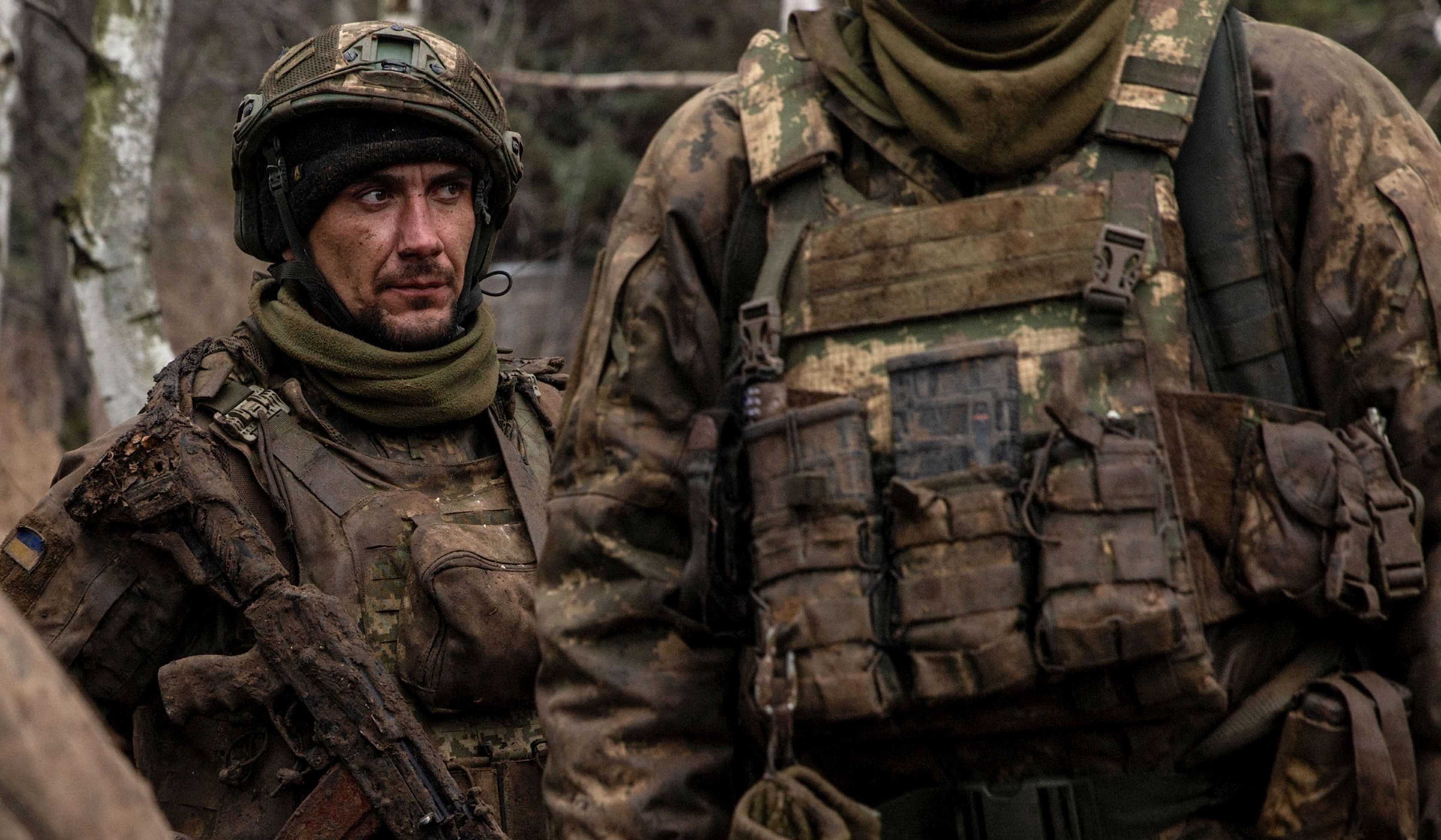
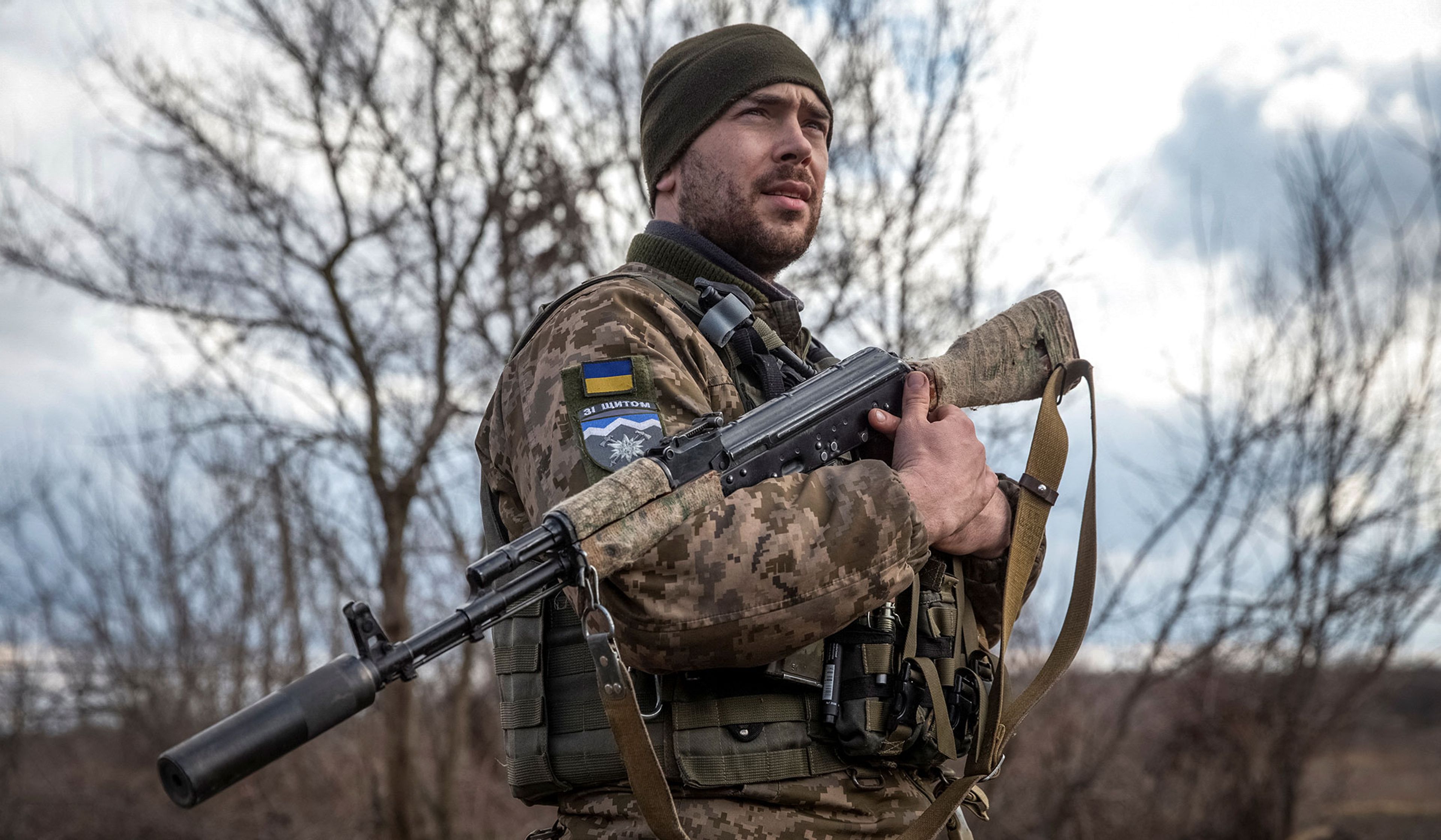
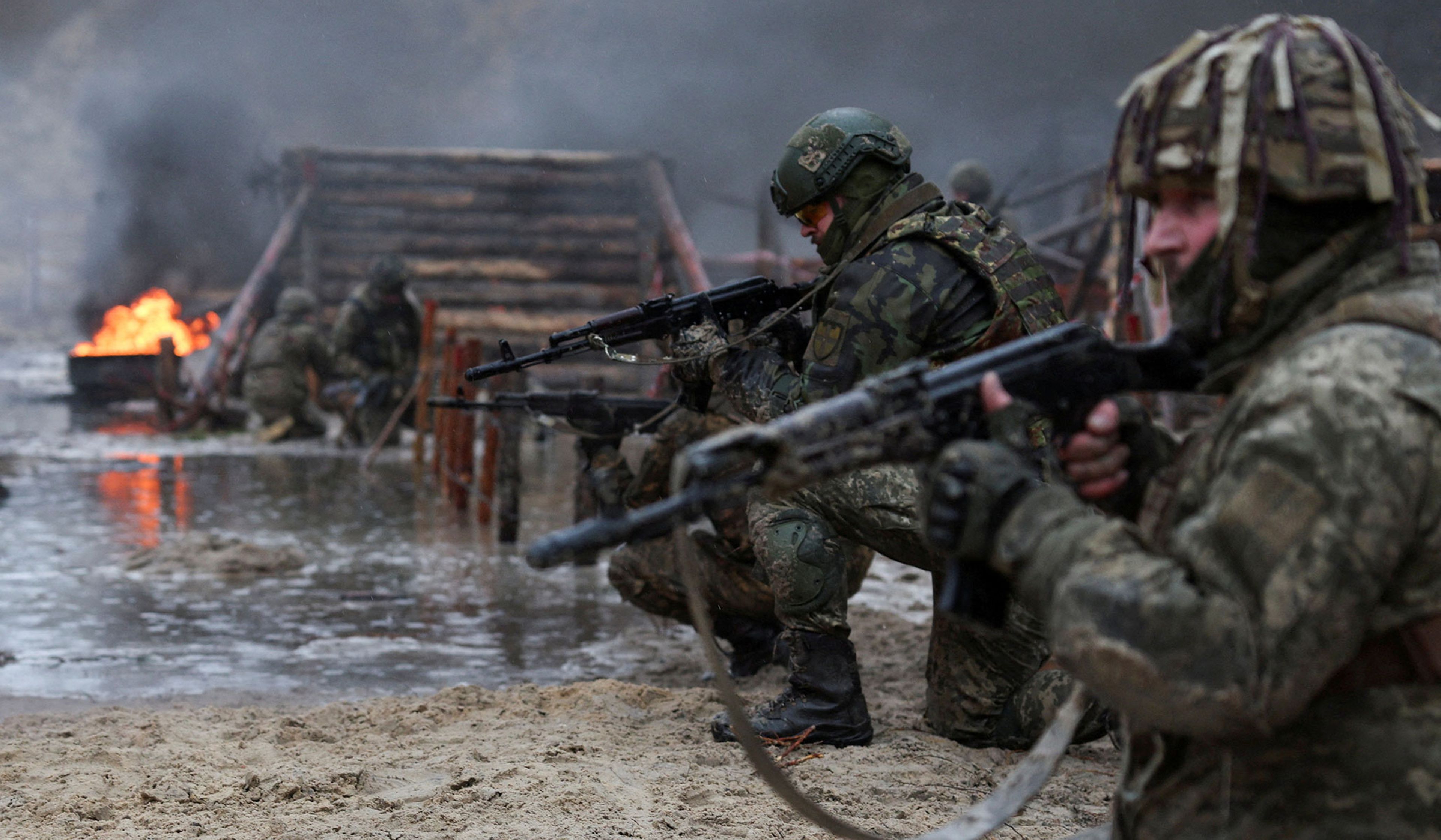
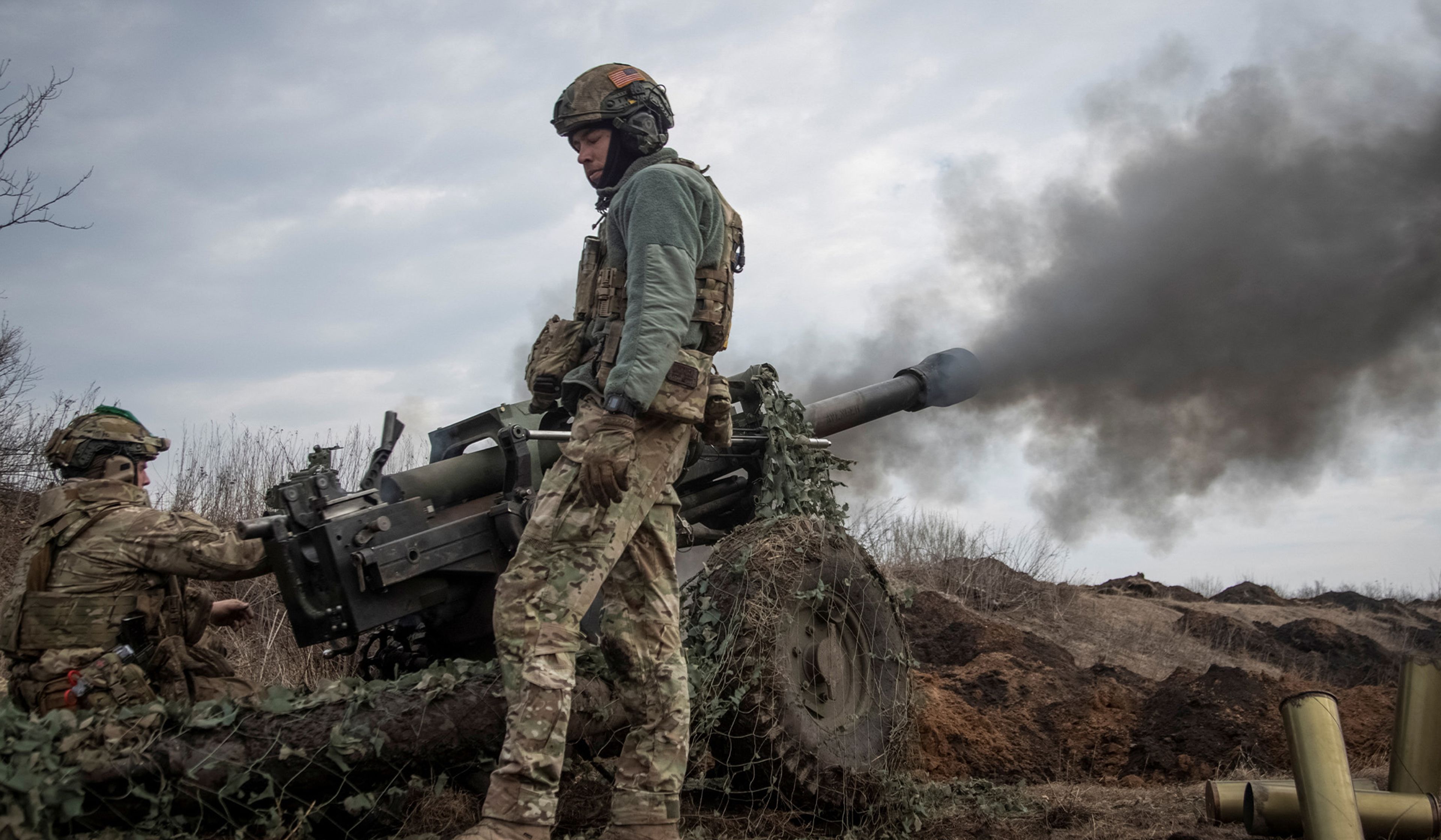

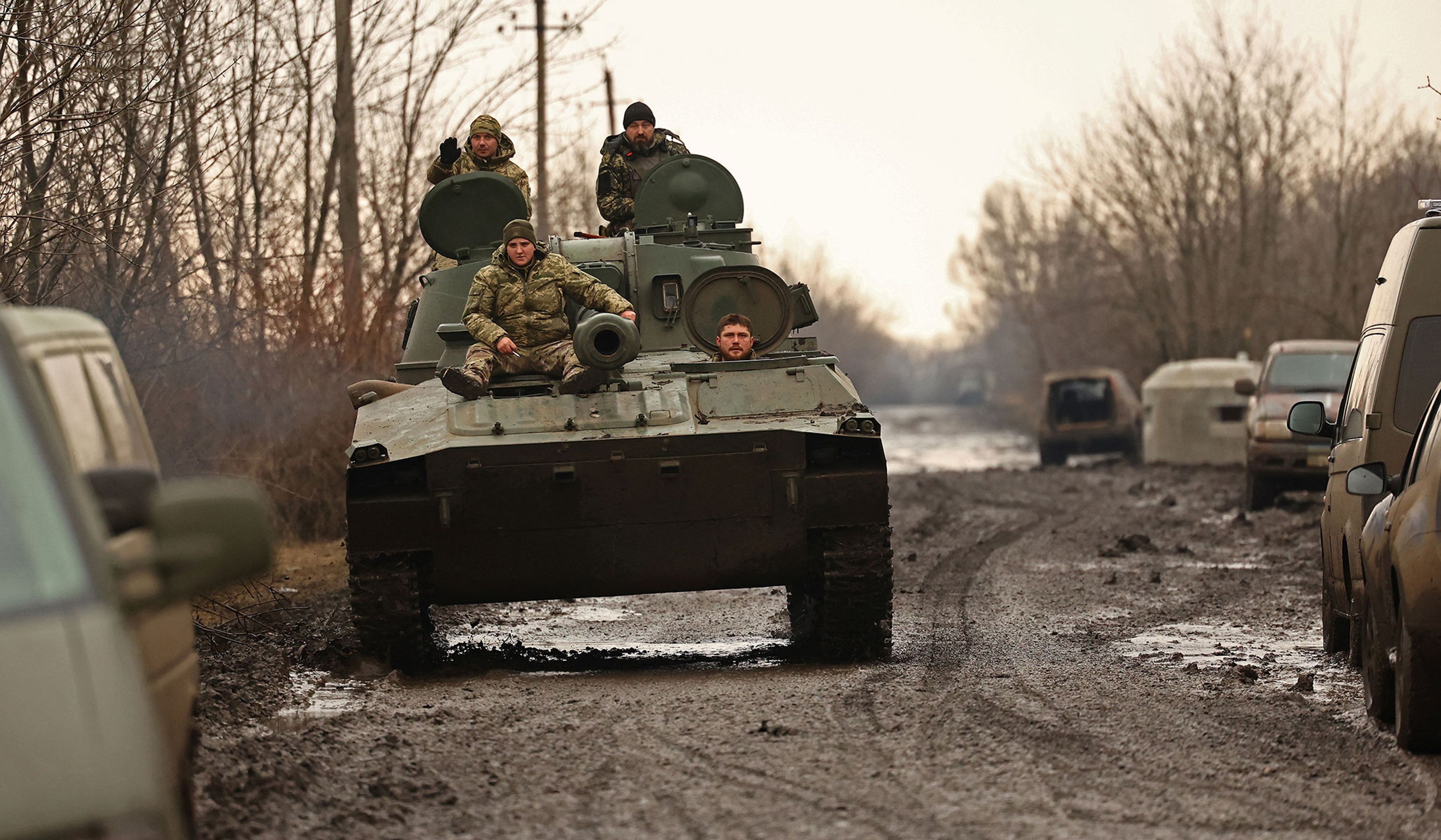

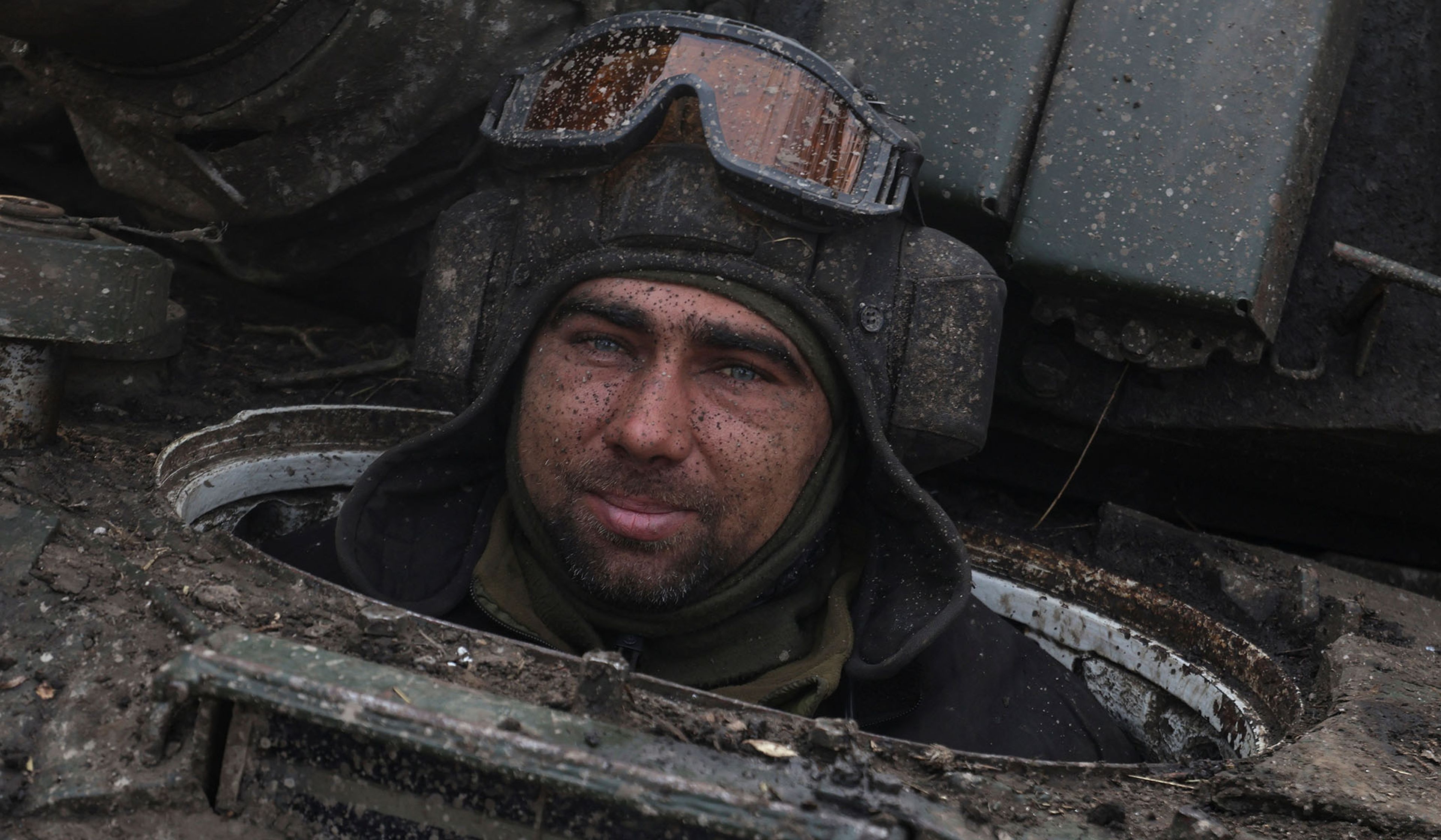
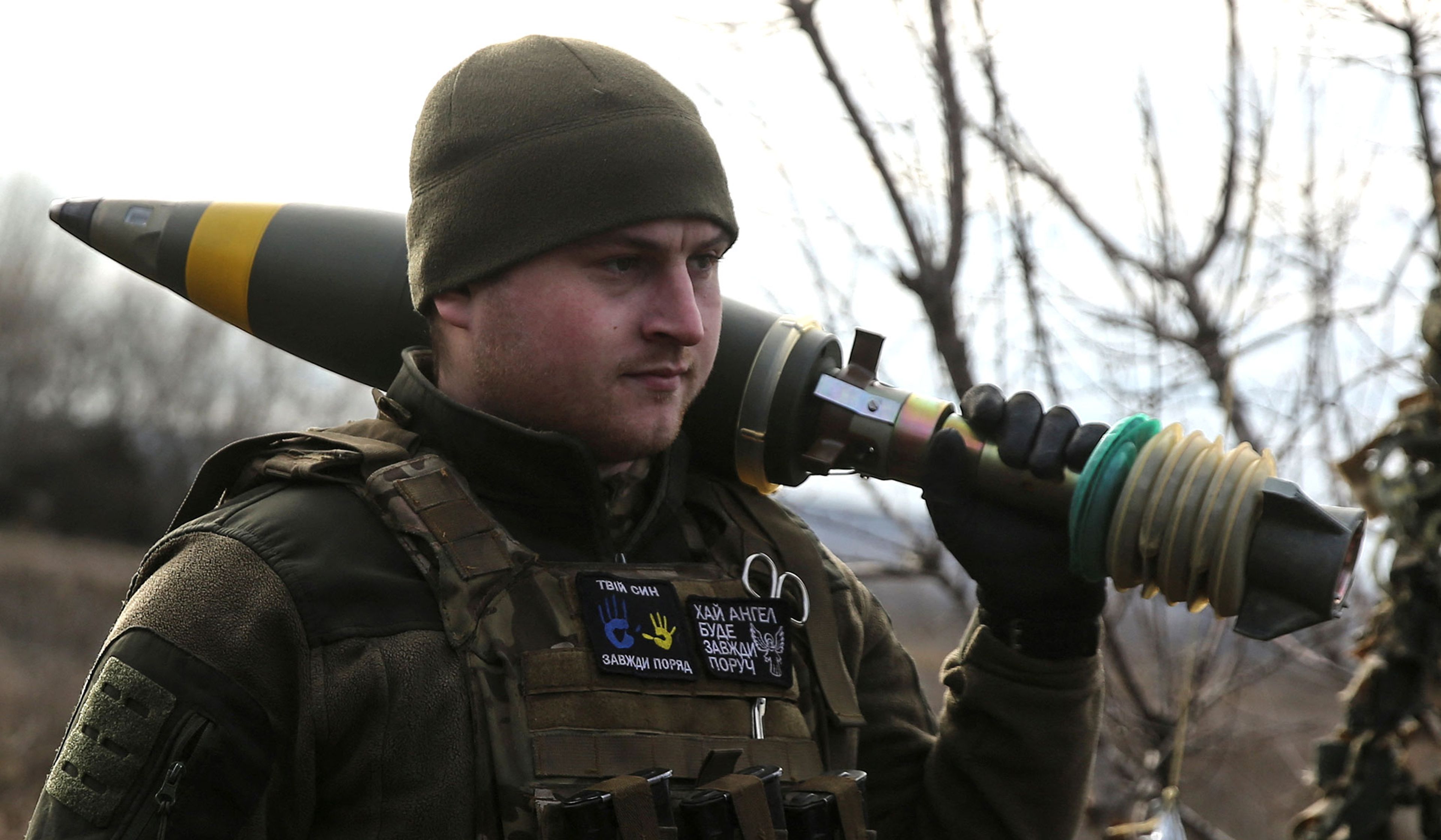
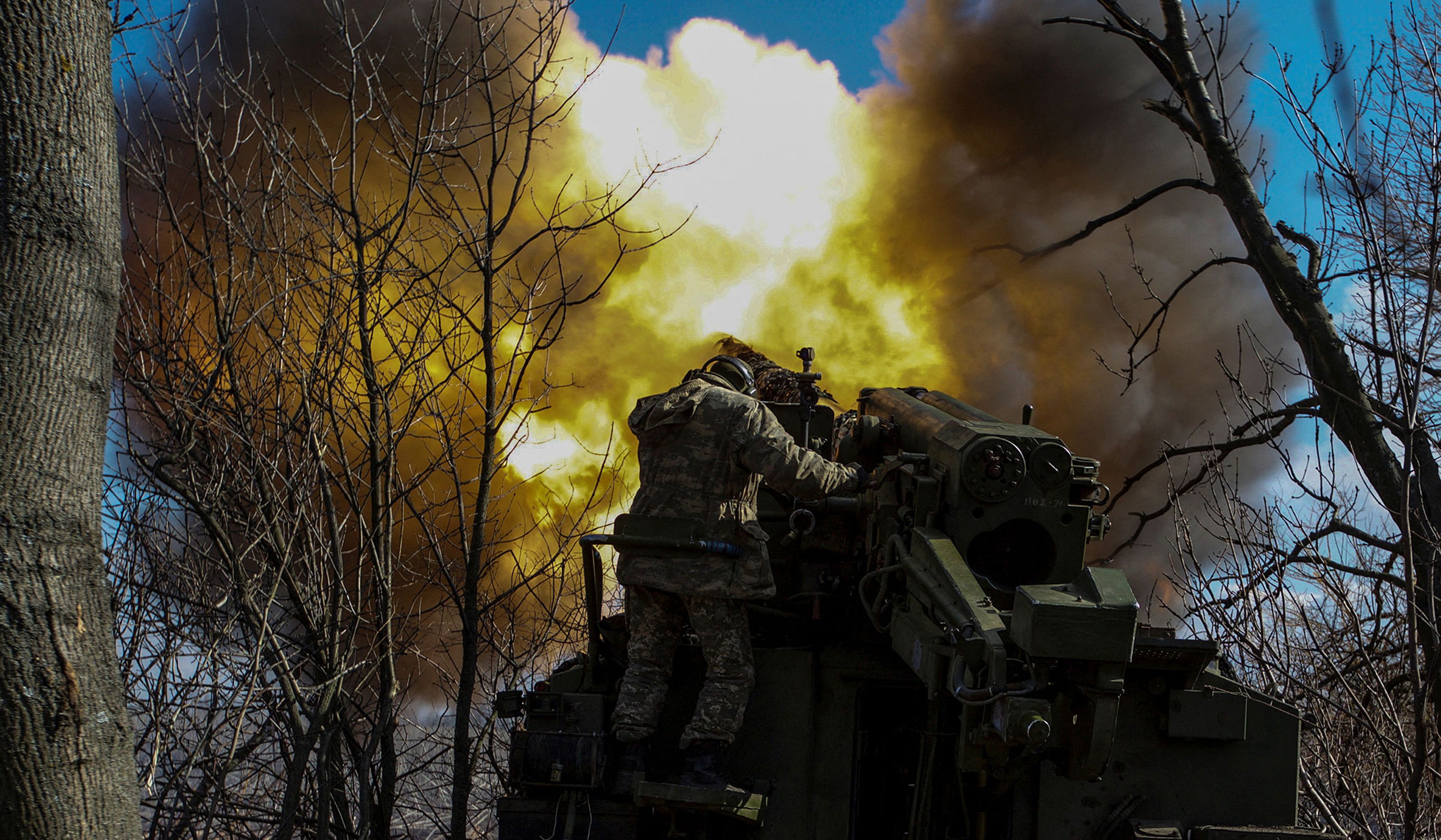

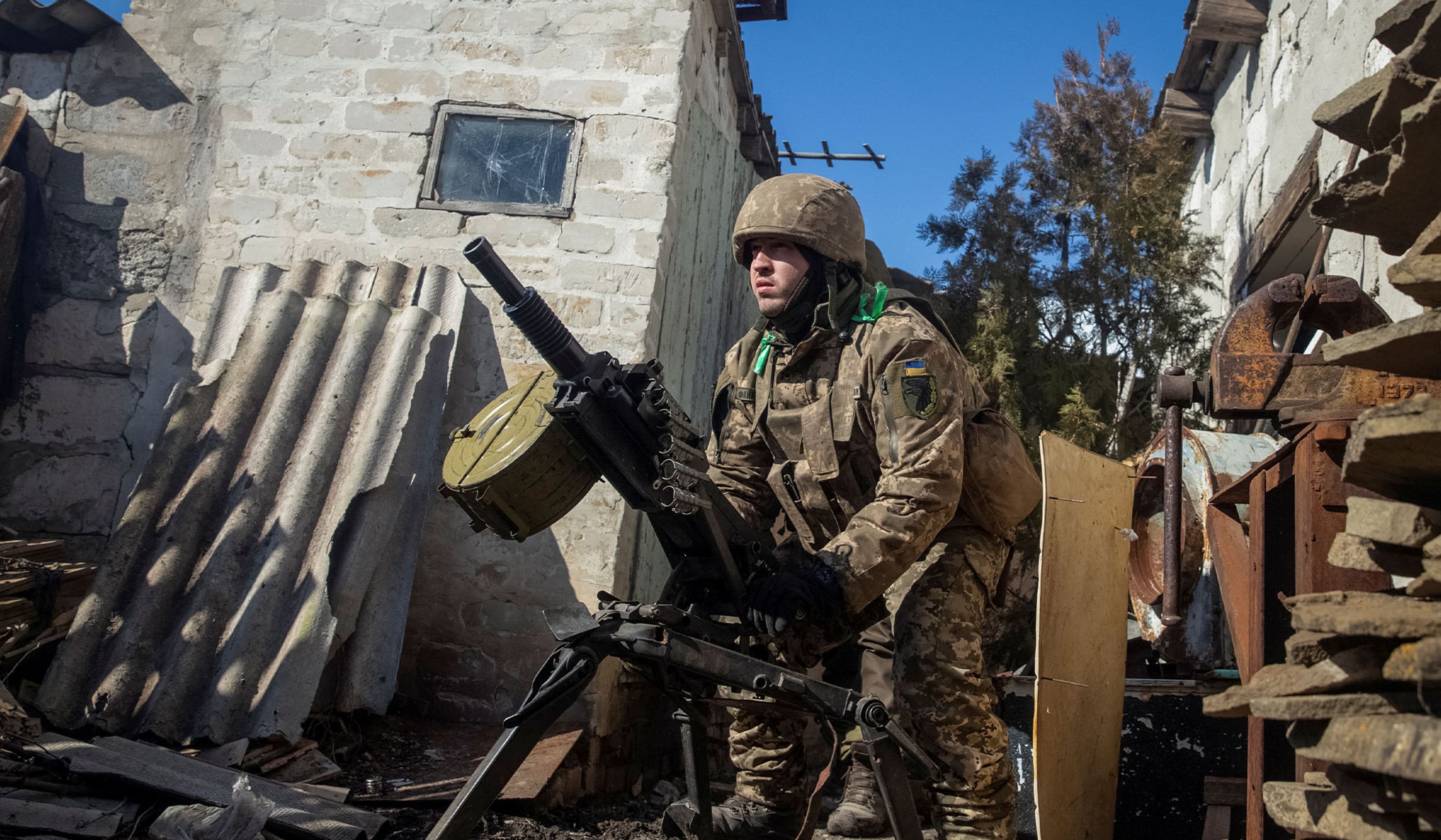
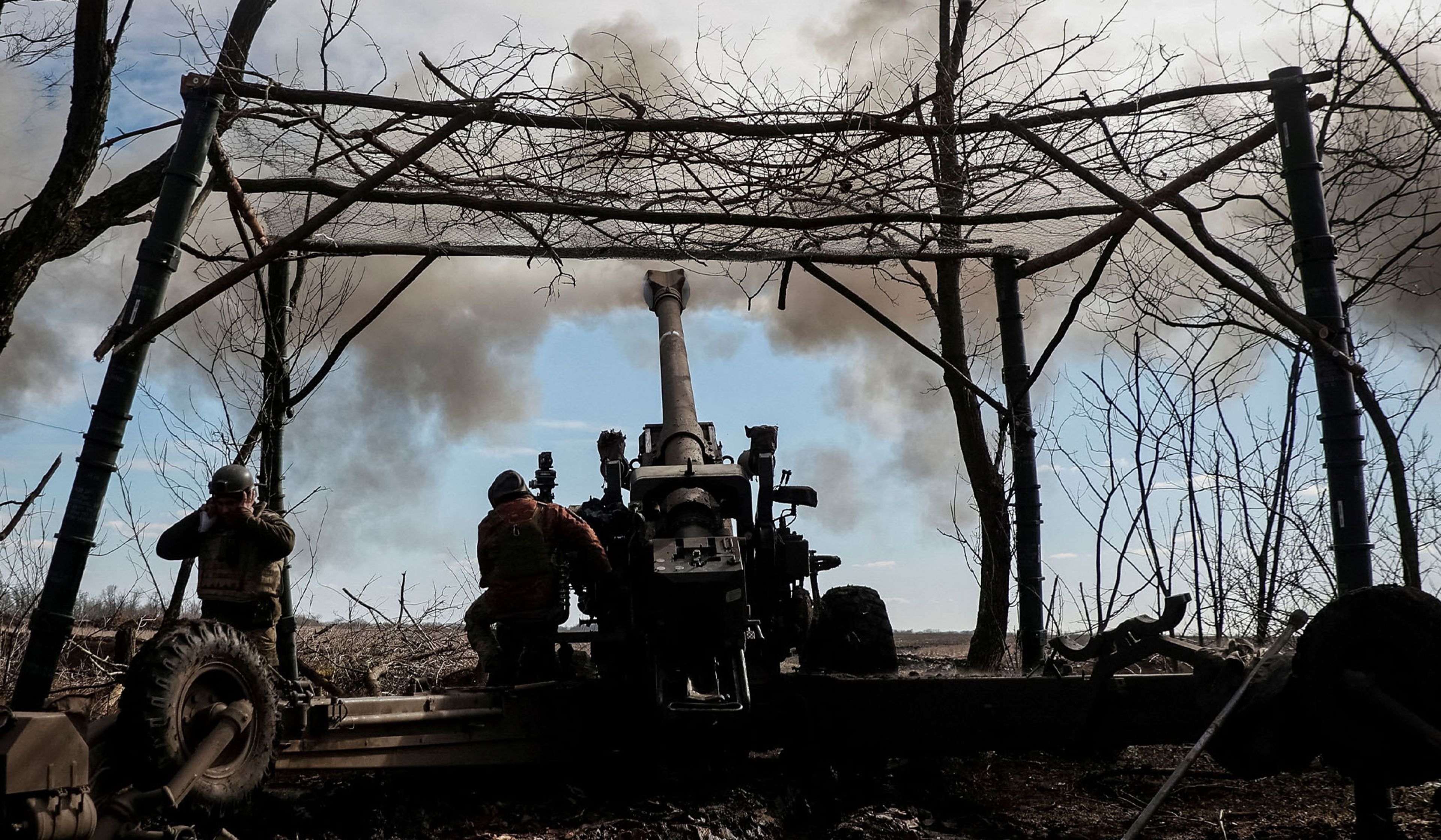


Ukrainian servicemen covered in dirt rest after returning from the frontline in Chasiv Yar, Donetsk Region, Ukraine, March 8, 2023.
Oleksandr Ratushniak/Reuters
Most significantly, Governor Ron DeSantis (R., Fla.) maintained the trajectory of his recent remarks on Ukraine in response to questions posed by Tucker Carlson. He called the Russian invasion a “territorial dispute,” which it is, in the sense that Vladimir Putin hoped to absorb all of Ukraine’s territory. He said that F-16s and long-range missiles should be “off the table” for Ukraine, lest they provoke a superpower war. But long-range missiles have never been on the table. And DeSantis’s preclusion of F-16s mirrors Biden’s (currently, at least) — and thus also Biden’s self-imposed, counterproductive limiting of what aid to send Ukraine (he typically reverses himself, too late to make a real difference, but just in time to prolong the stalemate). He made a passing gibe at “D.C. foreign-policy interventionists” when the real problem in Eastern Europe is Moscow foreign-policy interventionists. He concluded finally with an appeal to prioritize stopping illegal drugs at the border and to maintain our weapons stocks. Drug-running is a police matter. The world is — the world. If the weapons we need to be secure in it run low, make more.
All four solons have “R”s after their names. There was a time when Rs were strongly opposed to Russian imperial power plays. Those were the days, my friend.









Comments