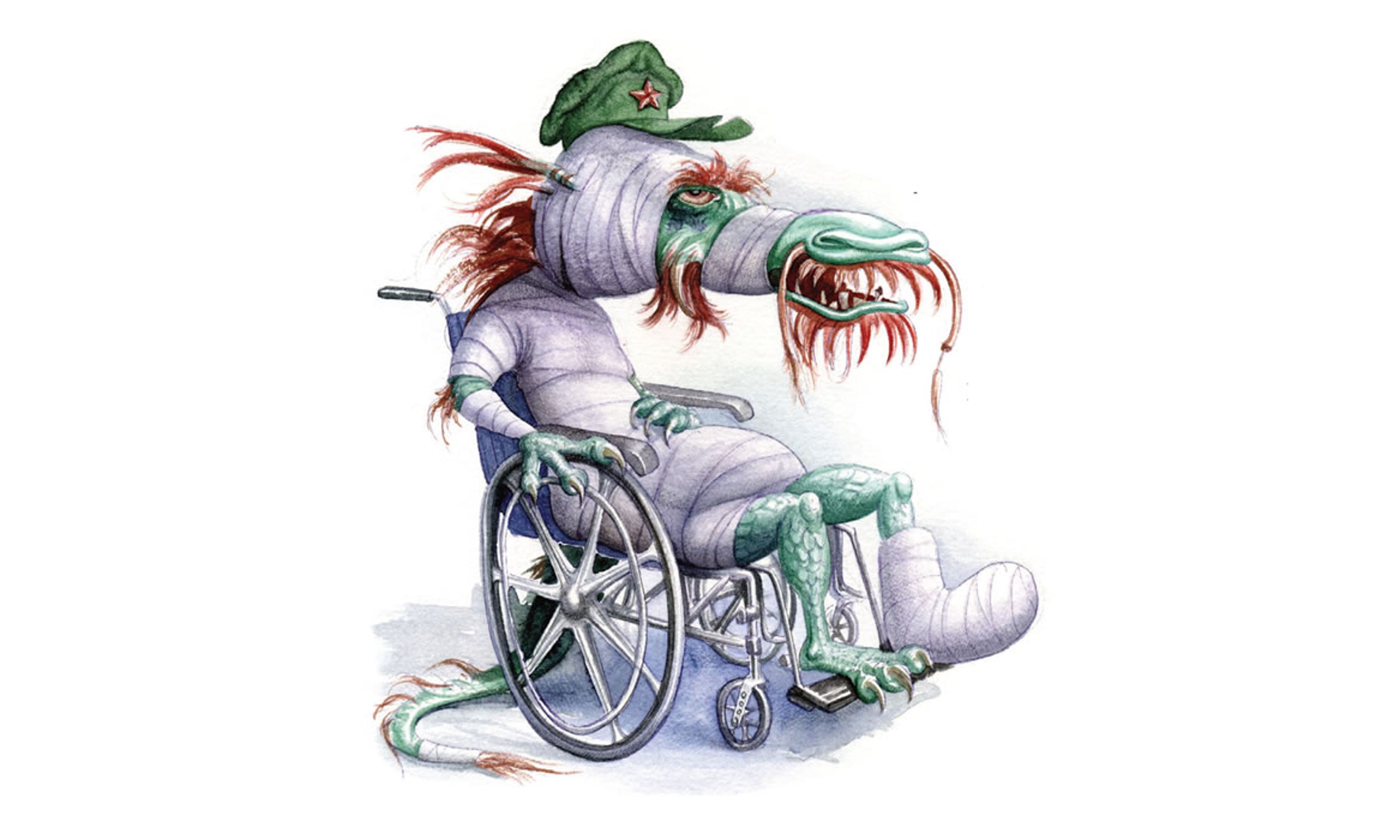
Wen Jiabao was confident, even smug, at the World Economic Forum in Davos this year. The Chinese premier relished criticizing America’s “unsustainable model of development” and touting his own country’s prospects. He was not alone in his views. The dominant narrative about the global economic crisis is that it will hasten American decline and accelerate Chinese ascendancy; some now speak of a “Beijing consensus.” This view is mistaken, and the opposite is more likely to be true: No national economy is more vulnerable in the current crisis than China’s.
The crisis will be especially deep and unusually long. We experienced a bubble of immense proportions, and excess capacity is now being closed down. The process of eliminating excess capacity — the precondition for recovery — will probably not be complete until global imbalances are unwound. The two most important of them are the Chinese current-account surplus and the American current-account deficit. The fastest path to global prosperity is for American manufacturers and farmers, who still retain competitive advantages in crucial sectors, to sell to China, thereby reducing in one stroke both imbalances. Given the size of the American and Chinese economies — together they account for about 31 percent of global output — there is little prospect for worldwide recovery until these two countries establish a more sustainable trading relationship. Since late July, however, the Chinese central government has been taking a new series of actions to wall off its domestic market from foreign products.
Other nations, taking their cue from China, are also trying to cope with the global crisis with policies that will ultimately depress trade, a crucial engine of economic growth. Governments have been adopting stimulus packages and other measures that favor domestic producers and, as a result, run afoul of either the spirit or the letter of World Trade Organization rules. Many nations, especially in Asia, have been actively depressing their currencies to make exports cheaper. In the 1930s, tariff walls deepened the Great Depression and prolonged it. This time, more subtle but equally destructive measures look like they will produce the same effect. According to the usually sunny World Bank, this year global trade will fall the most in 80 years. Globalization, which looked inevitable just a few months ago, is going into reverse. As this happens, the global economy will contract this year the most since the Great Depression.
The downturn rocking America is shaking China as well. True, the Chinese appear well positioned. For one thing, Beijing is still running large current-account surpluses. Over time, those surpluses have resulted in what has been called “the greatest fortune ever assembled,” China’s record-breaking foreign-exchange reserves. The reserves, now standing at $1.95 trillion, provide a cushion. Yet that cushion is not much use at home under deteriorating economic conditions. Moreover, the outsized reserves are a symptom of underlying vulnerability. As we saw 80 years ago, it is current-account-surplus countries that have the hardest time adjusting to deteriorating economic conditions. Why? Because they depend on exports to keep their factories running, and as trade declines their economies suffer. China today is extraordinarily dependent on exports — about 38 percent of its gross domestic product is attributable to sales of manufactured goods and agricultural products to customers abroad. And now we are seeing the pattern of the Great Depression repeat itself with China: Despite a series of central-government measures to support exports, sales abroad slumped a greater-than-expected 17.5 percent in January and 25.7 last month.
Because exports are shrinking, the overall economy is contracting. Although Beijing reported 6.8 percent growth for the last quarter, that number tells us little about the actual performance of the Chinese economy. China’s quarterly growth numbers are reported on a year-on-year basis; this method tends to mask declines in growth when they first occur. If China reported quarterly GDP like most other nations — showing changes in economic output from one quarter to the next — growth would have been 1 or 2 percent, if there had been any growth at all. It appears, from most indicators, that the economy actually shrank in December.
Whatever output was last quarter, it certainly is in steep decline now. According to official statistics, China’s gross domestic product skyrocketed a staggering 13.0 percent in 2007, and it was, in all probability, higher than that — poor sampling procedures did not properly take into account the output of small manufacturers, then the most productive part of the economy. Now, however, small manufacturers are suffering more than other producers, so current statistics do not reflect the real drop-off. When other distortions in the statistics — some the result of fakery — are taken into account, it’s clear no major economy is falling faster than China’s at this moment.
Due to the alarming dive, the greatest mass migration in history — Chinese peasants leaving inland farms to work in coastal factories — is going into reverse, as there is no work for tens of millions of citizens for the first time in decades. The country has been plagued by strikes, protests, and insurrections for more than half a year, but especially since October, and Beijing has been bracing itself for a new round of disturbances in the coming months. “The crisis in the West is purely economic,” said labor-rights activist Li Qiang in January. “But in China it’s a huge political problem.” Very few citizens — even party members — truly believe in the stated ideals of the Communist party anymore, so its primary basis of legitimacy is the continued delivery of prosperity.
Declining popular support at a time of increasing societal stress threatens social stability. How unstable is the country? A few months ago, the most popular man in China was a drifter who had entered a police compound in Shanghai and killed six officers while wounding four others on July 1, the anniversary of the founding of the Communist party. Outside his trial, middle-class Chinese, the beneficiaries of three decades of reform, chanted “Long live the killer!” and “Down with the Communist party!”
The political turmoil gives new urgency to the country’s economic-recovery planning. Its programs, however, are unlikely to have much of an effect. Beijing’s preference for boosting exports is unrealistic given declining global demand, and its stimulus plan, announced in November, is not designed to accomplish the only thing that can provide sustainable growth: increasing consumer spending. In fact, by emphasizing the building of heavy infrastructure and pouring funds into local governments and state enterprises, the stimulus program will undermine the most vibrant part of the Chinese economy: the private sector, which has been responsible for most of the country’s growth in the last 30 years.
We should not be surprised that the state’s plan is designed to strengthen the state economy. China’s grand experiment in grafting a free-market branch onto its socialist roots has just about reached the limit of what it can achieve inside the present authoritarian system. In the last three years, Chinese leaders have shunned further structural economic reform because such changes would threaten the power of the Communist party. A true market economy requires the rule of law, which in turn requires institutional curbs on government. Because these two limitations on power are incompatible with the party’s ambitions to continue to dominate society, China cannot make much progress toward them while maintaining its current political system.
When it had the opportunity to change the basis of the economy, Beijing squandered it. Instead, technocrats prized fast growth above all, and their policies brought other problems, such as bad bank loans, unfunded social-welfare obligations, a degraded environment, and rampant corruption. These difficulties did not pose serious threats, because increases in economic output in past years have tended to mask them. But as the economy begins to contract, the dislocations are becoming too big to ignore and probably too big to solve, especially in a severe — and long-lasting — global downturn.
Chinese citizens and businesses sense this: They evaded Beijing’s strict currency controls and smuggled $126 billion out of China last quarter. Another estimate, using a broader definition of “hot money,” put the figure as high as $240 billion for the same period.
And what about the world’s biggest economy? The United States, as a current-account-deficit country, can recover on its own, as it is now doing by consuming less — imports are dropping faster than at any other time since 1942 — and by saving more. As Americans save more, the need for external funding of the federal government is decreasing. If Washington doesn’t get in their way, efficient and productive Americans will eventually be able to work themselves out of this crisis.
The United States — inventive, resilient, and flexible — has a unique ability to renew itself, the greatest of its many strengths. The first nation into the downturn, it looks set to be the first to emerge from it, because it is making internal adjustments. In contrast, China does not have the power to solve its problems. As a practical matter, it relies on foreign customers, but its export-boosting measures are bound to trigger protectionism. The Chinese, therefore, could end up becoming the biggest victims of their own mercantilist policies.
Of course, China has appeared strong during a benign period of almost two decades of uninterrupted prosperity and globalization. Now, however, even the initial stages of the downturn are exposing the inherent weaknesses of its economic system and the fragility of its political institutions. China has the world’s most severely slowing economy, and unless there is a broad-based and robust global recovery this year — most unlikely — it will be heading toward a new period of prolonged turbulence. Wen may be a little less smug the next time he’s in Davos.










Comments