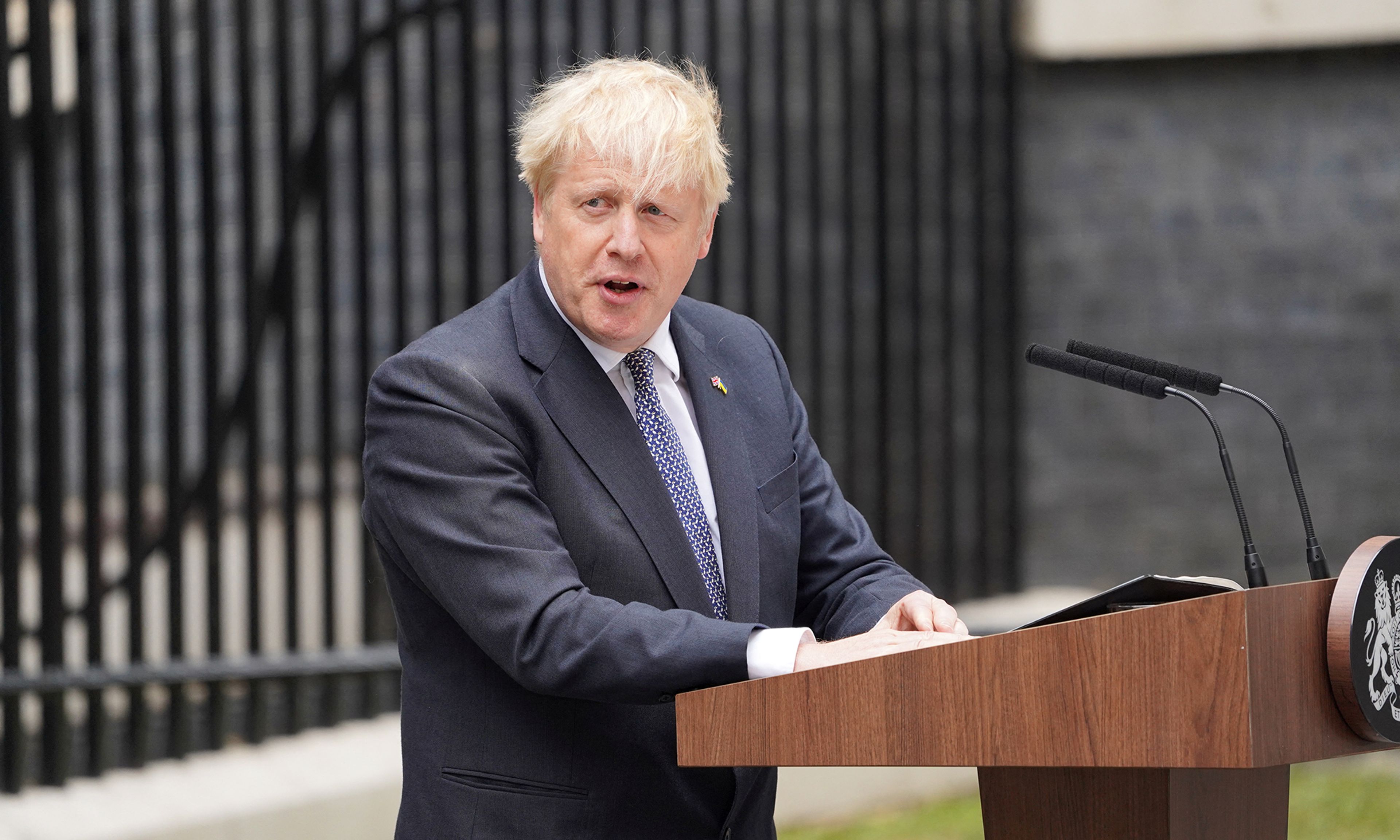
It is only two years and three months since I wrote the passage below on Boris Johnson’s brush with death from Covid:
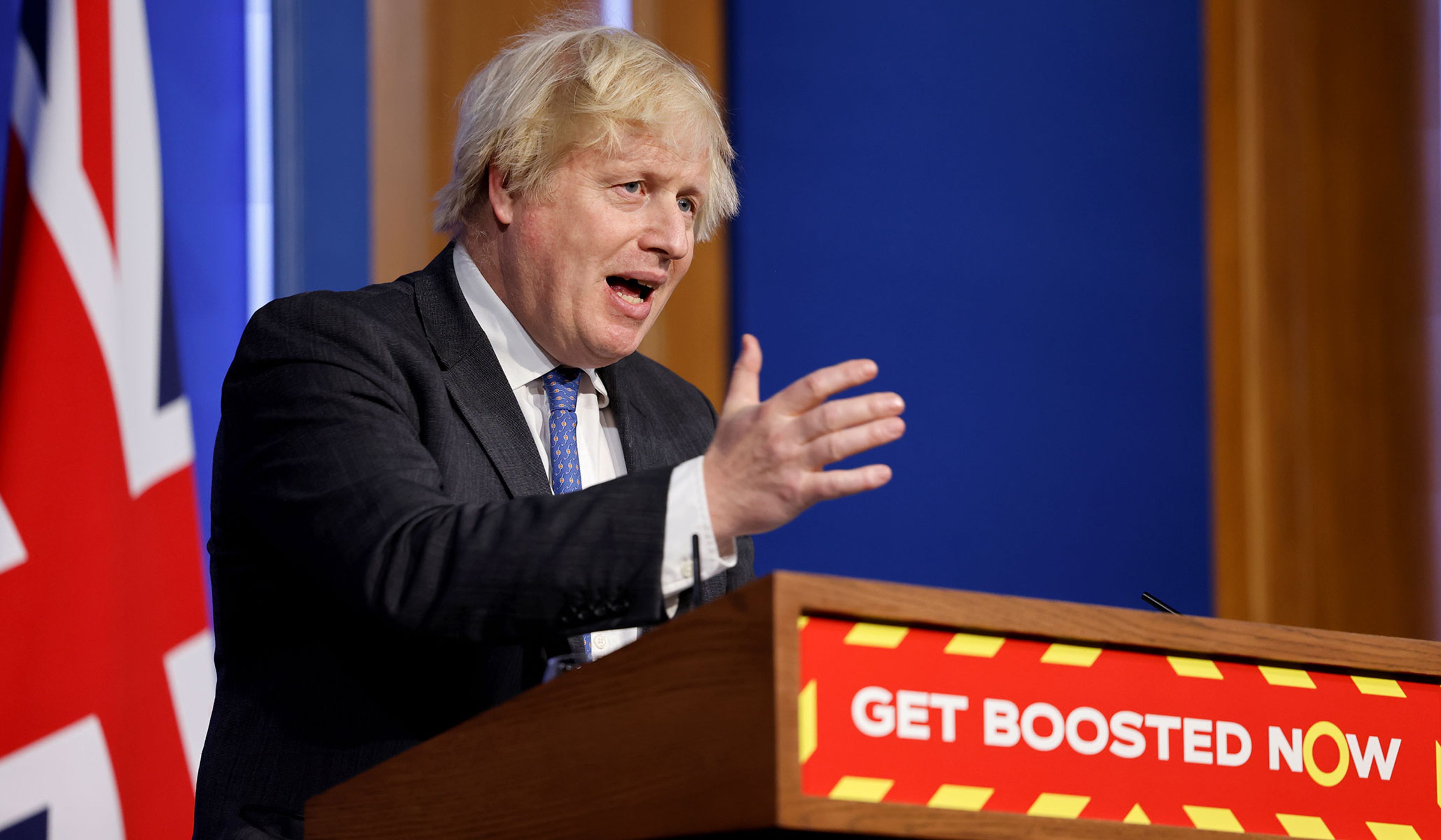
In one remarkable week Boris Johnson was rushed to hospital suffering from the COVID-19 virus, was moved to intensive care when his condition worsened the next day, came near to death, then began to recover and was reported to be “walking about” after six days, and was released the next day to convalesce at Chequers, stopping off on the way to give a powerful emotional address warmly thanking the National Health Service, in particular doctors and nurses who had treated him, several by name, and urging the nation to stay safe at home to defeat the virus. It had been a gripping drama, combining Darkest Hour with Emergency Ward 10, and it left people limp with relief and surprised to find that Johnson’s plight had made them realize how much they liked him. [Emphasis added.]
None of that was an exaggeration, but he quickly descended from that peak of popularity, and the reason is in the italicized clause. Johnson had initially taken a skeptical view of the need to lock down Britain. But he soon concluded that it was politically unrealistic for mere politicians to resist the scientists and doctors advising the governments that lockdowns, masks, social distancing, and avoiding older family members were essential measures to prevent millions of deaths. They were bound to lose. Indeed, because he was suspected of Covid skepticism, Boris went along with restrictions more draconian than elsewhere. Like most of the English-speaking world, Britain descended into a purgatory of petty authoritarianism in which hospitals kept children from dying parents, weddings were restricted to five people, and police told drivers whether or not their journeys were necessary. When the public complained, ministers replied that all this was necessary “to defeat the virus.”
Johnson also kept working, however, and the rules (though ambiguous) allowed relaxation and drinks at work. Johnson is far from being a party animal — indeed he’s a workaholic — and one of the things on which he kept working was to bring the lockdown to a gradual end from March to July last year, over the resistance of the scientific committees, some ministers, and an authoritarian media. But he had attended one or two work events that became brief parties, including a surprise birthday, where drinks were served. News and photos of them were leaked by insiders in a phased way to keep the story going. Boris’s enemies in the media, in the opposition, and on the Tory benches weaponized this modest scandal to argue that “they,” and Boris in particular, were flouting the harsh Covid restrictions they had imposed on others. And with every new revelation and investigation, many of which didn’t involve Boris at all, the affection he enjoyed in April 2020 gradually turned into distrust.
That wasn’t enough to bring Boris down, but it shaped the conditions for doing so. There was some justice in that. Some commentators have ascribed his fall to Character, as in a Greek or Shakespearian tragedy. They generally mean the unreliability and disorganization of both his office and his love life. It’s true that Boris’s character, like that of most of us, is mixed. It has those flaws but remarkable merits, too. To quote Daniel Hannan: “He was generous, brilliant, spirited, incapable of malice, infectiously optimistic, unable to hold grudges.” All true as far as I can judge. Character played a part in both his rise and his fall.
It was, however, a different element in his leadership that better explains his disappointing exit. It was political calculation. With the exception of Brexit — which was an issue on which he had to succeed or fail politically altogether — he was the opposite of reckless. Like an 18th-century general, he looked at the disposition of forces on both sides and, if they looked unfavorable, he either struck a deal or left the field. That explains the large number of issues on which Boris either did little to advance his known beliefs or even embraced policies he had previously opposed. The lockdown, discussed above, set the pattern.
His passionate crusading for net zero on greenhouse-gas emissions was a more extravagant reversal, both because he had earlier been a climate skeptic and because the scale and costs of state intervention needed to achieve it were outlandishly high. But the commitment of government, official science, all the political parties, the media, all cultural institutions, and Parliament itself to climate policy was total, and so dogmatic that he probably reasoned for the second time that resistance was useless. He would then get the credit for fighting for the climate against the odds, rather than suffer the blame for dragging climate policy down to failure.
One can see a certain logic in that as a one-off concession, to demonstrate his overall respectability, but it weakened his commitment to his political identity (including a robust traditional libertarianism), erased his skepticism towards big spending, led in short order to higher taxes, and made him look unwilling to fight on cultural issues and against “wokeness.”
All of which meant that Boris was presiding over policies that the conservative electorate disliked and was getting terrible economic results — a cost-of-living crisis, threats of electricity blackouts, etc., etc., etc. — that all voters disliked. His poll ratings plummeted. All the conditions were in place for a successful revolt. One duly occurred after a minor sex scandal — Tory Whip Gets “Handsy” in a London Gentlemen’s Club: Not Many Offended. Ministers resigned in choreographed indignation at the PM’s alleged insouciance over “sex pests.”
Boris fell like Lucifer into the Abyss.
He left behind a Tory Party in a state of confusion. His electoral strategy had more or less united the party around his undoubted achievement of bringing “Red Wall” Labour voters into the Tory camp to create a vast national coalition, drawn from all social classes and ethnicities, that has the potential of becoming “the natural party of government.” Most Tories want to preserve that achievement, and they are looking to the leadership election both for a program that will do so and for a leader to do it. But because Boris’s own program rode off furiously in all directions as the mood took him, he weakened the broad consensus on what united them other than Brexit. Tory MPs are more and more divided into pressure groups calling for different policies. There are even two pressure groups taking opposite positions on net zero. His example has also given almost every Tory MP the impression that if he has a policy of his own, he might ride it into Downing Street.
Right up to the moment that nominations closed for the first ballot, the number of leadership candidates kept changing. Altogether about 30 of them hemmed and hawed.
On the one hand, this was faintly comic; on the other, it’s looking like an unexpected sign of vitality in the party. Consider this remarkable upsurge of Tory “diversity.” Of the eleven candidates standing shortly before nominations closed, six were from ethnic minorities (seven if you count a Catholic of Jewish heritage, which in England I wouldn’t do), four were women, and two of them ethnic-minority women.
In the 24 hours before we went to press, the picture became clearer in two ways.
First, the rules laid down by the election organizers are that a candidate needs the nomination of 20 other MPs for the first ballot, 30 for the second ballot, and in every subsequent ballot the lowest-ranked MP drops out until only two candidates are standing. Those two candidates go on to present their argument in a series of debates in front of members of Tory associations throughout the country. The grassroots membership then votes in a secret ballot, and the result should be known by September 5. Boris then resigns, the new leader becomes prime minister, and he or she addresses the annual Tory conference a month later.
Though the voting procedure is straightforward, the plotting of MPs over how to cast their votes is murky and secretive. Each MP has two motives in voting. The first is to ensure that his favored candidate is one of the final two; the second is to ensure that the other finalist is someone who has no chance of winning a majority from the Tory activists. That may mean voting for a candidate you despise in the final ballot among MPs. It’s a tough maneuver to pull off, and it’s happened in the past that MPs have helped to elect their worst nightmare.
On the other hand, since reliable social surveys have shown that Tory MPs are considerably to the left of Tory voters on noneconomic issues, their nightmare may be a dream come true for the Tory activists and voters alike. Margaret Thatcher was almost certainly the beneficiary of such miscalculations in 1975 (admittedly in an electoral system confined to MPs).
Second, we now know the names (and number) of those candidates who have made it to the first ballot. They are Rishi Sunak, Liz Truss, Tom Tugendhat, Penny Mordaunt, Kemi Badenoch, Nadhim Zahawi, Jeremy Hunt, and Suella Braverman. If we allocate them into the following arbitrary categories invented by me — establishment moderate, establishment right, insurgent moderate, insurgent right — we have Hunt and Sunak in the first category, Truss and Zahawi in the second, Mordaunt and Tugendhat in the third, and Badenoch and Braverman in the fourth.
In a poll of conservative activists, including MPs, conducted by the website Conservative Home, three of four insurgent candidates — Mordaunt, Badenoch, and Braverman, all of them women — trounced the establishment candidates handsomely. (The fourth insurgent, Tugendhat, was himself trounced.) Truss was beaten by two other women, tied with Braverman, and beat all the men except Zahawi, who lost to all the women and beat all the men. And Sunak, the supposed front-runner, lost to everyone except Hunt.
But both Braverman, the attorney general, and Badenoch, the minister of state, are volubly patriotic and express gratitude to Britain for the opportunities it has given them and their immigrant parents. Braverman even praised the British Empire as overall a force for good in the world, which most stale, pale, and male Tories would shrink nervously from doing. Both oppose critical race theory. Their rise would transform the U.K. culture wars.
Some candidates would prefer, like Boris, to avoid the culture wars and concentrate on economic policy, where, however, there are deep divisions among them. A difficulty for all the candidates in the economic debate — and a source of particular weakness for Sunak — is that the U.K. economy, like most economies, is going to be in a Slough of Despond for the next two years (and the Tories have to face an election no later than January 2025).
Thus the Tories will be on the defensive economically. They won’t be able to rise grandly above the culture war, because it is their best electoral card. That in turn will present for Mordaunt a real obstacle in the race. She has everything going for her, including a military record in the Royal Navy, but one strike against her: At an earlier stage of the gender-ideology debate, she committed herself clearly to the proposition that “transwomen are women,” and that position surfaced like an enemy submarine to threaten her.
All the candidates will be facing such embarrassments in the televised debates beginning on July 17. All will seek not only to embarrass their opponents but also to change policy as a result. They’ll all be criticizing Sunak’s tax rises, for instance, but also perhaps hinting opposition to the Biden administration’s global-minimum-tax treaty, which is unpopular in much of Europe but nowhere more than among Tory tax experts, because it attacks the conservative principle of tax competition. Ditto net zero. Ditto the U.K.’s membership in the European Court of Human Rights.
The debates should be the best show in London.
There’s an unusual level of excitement about the contest, sparked by the variety and liveliness of the candidates. It disadvantages the more “establishment” candidates and gives a platform to the fresher faces — to Mordaunt, Badenoch, and Braverman. If one of them makes it into the final two, I think she has a good chance of becoming the next leader of the Conservative and Unionist Party.
I thought that Boris’s departure would gravely weaken the Tories. And that may happen yet. For the moment, though, I think they’re getting a shot in the arm — and not of Valium, either.
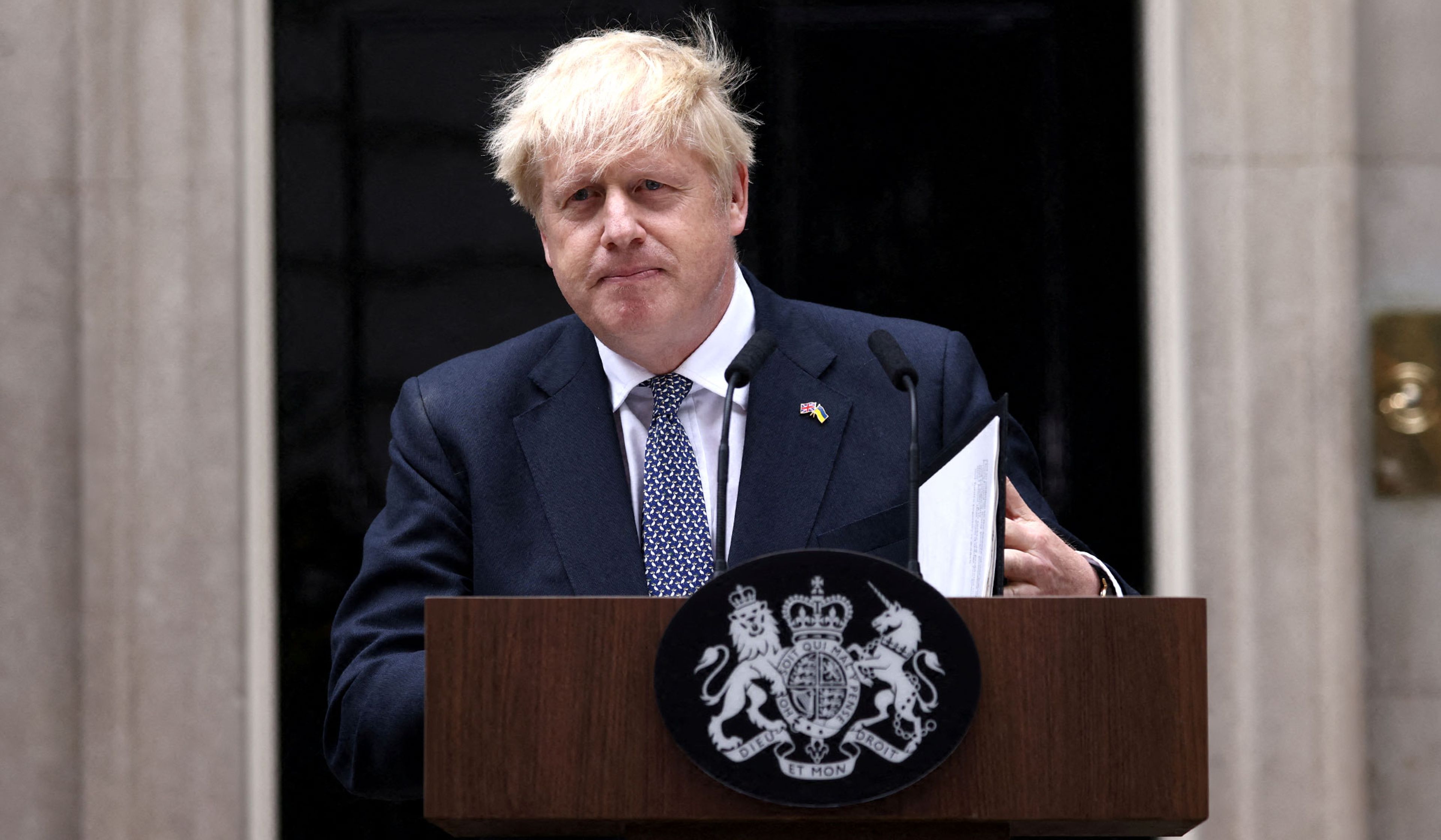
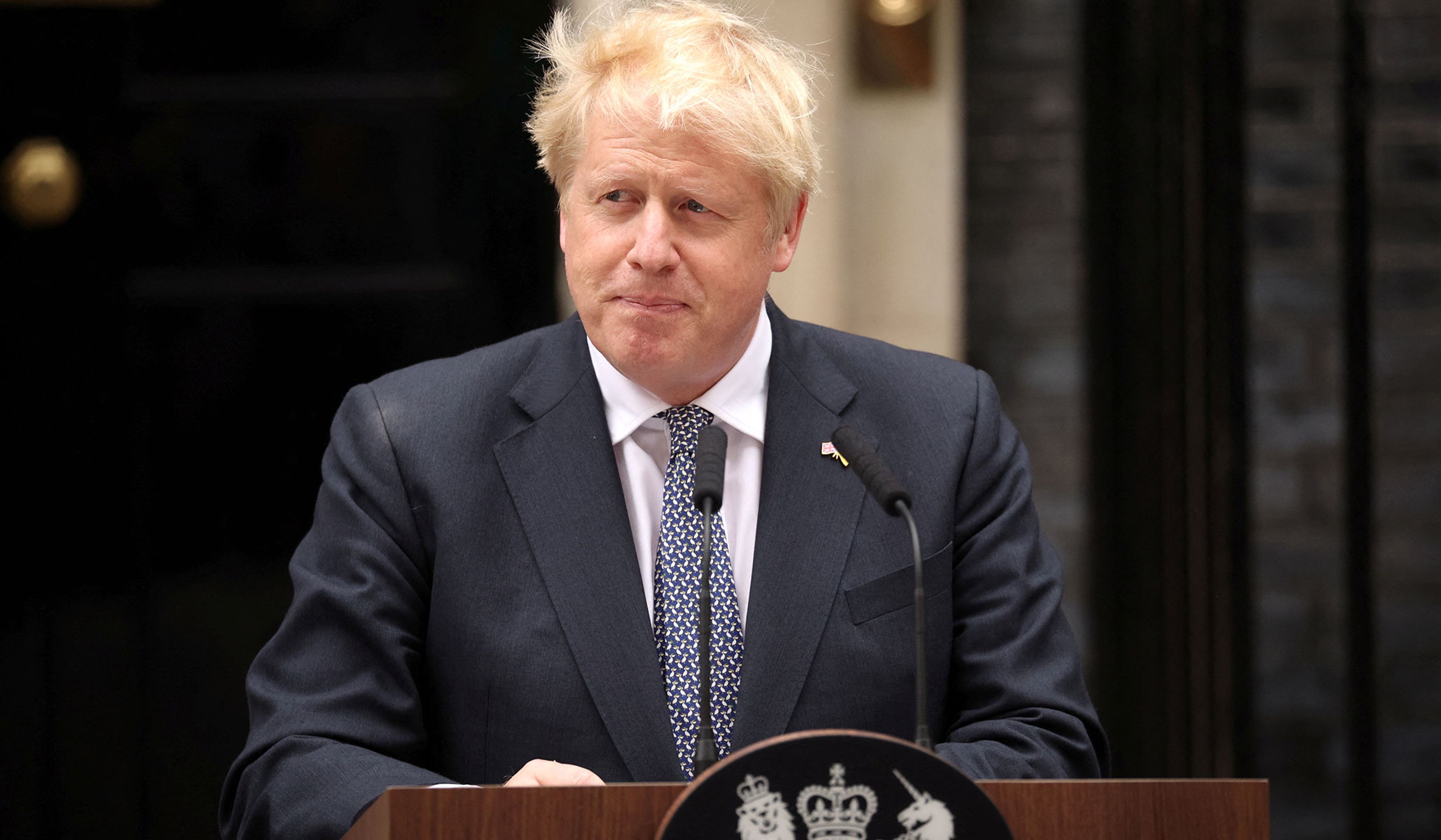
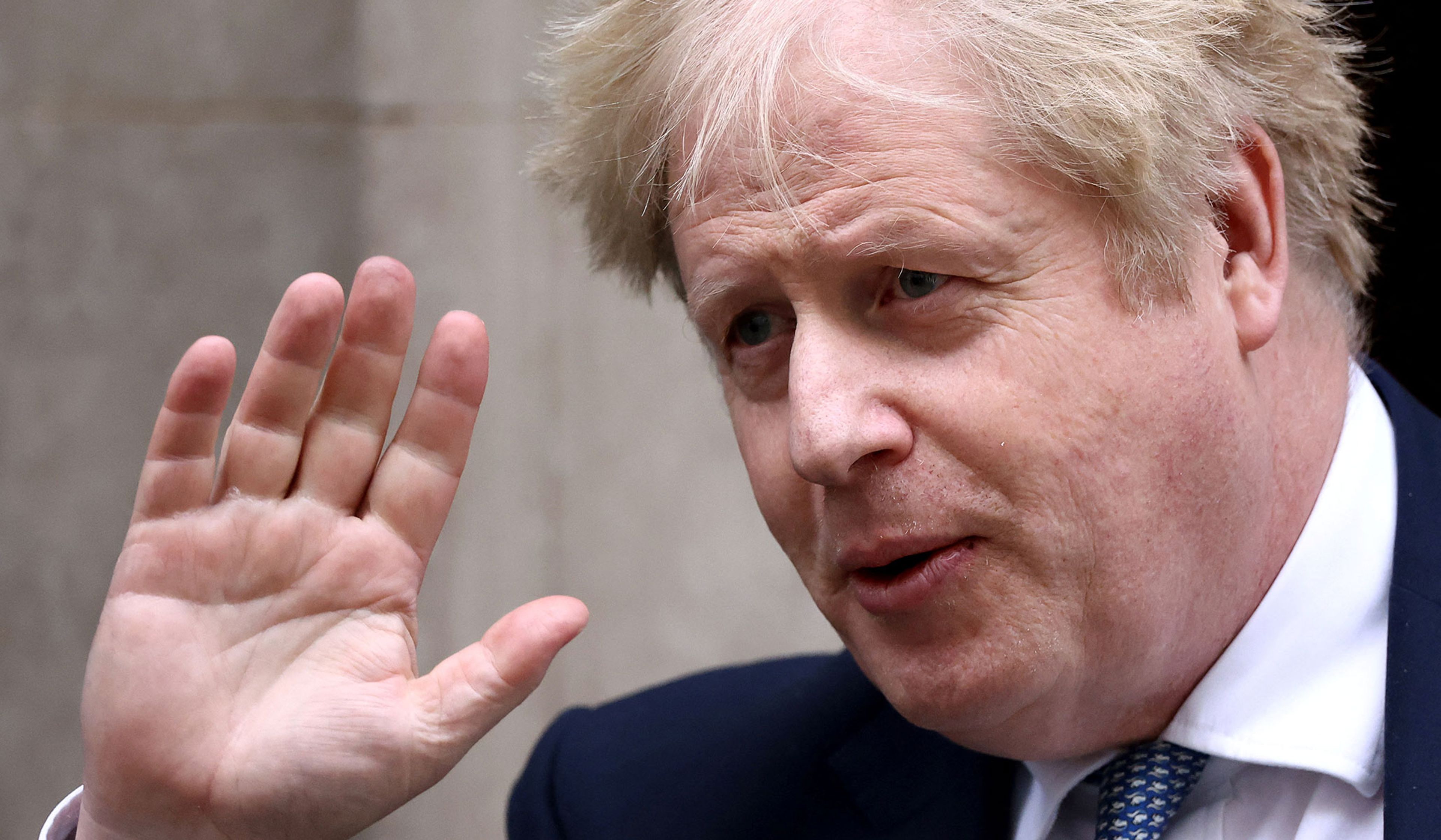
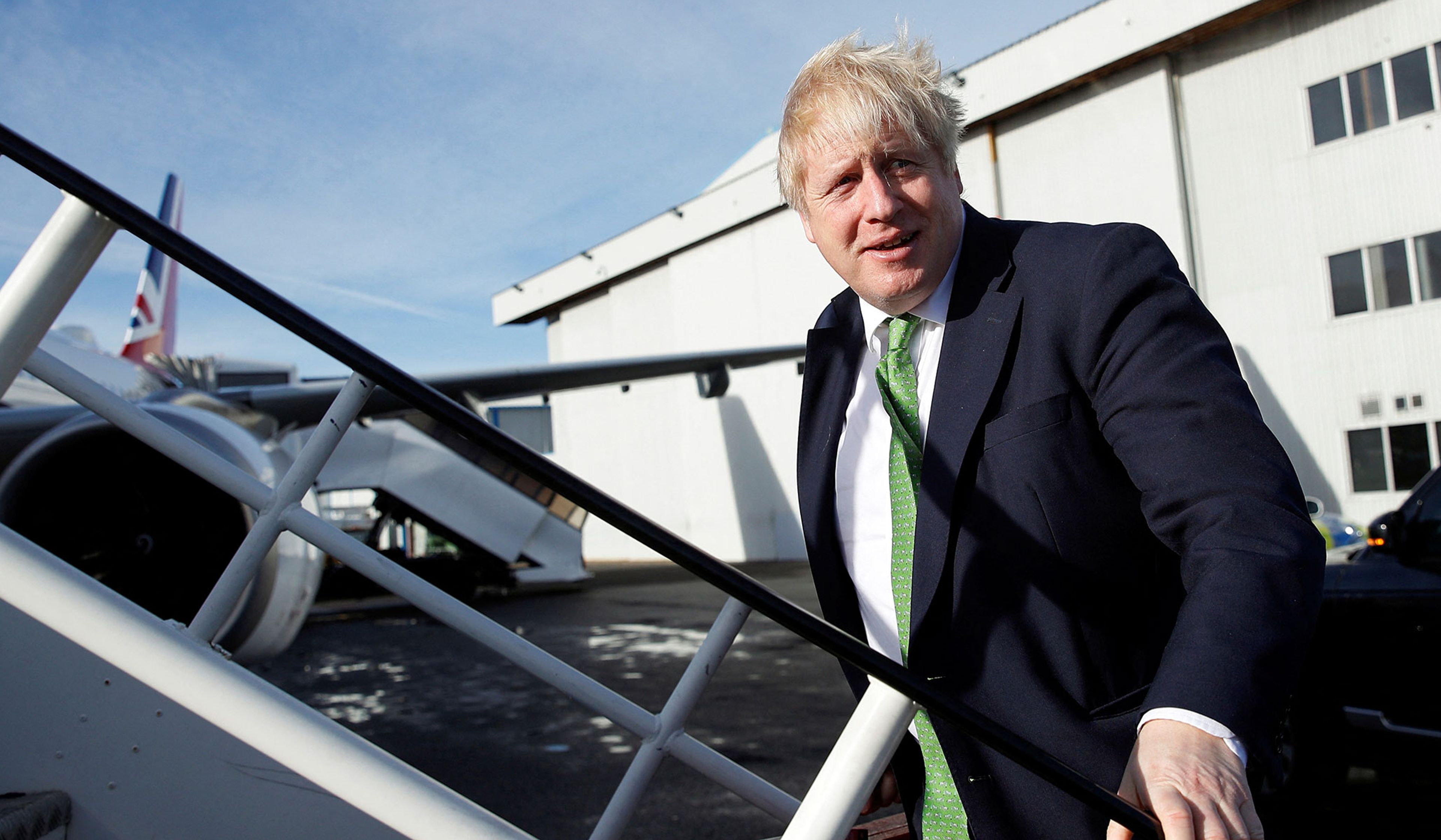
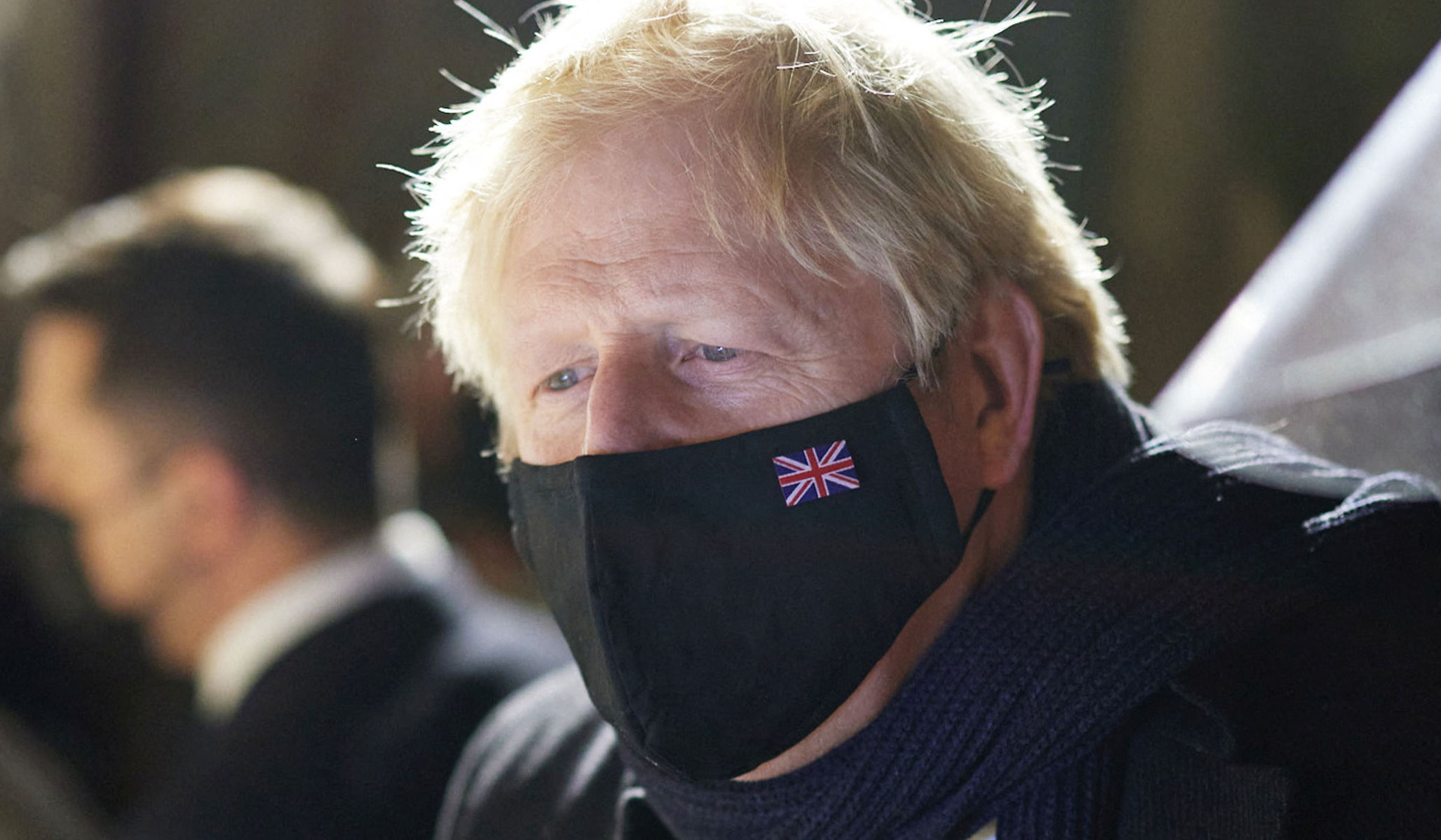
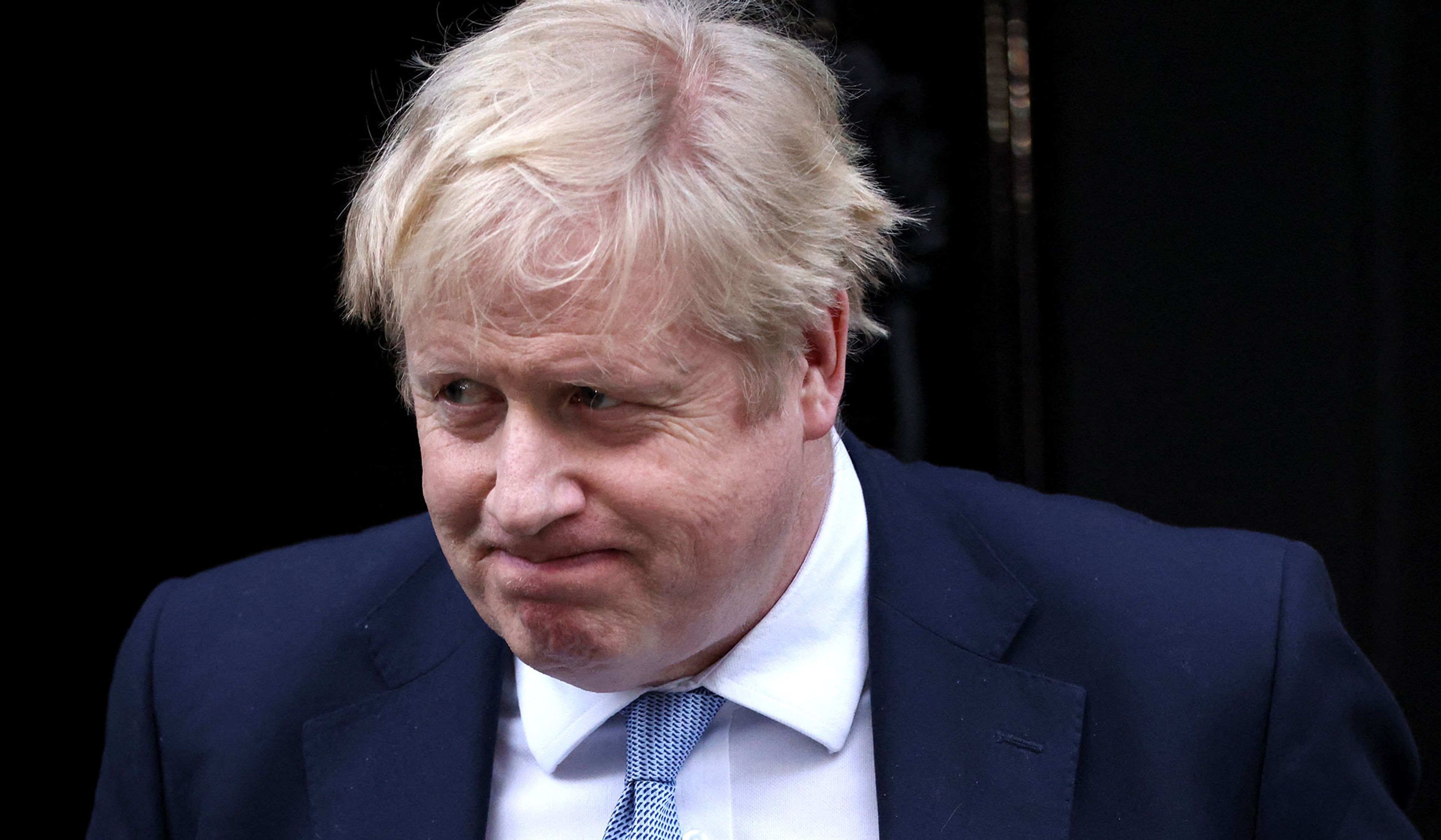
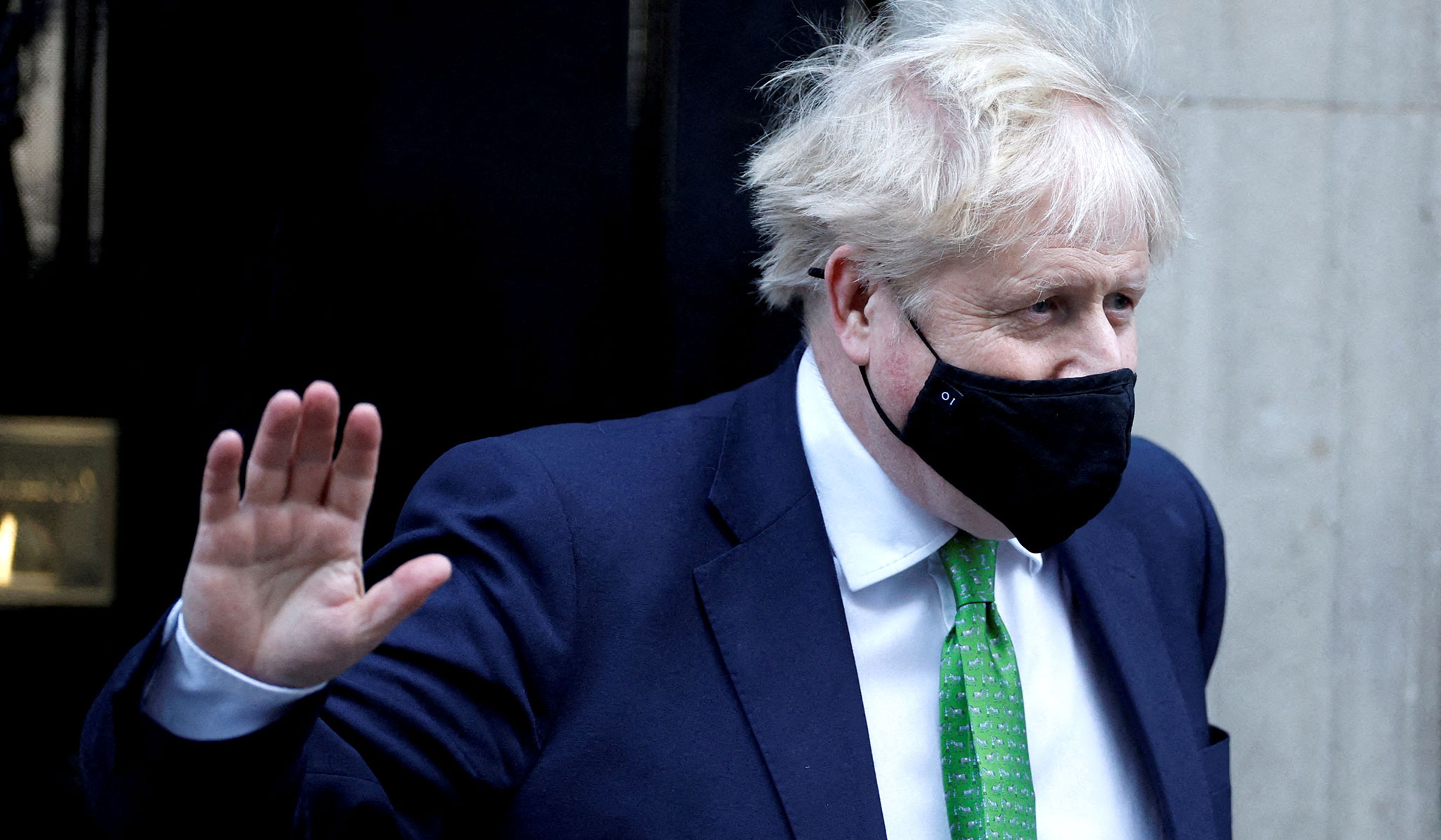
British Prime Minister Boris Johnson makes a statement at Downing Street in London, England, July 7, 2022.
Henry Nicholls/Reuters











Comments