Money may not be as essential as air, water, or food, but in a modern capitalist society, it can be just as life-giving. In the absence of wealth, daily existence is robbed of its flavor, variety, and excitement. “The trouble with being poor is that it takes up all your time,” said the great abstract-expressionist painter Willem de Kooning.
Surely the converse is equally true: Enormous sums of money can allow a person to repurpose for genuinely productive ends time that would have otherwise been spent scrounging, scrimping, and saving. Conservatives would point to captains of industry building businesses, inventing goods, and employing hundreds of thousands, but even the idle rich — to use an unfortunate term — are capable of engaging in constructive activities, though they may be self-directed: To select a sports car, acquire an art collection, or become a clotheshorse requires both money and creativity. Money enables the financing of dreams and the funding of passions.
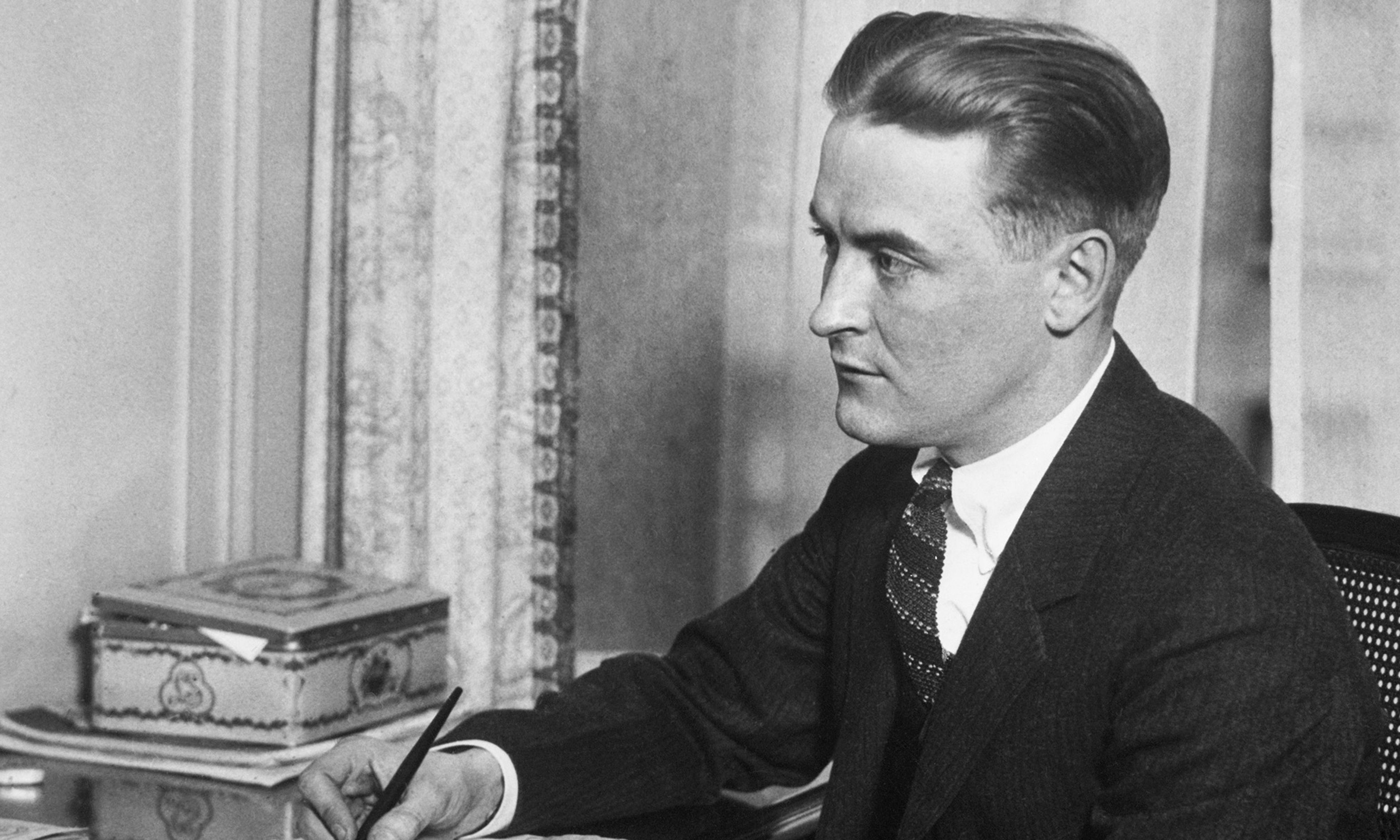
Even so, few works in the annals of American literature written by someone not named Ayn Rand credit the dollar as a force for industriousness, invention, and wish fulfillment. The single most striking exception to this rule is F. Scott Fitzgerald’s 1925 masterpiece The Great Gatsby, which anchors an impressive new collection of the author’s works from the Library of America. The volume is notable for being only the second of Library of America’s gatherings of Fitzgerald’s writings and its first in 22 years: In 2000, the publisher brought out F. Scott Fitzgerald: Novels and Stories, 1920–1922, which featured the author’s debut novel, This Side of Paradise, as well as a number of notable short stories. In addition to The Great Gatsby, the present volume includes the short-story collection All the Sad Young Men, among whose classic contents are the masterly stories “The Rich Boy” and “Winter Dreams,” and numerous other works of short fiction and nonfiction.
Nearly a century since it was first published by Charles Scribner’s Sons to blasé reviews and middling sales, The Great Gatsby has become widely accepted as a plausible candidate for the Great American Novel on the strength of its brilliant storyline: Set among the moneyed classes in New York during the Jazz Age, the novel has at its center the nouveau riche Jay Gatsby, whose conspicuous opulence is the subject of whispers from the nomadic revelers who turn up at his parties as well as from his more staid neighbors on Long Island. In the latter group is Daisy Buchanan (née Fay), who, as a well-heeled debutante in Louisville, Ky., was once besotted with Gatsby, a young soldier not many years removed from being one James Gatz, a North Dakotan of modest means, and not many months away from being dispatched to Europe to fight in World War I. The two are separated less by Gatsby’s war service than by their differences in background and social standing. Eventually, Daisy assents to marry Tom Buchanan, a brusque, brutish high-society type, while Gatsby, having survived the war and prospered in its aftermath, begins to pile up gobs and gobs of money through assorted business enterprises, both legitimate and dubious. Then, five years after their fleeting romance, the former couple come together thanks to Nick Carraway, a genteel, entirely unassuming stockbroker from the Midwest who serves the triple literary function of being Daisy’s cousin, Gatsby’s neighbor, and Fitzgerald’s keen-eyed, empathetic narrator.
This richly suggestive setup has elicited an array of thematic interpretations — the novel can be said to be about conspicuous consumption, the chasm between established wealth and new money, or merely, as Carraway puts it at one point, “privileged glimpses into the human heart” — but what if The Great Gatsby is actually about money, especially when acquired rather than inherited, as a good in and of itself? Gatsby’s self-actualization from jilted soldier boy to viable romantic prospect for Daisy is measured almost exclusively in financial terms. “He had waited five years and bought a mansion where he dispensed starlight to casual moths — so that he could ‘come over’ some afternoon to a stranger’s garden,” Carraway marvels upon getting word that Gatsby would like to renew his acquaintance with Daisy at Carraway’s modest neighboring domicile.
Fitzgerald portrays Gatsby as almost unbelievably single-minded in his pursuit of Daisy and what she represents: During an early encounter with Carraway, Gatsby tries to combat the lies told about him by telling his own set of lies — “I am the son of some wealthy people in the Middle West — all dead now,” he says, telling the truth only about the region of the country whence he came — but he is sincere in explaining the raison d’être behind his habits of acquisition: “I lived like a young rajah in all the capitals of Europe — Paris, Venice, Rome — collecting jewels, chiefly rubies, hunting big game, painting a little, things for myself only, and trying to forget something very sad that had happened to me long ago.”
Yet, throughout the novel, Fitzgerald seeds the idea that Gatsby realizes that Daisy is unworthy of all his honest effort (and dodgy dealing). When, at long last, Gatsby throws open his opulent doors to Daisy, Carraway notes that the green light on the Buchanans’ dock — the one that stood for all that Gatsby was seeking — was suddenly robbed of its symbolic importance now that Daisy was again present in the flesh. “Now it was again a green light on a dock,” Carraway says. “His count of enchanted objects had diminished by one.” It seems that Gatsby had used the image of Daisy — his memory of young Miss Fay — as a form of motivation, visualizing her when he thought about what he wanted to achieve and how much he hoped to earn. What person, even one as outwardly lovely as Daisy, could equal Gatsby’s reverie? “There must have been moments even that afternoon when Daisy tumbled short of his dreams — not through her own fault, but because of the colossal vitality of his illusion,” Carraway says. “It had gone beyond her, beyond everything.”
This, of course, represents the birth pangs of a tragedy, but Fitzgerald avoids the trap of suggesting that Gatsby’s striving was pointless merely because Daisy was, finally, unworthy of it. The novel is alive, as few ever have been, with delight in the things money can buy: In a famous passage, Gatsby shows Daisy and Nick the contents of “two hulking patent cabinets” in which he keeps his clothing, including shirts “piled like bricks in stacks a dozen high.” After Gatsby flings them about the room — “shirts of sheer linen and thick silk and fine flannel” — Daisy admits to being overwhelmed. “They’re such beautiful shirts,” she says. “It makes me sad because I’ve never seen such — such beautiful shirts before.” Perhaps Fitzgerald is ribbing Daisy for her superficiality, but he describes the garments with such unabashed tenderness that we, too, share a kind of happy bewilderment at the beautiful things in the world that can be bought only with a large bank account.
The point is that, while Gatsby may have accumulated his fortune with the notion of making himself attractive to Daisy, his fortune constitutes its own reward. At one point, when Gatsby drives Carraway into New York City for lunch and they happen upon a funeral procession, Fitzgerald even presents fabulous wealth as a consolation in the face of death. “The friends looked out at us with the tragic eyes and short upper lips of southeastern Europe, and I was glad that the sight of Gatsby’s splendid car was included in their somber holiday,” Carraway muses.
Of course, Gatsby errs terribly in following Daisy down a primrose path; Tom will not be so easily separated from his wife, and the ramifications of Gatsby’s having inserted himself in their marriage prove fatal. Yet Fitzgerald makes this tragic mistake comprehensible: Gatsby’s triumphant self-invention has persuaded him that money can alter the unalterable, and even though he learns that it cannot, we can’t help but admire him for supposing otherwise. What was it the poet said? “Ah, but a man’s reach should exceed his grasp, / Or what’s a heaven for?” In this novel, Fitzgerald is unusually attuned to the theme of renewal, appropriate for the story of a man who wrung the fabulously wealthy Jay Gatsby out of the perilously penurious James Gatz. “Now it was a cool night with that mysterious excitement in it which comes at the two changes of the year,” Carraway says at one point, while his friend, golfer Jordan Baker, says at another: “Life starts all over again when it gets crisp in the fall.” If the seasons can change four times every year, who is to say Gatsby was wrong to believe that a million here, a million there might make a difference to Daisy Buchanan?
That Carraway — who is, after all, Daisy’s relation, not Gatsby’s — comes to recognize the integrity of his neighbor and the fecklessness of his cousin (and her husband) supports this reading of The Great Gatsby. “They’re a rotten crowd,” Carraway tells Gatsby late in the book, implicitly contrasting Gatsby’s new money (and his genuine appreciation for it) with Tom and Daisy’s old money (and the indifference and self-absorption it breeds). “You’re worth the whole damn bunch put together.”
Later, Carraway is made aware of James Gatz’s boyhood daily itinerary, which included rising from bed at 6 a.m., working steadily throughout the day, practicing “elocution, poise and how to attain it, and so on.” This novel has survived the end of the Jazz Age and the many cultural transformations that have taken place since — the Crash, the Depression, another world war, a Cold War, a War on Terror — because Fitzgerald found a subject that transcends particular historical epochs: the limitless dreaming that accompanies the pursuit of money. It’s a uniquely American story that is told and retold again, and it helps explain why a real-estate magnate fancied himself a potential president and why a billionaire hopes to restore free speech on Twitter.
This exemplary volume brings back all the familiar pleasures of The Great Gatsby — including Fitzgerald’s extraordinary gift for language, as when Carraway listens to “the whip and snap of the curtains” in a wind-blown room, or when Jordan’s voice is said to resemble “a divot from a green golf-links” — but the real gift is the chance to see this exceptional novel’s themes more clearly. The story’s tragic contours notwithstanding, Jay Gatsby’s green light may have been the most potent symbol for the glories of capitalism — the light is the same color as our greenbacks, after all — until Miss Rand made use of the sign of the dollar in Atlas Shrugged. The lesson of this novel is not that Gatsby was wrong for wanting to make millions, but that he should have forgotten all about Daisy Buchanan once he made them. As Woody Allen might have put it, Gatsby should have taken the money — and run.












Comments