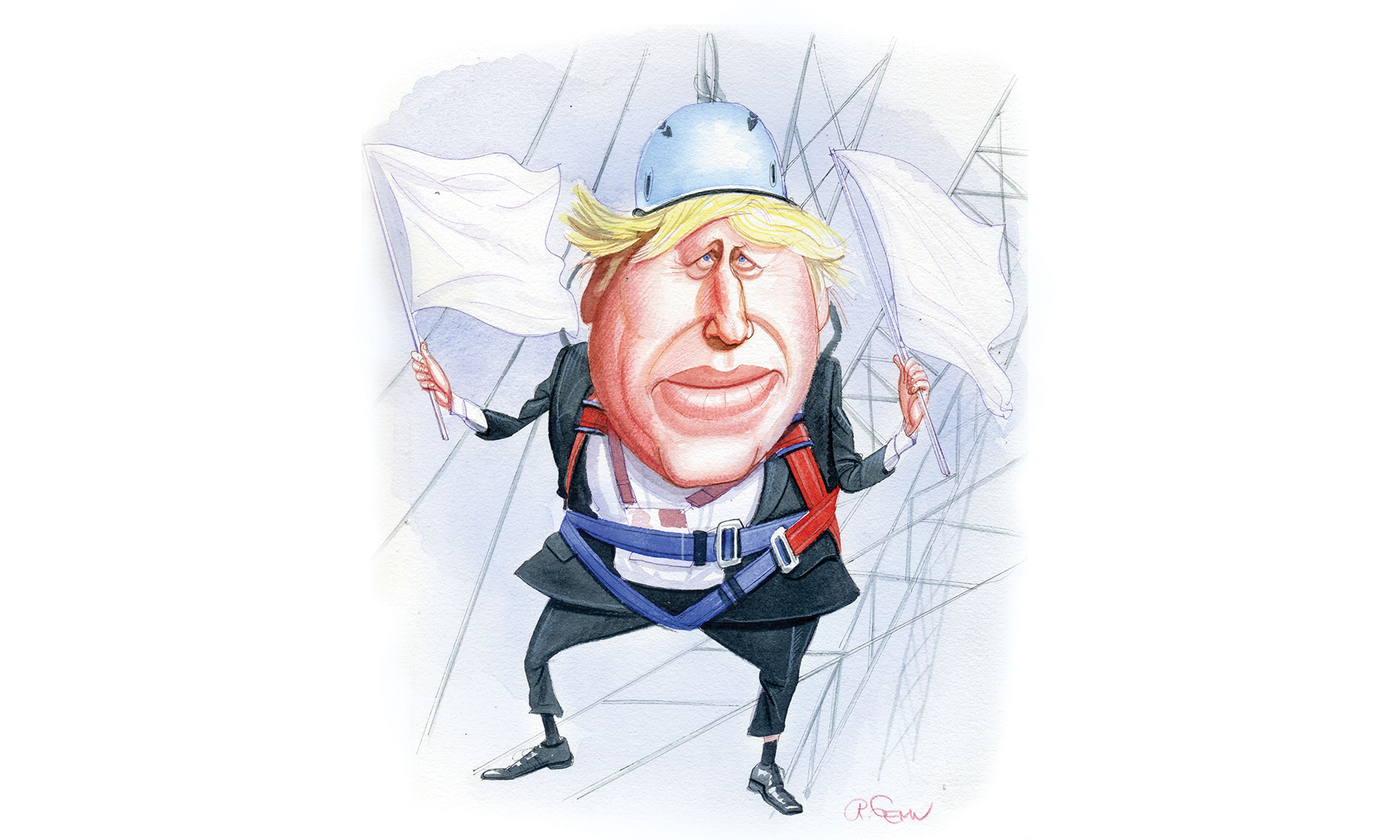
• Two out of three Americans surveyed disapprove of Joe Biden’s performance in office. The third guy is Hunter’s coke dealer.
• Whatever taboo there was on discussing Biden’s age has been lifted as his approval numbers have continued to sink into the 30s. In a brutal couple of days of coverage, the New York Times ran a long piece on how Biden is testing the boundaries of age and the presidency, as the headline put it. The report included the detail that White House aides worry that Biden, who increasingly shuffles as he walks, will trip over wires. Then, the Times revealed its new poll that has Biden’s approval at 33 percent, with 64 percent of Democrats saying that they would prefer that someone else run in 2024. The party and the media have gone from a period of euphoria when Biden was pumped up into something he wasn’t (the new FDR or LBJ) to a period of increasing despair over the reality of what Biden is. Whether it’s age, inherent limits, misplaced priorities, circumstances, or all of the above, he is not good at being president. At least Jimmy Carter was a young man.
• Gavin Newsom ran an ad in Florida urging people to flee the regime of repression imposed by Ron DeSantis and come to the free state of California. Of course, California, one of the most heavily regulated states in the country, is not a beacon of freedom, and it is steadily losing people to outmigration — nearly 280,000 on net last year. The subtext of the Newsom ad is shifting national politics. The spot underlines the rise of DeSantis, who is now such a bogeyman that Democrats think they can benefit by picking cross-country fights with him. And it shows that ambitious Democrats are preparing to jockey for position ahead of 2024 as Biden’s presidency founders. Newsom wants Democrats to notice that he’s tanned, rested — and nearly 30 years younger than Biden.
• Biden is in a bind on abortion. Many Democrats, and especially the most vocal ones, see abortion on demand as a paramount and massively popular cause to be defended at all costs. But the votes aren’t there in Congress. Pro-abortion executive orders run legal risks and can set a precedent for equally sweeping orders from the next pro-life Republican president. An unrestricted nine-month abortion right is unpopular everywhere and especially in key states and districts for the midterms. So Biden’s abortion executive order was long on rhetoric and weak on action. Congressional Democrats demanded that the Federal Trade Commission crack down on crisis pregnancy centers that aim to persuade women not to have abortions. Biden’s order directs the FTC and other agencies “to consider options to address deceptive or fraudulent practices.” The rest of the order is of a piece, full of directives for portions of the government to think about various topics. For now, Biden has declined calls for more extreme action in support of abortion. For now.
• Democrats in Congress are also targeting pregnancy centers with a bill that claims to “prohibit disinformation in the advertising of abortion services.” In reality, the bill is an effort to suppress the work of these pro-life centers, which assist pregnant women who want their babies to live — a mission that, naturally, decreases the number of women seeking abortions and therefore harms the bottom line of the abortion industry. The centers are in fact the ones in need of protection, as pro-abortion activists have spent more than two months firebombing and vandalizing them. The abortion lobby says that pro-lifers provide no care for women and babies, and then attacks them, sometimes physically, when they do.
• No joke: Democrats are trying to resurrect Build Back Better. Chuck Schumer is talking about putting together a package of health-care, tax, and climate proposals and sneaking it by the Senate parliamentarian as a budget-reconciliation bill. When he was growing up in Scranton, did Joe Biden’s grandma ever tell him to take a hint? With the tediousness of the president’s canned catchphrases, Democrats keep returning to this idea that already failed in Congress after more than a year of effort. The voters aren’t interested, and Democrats don’t have the votes in the Senate to pass any leftist wish list. Joe Manchin is reported to be negotiating with Schumer, but no actual text or specific proposals have been announced. As Manchin said in February, “There is no Build Back Better bill. It’s dead.” He should remind Schumer of that, with an Obama-style “let me be clear.”
• Dealt a good hand, unions that represent transportation workers are playing it around the world, without regard to the consequences for their economies. Truck drivers in South Korea, dockworkers in Germany and Belgium, passenger-train operators in the U.K., freight-rail workers in Canada, and pilots in Scandinavia have all had work stoppages over labor disputes this year. These stoppages have even occurred in places with normally tranquil labor relations; Germany hadn’t seen a dockworker strike in decades, and the Nordic labor model is almost always cooperative. But organized labor is empowered right now because the post-pandemic importance of transportation is magnified and because inflation has made significant pay-raise demands possible. In the U.S., there’s another factor in favor of unions: the Biden administration. The self-described “most pro-union president” has a former union leader as his secretary of labor and spoke in June at the latest AFL-CIO convention. With labor negotiations currently ongoing for West Coast dockworkers and freight railroads nationwide, it’s no secret which side Biden is on: Speaking at the Port of Los Angeles in June, he was introduced by a member of the International Longshore and Warehouse Union. Two of Biden’s appointees to the National Mediation Board were responsible for releasing railroad workers from mediation early, a legal prerequisite for a strike. We may yet see whether voters are quite as pro-union as this administration is.
• Cassidy Hutchinson, an aide to White House chief of staff Mark Meadows on January 6, 2021, provided what appears to be damning testimony before the House January 6 committee about Donald Trump’s behavior that day. For the first time, under questioning from Liz Cheney, the committee presented a public eyewitness of Trump’s conduct. The picture wasn’t pretty. Hutchinson said that White House counsel Pat Cipollone begged her, “Please make sure we don’t go to the Capitol, Cass. We’re going to be accused of every crime imaginable.” Ignoring all advice, Trump allegedly fumed when the Secret Service’s magnetometers kept many armed attendees at the “stop the steal” rally away from the president. “Take the f***ing mags away,” he supposedly insisted. “They’re not here to hurt me. They can come in. Then they can march on the Capitol.” Trump then, according to the sworn testimony, demanded that the Secret Service let him lead the crowd. At this point the committee erred: The hearing’s most gripping tale was about Trump grabbing the steering wheel from his Secret Service detail, but Hutchinson was relaying a second-hand claim that some press reports suggest that agents may deny. Even when the committee has powerful testimony, it can’t resist painting the lily.
• Every once in a while in politics, someone actually gets a comeuppance. Representative Marie Newman (D., Ill.) has gotten hers. Newman was drafted by the abortion lobby to run against pro-life Democrat Dan Lipinski in 2018. Lipinski defeated her then, but Newman squeaked by in the 2020 primary and won the general election, doing 17 points worse than Lipinski had the cycle before but still beating the Republican in the heavily Democratic district. Once in Congress, Newman became the target of an ethics investigation. It appears that, in a clear violation of campaign-finance law, she promised another potential candidate in the Democratic primary a job in her office if that person agreed not to run. By “appears,” we mean there is a contract with her signature on it that says exactly that. A brutal Office of Congressional Ethics report produced copious documentary evidence that contradicted claims Newman had made to investigators about the incident. Because Illinois lost a congressional seat after the 2020 census — the state is a consistent leader in resident outflow — Newman was drawn into the same district as fellow Democratic representative Sean Casten, who has now crushed her in a primary, winning 68 percent of the vote to her 29 percent. We hold no brief for Casten, but the riddance of Newman, who came to office on the sole issue of killing the unborn, is good.
• Second Amendment advocates are often asked why they so strongly oppose the government’s keeping a registry of gun owners, concealed-carry permit-holders, and so forth. To their already long list of reasons, we can now conclusively add, “Because governments cannot be trusted to keep that information private.” In June, the attorney general of the State of California accidentally — at least one hopes accidentally — released the full names, birth dates, home addresses, and other personal information of every legal concealed-carrier in the state. This disastrous breach of confidentiality looks only worse when one considers that the database contained the data for a whole host of judges, police officers, and witnesses whose desire to carry firearms is the result of direct criminal threats. Going forward, citizens of the Golden State would do well to consider whether they wish their government to keep such information in the first place.
• There is supposed to be a scandal involving Uber. So say the Guardian and the International Consortium of Investigative Journalists, which obtained documents showing that Uber . . . engaged in lobbying, public relations, and tax planning. Uber sought changes to taxi and labor regulations around the world in order to facilitate its business. It kissed up to public officials. When its drivers were brutally attacked by rival taxi operators — who in some parts of the world constitute a mafia — Uber talked about using the story to discredit critics. Uber used tax-planning strategies to park earnings in Bermuda, and it structured its own IT to make it difficult for investigators to gather evidence. It is not clear why it is a scandal when Uber seeks to use taxi regulations to suit itself but not when the local taxi cartel in Rotterdam or Mumbai does the same, or why it is a scandal when Uber petitions — even aggressively petitions — public officials for changes to policies relevant to its operations. Uber is a tough competitor in a business that is rough in much of the world and positively murderous in some of the world, and its disruption of local taxi monopolies has been on the whole a positive development. The company has issued a groveling apology — this is a San Francisco tech firm, after all — but it does not seem to us that the company has very much for which to apologize.
• For the first time in memory, the Supreme Court consistently did its job this term, thanks to Justice Amy Coney Barrett’s replacement of Ruth Bader Ginsburg. The Court resisted further mischief, discarded old and discredited precedents, and repeatedly stood up for the Constitution and the rule of written law rather than the rule of whatever is popular with lawyers. That started and ended by telling the administrative state that it cannot simply write laws just because Congress has failed to do so; the Court struck down the CDC eviction mandate, the OSHA vaccine mandate, and EPA emission rules. The Court stood up for the Bill of Rights, including the right to carry guns for self-defense and the right to the free exercise of religion. Most dramatically, the Court ended five decades of judicial overreach by recognizing that the Constitution never protected a right to abortion. That required tremendous fortitude in the face of an unprecedented leak, protests at the justices’ homes, and even an assassination attempt on Justice Brett Kavanaugh. Along the way, the Court’s new majority has discredited the critics of the originalist project from the right who claimed that all originalist judges knew how to do was lose the Constitution slower. For a year of keeping their judicial oaths, we say well done to Justices Thomas, Alito, Gorsuch, Kavanaugh, Barrett — and sometimes Roberts.
• In the issue of NR after a draft of the Supreme Court’s decision in Dobbs leaked, we thanked the justices in the majority, “the scores of millions of pro-lifers who have voted, organized, argued, and prayed for this day,” and “the politicians, from Reagan to Hyde to both Bushes to McConnell to Trump, who stood with them when it counted.” Now that the decision is final, we would like to reiterate Donald Trump’s inclusion in that roster — something we emphasize because we have often criticized Trump, especially for his conduct since the 2020 election. Another Republican might have been able to beat Hillary Clinton in 2016 if nominated, and another Republican might have made equally sterling Supreme Court appointments if elected. But Trump is the man who actually made the decisive appointments, over heavy opposition. He vastly exceeded the expectations many pro-lifers had for him when he first ran for office. His initial public reaction to the decision was to give credit to God rather than to himself. His role in this great victory for justice is a reminder of how strange the workings of Providence can be.
• James Madison believed it to be self-evident that Congress was the preeminent branch of the federal government. Madison also believed that, as “ambition counteracts ambition,” any attempt by the other branches to usurp Congress’s power would be fiercely resisted from within. Madison was wrong. In June, in the case of West Virginia v. EPA, the Supreme Court determined that decisions of political “magnitude and consequence” rest with either “Congress itself, or an agency acting pursuant to a clear delegation from that representative body.” In response, the majority party in that Congress screamed bloody murder. “Fascist SCOTUS,” tweeted Representative Rashida Tlaib, before explaining without irony that the effect of the Court’s decision had been to ensure that “the federal government will be restricted from regulating anything of significance in the absence of a clear Congressional directive to do so.” What, one must ask, do our legislators believe their jobs to be?
• For more than a decade, Justice Clarence Thomas has complained that the Supreme Court treats the Second Amendment as a “second class right.” In the case of New York Rifle and Pistol Association v. Bruen, Thomas and five of his colleagues sought to correct course. The specific question in that case was whether states such as New York, California, and Maryland are permitted to include subjective criteria when determining eligibility for concealed-carry permits. Six–three, the Court decided that they are not. Henceforth, the majority ruled, “authorities must issue concealed-carry licenses whenever applicants satisfy certain threshold requirements, without granting licensing officials discretion to deny licenses based on a perceived lack of need or suitability.” This was important, especially for the tens of millions of people who live in the five states that had not yet moved to a “shall issue” system. But more important still was the inclusion of specific instructions as to how America’s lower courts must consider firearms cases in the future. “When the Second Amendment’s plain text covers an individual’s conduct,” Thomas wrote, “the Constitution presumptively protects that conduct.” Translation: Holdout states, you are now on notice, for there are no tiers within the Bill of Rights.
• In 2015, Joe Kennedy, an assistant football coach at Bremerton High School in Washington State, lost his job for daring to pray in public. The Supreme Court finally righted that injustice in a 6–3 opinion by Justice Neil Gorsuch, ruling that a person praying silently on the field after a football game does not establish a state church, even if students choose to join him. In the process, the Court formally interred the 1971 Lemon v. Kurtzman “entanglement” test, under which an establishment-clause violation could be found anytime a school was “entangled” with religion. That test never had any basis in the Framers’ ban on official state churches and proved hopelessly unworkable in practice. The three liberal justices fretted about “coercion,” but Kennedy’s conduct was far less coercive than much of what the Left wants taught from the front of a classroom. Ominously, the dissenters did not deny that their preferred rule of intolerance for visible religious practice in public schools would require a school to fire an observant teacher who wore a yarmulke to work. “This is a free country,” Kennedy told students who asked to join him, including opposing players. “You can do what you want.” The Court properly proved him right.
• In early July, a mob assembled outside a Morton’s steakhouse where Justice Kavanaugh was dining. Given that, just a month earlier, he had been the target of a failed assassination attempt, one might have thought that such a moment called for statesmanship. Instead, we got equivocation and snark. “This is what a democracy is,” said the White House press secretary, Karine Jean-Pierre. “It’s all very unfair to him,” tweeted Alexandria Ocasio-Cortez: “The least they could do is let him eat cake.” In the Washington Post, meanwhile, Alexandra Petri suggested that the objections to the mob were ironic because “the right to congregate and eat dinner is actually not to be found anywhere in the Constitution.” Reporting on the incident, a host of press outlets proposed that, by criticizing the mob and defending its customers against intimidation, Morton’s had taken sides in the “culture war.” Once upon a time, we used to call its side “civilization.”
• But how refreshing it is to be able to praise a major American university for standing squarely up to the mob. After its law school came under fire for its continuing relationship with Justice Thomas, who delivers a lecture on campus each year, George Washington University responded with the obvious: “Because we steadfastly support the robust exchange of ideas and deliberation,” the college explained in a letter, “and because debate is an essential part of our university’s academic and educational mission to train future leaders who are prepared to address the world’s most urgent problems, the university will neither terminate Justice Thomas’s employment nor cancel his class in response to his legal opinions.” Better still, GWU reminded its students why they are there in the first place. “It is not the proper role of the university,” it contended, “to attempt to shield individuals within or outside the university from ideas and opinions they find unwelcome, disagreeable, or even deeply offensive.”
• A same-sex couple, Albert and Anthony Saniger, has sued a fertility clinic and its specialist. They had specified in their purchase agreement that they wanted a son. Instead, the clinic, according to the suit, “negligently, recklessly, and/or intentionally transferred a female embryo to the Sanigers’ gestational carrier.” In the emerging market for children, everything is conceivable. In other cases, courts have had the unwelcome prospect of assigning parentage to five individuals: the original contracting couple, the sperm donor, the egg donor, and “the gestational carrier.” In plain English, those final three are the biological father, the biological mother, and a separate birth mother. Of course, the logic of commercialization, once it has trespassed into these intimate relations, must obscure those primordial family relations; otherwise, we would be forced to reckon with the reality that couples such as the Sanigers are, sentimentality aside, commissioning the manufacture of children. From there it is a short, sad step to complaining about product quality.
• In early July, Russian troops captured the last bits of Luhansk Oblast, the eastern Ukrainian province to which Vladimir Putin had turned his attention after the spring’s disastrous offensive against Kyiv. For months, Russia’s strategy has been one of attrition. The Russian army has used its vast superiority in artillery to blast away at Ukrainian defenders while slowly pushing forward. The Ukrainians have fought hard, and they have been creative in the employment of the advanced Western weapons that have reached the front lines, such as the U.S. HIMARS rocket-artillery platform. But while the Russians have suffered shocking casualties and the damage to their economy is mounting, it’s hard to say that they are losing the war right now. As his forces pause to refit and regroup, Putin stands poised to press his advantage. The Kremlin knows that the coming winter, and its likely energy and food shortages, will give it greater leverage over Western governments. In Europe, natural-gas prices have already increased by 700 percent since last year, and gasoline sells for north of $8 per gallon. The U.S. and its allies must not let short domestic attention spans and recession fears allow Putin’s thugs to snatch victory from the jaws of last spring’s setbacks.
• European Commission president Ursula von der Leyen said the EU needed to prepare itself for a complete shutoff of Russian gas. A dozen EU member states have already seen Russian gas supplies disrupted or cut off entirely in response to EU sanctions. Germany’s economy, Europe’s largest, has been left particularly vulnerable by a generation of positively idiotic policy. The Nord Stream 1 pipeline that delivers gas to Germany from Russia was partially shut down because of “technical issues” — sure, Vlad, sure — and Germany fears that it will not be reactivated. German chancellor Olaf Scholz says Germany will fill up gas-storage facilities and expand import facilities for liquefied natural gas. But he remains stuck in wishful thinking, insisting that “every wind turbine, every photovoltaic plant, every biomass plant” is a step toward independence while Germany continues to denuclearize its energy sector — even when this means reactivating coal-fired facilities. Next door, France generates some 75 percent of its electricity from nuclear power, and the government is working to add nuclear capacity. In this case, the Germans could learn a little practicality from the French.
• Boris Johnson rose to Britain’s premiership on the strength of his carefully crafted public persona, only to be felled by the weaknesses he could not smooth off it. In the 2019 general election, and not for the first time in his career, he demonstrated his appeal across traditional party lines, delivering the largest Conservative majority since Mrs. Thatcher’s heyday. As promised, he “got Brexit done.” He can take considerable credit for Britain’s impressive rollout of a Covid-19 vaccine, and he was quick to rally behind embattled Ukraine, leading by example when example was badly needed. More of a metropolitan liberal, however, than — the occasional provocation aside — a man of the Right, he ducked a fight against the woke, failed to secure Britain’s borders, and, as British taxpayers have discovered, proved to be a big-spending interventionist. He also embraced a fundamentalist climate policy for which the bill is only beginning to fall due. Johnson’s downfall, however, came of his mishandling of a series of petty scandals. His reputation is now at a low ebb. The Tories may yet find themselves missing him come the next election.
• The admission of Sweden and Finland to NATO should be welcomed, and so the lifting of Turkey’s veto on their admission was good news. At issue on the surface had been the Nordic duo’s reluctance to sell Turkey arms as well as their alleged harboring of Kurdish terrorists. Just below the surface lurked the question of U.S. willingness to sell F-16s to Turkey. The Kurdish issue has been complicated by the generous refugee policies of Sweden and Finland and by disagreement over who is a terrorist. The Turks waived their veto in exchange for Sweden and Finland’s disavowing any arms embargo and promising to crack down on one Kurdish group and withhold support from two others. Sweden and Finland also, however, agreed to cooperate with Turkey to extradite some Kurds, and Ankara has warned that it will not allow ratification of the NATO-admission agreement unless it sees progress on extradition. In the end, these difficulties will probably be smoothed over by the sale of those F-16s, but we expect Turkey to bargain until the last minute.
• Federal prosecutors charged two men with ties to the Department of Homeland Security (one a current agent, one a former) with working with Chinese state security to harass and surveil dissidents in the U.S. According to a disturbing Justice Department complaint, the two men obtained information from government databases and transmitted it to their Chinese handlers, destroyed evidence, and lied when confronted by FBI agents. The DOJ also said that the Chinese agents subsequently used the information to carry out transnational repression efforts. For months, Justice has been rolling out a series of criminal prosecutions related to the Chinese government’s extensive targeting of individuals in America. More U.S. citizens are likely to be charged. Watch this space — and more important, watch China.
• Countries never fall in a day, but there is often a day that is remembered as the one when everything came apart. For Sri Lanka, it was July 9. The country had defaulted on its debt in May, after years of profligate spending and money-printing. Citizens had been suffering fuel and food shortages for months. The government, dominated by a single family, had attempted to convert Sri Lanka’s agriculture sector to 100 percent organic farming in 2021. Just as agricultural scientists warned, the country’s crop yields plummeted, reducing domestic food supply and destroying the export market. Then, on July 9, protesters stormed the president’s mansion and set the prime minister’s house on fire. All this in a country that was, until recently, doing fairly well, having become a major tourist destination after ending a decades-long civil war. Along with poor political leadership and the Covid pandemic (which kept visitors away), global economic conditions played a role in destabilizing Sri Lanka. The last time the Federal Reserve raised interest rates to lower inflation (in the early ’80s, under Paul Volcker), it helped spur a debt crisis in Latin America. The U.S. must be prepared for the global fallout from its actions now, however necessary. Sri Lanka is far from the only developing country with loads of foreign debt and irresponsible leadership.
• Last year, the Nobel Peace Prize was shared between Dmitry Muratov, the editor in chief of Novaya Gazeta, in Russia, and Maria Ressa, the co-founder of Rappler, a news site in the Philippines. Novaya Gazeta has now been shut down, like all other independent media in Russia. And Rappler has now been ordered shut down, although Ressa and her colleagues are appealing in the Philippine judicial system. Moreover, Ressa faces a jail sentence. Why? Because she and Rappler have reported news annoying to the government. Press freedom is essential to democracy — which is why, of course, authoritarians set themselves against it.
• Since its founding in 2019, the Quincy Institute for Responsible Statecraft, a joint project of George Soros and Charles Koch, has been a Beltway haven for self-described proponents of “realism and restraint.” Its scholars have peddled narratives almost uniformly sympathetic to authoritarian regimes and hostile to the United States. Quincy is now reeling from resignations of protest over its response to the Russo–Ukraine War. Analyst Joe Cirincione explained to Politico, “You cannot find a word on the website or in the analysis about the horrors and crimes that Russia is doing” — only criticisms of NATO’s response. His resignation followed that of board member Paul Easton, who explained his departure with the words “I support NATO.” A recurrent problem with advocates of American neutrality is how rarely they achieve neutrality themselves.

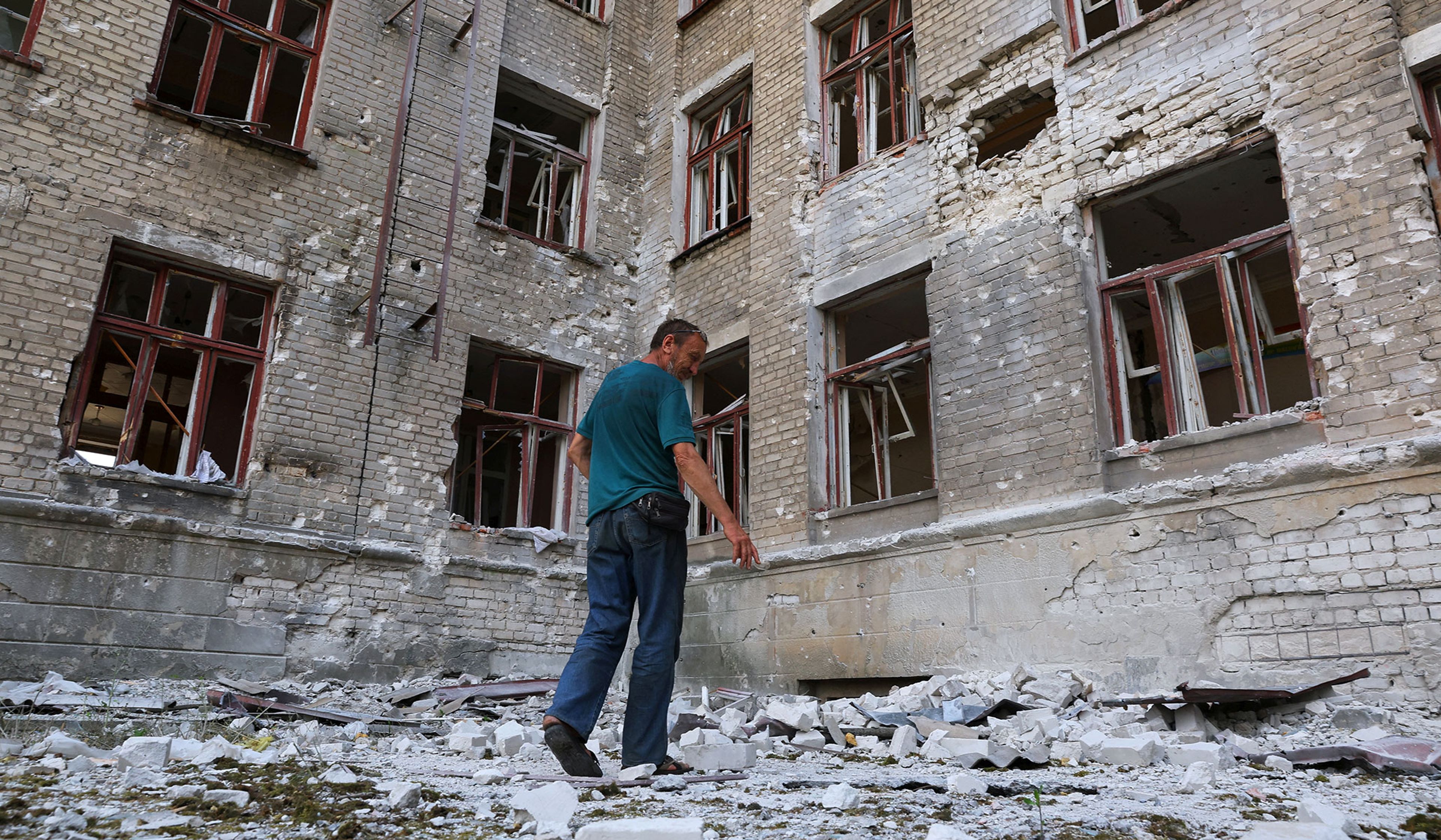

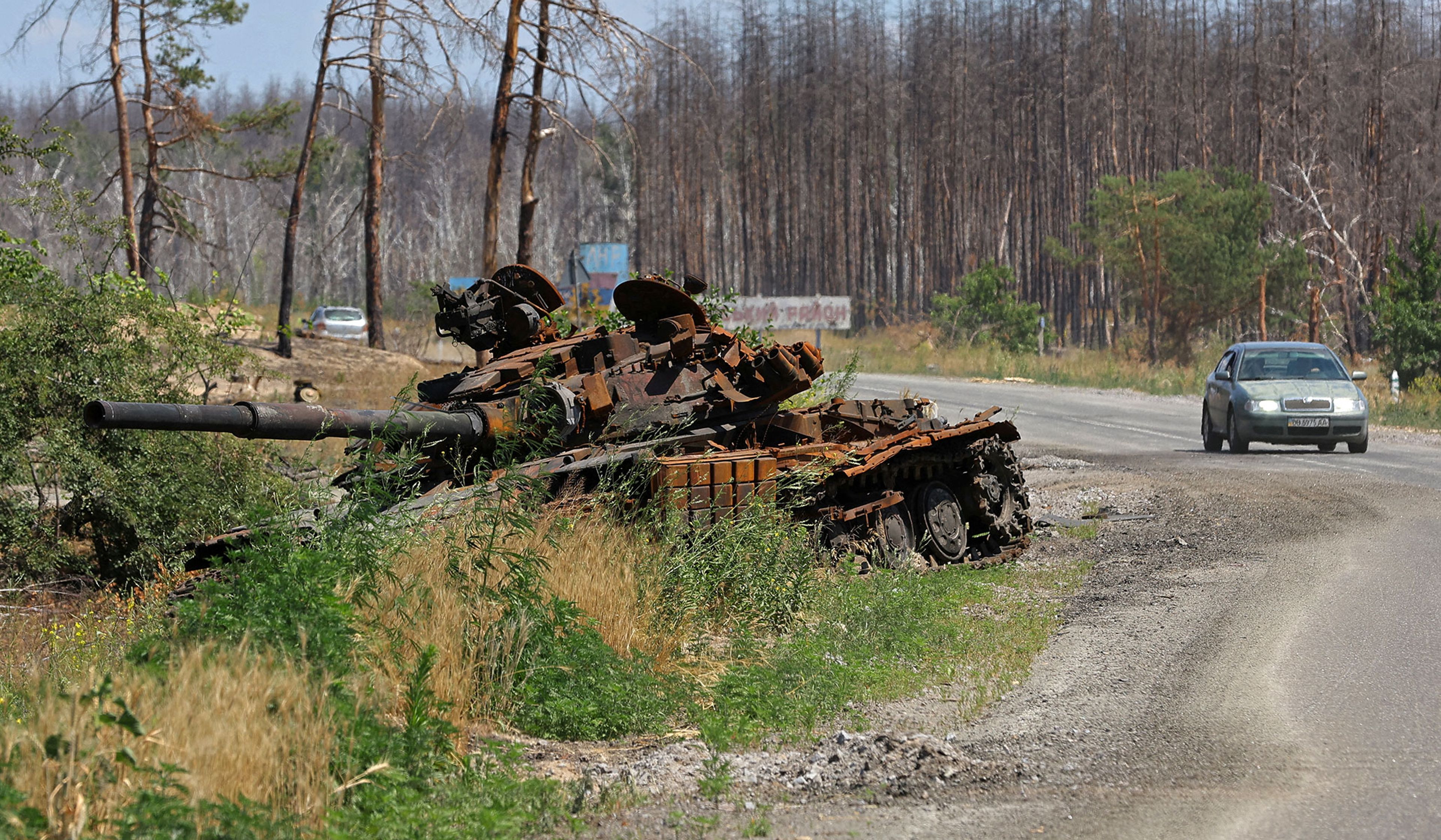
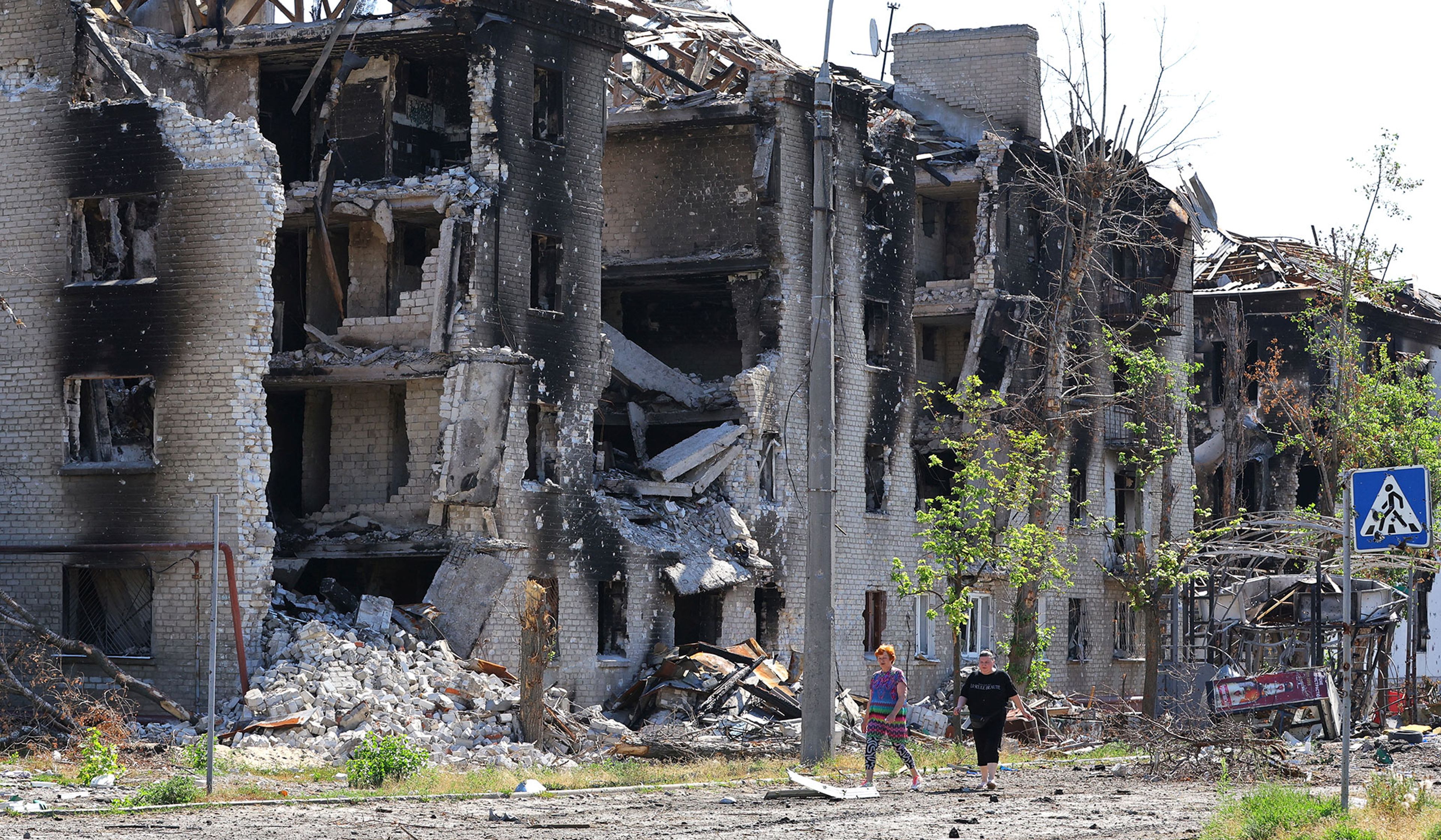

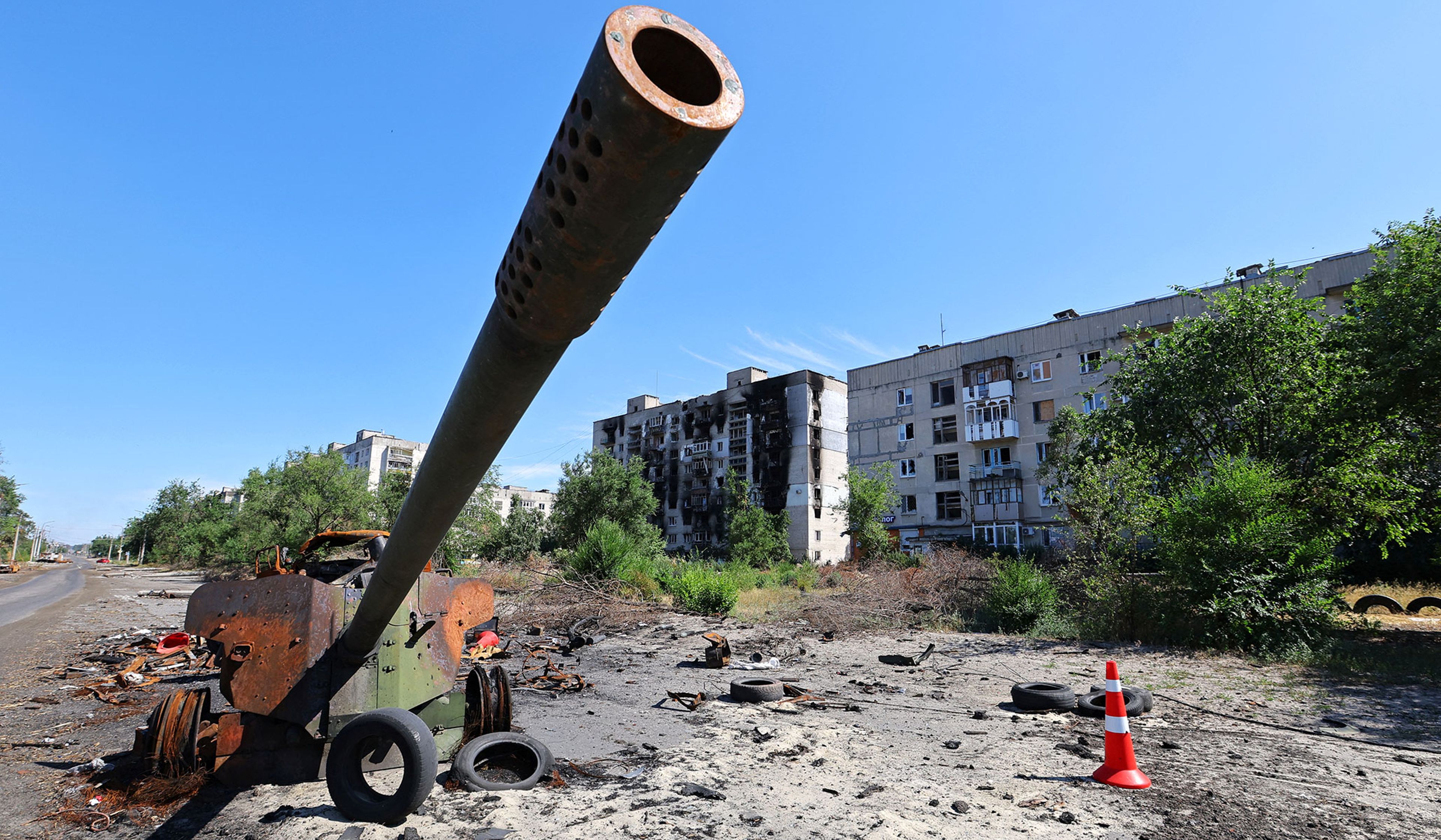
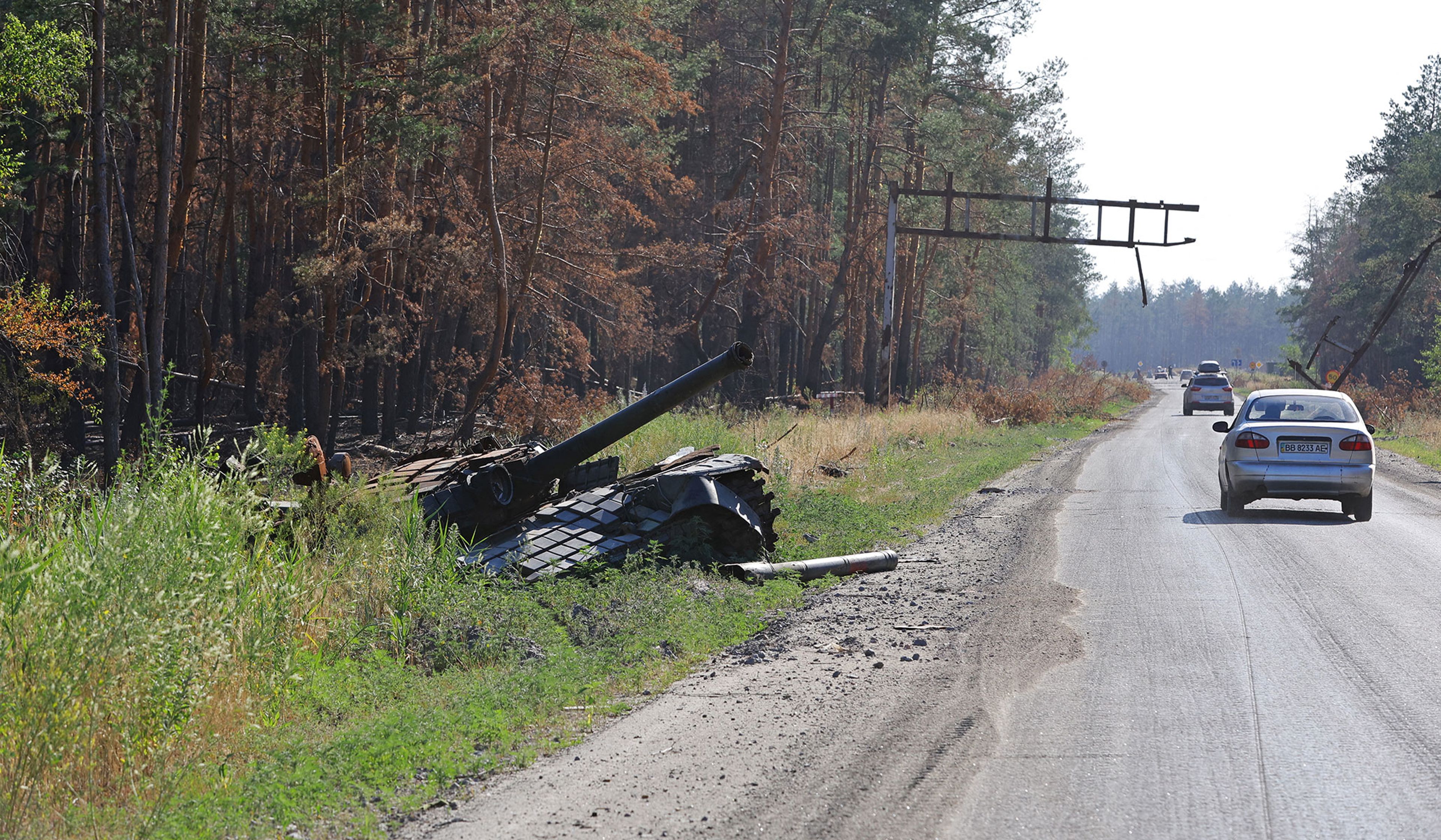
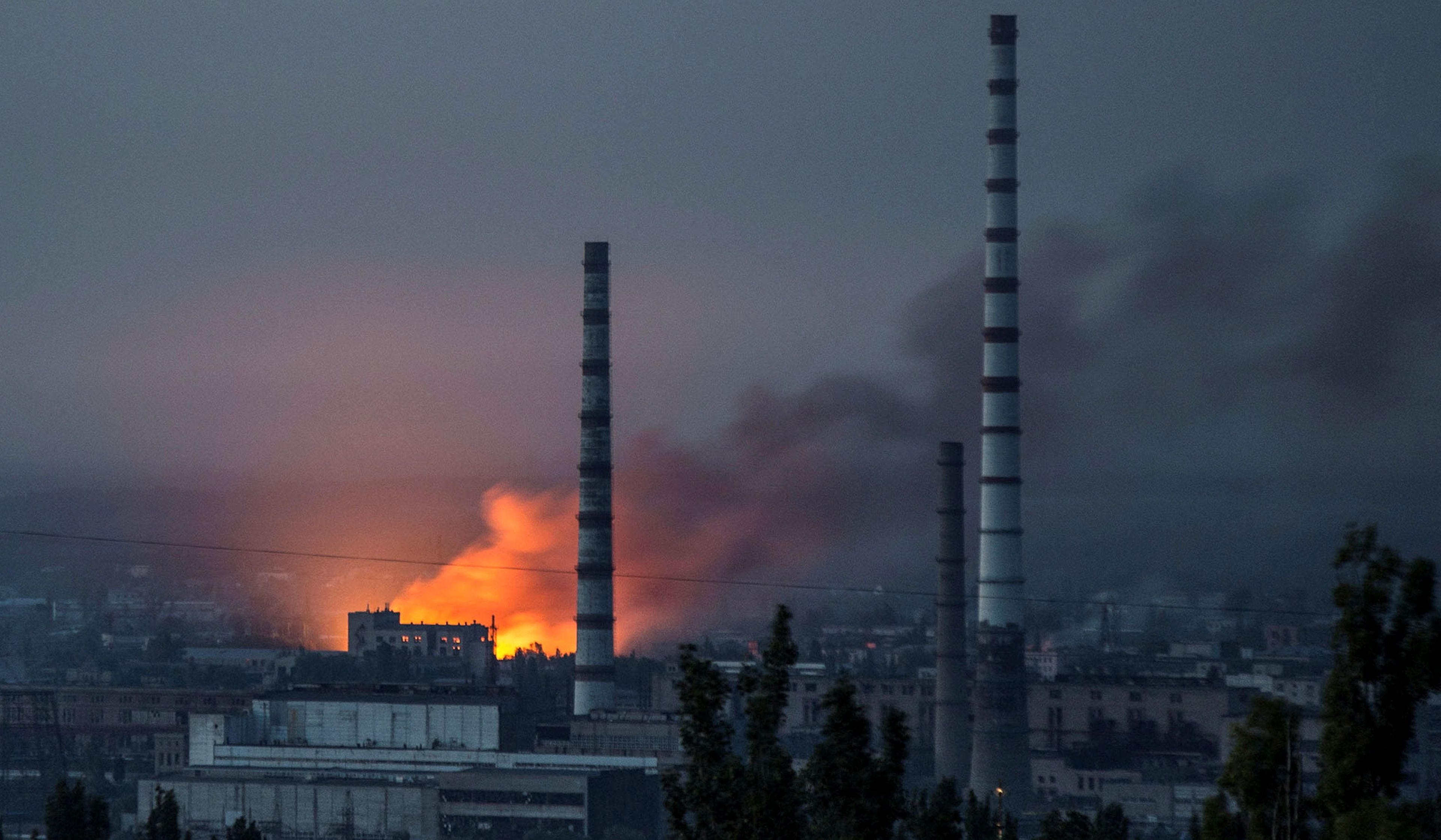


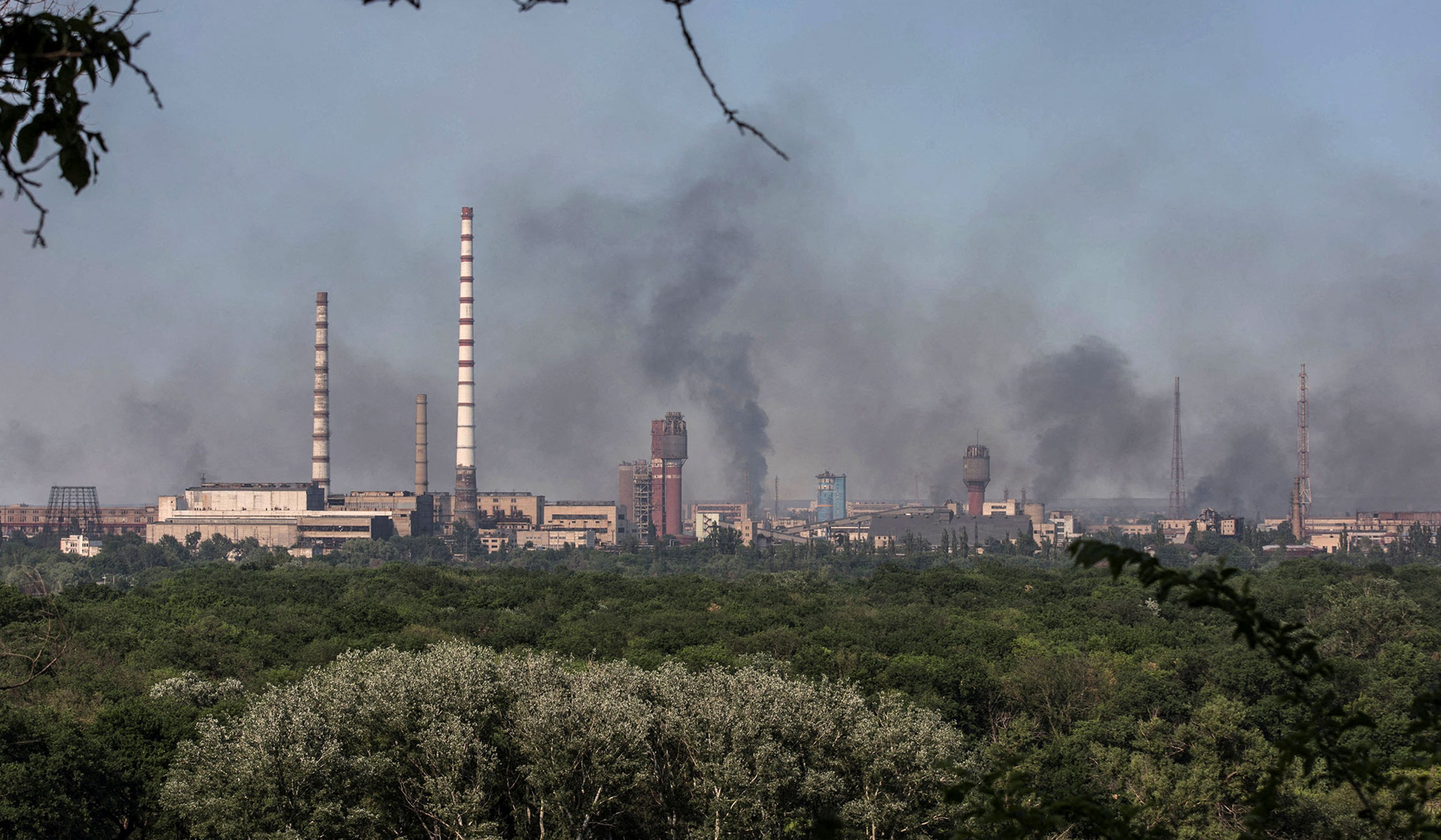
Pro-Russian troops ride an infantry fighting vehicle in Lysychansk, Luhansk Region, Ukraine, July 4, 2022.
Alexander Ermochenko/Reuters
• Dave Mastio is a veteran journalist and a conservative. He has worked for several publications, including the Detroit News and the Washington Examiner. But he has spent the bulk of his career at USA Today, in three separate stints, always for the opinion section. Until recently, he was deputy editorial-page editor. Last year, activists at the paper decided that the phrase “pregnant women” would be verboten. You had to say “pregnant people” instead. On Twitter, Mastio observed that people who are pregnant could also be called “women.” The “diversity committee” at the paper demanded that Mastio be fired. Instead, he was demoted. Managers wanted to cut his pay by $30,000, but the threat of a lawsuit stayed their hand. With a family to support, Mastio stayed on until he found another job — at Straight Arrow News. Mastio is a solid journalist: temperate, informed, professional. If a mainstream outlet can’t tolerate him, it can’t tolerate anybody, or any conservative. One of the things that USA Today lost when it lost Dave Mastio is: diversity.
• Steph Curry is widely acknowledged to be the best shooter in basketball history. His team, the Golden State Warriors, won the NBA championship this year — again — and Curry was voted the Finals MVP. He is also a new college graduate. In 2009, he left Davidson College, after his junior year, to go to the NBA. He has now, 13 years later, earned his degree. Why did he do it? He explained: because he promised his mother and his coach that he would. And it was important to him that he keep his promise. An old-fashioned, and laudable, instinct. Curry also joked, “My oldest daughter is getting older. I wanted to make sure I didn’t graduate the same year she did.”
• Woven into baseball’s unwritten rules has been the assumption that umpiring is a science but also an art. The home-plate umpire determines whether pitches pass through the strike zone as defined in the official rules, but he may tacitly adjust it when, in his judgment, circumstances dictate. That fastball you took missed the outside corner by a millimeter, but you were down in the count 0–2 and it’s the 19th inning, for crying out loud: You should have swung. Strike three. Say goodbye to that scenario and its countless permutations. Commissioner Rob Manfred expects that “robot umpires,” still making their way through the minor leagues, will be promoted to the majors by 2024. The accuracy of the technology has improved enough. Attached to the stands behind home plate, a Doppler radar calls balls and strikes and, through an earpiece, reports to the human umpire, who shouts out the finding and makes the usual hand gestures. His role becomes like that of the Oscars presenter who opens the envelope and announces the winner. How much discretion will the ump have to overrule the machine? Enough, we hope, to keep alive the tradition of heckling and second-guessing him.
• In the March 21 issue, National Review informed subscribers that the combination of labor turmoil, the long-term trend of paper mills’ retooling for the production of corrugated-cardboard boxes, and supply-chain shocks had led to a worldwide paper shortage. The editors were advised to reduce the size of each issue in order to guarantee that publication of NR would continue uninterrupted. The paper crisis is not completely behind us, but we now believe that we can begin to expand the magazine back to pre-pandemic normality. We thank our readers for their patience and promise that, unlike Joe Biden’s administration, National Review will build back better.
• Former Japanese prime minister Shinzo Abe was shot and killed in the city of Nara while campaigning for his party, leaving the world in shock. His murder will not erase the legacy of his deft leadership. When he returned to power, in 2012 (after a stint as prime minister in 2006–07), he tried to take on chronic stagflation with “Abenomics,” with varying results. But globally he’ll be remembered primarily for how he steered his country from its post–World War II pacifism toward a new, hawkish stance to deter China. He was able to reinterpret the constitution so that it will allow Japan to come to its allies’ defense and to bulk up its self-defense force with de facto aircraft carriers, though he failed to secure a revision that would have allowed Japan to maintain a standing military. In the wake of the assassination, Japanese voters delivered Abe’s Liberal Democratic Party a legislative supermajority, perhaps finally enabling his long-sought constitutional reform. R.I.P.
• In 1943, Woody Williams enlisted in the Marine Corps. The son of West Virginia dairy farmers, he saw ferocious combat on Guam and then, in February 1944, at Iwo Jima. After coming ashore, Williams — a demolitions NCO — witnessed the terrible toll that Japanese pillboxes were taking on the Marine infantry. “Bazookas and that sort of thing had no effect on them, because they were so thick and well built,” Williams said in a 2017 interview. Taking a 70-pound flamethrower, Williams went forward covered only by four riflemen. Over the course of four hours, the Marine knocked out seven Japanese bunkers, an action for which he was awarded the Medal of Honor. “I was just doing a job that I was trained to do,” he later said. Dead at 98, Hershel “Woody” Williams was the last surviving American to have been awarded the Medal of Honor for service in the Second World War. Rest in peace, Marine.
A Stain Erased
At last. It has taken 49 years and five months, but the Supreme Court has finally reversed the monstrous injustice it worked in 1973. In Roe v. Wade, seven justices cast aside the laws of every state protecting unborn children from the violence of abortion, even though nothing in the text, original understanding, or history of the Constitution authorized them to do so. It was an act of “raw judicial power,” as a Democratic justice wrote in dissent, and even law professors who approved the abortion license Roe created assailed the decision for lacking any constitutional basis.
Decades of work, the efforts of tens of millions of Americans, and persistence through many disappointments were necessary to bring us to this day of correction. Overturning Roe does not guarantee justice for the unborn: Pro-lifers know the work must continue. What the Court has done is give pro-lifers the chance to make their case and prevail in democratic fora. Our fundamental law will no longer effectively treat unborn children as categorically excluded from the most basic protection that law can provide. It is a mighty step forward for the rule of law, self-government, and justice.
Our fellow citizens who reject the right to life for all human beings, tragically misguided as they are, have the right to protest against the Supreme Court’s decision. They have no right to threaten, intimidate, vandalize, or commit acts of violence. One of the worst causes in American history — the defense of a judicially imposed regime of abortion on demand — appears likely to end in further disgrace. The Biden administration will be derelict in its duties if it fails to keep the peace.
The pro-life goal has been to make sure that unborn children are protected in law and welcomed in life. Our tactics in advancing that goal will have to adapt to the happy new circumstances. In legislatures in strongly pro-life areas, that should mean new laws that prohibit doctors from committing elective abortions and carry penalties sufficient to make that protection of the unborn effective. In other places, it should mean as much protection as the political balance of forces will allow — and a commitment to do the work of persuasion needed to tilt that balance further toward justice. Everywhere, it should mean private and public efforts to support women as they bring life into the world.
The Supreme Court’s cruel decision in 1973 has been complicit in the killing of scores of millions of innocents. It has warped our law, our politics, our medicine, coarsened our social fabric, hardened our hearts. Let us rejoice that this sad episode in our nation’s history has ended, and work to extend the blessings of life.












Comments