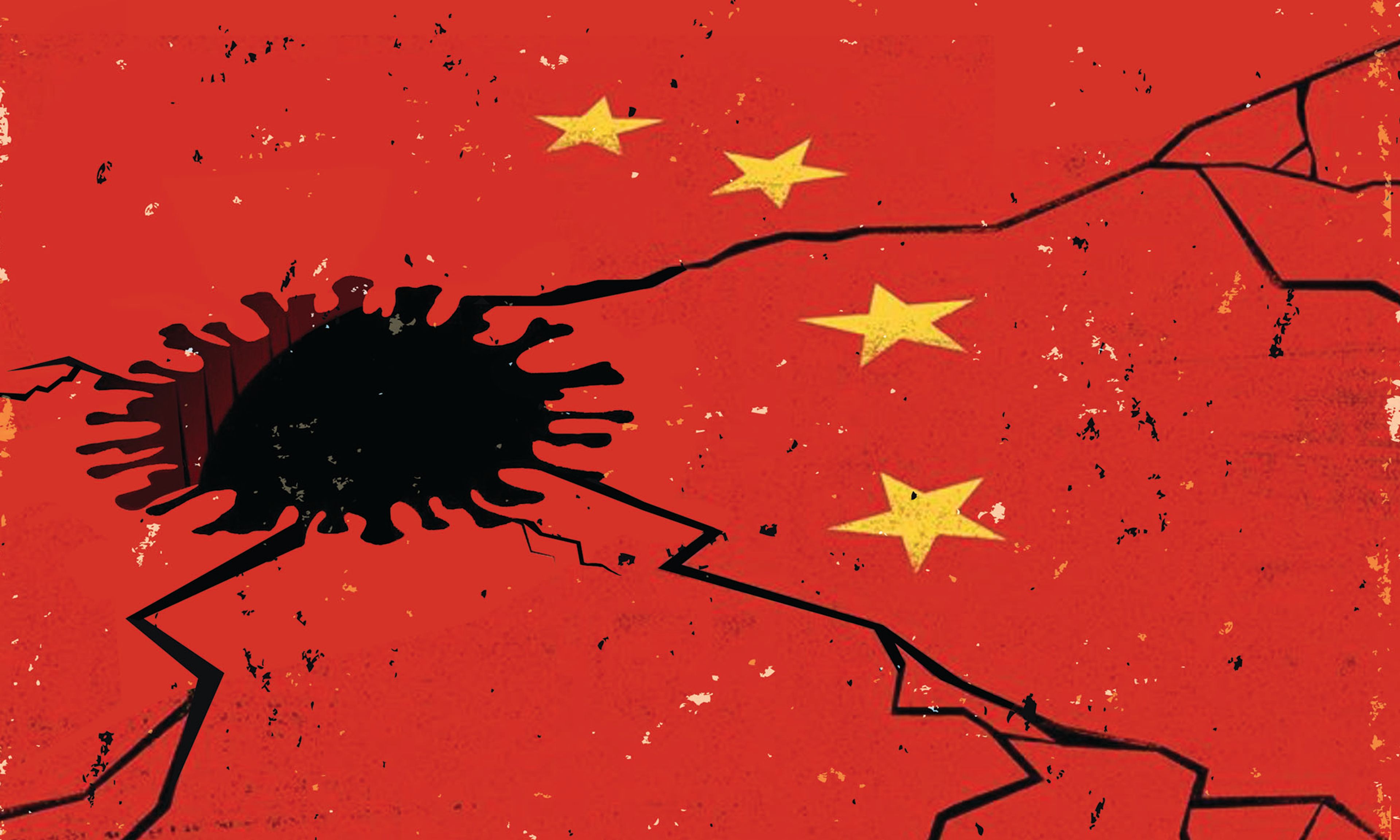
A People and Their Government
One thing I appreciated about “China Unquarantined” (Daniel Blumenthal & Nicholas Eberstadt, June 22) is that it consistently referred to the CCP and the government of China without use of the synecdoche “the Chinese.” It happens that I was a student in China at the time of the U.S. bombing of the Chinese embassy in Belgrade during the Kosovo War. Afterward, our foreign-student liaison advised us to stay in for a few days. My two oldest children attended a local preschool, and when I was picking them up after school, I noticed a tension that had not been there before. Another parent asked where I was from, and when I responded, she was noticeably upset. An older gentleman who was there to pick up his grandchild then said something I truly appreciated. He took my hand and said, “The American people did not bomb our embassy.” As an older man, he had lived through, and suffered through, the CCP leadership of his country for many years. I do appreciate it when the actions of a nation’s government are not linked through lexical choices to the average citizens, perhaps especially when they are citizens under a totalitarian regime.
Rebecca Vave Lake Park, Minn.
Internet Intrigue
I read Mr. Cooke’s article on why we need Section 230 (“Why We Need Section 230,” June 4). In principle, I agree with his argument, and yet I see that as a practical matter something must be done to keep the expression of opinion and the dissemination of facts on the Internet open to all. I wonder whether Mr. Cooke would like to add a codicil to his well-written piece in light of the actions instigated by an NBC reporter and Google regarding The Federalist and ZeroHedge. Perhaps a follow-up is in order. Thank you for all you do. Your magazine is a testament to the variety of opinion and thought that is allowed on the conservative end of the political spectrum.
Mark Bongard Via email
Charles C. W. Cooke responds: Mr. Bongard notes that, “in principle, I agree with [Cooke’s] argument, and yet I see that as a practical matter something must be done to keep the expression of opinion and the dissemination of facts on the Internet open to all.” Naturally, I am in favor of “expression of opinion.” But I do not know what this topic has to do with the preservation of Section 230, nor why these two statements are connected with an “and yet.” Section 230 exists to route defamation suits to the correct person. If it did not exist, there would be less free speech on the Internet, not more. In any pro-free-speech arsenal, Section 230 will be paramount. Is Google hypocritical? Yes, certainly. And yet, where the state must by definition be involved in setting the parameters of civil suits, there is no obvious government role in policing private hypocrisy. Indeed, I would go further and suggest that, while I dislike Google’s actions in the Federalist and ZeroHedge cases, it is in the interest of both free expression and conservatism that its right to free association remain intact. We already have a “something” “to keep the expression of opinion”: the First Amendment, which applies to the Internet in full, but which no more overrides the simultaneous rights of Twitter or Facebook than it does National Review’s. Were Congress or the executive branch to try to superintend the editorial choices of private businesses, the results would likely be disastrous for free expression — his and mine included.











Comments