From youth we were encouraged to gaze upward, by that strong, faceless voice heard over WPIX-TV every afternoon, back home after another day of parochial schooling, as Adventures of Superman commenced and commanded: Look. Up in the sky! It’s a bird . . .
You know the rest.
Living in the Big City, in its infamous outer boroughs and colorful neighborhoods, “up” was more likely a word used to precede “yours” than it was a place to look.
Recollecting a bit: The peepers were usually, and more practically, to be found casting sideways. We were a jaywalking citizenry after all, darting from between parked cars to grab the pink Spalding before it rolled down the sewer. That demanded alertness to massive Plymouths and Chevys barreling down tight streets. “Look both ways” was the mantra, and the boob tube was riddled with public-service jingles prejudiced to green lights and corners, warning Don’t cross in the middle of the block, your future’s a riddle if you cross in the middle . . .
The eyeballs’ second priority seemed to be downward, for other strategic reasons: In the days before “scooper” laws were established, the curbs and sidewalks of the Big Apple were plentiful with canine unpleasantries, awaiting the grooved soles of PF Flyers or Keds. Vigilance was required.
True, there were events that beckoned an upward tilt of head and lift of eyes. At the beach, one was sure to spy biplanes pulling Coppertone banners, or skywriting with “Surrender Dorothy” penmanship, declaring “PEPSI” or “COKE” or other sugary summer libations. Or maybe at Van Cortlandt Park there was the rarity of some kid getting a five-and-dime-store kite aloft and high, before its descent into ravenous tree limbs.
Oh my, there was that one gleeful moment from grammar school — the day the Goodyear blimp, traveling so low you could hear its propellers, sailed over St. Barnabas. As excited and amazed as their charges, the lenient nuns allowed our class to rush across the hall into the other room, to crowd around the big windows and oooh and ahhh and crane necks to watch the bloated dirigible approach from the Bronx and then — the mob in its entirety rushing back across the hall to our classroom — depart toward Yonkers, bound for the Catskills and maybe even Canada.
It was our Passover. Rimshot!
Around the same time, 1970 or so, there was another skyward moment — a total solar eclipse. Such hoopla: It was one of those events, like the moon landing, the first Frazier–Ali fight, and the tennis match between Bobby Riggs and Billie Jean King, that grabbed and enthralled people.
There was copious maternal chatter in the run-up to the day’s noontime darkening. Repeated ad nauseam were instructions against looking directly up at the sun. (You will burn your eyes out!) There were suggested alternatives. For the daring, that involved glancing at the moon-obscured sun through film negatives (plentiful back in the day). For the nerdy, or the nagged, it was advised to watch the eclipse via a camera obscura concocted from an old cardboard shoebox (hard to come by — they were always turned into Matchbox-car garages; and anyway, what in the heck was a camera obscura?).
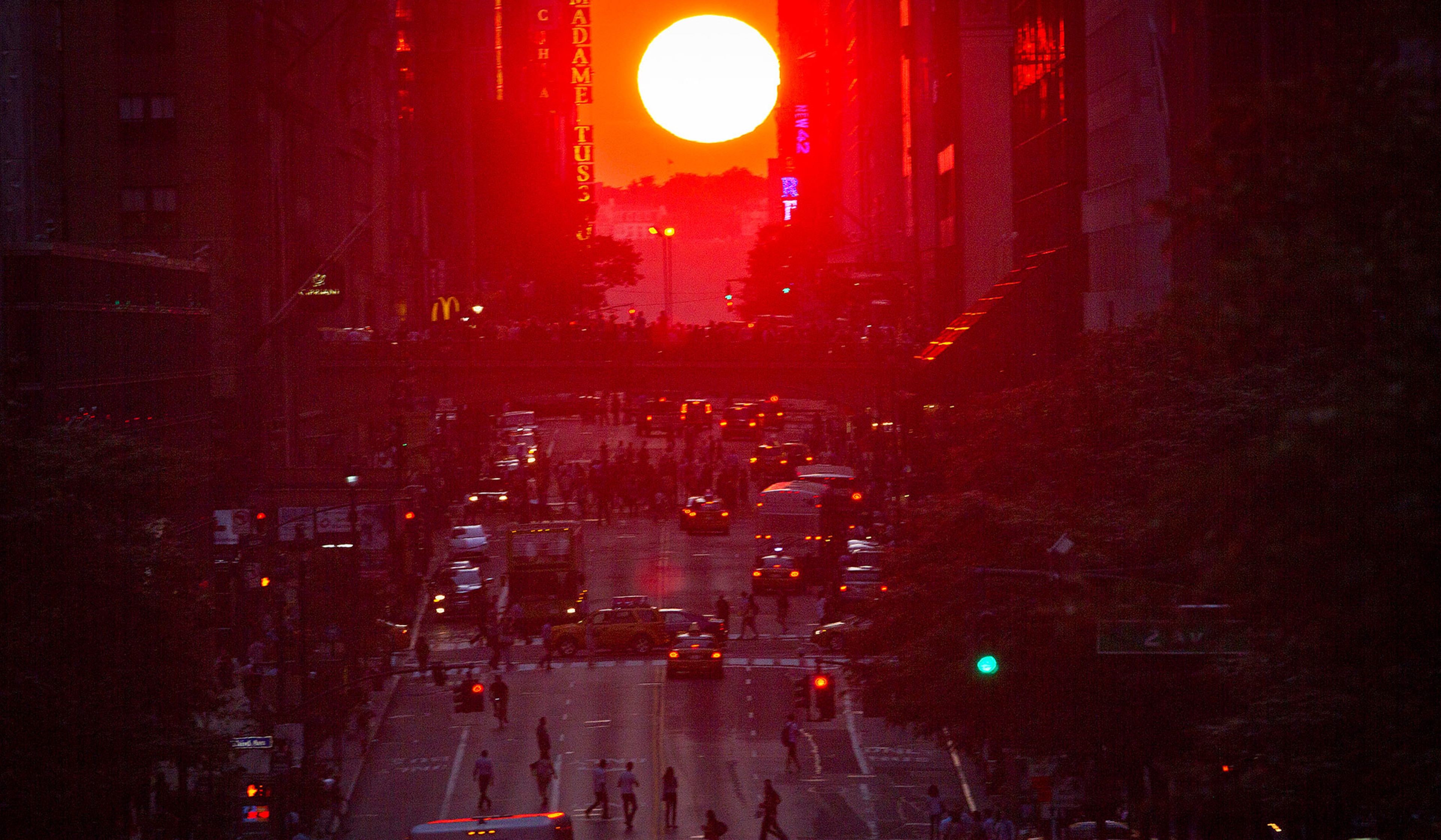
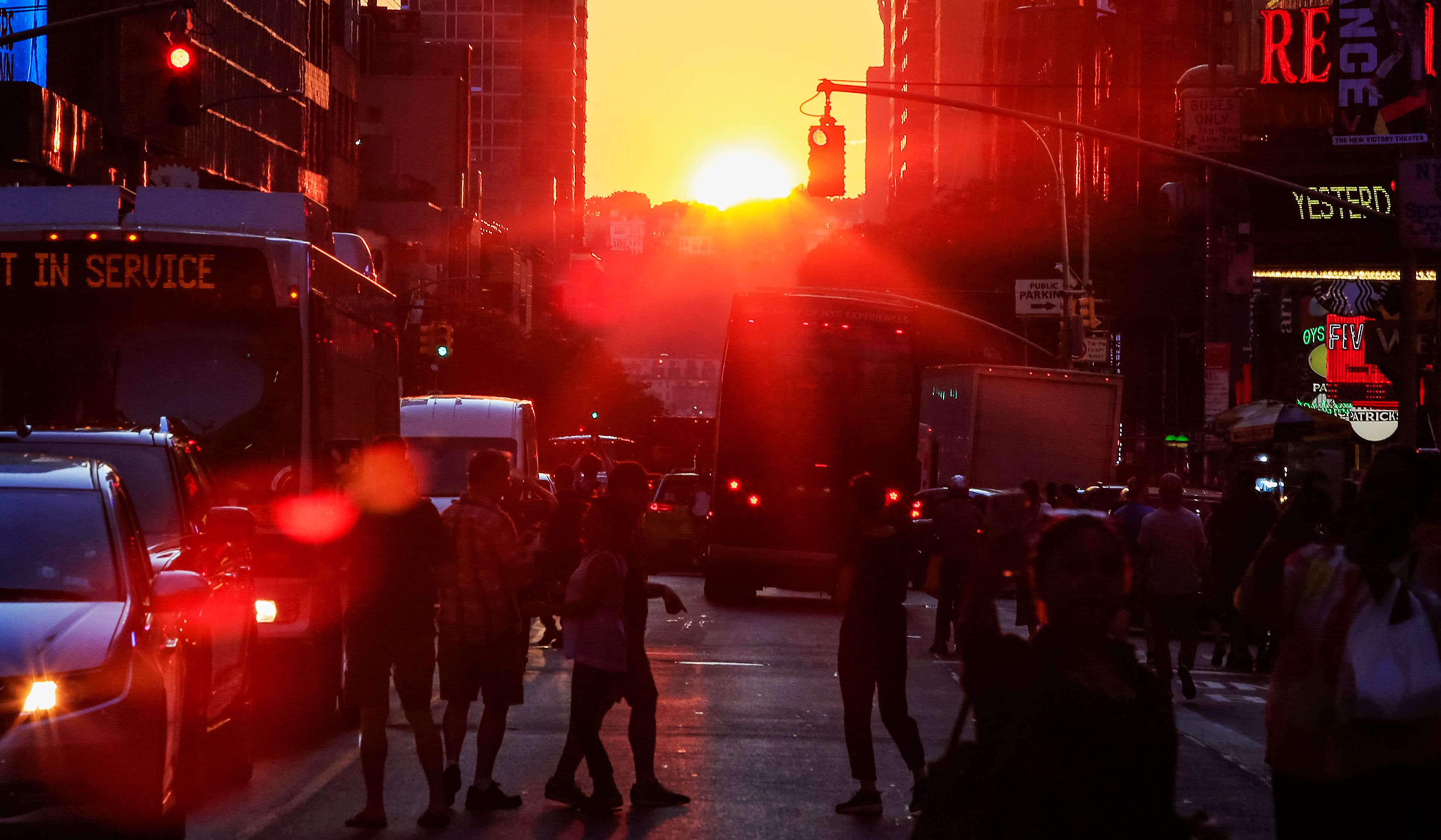
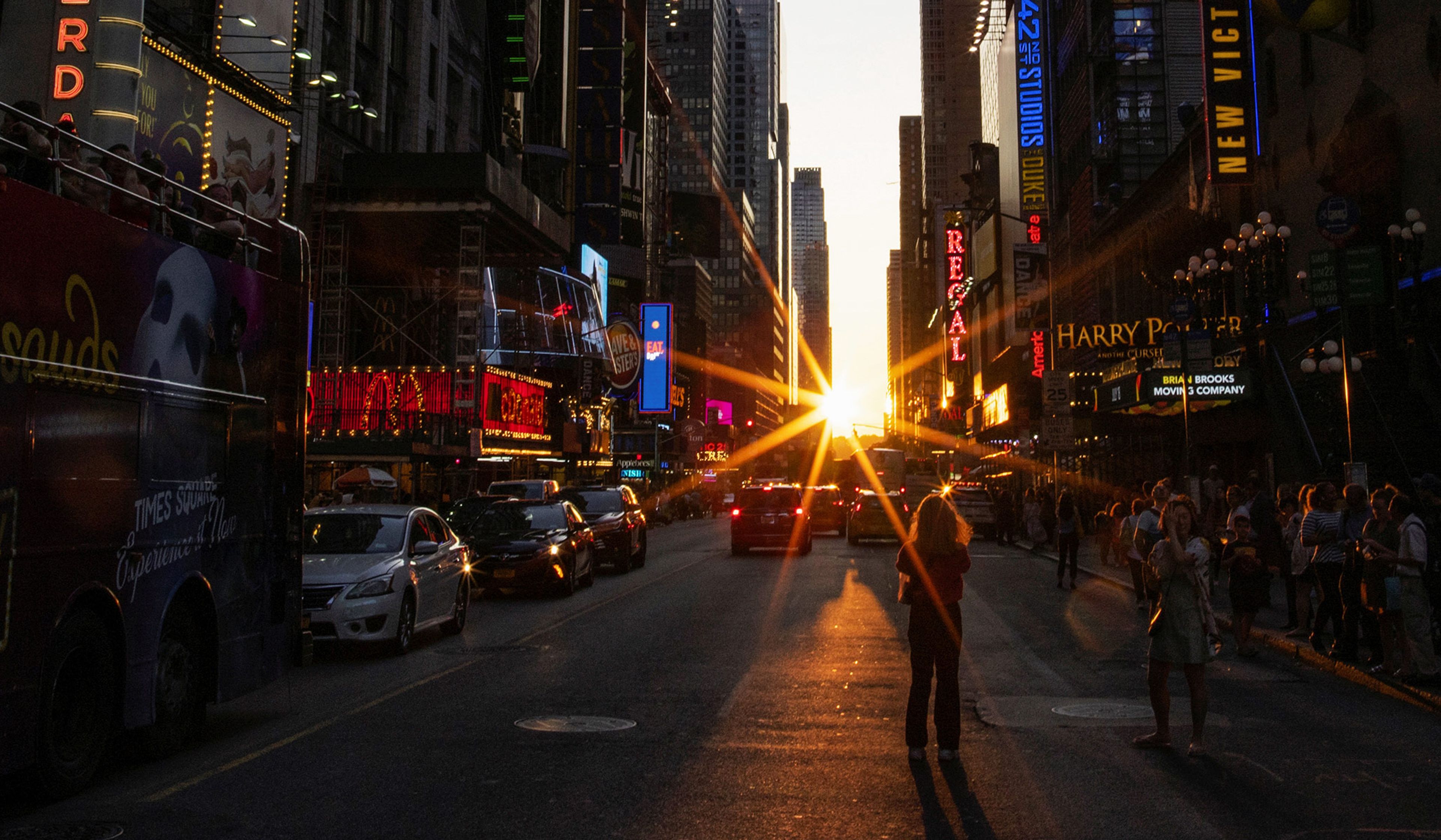
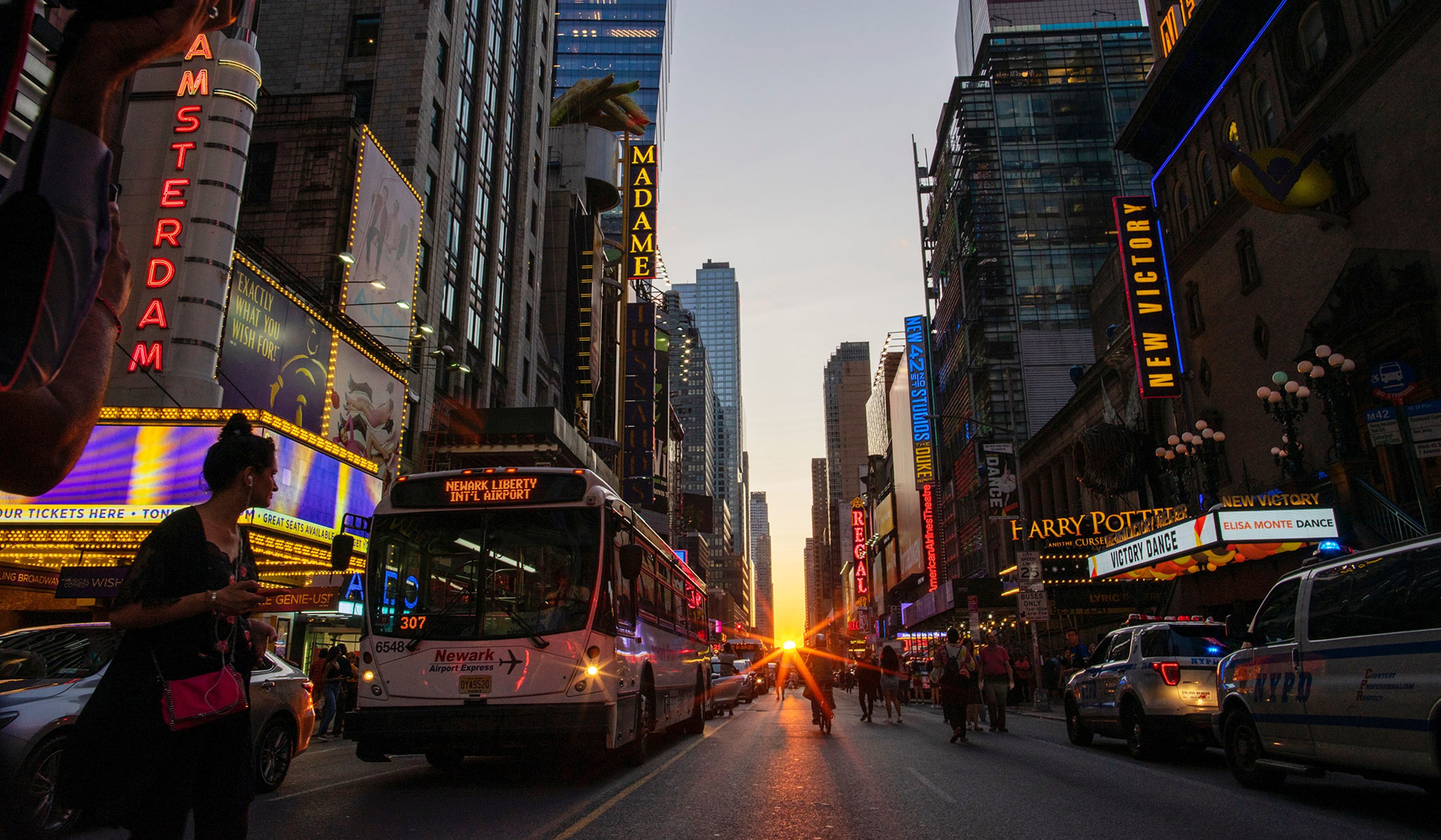
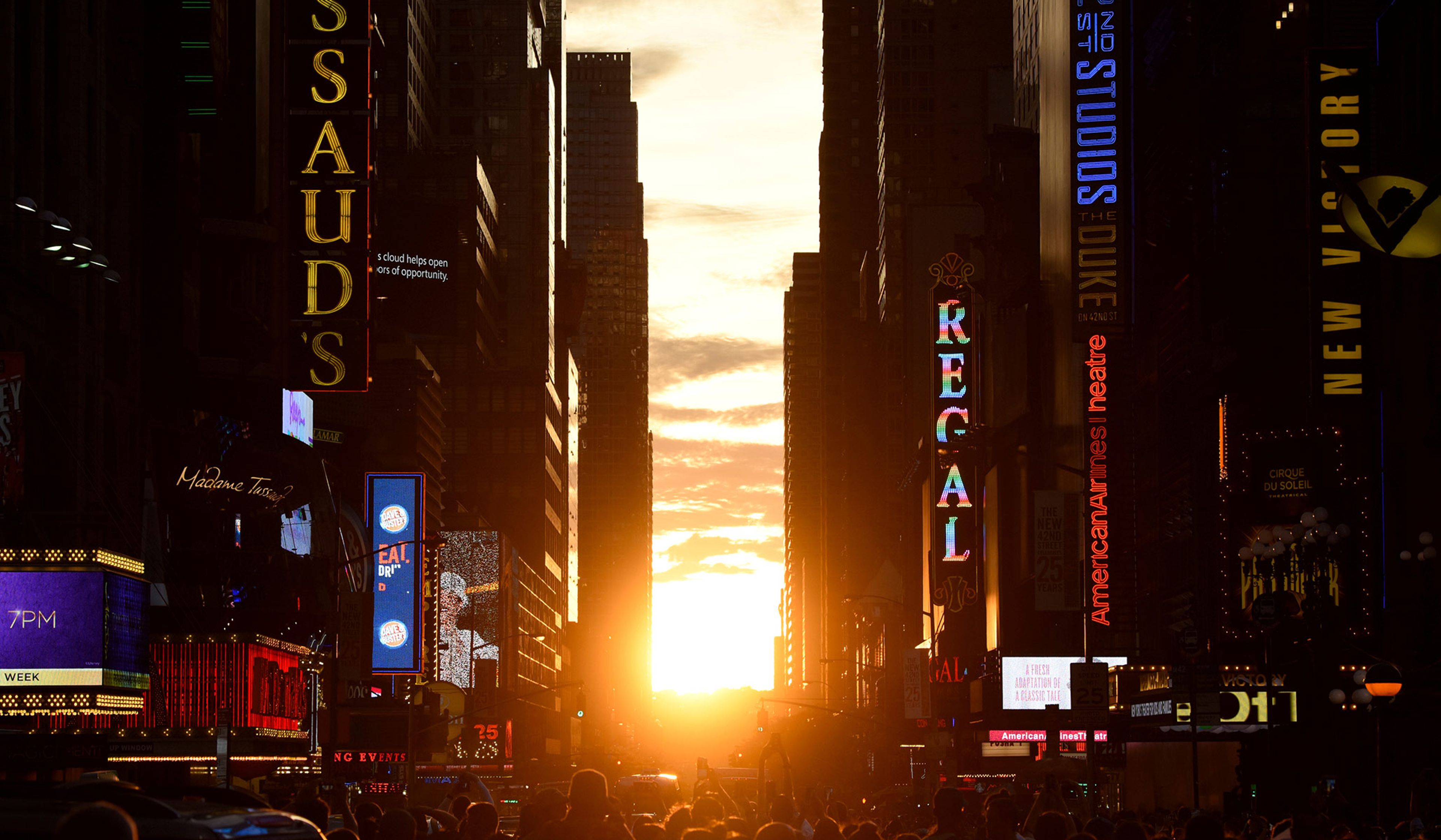
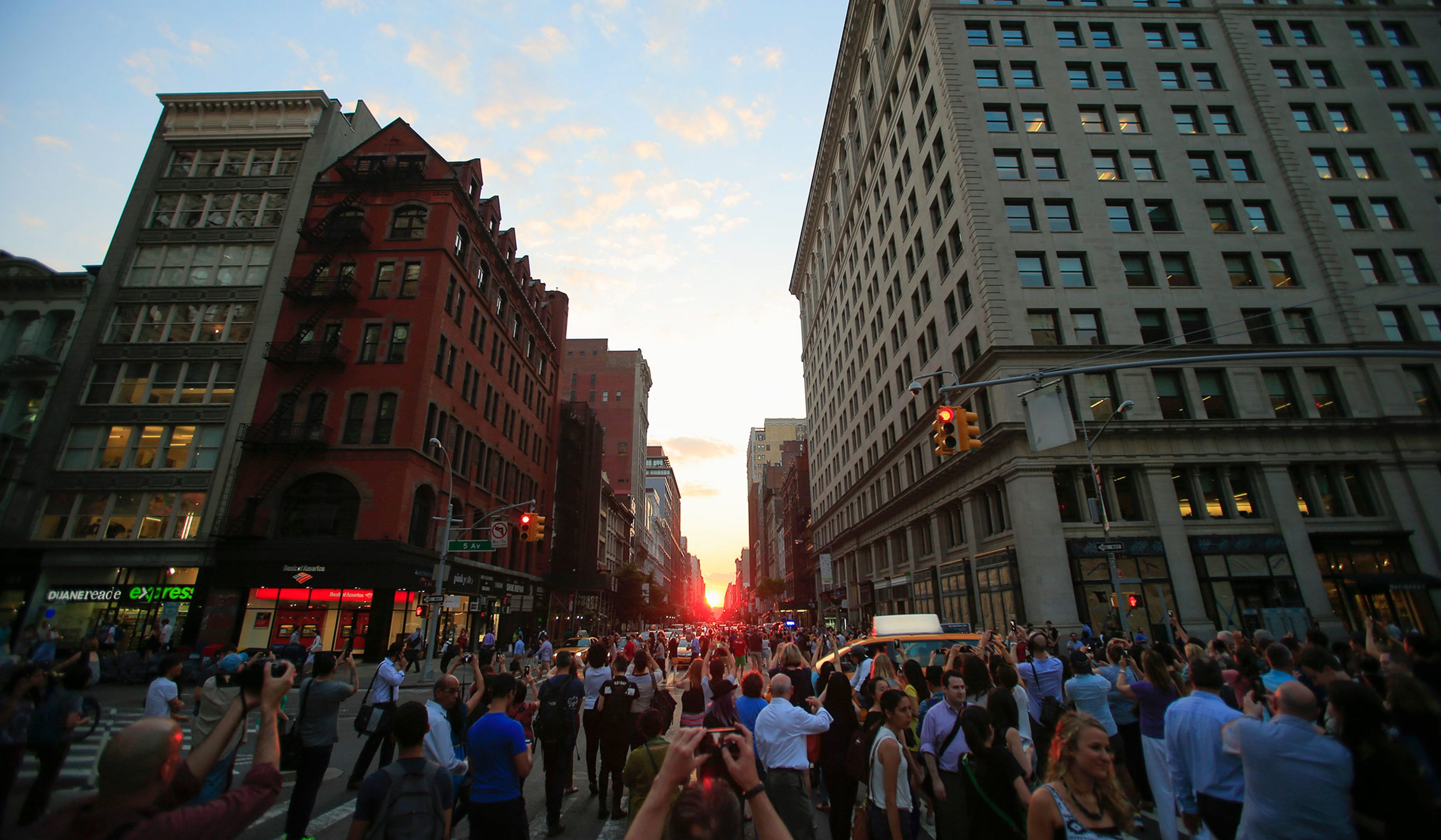
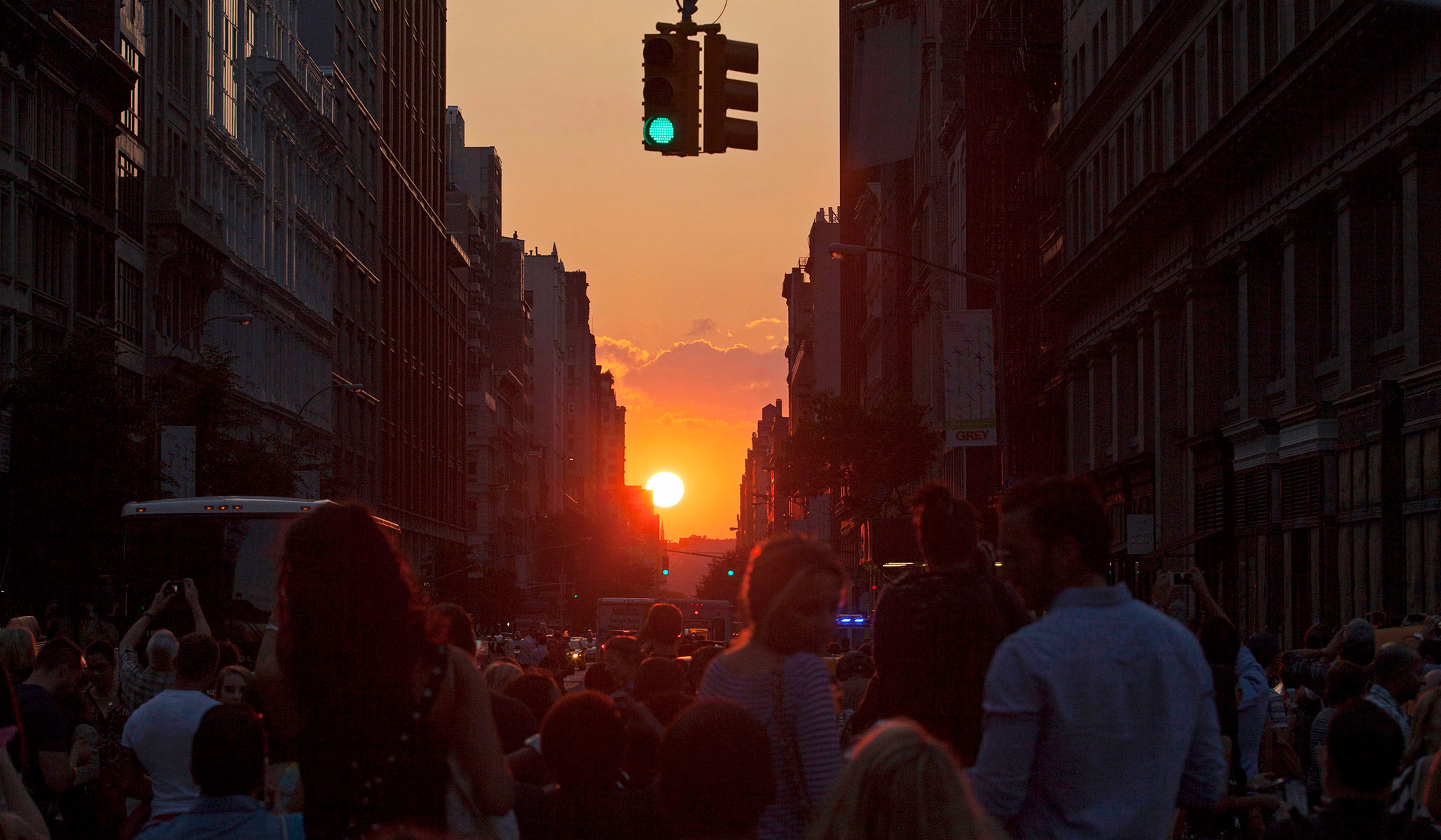
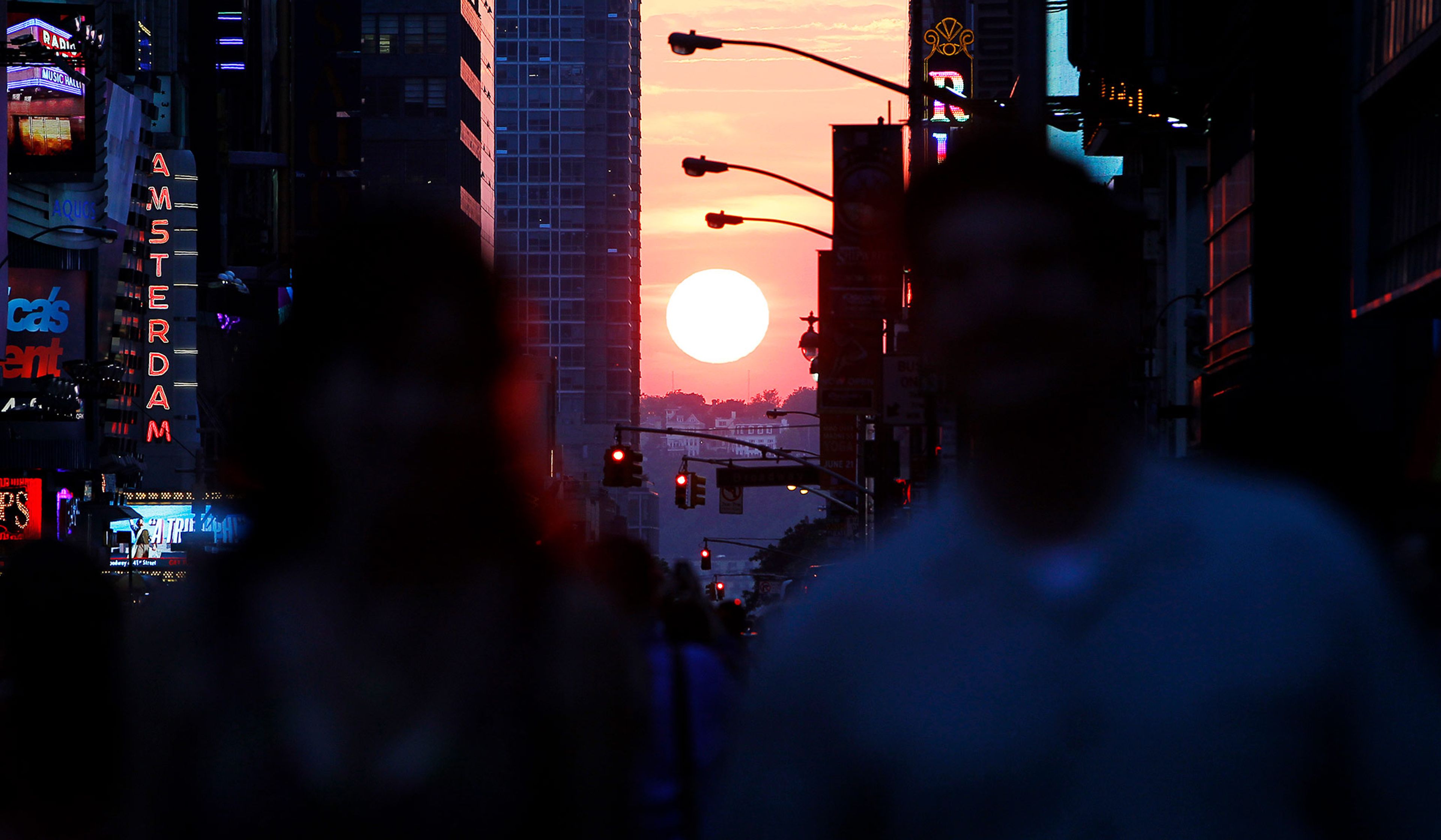
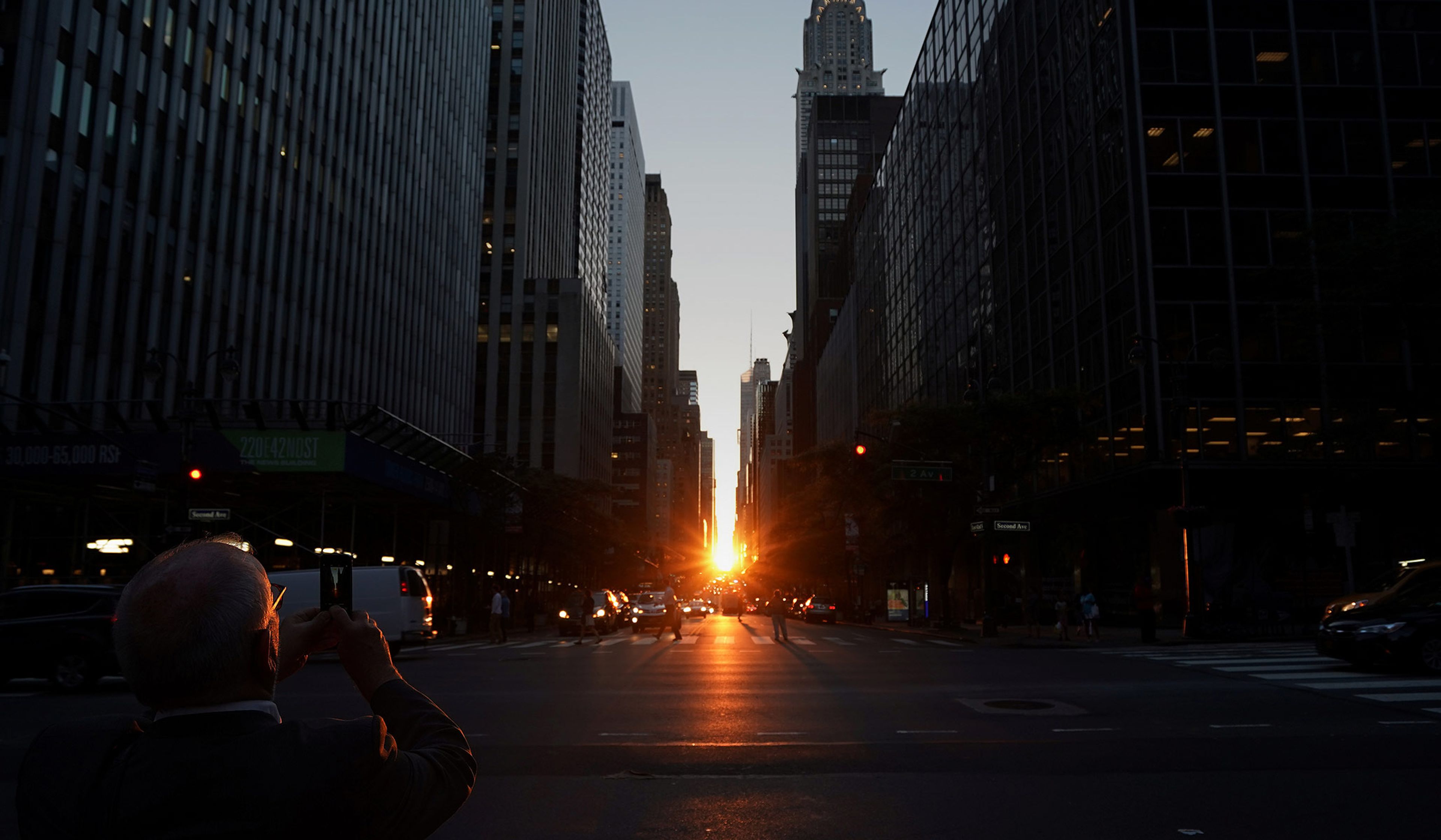
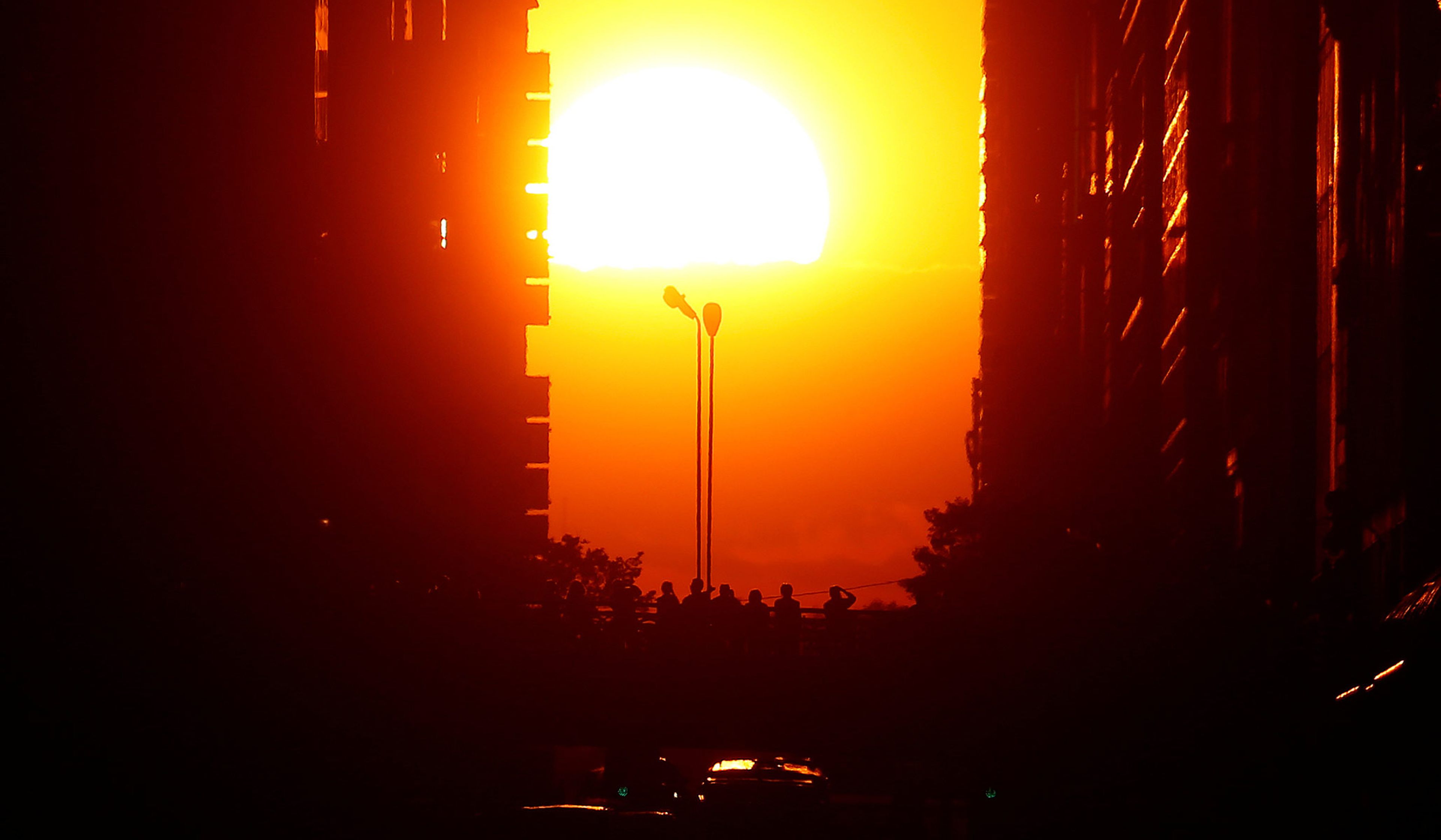
People crowd onto 42nd Street as they take photos of the “Manhattanhenge” phenomenon in the Manhattan borough of New York City, July 11, 2014.
Carlo Allegri/Reuters
The disobedient stole quick, direct solar peeks, and lived to tell of their bravado.
The dense — “dimwit” might be more fitting — took long looks. Years later, when we were living in Virginia, a neighbor would stroll and stop to talk, addressing us peripherally, or on occasion would wave as he rode past atop an old bike, his head cocked sideways, toward us. This proved the only way he could see . . . ahead. His elderly mother explained: He had eyeballed that same infamous eclipse, directly, and intently. It rendered him partially blind.
So, our moms were right after all.
These anecdotes aside, what was there to see up there? In the Metropolis smog hung a boring moon and a hazy sun. Stars were few — my kingdom for a constellation. The majestical roof threaded with golden fire was a thing of Hamlet and of National Geographic articles about “northern lights” and other alleged spectacles.
In the Bronx, a place of headlights and streetlamps and households ablaze with Mr. Magoo’s GE soft-white bulbs, we had yet to hear of “light pollution.” And while we saw it, like the smog, we could not see through it.
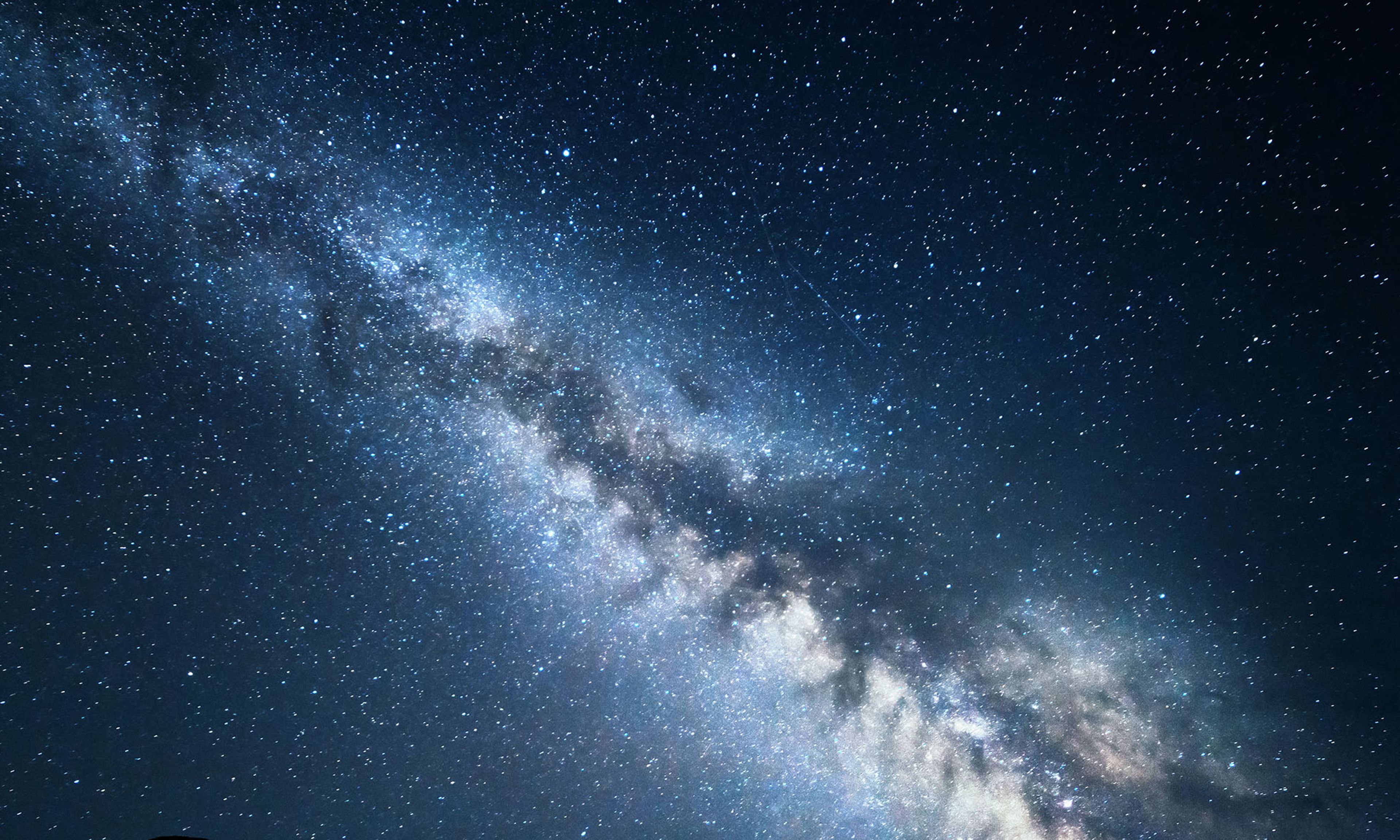
Still, there persisted a yearning to look up and witness a most excellent canopy. It intensified as social media emerged, teeming with braggadocio Instagram photos from Hunter and Sarah’s national-park camping venture, each a resplendent vision of the intersection of cloudless nights and new moons, capturing the heavens in their inherent and unfiltered glory, with the Milky Way looking like a dazzling glowing comforter. It deserved its candy-bar honor.
Further grew the desire to see the same, but not via Facebook. Maybe a few hundred nights on National Review cruises harbored a measly chance of this spectacle?
Nope. Mine eyes had seen no glory.
Then: A few years back, five decades into wishing and wanting but never directly experiencing the night sky ablaze, daughter Mary beckoned from the dock at a Maine rental house — Look! Up in the sky . . .
And there it was. Visible, clear, and mighty, on brilliant display — our very galaxy. A thing of enormity. Lying flat on the gently rolling dock, while the pond’s loons sang, we stared up in awe at the majesty as if for the first time. Which it was. And then we tracked satellites (Look, over there . . . another one!) as they perfectly circumnavigated the celestial vault, and thrilled to a shooting star or two or five.
Oh my! The sole obstruction to the splendor was damp eyes, from joy. Grateful for this show, long delayed: It confirmed what was already believed — there is a God, who on the Fourth Day filled the expanse of the heavens.
He saw that it was good.
He was right to think such.











Comments