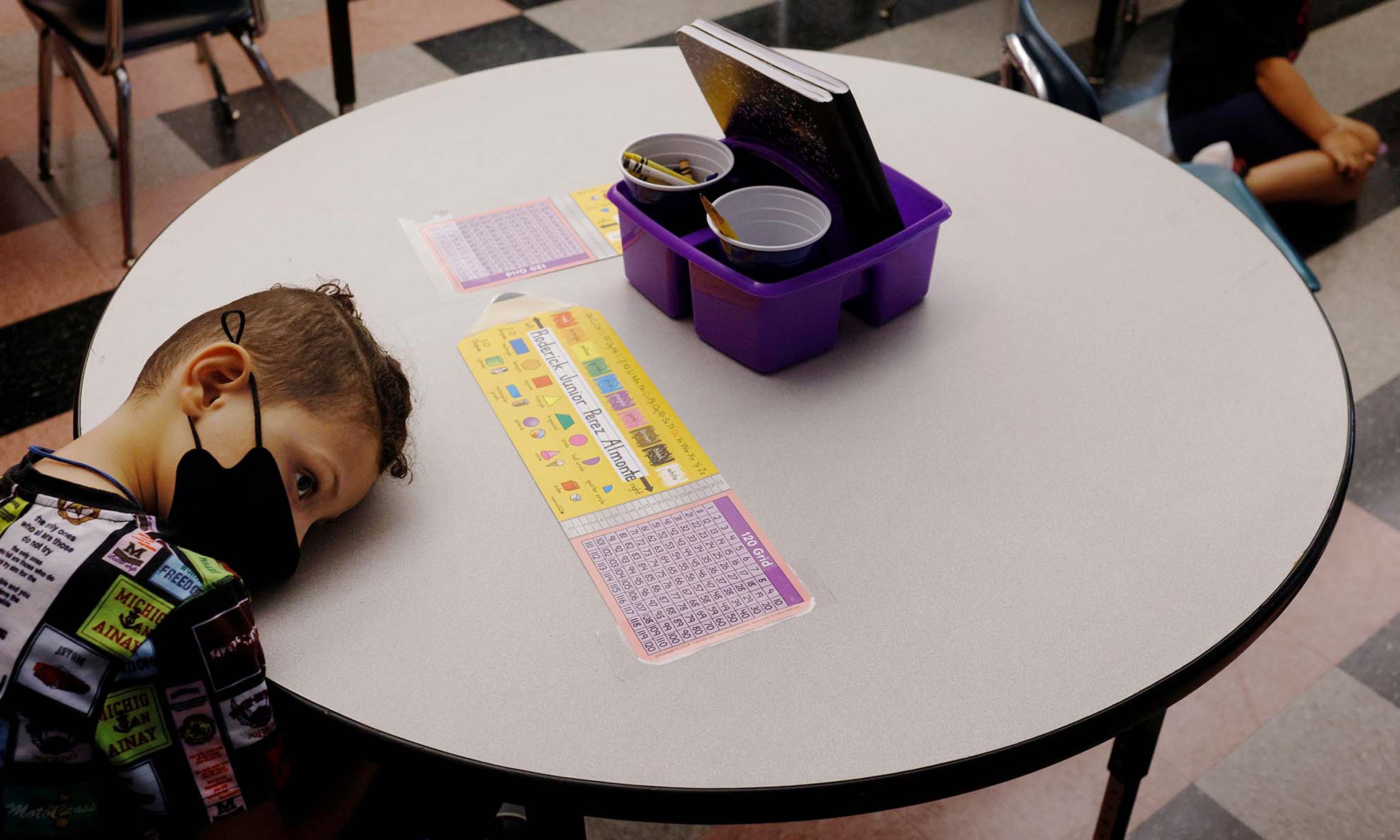
It is impossible to overstate the devastating impact that the Covid-19 pandemic has had on the education of America’s children. Over the past year, a growing body of evidence has produced something rare in education research — a consensus. These studies show that the disruption to schooling caused unprecedented learning shortfalls — worse even than the effects of school closures in New Orleans after Hurricane Katrina — that have hit lower-income and minority students the hardest, erasing hard-won progress toward closing achievement gaps made in the late 1990s and early 2000s.
Tragically, much of this was avoidable. The blame falls squarely on highly politicized decisions made by local school districts, driven to a large extent by school-employee interest groups and partisan calculations (as Nat Malkus explains in greater detail elsewhere in this issue of NR). Most depressingly, the same dysfunctional politics that caused student learning to suffer continues to impede students’ academic recovery.
To understand what went wrong, it’s important to briefly review how we got here. In the early months of the pandemic, in spring 2020, nearly every American school closed. With the benefit of hindsight, many now recognize that was a mistake. But the initial closures were not unreasonable at the time. Policy-makers saw how the emerging pandemic overwhelmed hospitals in Italy and New York City, and a great deal remained unknown about the nature of the virus and the risks faced by different groups.
By the summer, however, much had changed. Emerging data clearly indicated that children themselves remained at very low risk of severe disease, evidence from European countries where many schools remained open showed that teachers similarly did not face dramatically worse health outcomes than did adults in other occupations, and it appeared that schools were not the primary drivers of community spread, as pre-pandemic statistical models based on the seasonal flu had predicted.
By contrast, the nonacademic costs became obvious almost immediately. Reports of child abuse and neglect, often made by teachers, plummeted. Children who relied on free school lunches for their regular meals went hungry. And parents, especially women, reduced their work hours to shoulder greater child-care burdens.
Yet policy was slow to adapt to this reality. Outside of a few states such as Florida, where Governor Ron DeSantis courageously pushed local districts to reopen, most governors were happy to let local districts take the lead, avoiding responsibility and the resulting blame. With President Trump publicly advocating the resumption of in-person learning, voter attitudes polarized and hardened along partisan (and thus racial) lines. At the start of the 2020–21 academic year, schools in Republican areas largely reopened as normal while many deep-blue, big-city districts remained fully remote, regardless of local case levels. We now know that, as a result of these dynamics, students in high-poverty schools spent more time in remote learning and paid a higher academic cost for doing so, causing preexisting achievement gaps to widen substantially.
But this was only the beginning. The drama that followed can be divided into three acts — delay, deny, and, ultimately, distract.
In many big cities, where school remained closed or in hybrid mode through much of the school year, the delays came about as a result of obstruction from local teachers’ unions. In many districts, the unions argued that schools could not reopen safely without first vaccinating teachers, who would jump to the front of the queue, ahead of those in lower-paid and higher-risk occupations, such as line cooks and grocery-store workers, who continued to work in person for much of the pandemic. Even after vaccines became available, unions in some areas continued to drag their feet. In San Francisco, for example, vaccinated teachers wanted toilet-seat covers before they would agree to return to in-person teaching. In Chicago, the teachers’ union listed among its demands for reopening increased housing assistance for families facing housing instability.
Next, as early test and assessment data began to document the dramatic impacts on student learning, many education experts and school officials seemed to stick their head in the sand. Some education theorists argued that “learning loss” was really just a state of mind, and others claimed that even talking about it would stigmatize students. In San Francisco, a school-board member asked that learning loss be called “learning change.” In Los Angeles, the teachers’-union president told a local magazine, “There is no such thing as learning loss,” and went on: “Our kids didn’t lose anything. It’s okay that our babies may not have learned all their times tables. They learned resilience. They learned survival. They learned critical-thinking skills. They know the difference between a riot and a protest. They know the words insurrection and coup.” And in Alexandria, Va., where full-time in-person learning did not resume until summer 2021, a school-board member asked parents, “Do you want your child to be alive or to be educated?”
Gradually, denial gave way to distraction, with political elites on both sides of the aisle taking advantage of the crisis to push through their long-preferred education-policy agendas. President Biden lobbied Congress to pass his American Rescue Plan, which included over $100 billion in new federal funding for school districts. The administration argued that the money was needed for schools to reopen safely (although little of it was spent before reopening), and to combat learning loss (although the law required only 20 percent of the funds to go toward learning recovery and included few accounting safeguards to prevent districts from diverting even that small share to other uses). At the same time, Republican activists in red states enacted or expanded school-choice and voucher programs. These are perhaps reasonable policies, but they are largely removed from the urgent need to address learning disruption and poorly targeted to benefit the students most affected.
Most bizarrely, school-board meetings in many communities devolved into shouting matches over masking policies, transgender athletes, critical race theory, and library books. Oddly, the pandemic and its aftermath seemed to increase the political salience of every educational policy or issue except for the one that was most directly implicated — declining student academic achievement.
Although more-recent data on achievement have provided some encouraging evidence that students have begun to make up lost ground, there are also deeply worrying patterns that portend a dark future. Older students appear to have made the least progress and remain well behind pre-pandemic performance, with limited time to catch up before the end of high school. Bad policies and practices — including more-lenient grading standards and the overlooking of chronic student absenteeism — that were tolerated or even encouraged in the early months of the pandemic appear to have become entrenched. Several weeks ago, the Los Angeles superintendent warned that tens of thousands of students appear to have disappeared and are not on the attendance rolls for the coming school year.
As concerning as the short-term prospects look, the long-term challenges remain immense. Many districts appear to have gone on a hiring binge with their temporary stimulus dollars, creating new positions that are contributing to record teacher vacancies and may lead to staffing and salary practices that will be difficult to sustain once the one-time federal funding goes away. This spending and hiring may also exacerbate teacher churn that will likely affect the most disadvantaged students and schools disproportionately. At the same time, in the face of opposition from both school employees and some parents, few school systems have done the one thing likely to make a substantial dent in learning recovery: increasing learning time by extending the school day and school year.
Many of the largest urban areas have also seen a mass exodus of families with children in the two years since the pandemic started, portending coming budget cuts and politically toxic and racially charged battles over school closures.
In many ways, the pandemic accelerated and accentuated some of the most distressing and depressing trends of our politics. Our collective inability to prioritize the academic recovery of students — especially the most vulnerable — is an important reminder of how much of our education policy is driven by the interests of adults rather than by the needs of students.











Comments