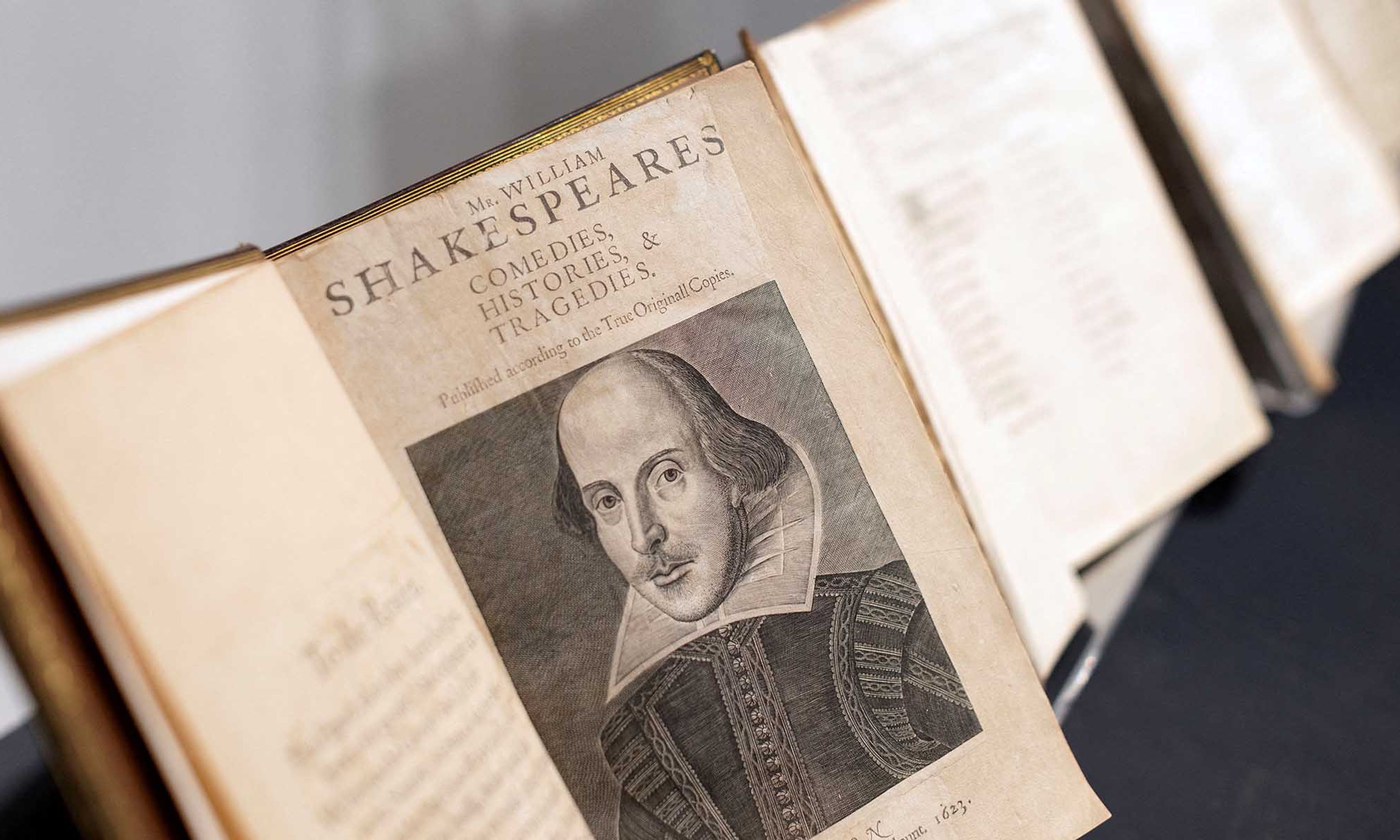
Eliot A. Cohen has been writing, thinking, and teaching about power for decades. Cohen is a professor at Johns Hopkins University’s School of Advanced International Studies and was a counselor at the State Department under Condoleezza Rice. He has also long been a student and lover of Shakespeare, from whom he has learned much about how power is wielded on the world stage (not to mention in faculty lounges and D.C. policy circles) and how the character of individual leaders determines events. In The Hollow Crown: Shakespeare on How Leaders Rise, Rule, and Fall (Basic Books, 288 pp., $30), Cohen traces the way Shakespeare’s plays — particularly the historical ones and some of the tragedies — illuminate what he calls the “arc of power,” the ways in which it is gained, exercised, and lost. His title is drawn from Richard II: “For within the hollow crown / That rounds the mortal temples of a king / Keeps Death his court, and there the antic sits / Scoffing his state and grinning at his pomp.” Cohen’s book is infused with this tragic sensibility, informed by his own time in the corridors of power and his deep reading of history. He concurs with Samuel Johnson’s judgment that Shakespeare is “a faithful mirrour of manners and of life” and adds that what we see reflected there is not always beautiful, as we would wish, but often “ugly or even hideous.”
The classicist Paul A. Rahe, a professor at Hillsdale College, would like would-be statesmen and political leaders to learn from ancient Sparta. His new book, Sparta’s Sicilian Proxy War: The Grand Strategy of Classical Sparta, 418–413 b.c. (Encounter, 400 pp., $34.99), is the fifth volume in a series on ancient Lacedaemon and Sparta’s grand strategy. The book deals with the Sicilian expedition launched by Athens in the Peloponnesian War — a disastrous defeat for the Athenians, described by Thucydides — but from the perspective of the Spartans. In Rahe’s telling, Sparta’s proxy war in Sicily was a cunning and successful one. The larger purpose of his close analysis in the series is to demonstrate that the study of war and diplomacy ought to entail the study of particular regimes with their distinct cultures, histories, and politics. Foreign-policy realists and Wilsonian idealists, he believes, ignore such particulars at their peril.











Comments