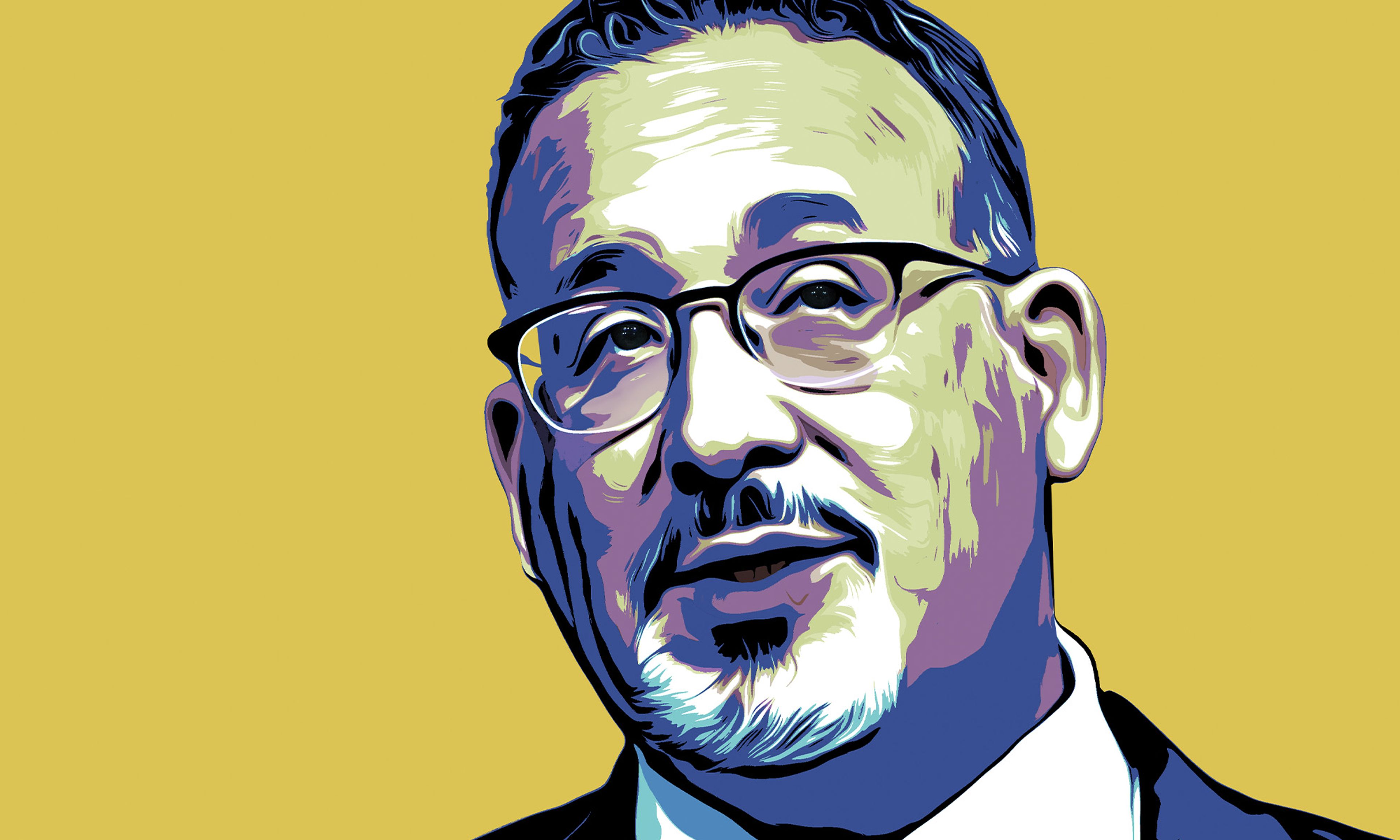
Miguel Cardona is the worst secretary in the 45-year history of the U.S. Department of Education, and it’s not particularly close.
Reporting this brings me no glee. When Cardona took office in January 2021, after the media’s vicious, irresponsible treatment of his predecessor, Betsy DeVos, I argued against reflexive payback. Noting that Cardona seemed “a likable figure,” I called for judging him by “a more measured and fair-minded standard.”
Well, Cardona has had four years to show his mettle, and the results aren’t pretty. Perhaps it’s no great surprise that Cardona has been overmatched, given that his prior experience came mainly as a mid-level bureaucrat in Connecticut’s 13th-largest school district (plus a brief stint atop the state’s education agency). Harder to see coming was the degree to which this anodyne administrator would exhibit relentless partisanship, troubling disregard for student learning, and disdain for democratic accountability.
Many secretaries have failed to make good on grand policy ambitions; not one has whiffed at the basics of executive administration as badly as Cardona.
His most prominent failure was the staggeringly inept rollout of a congressionally mandated effort to simplify the Free Application for Federal Student Aid (FAFSA). In 2020, well before Cardona’s tenure, Congress adopted long-awaited, bipartisan legislation to make the FAFSA less burdensome and provide better information on available aid. The Department of Education had three years to simplify the 108-question form and link it to other databases.
As the Wall Street Journal documented this spring, the department failed catastrophically. A glitchy new FAFSA briefly debuted at the end of 2023 — technically meeting the congressional deadline — but was quickly taken down for an overhaul. By the fall of 2024, it still wasn’t working properly, the promised fixes were way behind schedule, and the college plans of millions of potential students had been disrupted.
Testifying before Congress, financial-aid savant Mark Kantrowitz and Justin Draeger, president of the left-leaning National Association of Student Financial Aid Administrators, both gave Cardona and Biden an “F” on the FAFSA rollout. It was the most consequential instance of maladministration in the history of the Department of Education. Yet, throughout the debacle, Cardona refused to accept responsibility. He also proved remarkably tone-deaf: At one point, he took to X to make a cheerful post about how much he and his college-going daughter liked the new FAFSA.
Meanwhile, as his department dithered, Cardona spent his time railing against the judges and Republican officials who were challenging the administration’s unconstitutional ploy to transfer hundreds of billions of dollars in student-loan obligations from borrowers to taxpayers. When Cardona insisted he needed more funding to fix FAFSA, Congress offered additional resources if he promised to devote the funds to FAFSA and not to loan forgiveness. Cardona rejected the deal.
Even Nancy Pelosi, then serving as House speaker, noted that the executive branch lacked the authority to discharge student-loan debt. Cardona’s first attempt to cram a half-trillion-dollar giveaway into a minor provision of the 2002 HEROES Act (intended to help borrowers affected by the War on Terror) was laughed out of the Supreme Court. Yet Cardona was undeterred, intent on transforming federal lending into a hugely expensive backdoor entitlement via his new SAVE program. The department scrambled to find a loophole that would make loan cancellation a fait accompli before the courts could weigh in.
Because of the pandemic, Congress granted Cardona extraordinary sums that he was legally authorized to spend. Cardona was tasked with distributing $190 billion in emergency aid to K–12 schools and another $76 billion to higher education. While Cardona eagerly took credit for distributing this money, he proved allergic to oversight. He refused to institute any federal reporting on how funds were spent, issue any guidelines for states or school districts to track outlays, or do anything to gauge the impact on student learning. Worse, even as tales of dubious outlays proliferated, Cardona refused to use his bully pulpit to urge schools to spend these dollars responsibly. (I recall a couple of superintendents who visited me after a private Education Department conclave and said Cardona’s senior staff had told them the priority was to spend the funds quickly because Cardona was intent on “getting them more.” The superintendents found this troubling.)
Meanwhile, Cardona gave the teachers’ unions backdoor access, including a privileged say in crafting the rules for reopening schools. His office took the astonishing step of coordinating with the National School Boards Association (NSBA) to urge the FBI to investigate irate parents as “domestic terrorists” for protesting school-board decisions about masking and curricula. The NSBA eventually apologized for this gross misstep; Cardona never did.
Then there are all the pedestrian ways in which Cardona has disappointed. Eschewing longtime Democratic support for charter schools, he even put a target on their back — seeking to slash charter funding, proposing a raft of nettlesome new regulations, and demanding that new charters get an okay from local school districts. He blithely denounced Republican efforts to expand school choice as a plan to “attack our schools” and “privatize education.” (Cardona couldn’t muster that same indignation about campus antisemitism after October 7, 2023. While congressional leaders called college presidents to account, Cardona issued tepid press releases lamenting “antisemitism, Islamophobia, and related forms of discrimination” and resolved complaints by giving colleges a slap on the wrist.)
Most surprising is how Cardona’s clumsy partisanship has broken with decades of tradition. If a career bureaucrat should know anything, it’s how to tiptoe around crude political gamesmanship. And yet Cardona appeared so eager to please his White House handlers that he shattered his office’s bipartisan norms. For two decades after the 2002 passage of the Education Sciences Reform Act, his predecessors had nurtured a tradition of keeping federal data releases nonpolitical. Not Cardona. In 2022, he used an announcement of National Assessment of Education Progress (NAEP) results to distribute administration talking points.
Last year, confronted with dismal NAEP results for history and civics, Cardona insisted that the problem could be blamed on Republican officials’ “banning history books” and “censoring educators from teaching” these subjects. Aside from the partisan sniping, there were some obvious problems with Cardona’s criticisms. For one thing, the NAEP civics and history data are national — so it’s impossible to determine which states fared better or worse. For another, the poor history results continued a decade-long dip — so it was odd for Cardona to try to make the announcement about recent legislative disputes.
This past summer, less than 24 hours after President Biden issued a call for unity following the first failed assassination attempt on Donald Trump, Cardona sent a department missive to millions of borrowers, thundering, “Federal courts have issued rulings in lawsuits brought by Republican elected officials who are siding with special interests and trying to block Americans from accessing all the benefits of the most affordable student loan repayment plan in history.” Even some Democrats were quietly appalled by Cardona’s conduct, especially since the text read more like campaign clickbait than an official communication. After all, the “special interests” are the 90 percent of Americans who don’t owe student debt. As for those awful court rulings, several were issued by judges appointed by President Obama.
At times, Cardona has given every impression that he’ll do anything to keep his position. During fall 2023, for instance, he mounted an out-of-nowhere press barrage transparently calculated to help him keep his job in a second Biden term.
The history of leadership of the Department of Education is decidedly uneven. Democrat Richard Riley and Republican Lamar Alexander showed foresight and grace. Republican Bill Bennett used the office as a bully pulpit; DeVos sought to do the same, with less success. Republican Margaret Spellings and Democrat Arne Duncan pushed ambitious, controversial agendas that mainly yielded disappointing results. Most of the other secretaries haven’t left much of a mark.
Yet even in that mixed crowd, Cardona stands out for falling short. This summer, Tim Daly, the respected center-left-ish school reformer and pundit behind Education Daly, reached out to a bipartisan array of two dozen education chieftains, education insiders, and Hill types, asking them to evaluate the Biden-Cardona record. The most common grade was “F.” Daly noted that “more than one person asked if an F-minus was permissible.” Republicans and Democrats slammed Cardona and Biden for their inattention to student learning, describing them in terms such as “absentee,” “silent,” “lacking vision,” “no sense of urgency,” and “missing the boat.”
Throughout, Cardona was alternately dismissive and contemptuous of congressional oversight. Congressional staffers share numerous accounts of his refusing to provide documents and dissembling about department activities. When asked for comment, Representative Virginia Foxx (R., N.C.), who chairs the House Committee on Education and the Workforce, issued a statement saying, “The recurring theme with Secretary Cardona [is that] he makes decisions to keep far-left activists and teachers’ unions happy, regardless of the negative impact on students, and then he tries to dodge all accountability for the results. In fact, because of his misaligned priorities, the Department failed two consecutive financial audits for the first time in decades.” Senator Bill Cassidy (R., La.), the ranking Republican on the upper chamber’s education committee, lamented to me, “The only thing more disappointing than Secretary Cardona’s inability to carry out his responsibilities under federal law is his insistence to avoid responsibility and obstruct accountability.” Indeed, one former Biden-administration official acknowledged that, under Cardona, “the disdain of ED for Congress is breathtaking.”
A longtime Hill veteran familiar with the inner workings of the Senate Education Committee scathingly sums it up this way:
When even the NEA [National Education Association] and AFT [American Federation of Teachers] are rallying for the next secretary of education to be a different person, you know that Cardona has been an abject failure. Secretary Cardona has been overly impressed with his title and trappings of office while ignoring oversight by Congress, failing to take accountability for catastrophic mismanagement of his agency, and not understanding that his agency could have helped stop the scourge of campus antisemitism by reminding universities of their legal obligations to protect Jewish students. When the history books are written, he will only be remembered as the least competent, least capable secretary of education the country has ever suffered through.
This September, Cardona went on the traditional back-to-school bus trip, an annual opportunity for the secretary of education to generate some feel-good PR and showcase a few schools. In Cardona’s hands, the celebratory ritual morphed into a partisan extravaganza, with three of the four days spent in November’s electoral battlegrounds. The tour started in Wisconsin, ended in Pennsylvania, and featured a day in Michigan. A fluffy press release bragged about the hundreds of billions spent and the public employees hired on Cardona’s watch but offered not one word about student outcomes. And, of course, it impugned those nefarious forces “who wish to destroy public education.”
The trip would make a fitting conclusion to the tenure of a bungling, big-spending bureaucrat with a mean streak.











Comments