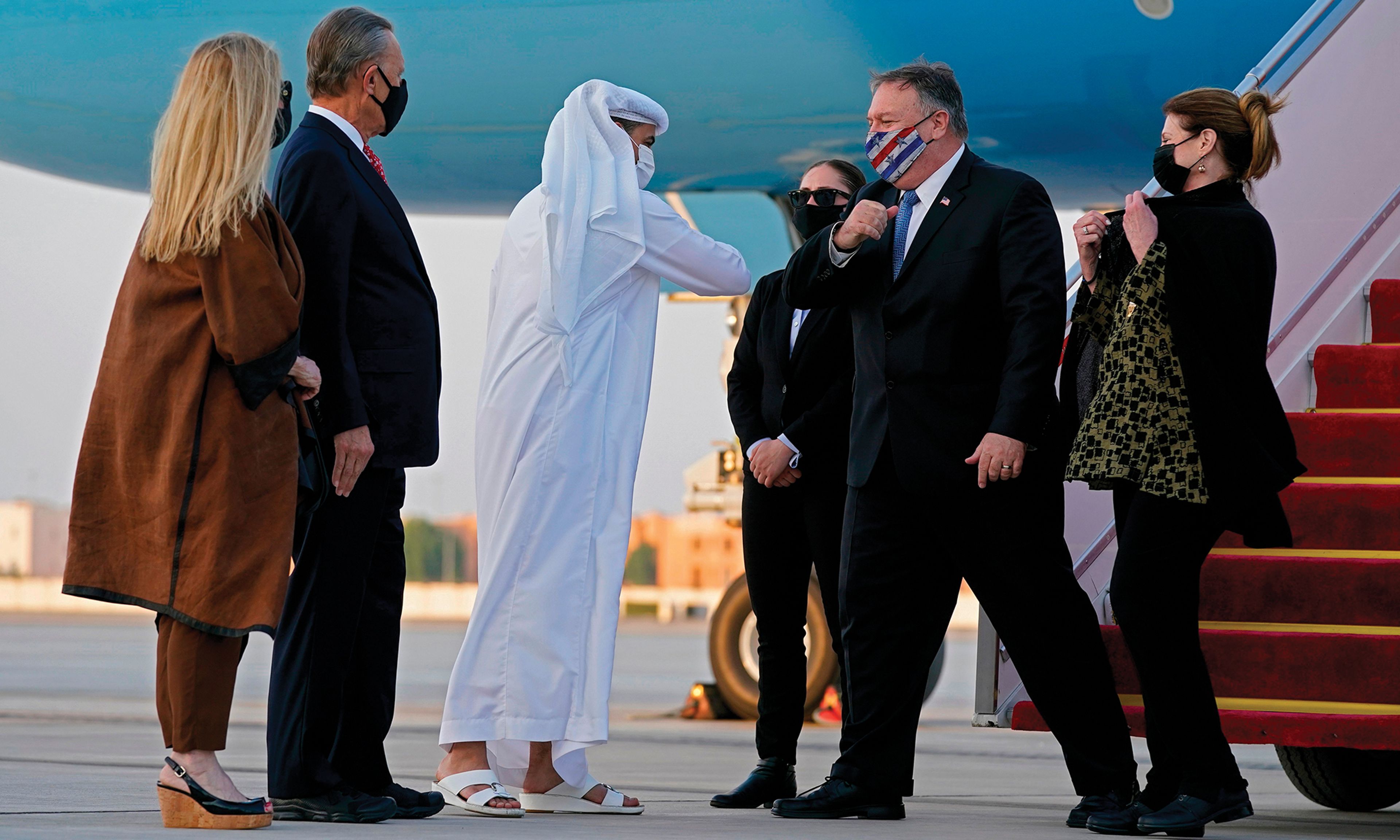
Abu Dhabi
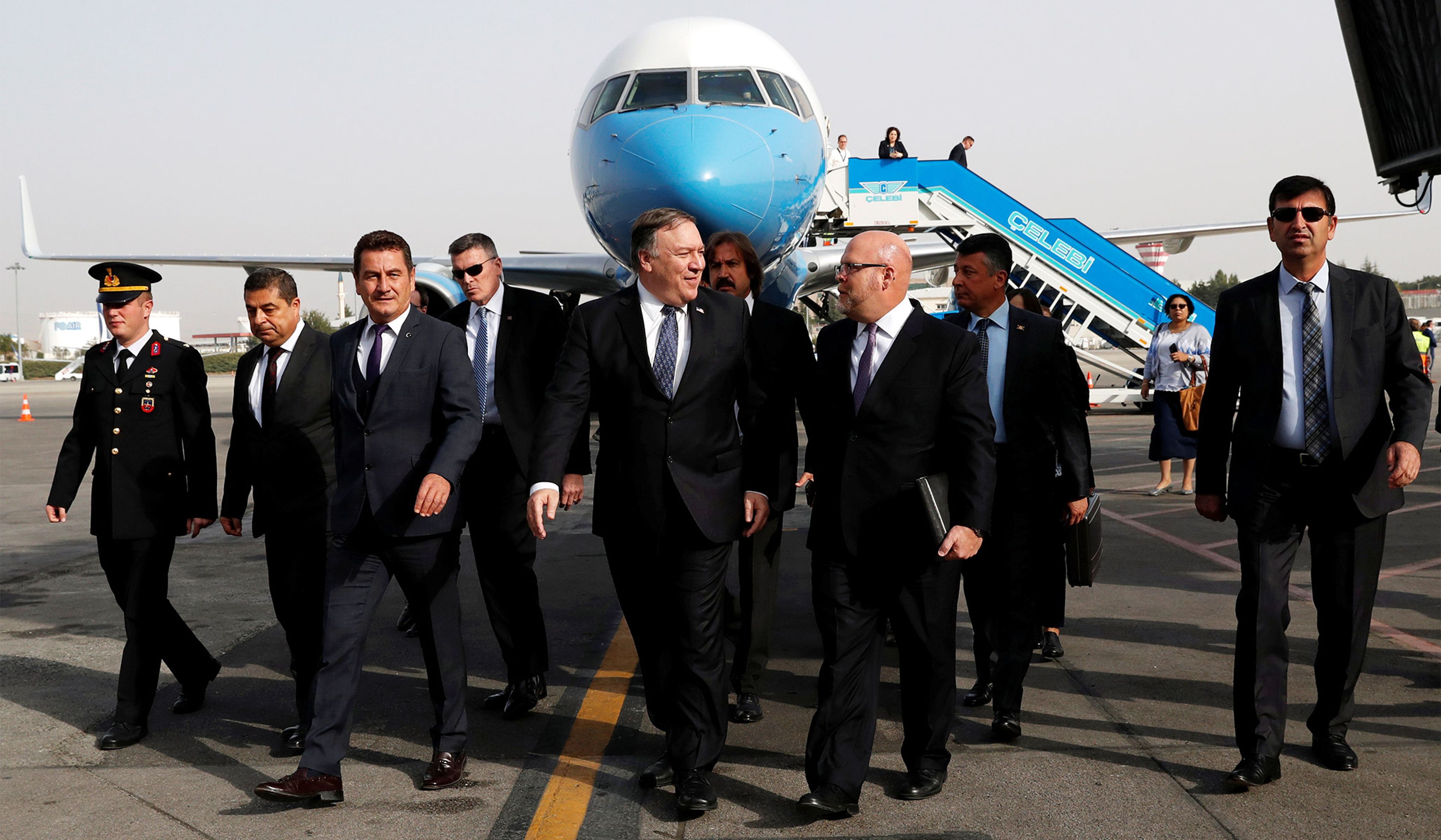
By the time I sit down with Secretary of State Mike Pompeo in a tiny room at the Abu Dhabi Ritz, this whirlwind, COVID-era trip — one of the last of his tenure — is already coming to a close.
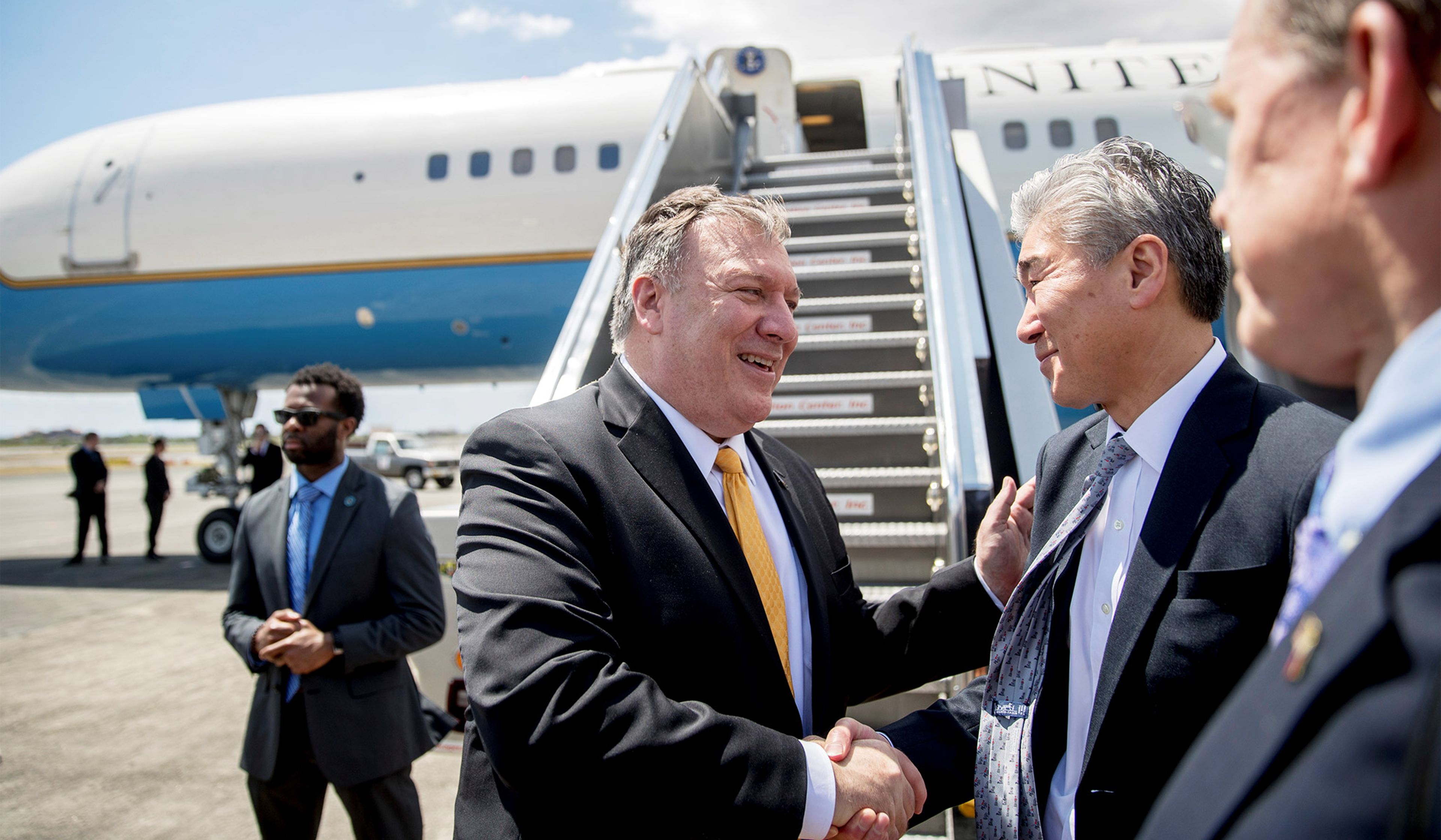
His meetings and visits — which included houses of worship in Istanbul, a roundtable with Georgian civil-society groups, two joint pressers with Prime Minister Benjamin Netanyahu, stops at an Israeli West Bank settlement and in the Golan Heights, in addition to others — went smoothly. While he has held a handful of interviews with foreign reporters, Pompeo has provided no opportunity for the reporters flying with him on the plane to grill him about the political chaos unfurling at home (it’s mid November, and the election has been called for Joe Biden), his boss’s refusal to concede, and his own jocular post-election comments about smoothly transitioning to a second Trump administration. He has remained relentlessly on message.
There was one small problem in the Golan, though. When word got out that State used the term “the Pompeo Doctrine” in briefing materials for the press, some journalists back in D.C. started tweeting that the State Department had placed it in an official readout summarizing Pompeo’s visit to an Israeli settlement in the West Bank. But officials quickly objected: The packet in question was provided for background information only and was not to be taken as an official statement. They added that the phrase in question is not their invention and that it’s used widely in Israel to refer to Pompeo’s stance that the settlements are not inconsistent with international law and that Washington should shield them from international sanctions. Yet the snafu contributed to the perception that Pompeo was self-interestedly elevating his own foreign-policy doctrine, an accusation that his team has taken great pains to fight.
But there is a discernible Pompeo Doctrine, even if officials at State decline to say that one exists. Pompeo has laid down a distinct marker in the post-Trump conservative foreign-policy debate: He can bask in the glow of distinctly Trumpian policy victories, dependent on the president’s personality and agenda but made possible by the Republican foreign-policy establishment that Trump disdains.
In the Emirati capital, the secretary of state explains the Middle East strategy that has most recently led to normalization agreements between Israel and four Arab countries. It all starts with seeing the previous administration’s foreign policy for what it actually was: The Obama team, he says, bequeathed them “a set of policies that didn’t recognize reality, that had an inherent bias toward appeasement.”
When I ask about Europe’s reluctance to reimpose sanctions on Iran, Pompeo touts what he calls a “conservative realism,” according to which “we centrally acknowledge the truth, build up coalitions around that, and then act in a way that protects Americans and builds out prosperity around the world.”
He has previously used the term “conservative realism” in interviews. But in a 2019 address to the Claremont Institute, he also explained the Trump administration’s foreign policy as depending on three principles: realism, restraint, and respect.
This might seem promising to advocates of a noninterventionist foreign policy, but his Claremont address concluded with a paean to American exceptionalism. And this is no surprise, considering the people he has selected to implement his conservative-realist vision. Pompeo has brought in trusted, hawkish Republican foreign-policy hands to oversee specific issues and report directly to him, bypassing the traditional State Department bureaucracy.
These staffing choices seem counterintuitive for an official fiercely loyal to a president who ran on overturning the old foreign-policy consensus. But there’s a method. Calling Pompeo’s picks “experienced creatures of the foreign-policy bureaucracy,” Ambassador Jim Jeffrey, Pompeo’s recently retired point person for Syria and ISIS, told me in a phone interview, “We all knew the bureaucracy and thus knew how to operate not within it, but with it.” Pompeo kept the department’s normal channels from subsuming their efforts, Jeffrey says. So what has this structure made possible?
In Abu Dhabi, Pompeo emphasizes that he and the administration brought a new approach to thinking about old problems, linking seemingly disparate things. Speaking about the Iran maximum-pressure campaign and the recent Abraham Accords establishing normal relations between Israel and several Arab countries, Pompeo tells National Review, “They’re all connected.”
As he tells it, reaching the accords required three things: acknowledging the Iranian threat to peace; the Arab countries’ recognizing Israel’s central role in the region; and grasping that we can’t wait for an end to the Israeli–Palestinian conflict to broker other peace agreements. It’s this, eschewing the received wisdom on Israel and the Palestinians, that, in addition to the maximum-pressure campaign on Iran, has allowed the Trump administration to broker these deals. At the time of writing, there are four deals, but the grand prize — Saudi–Israeli normalization — remains elusive, despite Pompeo’s trip to the Kingdom later in the evening, which overlapped with a surprise meeting there between Crown Prince Mohammed bin Salman and Netanyahu.
Besides implementing the maximum-pressure campaign, Pompeo has contributed to this novel bid for Middle East peace in another way that’s often overlooked, a former White House official suggested in a phone call: His decision to reverse the State Department’s ruling that the West Bank settlements are illegal opened the door for Netanyahu to consider declaring sovereignty over them. This “put enormous pressure on the UAE to figure out how to prevent that from becoming a stumbling block to normalization in the future,” the official told me.
But there’s more to a conservative-realist strategy than recognizing reality and shattering old myths. The Abraham Accords were bolstered by the Trump administration’s ability to coalesce certain Gulf states around its counter-Iran efforts — so Pompeo’s conservative realism also requires building strong alliances in pursuit of U.S. foreign-policy goals and not just in the Middle East.
Perhaps the most notable yet least remarked-upon area in which the administration has prioritized coalition-building is in its efforts to counter the Chinese Communist Party — which, Pompeo tells me, is “a truly existential threat to the United States of America.”
National-security types in Biden’s orbit have argued that the Trump administration’s rhetoric in calling out the CCP for its horrific human-rights abuses, unfair trade practices, and malign global-influence campaigns is just bluster without a refined strategy to marshal international cooperation. But there is a strategy. Since Pompeo started talking in speeches last year about the CCP’s use of Huawei for espionage and political influence, the Trump administration has recruited more than 50 countries to join its Clean Network program. That initiative warns members against the use of technology tainted by Beijing’s influence and espionage.
Pompeo argues that this administration’s vocally anti-CCP stance has given cover to America’s allies to undertake their own reappraisals of their relations with China: “We have been a call to nations all over the world. We’ve laid down the reality of what the Chinese Communist Party does and is, and we’ve had real impact.” Elaborating, he notes that closer defense cooperation between Australia and Japan complements the Quad grouping, a counter-Beijing coalition revived by the Trump administration that includes the two countries plus India and the United States. And the European Union’s decision to hold a series of high-level meetings with the United States on China-related issues, such as human rights and security, is another outgrowth of the administration’s diplomatic push. “These are historic sets of relationships built up by the Trump administration,” Pompeo says. And they’re targeted squarely at Beijing.
Although Pompeo leaves no doubt about his unflagging loyalty to Trump, it’s also clear that he — unlike his boss — views alliances as an essential instrument of U.S. foreign policy.
Still, compared with the approach of unreformed internationalists who almost always favor human-rights promotion in close concert with U.S. allies, Pompeo’s handling of these issues is more nuanced. That’s gotten him into some trouble. He has faced criticism for highlighting human-rights violations when they fit his narratives on Iran, the CCP, and international religious freedom but not otherwise, and for ignoring such violations when they’re perpetrated by pro-American autocrats, such as the ones he has met in the Gulf. The Cold War is over, but one could be forgiven for thinking that Pompeo is at least partly guided by Jeane Kirkpatrick’s formulation: “that traditional authoritarian governments are less repressive than revolutionary autocracies, that they are more susceptible of liberalization, and that they are more compatible with U.S. interests.” If Saudi Arabia is understood to be the former and Iran the latter, this sounds like a succinct encapsulation of Pompeo’s view of the region.
His foreign-policy outlook includes another feature that’s come with the Trump-era: retrenchment in America’s post-9/11 conflicts.
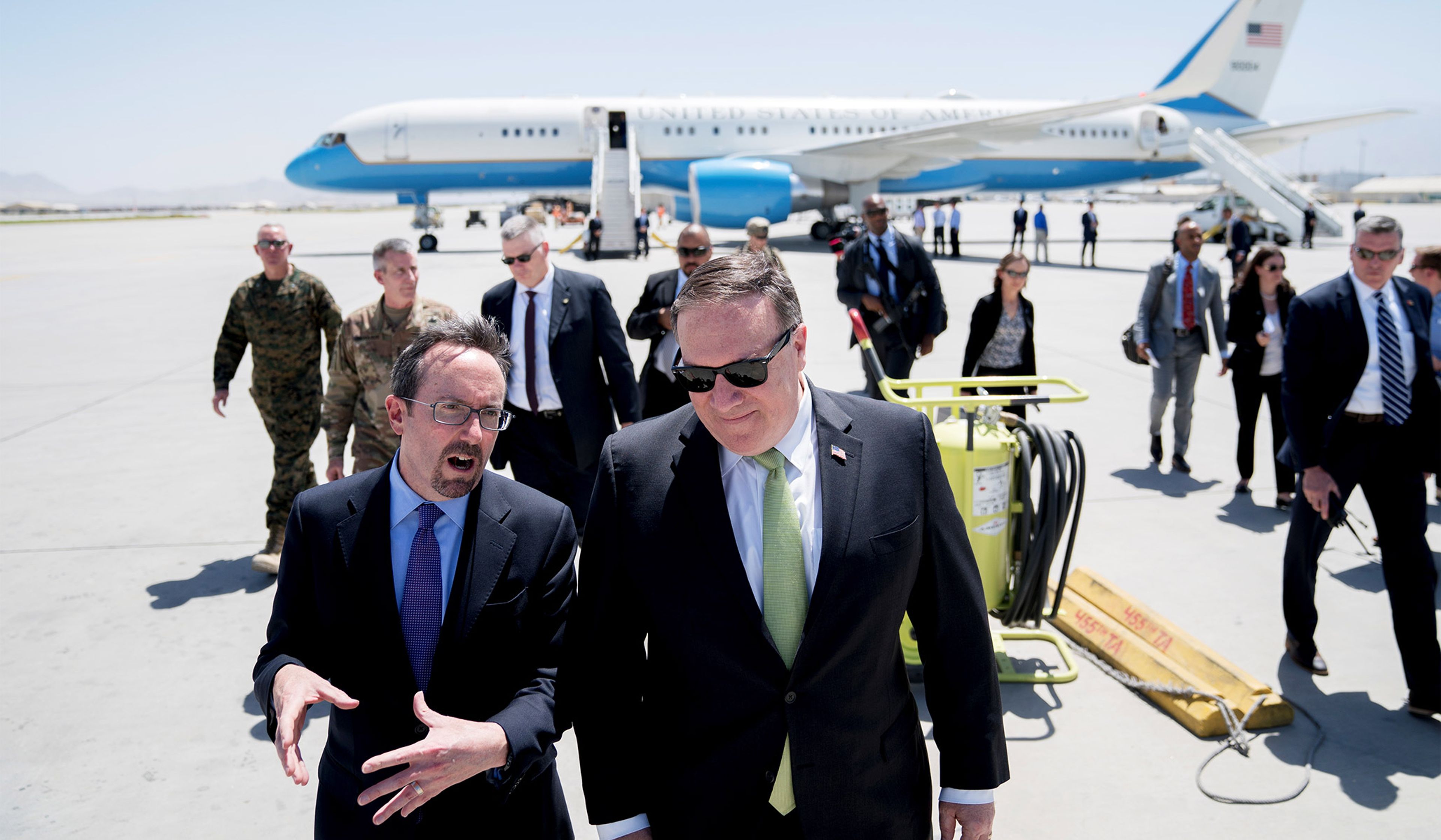
A few days after Pompeo left for the trip, the Pentagon announced its intent to withdraw more troops from Afghanistan, bringing the number there down to 2,500 from 4,500 by mid January. Some key Trump allies, such as Mitch McConnell, panned the move. They fear that a drawdown now risks a bloody Taliban resurgence. Pompeo, though, has publicly defended Trump’s strategy and preference for a drawdown, and he has overseen the U.S. effort to coordinate talks to end the conflict. Toward the end of the trip, he met Afghan-government and Taliban representatives in the soft white halls of the Doha Sheraton, where the negotiations are taking place.
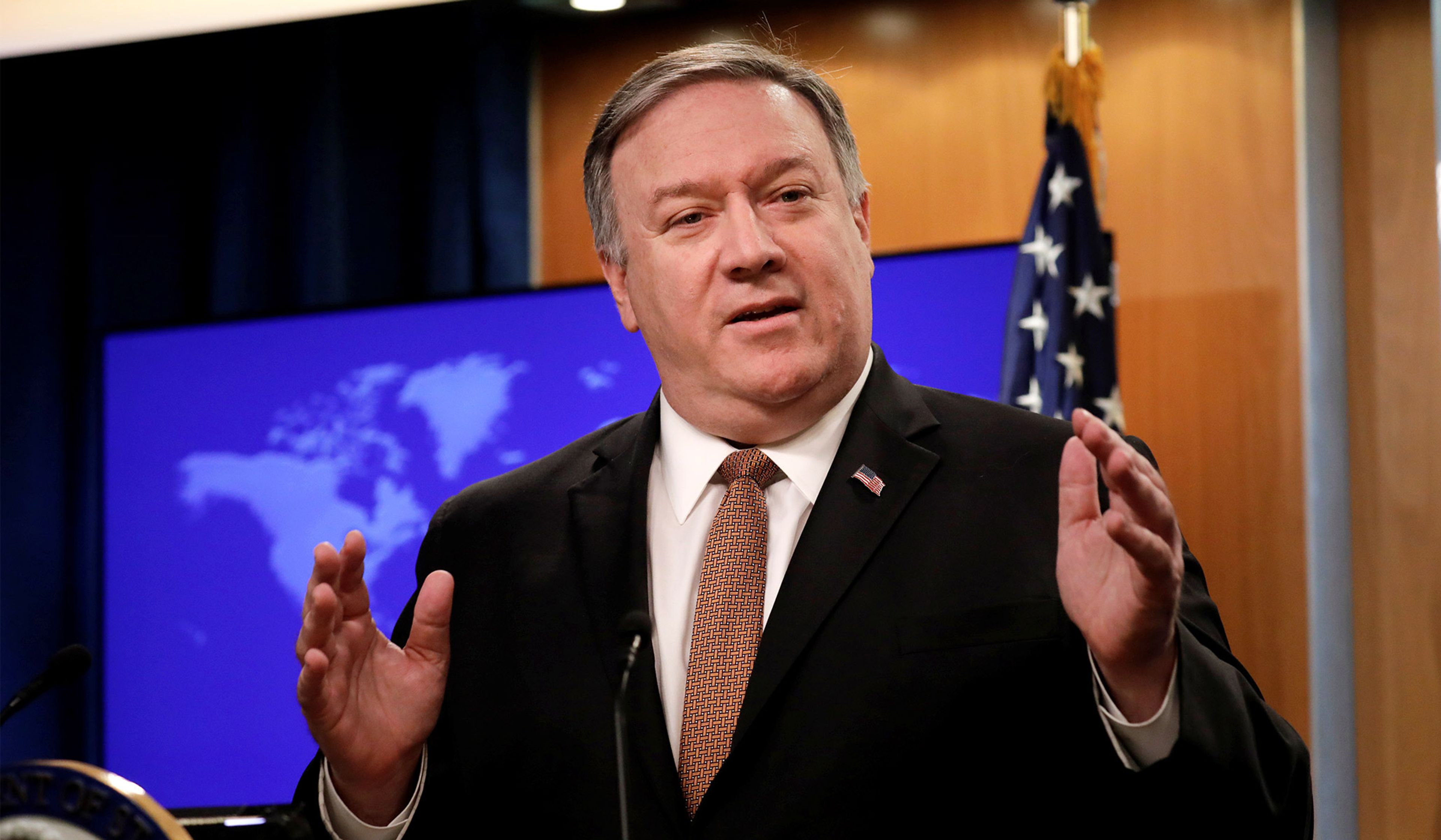
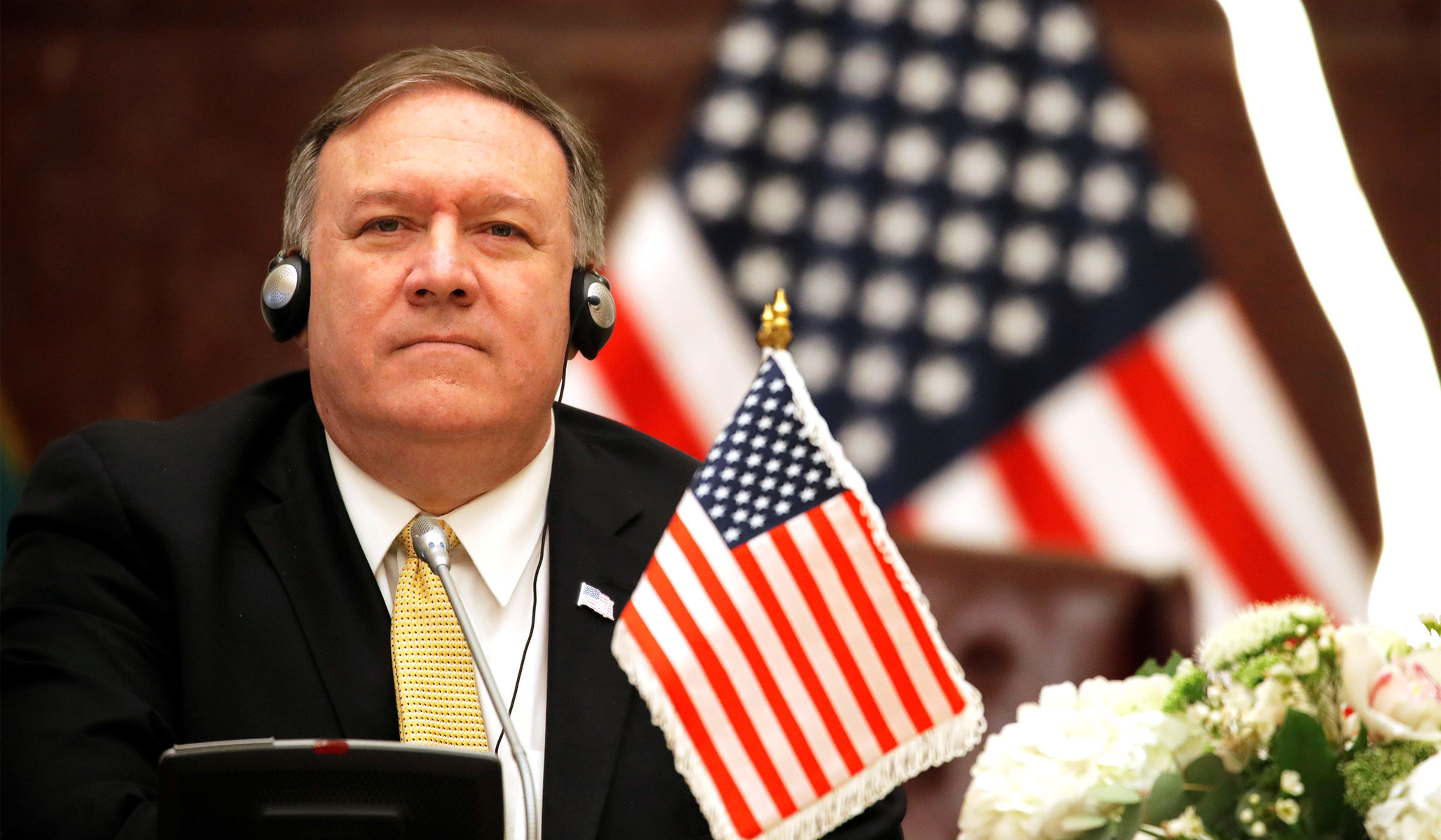
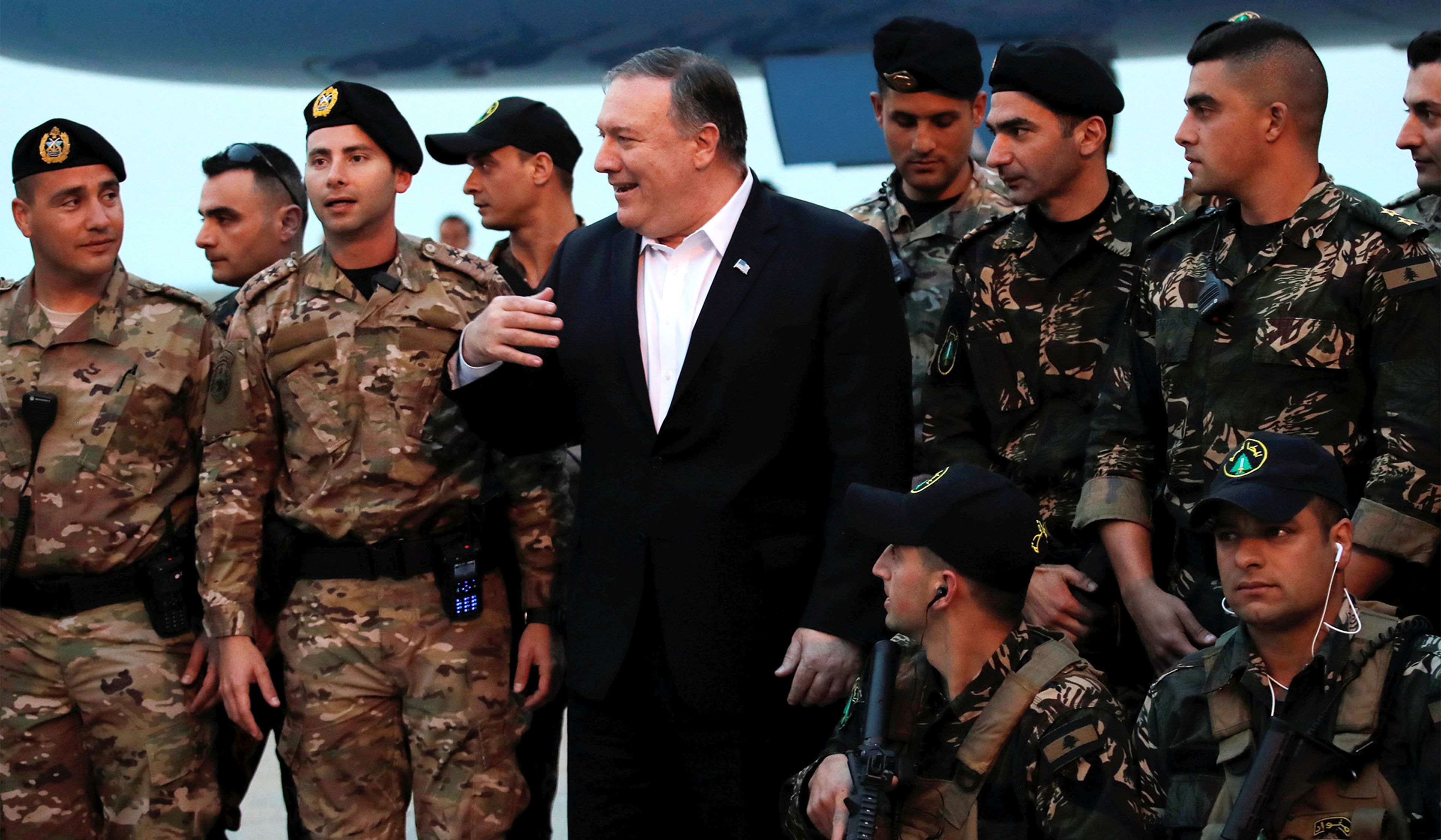
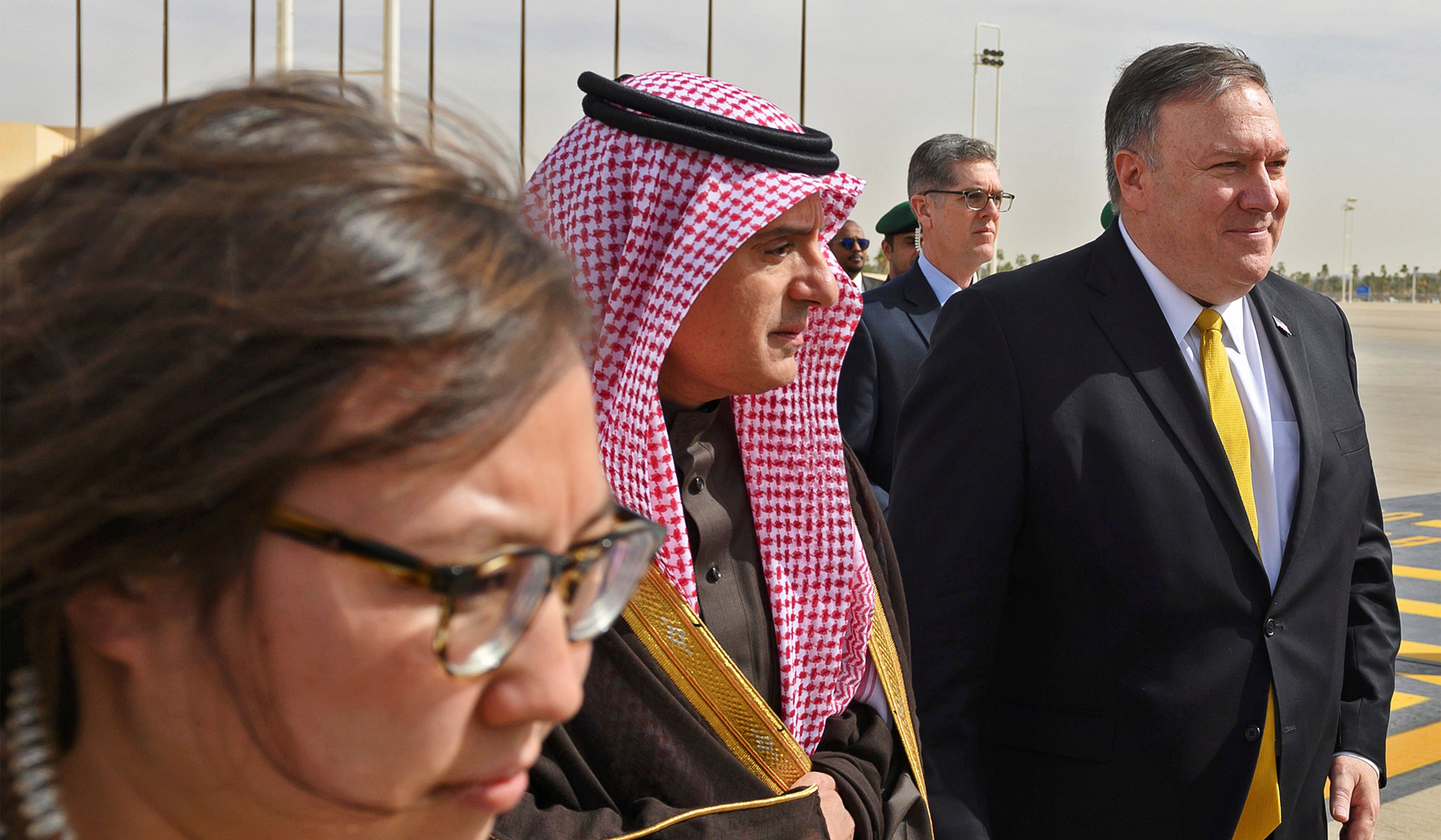
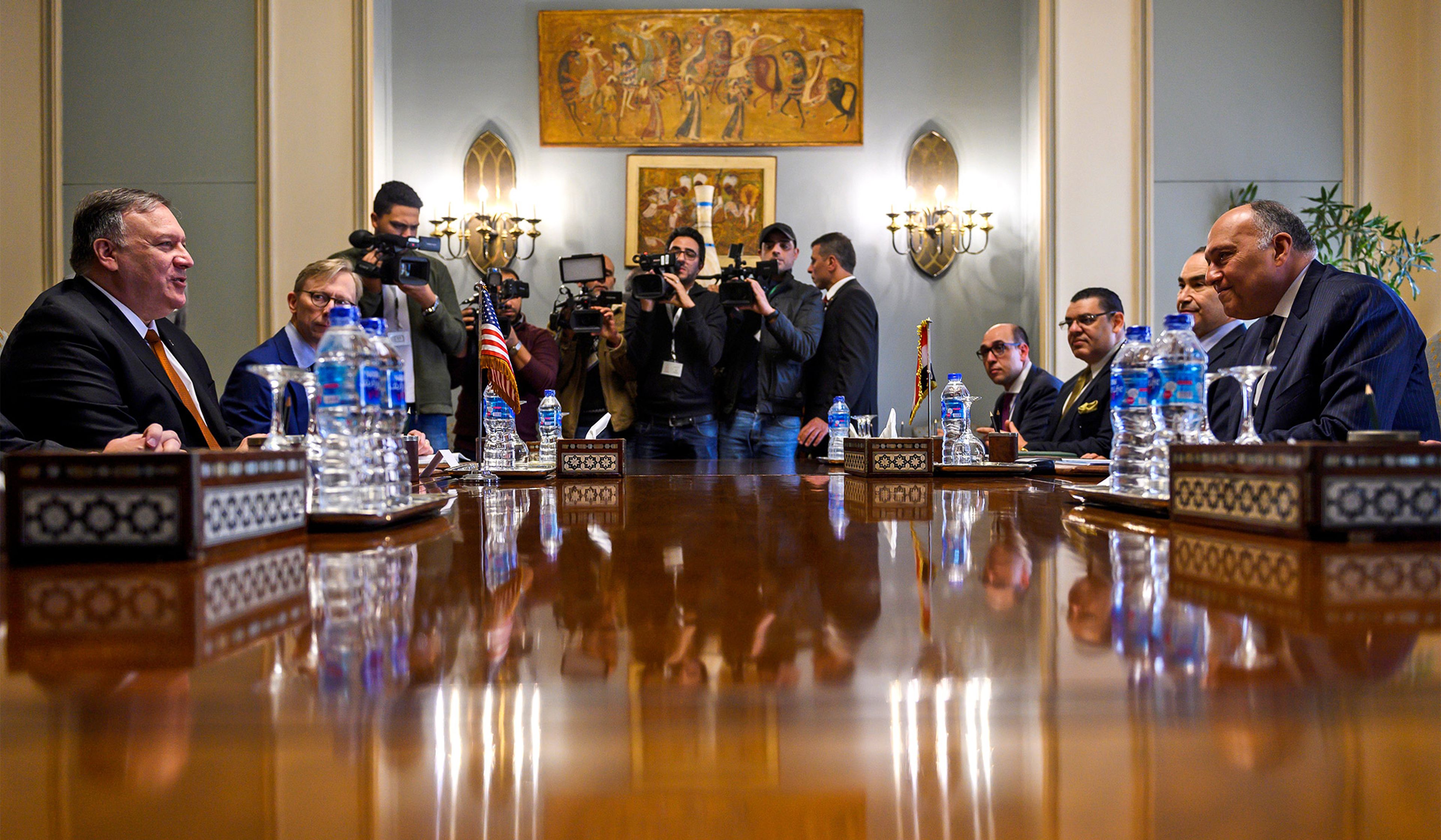
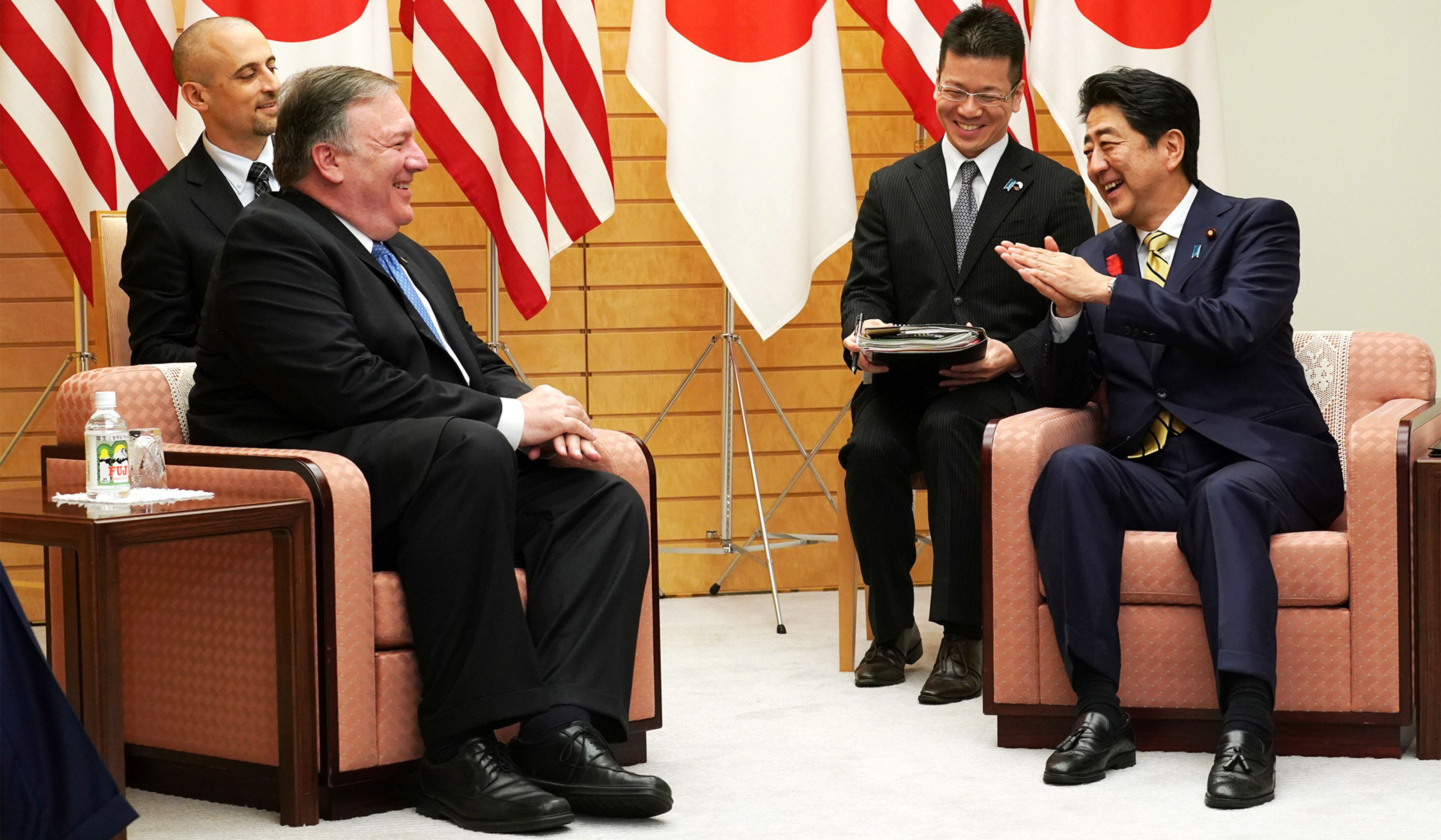
Secretary of State Mike Pompeo speaks during a news conference at the State Department in Washington, D.C., March 15, 2019.
Yuri Gripas/Reuters
I ask him what he thinks about where things stand. The invasion and war that followed were “right and justifiable,” he says, but now there are fewer than 200 al-Qaeda operatives left in the country. “The mission the president laid down for us was to make sure that an attack could not take place,” or to “at least greatly reduce the risk that such an attack would take place, but at the same time to make sure we got our kids home.” He adds, “We’ve done that.”
Withdrawing U.S. forces from the war is one of the president’s most pressing foreign-policy priorities (he tweeted in October that he wants to bring all U.S. forces in the country home by Christmas), and publicly Pompeo exhibits no qualms about that.
The way Pompeo explains it, ending the conflict through a negotiated settlement with the Taliban is the natural outgrowth of the strategy that exists today to bolster the Afghan government’s capacity: “We’ve built up partners and alliances that are now performing this [supporting] function together. That’s consistent with how we’ve operated in every space.”
The unexpected synthesis — of Trump’s end-the-forever-wars rhetoric and pre-2016 Republican support for a robust U.S. leadership role in the world — embodied by Pompeo makes sense to Colin Dueck, a George Mason University professor who writes about the direction of conservative foreign policy. Dueck tells me that he sees “a hybrid or a fusion between what was considered conventionally Republican pre-Trump and then the changes that Trump has brought,” and he doesn’t expect it to disappear anytime soon.
That’s conservative realism, or the Pompeo Doctrine, in a nutshell. Trump entered office promising a break with the existing foreign-policy consensus. As secretary of state, Pompeo has managed to channel the most promising of these ideas into a coherent approach that mobilizes America’s partners, even as Trump verbally trashed, and in certain cases imposed tariffs on, some of them. Similarly, Pompeo’s conservative realism is blunt. It eschews convention and existing consensus. But it’s also a bridge between America First and the pre-Trump GOP conception of American leadership in the world. Executed well, it homes in on the foreign-policy challenges that previous administrations ignored. But it wagers that retrenchment in some areas alongside unreserved U.S. support for autocracies in other areas won’t become future sources of regret.
Trump’s iconoclasm makes this possible. “For every hour that I have as America’s secretary of state, I’m going to continue to do my best to take President Trump’s guidance and implement it,” Pompeo pledges. The question going forward, though, is whether conservative realism might stand a chance of surviving on its own.











Comments