Roger Shattuck, the eminent American scholar of modern French literature and art, spoke in 1994 to a group of traditionalist literary scholars and teachers deeply troubled by the radicalization of the teaching of the humanities in American universities. “Everything has been said,” he told them. “But nobody listens. Therefore it has to be said all over again — only better. In order to say it better, we have to know how it was said before.” Shattuck was no backward-looking, monolingual, chauvinistic provincial, but he articulated a view that could only be a scandalous provocation to the ascendant radical movements — largely French-inspired and Nietzschean — that had been taking over literary instruction in elite universities.
R. V. Young and Lee Oser, both of whom took doctorates in English literature at Yale in its great, pre-radical period, when Shattuck was educated there as an undergraduate, have just published fine books on Shakespeare, in whose plays and poems, we might assert, “everything has been said.” Of course the assertion is meant to shock. The shock is salutary in the deeply confused, bitter ideological climate in which contempt for Western culture and history is now frequently expressed by many privileged custodians in high positions in our institutions of both high and popular culture.
Young’s and Oser’s books are built on the assumption that the status of Shakespeare’s works as classics is merited. A distinguished editor (formerly of the quarterly Modern Age) and translator (from Latin), Young defends Shakespeare as representative of what is best in Western civilization, a conception he explains and uses with tact and grace, and without chauvinism. Shakespeare’s works elicit experiences of reading, meditation, and deliberation that shape character: To read them well is to grow in maturity. It is to experience mental and emotional developments that are at once intimately familiar and recognizable and also transcendent and “other” than ourselves, touching and illuminating both the normative and the exceptional (whether noble or villainous).
And although both Young and Oser clearly distinguish Shakespeare’s work from confessional religion, both see it as essentially Christian. Yet the work challenges Christians and all persons of goodwill with the complexities and anguish of life as well as delights them with life’s pleasures and joys. The skein of intellectual, moral, and emotional experience into which the reader is inducted cannot be summarized adequately in propositional language, and yet that experience is not merely private or subjective.
Young and Oser give highly informed, close readings of several of the major plays, including The Merchant of Venice, the Henriad history plays (Richard II; Henry IV, Parts I and II; and Henry V ), Hamlet, and King Lear. They show a command of much of the vast secondary literature, from Samuel Johnson and Coleridge to Enid Welsford and E. K. Chambers to our contemporaries. Both also show an impressive command of the Latin-language, civilized culture in which Shakespeare was educated in school at Stratford and in life in London. It was an international culture that predated and resisted the rise of nationalism and religious chauvinism. Whatever its cultural, political, or religious deficiencies, it realized and conveyed ideas — of universal obligation and validity — that inspired a civilization. The ideals and beliefs that it gave rise to have maintained their trajectory and some of their momentum even into our own time.
For both authors, Erasmus is the hero in the account of what made the early-modern civilization that shaped Shakespeare. (Literary scholar Emrys Jones: “Without Erasmus, no Shakespeare.”) Erasmus’s publications for schools, his defense of Christian doctrine and free will, and his witty, satirical-philosophical literary works, especially The Praise of Folly (1511), are seen as the crucial background for Shakespeare’s worldview and ethical and religious aims. Valuing reason and universals against philosophical nominalism and the brutal, emergent realpolitik of Machiavelli that Hobbes would later carry forward, Erasmus and Thomas More, his friend and colleague, are the exemplary, emblematic figures of a high European civilization for which neither “medieval” nor “Renaissance” is really an adequate qualifier. More’s conscientious martyrdom at the hands of the egotist Henry VIII made him an exemplar for Shakespeare and later statesmen and writers, from Jonathan Swift (who called him “the greatest man these isles have produced”) to Robert Bolt (A Man for All Seasons).
Both Young and Oser offer effective critiques of nominalism, showing that, as F. R. Leavis argued, language properly used does impose on its user a large measure of consenting agreement with a currency of valuations that itself is the living voice of a civilization. In every literate culture the process of teaching and learning “composition” in one’s native language is the essential means by which specifically human, “non-natural” (E. D. Hirsch) values and virtues are conveyed across time. (Oral ethical cultures will accomplish this by memorization and public speech or liturgy.) Proper language use is a matter of grammatical correctness but, implicitly, also of saying and doing valid and virtuous things, of “reason rightly used” (recta ratio). In Falstaff’s cowardly mockery of “grinning honour” on the face of the dead Sir Walter Blunt, and in Richard III’s contempt for conscience — “but a word that cowards use, devis’d at first to keep the strong in awe” — Shakespeare clearly condemns the age-old inhumanity that he saw Christianity oppose and mitigate. Medicis, Tudors, Stuarts, and corrupt popes were contemporary examples of recurrent vice.
Young and Oser are Catholic Christian humanists who see the modern heresies that they identify in influential critics. Oser quotes the scholar Debora K. Shuger as “provocatively observing” that “all materialisms remain illicitly dualist.” Materialists and determinists inevitably make an epistemological exception for their own generalizations about people and societies. Young draws on Richard Weaver’s classic argument, in Ideas Have Consequences, that “the practical result of nominalist philosophy is to banish the reality which is perceived by the intellect and to posit as reality [only] that which is perceived by the senses.” Epistemological skepticism always logically entails moral nihilism. Foreshadowed by Sade and Nietzsche, “the unprecedented rise of anti-humanism” (Oser’s phrase) in our time is both reflected in and — as Jacques Barzun pointed out — augmented by absurdism in the arts, whether high-cultural or pop.
Like T. S. Eliot’s secular but stoical teacher Irving Babbitt a hundred years ago, Young and Oser see human moral duality — what Babbitt called the “internal dualism” — as the basic dynamic by which we come to know ourselves and the Good. It is Saint Paul’s great theme in Romans 7 and even the pagan Ovid adumbrated it: “I see and approve the good but follow the bad.” Shakespeare is our greatest literary portrayer of these dynamics, though all “morally coherent” writers, as Oser calls them, in our own and other Western languages conceive and enact the same understanding of the perennial human struggle to be just and humane. In the inner sanctum of conscience, the self judges itself by reference to a light and truth beyond itself.
When the illusions of atheistic libertinism and utilitarianism had begun to reveal their catastrophic consequences in World War I and afterward, great “morally coherent” modern writers such as Eliot and Aleksandr Solzhenitsyn recovered the “orthodox,” Shakespearean literary-ethical perspective. As Young and Oser both brilliantly demonstrate, the Henriad of the late 16th century serves as a meditation on political history and personal and social ethics. Murder in the Cathedral and “The Ascent” in The Gulag Archipelago do the same for the tragic 20th century.
Oser’s and Young’s books add to the large body of “orthodox” Shakespeare commentary that itself constitutes a worthy and distinguished literature, works such as Samuel Johnson’s 1765 Preface and notes to his edition of Shakespeare. A good generalist introduction to Shakespeare by a great teacher, Mark Van Doren of Columbia, was first published in 1939 and remains in print. Belonging on the same shelf of valuable secondary sources are Shakespeare the Thinker (2007), by A. D. Nuttall, and Shakespeare’s Christian Dimension (1994), an anthology of commentary edited by Roy Battenhouse. Achievements of a powerful and orthodox mind and spirit, Shakespeare’s works continue to give orientation, wisdom, and delight. They are a large part not only of our cultural past but of our civilized future, if we are to have one.

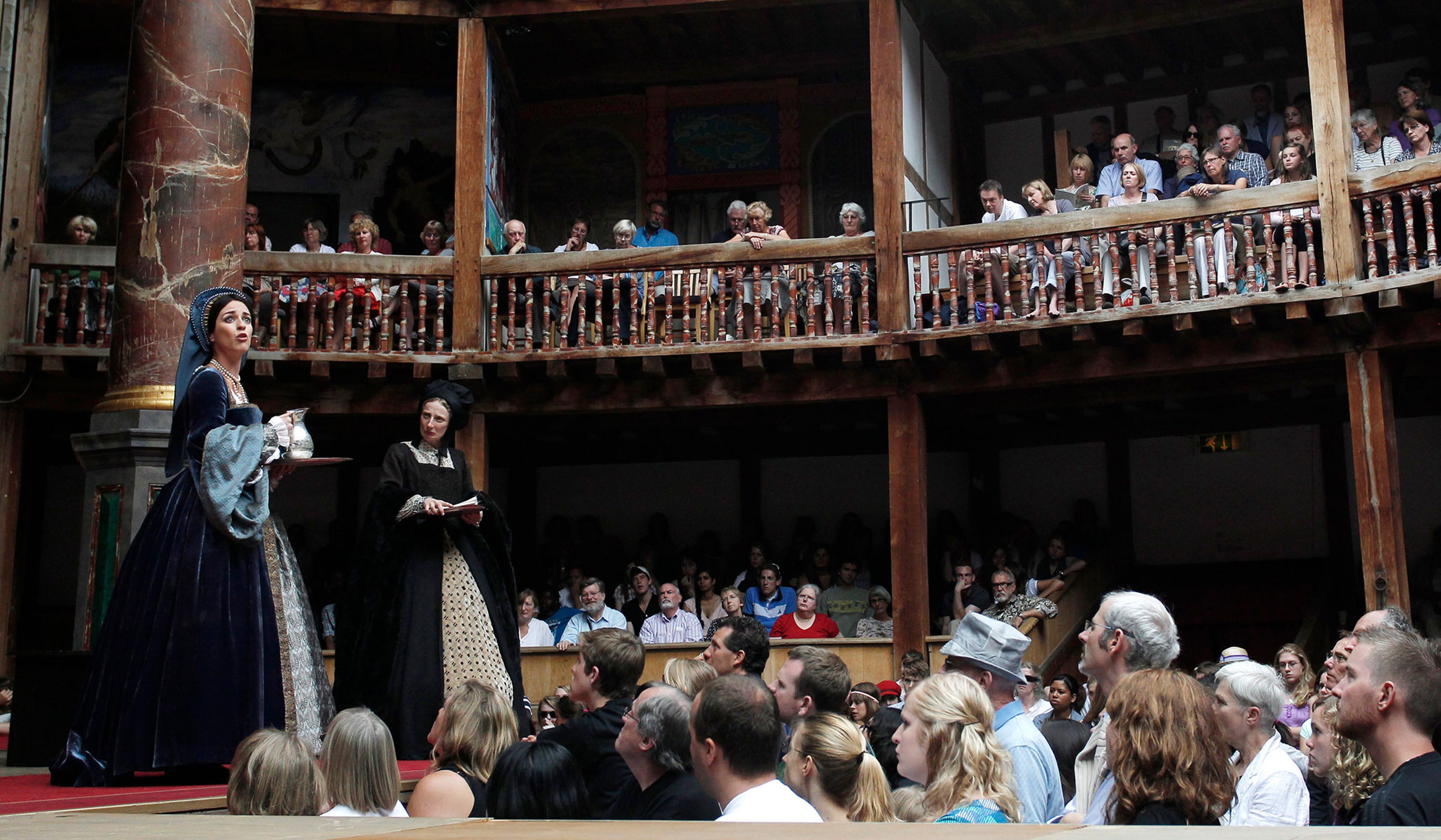







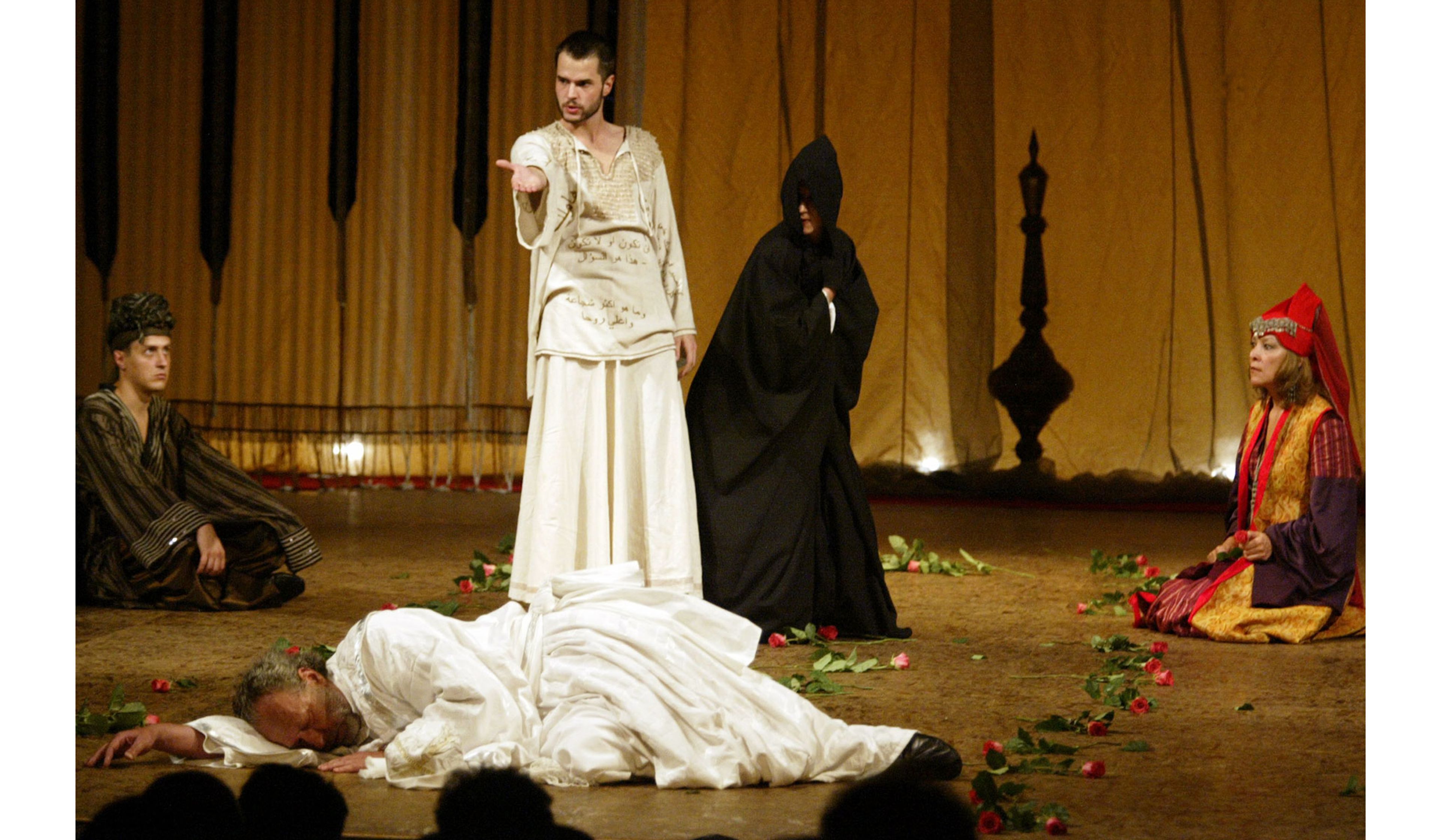
Actors Kate Duchene and Dominic Rowan perform as Queen Katherine and Henry VIII in Shakepeare’s Henry VIII at the Globe Theatre in London, England, in 2010.
Luke MacGregor/Reuters












Comments