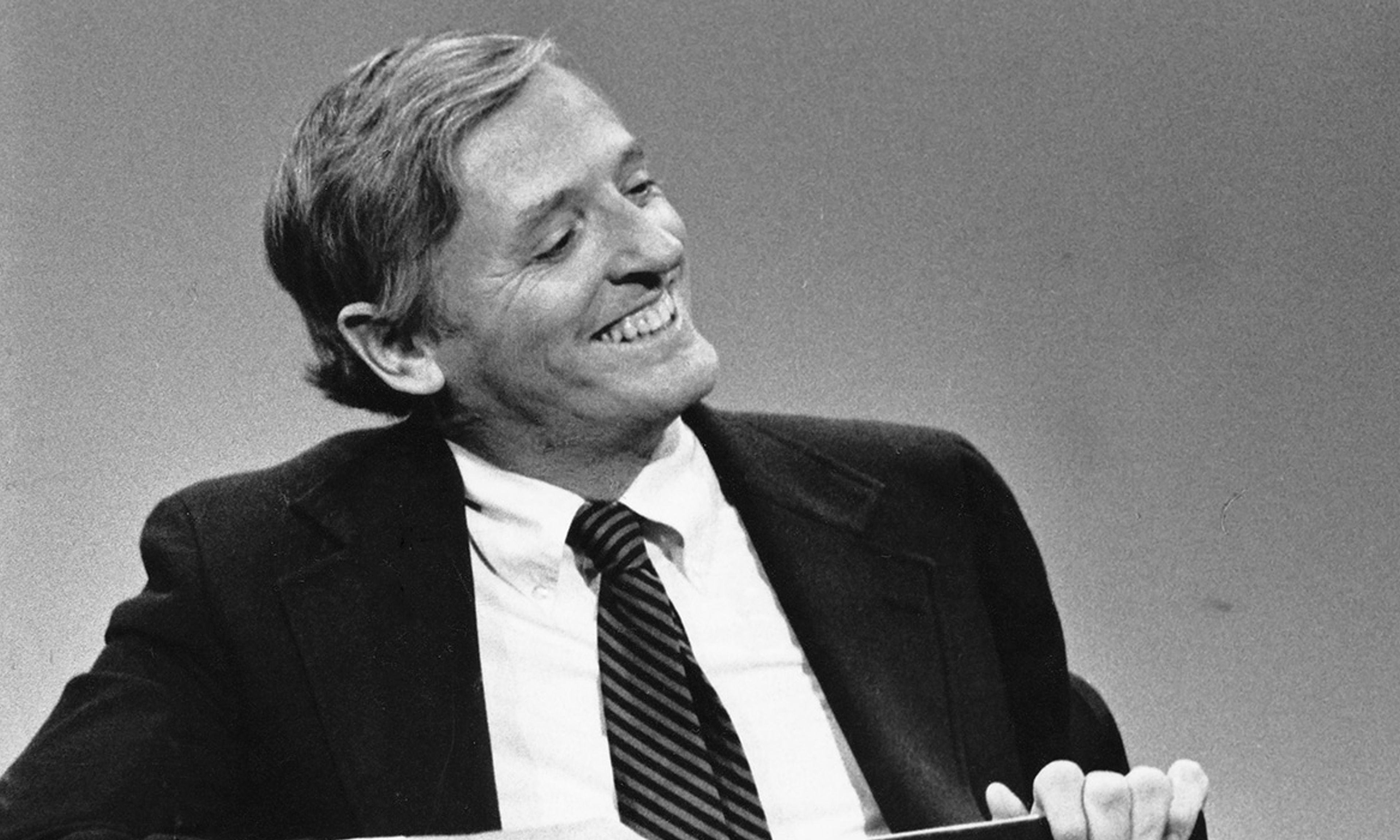
Some years back my bride Jane gave me the best present I’ve ever received. I now recommend it for all those hard-to-please types on your Christmas list. Jane sued the federal government and obtained a copy of my FBI file. (I should note here that Jane and I were introduced by Bill Buckley, prompting one of my many left-wing cousins to call Jane’s and mine an “arranged Taliban marriage.” I now recommend those, too.)
Your FBI file makes for a great read. The best parts are the field audits. When you’re nominated for a presidential appointment, the bureau conducts a full field investigation. They talk to everybody — business partners, friends, neighbors. Somewhat more pungently, they talk to the guy whose tiny, doglike pet was nipped by your real dog. They talk to your former employees, and at impressive length with the most disgruntled. They talk to your fraternity brothers and, for a different perspective on the night in question, to the local police. In terms of personal intrusion, the field audit is colonoscopic.
Reassuringly, the witnesses tell the truth. For two reasons. The agent warns them that, if they don’t, they could be subject to felony arrest. And second, that, because their testimony will be sealed, the words of the witness will never reach the ears of the subject. (Which they won’t. Unless you happen to be married to Jane Freeman.)
Well, I’m flipping through my file on Christmas morning, and I come across the sworn testimony of William F. Buckley Jr. His name is redacted, but I know immediately who it is. Who else would drop into an FBI interview the phrase mutatis mutandis?
The first question is a frame-setter. Agent: “How would you describe your relationship to the subject?” Witness: “He’s one of my closest friends.” Now, I knew that, but it was oddly moving to read it in a secret government document.
The agent then leads the witness through a series of ventures in which he had collaborated with the subject. As he did so, I was reminded that, while you and I may watch the movie of our life in black and white, Bill Buckley saw his in vivid colors. And in large, Rorschachian patterns. He had a knack for discerning connections, invisible to others, between mundane activity and high purpose.
Take the syndication of his newspaper column. One bright fall day, I rented a car, stuffed the trunk with promotional literature, and for the next six months drove across the country, selling Bill’s column city to city. I remember that trip well. It was, at one level, basic training for my later work as a commentator on national affairs: I learned the political geography of the country from the ground up. At a slightly less elevated level, I remember that trip as the last great bachelor adventure of my life.
Bill remembered it differently. In his telling, I wasn’t just a traveling salesman. As he recounted my long, stop-go advance from east to west, Bill seems to have persuaded himself that, in completing my journey, I had somehow managed to combine the best qualities of Lewis and Clark.
The witness wraps up his testimony with characteristic panache. The agent’s final question (an omnibus, fanny-covering question) was this: “Would the subject be likely to do anything that would embarrass the Administration?” Replied the witness, still under oath: “I should think that the reverse would be much more likely.”
That was Bill Buckley.
I met him in 1963. I was sitting at my desk at Doubleday & Company, the junior-most executive at what was then the biggest and arguably the best book publisher in the country. The phone rang, and a man identifying himself as William Buckley said, “I’ve just read your piece on Mr. Rockefeller and found it, uhhhh, arresting. I wonder if you could join me for dinner to discuss it.” I was living in a studio apartment in New York City. He had me at “dinner.”
I showed up at the appointed hour to find that there would be four of us for dinner: Bill and me; Bill’s wife, Patsy; and the new publisher of National Review magazine, Bill Rusher.
Patsy made a strong first impression. She was six feet tall. Supermodel gorgeous. Vassar-educated with a wit that carried the sting of an alpha hornet. An improbably good cook. And a chauvinistic Canadian, from the real Canada where they drill for oil, dig for coal, and mine for gold. It would be fair to say of Patsy Buckley that she never met an extractive industry she didn’t like.
Bill Rusher had worked a Stakhanovite schedule through high school, which got him into Princeton, where he excelled, which got him into Harvard Law School, where he excelled again. When he landed a partner-track job at a big Wall Street firm, his single mom, possibly for the first time in 25 years, was able to exhale: Her only child, Billy, was going to be all right. (Which he was. Until the day he quit the white-shoe law firm to join Buckley’s ragtag band at National Review.)
How did that evening go? We talked about boats and buildings and, for reasons I can’t imagine, standing armies. We took on the Oxford trilogy of PP&E — philosophy, politics, and economics. We spoke without pause. Four peas, one pod.
At ten o’clock, Bill Rusher, a man of iron habit, excused himself and went home. Along about one o’clock, Patsy, a young mother with things to do in the morning, excused herself and went upstairs to bed. I don’t know how long I stayed, but I do remember this: When I left Bill’s place, I walked down Fifth Avenue to the Doubleday building. I went to the men’s room and shaved. And I marched into the boss’s office and resigned. I was going to work for National Review.
Why did I leave a promising career? Why did Bill Rusher? Why did the rest of the National Review Irregulars? Because Bill Buckley proposed to change the world. We thought he just might do it. And we wanted to help.
The shocking twist to this tale of impetuous youth is that, in the event, it happened in exactly that way. Bill changed the world — and some of us like to think we helped.
Remember the historical circumstance. After the Eisenhower moderates had crushed the Taft conservatives, America at mid century found herself with two great political parties: a tendentiously left party, the Democrats, and a staunchly centrist party, the Republicans. Lionel Trilling’s words have survived these many years because they were so perfectly apt. Conservative resistance in this country, Trilling observed of the time, amounted to little more than a series of “irritable mental gestures.”
It is important to remember, then, that Bill Buckley did not resuscitate American conservatism. He did not rejigger it. He created it. And as we all know, it is more difficult — more difficult by orders of magnitude — to create something new than to maintain something old.
Under Bill’s loose and avuncular supervision, we all developed our own philosophical frameworks, congenially related to his, of course, but tailored to accommodate our individual predispositions.
I can tell you how my own developed. As I read more history, I began to hear the American story as one endless and endlessly fascinating conversation between Thomas Jefferson and Alexander Hamilton. The question that engaged them was this: Where in the American polity should we place the locus of power? Should we place it at the periphery, with what we hope is the enlightened individual, as Jefferson argued? Or should we place it close to the hub, with what we hope is a benevolent central authority, as Hamilton argued?
The correct answer, of course, is: neither of the above.
Every generation must strike its own balance between the competing claims of personal freedom and social order. Why must they do so? Because it is axiomatic that if one side wins, both sides lose. Social order without personal freedom becomes tyranny just as surely as personal freedom without social order becomes anarchy. It is precisely this tension between two powerful impulses that animates American society. Political scientists call our system of governance “ordered liberty.” Which, for me, has been, and with any luck will continue to be, the golden oxymoron of the American experiment.
Broad minds, such as Bill’s, could live with the unresolved question — the strategic ambivalence — between order and liberty. Narrow minds could not. Down through the years, ideological thugs (usually from the Left, occasionally from the Right) have sought to settle the question dispositively and always, always, in favor of an engorged and less than benevolent central authority.
Bill would have said this better than I. Certainly, more polysyllabically. But here’s the gist of the matter. If we as a nation ever attenuate our commitment to personal freedoms, the best possible outcome for America will be a soft despotism in which a few of our old friends will be briefly in charge.
When it came to political activism, Bill’s supervision was neither loose nor avuncular. His was the decisive voice in campaign endorsements. It was he who made the early overtures to the veterans’ groups; to the farmers and ranchers; to the cops and firemen. It was he who built out the youth groups. It was he who concluded lengthy negotiations with Russell Kirk and his traditionalists to join the coalition. After which, Bill turned around and did the same thing with Kirk’s archrivals, Irving Kristol and his neoconservatives. Bill Buckley was in on the ground floor of the pro-life movement and, somewhat later, the supply-side movement. For years, decades even, he was in constant motion, building the conservative majority, block by block.
He did so not because he had lax admission standards for his coalition but, rather, because he had lofty ambitions. He had read the Constitution carefully. He had come to understand how James Madison had rigged the system. In American politics, by quite explicit Madisonian design, coalitions win and factions lose. Bill Buckley had no interest in losing, however gloriously.
So put aside for a moment his contributions to our geostrategic triumph, to our economic abundance, to our rich cultural life. Consider the magnitude of his political achievement. From 1964, when Bill was still in his thirties, until 2012, four years after his death at the age of 82, every Republican nominee for president was either a Buckley conservative or somebody who pretended to be one.
As is the case with most originals, Bill resisted casual labels. But when pressed to describe his own political views, he would say that he was a libertarian conservative — a term that is, yes, both golden and oxymoronic.
He did not acquire those nuanced views at elite boarding schools or at university or even at the knees of his Ph.D. colleagues at the magazine. He acquired them at the dinner table and, specifically, from two guests, one semi-regular, the other occasional.
The semi-regular guest was his father, a peripatetic seeker of fortune. William F. Buckley Sr. was a Texas oilman. Not in the sense that term is used today. Will Buckley never strode the polished corridors of Exxon headquarters, sleek in designer suit and bench-made shoes. No, Will Buckley was an independent oilman, working the hard dirt of rough neighborhoods in Tampico, Mexico, and Maracaibo, Venezuela, wondering by Tuesday who might be willing to lend him the money to pay his roughnecks on Saturday. He was a torpedo-damning entrepreneur, thrilled by the chase, driven by the ancient dream of giving his children better prospects than his own. I have been told that some of the proudest days of his life were those when he signed fat tuition checks to send his sons to Yale, all four of them.
For Bill Buckley Jr., his father became a walking, talking affirmation of the virtues of the free economy and the prodigious benefits it could produce.
The other guest, the occasional guest, was Will’s friend, Albert Jay Nock, the lambent essayist. Nock was a hard-shell libertarian. To give you the flavor of his work: One of his best-known books was titled Our Enemy, the State. Nock brought two gifts of great value to young Buckley. The first was a singular prose style that, more than any other influence, left its imprint on Bill’s own memorable style. More consequentially, Nock gave Bill an intellectual construct for the freedom philosophy. That is to say, while his father showed Bill that the market worked, Nock explained why it worked — and why it was likely to work not just for Will Buckley but for everybody else as well. After surviving instruction by professors in Yale’s Department of Economics, Bill became a lifelong believer in the free economic system — a believer of both the head and the heart. Over the course of his long public career as the country’s best-known libertarian conservative, Bill came to personify for millions of Americans their golden oxymoron.
Happily for those of you reading this tribute, not to mention your heirs and assigns, Bill was one of those rare individuals who excelled at converting thought into action. I saw it up close: Bill was indispensable in persuading his protégé Ronald Reagan to tilt our economic system away from the leviathan state and back toward the productive elements — toward the savers and investors, the innovators and job creators. It seems hard to believe at this remove, at a time when obscenely profligate boondoggles can be called with a straight face the American Rescue Plan, or the Inflation Reduction Act, but during the Reagan presidency, the top individual tax rate was cut from 70 percent to 28 percent.
That was a monumental achievement. Nobody would argue otherwise. But that’s not how Bill chose to describe it. For him, the headline news was that the entrepreneur’s share of the new dollar of revenue had just increased from 30 cents to 72 cents. That was a victory to be celebrated. That was a victory for the enterprising individual, long overdue. That was a victory for the economically marginalized, for whom growth is the only way up and out. That was a victory for the American spirit, which, then as now, was desperately in need of rejuvenation. And that was a victory for the cause of freedom, which never has enough foul-weather friends.
That, too, was Bill Buckley.
In late 2007, he missed our regular catch-up session, and I called to check on him. I invited him to visit us in Maine. I said that we could watch some boatbuilding and plot out his next book. There was no response, so I tried again. I said there might even be an apology for Firing Line in it for him. (That was an inside joke. He had never liked the name I gave to the television series.)
After a long pause, he replied, “Mon vieux, I have terminal emphysema.” Bill Buckley did not use words imprecisely. I thought a bit and said, “Okay, we’ll bring Maine to you. Hold lunch for us Thursday.” Jane and I pulled some lobsters, scavenged a few bottles of his favorite Alsatian white, and barreled down the road to Stamford, Conn.
It was a chilly day, but sunny, and we sat out on his lanai overlooking Long Island Sound. We drank some wine and laughed and talked about the good times, of which there had been many.
Toward midafternoon, he tired. He said he needed a “snort of oxygen.” As he started to rise from his chair, he slumped back down again, a look of distress crossing his face. He was mortified, as he put it, to remember that a book he had given me actually belonged to a British friend. Would I be sure to get it to him? He mentioned a woman with whom we both had worked for many years. He regretted that cross words had passed between them. Would I remember to tell her he loved her? He had promised a mutual friend that he would write a letter for a grandson seeking admission to Yale. Bill didn’t think he could get to it. Might I be willing to fill in?
One by one, this man who had known popes and presidents, this man who had bent the arc of so much history, worked his way through a list of slights unattended and courtesies unreturned, none of them rising to the level of a social misdemeanor. These were the most important people in the world. These were his friends.
Bill died a few weeks later. He had been at his desk, his caretaker told me, in the drafty old garage he used as a makeshift office. He was writing a column for some of the same newspapers that had hired him more than 40 years earlier.
Two days later, I received a letter from National Review’s office in New York. It was Bill, thanking me for some forgettable favor and, more generally, for a lifetime of friendship. It was apposite, exquisitely so, that Bill Buckley should have expended some of his last breaths dictating expressions of gratitude. His life with words had been long and promiscuous, but he remained steadfast in his attachment to the word “gratitude.” It became the title of his favorite book, which took the form of a love letter to the land of his birth. He was grateful to his friends, to his family, to his church, and to the United States of America.
I would ask you, my countrymen, to return his gratitude in full measure. As you do so, I would ask you to reflect on your answer to this question: Who did more than Bill Buckley to save our nation from socialism, and our world from communism?
This article has been adapted from an address to the annual meeting of the Fund for American Studies on February 4, 2023; a version of it was published on National Review Online on February 10, 2023.











Comments