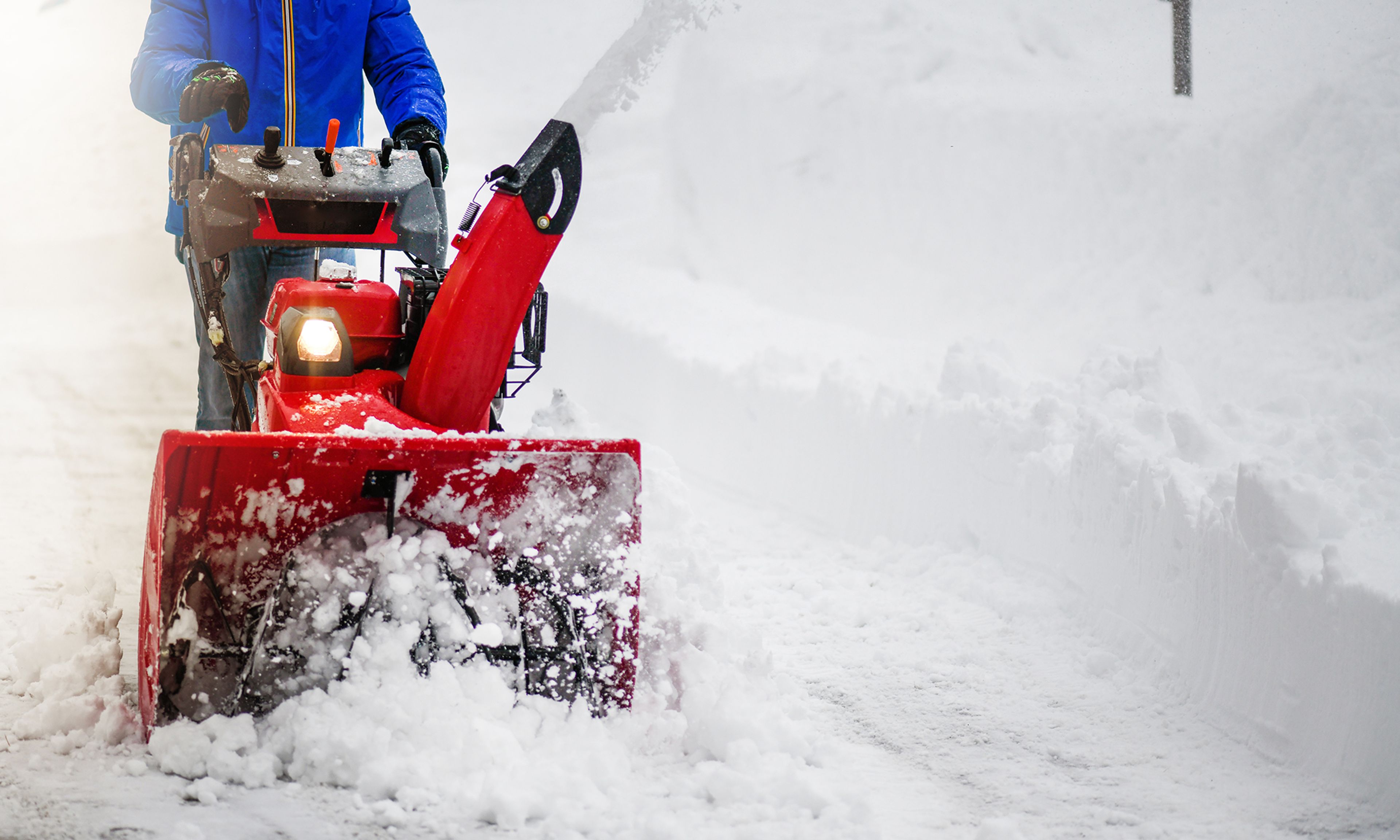
Our first winters in the country, our driveway was plowed by a friend of a friend who did it almost as a lark. A twelve-pack of beer was his price for a season’s work. More people from the city moving up created greater demand, and a more formal market. We ended up calling on a different friend of a friend, who plows us out in winter and mows us in summer. I do the detailing, raking up the clippings and putting them in the compost in the green months, scraping the ice off the gutters in the white ones.
We have a long dirt driveway that dips down from the road and runs straight through the gate in the deer fence, until it turns left, in gravel, up a short slight slope to the carport. Carports are characteristic of Frank Lloyd Wright houses too (along with tiny kitchens and chimneys that smoke). Carports are cheap, low maintenance, and in the winter cold as hell.
You need your plowman only for big snowfalls. Anything a few inches or less can be handled with shovels, ice melt, and four-wheel drive. Contemporary snow shovels come with curved shafts and plastic blades to make lifting and tossing easier on the back, though an old-fashioned straight-pole wooden shaft with a metal blade is better at chopping recalcitrant chunks. The Finns invented a big-bladed snow scoop with a handle shaped like a harness that allows you to attack a drift layer by layer, gliding each load over the remaining snow below. If the snow is powdery and you get it just after it has fallen, this works like a dream. Sprinkle little blue nuggets like seasoning on the patches made by your footsteps. For the detritus left by the town plow at driveway’s end, get a running start and power through.
These are the ordinary arrangements of winter in the country, until something out of the ordinary occurs.
The first hefty snow of the year came down at night. When you got up to go to the bathroom, earth, air, and sky were all a dim glow. Morning found seven inches everywhere. The drifts and mini-drifts were like the highlights of a lax but ultimately ruthless editor: Did you mean this, and this, and this? Well, here it is. Juncos landing on a snow cowl left no mark whatsoever.
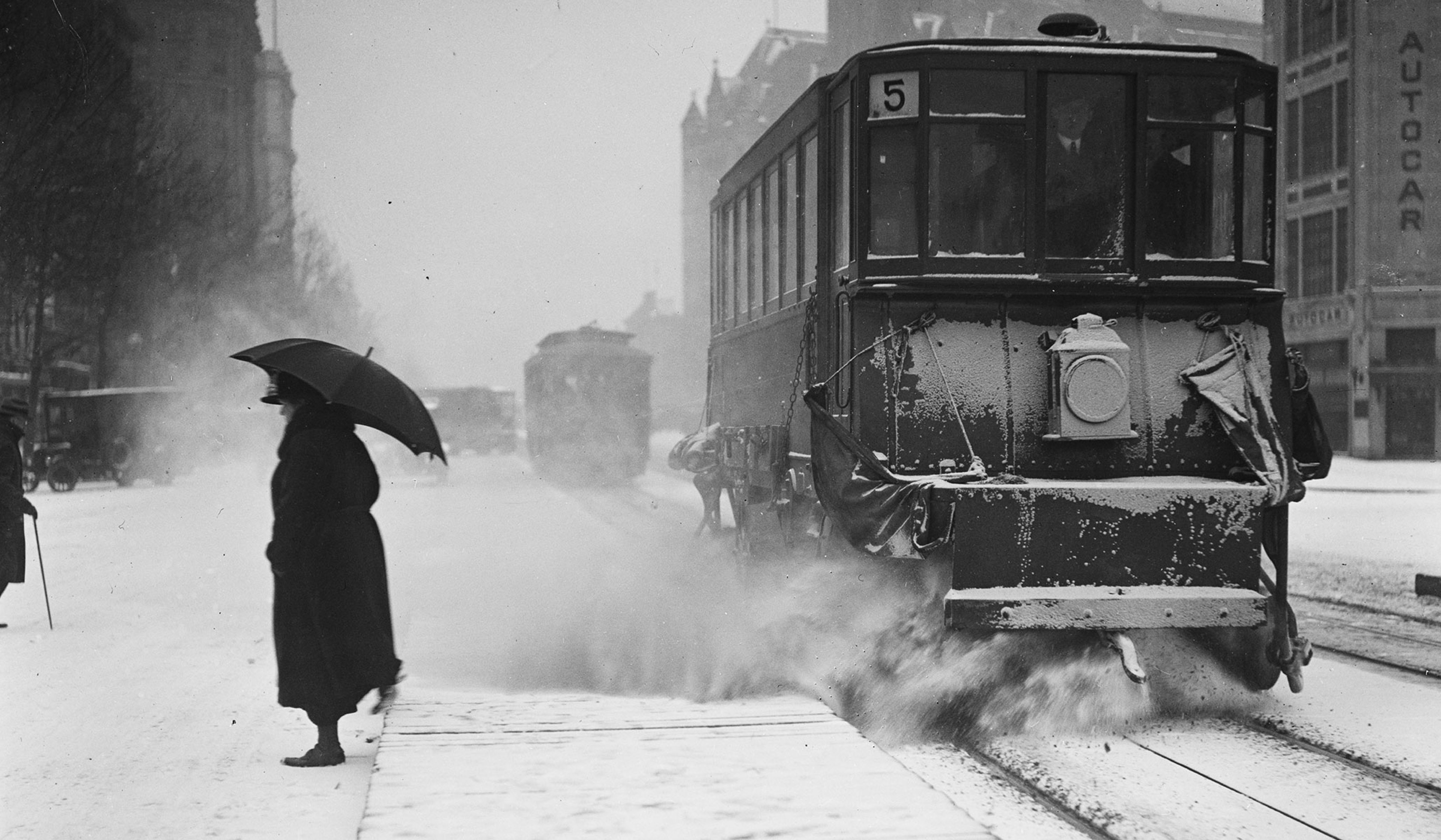
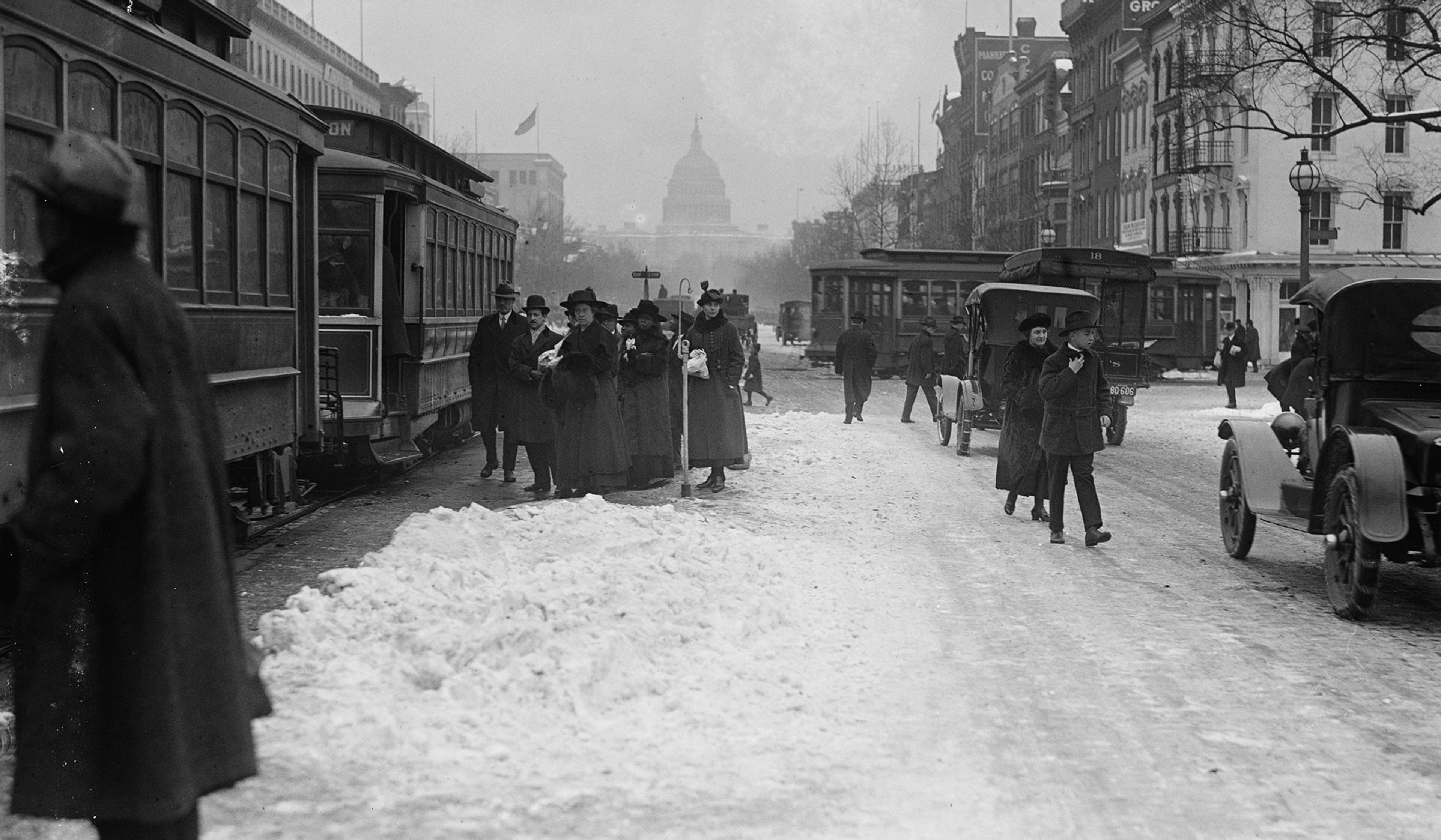
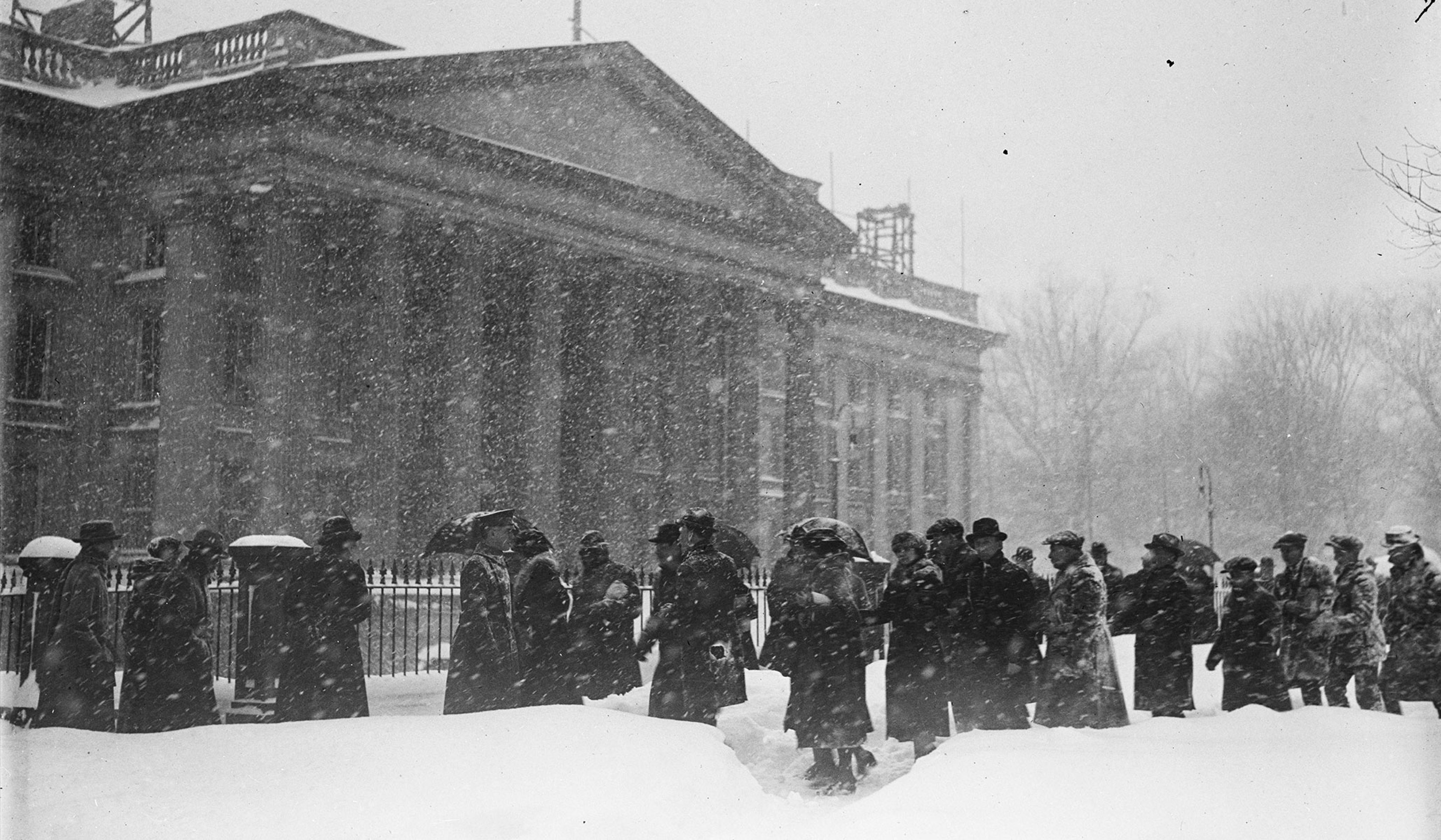
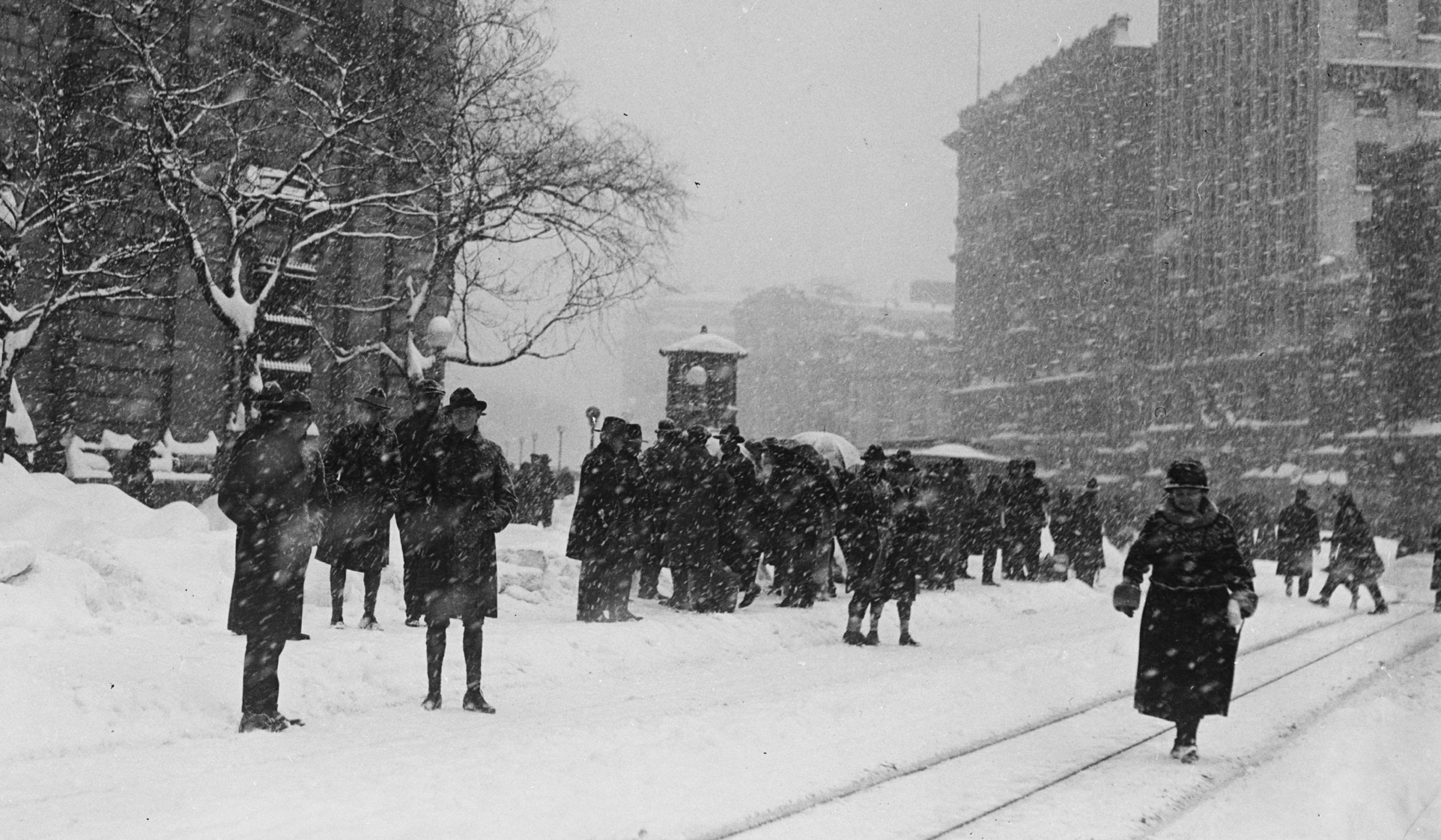
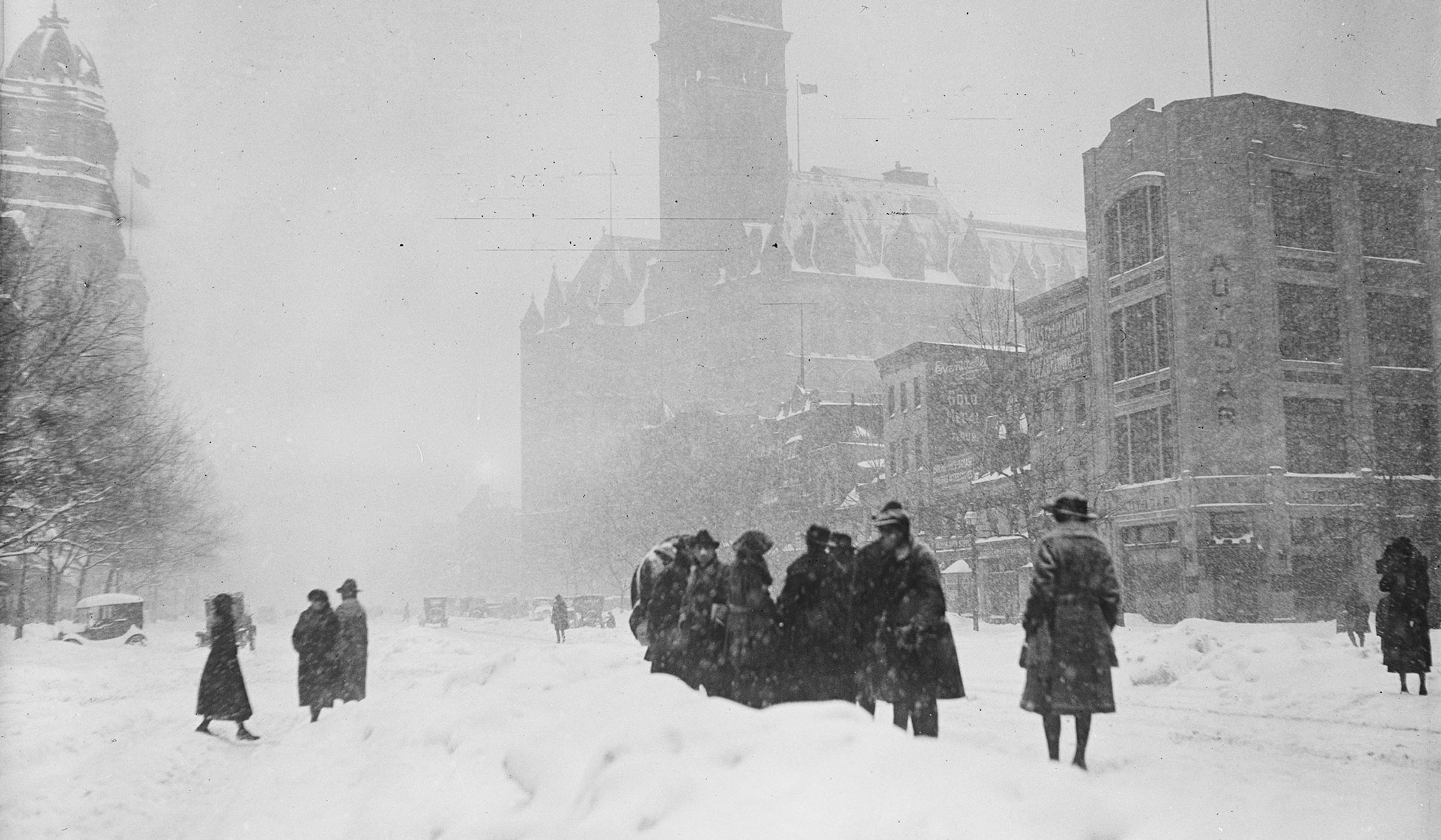
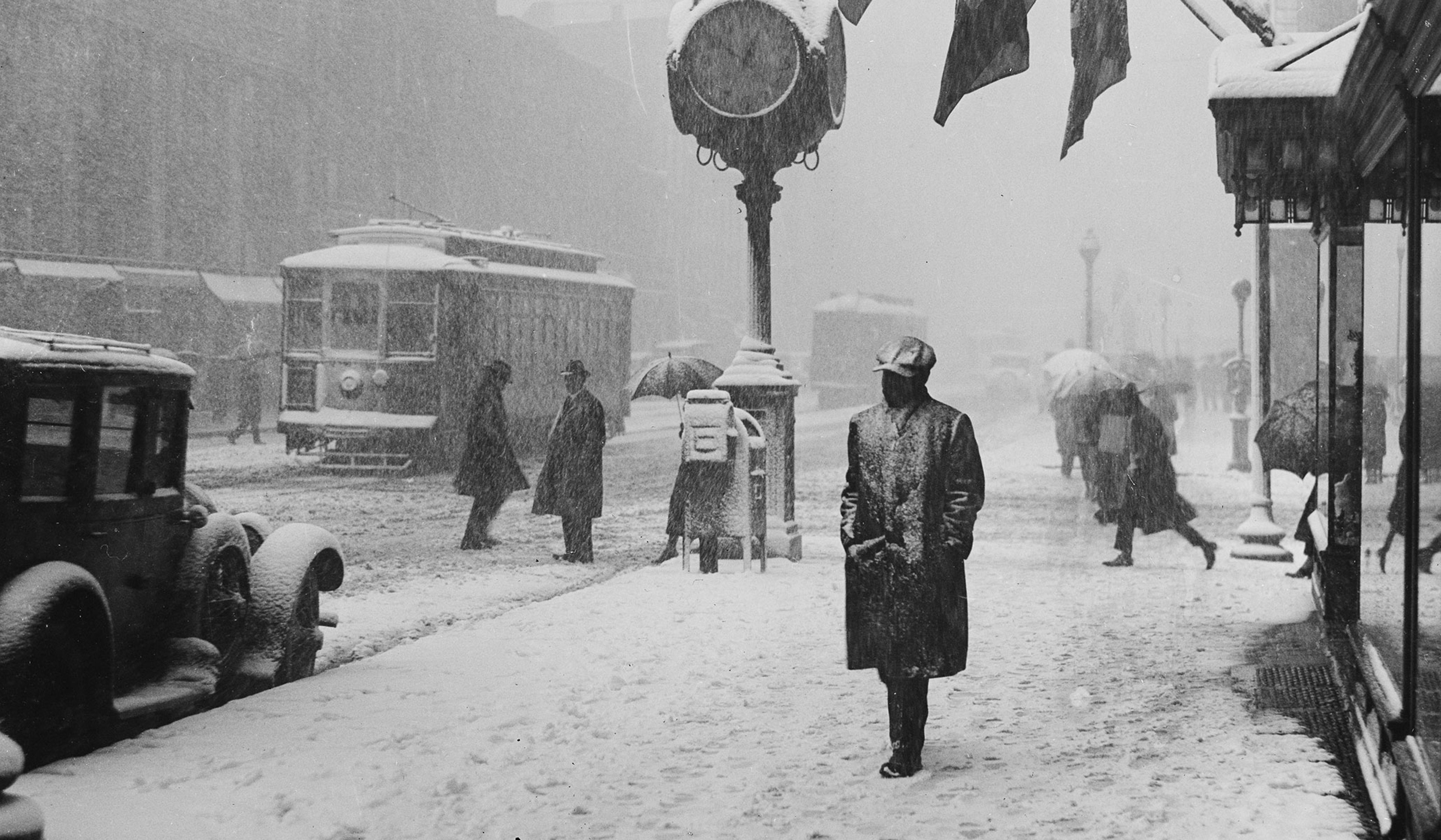
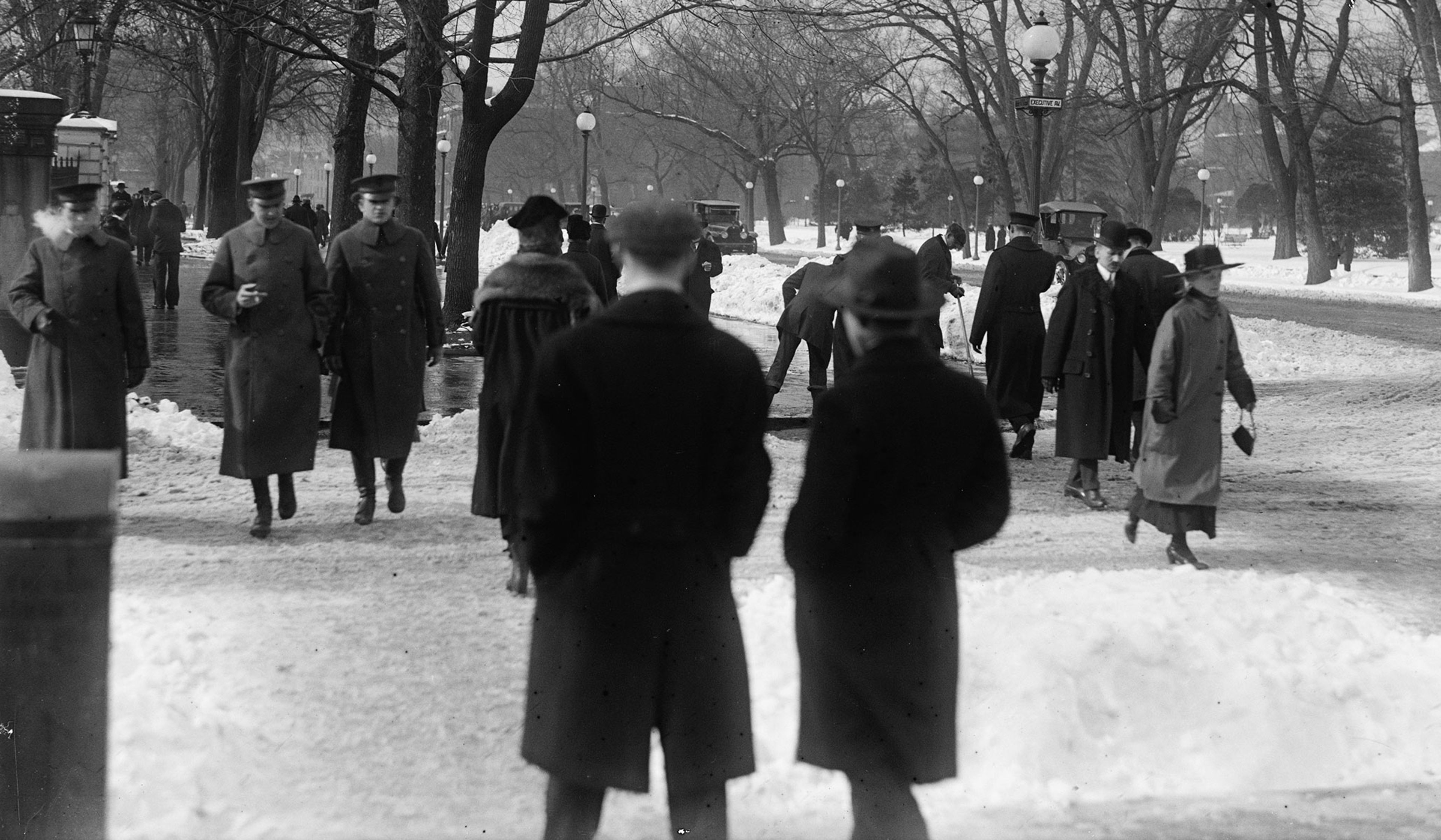
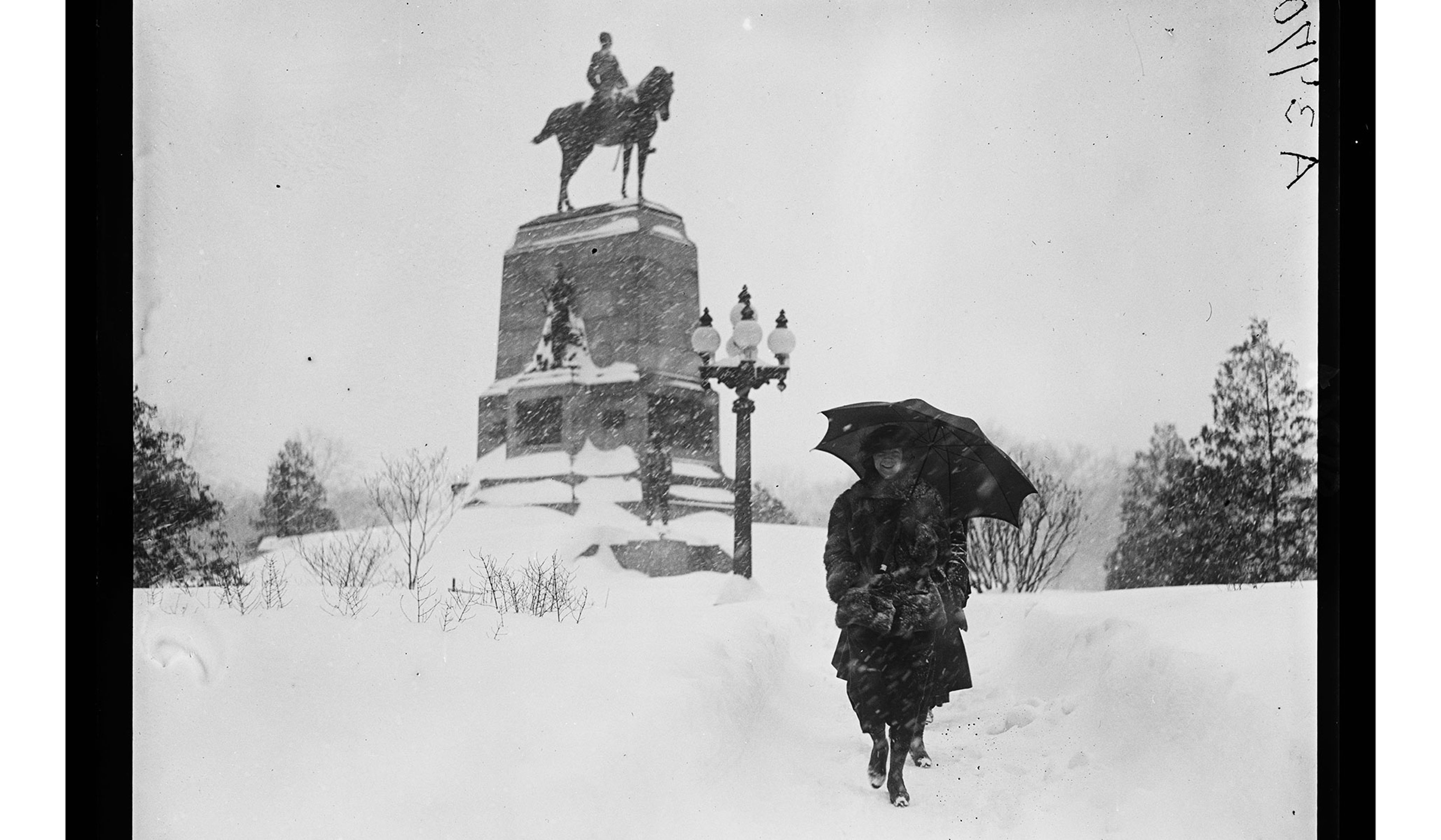
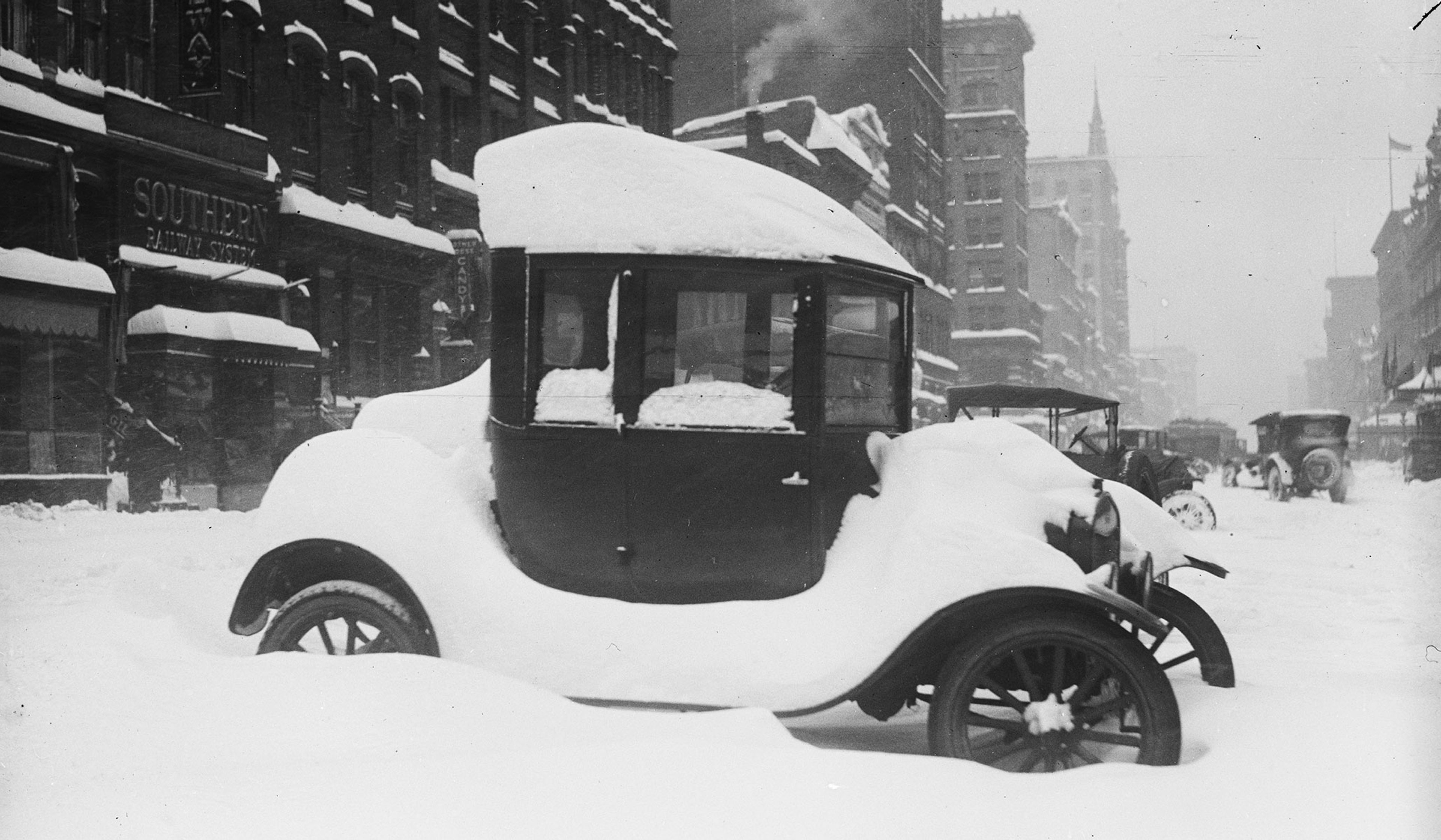
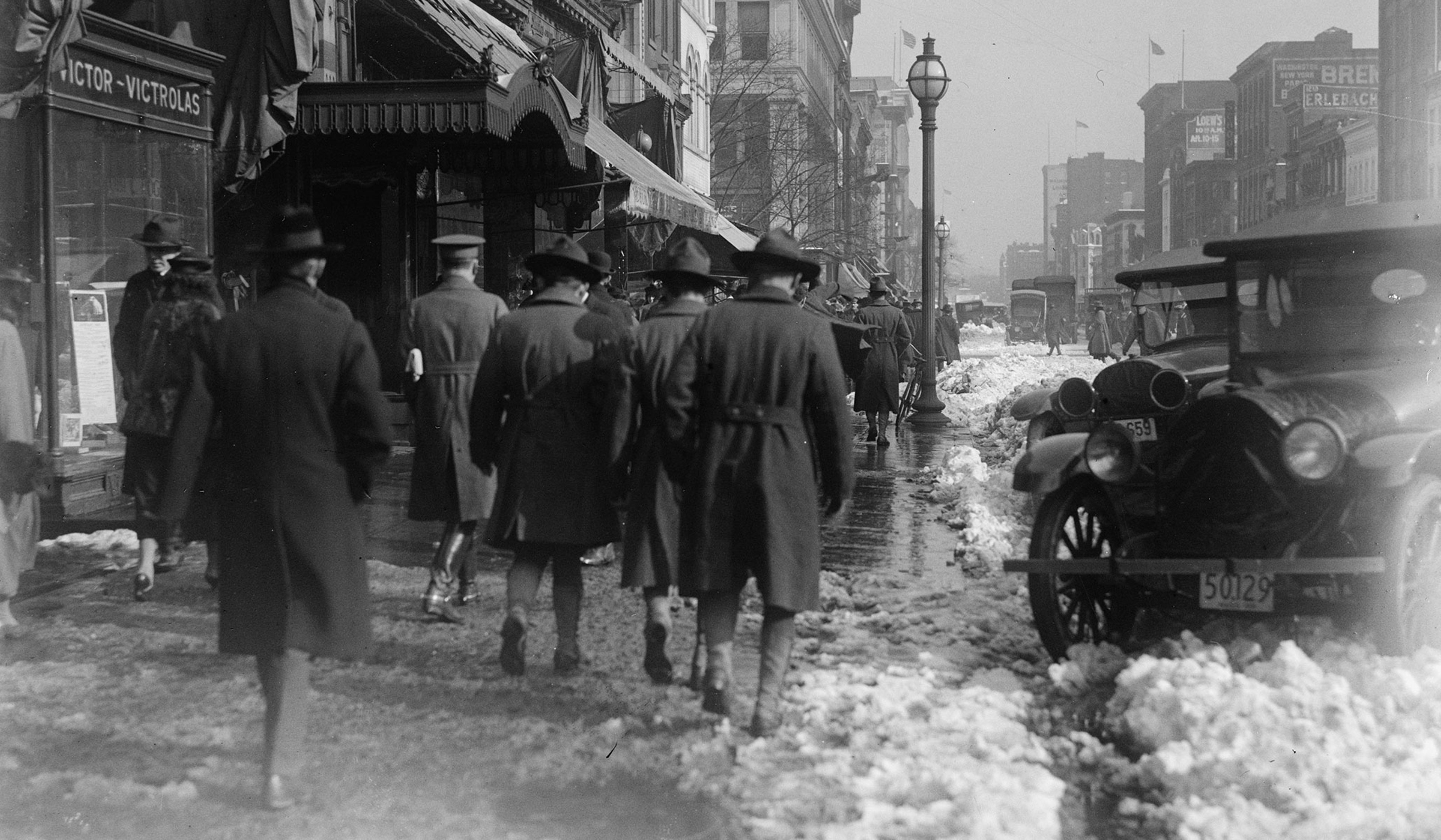
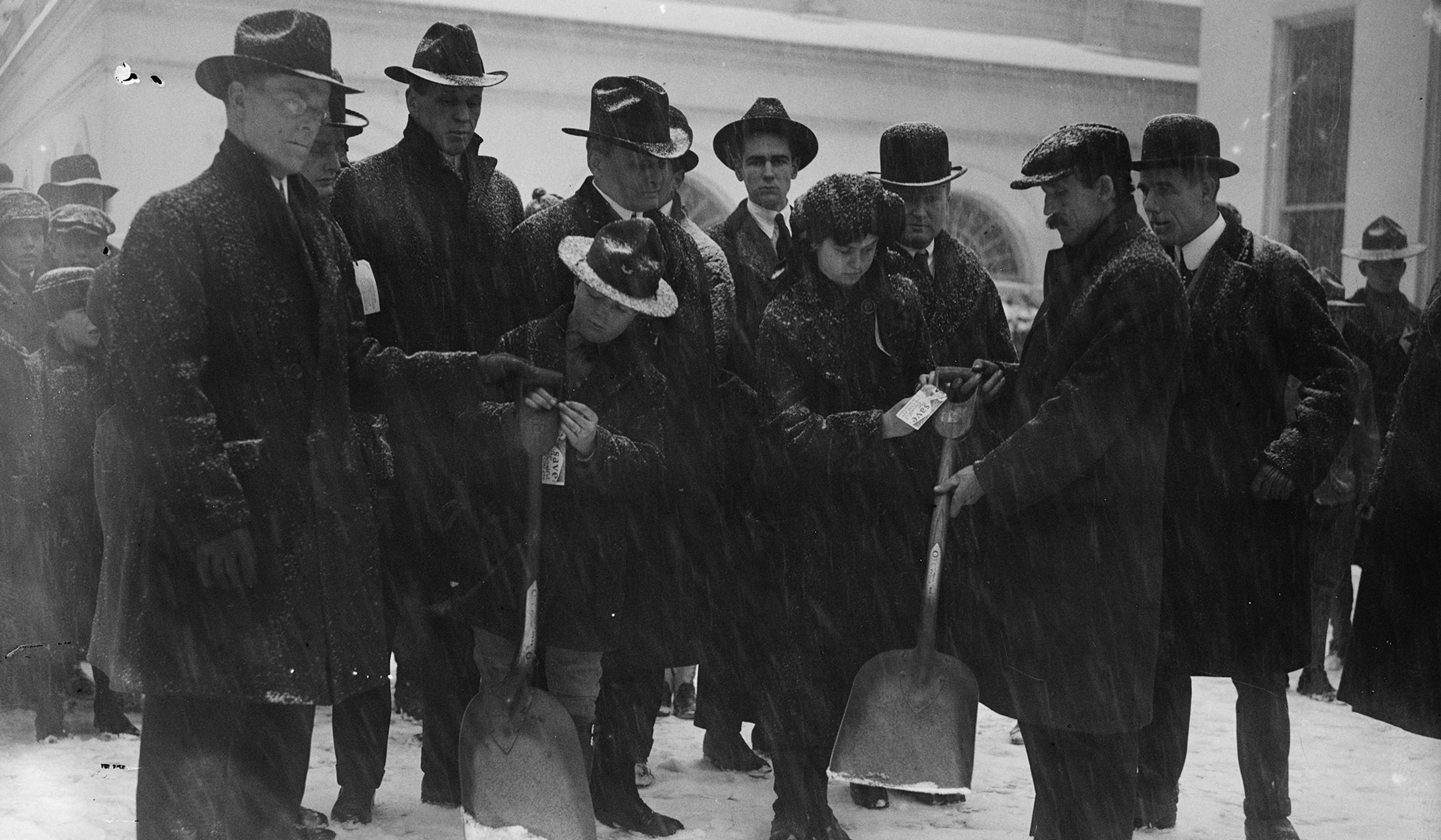
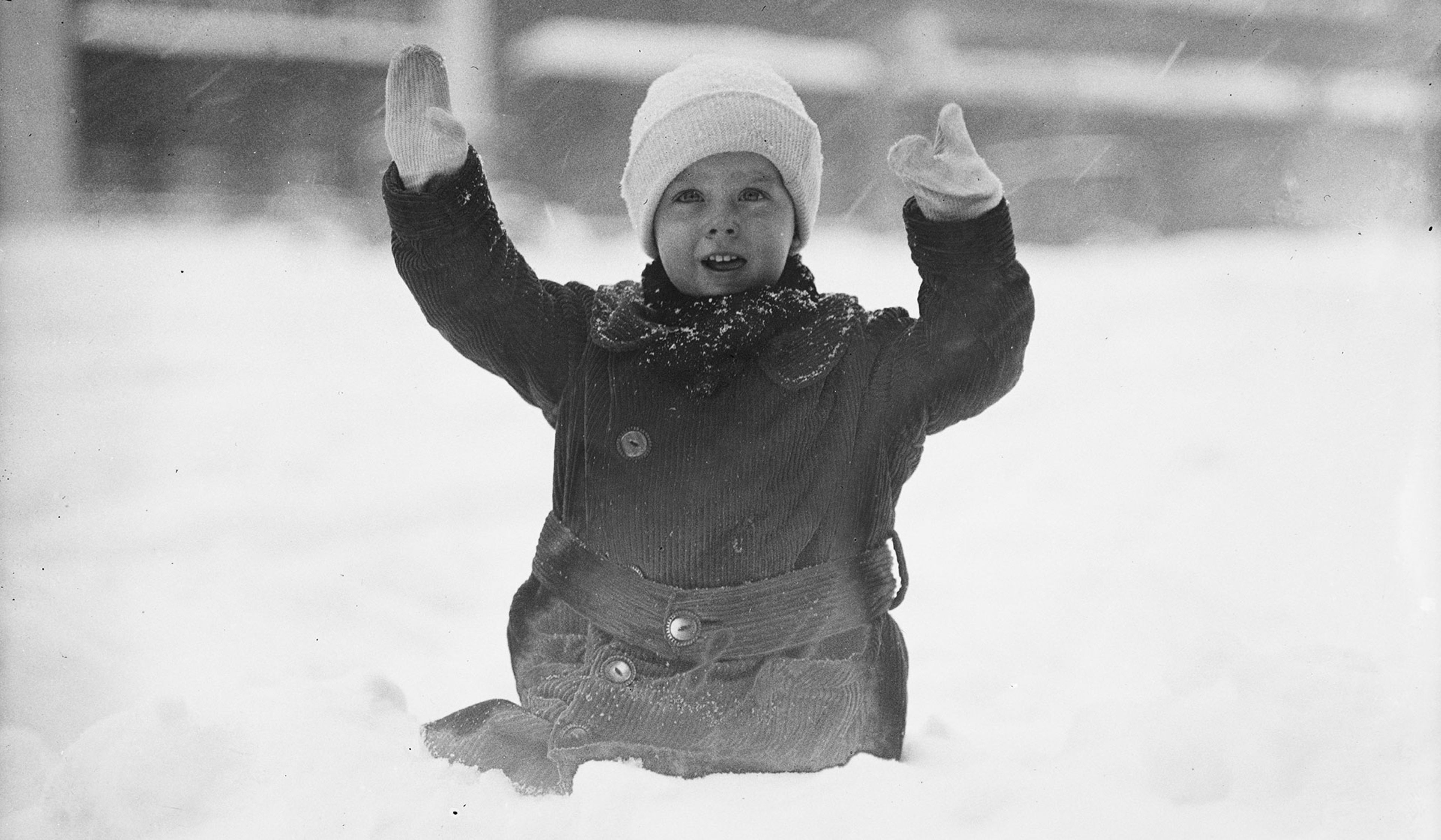
Washington, D.C., January-February, 1923.
Harris & Ewing Collection/Library of Congress
Nice. But I could tell the moment I first scraped the landing outside my front door that this snow was not powdery, it had heavied. Trouble. With the aforementioned tools I cleared a space in front of my carport and drove out.
Immediately I was stuck. Spinning wheels made tractionless icy pits for each tire. I took up the tools again, assisted by irregulars: a digging shovel, a pick, handfuls of ash from the fireplace. Getting the car to the road was obviously a fantasy. The maximum goal was to nudge it back into the carport. It took three sessions of work, the last in the early darkness, separated by long periods of sweaty recuperation. I did not want to follow Doug and Terry just yet.
But that is a self-protective half-truth. The bigger threat to my health was not labor but rage: over the initial mistake of judgment, not seeing that three extra inches were three too many for a vehicle with the ground clearance of mine; over the futility, until the last try, of my efforts to retrieve the situation.
What had happened to our regular plowman? Normally he would have come, in late afternoon, after finishing his shift on his job. But this day his replacement had not come in, so he had had to work two shifts back to back. (Note to verbalists: We crash deadlines, but we flatter ourselves it is more autonomous than punching a clock.) I called our nearest neighbors (we call them our upstairs neighbors, because their house is just visible up a hill through the trees). They are a young couple from the hip borough, a lawyer and a scriptwriter; I suspect they think of us as the Old Ones. They do not own a snowblower (their driveway is little more than a roadside pullover), but they assured us they would get us out if necessary. I did not want them to go into full Balto mode. I called a friend in the college town, a building contractor. He gave me the name of his plowman. His plowman said he couldn’t come, but gave me the name of another who lives in my village.
So things stood when the day ended. The next, my friend’s plowman called back to say he could send a truck after all. It came in the late morning, with twin moldboards forward, like wings. It was quick and dirty. Maybe 15 to 20 shoves cleared the entire way. The resulting snow piles will last through the first day of spring. The young man who drove it said he had worked till midnight the night before.
Involuntary immobility in the country, even for as little as 30 hours, gets your attention. I spent the hurricane blackout in the city. There was only one store in the neighborhood, a deli/bodega, that had its own generator, and from my apartment you had to walk down 13 flights of stairs. But you could get there and back, and I did. In the country, the nearest convenience store/pizzeria is just over a mile away, down a hill, via a road with no sidewalks and barely any shoulders. You could get there and back in a pinch, but I did not consider it.
Snow has been falling here since before there were helpful plowmen, or people to be plowed, and it will fall again and again. More to the point, when it does fall, you are there, suddenly with only yourself to occupy yourself. So, the fire is so delightful, or they cannot scare me with their empty spaces between stars. The choice is yours.











Comments