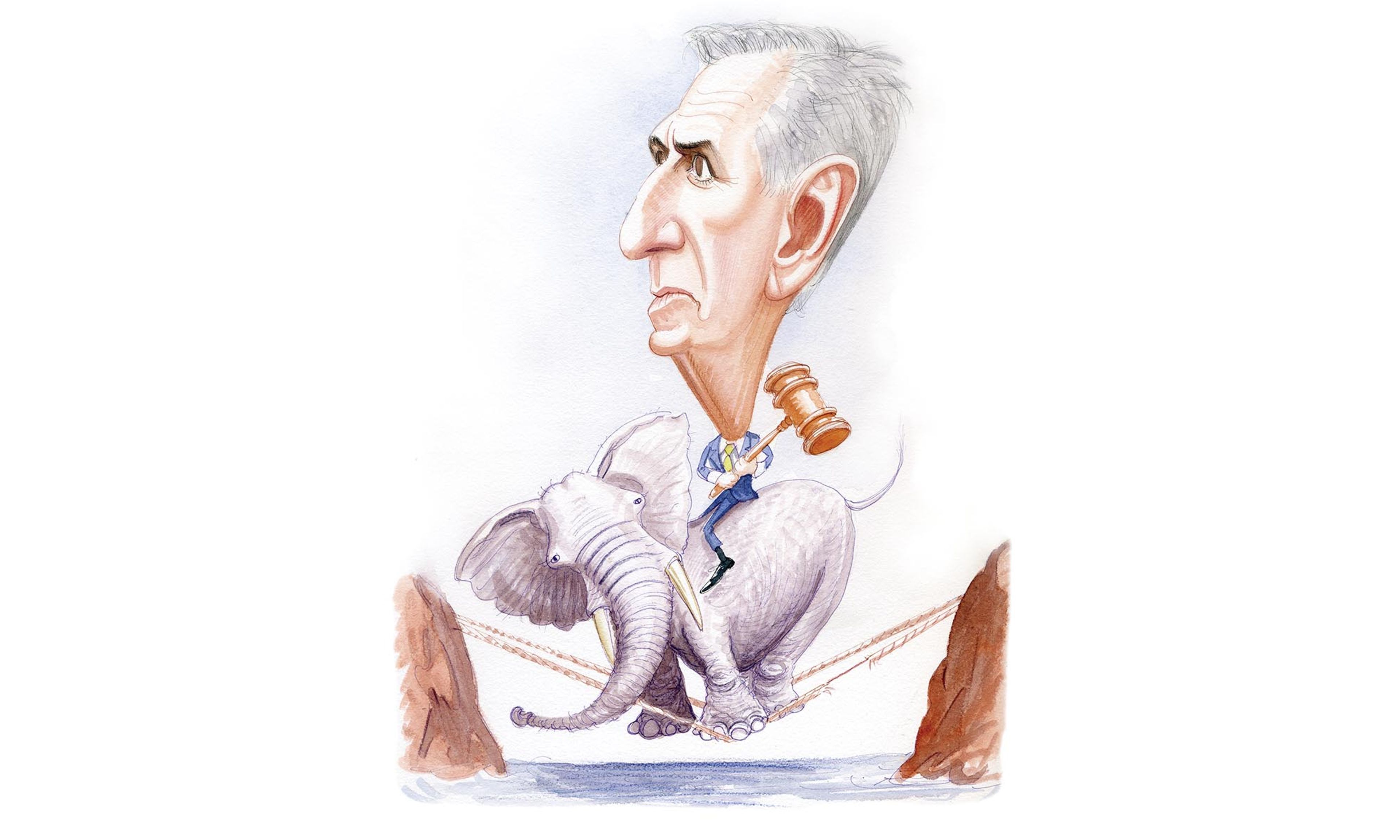
Name the year: A Democrat sits in the Oval Office, his party runs the Senate, and Republicans control the House of Representatives. The GOP eyes the coming fight over the debt ceiling as an opportunity to cut domestic spending. Part of the Republican conference is suspicious of its leadership and wants more change in Washington than can be achieved with one-half of one-third of the federal government. The presidential campaign approaches, and Republicans search for an outsider candidate while the incumbent prepares to cast his opponents as extreme.
Stumped? Well, there’s no single answer. The paragraph above describes 2011 just as well as 2023. There are differences between then and now, for sure, but they won’t necessarily make life easier for Republican leaders or produce conservative reforms. On the contrary: The GOP seems to be stuck in a time warp and fated to reenact the drama that roiled its House majority a decade ago. Republicans brace for another game of fiscal chicken, with no clear plan for how to get a better result with President Biden than they got with his Democratic predecessors. If they lose, it won’t be members from deep-red districts who pay the price. It will be Speaker Kevin McCarthy, Republicans who come from places Biden won in 2020, and possibly the GOP majority.
McCarthy’s struggle for his position showcased the transformation that the GOP underwent between the 112th Congress of 2011–13 and the current 118th Congress. Put simply, though the overall configuration of power in Washington looks similar, the House GOP conference is both smaller and more populist and conservative than it was then. The anti-establishment spirit that has animated an increasing number of Republicans since 2008 has found its way into the upper echelons of the House, reducing the chances of bipartisan dealmaking and aggravating tensions between Capitol Hill and the West Wing. Not only will McCarthy have to worry about Democrats such as President Biden and Senate majority leader Chuck Schumer, he’ll also have to keep an eye out for challenges from within.
In 2010, Republicans rode the Tea Party wave and gained 63 seats, for a 242–193 House majority. The lopsided distribution allowed Speaker John Boehner plenty of room for maneuver. McCarthy hasn’t been as lucky. In 2022, the GOP picked up a disappointing nine seats for a narrow 222–213 majority. If Democrats unite, Republicans can spare only four of their party members’ votes before a measure fails in the House. McCarthy learned this fact the hard way when a group of 20 rebels opposed his speakership for four days and 14 ballots. They relented on the 15th ballot after McCarthy agreed to a host of demands.
McCarthy’s concessions will have a lasting impact. He gave away more of his authority than any speaker in recent memory. Media outlets fixate on his allowing a single member of the House to challenge his position and on his acquiescence in holding votes on congressional term limits, a balanced-budget amendment, and the replacement of federal taxes with a national sales tax. Perhaps his most important decision, however, was guaranteeing that the House Freedom Caucus would have multiple seats on the Rules Committee, which determines when and how bills are brought to the floor, and on the Steering Committee, which selects committee chairmen and members. In effect, McCarthy made the Freedom Caucus a partner in leadership and elevated Representative Jim Jordan of Ohio — a McCarthy supporter, chairman of the Judiciary Committee, and the spiritual guru of the Freedom Caucus — to the role of shadow speaker.
The rise of the Freedom Caucus has been extraordinary. It began in 2015 as a splinter faction of the Republican Study Committee (RSC), the largest grouping of House conservatives, which has for four decades lobbied for a more ideological GOP conference. The Freedom Caucus’s nine founding members included Congressman Jordan as well as future White House chief of staff Mark Meadows, future White House budget director Mick Mulvaney, and future Florida governor Ron DeSantis. They were tired of then-speaker Boehner’s tightly controlled, top-down command structure and his willingness to negotiate with Obama. They also suspected that Boehner had urged his allies to join the RSC to lessen its combativeness and make it more susceptible to his command. Before long, the Freedom Caucus threatened to invoke the then-obscure “motion to vacate the chair” and call for a vote of no confidence in the speaker. An exhausted Boehner quit in October 2015.
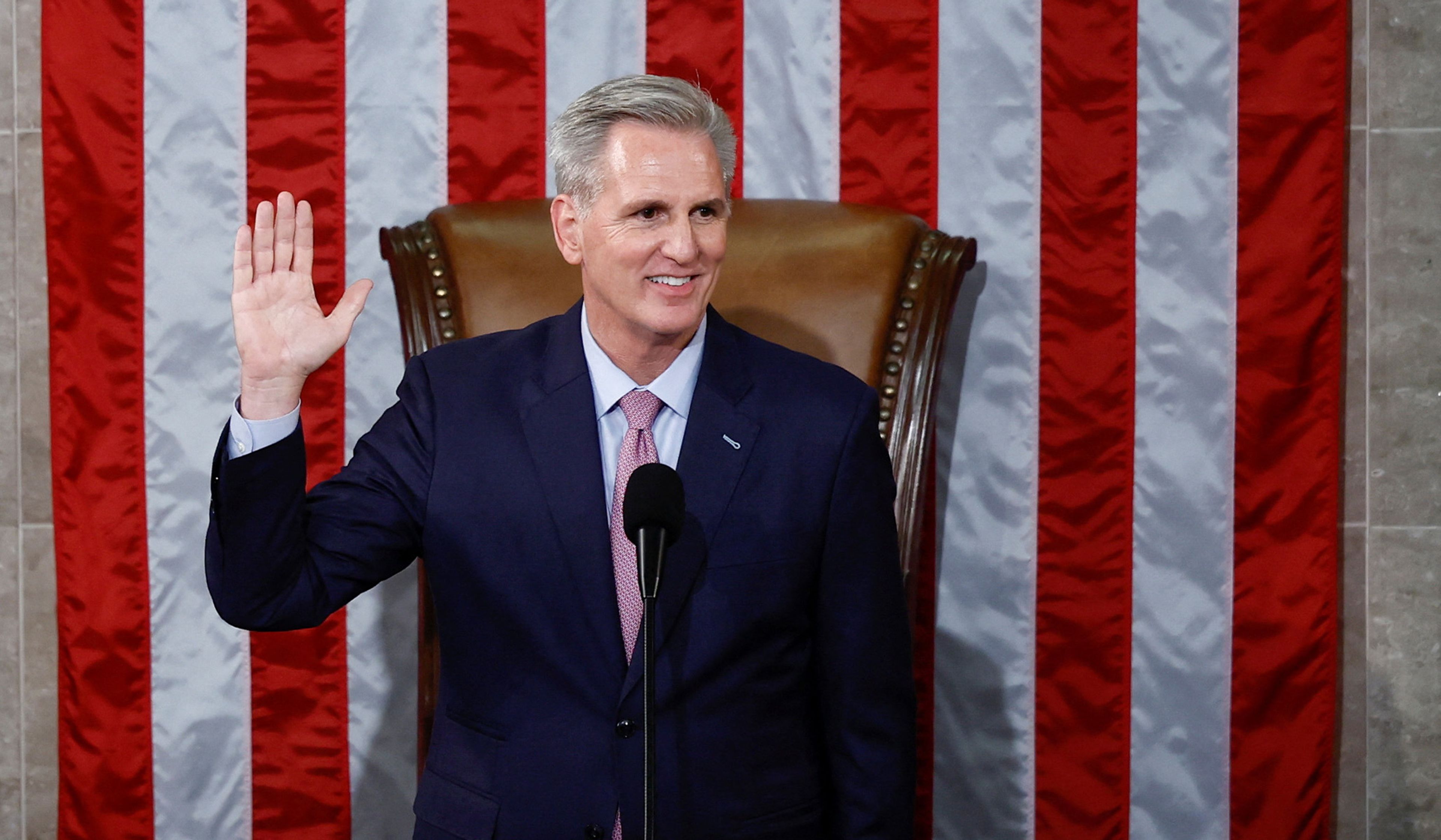
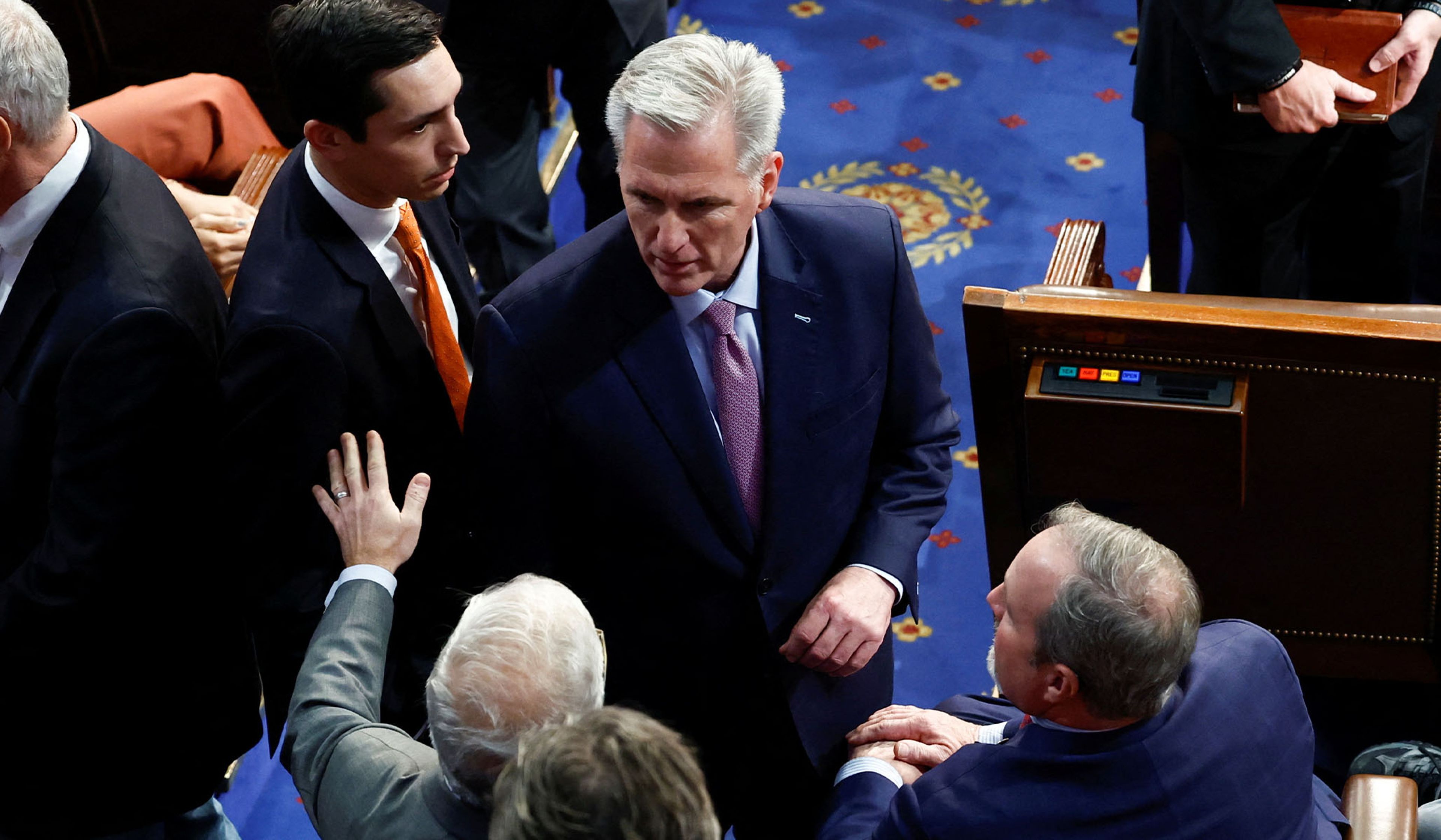
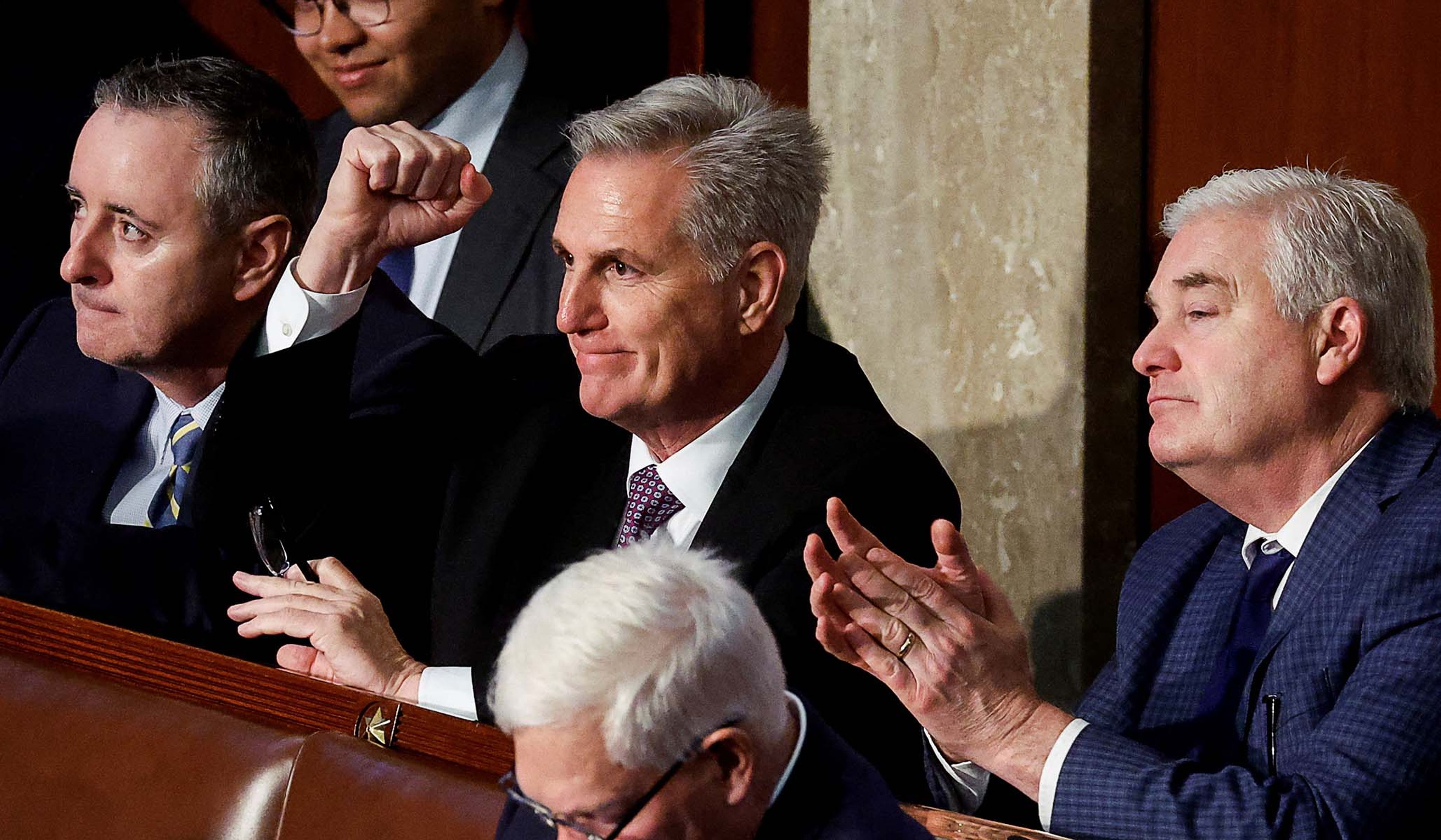
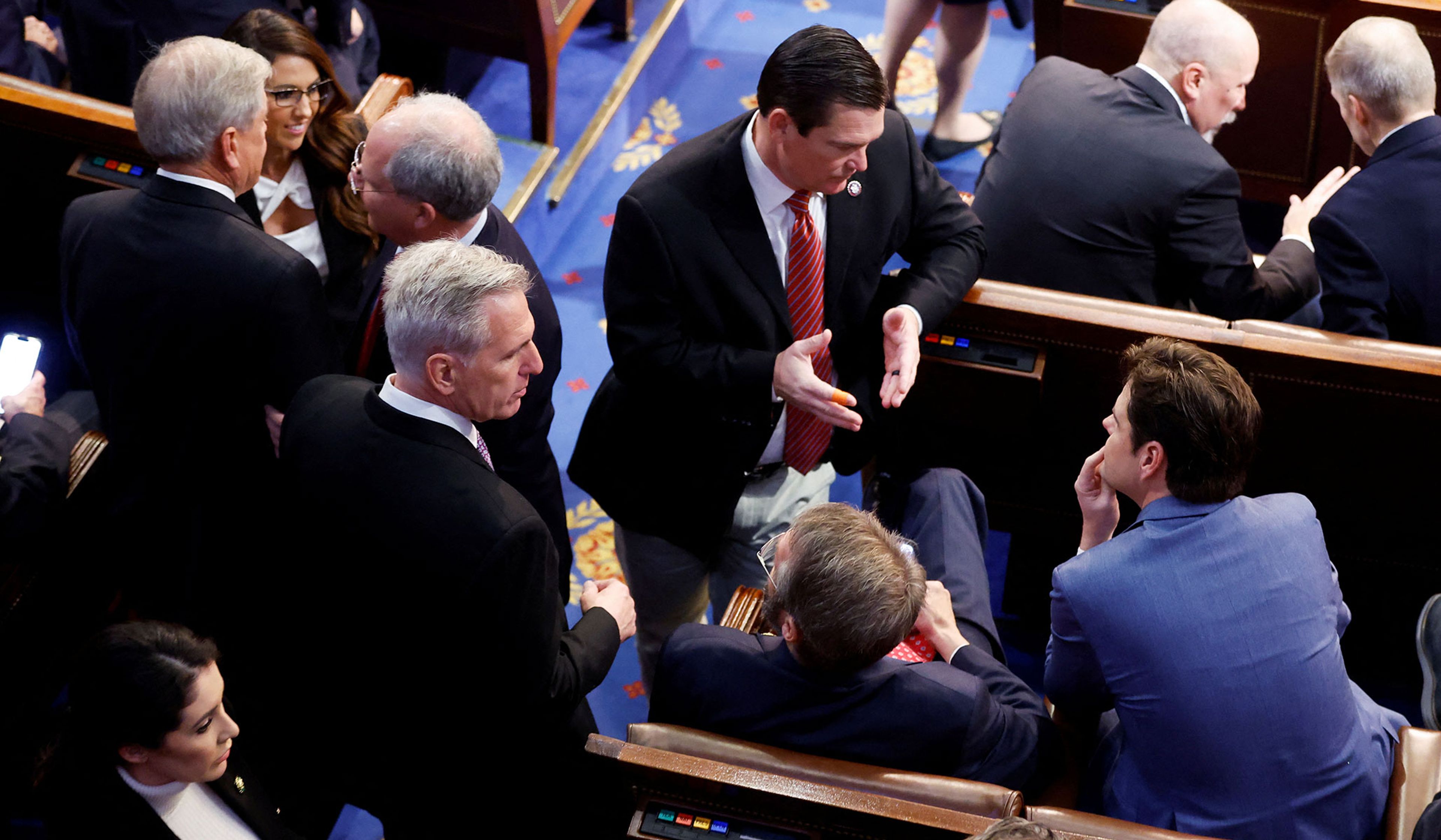
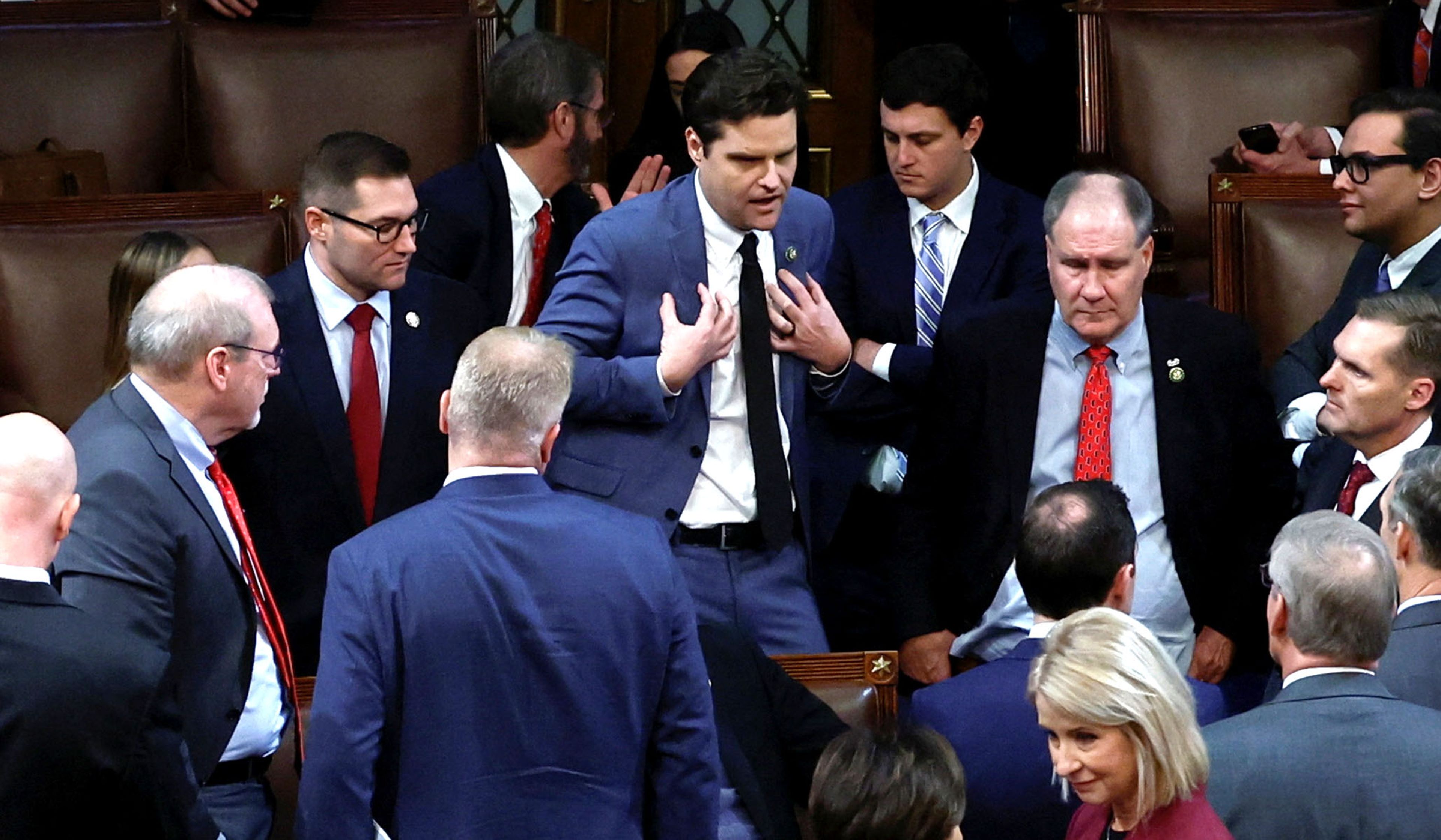
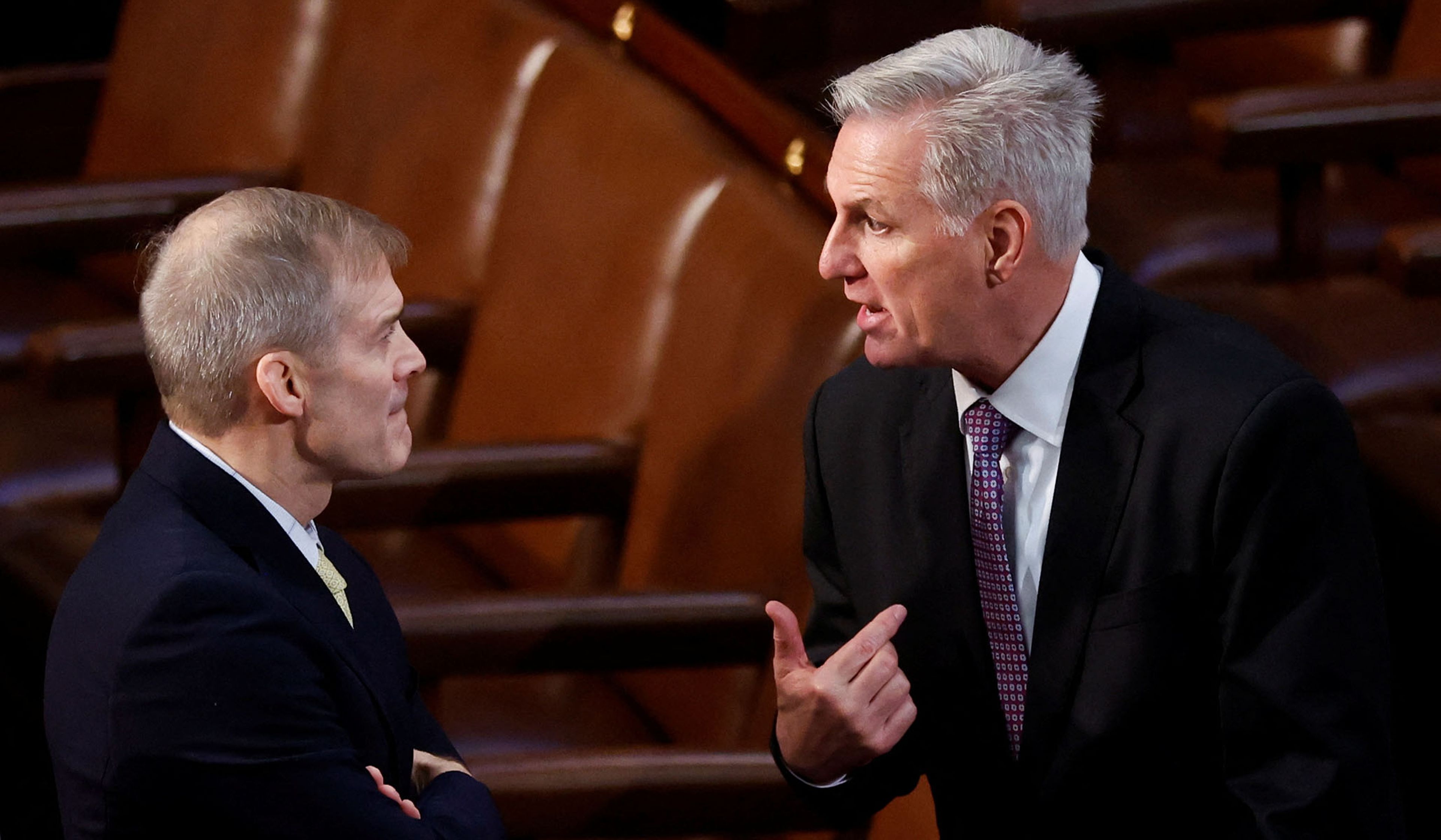
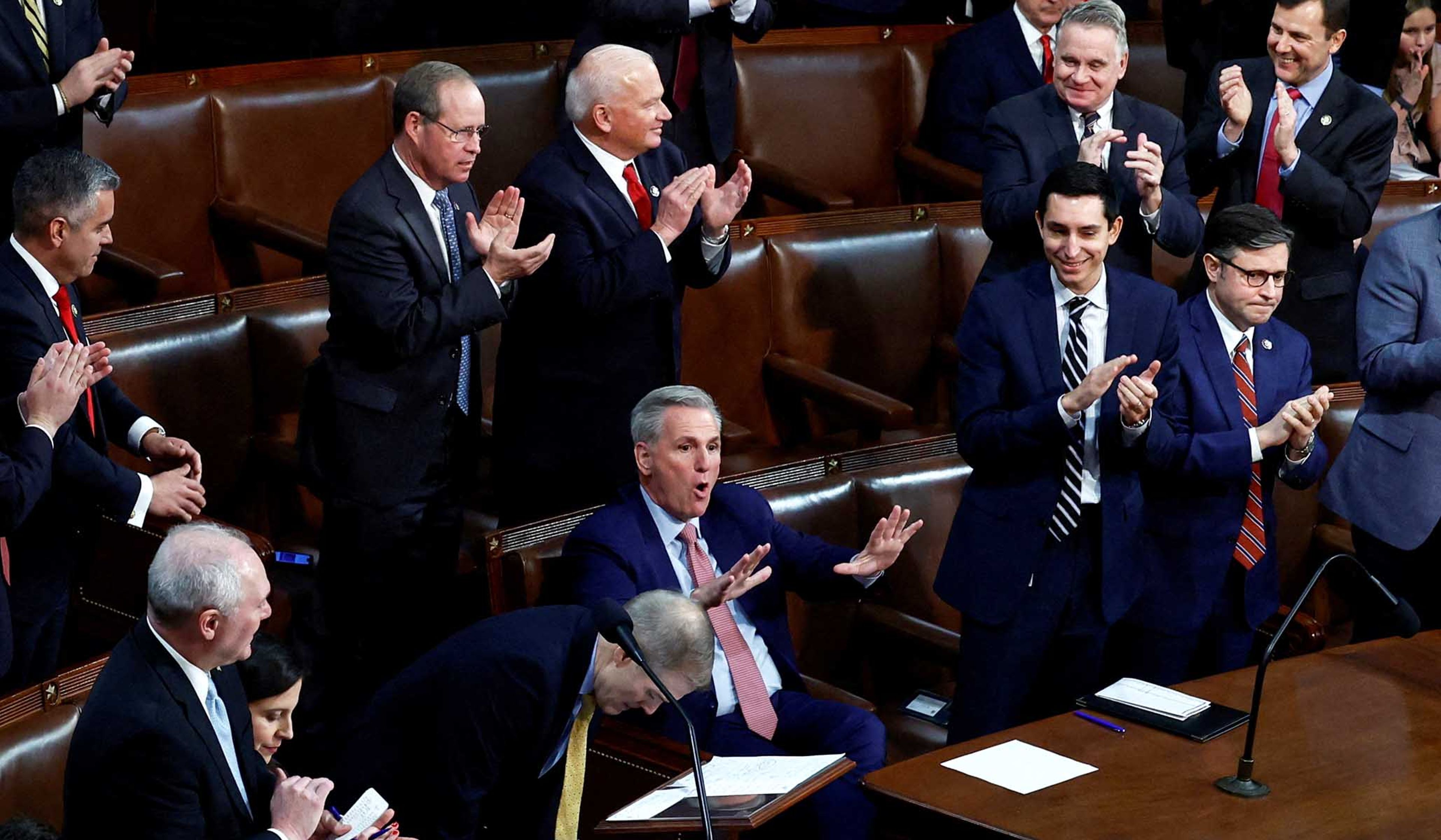
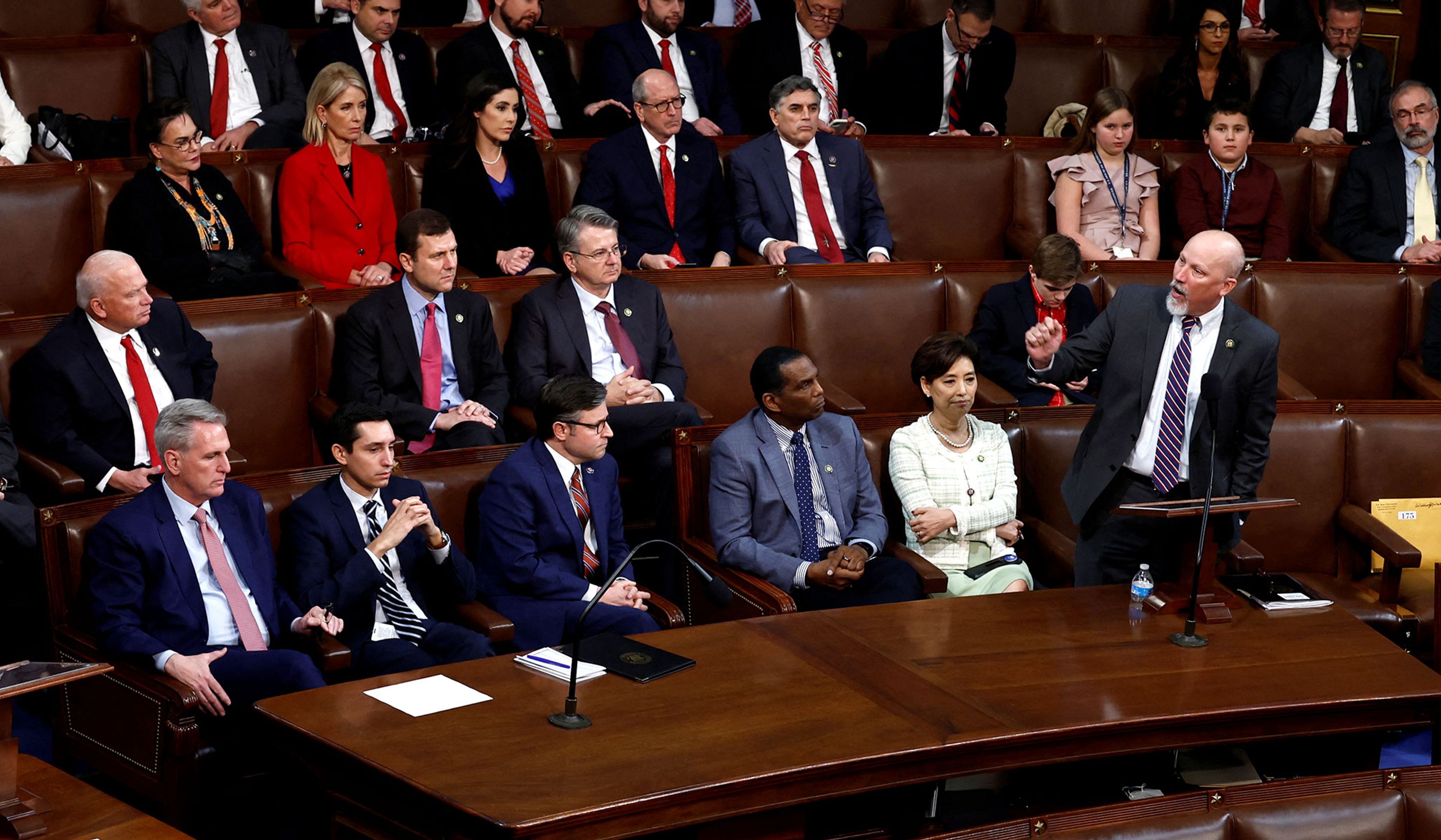
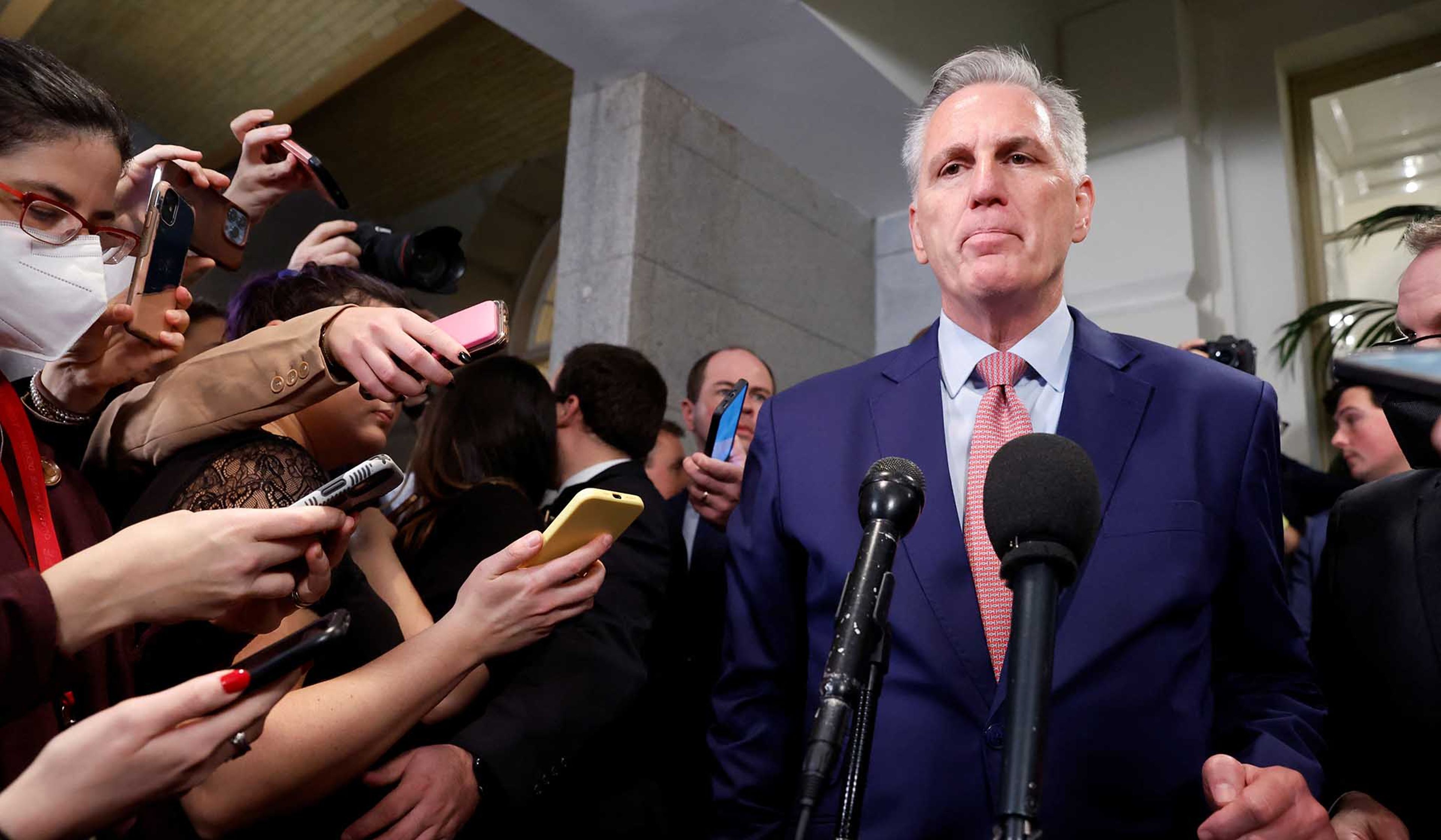
New Speaker of the House Kevin McCarthy (R., Calif.) is sworn into office after being elected the next Speaker of the House of Representatives at the U.S. Capitol in Washington, D.C., January 7, 2023.
Evelyn Hockstein/Reuters
The Freedom Caucus doesn’t publicize its membership, but it clearly has grown in numbers since Boehner’s demise. It denied McCarthy the speakership on his first attempt in 2015, held Speaker Paul Ryan’s feet to the fire during his tenure from 2015 to 2018, and sometimes clashed with President Trump. Its message is amplified by a host of spokesmen online, in talk radio, on Fox News, and at D.C. institutions such as the Heritage Foundation and its lobbying wing Heritage Action for America, the Conservative Partnership Institute, the Center for American Renewal, and the Conservative Action Project. Together, these groups have shut down the government several times, driven two Republican speakers from Congress, and bent a third to their will. They’ve been busy.
The Freedom Caucus was divided over this year’s speakership question. Plenty of its people joined Jordan and backed McCarthy. But not all the rebels were Freedom Caucus members. For some congressmen, opposing McCarthy was a means to the end of forcing changes in House procedure and in legislative priorities. For a smaller contingent, saying no was nothing more than a way to build a social-media brand and a small-dollar-donations list. The six Republicans who voted “present” on the final ballot came out the losers, at least within the context of the conference and the House. Unlike McCarthy, his leadership team, or the contingent of rebels led by Chip Roy of Texas, these stubborn six gained nothing in stature or in substance.
House Republicans eventually consolidated behind McCarthy. They established committees on competition with China, the retreat from Afghanistan, and the weaponization of the federal government. They repealed funding for additional IRS employees, passed the Born-Alive Abortion Survivors Protection Act, and condemned violence against pro-life organizations and churches. The querulousness and division of the speaker battle appeared to vanish. McCarthy contrasted the active Republican House with the passive Democratic Senate. “Is the Senate even in this week?” he asked rhetorically on January 12. “What did they do this week? Oh yeah — they haven’t done anything.”
Don’t expect this unity within the GOP to endure. The grassroots still distrusts Republican leadership. The House Freedom Caucus and its affiliates still push for a maximalist agenda that can’t be accomplished under present circumstances. And conservatives’ and Republicans’ views on budget strategy and on military and economic assistance to Ukraine still vary widely.
Arguments may break out in unexpected places. The talented Mike Gallagher of Wisconsin, who will head the select committee on China, will have to reconcile Republicans whose primary interest is national security with Republicans who prioritize cultural issues and woke capitalism. Jason Smith of Missouri, chairman of the Ways and Means Committee, will face pressure from members who want to employ the tax code to punish enemies, subsidize industry, and protect U.S. markets from international competition. There also could be a turf war over investigations between the Oversight Committee, led by James Comer of Kentucky, and Jordan’s Judiciary Committee.
These internal disputes will surface when the House is faced with raising the debt ceiling later this year. Republicans think that they can bargain with the White House for automatic spending cuts as they did in 2011, but that isn’t a safe assumption. The Democrats believe that the politics of a clash over the debt ceiling work in their favor. They don’t want to deal with Republicans; they want to demonstrate solidarity with liberals and show independents and moderates that they are the more responsible party. The Freedom Caucus’s newfound influence on the Rules Committee may prevent a replay of 2011, when then-speaker Boehner passed a rise in the debt ceiling with Democratic votes.
House Republicans may seem to be on the same page now, but that probably won’t be the case in a few months. McCarthy must navigate the shoals of a fractious conference whose ranks include many figures who would like to see him gone. The calendar is not on his side. He capped off his first week in office with an invitation to President Biden to deliver a State of the Union address on February 7. It will be the first occasion on which McCarthy presides over a presidential address to a joint session of Congress. If he’s not careful, it may also be his last.









Comments