Eric Hoffer (1902–1983), an often-quoted American philosopher and Presidential Medal of Freedom recipient, famously observed that “up to now, America has not been a good milieu for the rise of a mass movement. What starts out here as a mass movement ends up as a racket, a cult, or a corporation.” Unfortunately for America’s retirees, ESG investing has made this transition in record time, and if Hoffer had lived long enough to see its emergence, he would have died laughing.
ESG — environmental, social, and (corporate) governance — is a hocus-pocus set of criteria used by professional asset managers to find politically correct investments for retirees and pensioners who may want to be “socially responsible.” For several years it has been the rage among financial advisers who are collectively responsible for allocating billions of dollars of other people’s money.
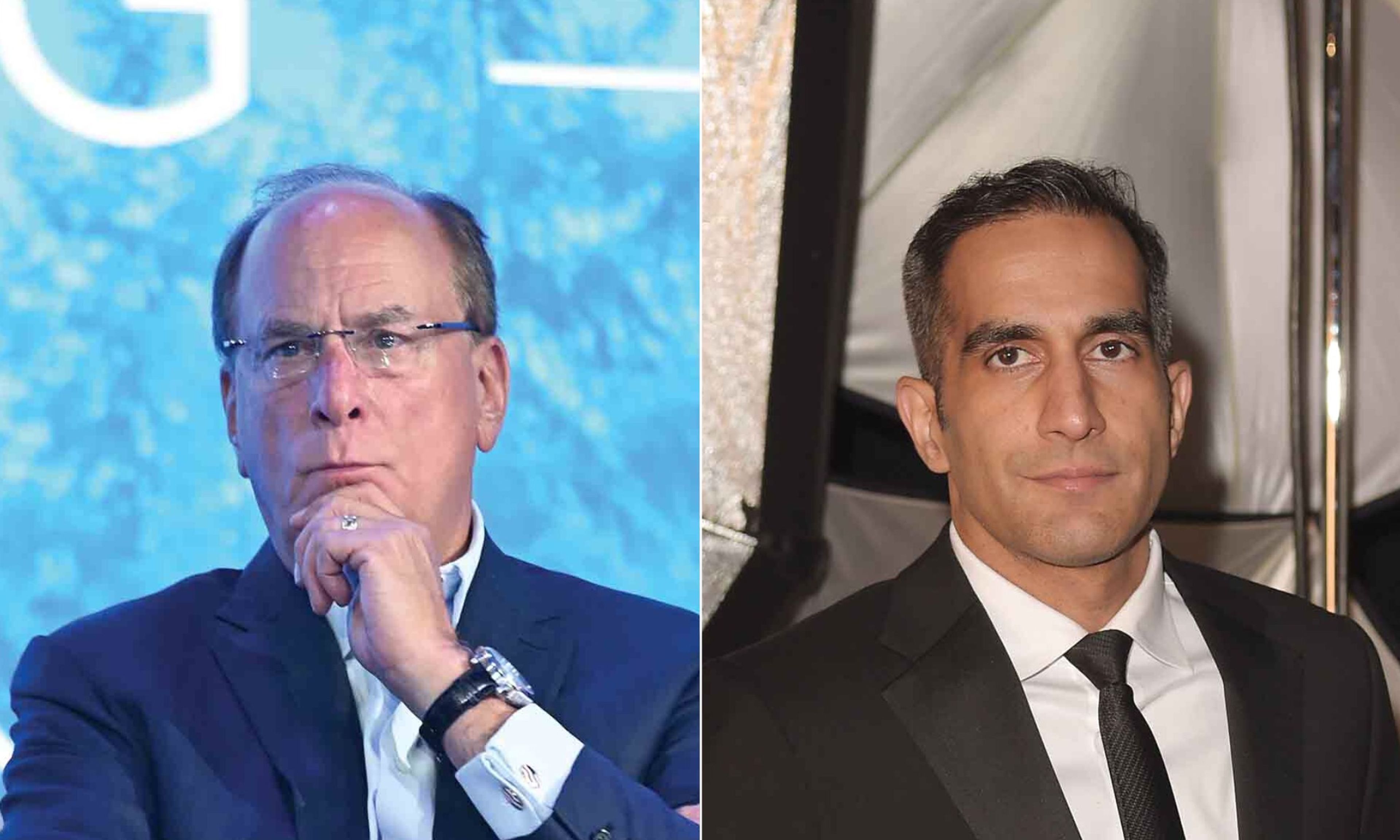
But now the bloom may be off the rose. In January 2021 Larry Fink, the founder and CEO of BlackRock — the world’s largest asset manager — sent out his annual letter to CEOs, cheerleading for climate-change mitigation, DEI (diversity, equity, and inclusion), and environmental sustainability. He wrote that climate change would become a “defining factor” in how BlackRock assessed the companies in which it would invest. The reaction to his message was not uniformly favorable, and in a February 2022 letter Fink sounded defensive, claiming that “stakeholder capitalism is not about politics — it is not woke. It is capitalism.” (“Stakeholder capitalism” envisions that essentially anyone who is impacted by business decisions — suppliers, employees, customers, owners — matters equally. Traditional shareholder capitalism, as enunciated by Nobel Prize–winning economist Milton Friedman, recognizes that the risk-takers, entrepreneurs, and owners of the business are the primary stakeholders, whose principal goal is to increase business profits.)
The critics of ESG are a growing list of respected financial advisers, analysts, economists, and state officials. They include Tariq Fancy (former chief investment officer for sustainable investing at BlackRock), Andy Kessler (Wall Street Journal columnist), Alicia Munnell (former assistant Treasury secretary for economic policy), Hester Peirce (SEC commissioner), Jason Zweig (financial journalist), Kimberly Yee (Arizona state treasurer), and Dale Folwell (North Carolina state treasurer). To top things off, shortly after Tesla, the world’s largest producer of electric vehicles, was removed from the S&P 500 ESG Index, CEO Elon Musk tweeted: “ESG is the devil.”
Officials charged with safeguarding state funds are increasingly moving beyond criticism and taking action against ESG investing. In July 2022 West Virginia’s state treasurer published a “Restricted Financial Institution” list, barring several prominent financial institutions from entering into banking contracts with entities of the state. The list was released after the West Virginia legislature enacted a law authorizing the treasurer to identify and publicly list financial institutions “engaged in boycotts of energy companies,” this in order to exclude them from the selection process for state banking contracts.
In August the Texas comptroller presented his own list of ten financial institutions and approximately 350 funds that refuse to deal with companies that “engage in the exploration, production, utilization, transportation, sale or manufacturing of fossil fuel-based energy.” Texas state-government entities must divest from the listed companies and are prohibited from contracting with them.
These two states have large fossil-fuel industries, but state-level opposition to ESG goes beyond support for coal, oil, and gas. On August 4, Arizona attorney general Mark Brnovich led a coalition of 19 state attorneys general in sending a letter to BlackRock that called out its putting politics above investors: “A fiduciary responsibility requires putting your client’s best interests ahead of any political agendas. Helping to ensure financially secure retirements must be the first priority.”
Also in August, Florida governor Ron DeSantis, along with his fellow trustees of the State Board of Administration, passed a resolution directing the state’s fund managers to invest state funds in a manner that prioritizes the highest return on investment for Florida’s taxpayers and retirees, without considering the ideological agenda of the ESG movement.
Meanwhile, the attorneys general of Indiana and Louisiana have stated that ESG investing for state pension funds may violate fiduciary duties applicable to investment advisers. Federal regulators, too, have been stepping up their scrutiny of ESG funds: In May the SEC fined Bank of New York Mellon Corporation $1.5 million for its misleading claims about ESG funds, finding that from July 2018 to September 2021, BNY Mellon Investment Adviser represented or implied in various statements that all investments in the funds had undergone an ESG quality review, even though that was not always the case.
And this legal pushback is not limited to the United States. On June 1 the Wall Street Journal reported: “Authorities raided the Frankfurt offices of Deutsche Bank AG and its asset-management subsidiary, DWS Group, over allegations [that] they made unsupported claims about ESG investments. Around 50 agents of the city’s public prosecutor’s office, alongside German market regulator BaFin and the federal criminal police office, were deployed, a spokeswoman for the Frankfurt prosecutor’s office said.”
Even the Biden administration, which at first was favorable to ESG investing, has pulled back a bit. This past November the Labor Department published a final rule on ESG factors in investments that are governed by the 1974 Employee Retirement Income Security Act (ERISA). The original proposed rule had been extreme and probably would not have survived judicial review: It deemed consideration of ESG factors to be “often” required by fiduciary duty. The final rule, fortunately, was much less drastic and dropped the word “often.” Two prominent law professors well versed in ERISA — Max Schanzenbach of Northwestern and Robert Sitkoff of Harvard — commented: “In contrast to the Biden rule’s radical initial proposal, the final Biden rule on ESG investing does little more than tinker, leaving an ERISA fiduciary’s core duties unchanged. It also commands that an ERISA fiduciary may never sacrifice return in pursuit of a nonfinancial objective.” The word “fiduciary” is derived from the Latin word for “trust,” and a fiduciary relationship requires the utmost allegiance — what Supreme Court justice Benjamin Cardozo famously described in a 1928 decision as “the punctilio of an honor the most sensitive.”
Then in December, Vanguard, a well-known investment adviser with more than $7 trillion in global assets, announced that it was reversing course and abandoning its commitment to the Net Zero Asset Managers (NZAM) initiative, which it joined in 2021. NZAM, championed by BlackRock’s Fink, aims for zero net greenhouse-gas emissions by 2050. Vanguard’s U-turn is a big setback to efforts to set financial markets against fossil fuels. Said Vanguard: “We have decided to withdraw from NZAM so that we can provide the clarity our investors desire about the role of index funds and about how we think about material risks, including climate-related risks — and to make clear that Vanguard speaks independently on matters of importance to our investors.”
Tariq Fancy, the former BlackRock executive turned ESG critic, had this to say in a 2021 opinion column in USA Today: “The financial services industry is duping the American public with its pro-environment, sustainable investing practices. In truth, sustainable investing boils down to little more than marketing hype, PR spin and disingenuous promises from the investment community.” Consider that phrase: “marketing hype, PR spin and disingenuous promises.” Are we talking about ESG or confidence tricks?
May the anti-ESG trend continue. The new Republican majority in the House of Representatives should require the Labor Department and the SEC to provide aggressive oversight of ESG matters. State attorneys general and treasurers should exercise their authority over state pension funds and state-regulated investment advisers. And pensioners should not be shy about going to the courts to protect their retirement savings and insisting on the long-established fiduciary requirements expected of investment advisers. These combined efforts will help empower Americans to make independent and informed financial decisions, save for retirement, and build wealth.
Retirement security for American workers is a very worthy social goal. This is one cause that must never become a racket.











Comments