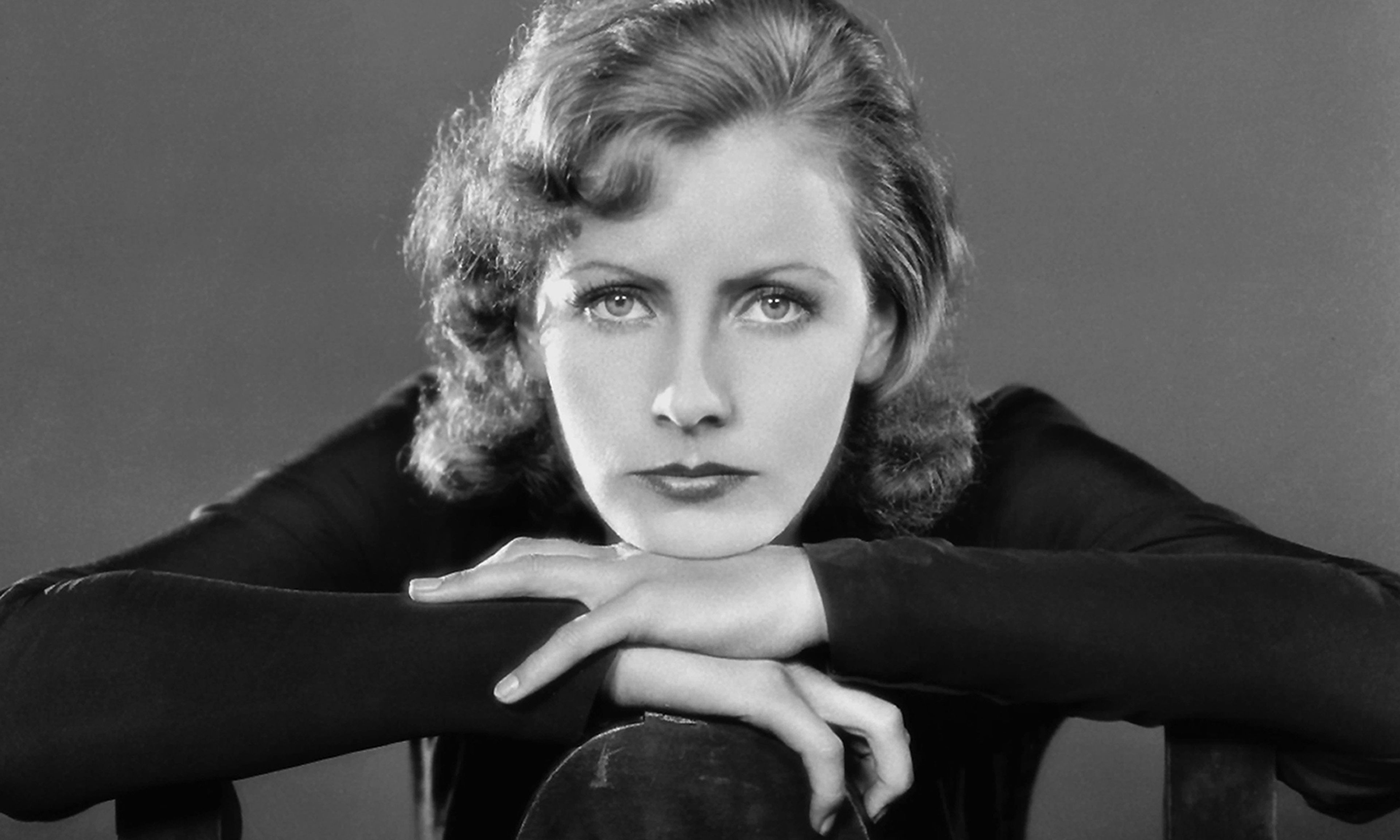
Have you ever wondered why we call movie stars “movie stars”? How and when did the actors and actresses who populate the silver screen come to be compared to objects in the night sky? In truth, it shouldn’t take an etymologist to surmise that the celestial metaphor arose from the nature of the performers themselves: Especially during the Golden Age of Hollywood, the screen personages who proved most popular were generally those who remained slightly out of reach — as bright, yet as distant, as the real stars in the heavens above.
To the earliest moviegoers, the stars must have seemed simultaneously near and far: Charlie Chaplin, Douglas Fairbanks, Mary Pickford, and their ilk would appear and make the audience laugh, weep, or dream, but the minute the house lights came up, they would vanish. In the absence of television talk shows or social-media platforms, there was little to satiate interest in the stars in the meantime. During the silent era, audiences would not have even known what the stars sounded like. Fan magazines probably filled in some blanks.
Even when sound came to the movies, the smartest stars recognized the advantages of being elusive or at least media-shy. In retiring from the screen long before age would have dictated it, Cary Grant avoided appearing to the masses as anything less than fit as a fiddle; and in making his later screen appearances infrequent and generally fleeting, Marlon Brando forever left audiences wanting more. Nowadays, the situation is a bit different. The stars are simultaneously more and less accessible, emitting political opinions, woke platitudes, and glimpses of the luxe life on Twitter or Instagram, but their omnipresence only proves how deeply strange these people really are. In a very literal sense, Gwyneth Paltrow is quite mysterious — it’s a mystery how a well-brought-up lady such as she went from winning an Oscar to hosting a “sex therapy” program on Netflix — but her brand of mystery is of an altogether different character from that of, say, Greta Garbo.
Which brings us to the great Swedish movie star, who, more than any star before or since, embodied the spell the medium was capable of casting over millions. Her most famous films, including Anna Christie (1930), Grand Hotel (1932), and Camille (1936), were sensations in their day, but it’s generally agreed that, whatever inherent cinematic value they may have possessed, Garbo’s presence in them — stoic, inscrutable, obliquely alluring — was the primary reason for their success.
Garbo’s decision to wall off her private life from public view — she resisted the publicity machine during her peak years in Hollywood and sought to avoid it outright following her retirement in 1942 — also contributed to her seemingly impenetrable persona. Consequently, Garbo, born Greta Gustafsson in Stockholm in 1905, has long been a tough nut to crack for her many idolaters; as the song says in The Sound of Music, how do you hold a moonbeam in your hand? Of course, that hasn’t stopped literary types from trying. Thirty-two years after the star’s death at 85 in 1990 (isn’t it strange to think of Garbo living as late as the midpoint of the first Bush administration?), Robert Gottlieb has become the latest literary eminence to tackle Garbo. In this highly readable new book, he gives us Garbo in full, surveying her life, career, and legacy in a work that blends elements of biography, history, criticism, and encyclopedia.
The former editor in chief of Simon and Schuster, successor to William Shawn as the editor of the New Yorker, and, most pertinent to his present assignment, author of fine biographies of George Balanchine and Sarah Bernhardt, Gottlieb not only draws on his own keen appreciation of Garbo but enlists more than a few of the many notable writers, critics, and colleagues who have, at one time or another, waxed poetic about her inimitable qualities.
At the back of this beautifully designed and illustrated volume is a section entitled “A Garbo Reader,” in which Gottlieb shows off his deep knowledge of what might be called the Garbo bibliography. Herein is film critic Raymond Durgnat, on how Garbo overcame the shoddy parts she was saddled with early on: “To see, in these early films, Garbo breathe life into an impossible part is like watching a swan skim the surface of a pond of schmalz, and, finally, with long, slow, persistent strokes, mysteriously as natural breathing, streak to some unknown horizon.” And director Clarence Brown, on the unknowable mysteries that lay beneath that enigmatic face: “Garbo had something behind the eyes that you couldn’t see until you photographed it in close-up.” And Simone de Beauvoir, expressing the same thought in a haughtier manner: “Garbo’s face had a vague expression onto which you could project anything at all; you can’t project anything onto Bardot’s face. It is what it is.” Gottlieb includes, as the cherry on the sundae, some song lyrics in which Garbo is namechecked, including Cole Porter’s “You’re the Top”: “You’re the National Gallery, / You’re Garbo’s salary . . .”
As entertaining and sometimes revealing as these accounts are, quite often Garbo’s disciples reach out for something solid but come away with fists full of so much stardust. Happily, Gottlieb has his own feet planted solidly on the ground. The stardom of most Golden Age icons can seem inevitable — it seems inconceivable that John Wayne would ever have been an insurance salesman or a truck driver or anything but a movie star — but, of course, their stardom resulted from the usual mix of talent, grit, and luck. Garbo is no exception. To prove the point, Gottlieb does the useful work of chronicling the practical steps by which awkward, materially disadvantaged, erratically educated young Greta from Stockholm became the object of nearly a century’s worth of adulation.
Despite remaking herself as a solitudinarian later in life, the youngest daughter of Karl and Anna Gustafsson harbored dreams of show business from a young age and so invited the fame from which she later fled. Gottlieb describes Greta as the ringleader of neighborhood theatrical shows — a girlhood friend recalls her casting herself in the lead roles and bossing everybody else around: “You must come in like this and pretend you are very much surprised to see me and look like this,” Greta would say. While admitting that countless youngsters dream of stardom, Gottlieb notes the unusual intensity of Greta’s obsession: “It’s hard to believe that apart from Greta, there was ever a girl of eight or nine who would walk some distance to theaters in the evening and stand at the stage door, alone, for hours, just to watch the actors and actresses come in and go out.”
Gottlieb ably sketches the Garbo origin story: In 1920, when she was 14, Greta gained employment at a Stockholm department store, where, eventually catching the eye of a superior called Miss Hellberg, she was invited to model hats for the store’s spring catalogue. There followed appearances in advertising films and, by the end of the year, a job as an extra in a feature film, The Gay Cavalier. Later, while studying at the Royal Dramatic Theater Academy in Stockholm, Greta was noticed by director Mauritz Stiller, an eminence in Swedish cinema, and cast in his epic production The Saga of Gösta Berling (1924). Gottlieb quotes earlier Garbo biographer Karen Swenson, who notes that, at some point during the shoot, Stiller became among the first to recognize that Greta was no ordinary ingénue: “Later scenes were even shot differently, with more of an emphasis on close-ups.” Gottlieb judges as plausible the story that Stiller conferred the surname “Garbo” on his protégé.
Eventually, Louis B. Mayer summoned Garbo and Stiller to M-G-M, though — in yet another confirmation of the eternal validity of the plot of A Star Is Born — only one of the two was destined for longevity at the studio. (It wasn’t Stiller, who died in 1928.) Even so, Hollywood had only limited notions of how best to use Garbo, who, for a long stretch, was cast in so-called vamp roles in films with titles such as “Flesh and the Devil.” “I cannot see any sense in dressing up and doing nothing but tempting men in pictures,” the star later insisted. Ironically, although Garbo got her start during the silent era and in many ways seems a relic from that period, it was only when the movies — and she — started to talk that the breadth of her talent became apparent. Anna Christie is described as an artistic breakthrough — “The crucial thing is that in her first talking film, Garbo successfully plays a real woman, however stagy much of the dialogue and action may be,” Gottlieb writes — and, while the films made in its immediate wake were of variable quality, most of them showed her to full advantage.
Gottlieb can be acerbic in describing these early talking pictures — writing about the clunky multi-star vehicle Grand Hotel, he wonders whether the author of the original novel, Vicki Baum, merely used clichés or in fact was the source of them — but he is never less than appreciative of Garbo (who, playing a prima ballerina in Grand Hotel, uttered one of the movies’ most famous lines: “I want to be alone”). “We believe she’s a great ballerina, even though she doesn’t look like a dancer or move like one,” writes Gottlieb, a noted dance critic. Yet he doesn’t slide into mumbo-jumbo when recounting perhaps the most significant few seconds of her career: the final image of 1933’s Queen Christina, in which Garbo, playing the Swedish monarch, looks off screen with a certain passive grandeur. Yet, Gottlieb reveals, director Rouben Mamoulian had no fancy direction for his star but only far more basic instructions. Mamoulian told her, he recalled: “You must make your mind and heart a complete blank. Make your face into a mask; do not even blink your eyes while the camera is on you.” The director continued: “This was one of those marvelous spots where a film could turn every spectator into a creator.”
Gottlieb rightly celebrates Garbo’s less steely turn in 1939’s Ninotchka — the Lubitsch classic that drew in audiences with the promise that “Garbo laughs” — but by the time of what became her final film, 1941’s underrated farce Two-Faced Woman, the public had already started to move on. Here, World War II gets the blame — the film came out just before the bombing of Pearl Harbor — but if the Allies’ attempt to save Western civilization hadn’t curtailed Garbo’s career, it would have been something else. Was Garbo ready for Technicolor? And widescreen? And (gulp) advancing age? Can we imagine her as a viable screen presence in the Sixties? Would we wish her to ride off in a wave of appearances on Dick Cavett and guest spots on Bewitched or The Love Boat? It’s a good thing that Garbo, as we learn here, declined a cameo in Airport 1975 — how different our measure of her might have been!
Gottlieb teasingly itemizes potential comeback projects that may or may not have tempted Garbo at the time, including Luchino Visconti’s never-made adaptation of In Search of Lost Time, but it seems likely that the actress recognized that her stardom was best preserved by declining opportunities to further it. Gottlieb’s descriptions of Garbo’s idiosyncrasies, habits, and peculiarities, as well as her longtime friendships with Salka Viertel, Cecil Beaton, and others, are interesting in and of themselves, but this isn’t the sort of biography that one puts down with the feeling of having figured out its subject. That’s as it should be: Although Gottlieb adds to and clarifies her story, Garbo remains in the galaxy of Hollywood stars because she is, still, so far, far away.












Comments