Early in this magisterial history, Edmund Fawcett identifies the twin projects of conservatism. “Conservatives fight to identify and protect traditions that liberal modernity undermines,” he writes, “and they fight among themselves for ownership of their own conservative tradition.” So discussions of conservatism typically do two things: defend particular ideas about what conservatism is, and explain how conservatives defend it from its opponents.
Fawcett, a longtime correspondent for The Economist, has also written a well-received volume on liberalism. At the beginning of this book, he gives the game away by positioning liberalism at the center of the Western political tradition and conservatism as useful only insofar as it serves liberalism. “To survive, let alone flourish, liberal democracy needs the right’s support,” he writes, “needs, that is, conservatives who accept liberal and democratic ground rules.” Moreover, he argues, such acceptance has been good for conservatives, who have been better combatants than liberals on the ideological-political chessboard over the past two centuries. For Fawcett, three “advantages — the backing of wealth, institutional support, and electoral reach — helped the right prevail at the liberal democratic game.” He continues: “Puzzling as it sounds, conservatism’s ultimate reward for compromising with liberal democracy was domination of liberal democracy.”
To explain why the advantages accrued to conservatism, Fawcett presents perhaps the most comprehensive view of “the conservative mind” since Russell Kirk’s classic book (1953) of that title, discussing thinkers from the United Kingdom, the United States, Germany, and France. His roster includes, among others, Enoch Powell, Roger Scruton, David Willetts, John Kekes, Yuval Levin, Peter Sloterdijk, and Arnold Gehlen. The opening chapter is devoted to modern conservatism’s forerunners, including Edmund Burke, Joseph de Maistre, and other critics of revolution. Because of such antecedents, critics of conservatism often assume that it must always be reactionary, a wish to restore an ancien régime. It can’t be restored, so how can conservatism make any sense?
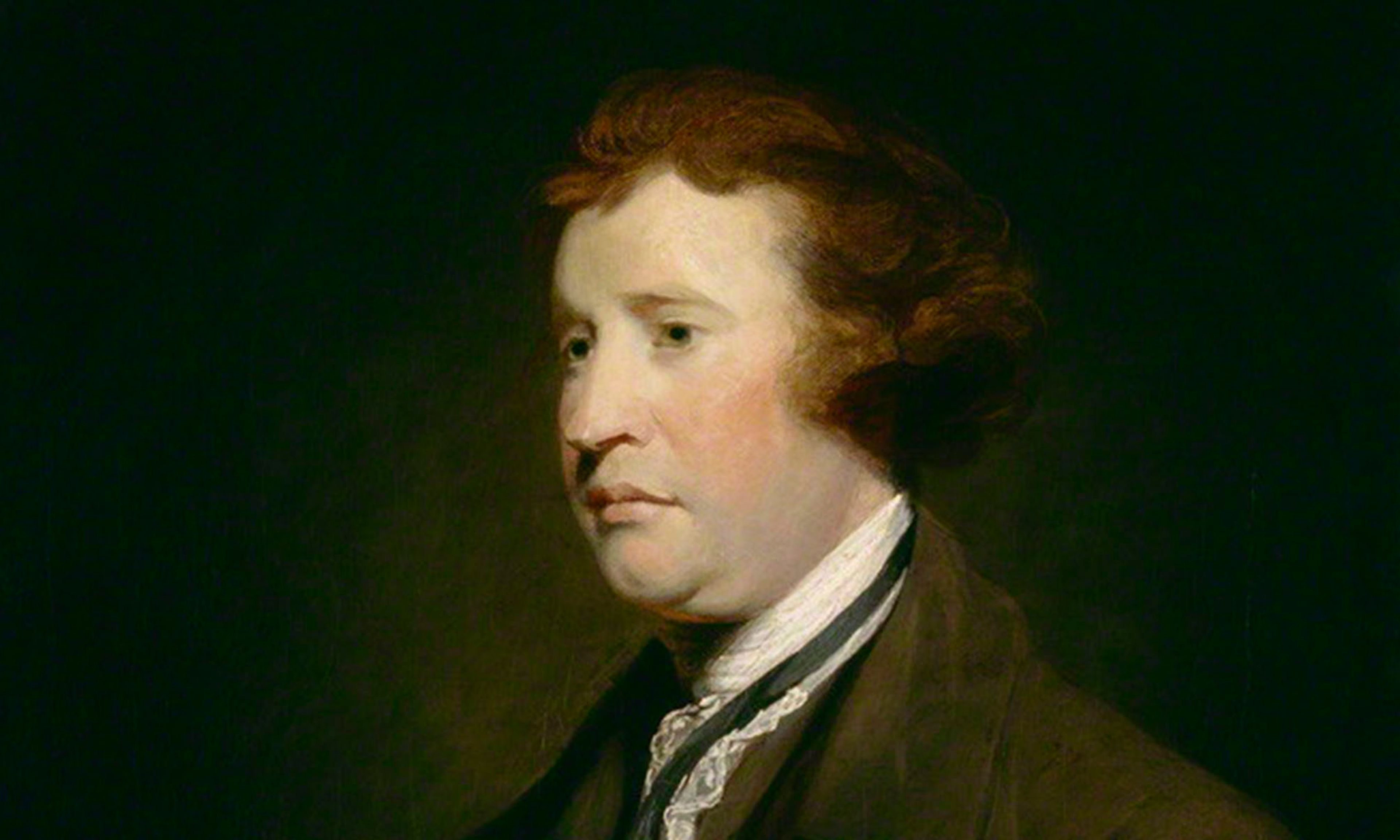
The European forerunners of modern conservatism did defend hierarchical society, which was opposed to the cultural and social solvent of revolutionary thought. Maistre, writes Fawcett, stood for the “hard authority of punishment,” which “proscribed reasoning in politics, . . . celebrating instead faith and obedience.” Burke, on the other hand, was “more open,” which is one reason that he has been a more attractive figure in the Anglo-American conservative tradition. Burke’s authority was the soft one of custom, Fawcett notes; he “insisted on the need for shared customs and a common faith within a unified society, without which, argument risked slipping into intellectual warfare.” But that is an understatement of Burke’s concern. He thought that what Fawcett describes as “intellectual warfare” was in large part impossible without prerational commitments.
That is why a common culture is so important, even one (such as that of England or the United States) that can accommodate great diversity. Invocations of “norms” may be politically motivated, but for people to make any sense at all to one another, they must have some understanding of what any given norm is and of its importance relative to other norms. Further, they must recognize that, regardless of its political effect, the refusal to violate a norm should be respected. No amount of “explainers” will paper over differences in shared assumptions about what counts as normative and whose authority can be recognized.
To his credit, Fawcett does not take the route of conservatism’s critics. Instead, he proposes two responses. First, the forerunners of conservatism handed on not so much their defense of a lost society — or a case for restoring it — as a stock of arguments, images, and rhetorical tools that conservatives could draw on to attack liberalism as it too evolved in the succeeding decades. We can see this in some of the powerful images Burke used in his defense of social order, and in the attacks that he, Maistre, Friedrich von Gentz, and others made on ideas about the power of human reason or on the notion that society is perfectible.
The second response is framed by James Madison, Fawcett’s last forerunner. Madison balanced the revolutionary fervor of Jefferson with an inclination to preserve authority and social stability. The U.S. Constitution, which Madison had such a large part in shepherding, entails a “belief in the need for popular control of government,” but he “thought peace and prosperity elusive without overall central power and uniform national laws.” Interestingly, Fawcett does not discuss John Adams, whom Kirk, for example, thought a bedrock thinker of American conservatism because Adams believed a republic could survive only with a virtuous citizenry. Without it, conservatives have argued, the structures in which Madison trusted would not work as intended. That need for virtue would also apply even if you accepted Fawcett’s presumption that conservatives should support liberal democracy; the proceduralism favored by so many liberals is not enough.
The constitutional structure was an attempt to set the principles of order and liberty in a fruitful tension, and in a way unknown in the Old World. The Constitution itself then became part of the “common culture” that conservatives in America would seek to preserve against various progressive or left-wing movements, as well as, at times, right-wing movements such as the John Birch Society or, more recently, the alt-right.
Fawcett divides his chronology into four sections, deftly crosscutting political and cultural developments in his four countries: resisting liberalism (1830–80), adaptation and compromise (1880–1945), political command and intellectual recovery (1945–80), and the fourth, current phase, hyper-liberalism and the hard Right. Conservatism is both political practice and “aesthetic” or philosophical opposition to modernity. At the same time, writers as diverse as W. H. Mallock (1849–1923) in England and, in America, the Southern Agrarians have all tried to formulate their own vision of conservatism against the forces of liberalism.
Relatively few pages are devoted to the role of Christianity in the development of conservative thought. In a sense this is not surprising; Christianity is a liberationist, revolutionary religion, and in any event it resists neat ideological categorization. Nevertheless, in the Western context, conservatism cannot be separated from Christianity, because of its doctrine that original sin clouds our reason and our passions. The teaching tracks closely the conservative suspicion of ideological plans and the assumption that their failure is almost inevitable. The most explicit discussion of Christianity deals with John Henry Newman, Orestes Brownson, and a handful of other 19th-century figures concerned with the decline of the public appeal of religious arguments. Fawcett omits Cardinal Edward Manning and other conservative English figures but does note that Brownson in America argued that religion and democracy were inseparable and that a rejection of religious faith would ultimately doom even a pluralist, constitutional democracy.
In Fawcett’s view, conservatism made its crucial turn after 1945. In the post-war period, the defense of an overarching Christian-inflected culture came undone and was transformed into a more generic defense of “culture.” This term became detached from long observance of human nature and from religious precedent and came to mean practices that were simply either “useful” or “nonideological,” which made them vulnerable to attack on utilitarian grounds. Similarly, conservative defense of government and business working together to support a larger culture furthering a common good was replaced with a defense of “the market,” independent of formerly widely shared assumptions about humanity and God.
Fawcett implies that conservatives have actually won the political battle with liberalism, thanks to conservatism’s triple advantages (wealth, institutional support, electoral reach). Indeed, Fawcett says we “are living in an era of the right.” But this misses the mark. Take, for instance, his contention that conservatives have the wealthy class as their support. While economic interests wish to hold their own, they do not further any identifiable conservative social goals, and indeed have been captured by “woke” forces to a very large degree. Wall Street and Silicon Valley are strongholds of social and cultural liberalism and have strongly supported liberal policies.
A lot of Fawcett’s argument depends on the question of why modern liberal societies need an articulated conservative opposition. Is it because liberal premises about unbounded autonomy and the perfectibility of society are self-destructive? If so, why does Fawcett think conservatives should accept these premises? He does not really address this tension; he seems to suggest that conservatives simply need to slow liberalism down but ought to generally accept its view of the individual, the non-binding character of religious or family obligations, and related positions that liberals have taken at different times. Is it instead that capitalism is a danger to organic human affection and communities and that conservative defenses of human dignity provide some protection for the weak? If so, perhaps a conservative state with a liberal opposition is preferable to the reverse. In referring to “liberal principles,” Fawcett may instead mean values — democracy, rejection of any social structure that impedes the individual will, and a supposed lack of religious orthodoxy (in favor of a kind of secularism) — that are more attractive to modern societies.
Fawcett does not believe that conservatism represents a tradition of thought that should try to replace liberalism as the West’s cultural and political baseline. He is fair enough, however, to bring to light the ideas of thinkers from Maistre to Scruton about what such a baseline might look like and how it would differ from liberal assumptions. With its reach and breadth, Conservatism is a significant contribution to the scholarship on conservatism, especially in its cross-cultural analysis. It is one of the fairest accounts of the conservative intellectual tradition to be published in recent years.











Comments