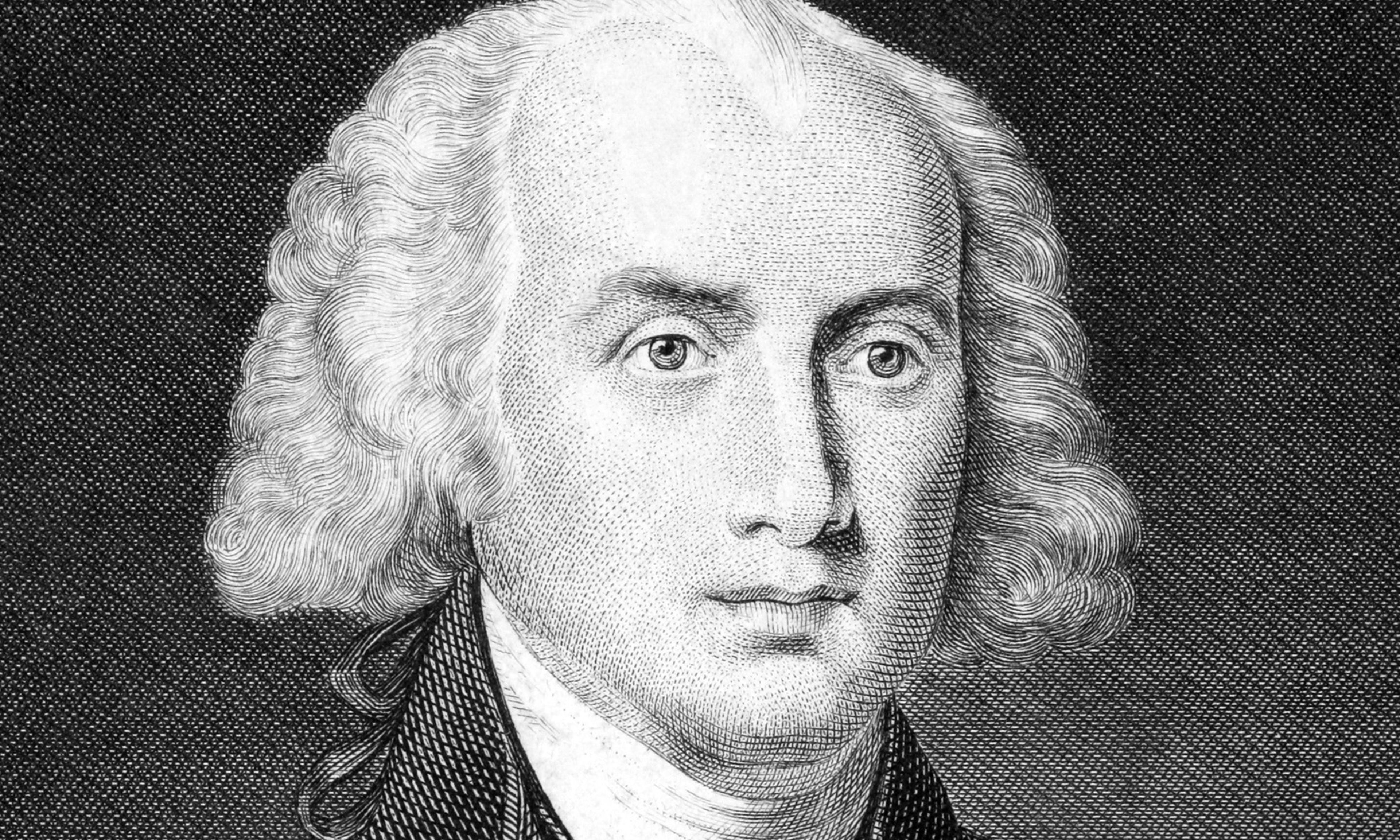
Every time a biographer of a Founding Father is asked why we need yet another such book, I wish for the question to receive the contempt it deserves. If the universe can bear up under the weight of so many movie remakes of various Peter Parkers being bitten by slightly different radioactive spiders, there’s space enough for a few more good biographies. We need more books about the Founders because we need more books about the Founders. Jay Cost, the Gerald R. Ford fellow at the American Enterprise Institute and the co-host of National Review’s Constitutionally Speaking podcast, has written an excellent one on James Madison. New works on the “father of the Constitution” will be timely for as long as American political discourse is inextricable from interpretive discussion of our organic law — in a word, always.
Perhaps a fresh biography of a slave-owning Virginian is especially timely after the removal of Thomas Jefferson’s likeness from New York’s city hall. In addition to the folly of enacting posthumous autos-da–fé upon dumb statuary, there is a special irony in repudiating an author of what Martin Luther King Jr. called “the magnificent words of the Constitution and the Declaration of Independence, . . . a promise that all men, yes, black men as well as white men, would be guaranteed the inalienable rights of life, liberty, and the pursuit of happiness.” If the censorious redactors have buried Jefferson, surely their feet are at Madison’s door to carry him out also? His record on slavery is lamentably contradictory. But while another recent Madison biographer, Harvard Law professor Noah Feldman, has struggled with this problem at length, that is not Cost’s purpose. He gives the subject sparing but unequivocal treatment. Though Madison “was by all accounts not a strict master” over his slaves, “he expressed little interest in their freedom. Though he viewed human bondage as incompatible with free government, this was not much more than an intellectual judgment. Slavery for him never seemed to have been a moral dilemma over which he lost sleep.” Thus, Cost’s book is no hagiographic denial of Madison’s hypocrisy on slavery; the question simply is not a major focus.
Cost has not written an evenly paced and granular life (for which interested readers should consult Ralph Ketcham) but a specifically political biography. And more than slavery, political inconsistency is the great challenge for all Madison biographers. Americans often idolize and idealize the Founders. The Judeo-Christian West does not worship changeable gods, and Americans naturally look for consistency of principle in the originators of their national institutions. This is the core interpretive dilemma posed by Madison’s career. A fierce opponent of executive prerogative during the Revolution, he advocated a new constitution because, as he warned in Federalist No. 48, “the legislative department is . . . drawing all power into its impetuous vortex.” He collaborated closely with Alexander Hamilton as a nationalist constitutional reformer in the late 1780s; but a few years later, when Hamilton served as Treasury secretary, Madison led congressional opposition to his policy agenda. Yet the constitutional scruples Madison cited against Hamilton’s latitudinarian use of the “necessary and proper” clause in the case of a national bank evaporated when Jefferson acquired Louisiana. As president, Madison vetoed one bill chartering a second bank of the U.S. only to sign another the following year. He similarly approved federal appropriations for “internal improvement” projects before forcefully vetoing a virtually indistinguishable bill in the final act of his public life.
Cost admits bluntly that Madison “positioned himself on both sides of virtually every major constitutional controversy.” Indeed, at some points in his career, the applied constitutionalism of the Father of the Constitution seems a confused mess. Cost calls his “positions on the bank and internal improvements at the end of his presidential term . . . unpersuasive to the point of [being] incomprehensible.” But this biography is no more iconoclastic than hagiographic. Cost acknowledges occasional incoherence to better illuminate his claims as to the consistent nature of Madison’s true genius.
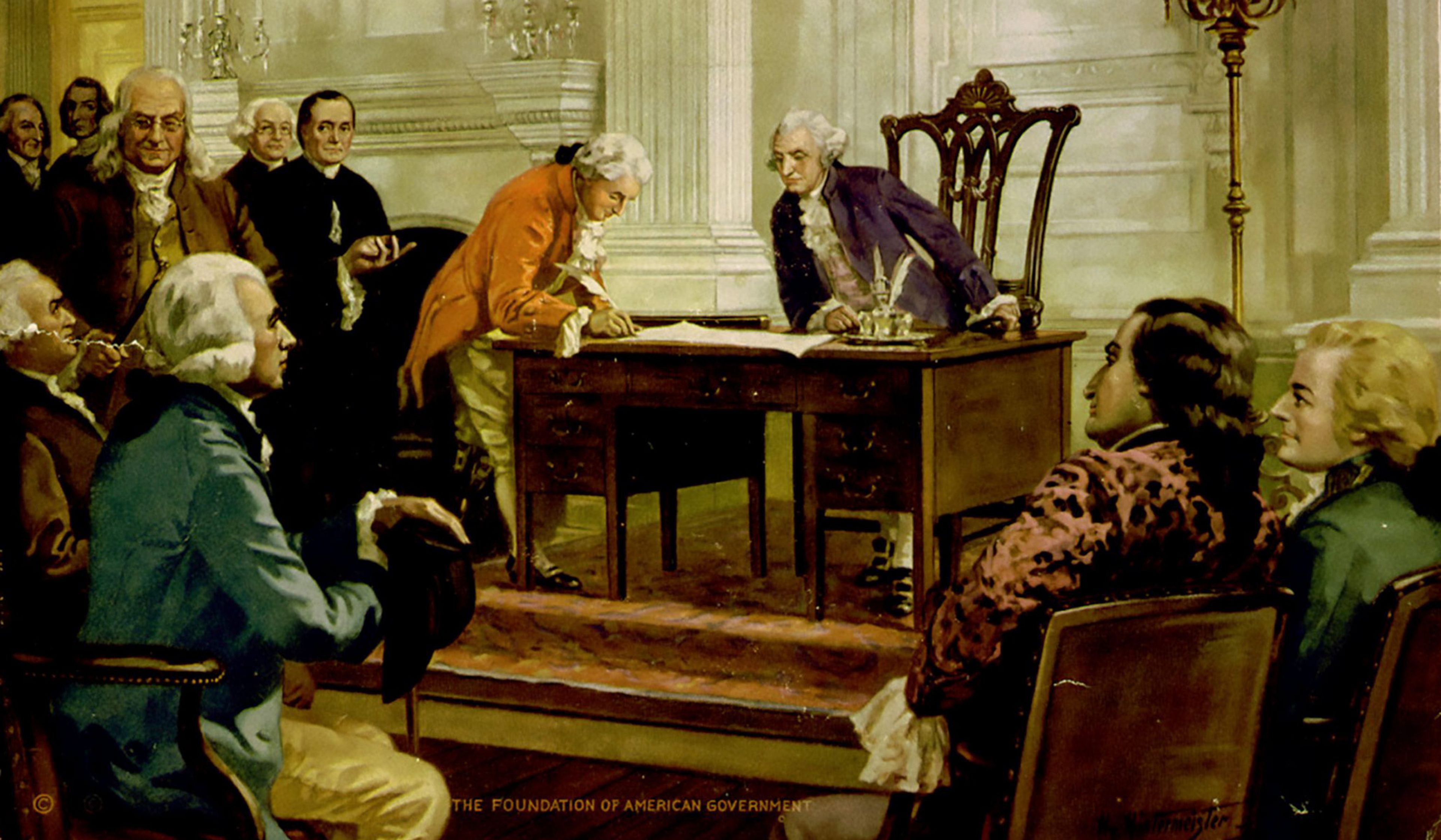
Cost’s approach is best demonstrated in his most original and satisfying chapter, on the constitutional convention. Rather than a detailed recounting of the delegates’ debates (for which interested readers should consult Forrest McDonald), Cost uses Madison’s private letters to show his deep disappointment at the final product. No one did more than Madison to bring the Philadelphia convention about, to prepare for it, and to dictate its course. Rather than his better-known contributions to the pro-ratification Federalist Papers, Cost cites Madison’s various pre-convention memoranda as his most definitive and original works of political theory. These outlined a theory of an “extended republic” in which the most capable men of the widest reputation for good character would be elevated to a legislature that represented the people by population — an equality of individual citizens, not of sovereign states. Thus, Cost writes, “Madison became the first theorist of a truly national American politics, the idea that the strength of the nation was in its diversity.”
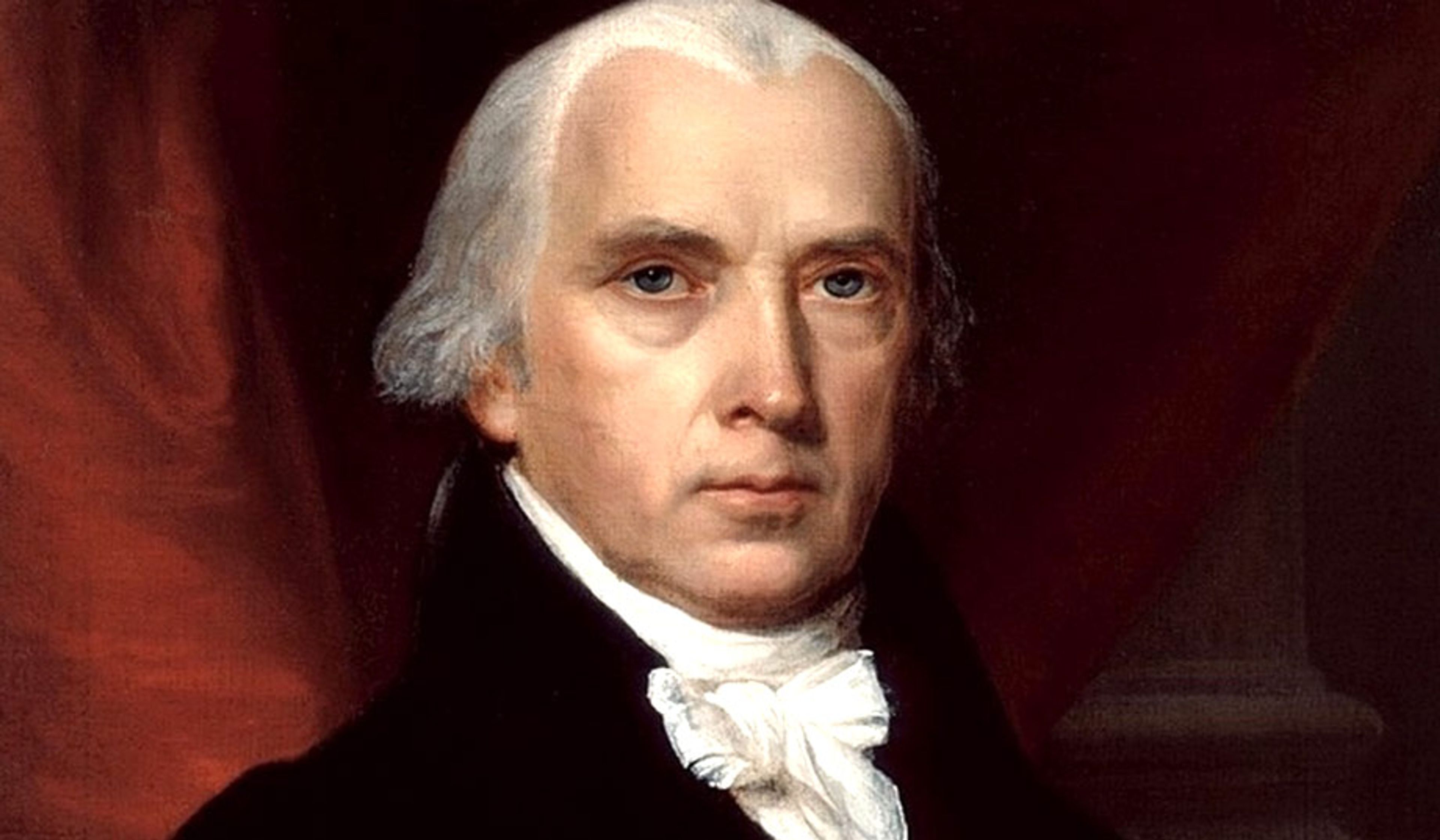
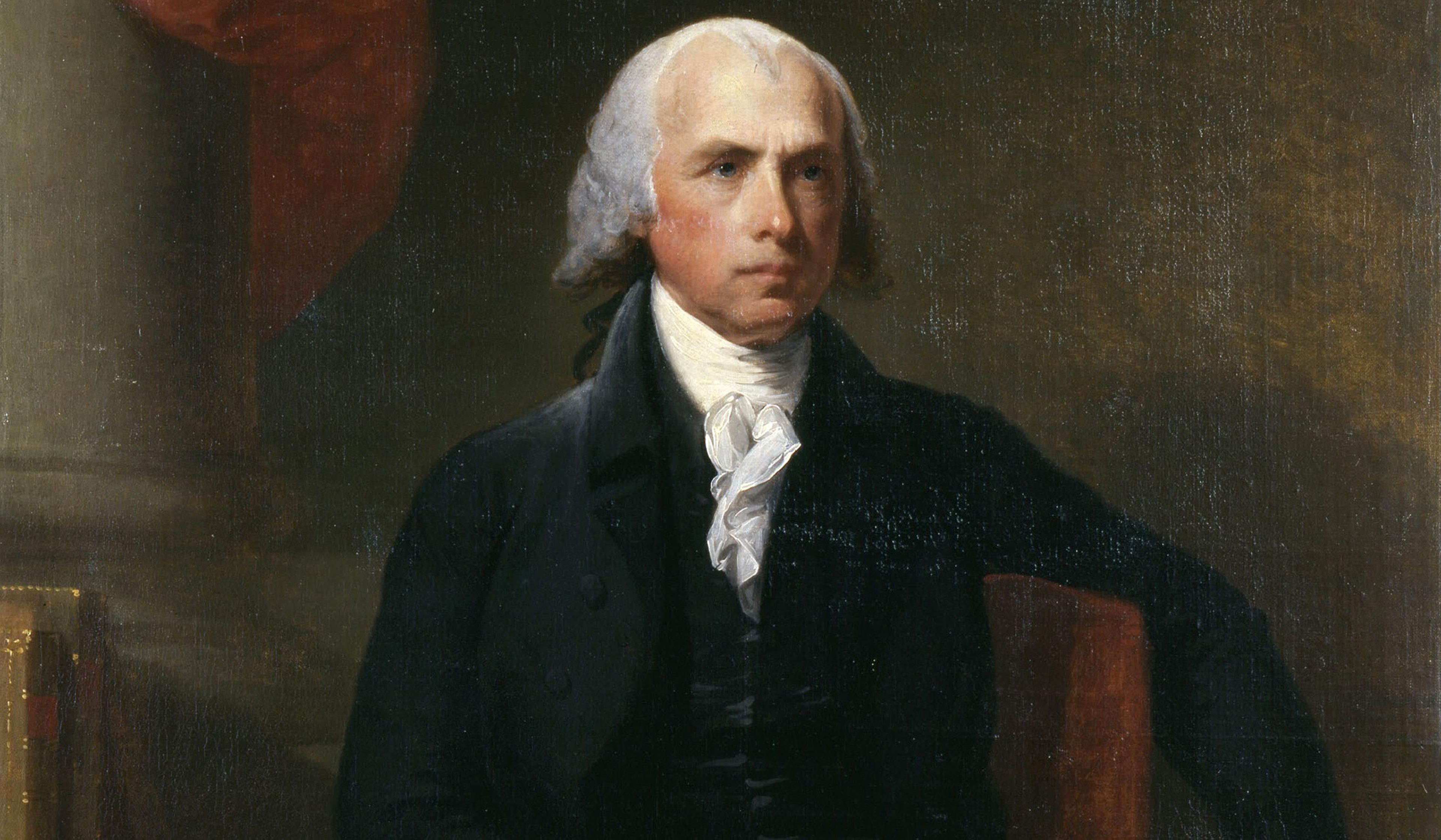
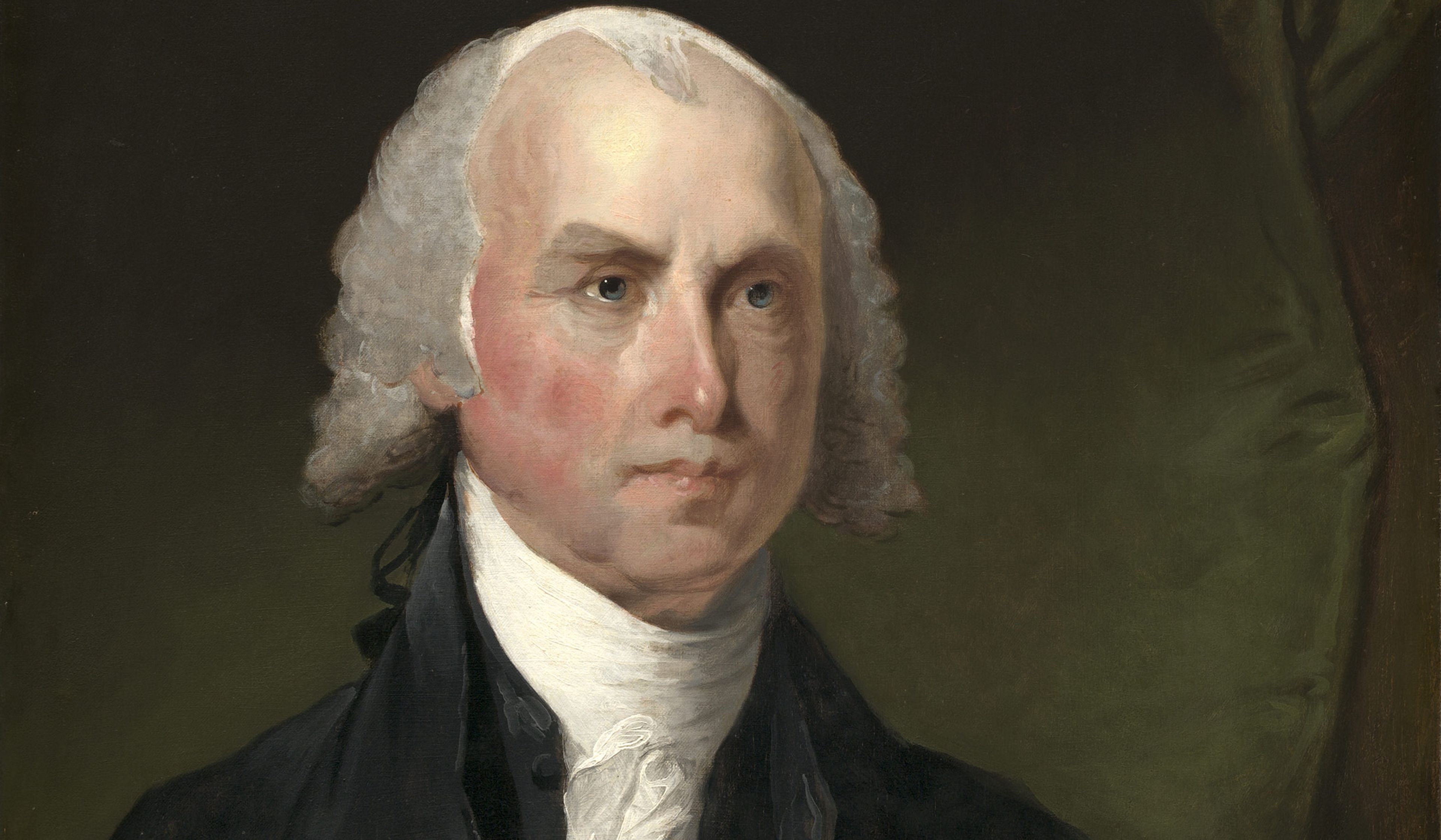
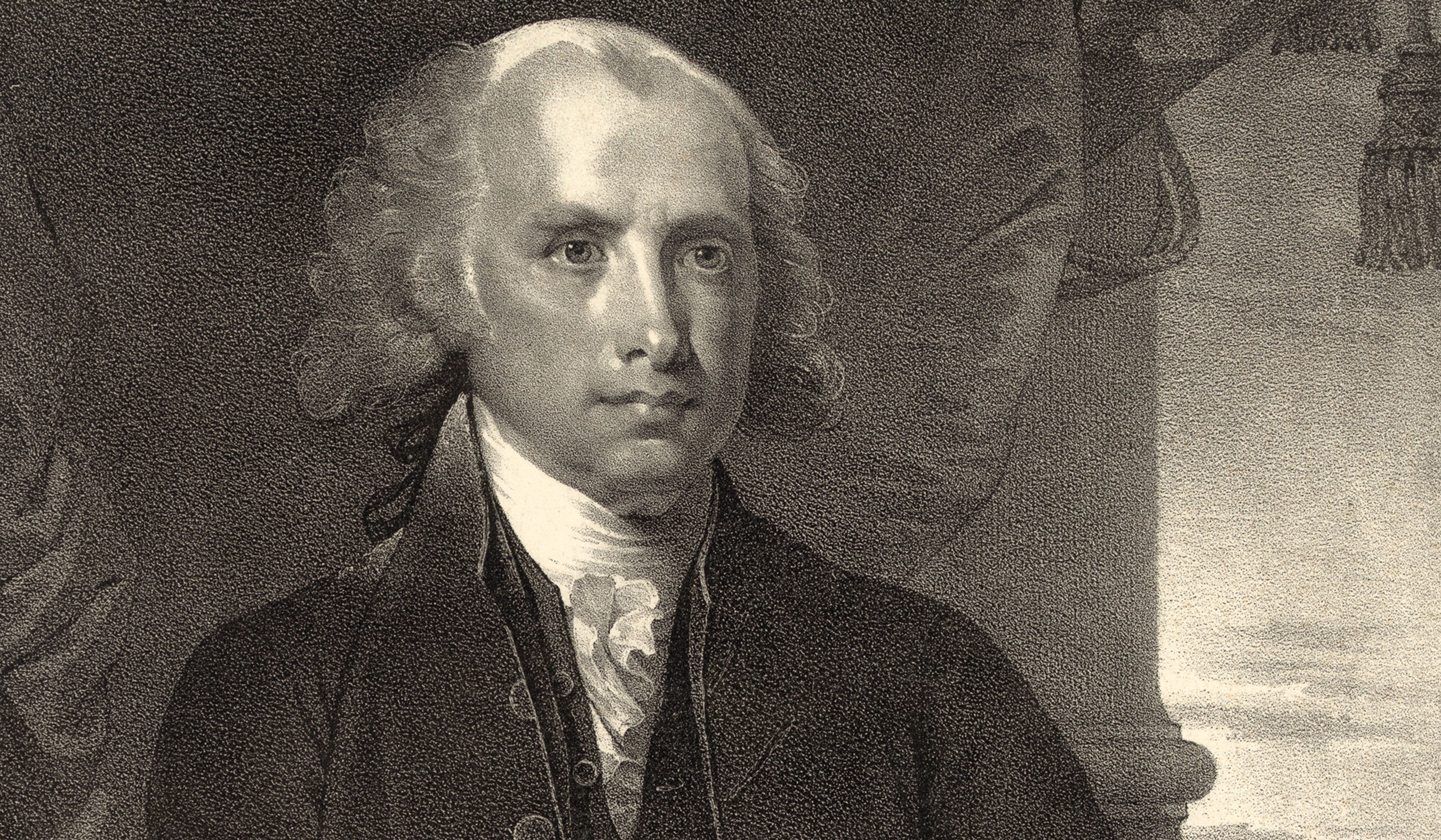
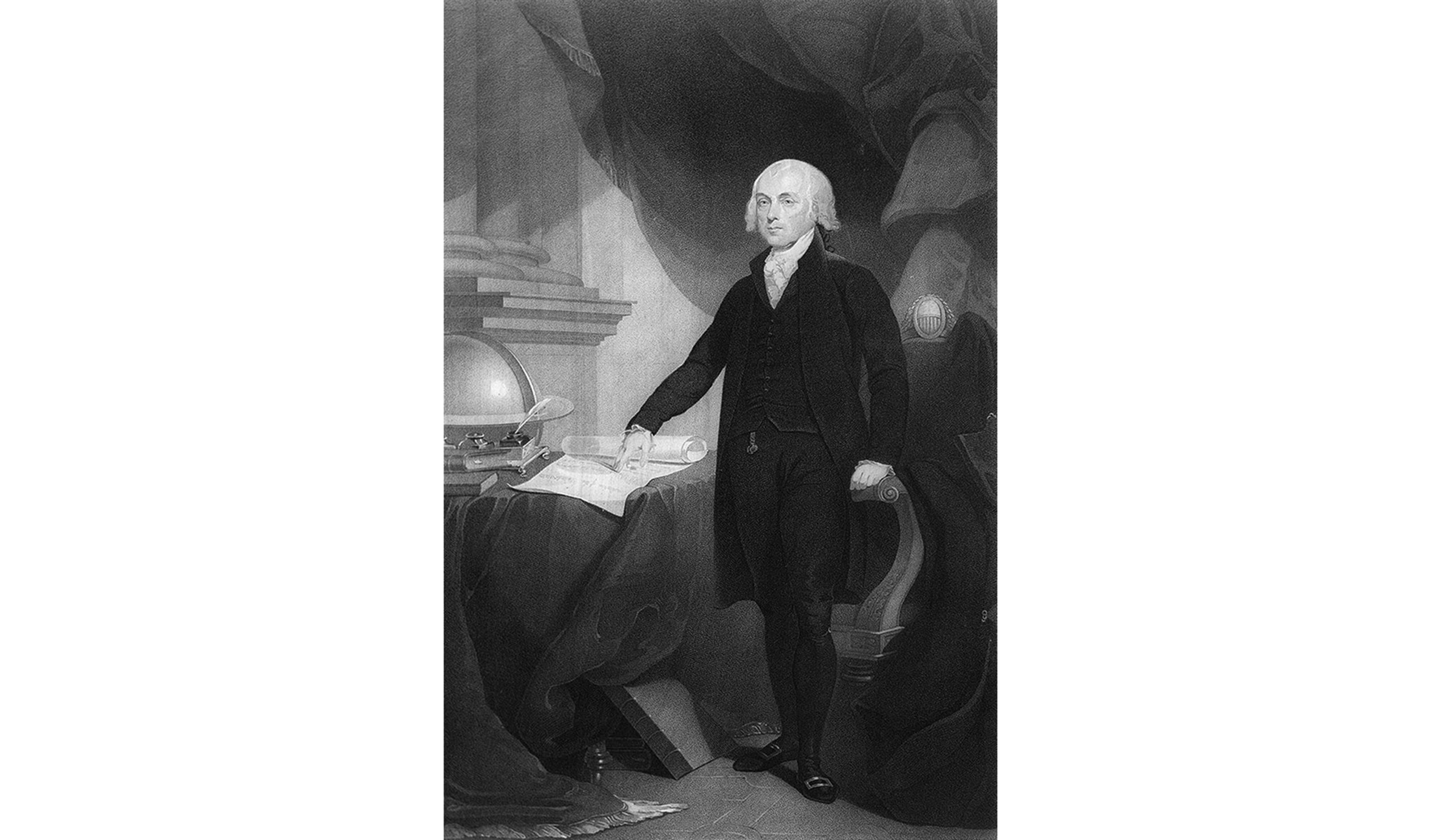
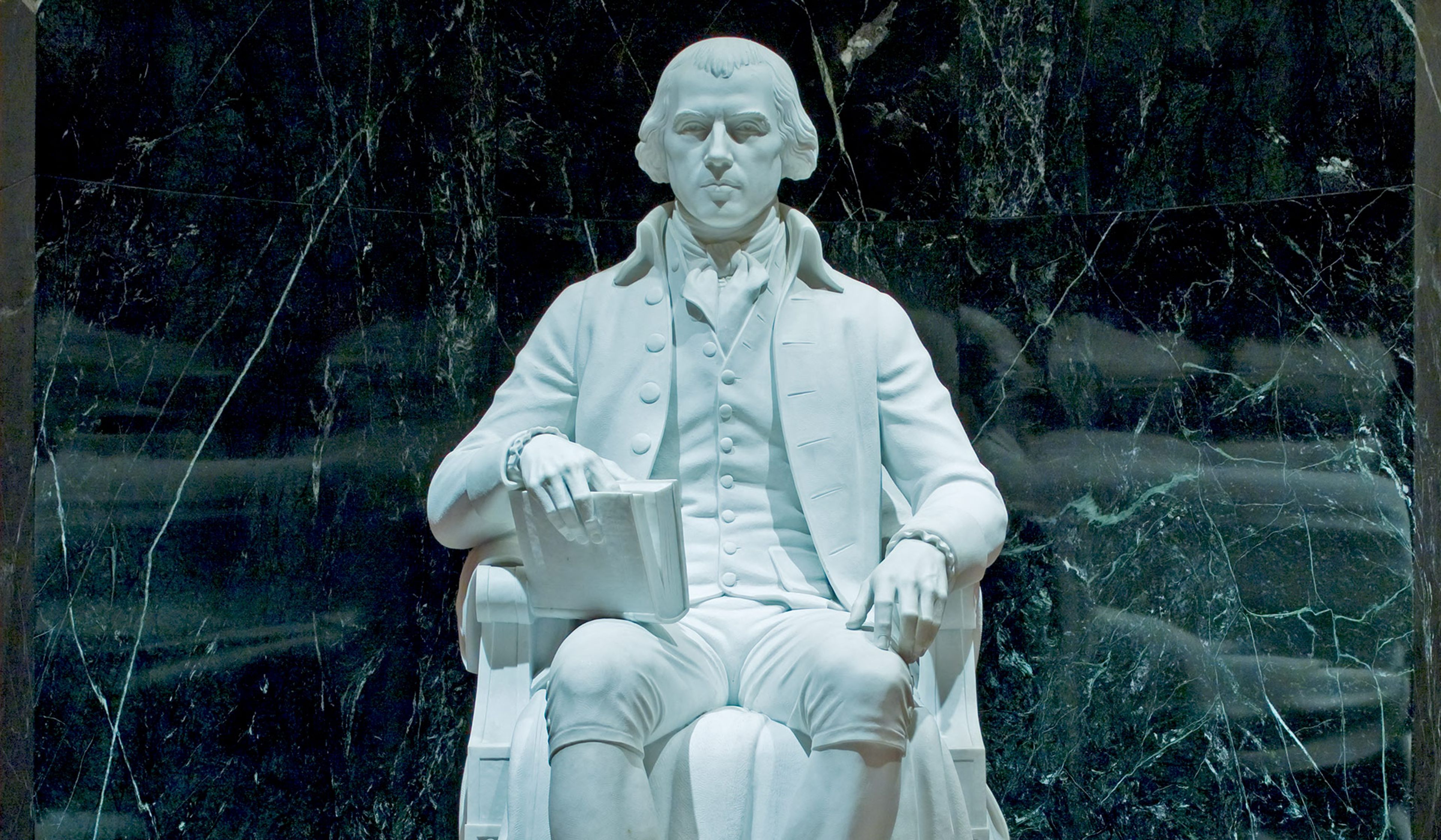
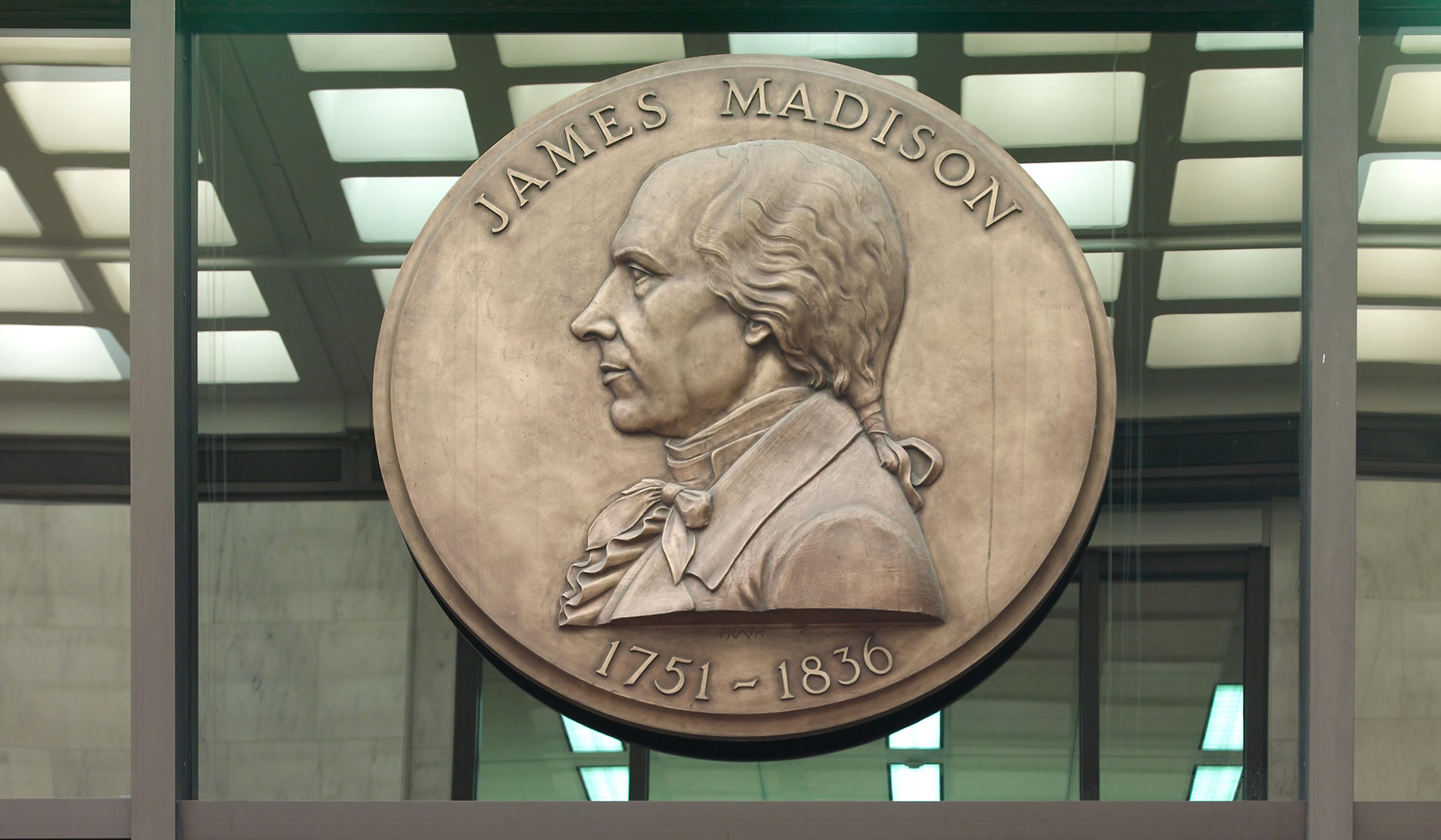
Detail of portrait of James Madison, 1816.
White House Historical Association/Public domain
Inevitably, Madison’s theory — however visionary its brilliance — was only one of many offered at the convention. From the debates emerged a compromise agreement shorn of what Madison considered his best and most necessary suggestions. Some are intriguing, such as his “council of revision,” in which the president and Supreme Court justices would discuss every congressional bill as a condition of its passage. Could we not benefit from a constitutional-review process timelier, cheaper, and less contingent than the filing of interminable lawsuits? Others are outright horrifying, such as Madison’s pet idea of a federal veto power over all state laws, which Cost rather understatedly calls “impracticable.” Generally, in 1787 “Madison’s republicanism was too nationalistic for most of his fellow delegates.” Astonishingly, as the convention adjourned Madison wrote to his mentor Jefferson almost in despair at the perceived failure of his project. It is here, in Cost’s telling, that Madison’s genius shines: “Ironically enough, his frustration was proof of concept for his theory of the extended republic. . . . The convention took the basics of the Madisonian system and, through a political process, bargained its way to a deal that satisfied a majority of delegates.” The result, “while not logically airtight, served the public interest.” After privately airing his disappointment to a few confidants, Madison responded characteristically. He threw himself completely into the political process of ratification, even if he was occasionally (as in his celebrated Federalist No. 10) arguing more for his underlying theory than the document in its actual form.
For the next three decades, Madison devoted himself to national politics under this constitution forged in compromise. Cost traces the ebb and flow of his public life with varying degrees of attention to detail, but always with a unifying focus on what he calls “the through line of Madison’s career.” Madison remained unwaveringly committed, Cost argues, “to the sovereign rule of the people in accordance with the principles of justice and equity. The people alone were to govern, and properly organized . . . [would] promote the welfare of the whole country, as opposed to a handful of factions.” Madison was variously with Hamilton, then against him; opposed to a national bank, then for one; calling for constitutional amendments, then proceeding in their absence. But his great priority was always that selfish factions should not govern the commonwealth to the detriment of others’ interests and rights.
Madison’s conception of the “extended republic” is profoundly relevant today. A culture that purports to celebrate diversity struggles under the weight of increasingly illiberal political discourse; political opponents are demonized as “deplorables” and “losers.” Senator Ben Sasse has argued eloquently for the restoration of charitable civility in his book Them: Why We Hate Each Other and How to Heal. Sasse writes that “Madison encouraged everyone to consider themselves as creedal minorities. Assume that if you believe anything, or hold anything dear, it will not always align with majority opinion. . . . Government isn’t in the business of setting down ultimate truths. It doesn’t decide who’s saved and who’s damned. Government is merely a tool to preserve order, to preserve space for free minds to wrestle with big questions.”
To adapt the old libertarian axiom, Sasse and Cost understand Madison as saying that the only cure for the ills of politics is more politics, counterintuitive as that may seem amid such acrimony. Cost concludes that “if you participate in politics, . . . you are almost by definition a Madisonian.” There is no such thing as an ethnic American. As citizens, we are defined only by law and unified only in our shared institutions. Americans, for better or worse, will always be political creatures. Cost’s life of Madison presents “America’s first politician” as the exemplar of what Abraham Lincoln called “the better angels of our nature.” Since Lincoln’s day, we have never needed that example more.











Comments