Fluorescence
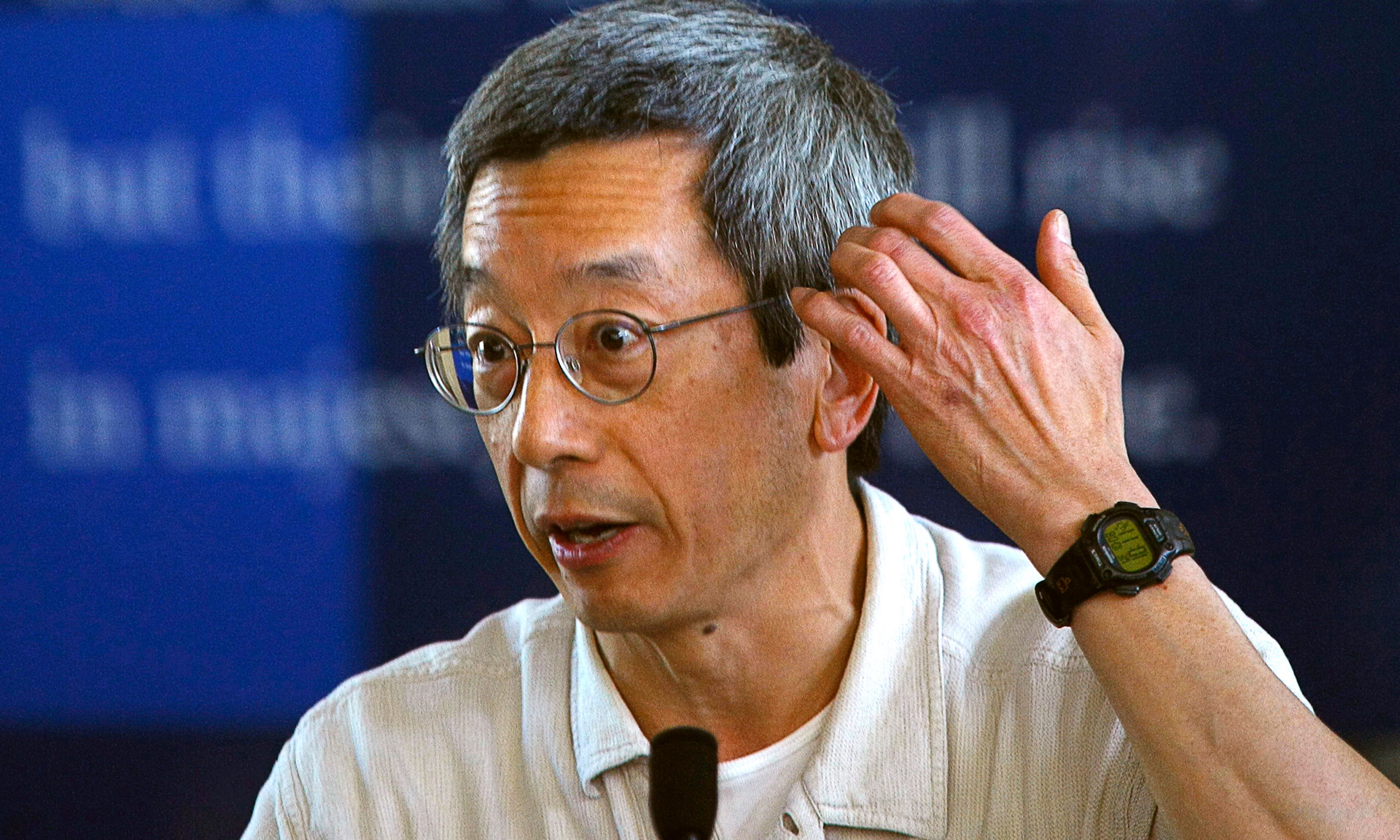
I am reminded of one of the supervisors of my Ph.D. at UC Berkeley, Roger Tsien, who won the Nobel Prize in Chemistry in 2008. Roger, an American who had done his Ph.D. and research fellowship at Cambridge, had already demonstrated trailblazing genius as a young post-doc by engineering molecules that one could insinuate into a cell to give off fluorescent signals of invisible events inside it. The early versions were imperfect, and there were doubting Thomases in Cambridge, but as an assistant professor at Berkeley he was able to perfect the molecules over the years with two full-time senior employees. This invention revolutionized cellular physiology, as well as creating the wherewithal for the establishment of several now–internationally recognized companies.
The Hollywood storyline boils down to “U.K. gives birth to science that could be exploited fully only in the U.S.” That sounds like the U.S.-Japan plotline in the 1980s, but really it is just the golden rule: The man with the gold makes the rules. Exploitation takes substantial money, money requires a willing funder, and funders bet on the road less traveled only when there are multiple funders for the same type of science.
Harry Witchel
Senior Lecturer in Physiology
Brighton and Sussex Medical School
University of Sussex
U.K.
Fred Schwarz replies: I’m sure Mr. Witchel is correct about the independence of British scientists, and I apologize if I seemed to suggest that they are in any way subservient to the state (though in Britain, as elsewhere, I think politicians would interfere more in science if they were capable of understanding it). The point I was trying to make was that in Europe, large-scale funding and organizational decisions tend to be concentrated in a few bodies, and the continuing ascendancy of the EU will only accelerate this trend. Even when everyone involved acts wisely, impartially, and with the best of motives, this sort of oligarchy tends to limit innovation. In America, through a combination of historical accident and benign neglect, “science policy” is much more widely dispersed, with the same beneficial effects that we see from competition in other areas (though, as my article noted, the EU comes out ahead in big-ticket, multinational projects like particle accelerators).











Comments