The phrase “robber baron” entered the American vernacular in 1859. Originally a reference to medieval German nobles who ran extortion rackets on the Rhine, the phrase was revived by New York Times reporter Henry J. Raymond to describe railroad magnate Cornelius Vanderbilt. Though “robber baron” now connotes the unscrupulous avoidance of competition in business, Raymond initially used it to describe excessive competition — “competition for competition’s sake; competition which crowds out legitimate enterprises.” Commodore Vanderbilt, the parvenu son of a ferry operator, had turned the genteel, “legitimate” shipping business into a street brawl. The sheer scale of his wealth — an unprecedented $100 million at the time of his death, roughly $2.5 billion in today’s dollars — offended the Times’ polite sensibilities.
The same revulsion at big business undergirds a recent report by the House subcommittee on antitrust, which likens Facebook, Google, Apple, and Amazon to “the kinds of monopolies we last saw in the era of oil barons and railroad tycoons.” Discomfited by the wealth amassed by tech CEOs, the subcommittee calls for a total overhaul of antitrust law to rein in the country’s leading businesses. Among its recommendations: break up tech firms, prohibit all their mergers and acquisitions, and bar them from promoting their products over those of competitors. Politicians as far afield as Senator Elizabeth Warren and Senator Josh Hawley have endorsed these proposals.
The problem for these would-be trustbusters is that antitrust law as it currently exists does not suffice to achieve their ends. Since the publication of Robert Bork’s The Antitrust Paradox in 1978, the courts have punished monopolistic behavior only insofar as it harms consumers. By every relevant metric, the tech industry benefits consumers.
So Big Tech’s opponents call for a return to a previous era, when antitrust law aimed at a hodgepodge of incoherent, often contradictory goals. Before adopting the consumer-welfare standard, courts at times punished businesses for raising prices, at other times for cutting them. With no clear definition of monopoly, judges could deem anything and everything deleterious to competition — and they did. In 1962, the Supreme Court blocked the merger of Brown Shoe Company, a shoemaker accounting for 5 percent of the national market, with a retailer that sold 2 percent of the nation’s shoes. The merged firm would have held 7 percent of the market for a single retail category, with numerous competitors nipping at its heels. The resulting efficiencies would have lowered prices for consumers and freed up capital for investment, but the overweening nature of antitrust jurisprudence allowed the Court to halt the growth of businesses arbitrarily.
By the time Bork wrote The Antitrust Paradox, the situation was as follows: “Internal growth to large market size has been made dangerous. Growth by merger with rivals is practically impossible, as is growth by acquisition of customers or suppliers. Even acquisitions for the purpose of moving into new markets have been struck down.” Bork rightly saw that a monomaniacally punitive antitrust law threatened free enterprise and hampered the economy. The Court adopted his consumer-welfare standard in 1979 and has more or less adhered to it since.
Digital platforms pose a new problem for regulators because they do not charge their users a monetary fee: Anyone with an Internet connection can create an account on Facebook, Instagram, or WhatsApp and use Google’s search engine, email platform, maps application, and Web browser, free of charge. When Big Tech does charge users, it is either cheap (Amazon) or so expensive that it erodes market share (Apple).
Digital platforms do, however, charge users in kind, by obtaining their data and using it to sell advertisements. Facebook and Google together hold about 70 percent of the digital-advertising market. Their massive user bases position them to place ads where they are most effective, and advertisers — Fortune 500 companies, start-ups, political campaigns — compensate them handsomely for it.
The Big Tech debate often overlooks just how innovative this market structure is. Before the consumer-Internet era, you might mention your name, age, and hometown when introducing yourself to someone at a bar. Now, these nuggets of personal information buy you intricately detailed maps, a plethora of tools for communicating with anyone on earth, a library containing much of the world’s accumulated knowledge, and more high-resolution video than you could hope to watch in a million lifetimes.
In the pre-Internet world, the 2.5 quintillion bytes of data created by human beings every day lay out of reach, like heavy oil too deep to drill. Dispersed among millions of people with no means of storing and selling it, personal information was a massive untapped reservoir. Now, it’s a means of exchange for billions of consumers. Google makes roughly $250 for every American using its products, while Facebook pockets $110 per user. Amazon and Apple make $15 and $30 per user, respectively, in their “platform” segments (advertising and add-on services, as opposed to retail sales).
For these companies, users are not so much customers as they are products: Google does not sell its search engine; it sells its user base to advertisers. A large user base means not only higher-quantity output but also higher-quality output, because access to large amounts of data improves ad-targeting capabilities. Consumers also tend to prefer big platforms, because a larger pool of users means more people with whom to connect. The “winner takes most” characteristics of the digital economy mean Big Tech firms enjoy something akin to monopoly power — but it is monopoly power achieved and sustained by keeping users happy.
Accordingly, for every dollar Big Tech companies make, they provide many thousands of dollars more in value to consumers. A 2019 study found that the median American places an annual value of $17,500 on search engines, $8,400 on email, and $3,600 on digital maps — products for which they pay a scant few hundred dollars in personal data. By all indications, users of Google and Facebook are getting an incredible bargain.
Still, argue the would-be trustbusters, consumers would benefit from a more competitive environment. Dina Srinivasan, a marketing executive turned antitrust lawyer whose work has guided the posture of congressional Democrats toward Big Tech, argues that digital platforms ramp up their surveillance of users as they grow. When Facebook revises its privacy policy to increase data collection, it effectively charges users more. In Srinivasan’s telling — quoted in the House report — the ability of tech companies to ramp up data collection reflects a monopolistic power to fix prices.
Facebook, for instance, initially marketed itself as a more secure alternative to Myspace, but once it reached scale, it began to surveil users more aggressively each year. By then, competitors were too weak to offer a viable alternative. The House subcommittee quotes a U.K. regulatory agency that argues, “The collection and use of personal data by Google and Facebook for personalised advertising, in many cases with no or limited controls available to consumers, is another indication that these platforms do not face a strong enough competitive constraint.”
Of course, users who value privacy can simply delete their social-media accounts. Unlike railroads — which were the only viable mode of transportation for many shippers before the advent of the automobile — users have an abundance of alternatives to Facebook. They can use Twitter or Pinterest or iMessage, they can go to online forums such as Reddit, they can make telephone calls, and they can even go out into the real world. By now, the privacy practices of Big Tech firms are well documented. Users who choose to stay on Facebook, or to use Google despite similar privacy policies, value the product more than they value privacy.
Still, argue antitrust advocates, it would be better if consumers didn’t have to choose between privacy and digital isolation. In the antitrust utopia, smaller tech companies would collect less information on their users while offering the same products. But remember that data are what consumers use to “pay” for digital platforms. Google and Facebook spend billions to maintain and improve their products precisely because they can profit by collecting information on their users. A world in which tech companies gather less data is one in which consumers have less to “spend” on digital services, and businesses have less of a reason to compete for users. If new regulations successfully limited data collection (a dubious proposition, but more on this later), the aggregate value of the consumer-Internet market would go down — a deadweight destruction of wealth — and the value of personal information would return to the ultradeep waters where it lay for millennia before the Internet unlocked it.
In a world of many small Facebooks and Googles, consumers would have more options, but those options would necessarily be worse. The House report concedes as much in noting that digital platforms “become more valuable as more users engage with the network.” In social media, bigger is better: more people to connect with, more links to click, more-sophisticated algorithms to direct you to the content you enjoy. Indeed, there are currently many smaller versions of Facebook: People don’t use them because they want a big platform. Break up Facebook and you lose the value generated by its large network and economies of scale and scope — value that accrues largely to consumers.
Worse yet, a breakup of Big Tech — or some alternative measure with a similar effect — would likely lead to more-egregious privacy violations. At present, Big Tech firms collect considerably less data than they theoretically could. The hubbub this summer over TikTok’s surveillance practices, which permanently tracked users without allowing them to opt out, offers a glimpse at what social media would look like in the antitrust utopia.
Digital platforms currently circumscribe their surveillance practices in order to appeal to users who value privacy. Assume for the sake of argument that Google would lose 20 percent of its market share if it revised its privacy policy to start listening to all its users’ conversations. Google hasn’t done so yet because it doesn’t want to lose market share, but if its size were capped by regulators, it would no longer have to appeal to its most privacy-sensitive users. A smaller Google would thus likely have worse privacy policies. That is what happened when IBM faced antitrust litigation in the 1980s. Because regulators cited IBM’s market share in electronic data processing as evidence of monopolization, the company simply charged more to fewer customers — making the same amount of money and appeasing antitrust authorities in one fell swoop.
Separately, more-profitable companies also have more to invest in security. In his book Big Business, Tyler Cowen notes that when Google bought YouTube in 2006, it “appeared to be a cesspool for comments and a bottomless pit for copyright violation suits.” Because Google was larger and more profitable than YouTube, it managed to fix these problems while also improving the underlying video-streaming technology.
As a contrast, consider the ultracompetitive restaurant industry. Your local burger joint has few ways of differentiating itself from the competitor next door. If you glance at the menu and find the prices too high, you can get a burger somewhere else — or eat pizza instead. Ever-looming competition means restaurant owners charge customers as little as possible, but it also means they spend as little as possible on wages, employee benefits, ingredients, and sanitary measures. Some restaurants offer higher quality at a higher price, while others charge less for worse and less-healthy food. But if regulators push prices down, firms must sacrifice other factors. In the case of Big Tech, that would mean worse privacy violations and worse security protocols.
Contrary to the premises of House Democrats, competition is not an unalloyed good, especially for consumers who value intangible goods like security. Because Big Tech firms enjoy such large market shares, they generate enough earnings to invest large sums of money in security and research and development. As tech investor Peter Thiel puts it, “Google’s motto — ‘Don’t be evil’ — is in part a branding ploy, but it is also characteristic of a kind of business that is successful enough to take ethics seriously without jeopardizing its own existence. . . . Monopolists can afford to think about things other than making money; non-monopolists can’t.”
Moreover, the profits accruing to tech firms do not simply go to shareholders. They are spent on projects like DeepMind, Google’s artificial-intelligence subsidiary, which announced in late November that its AlphaFold program had achieved the groundbreaking feat of accurately predicting the 3-D structure of proteins from genetic information. The discovery will accelerate the design of drugs for cancer, dementia, and a host of other diseases — all courtesy of monopolist Google.
Not to be outdone, OpenAI, a research laboratory founded by a group of tech CEOs including Elon Musk, made use of a $1 billion investment from Microsoft to create GPT-3, a natural-language-processing algorithm that can write prose roughly as cogent as that found in the House subcommittee’s report. Monopoly profits facilitate these kinds of discoveries.
Finally, antitrust advocates argue, even if the monopolization of tech causes no direct harm to consumers, it stifles innovation by keeping competitors out. That is the argument made by the Justice Department in a recent lawsuit against Google, which focuses on the company’s payments to mobile-phone manufacturers such as Apple and Samsung in return for setting Google as the default search engine on their devices. The lawsuit neglects to account for the effect of those payments on mobile-phone prices. Nor does it mention that the main recipient of those payments, Apple, is reportedly building a search engine to compete with Google.
Nor does it mention the 70 percent market share of Google’s Chrome browser, achieved despite competition from default native browsers such as Apple’s Safari and Microsoft’s Edge. Just as most Chrome users actively install the browser, so too can they switch search engines with just a few keystrokes. Other examples of allegedly anticompetitive practices — such as Amazon’s listing its own products at the top of its search engine — are the regular stuff of commerce. Grocers, for example, have long charged vendors for premium shelf placement and often prioritize their own brands over those of competitors. Lawmakers fail to demonstrate how the practice harms consumers: If Amazon offered inferior or overpriced products, it would be foolish to damage its platform by listing them at the top.
So yes, Big Tech firms are monopolies. Yes, it’s hard for new entrants to compete. But as Justice Scalia wrote in a 2004 opinion: “The mere possession of monopoly power, and the concomitant charging of monopoly prices, is not only not unlawful; it is an important element of the free-market system. The opportunity to charge monopoly prices — at least for a short period — is what attracts ‘business acumen’ in the first place; it induces risk taking that produces innovation and economic growth.” Indeed, not long ago, Google, Facebook, and Apple were small start-ups competing with the far larger Microsoft, Yahoo!, AOL, and Myspace. That they dislodged these incumbents in such a short span of time is a testament to the dynamism of the digital economy.
And the many new tech start-ups formed every day, receiving hundreds of billions in venture-capital funding, are attempting to do the same — not by creating search engines or social networks, but by creating new products to supplant those now offered by Big Tech.
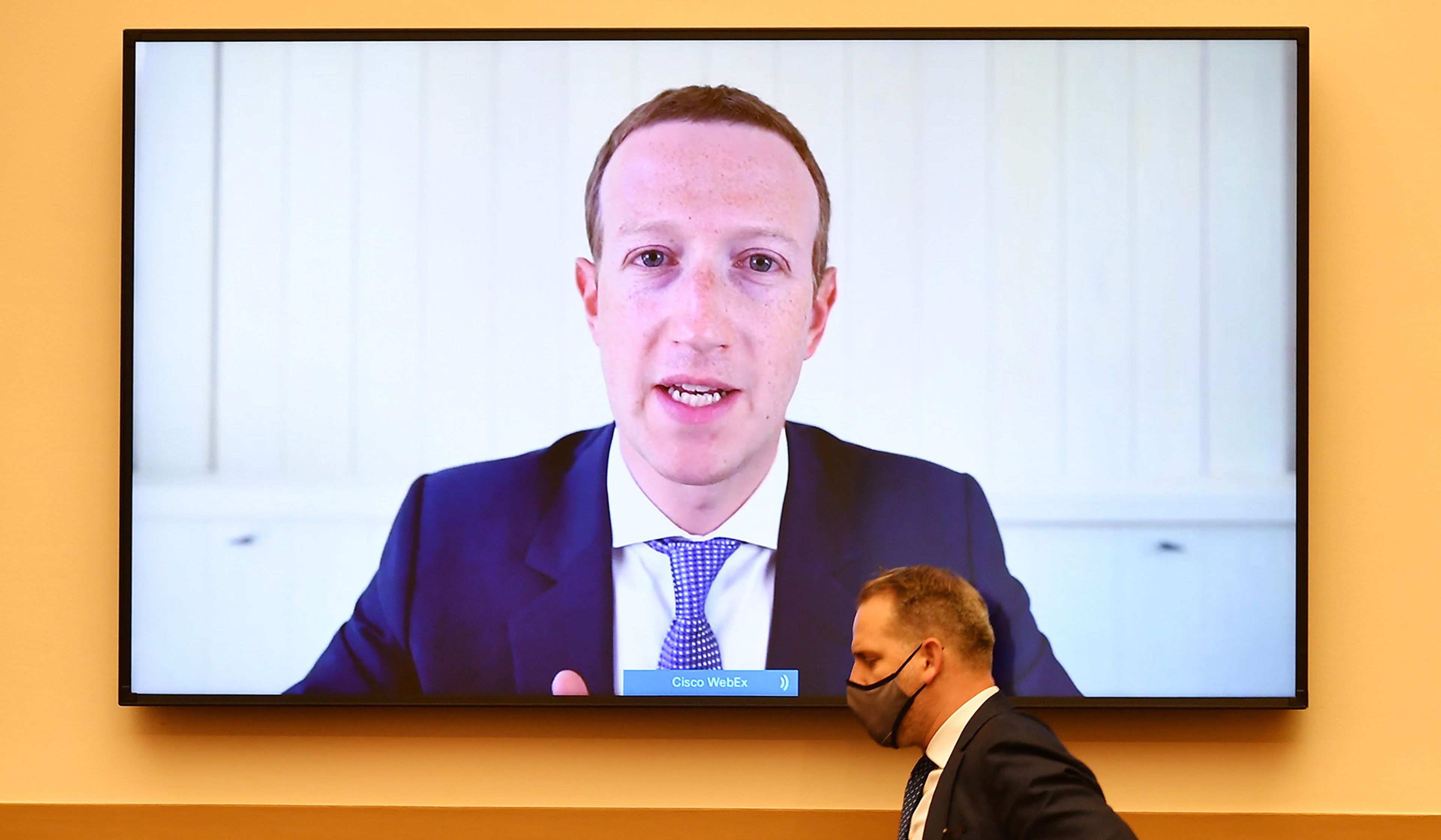

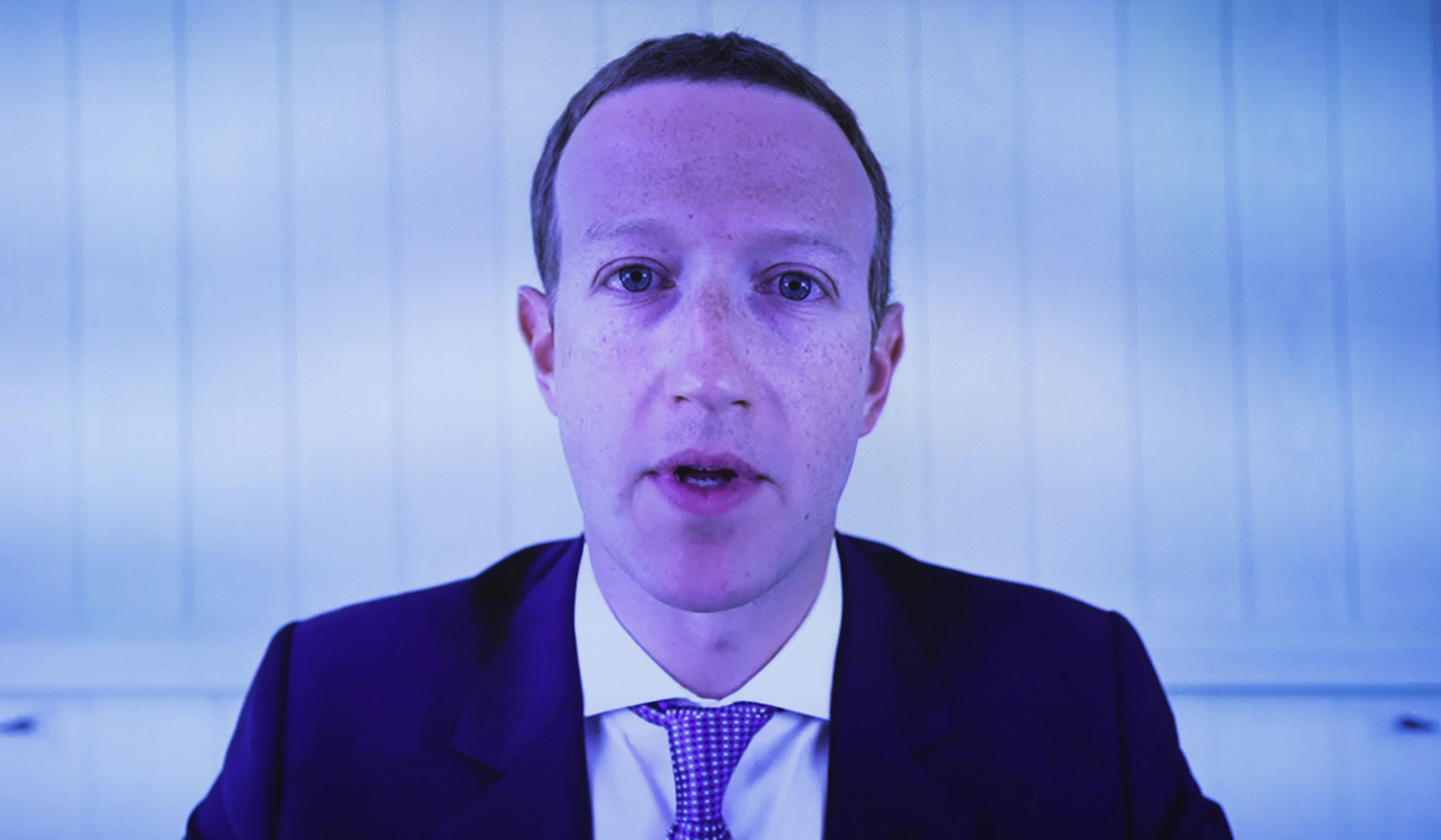

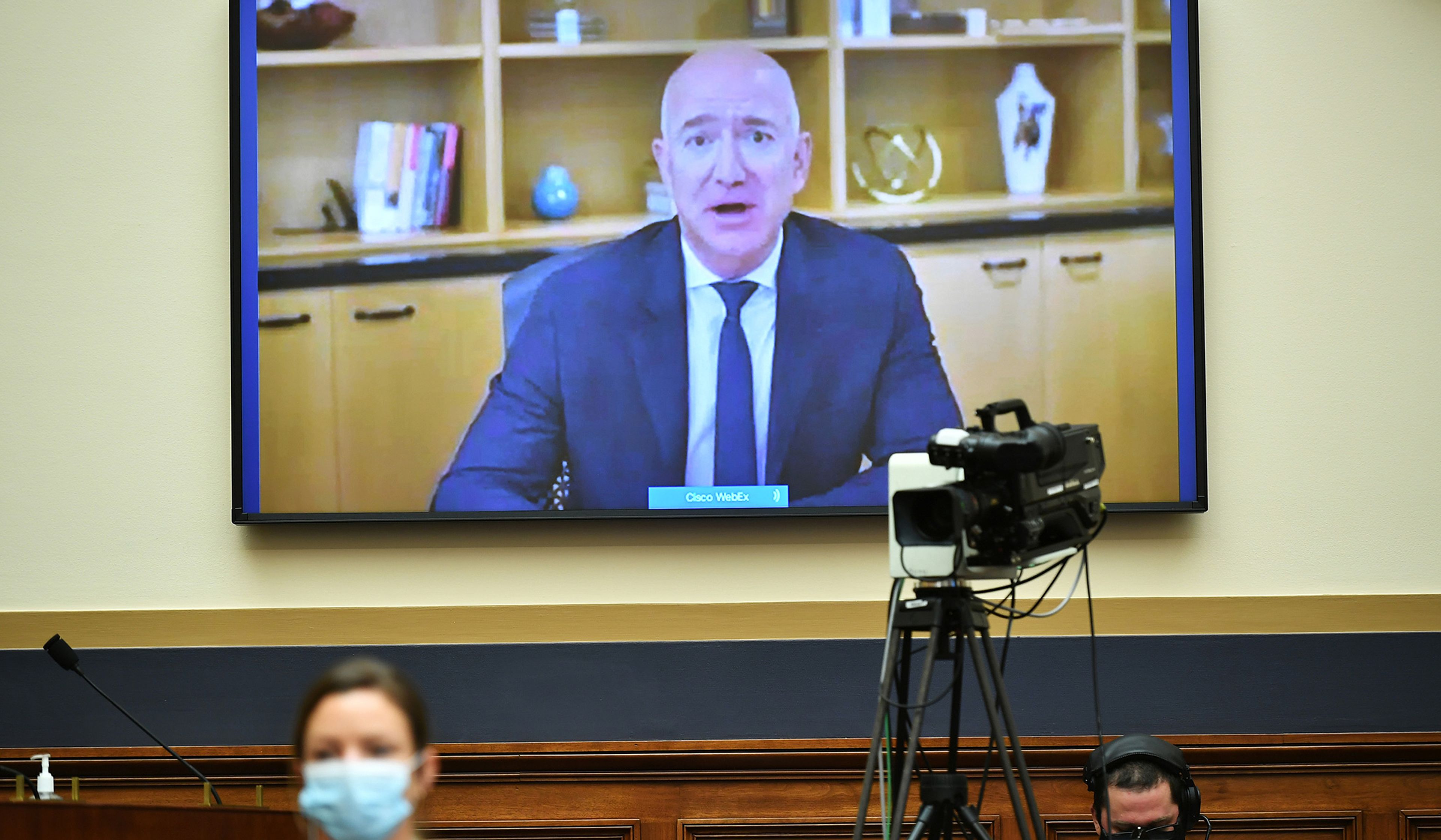

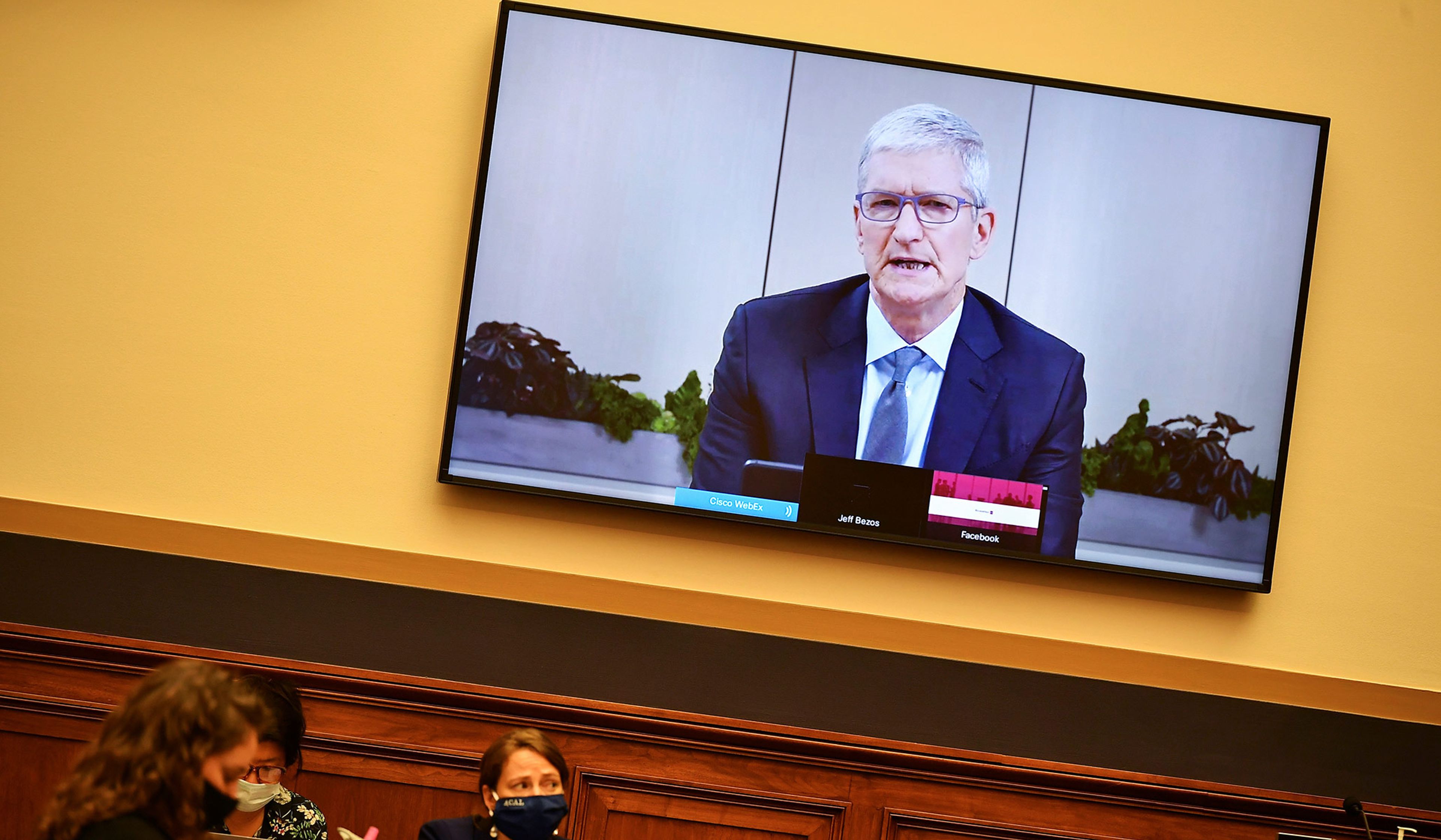
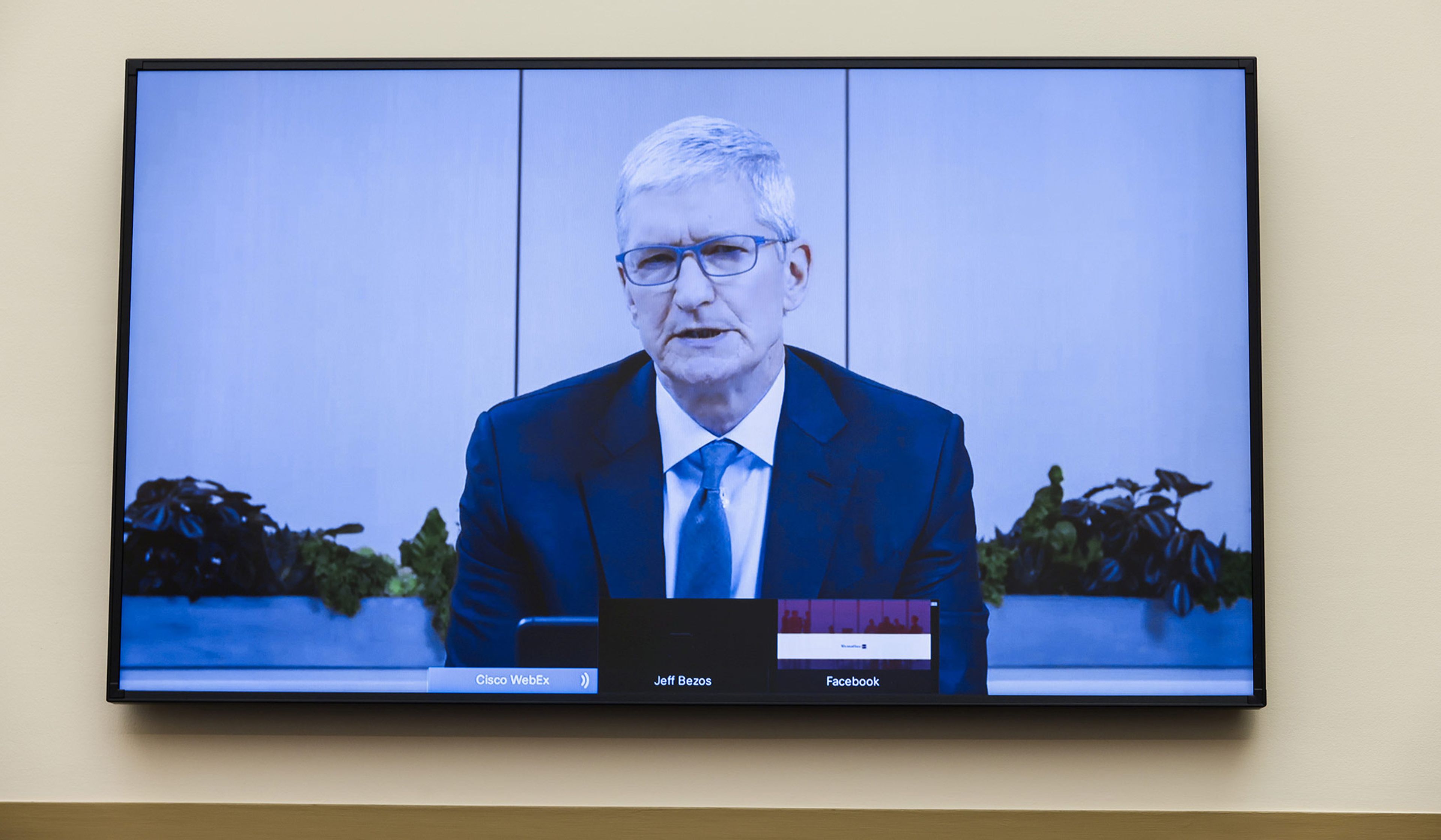
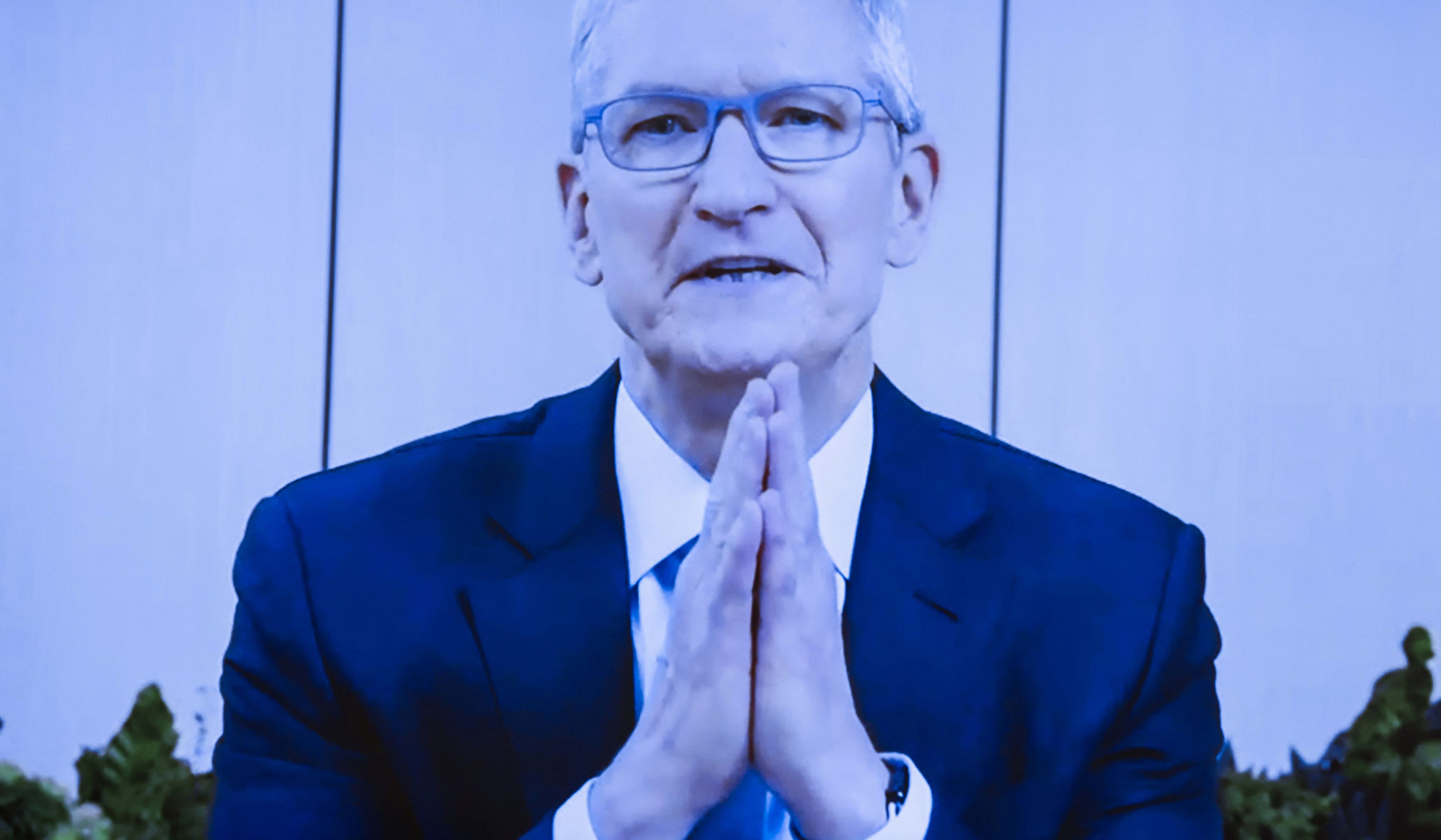
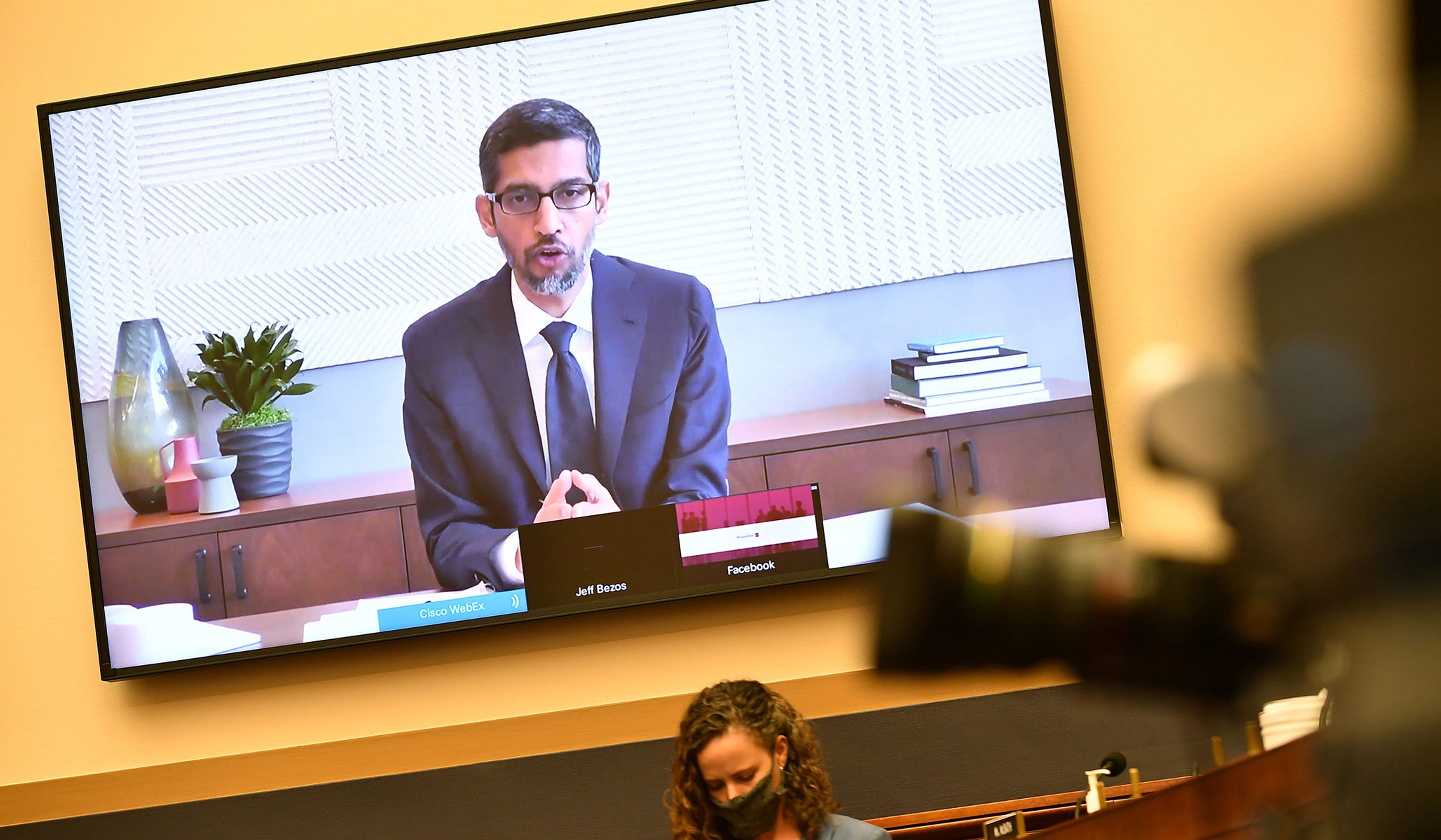
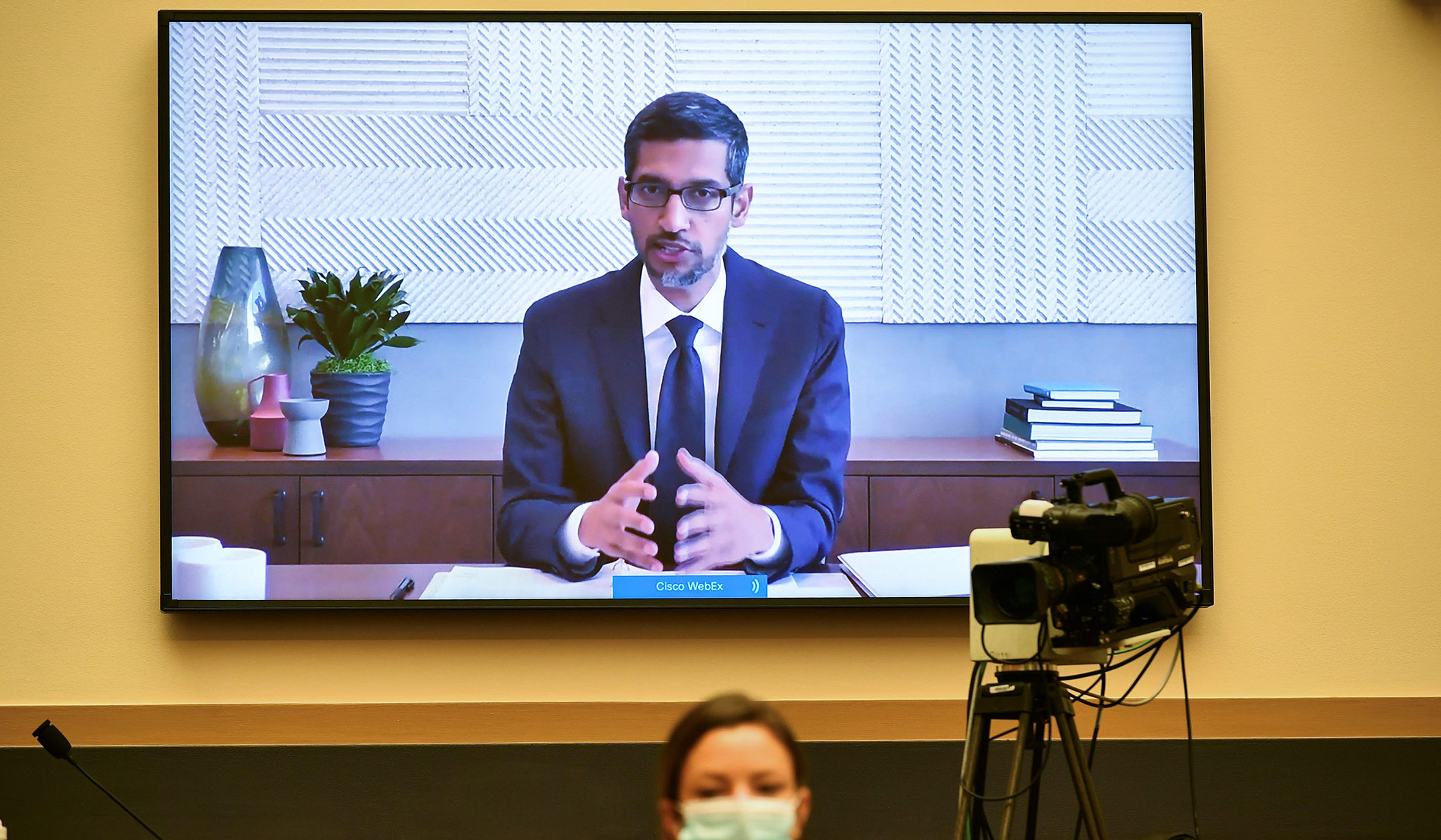

Facebook CEO Mark Zuckerberg testifies before the House Judiciary Subcommittee on Antitrust, Commercial and Administrative Law on “Online Platforms and Market Power” on Capitol Hill, July 29, 2020.
Mandel Ngan/Pool/via Reuters
Where might competition come from? This year gave us a taste. The videoconferencing company Zoom, for instance, saw its market cap exceed $150 billion during the COVID-19 pandemic as businesses shifted to remote work and individuals hunkered down at home. Zoom competes directly with Big Tech software such as Microsoft Teams, Skype, Google Meet, and FaceTime, while more broadly drawing users from online-communications tools such as Facebook, Twitter, and WhatsApp. The company took market share because it offered a better product.
Chinese video-sharing platform TikTok rose meteorically this year — powered, ironically, by its ads on Facebook. The company won 800 million users by creating a new kind of social network. Its ties to the Chinese Communist Party highlight another risk of antitrust action: If we weaken our domestic companies, who’s to say less scrupulous foreign competitors won’t take their place?
Elsewhere, entrepreneurs are rethinking the very architecture of the Internet. Though the craze and speculation around Bitcoin make it easy to dismiss, its impact is indisputable. As a payments platform independent of the banking system, it represents an alternative to the economy as we know it. Other technologies modeled on Bitcoin, such as Ethereum, present the possibility of a new Internet altogether, in which data are distributed among “peers” rather than warehoused on the servers of large companies.
Facebook understands the threat: It led the creation of the digital currency Libra, backed by a handful of other businesses. Libra faltered this year after PayPal, Mastercard, and others pulled out, while Bitcoin’s market cap reached an all-time high of $350 billion. That is what competition looks like.
Compare the activity in the largely unregulated digital world with that in the heavily regulated physical world. We now travel about as quickly as we did in the 1960s: Centuries of rapid acceleration — from lightweight ships in the 16th through 18th centuries to trains in the 19th century to cars and planes in the 20th century — have come to a grinding halt. We can thank regulations preventing the production of cheap nuclear energy, which would no doubt accelerate travel speeds. Our telecommunications companies, hobbled by antitrust litigation, can no longer keep up with foreign competitors such as Huawei and Nokia. 5G mobile connectivity may be the first modern technological advancement in which the U.S. lags. Even our military weaponry largely resembles that of prior decades.
It is hard to avoid the conclusion that the alternative to Big Tech is sclerosis. The size and power of our tech overlords may discomfit us, but stagnation of the Internet should discomfit us more.
Bork wrote that “there has always existed in this country a populist hostility to big business, . . . reinforced by the suspicion that major corporations are somehow to blame for hardships that have their origin elsewhere, in the politics of OPEC, in federal regulation of gas prices — or in bad weather, for that matter.”
At present, politicians and pundits blame Big Tech for social division, censorship, election manipulation, poor educational outcomes, and all manner of other ills. In previous decades, the same sentiment was directed toward Walmart, Microsoft, AT&T, and General Motors. New technologies raise real concerns, but the perennial question is whether regulators are better positioned to address those concerns than entrepreneurs and consumers. The evidence points to a resounding “No.”











Comments