On the ground floor of a nondescript office building in downtown Washington, D.C., you will find SoulEx. It’s a float-tank facility founded in 2017 to make “this magical therapy available to all in the Washington, DC metro area.” Pedramin Vaziri founded SoulEx (short for “Soul Experience”) after a “phenomenal” experience of floating. But for all the supposed wonder of float tanks, SoulEx’s building doesn’t stand out. You could walk by, espy the dentist’s-office–cum–Apple-store interior of its lobby, and never know what was inside. One day, however, I walked in.
I had long been interested in float tanks as a means of sensory deprivation. Fascinated by their pop-culture depictions in Altered States, Fringe, and Stranger Things, and further enticed by famous users (podcaster Joe Rogan, quarterback Tom Brady, NBA MVP Steph Curry, among others), I wanted to experience the magic myself. Before I could, however, Vaziri took me through a pre-float orientation. I took off my shoes, replacing them with provided sandals. She then opened a door from the lobby into a quieter, darker area with a series of numbered doors. We entered Door No. 1.
Inside was a sauna-like wood-paneled room, dominated by a large white pod, split open like a clam. Paired blue lights circled its bottom half on the inside. Also in this room were a glass shower stall, a towel rack with a shelf above, a small garbage can, a large rock, a stool, and a bathrobe on the door. Vaziri said users shower before entering. She then pointed to two wax earplugs on the towel-rack shelf. I was to roll these into a ball and put them in my ears before showering, and keep them there while floating, to block water.
When I was ready, Vaziri would leave the room, and the tank would begin filling with water. At the right level, the flow would stop, and I would get in. The room’s motion-activated lights would turn off once I did. She advised that I, a tank neophyte, use a floating neck rest. She also pointed to a button inside the tank to press for emergencies. Once I was in, there would be lights and sound for a few minutes, but they’d fade out, fading back in as the 60-minute session ended. I had no questions and said I was ready. She pressed some buttons on a wall panel, and the tank began to fill with water. Then she wished me the best and left the room.
When she was gone, I locked the door, undressed, and turned off my digital recorder and phone. I then inserted the earplugs. They muffled all sound outside my body, including my voice and, once I entered the shower, the water droplets, making them sound like a distant, heavy rain. Yet they amplified all sound inside my body, such as that of swallowing spit.
In the shower, I had stood still enough to shut off the room’s lights. Everything was dark, save the now-red and eerie ring of lights inside the nearly full flotation tank. So I left the shower and moved around to turn the room lights back on. In the mostly silent room, I didn’t realize how used I had gotten to the sound of the tank filling with water until it stopped filling. The room then became totally silent. Ready but also nervous, unsure, and skeptical, I entered the tank.
I clambered in awkwardly, dropping in and hitting the tank’s bottom with my own. Getting up, I reached to the top of the pod and pulled it shut over me. I heard faint splashes from my entry and my breathing, but nothing else. I briefly thought I wouldn’t float. But when I positioned myself on my back, arms by my side with palms turned up, head back and resting on the supplied headrest, I did.
The tank was still lit. Gentle music mixed with nature sounds played. As I lay there, I initially appreciated being eased into the experience, then grew annoyed at these remaining stimuli, anticipating the darkness and silence. After five minutes, the sounds stopped, then the lights shut off, one by one. The darkness I sought had come.
And it was indeed dark. Keeping my eyes open made no difference. Yet I did not find the utter blackness intimidating. I retained a lingering consciousness of my body: The position of my hands was somehow uncomfortable. So I turned my palms over, and, after finding the right position for my neck, began to relax.
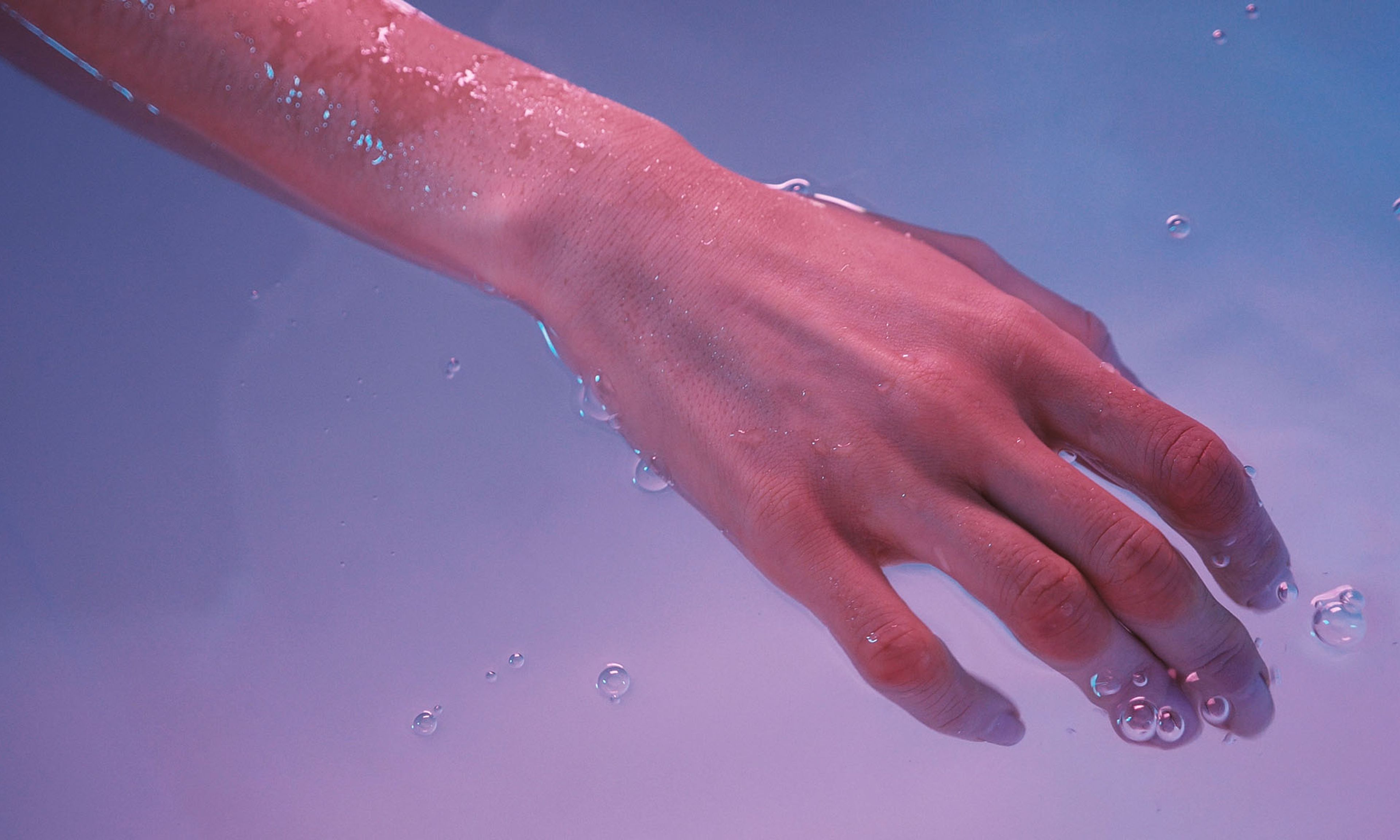
I became conscious of another sign that I still had a body: Even though the tank’s salt water was kept at body temperature to erase the distinction between a tank user’s skin and the water itself, there was sweat on my forehead, above the water’s surface. I began to worry that I would sweat throughout. But it soon faded, and I was soon unable to distinguish between my body and the water. My arms and my legs, liberated from gravity and any other stressors of use, began to go numb.
As I sensed my body less, I started to feel as if I was spinning. I probably was moving slightly; at least once, I touched the sides of the tank. The spinning feeling was more severe than what was possible. But I felt like I had gone halfway around the tank.
A localized yet acute itch ended the spinning. I hoped it would quickly diminish. Instead, it intensified, becoming almost the totality of my sensory experience. I thought only of it, but resolved to do nothing about it. Thankfully, it abated.
Now fully engaged in the tank experience, I turned to its other aspects. I realized that my loud breathing might have blocked other noises or sensations. So I quieted it.
That’s when the hallucinations started. As my open eyes stared straight up into the dark, some very faint, fuzzy, gray shapes began to coalesce. They did not take any definite forms, ending up only as wavelike configurations moving back and forth. As I saw them, I got excited. I thought they were only the beginning, that soon I would enter the Stargate from 2001: A Space Odyssey, or something comparably kaleidoscopic.
Alas, that was it. The waves dissipated. Suddenly, I became very conscious of my vulnerability. I grew frightened, perhaps by the now-vanished hallucinations, that something might happen to me while I was incomparably defenseless. A few quick prayers relieved this, however, and I returned to my prior relaxed state, wondering what was next.
Now the stimulation came from my ears, wax-plugged though they still were. The noises coming from within my own body were much louder than those from without. I began to hear my heartbeat and the small water ripples it created. I heard the loud gurgling of my stomach. When I interrupted shallower breaths with a deep one, it resounded through the tank like a gust of wind, and my raised diaphragm upset the water’s calm surface. I also heard a few noises from outside: a low humming, fading in and out, and what sounded like a heavy item being dropped.
The focus on sound revived my stream of consciousness. I tried directing my thoughts fruitfully, toward aspirations in my own life: running (a longtime passion yet the source of much struggle for me at the time) and a novel I was then drafting. I tried picturing myself as a sub-2:30 marathoner. But I felt no magical effects from imagining the image. Turning toward my novel, I tried to resolve its unfinished aspects. No luck.
Then the stream of consciousness became a flood. My mind returned to things from before the tank session. Though less irritated by them now, I was annoyed to be thinking about them again at all. For the rest of my session, I fought to suppress my wayward mind. But these inner digressions weren’t completely useless. They produced two pop-culture comparisons to the tank experience: the Pink Floyd song “Echoes” (particularly its middle instrumental section) and the scene in The Matrix in which its protagonist first awakens from simulated reality in the machine world and finds himself naked in a watery pod.
Yet the digressions dislodged me from the experience. I was reminded where I was, and that I had a body. I saw, to my left, a faint yet constant horizontal line of light, which crept into the closed tank. I felt bubbles travel from the tank’s bottom, along my body, to the water’s surface. And I got another localized itch, though it subsided.
I spent the rest of my session wondering how much time was left. Without any way to tell time, I had no idea how long it had been. I knew I’d have to leave eventually. Yet when the sounds did begin to return, and the lights began to turn on, I was furious. Surely it hadn’t been long enough. But it had been. The sounds and lights faded back in. After so much time in darkness, any light was blinding, so I closed my eyes. Even holding them half open was hard. For the first time in almost an hour, I moved — to put one hand between my eyes and the light.
For five minutes I lay there, easing myself back into reality. I was again conscious of my body, now visible before me. Seeing it, I realized how weird what I’d been doing was. I remained motionless until I heard a muffled voice announce my session’s end. I stood up, then crouched as I lifted the pod’s top, standing up taller as I did. Then, I stepped out.
I felt something I hadn’t since going in: gravity. In the tank, I not only transcended Earth’s gravity but also didn’t notice that I had done so until I emerged. On the way back to the shower, I removed my earplugs, and sound fully returned. I showered, dressed, then immediately recorded my sensory impressions. As I did, the tank, which had begun to drain as I left it, swallowed the last of its water.
I left the room, removed my sandals and restored my old shoes, and then walked into the lobby, where Vaziri and a friend of mine waited. They asked me what it was like. All I could muster was that it was “wild.” I asked Vaziri one question before leaving: How are people afterward? She said some are quiet; others, exuberant. I thanked her and walked with my friend back into the world.
After I left SoulEx, I felt lighter, cleaner, and more relaxed. It felt strange to return to what I had done beforehand: reading a book, riding a bus, sending text messages. The city around me did not seem noticeably louder. But I saw things more clearly. My body was soothed and freshened; muscle discomfort had disappeared.
I was curious to see how I would sleep. Fitfully, it turned out; my bed was uncomfortable compared with the tank. But I still woke up feeling reinvigorated — so much so that, without any great struggle, I did something that had been quite difficult for me over the preceding days: I went for a run. My head was cleared of the deleterious detritus that had discouraged me from running that week. With the combined effect of a float the night before and my first real run in several days that morning, I felt quite good that day, even if I had not gained psychic powers, traveled to another dimension, or become an Olympic-qualifying marathoner.
Good enough to meet my pre-tank expectations? I’m unsure. But that was partly my fault. I remained very conscious in the tank of the experience itself, though I didn’t know how to avoid that; it was completely new to me. Knowing that I planned to write about it also forced me to process each new sensation as something to be related later. This may have kept me from welcoming the full experience.
I think that I nonetheless benefited from floating. I emerged feeling better, physically and mentally. And I would go again. Both Vaziri and the books I’ve read about sensory deprivation claimed that the benefits are cumulative. Another session would also probably lessen my obsession with the newness of the experience. If I weren’t planning to write about it, I would be likelier to accept things as they came to me.
There are possible anxieties associated with tanks: trouble letting go, darkness, vulnerability, unpredictability. These all featured in my float. But if you can get past them, floating promises profound relaxation, deeper than that I have found almost anywhere else.












Comments