• The way it works this winter is that if a groundhog sees its shadow, Joe Biden will come up above ground.
• Republicans put up two weak candidates in a competitive state, and then discouraged their voters from showing up. Relying on conspiracy theories and falsehoods, President Trump and many Republicans who felt compelled to play along with him encouraged the state’s conservative voters to think that their votes would not be fairly counted, and that Georgia Republicans were shirking their duty to protect election integrity. The result was losing both Georgia Senate seats, and thus control of the Senate. It’s not a catastrophe: The Democrats’ control of both houses of Congress is thin, and Republicans retain the power to filibuster. What makes these losses painful is how easily avoidable they were.
• Representative Louie Gohmert of Texas believes that he has discovered a remarkable source of power hidden deep in the Twelfth Amendment. According to a lawsuit Gohmert filed, the role that Vice President Pence plays in Congress’s certification of the Electoral College vote is not ceremonial but absolute. If Pence decides that Donald Trump has won, then Donald Trump will have won, and the rest of the apparatus will have been rendered moot. This is, of course, preposterous. In effect, Gohmert is suggesting that the framers of the Twelfth Amendment intended to make the vice president of the United States an election dictator in possession of untrammeled authority to decide who has emerged victorious. The text betrays no such intention. Neither does the historical record. Otherwise, one might have expected previous vice presidents to have noticed — including Richard Nixon in 1960 and Al Gore in 2000, both of whom lost extremely close races that they were not entirely convinced had been conducted fairly. If Gohmert had prevailed, he would have struck a death blow against American democracy, against federalism, and against the Constitution. Thankfully, he was swiftly laughed out of court.
• Representative Chip Roy (R., Texas) is a rising Republican star who proved, in defeating abortion-lobby darling Wendy Davis, that a principled conservative running on ideas remains a force to be reckoned with. Though he supported President Trump for reelection, he has also been clear-eyed about the folly of claiming that an election in which Republicans did exceptionally well down-ballot must have been rigged just because the president lost. At the first, usually ceremonial session of the new Congress, Roy deftly called out his fellow House Republicans on their illogic — in particular, that of the approximately 140 who have threatened to oppose the certification of President-elect Biden’s victory. Roy demanded a roll-call vote on the seating of the new Congress, pointing out that his colleagues might want to object to themselves since they’d been elected based on the “very same systems — with the same ballot procedures, with the same signature validations” that obtained at the top of the ballot. Roy’s fellow Republicans managed to get past their deep concerns about systemic fraud and certify the legitimacy of their own election victories. Well played, congressman.
• Attorney General Bill Barr departed the administration a month early, a stellar aide worn out by the thankless task of serving President Trump well. In his second tenure as AG (the first was 30 years ago under President Bush 41), Barr was an ideal pick: a formidable scholar and defender of executive prerogatives, yet devoted to the Justice Department’s rules and norms. He steered the beleaguered president through the Mueller investigation, ensuring that there was transparency by releasing the report in full and keeping partisan anti-Trump prosecutors from bringing charges based on flimsy evidence and extravagant obstruction theories. During the pandemic, he focused the DOJ on defending religious and economic liberty from overbroad or discriminatory lockdown orders while ramping up federal resources to address spikes in violent crime. His recent impasse with the president owed to his refusal to politicize the Justice Department: He did not rush to publish the Durham report on Obama-administration misconduct or to reveal the Hunter Biden probe before the election (both investigations continue). He said that the DOJ had investigated but not found material evidence of election fraud. Trump and Barr could no longer coexist because the vengeful president wanted comeuppance while the lawman insisted on one standard of justice for all.
• President Trump drew his first veto override when he tried to block a defense-authorization bill. His main, absurd justification was that it endangered national security by failing to change the law governing websites such as Facebook and Twitter. He wants it to be easier to sue those companies. There is a legitimate debate over that question, but it’s not one that justifies holding up the military for one side to prevail. Trump then threatened to veto a needed if imperfect COVID-relief bill that his own administration had helped to negotiate, after Congress had passed it and left town, because he suddenly wanted to send bigger checks to nearly every household in the country. He backed down, but his delay in signing disrupted some unemployment relief. As his time in office draws to a close, Trump has not mastered the basics of how a president deals with the legislature.
• House speaker Nancy Pelosi supported the effort to include $2,000 checks in the coronavirus-relief package while Senate majority leader Mitch McConnell did not. Both nevertheless had their homes vandalized in the wake of the measure’s failure. In Pelosi’s case, fake blood and a pig’s head were accompanied by a series of spray-painted messages including: “$2K,” “We want everything,” and “Cancel rent!” McConnell’s property had “WERES [sic] MY MONEY” scrawled on the door and “MITCH KILLS THE POOR” written on a window. It’s been a hard year, and Congress’s inaction — it took seven months for them to pass a second relief package — has made it even harder. The remedy, however, is at the ballot box, not the home of Pelosi, McConnell, or anyone else.
• Arizona has two Democratic senators and went narrowly for Biden. The state’s Republican Party, under Kelli Ward, is responding by hunkering down. Ward has gone after the state’s Republican governor, Doug Ducey, for following the state’s election laws, and the party’s Twitter account has exulted that the days of Republicans such as John McCain, Jeff Flake, and Mitt Romney are over. Those three men have and had their pluses and minuses, but all of them won elections in Arizona, which is something Ward’s party cannot say.
• Senator Marco Rubio (R., Fla.) accused Dr. Anthony Fauci of lying about COVID. Early on, Fauci said most people should not wear masks. He changed his tune, saying the original advice was based on concern that health-care workers would have enough masks for themselves. But that’s not the rationale he was giving at the time. More recently, Fauci has said that he has been raising the estimates he gives for how many Americans need to be vaccinated to achieve herd immunity — raising those estimates, he says, in part based on the rising percentage of people who are willing to take the vaccine. “Lying” may be an unduly harsh characterization, but this isn’t being upfront either. It’s treating American citizens as objects of manipulation rather than fellow adults: an attitude so pervasive in the public-health world that even its intelligent and conscientious denizens don’t seem to think twice about it.

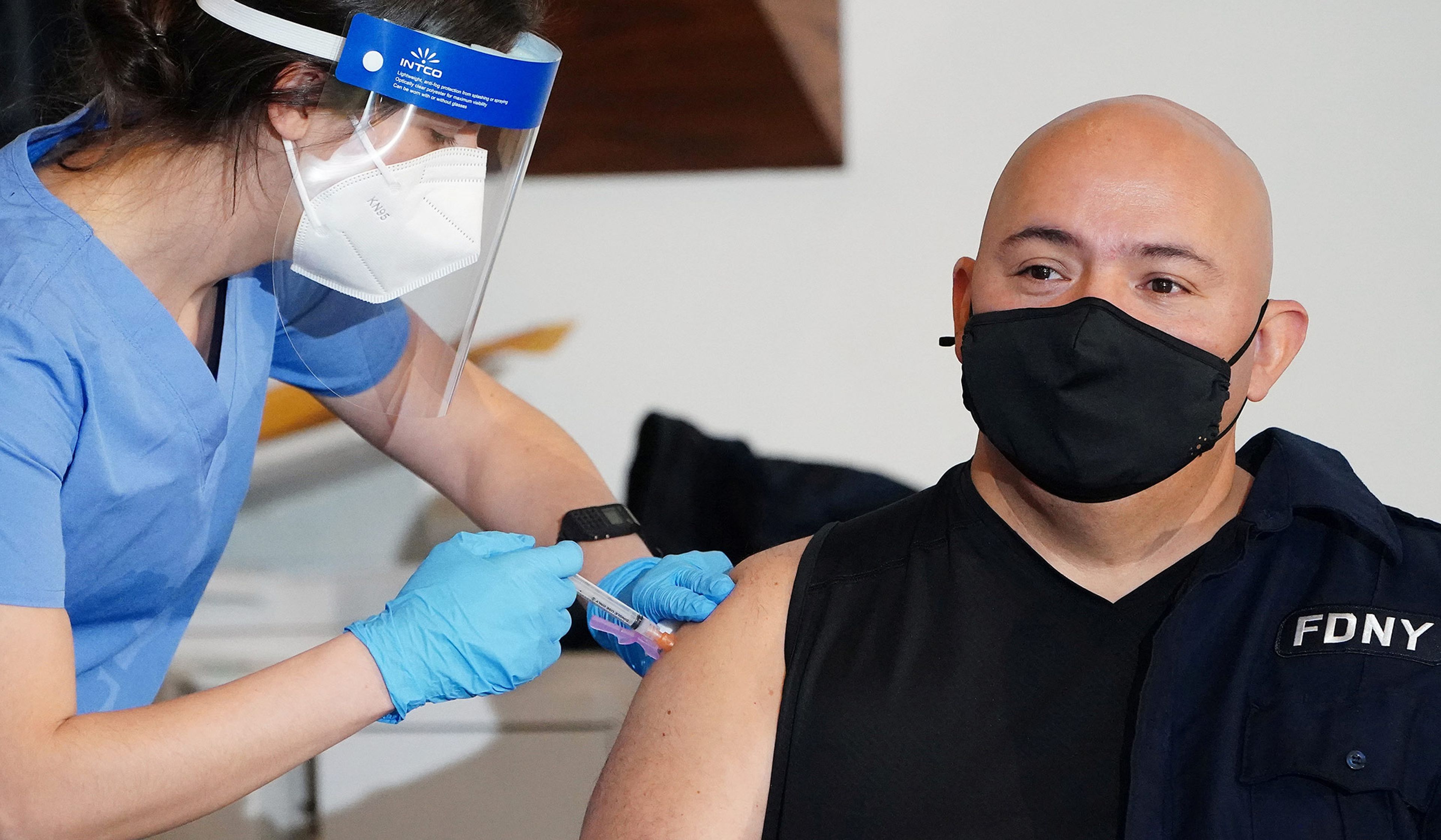
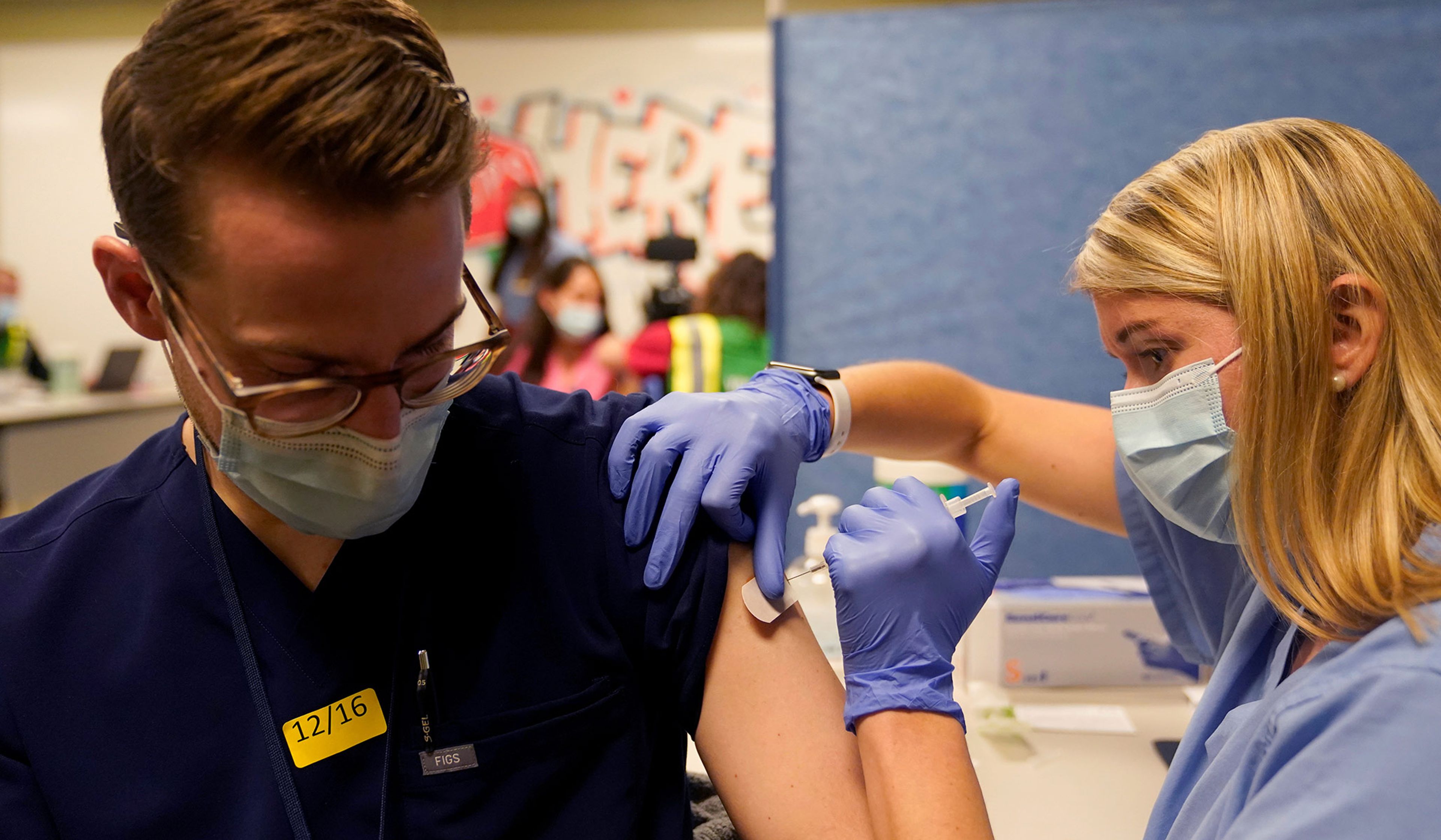

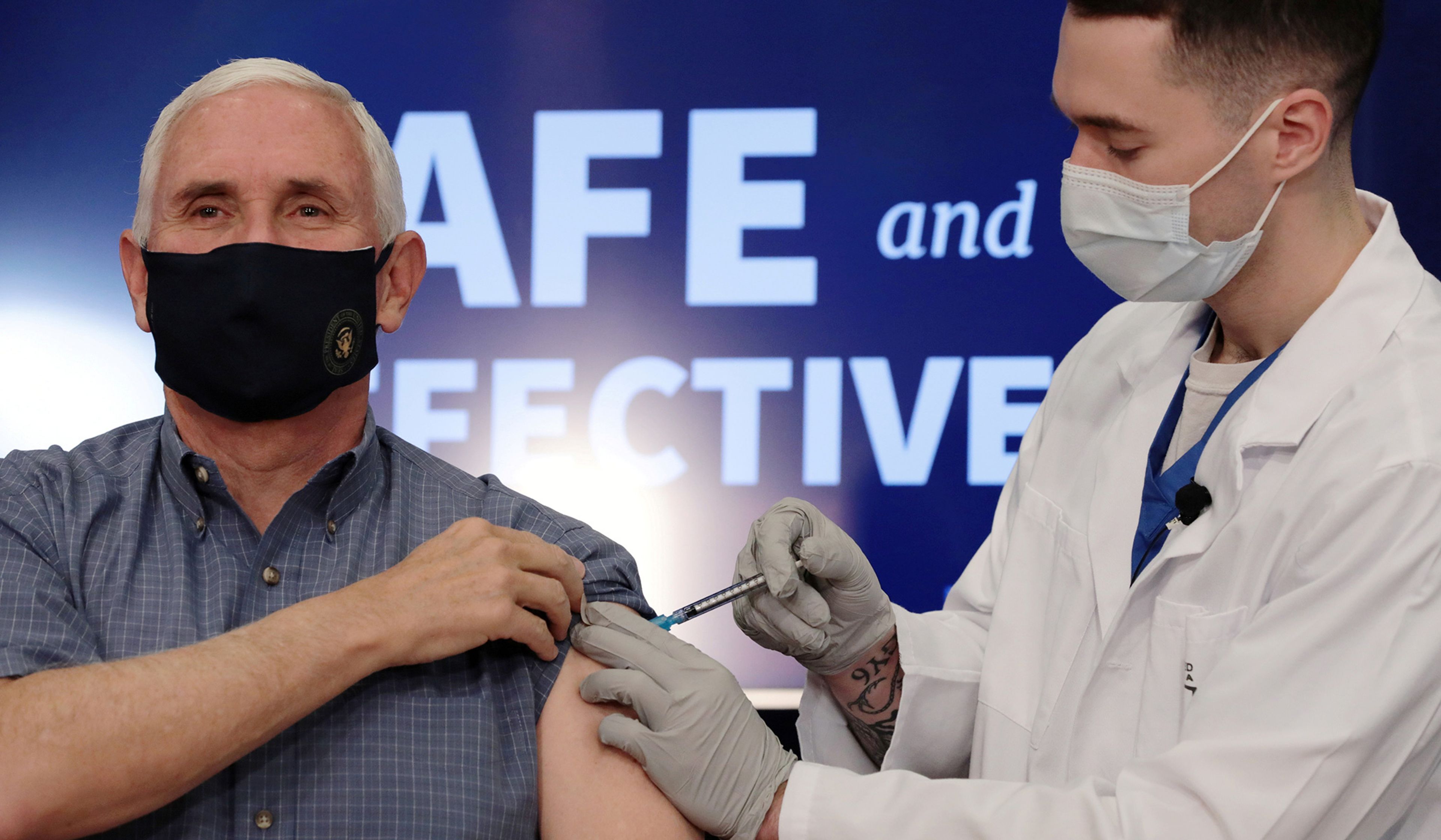




A nurse prepares a syringe with the Moderna COVID-19 vaccine for a worker of the New York City Fire Department Bureau of Emergency Medical Services in New York City, December 23, 2020.
Carlo Allegri/Reuters
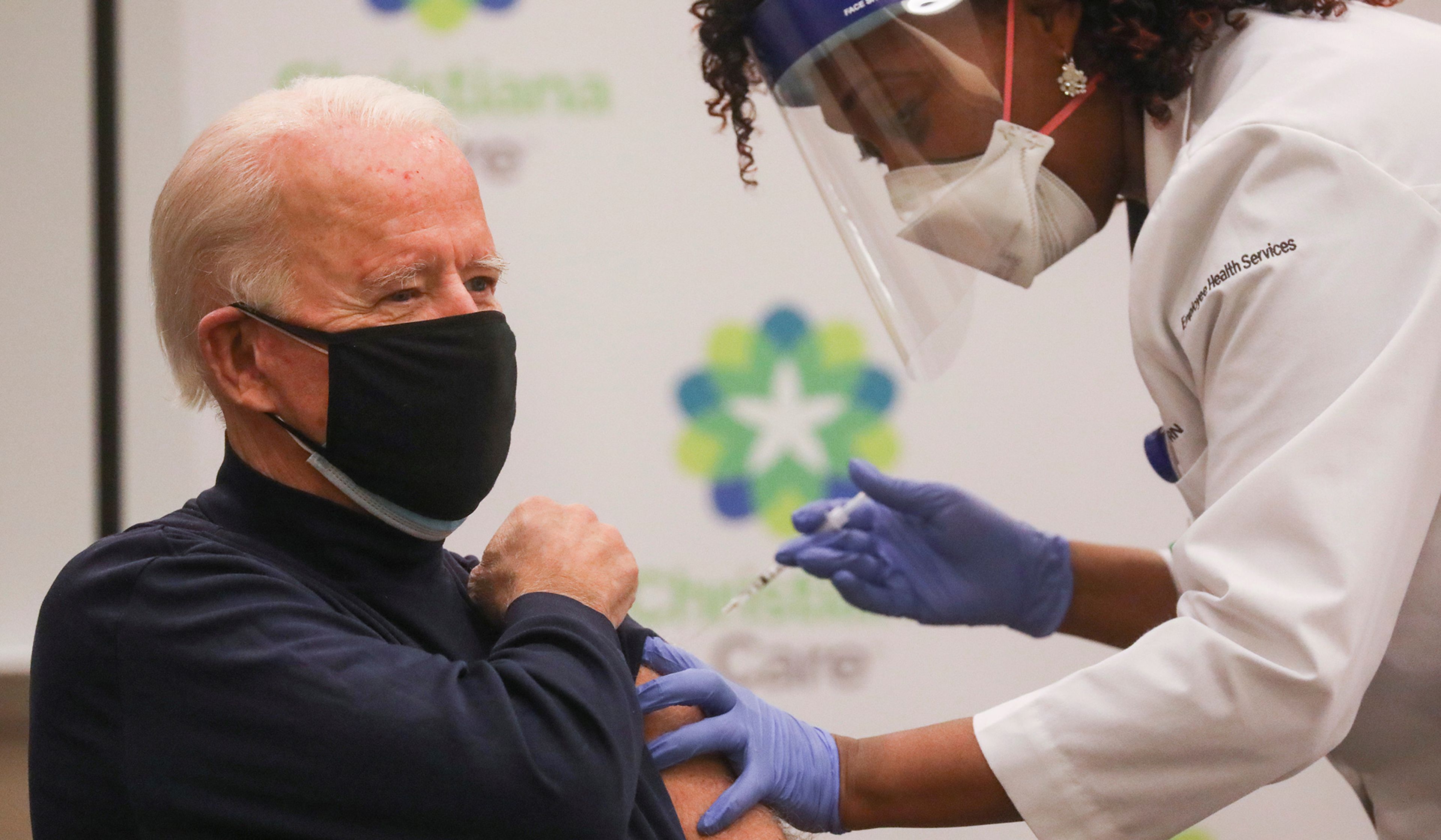
• COVID vaccines were developed faster than a lot of people expected, but now they are getting into people’s arms too slowly. One cause for the delay appears to be the desire to give vaccinations to all health-care workers, regardless of how much contact they have with COVID sufferers. The best policy would probably be to let people get vaccinated on a first-come–first-served basis, with the elderly allowed to skip the line. A second-best would be to vaccinate by age group, starting with the oldest. Former FDA commissioner Scott Gottlieb also thinks it’s a mistake for the federal government to hold on to doses to make sure everyone who got the first shot can get a second. We are producing shots quickly enough not to hoard them for this reason. As we consider how to prioritize, remember that the first priority is speed.
• The public-health establishment hardly covered itself in glory during 2020, and it ended the year with one of the worst embarrassments of all. A Centers for Disease Control work group, tasked with producing recommendations as to how states should prioritize vaccine access, released a preliminary report in late November. The document posited that, after health-care workers and those in long-term-care facilities had been taken care of, essential workers should get the vaccine before those ages 65 and up. Why? The experts’ own modeling said this could increase the death toll, since the elderly are at such higher risk. But essential workers got bonus points for “equity,” because this group is more heavily poor and minority. An early-December New York Times story quoted several experts defending such thinking, including one who remarked that “instead of giving additional health benefits to those who already had more of them, we can start to level the playing field a bit.” After a public outcry, the group came up with something more sensible, prioritizing those over 75 along with certain “frontline” essential workers, and states remained free to make their own plans if they wanted. But the original suggestion laid bare the depraved priorities held by those in charge of the nation’s medical “ethics.”
• In the House, Representatives Tom Malinowski (D., N.J.) and Adam Kinzinger (R., Ill.) introduced the Hong Kong People’s Freedom and Choice Act. The bill would provide temporary refuge to Hong Kongers already in the United States and would expedite the asylum process for those wanting to flee here. Said Malinowski, who was born in Communist Poland and served in the State Department: “Welcoming Hong Kongers to the United States is more than a humanitarian gesture. It’s a message to the Chinese government that if you crush Hong Kong, you may lose the very people who most contribute to its vitality. It’s about fighting a closed and fearful system with the openness and self-confidence of ours.” The House passed the bill on a voice vote. The bill was blocked in the Senate, however, by Ted Cruz (R., Texas), who registered two objections: The Chinese government could salt spies among the refugees, and the Democrats want to pursue an open-borders agenda. In our judgment, neither of these objections should block the bill, and we hope it is adopted as soon as possible. The United States stands for something in this nasty, bruising world.
• House Democrats, working diligently to protect Americans from all manner of danger, have unveiled “visionary” new rules for the 117th Congress that are completely gender-neutral. Gone is the Office of Whistleblower Ombudsman, who has been rechristened the “Whistleblower Ombuds.” Gone are “husband” and “wife,” “brother” and “sister” (renamed “spouse” and “sibling,” respectively). The House will now refer to seamen as “seafarers” and chairmen as “chairs,” and has also excised “man,” “woman,” “father,” “mother,” “son,” “daughter,” “uncle,” “aunt,” and any other English word that happens to imply a person’s sex. “These future-focused proposals reflect our priorities as a caucus and as a country,” Nancy Pelosi declared, in case you were wondering. Half-right, anyway.
• Just before Christmas, President Trump issued an executive order “on Promoting Beautiful Federal Civic Architecture.” It praised various older styles of architecture in federal public buildings in D.C. (such as those of the U.S. Capitol and the Lincoln Memorial) and around the country, lamented the rise since the 1950s of buildings constructed with a basis in more modern styles, such as brutalism and deconstructivism, and established that “classical architecture shall be the preferred and default architecture” for new federal public buildings that cost more than $50 million to build, “absent exceptional factors necessitating another kind of architecture.” The order stipulates that building styles should be selected to serve the American people rather than to impress “the architectural elite.” That elite and others predictably reacted with scorn to the final version of this order, much as they had when a draft of it leaked in February. They are mistaken. Public buildings governed by the Guiding Principles for Federal Architecture, the decades-old federal-architecture guidelines promulgated and enforced by the General Services Administration since 1962 and now updated by this order, are indisputably uglier than what came before. Washington, D.C., is blighted by many of these buildings (such as the Hubert H. Humphrey Building, which houses the Department of Health and Human Services), which perversely marry form to bureaucratic function with squat, gray, blocky exteriors more befitting an Eastern-bloc nation than a free republic. Making federal architecture great again won’t restore limited government, especially if this order becomes one of the many that President-elect Biden reverses. But this is one area where Biden should think twice before reflexively undoing something Trump has done.
• “A cadet will not lie, cheat, steal, or tolerate those who do” is the simple but firm honor code of the United States Military Academy. Unfortunately, West Point seems willing to tolerate at least a bit of cheating. In December, officials disclosed the largest cheating scandal at the academy in decades. Seventy-three cadets have been accused of cheating on a calculus exam in May, after instructors discovered a pattern of “irregularities in the mathematical work.” In contrast with previous large-scale incidents — such as in 1951, when 90 cadets were expelled, or 1976, when 150 seniors or “firsties” were dismissed or resigned for cheating — 55 cadets involved in the current scandal will be enrolled in a “rehabilitation program.” “The honors process is working as expected, and there have been no exceptions to policy for any of these cases,” a West Point public-affairs officer told the New York Times. “Cadets are being held accountable for breaking the code.” From George Washington to Ulysses Grant to Dwight Eisenhower, unimpeachable integrity has been a foundational requirement of the republic’s military leadership. That’s unlikely to be the message received by the Army’s future officers after this incident. The Army should expel these cadets, not from vindictiveness but from prudence.
• Bill de Blasio is engaged in a cover-up. The New York City public schools do a wretched job of educating the black and Latino youths who make up nearly 70 percent of students, and this failure shows up, among many other places, in the admissions figures for the city’s selective schools, where Latinos make up a much lower share of the students than they do elsewhere. Mayor de Blasio knows these selective schools well: His own children attended Brooklyn Tech and the Beacon School, two of the hardest to get in to, both home to students who are disproportionately well-off and white. (De Blasio himself attended Rindge and Latin in Cambridge, Mass., back when he was known as “Warren Wilhelm Jr.”) The academic success of New York City’s selective public schools, like the success of its charter schools, casts a harsh light on the failure of its conventional public schools — a failure that imposes especially high costs on children in poor, black, and Latino families. De Blasio could try to do something about that failure. Instead, he proposes to effectively abolish the selective schools by ending their selectivity, with students to be chosen in a random lottery instead. But the scandal isn’t that the Beacon School is competitive. New York’s scandal is that so few Latino students are prepared for that competition.
• Statistics is the science of finding patterns in multiple discrete events, but sometimes one event epitomizes an era. Days into the new year, Bryan Thompson, 43, became a one-man Manhattan crime wave. In the space of a few hours, he clubbed a woman and two men in a subway station, struck another woman on the street, attacked a man in an SUV and stole it, crashed it into two parked cars, smashed the windows of two more cars in vain efforts to steal them, beat a couple outside a hotel, and then successfully stole yet another car, which he crashed into a police car. When he refused to leave his last vehicle, cops broke the window and tased him. One of Thompson’s victims was left unconscious, another got window glass in her eye. A madman on a spree: Could happen anywhere, anytime. But seven years of Bill de Blasio have left Gotham under-policed; COVID leaves its streets relatively empty, emboldening the lawless further. New York needs a good mayor and a vaccine. It will likely get only one of these in 2021.
• Drug-overdose deaths in San Francisco have increased by nearly half from the rate of a year ago. In Baton Rouge they have almost doubled. Overdose deaths are up in places ranging from Butler County, Ohio, to New York City, and are at record levels in Milwaukee. These deaths are to some extent another casualty of the coronavirus epidemic: Just as Americans’ alcohol consumption rose sharply with the lockdowns, consumption of illegal drugs is up in a situation of economic and social stress, boredom, isolation, and despair. To make things worse, resources for recovering addicts have been sharply diminished as support-group meetings have vanished and rehab facilities have reduced their operations. This is a horror. It is also a reminder of the limits of social engineering. Like economic life, the network of institutions and relationships that help recovering addicts is a complex, evolved, organic system — and disrupting it, even out of public-health necessity, imposes real costs on real people.
• A U.S. pressure campaign has severely constrained Iran’s ability to exert influence in the Middle East, so the state’s regime has fallen back on some reliable tricks designed to pressure Joe Biden back into the nuclear deal. The Iranian government announced that it will now enrich uranium to 20 percent, a clear violation of the 2015 accord (to which it’s still bound, unlike the United States), and the Iranian navy seized a South Korean oil tanker. Iran’s message is finding a receptive audience. Jake Sullivan, the incoming national-security adviser, recently reaffirmed Biden’s resolve to return to the deal, and the transition team announced that Wendy Sherman, one of the agreement’s chief negotiators, is to be deputy to Secretary of State nominee Tony Blinken. It’s promising that this Obama-world dream team acknowledges that they can’t sideline Israel and America’s Gulf allies this time around, but they’re still probably going to follow their old, discredited playbook.
• Four and a half years after the momentous vote in June 2016, Brexit is finally and fully accomplished with a U.K.–EU trade deal that sailed through Parliament, 521 to 73. It’s all over. The excruciating political turmoil in the wake of Brexit — including a Remainer backlash that threatened the country’s constitution and nearly placed Jeremy Corbyn at the top of government — was overcome by Boris Johnson in his triumphal 2019 election. With the political talent and a mandate to say no to the European Union, Johnson was able to break the logjam. In the end, both sides said yes because continued liberal trade arrangements are in the interests of all parties. Europe benefits from funding scientific research in the United Kingdom, which it will continue to do. Onions can and will still be sent from Belgium to Scotland. Mercedes still wants to sell cars to rich French bankers in England, who in turn want to continue doing their financial work in the City of London, which is free of French regulators and has more attractions than Dublin or Frankfurt. The European Union is succumbing to an antidemocratic utopianism, and so it is good to celebrate the liberation of the United Kingdom from the dreary project of “more Europe.” As an independent, democratic, and sovereign power, the United Kingdom is best positioned to remain a land of liberty, and to address the fissures that have opened up in British society and in the Union itself. Three cheers for rebirth of independence.
• Throughout the Trump era, commentators crowed that the president had ceded the mantle of global leadership to Angela Merkel and Emmanuel Macron. That narrative was overhyped, but we did get a taste of what a stronger, more independent Europe would look like when the EU concluded an investment agreement with China late last month. It still needs to clear some hurdles, but the pact is as abject as you might fear. Although it won greater access to China’s market for European firms (benefiting, unsurprisingly, the German auto industry and France’s Airbus) and vague promises from Beijing to stop certain anticompetitive practices, the EU has accepted the Chinese Communist Party’s “continued and sustained” efforts to stop its enslavement of Uyghurs. Good luck with that. These new supposed “leaders of the free world” have granted the CCP greater legitimacy just as the world has awakened to its escalating campaign of repression in China and abroad. The timing of the deal is no accident. The Chinese wanted to get it done before January 20, to constrain the incoming president, and our allies rushed to oblige.
• A Chinese court sentenced ten activists fleeing Hong Kong by boat in August to jail time (two minors arrested with them were placed in custody of the Hong Kong police). The Shenzhen 12, as they were named for the mainland city in which they were detained, had been making a break for Taiwan, knowing full well that the Hong Kong government would target them under the authoritarian national-security law enacted in May by Beijing. Beijing got them anyway. The lesson is clear: The CCP’s reach under the law knows no limits, and although the arrests took place close to the Chinese coast, Beijing claims universal jurisdiction under the legislation. (The Party can grab dissidents anywhere in the world, provided that the local authorities are pliant enough — and they can be remanded to mainland prisons.) The Chinese Communist Party is turning Hong Kong into a Chinese city like any other, and perhaps also an open-air prison.
• The Soviets and their Russian heirs have long had a fondness for poisoning their opponents, although the attempt to kill opposition leader Alexei Navalny by applying Novichok (the nerve agent used in an unsuccessful bid to kill the Skripals, two Russians based in England, in 2018) to his boxer shorts seems, even by the standards of the Kremlin, to have been a particularly grotesque touch. Novichok can be lethal, and both the Skripals and Navalny are extremely lucky to have survived. Navalny, who was left partly blind in one eye after an earlier chemical attack, was eventually allowed to be taken to Germany to have the treatment that saved him, and is pugnacious as well as brave. Still recuperating in Germany, he made phone calls to two of the FSB agents (the FSB is the successor of the KGB in more ways than one) he suspected of responsibility for the attack, pretending to be a member of the agency. One (whose career prospects may now not be so good) revealed the details of the alleged plot — boxer shorts and all — to Navalny, who was recording the call. The Kremlin denies that there was any attempted assassination and insists that Navalny should return to Russia to face various bogus charges, a move that would lead to his incarceration and is probably designed to discourage him from going home, as he wants to do: An exile is less dangerous than a martyr.
• In December, the lower house of the Spanish parliament voted to legalize euthanasia and assisted suicide. Observers predict that the bill will pass in the senate and be enacted into law by June, if not sooner. In neighboring Portugal, where public opinion on the issue appears more ambivalent, the parliament is considering similar legislation. Some form of “assisted dying,” as its advocates call it, is permitted in Switzerland, Belgium, Luxembourg, and the Netherlands as well as in Canada, Colombia, and some states in the U.S. The penalty for hastening death in Spain is a prison sentence of up to ten years. More than 80 percent of the population there favors decriminalization, according to some polls. That figure is more than 20 points higher than the percentage of members who voted for the bill in the lower house, and so the pro-life movement should understand that simply electing new lawmakers to repeal such legislation would be a worthy goal but a stopgap. Lasting success depends on the movement’s patience and persistence in the slow, demanding work of changing the popular consensus.
• Mimi Groves, a high-school graduate from Virginia, was due to matriculate at the University of Tennessee this year, having won a place on its cheer team, when a former classmate decided to purposely ruin her college education before it had begun. Jimmy Galligan came across a video Groves had sent to a friend on Snapchat three years ago in which she said “I can drive, n*****s,” and he posted it online. Groves, then aged 15, had just gotten her learner’s permit and was trying in a typically teenage way to be cool. What she did not appreciate was that, because she is white, appropriating the racial slur commonly found in hip-hop and rap music would be enough to make her the target of a national social-media furor and the subject of a lengthy report by the New York Times. Galligan told the Times’ millions of readers that he had “no regrets” about thwarting Groves’s education and reputation, since making an example of her was helpful in the fight against systemic racism. The principal villain here is neither Galligan nor the Times, but the University of Tennessee, a taxpayer-funded institution that proved itself pusillanimous in the face of an online mob.
• Major League Baseball has announced that it is “correcting a longtime oversight in the game’s history by officially elevating the Negro Leagues to ‘Major League’ status.” The Elias Sports Bureau, MLB’s official statistician, will review data and incorporate into the official record the performance of more than 3,400 players representing seven Negro Leagues from 1920 to 1948. Josh Gibson, who hit .441 in 1943, is poised to be crowned the new record-holder for the highest single-season batting average. Bob Kendrick, president of the Negro Leagues Baseball Museum, in Kansas City, Mo., calls the decision “a well-deserved recognition” and “historical validation” for those who, excluded from MLB because of their race, “had the foresight and courage to create their own league that helped change the game and the country too.” He adds that Negro League players “never questioned their own validity. They knew that their own league was as good as anybody’s.” Their MLB peers, whom they played with and against in exhibition games and regarded as equals, reciprocate the recognition at long last.
• Daniel Patrick Moynihan, intellectual, wit, conscience of the U.N., and U.S. senator, now has his name on a train station. A comedown for someone whose friends hoped he might be president one day? Or one of those concrete improvements that, taken together, keep civilization afloat? The new Moynihan Train Hall sits across the street from New York’s Penn Station, an urban-renewal atrocity stuffed under the haunches of Madison Square Garden. The new hall, a pet project of the late senator, sits within a grand post-office building. There are kinks yet: no bike parking outside, scant public seating within. But the glory of the design is a great glass ceiling resting on trusses, recalling railway masterpieces of the 19th century. Arriving via Amtrak will no longer be a grim, furtive experience. As the city recovers, as it surely will, it will match its splendid anteroom.
• On December 18, congressman-elect Luke Letlow (R., La.) announced that he had tested positive for COVID-19. Just over one week later, his family announced that he had died. He was only 41 years old, and leaves behind his wife and two young children. His death was shocking and tragic — and a reminder of the virus’s threat and of our vulnerability. Yet in the mere hours following the news, a number of commentators wrote that his death was “avoidable” and chided him for not taking the coronavirus pandemic seriously enough. Many shared an October clip as evidence of his carelessness and so-called denialism. His actual words — advocating reopening the economy while maintaining necessary state and federal precautions — were nothing of the sort. Letlow was a good man doing his best to navigate a public-health and economic crisis. “This is a gentleman who cared about nothing but others. . . . He was a true servant’s servant,” said a former colleague. May he rest in eternal peace, and may his family find comfort.
• Richard Thornburgh was a lawyer and politician, but also something more: a genuine public servant. Born in Pittsburgh in 1932, he went to Yale for engineering and the University of Pittsburgh for law. He served as a federal prosecutor. A Republican, he was elected governor of Pennsylvania in 1978. Ten weeks into his tenure, the Three Mile Island plant suffered its partial nuclear meltdown. “Taking charge of the crisis,” said the New York Times in its obituary, “Governor Thornburgh was a calm voice against panic and made decisions that proved to be correct.” President Carter called his performance “superlative.” Thornburgh would serve two terms as governor, racking up considerable success. Again, the Times: “Mr. Thornburgh balanced the budget eight straight years, eliminated 15,000 state jobs, streamlined the bureaucracy, cut taxes and state indebtedness, and left office with a $350 million surplus. He also reduced unemployment, carried out welfare reforms, and pushed economic development. The private sector added 50,000 businesses and 500,000 jobs. By the end of his term, he had a 72 percent approval rating.” In 1988, President Reagan made him U.S. attorney general, and President Bush (the Elder) kept him on. Thornburgh played many roles in a long career, demonstrating intelligence and trustworthiness. The country could use more like him. Dick Thornburgh has died at 88. R.I.P.
• In the Cold War years, the British intelligence services made a number of mistakes, and one of the most grievous was the recruiting of George Blake. He had a gift for languages, one of them Russian. Stationed in Seoul, he gathered information about North Korea, Communist China, and the Soviet Union in the Far East. Either the North Koreans captured him or he went over to them voluntarily, but he emerged from their hands a true believer in communism. At first in Berlin and then in London, he passed to the Soviets no fewer than 4,720 pages of secret intelligence. The true figure is uncertain but he boasted that he was responsible for the arrest, torture, and sometimes the summary execution of at least 400 Allied agents operating in the Soviet bloc. When a Polish defector gave him away, he might have been hanged for treason but instead was sentenced to 42 years in prison. Two antinuclear radicals, a petty crook, and almost certainly the KGB put in place a rope ladder by means of which he managed to climb the prison wall and escape. Far from expressing regret, once in Moscow he insisted for the rest of his life that communism was a good idea that inexplicably had always fallen into the wrong hands. President Putin called Blake’s contribution “invaluable” and “legendary.” Died aged 98. R.I.P.
• These days, Chinese pianists are common. Indeed, they are some of the leading pianists in the world. But Fou Ts’ong, born in 1934, was the first. He made a reputation in the West, beginning in 1955 when he took third place in the Chopin Competition in Warsaw. Thereafter, he studied at the Warsaw Conservatory. His father, Fu Lei, was an eminent scholar, a translator of French literature. Fu Lei was persecuted in the Anti-Rightist Campaign of the late 1950s. During this period, his son defected from Warsaw to London. In the Cultural Revolution, Fu Lei and his wife, Zhu Meifu, were targeted and tortured, and eventually committed suicide. In later years, Fu Lei’s letters, mainly to his son, were published in a book. The book became a best-seller in China, devoured by people hungry for real family relations. In addition to being a pianist, Fou Ts’ong was a representative of humane values. He has died at 86, after a turbulent and brave life. R.I.P.
• “Every bum and prostitute in ancient Rome spoke Latin,” Reginald Foster reminded his students, “so there must be some hope for us.” A Milwaukee boy from a family of plumbers, the Carmelite monk dressed on the job as they would on their jobs, forgoing his order’s traditional tunic and mantle — his worker’s jumpsuits were legendary. For more than three decades, beginning in 1970, he taught at “the Greg,” the Pontifical Gregorian University in Rome, with a simultaneous gig at the Vatican, in the Office of Latin Letters. In 1985 he added a summer course, gratis, in Latin grammar, literature, and conversation. He was fluent, almost alone among his peers in the clergy, to say nothing of the world at large, although his mindfulness that most Roman lowlifes probably spoke the language better than he did helped keep him humble. He returned to Milwaukee in 2008 after falling ill and taught Latin to all comers in the basement of the nursing home where he lived his final years. He died on Christmas Day, Anno Domini 2020, age 81. The Paideia Institute, founded by former students, carries on his mission. Euge bone serve, et fidelis (Matt. 25:23). Requiescat in pace.
A Constitutional Charade
As we went to press, a joint session of Congress had begun the process of counting electors in the presidential race.
This is supposed to be a ministerial act, but it acquired more drama when about a dozen senators, most prominently Josh Hawley and Ted Cruz, said that they would join Republican members of the House in objecting to Biden electors from battleground states that Trump still insists that he won. This will force each house of Congress to meet separately and vote on whether to uphold the objections or not. For the objectors to carry the day, they need both houses to go along, and neither one will — or should.
Congress long ago adopted a statute giving states a “safe harbor” for their electors, i.e., assurance that they’d be considered conclusive by the federal government, if appointed six days prior to the Electoral College. All the contested states (except for Wisconsin) met this standard. No competing slate of electors was appointed by any legitimate body of any state government.
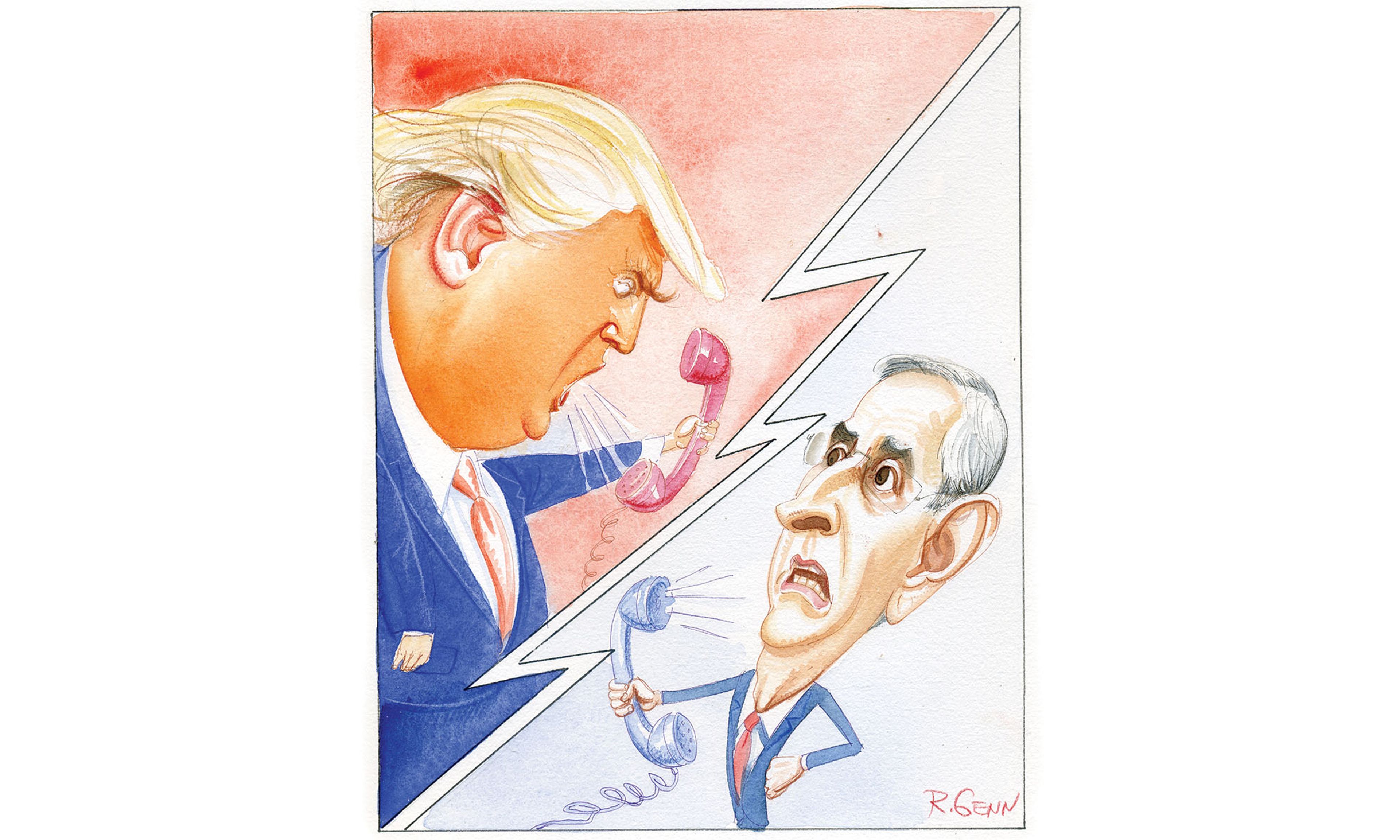
Notably, none of the objecting senators has directly said that the election was stolen — the only possible basis for contesting the counting of electors. A statement written by Ted Cruz says only that “the allegations of fraud and irregularities in the 2020 election exceed any in our lifetimes.” Of course, this is true only because the sitting president of the United States is amplifying such allegations every day, without regard to their truthfulness or connection to reality.
In Georgia, for instance, machine and hand recounts have confirmed the results, while a signature audit has found no evidence of endemic mismatches. Yet the president of the United States still called the Republican secretary of state of Georgia to try, shockingly, to browbeat him into awarding him victory in the state based on misinformation and conspiracy theories.
To his great credit, Brad Raffensperger told the president “no,” and it’s a heartening fact in this otherwise dismal episode that almost every state Republican officeholder or judge with the power to subvert the legitimate outcome at the urging of Trump has refused to do so.
In Congress, too, many Republicans aren’t going along with the charade of objecting to electors. Mitch McConnell has been stalwart, and Senators Tom Cotton and Ben Sasse, as well as Representative Liz Cheney, released thoughtful, constitutionally sound statements explaining why they won’t object.
If all the objectors really want to do is signal that they are upset that Biden won, this isn’t the manner or the forum to do it, full stop.












Comments