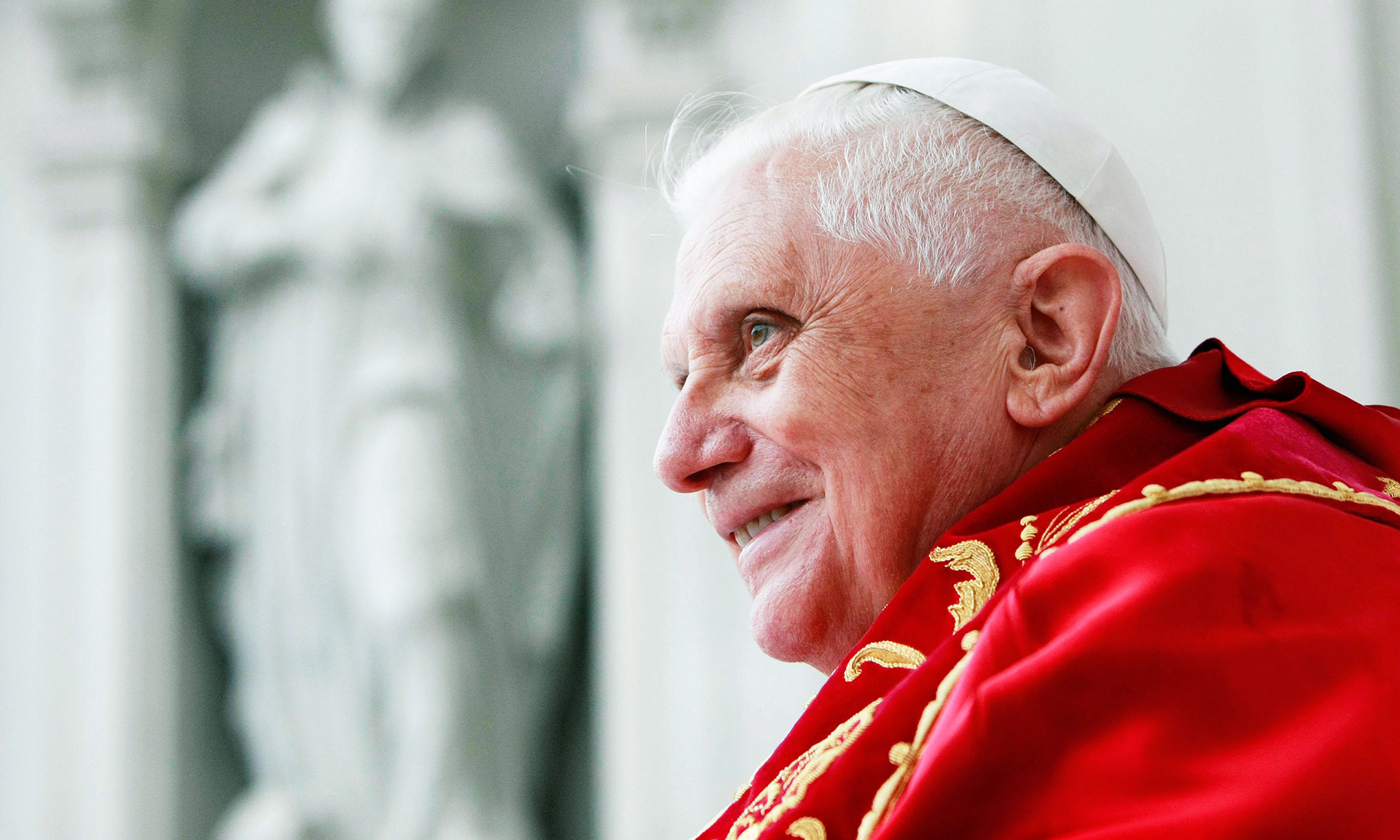
German journalist Peter Seewald is the author of two very popular book-length interviews with Joseph Cardinal Ratzinger. His new book, Benedict XVI: An Intimate Portrait (Ignatius, 260 pp., $24.95), lives up to its title: It offers an idiosyncratic and genuinely insightful view of one of the world’s great spiritual leaders. Why is the current pope so doggedly counter-cultural? A key reason, writes Seewald, is that he grew up under Nazism, under the tutelage of a father who bravely opposed that regime: “It was the exemplary attitude of summoning up courage and defending his position, ‘although [said Cardinal Ratzinger] this was opposed to what was officially in force.’ For it is not current tendencies or majorities that determine whether the fundamental rules of life should suddenly cease to be valid or not.”
This point is ironically confirmed by one of Seewald’s interviewees, dissident theologian Hans Küng. How could such an intelligent Church liberal — as Ratzinger had been at Vatican II — have become such a strong advocate of orthodoxy in dogma? “There is a break in his biography, no question,” says Küng. “I believe there must still have been, somewhere in his heart, an unenlightened shrine to an old-fashioned God.” This is the crux of the matter: Ratzinger believes in a God Who pre-exists human decisions about Him, and Who offers more solid guidance than evanescent intellectual fashions do. We — people of faith, and people of no faith — can grow in our understanding of Him, but when our search loses sight of the fact that there must be a truth antecedent to human reason — that we are not merely making it all up as we go along but are seeking the face of reality — that search turns into a process of self-deception.
The heart of man seeks fundamental truth, as much truth as he can bear. This is the greatest role of human intellect, and Seewald has discerned in this regard a remarkable influence on Ratzinger: none other than Hermann Hesse, the German writer beloved of the hippies of the 1960s and 1970s (and many others too, of course). Even before discussing Hesse with Ratzinger, Seewald intuited “a certain spiritual relationship, a similar sensibility and density of romantic feeling” between Ratzinger and Josef Knecht, the leading character in Hesse’s Glass Bead Game. Like Knecht, Ratzinger is a gifted intellectual who sees that the life of the mind has a goal beyond mere virtuosity. Ratzinger later told Seewald that he was indeed an admirer of Hesse, and of The Glass Bead Game; but his favorite Hesse book, he said, was Steppenwolf (which inspired not only a fine 1974 film adaptation starring Max von Sydow, but also Francis Ford Coppola’s masterpiece The Conversation the same year).
Readers interested in the pope will enjoy this book; they, and others, ought to consider revisiting those two classics by Hesse as well.












Comments