In America on Trial, Robert Reilly excavates the deep foundations of the American Founding. He finds in them the unwritten constitution of Western political philosophy and theology that stretches back to Jerusalem, Athens, and Rome. Reilly focuses on the tradition of “right reason,” that is, the metaphysical, epistemological, anthropological, and theological roots of constitutional government. Those roots are thick but forgotten, if not denied, by most of the West’s academic and intellectual class. In his study, Reilly reintroduces contemporary readers to ideas about the primacy of reason over will, universal truth, natural law, and monotheism. From these touchstones, he shows how other truths were discovered: man created in the imago Dei, equality of persons, and the moral grounding of freedom — which empty the state of the divine power it held in the classical world — along with the intrinsic good of happiness and its inseparable relationship with virtue. These are the pillars of constitutional thought and practice that must be understood before we can think about law and politics.
This is a book, therefore, “not so much about the Founding itself as about the provenance of its ideas. Its purpose is to demonstrate that the ideas of democratic constitutional government have only one set of roots in human history.” An underlying concern is the role that our understanding of reason and will plays in establishing constitutional government: “The drama hinges on two opposing conceptions of reality: Is it constituted by reason or by will?” The answer to this question, Reilly repeatedly argues, shapes what we think about the substance of law. This is because the “primacy of reason means that what is right flows from objective sources in nature and the transcendent, from what is, as Plato proposed. Primacy of will, on the other hand, means that what is right flows from power, that will is a law unto itself.”
Reilly describes the ideas of an array of thinkers linked across centuries who contributed to the bedrock of American constitutionalism: Aristotle, Cicero, Augustine, Thomas Aquinas, Francisco Suárez, Richard Hooker, Algernon Sidney, and John Locke are some of the highlights. He also surveys a competing set of thinkers whose ideas he says created the conditions for political absolutism: William of Ockham, Niccolò Machiavelli, Thomas Hobbes, Martin Luther, and Sir Robert Filmer are some of the dim lights. Reilly argues that our country encapsulates in an exemplary manner Western civilization’s always difficult attempt to forge a liberty worthy of man, a being between God and the beasts. His challenging claim is that the preconditions for becoming a constitutional people are rooted in our philosophical ideas about essence, reality, human nature, and God. Such ideas inevitably shape whether we think we are capable of the morally demanding requirements of freedom. They ground and inform the responsibility needed to govern ourselves according to reason and to flourish.
The thinkers discussed by Reilly who justified unbound political power undercut this ennobling attempt or denied that it was possible because they misunderstood the nature of man and insisted above all that the human person is incapable of knowing the truth about himself. Reilly argues that the fundamental intellectual precondition of political authoritarianism is to think that man is not a reasonable creature situated in an ordered and understandable world, but a being driven by will, governed, perhaps, by a god of will, and that his basic impulse is an egoistic need for control and power over things. This notion’s recurrence in history is unmistakable. The American Founding set itself against that idea.
The fundamental dispute about reason and will inevitably shapes thinking about law and constitutionalism. One concrete expression was Abraham Lincoln’s challenge to Stephen Douglas over the moral and political meaning of slavery. Lincoln argued that the establishment of slavery could not be the subject of a majority vote in the states. Slavery, Lincoln maintained, is a comprehensive evil that denies the very prerequisites of freedom and equality upon which republican government stands. Its origins are in the passions unrestrained by reason, the desire to wrest your bread from the sweat of another man’s brow. Democracy without moral limits isn’t reasonable; it’s merely majoritarian domination.
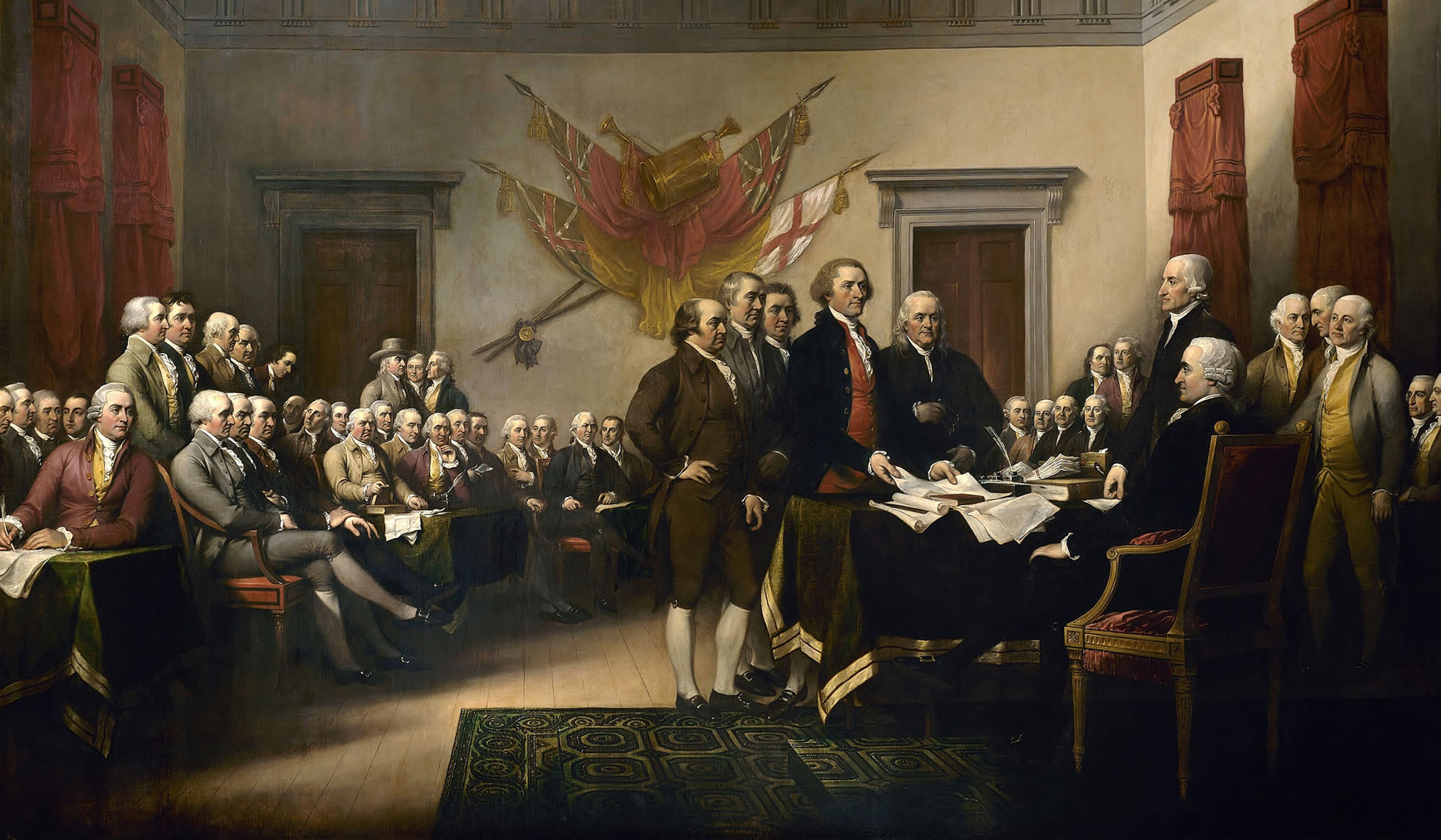
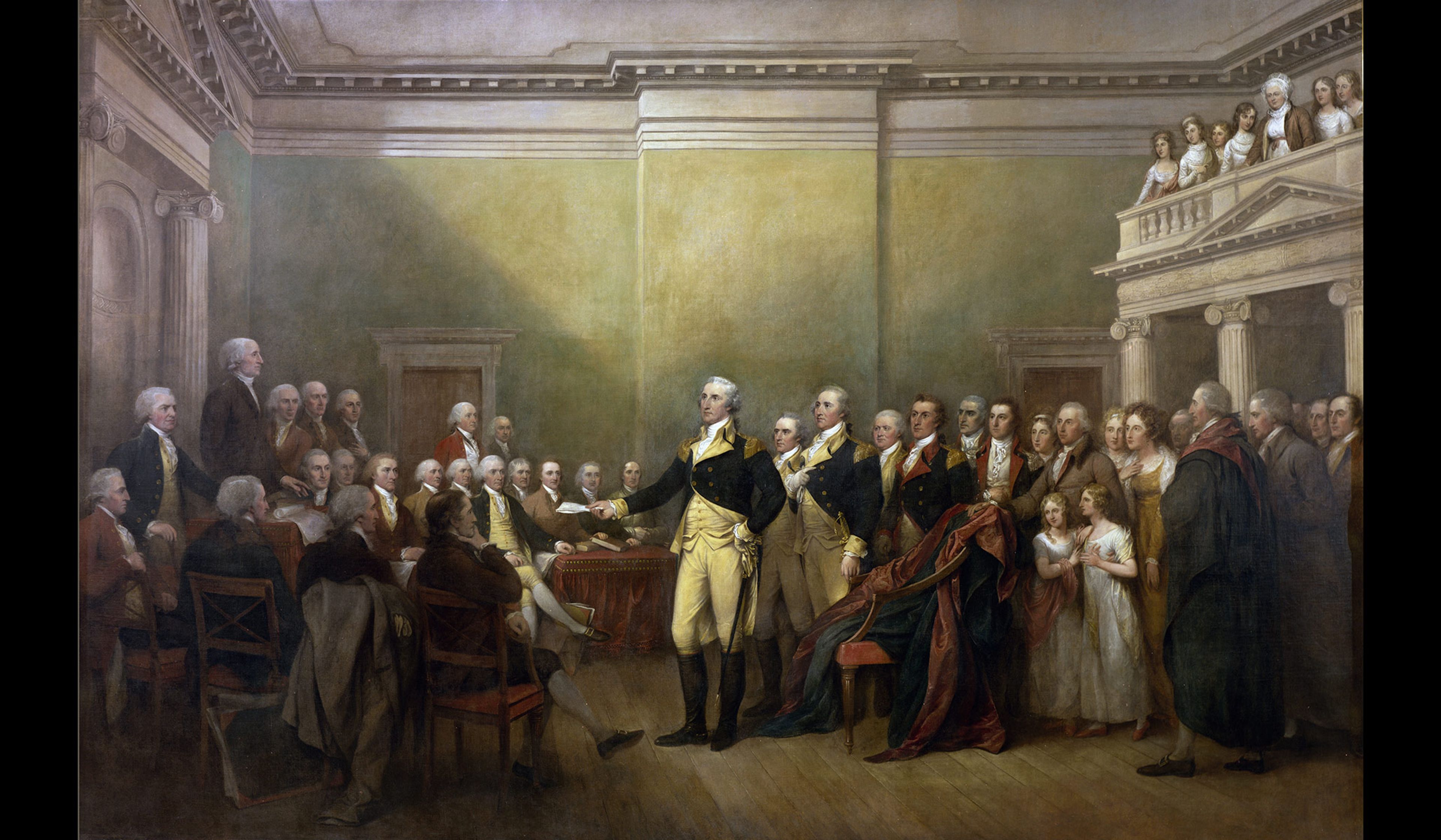
John Trumbull’s Declaration of Independence, 1818
Architect of the Capitol
Locke is significant in Reilly’s account of the Founding, but Reilly firmly situates him within the natural-law and constitutional school of thinking that has roots stretching to the medieval period and earlier. Locke’s debts to the 16th-century English theologian and divine Richard Hooker, and to the 16th-century Jesuit philosophers and legal thinkers Francisco Suárez and Robert Bellarmine regarding consent, the rule of law, natural law, and equality are underscored by Reilly. Given Locke’s centrality to the way certain Founders thought about political independence and liberty, this is important.
And that brings us to the highly charged occasion for this book. On one level it’s obvious what Reilly is defending against. Progressivism and its historicist and pragmatic sources pose a direct challenge to the natural-law constitutionalism that Reilly painstakingly weaves together. Progressivism insists that the evolution of history, rather than nature and reason, is the criterion of truth, and that history unfolds the project of democratic egalitarianism. This challenge to the American Founding is now over a century old, and it has remade significantly our constitutional practice. The Progressives’ latter-day descendants illiberally proclaim that the American Constitution requires abortion, pornography, same-sex marriage, and a collection of autonomistic rights that are willed into being. They increasingly downplay the traditional protections of religious liberty, freedom of association, and freedom of speech, the redoubts of religious conservatives who have been politically defeated on many fronts. By attempting to close the gates on these rights, the contemporary progressive movement means to rout an imperiled religious-conservative minority, finally.
Certain conservative thinkers now blame not progressivism or modern ideological errors for their plight, but the Constitution itself. According to this group, consisting mostly of Catholic intellectuals, the American Founding is a set of interchangeable Hobbesian/Lockean ideas that invited an emancipated individualism, a militant secularism, and an economically exploitative order that has inevitably grown rotten and is now falling apart. The only reason things remained good for so long was America’s religiosity, which counteracted the individualism run amok that the Constitution licensed. Reilly refers to this as the “poison-pill thesis.” One of its most prolific and eloquent academic expounders is Patrick Deneen, a political-science professor at Notre Dame and the author of the acclaimed Why Liberalism Failed. Reilly notes his agreements with Deneen’s criticisms of contemporary culture but squarely confronts Deneen’s rather severe disagreements with the American Founding.
Deneen argues that the Founding was really built on “a relativist philosophy.” Pointedly, he inquires, “if we are to believe that the American Founding represents the culmination of a long and unbroken tradition that stretches back to Plato, Aristotle, Cicero, and Aquinas, then how did that tradition disintegrate so quickly?” He knows that the Founders did not build a constitution ex nihilo but rather with the political and cultural materials they had in hand. He just believes that those materials were shoddy and have given us a deformed political order. In a 2017 First Things essay, Deneen asserts, “We have today more the country that springs from our political DNA than one that doesn’t.” That DNA is the “autonomy of self,” which was “long obscured by the fact that Americans had a rich and sustaining Christian culture that was older and deeper than the political structure.” However, our “political order” has made that culture conform to its “liberal anti-culture.” As Reilly notes, “Deneen does not speak of ‘the betrayal of our political origins, but the fulfillment of [their] logic.’” And this logic makes it difficult to be both a good man and a good citizen of America. As Deneen puts it: “Americans will have to break with America, and seek to refound the nation on better truths . . . which are far better than our philosophy and increasingly better than ourselves.” Deneen’s argument, as Reilly notes along with many others, is short on what those replacement “better truths” are.
Reilly asks, “Is there not anything worth saving in the American Founding?” In response to such a question, Deneen might refer him to the great Czech anti-Communist writer and statesman Václav Havel, who, he says, “did not appeal to the better version of the Communist regime in Czechoslovakia or seek to reform it from within, but to ‘expose its unstable foundations’ by refusing to pretend that its lies were true.” Deneen apparently sees himself as a Havel-like truth-teller, exposing the lie of American constitutionalism. Reilly teases out the logic of Deneen’s anti-American conservatism with a comparison between retired Justice Anthony Kennedy and the late Justice Antonin Scalia. Kennedy’s famous assertion in Planned Parenthood v. Casey that at the “heart of liberty” for every American “is the right to define one’s own concept of existence, of meaning, of the universe, and of the mystery of human life” is really constitutional gospel per Deneen. Justice Scalia referred to it as the “sweet-mystery-of-life passage,” mocking its postmodern ridiculousness. If Scalia had held conversations with the Sage of South Bend, he could have learned how rotten his Constitution really is and how correct Justice Kennedy was.
Reilly’s deeper response to Deneen is to note the recurring danger of political authoritarianism and its ideological edifice, which is not evident in the American Founding. Rather, our Founding was a response to an English constitutional system that, as Edmund Burke noted in his speech on them, was partly acting in an absolutist way towards the American colonists. In short, the American Founders reestablished constitutional liberty by recovering and implementing political principles whose lineage dates not to the Enlightenment, as Deneen would have it, but to the medieval period or earlier. These were a set of principles that Lord Acton noted had not been treated well by early-modern political practice, which was characterized by absolutist sovereignty not restrained by law or consent. The Founders reached to the truth of things by articulating the equality of men under God, popular sovereignty, political consent, and a “moral right of revolution,” and they constructed “a constitutional republic that was the project of deliberation and free choice.” They would not submit their affairs to being settled by “accident and force,” as Publius intones in Federalist No. 1. Far from being a self-undermining logical conclusion of the Founding’s principles, progressivism might more accurately be described as generalizing the will-driven politics of absolutism, in service of abstractions such as “equality” and “social justice.”
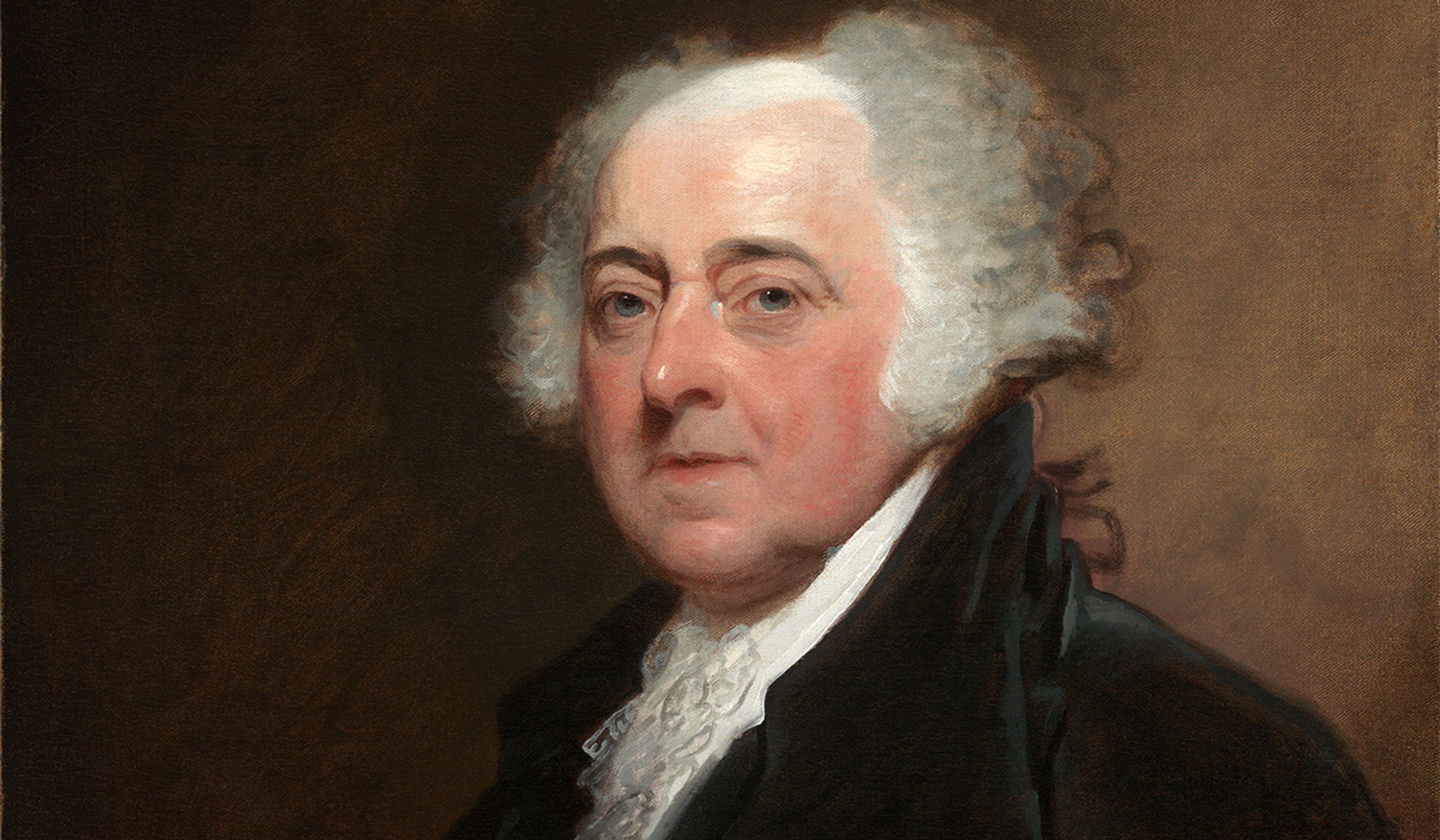
Reilly notes that political absolutism emerged in the 16th century at the same time that a series of thinkers began to articulate a new reality of a Crown no longer limited by law, the true contention of the modernist notion of “Divine Right of Kings,” an idea that can easily be extended to parliaments. In response to such absolutism, the Founders, according to John Adams,
begin by reminding the people of the elevated rank they hold in the universe, as men; that all men by nature are equal; that kings are but the ministers of the people; that their authority is delegated to them by the people. . . . These are what are called the revolution principles. They are the principles of Aristotle and Plato, of Livy and Cicero, and Sidney, Harrington, and Locke; the principles of nature and eternal reason; the principles on which the whole government over us now stands.
A weakness in our Founding may come from the Founders’ presuppositions of certain liberties that they didn’t explicitly defend because they didn’t consider them to be in danger. Their liberalism too quickly assumed that certain goods such as education, religion, or family would continue to exist without challenge. We know that isn’t true. I have had frequent recurrence to the U.S. Catholic bishops’ statement in 1884: “We consider the establishment of our country’s independence, the shaping of its liberties and laws, as a work of special Providence, its framers ‘building better than they knew,’ the Almighty’s hand guiding them.” It is manifestly evident that we must recover the unwritten foundation they squared our great nation on if we mean to turn back the forces of unreason and night that now menace us. Reilly’s book will be central to this effort, along with a great deal of gratitude and devotion to the country that has given us so much.












Comments