The film genre Screwball Comedy does not, in fact, exist. There were a hundred efforts to capitalize on the works of Lubitsch and Preston Sturges, but most coasted on the form, stole the plots, flagged the places where the gags should have been, and had the actors falling down or spilling soup on one another.
The few great 1930s comedies had a simple plot, following the wisdom of Sun Tzu: Let your plans be simple, so that your opponent can follow them. The great comedies moved the plot along by great gags.
What is a gag? It is a joke requiring, as all jokes do, a setup, a development, and a surprising punchline. It must unfold over time, that is, calling to the audience’s attention some facts that they, previously, noticed but did not feel important.
In Some Like It Hot, the genius comedy of Billy Wilder, the two musicians witness the St. Valentine’s Day massacre. Jack Lemmon’s bass fiddle gets perforated by machine-gun fire. He and Tony Curtis flee to Florida. The Mob comes to vacation in Florida. Lemmon and Curtis are incognito as women musicians. But then the mob chief spies the perforated bass, and the jig is up.
In Unfaithfully Yours, by Preston Sturges, Rex Harrison plays the conductor of the world’s most famous orchestra. He refers to himself as “a band leader.” Not a gag, but a pretty good bon mot. Similarly, with a semi-excusable (and factitious) attempt at self-deprecation, I’ve often referred to myself as a gag writer. My “straight” job description, for the last millennium, has been “dramatist,” but the term always made me queasy.
The honest lawyer (pause) may refer to his profession with affectionate deprecation as “mouthpiece,” and it’s funny as there is much truth therein. A gag writer who can structure the small bits into a plot that holds the audience is the real thing. Those who cannot may be called dramatists, but I ain’t going to see their play. Aristotle referred to those components that comprise the plot as “incidents,” but they’re just gags.
Now, the essence of a gag is that, post facto, it becomes self-evident. Q: What do you call a black man who flies a plane? A: A pilot.
The writer stumbles upon, or perhaps over, a great gag, for it can’t surprise the audience unless it surprises its creator. Frequently, the thing seems so inevitable that the writer wonders if it is not actually known to all and he’s the last to hear. All comedians know the phenomenon: We come up with a gag so good, we stun ourselves, and have to call our friends to ask “. . . did I make this up . . . ?”
Here are two examples from my own oeuvre: referring to the political process as “wag the dog”; and a line from my film State and Main. Alec Baldwin, drunk, wrecks a car in which he has been canoodling with an underage girl, Julia Stiles. He drags himself out of the car, looks around, and says, “Well, that happened . . .”
I am often baffled in writing drama. But if the dramatist is not, at some points, lost or confused, he is not doing his job; for the journey of the writer and that of his hero are one and the same; both are forced to make difficult choices. When at a loss the dramatist may step back, refer to basics, and ask, “What is the form?”
Gang comedy, slapstick, farce, comedy of manners exist as forms because they correspond to various human modes of understanding. We may refer to examples of the form to determine our requirements as writers: Romances end in marriages, comedies in return of the heroes to the situation per ante, sadder but wiser.
If the piece is a farce, we must find the stock characters — their presence defines the form: the stern father, the old lecher, prating professor, mooncalf lover, mean miser, and so on. The comedy of manners must contain a butler or maid acting as the chorus; a melodrama has to have a vile villain.
Civilizations and constituent societies progress through recognizable forms. The upheaval of the last few years can be identified as a nascent totalitarian movement by the accretion of religious rites, observances, miracles, and martyrs.
The new Food Laws are as strict as halal and kashrut, and considerably more elaborated. See: locally sourced, gluten-free, cruelty-free, free-range, organic, fair-trade, sustainable. (My jar of peanut butter carries the warning that it was processed in a facility that may have processed peanuts.)
An insistence on pansexuality replaced previous injunctions to chastity with an equal vehemence; vagrancy is redefined as a sort of martyrdom; disorder celebrated with that pride once reserved for examples of restraint; and “the peace which passeth all understanding” has given way to an insistence on the constant performance of rage.
For the last few years I’d wondered how the Left could burgeon as it did as a political-religious entity without a name, and without a leader.
Just as one needn’t worry, on an airplane, until the flight attendants do, I consoled myself that things would not progress into actual insurrection until the Left confected the necessities above.
Now the Left has had, for the nonce, the names Antifa and Black Lives Matter. Having adopted the form, it will be easy to change the substance, and a new name will emerge as required — as Bolshevik was replaced by Communist. But what of the leader, that person to whom they could ascribe superhuman powers, whose every action and utterance strengthened their cohesion?
The form — insurrection — required a leader. Its absence drove me to the familiar writer’s posture of shaking my head over a situation that must but would not resolve. And then the thing became clear. For the last six years the Left has had a leader, his supposed omnipotence equal to that of Hitler, Mao, Castro, and Stalin, Him to whom all attention must be paid. His name ever in our mouths.
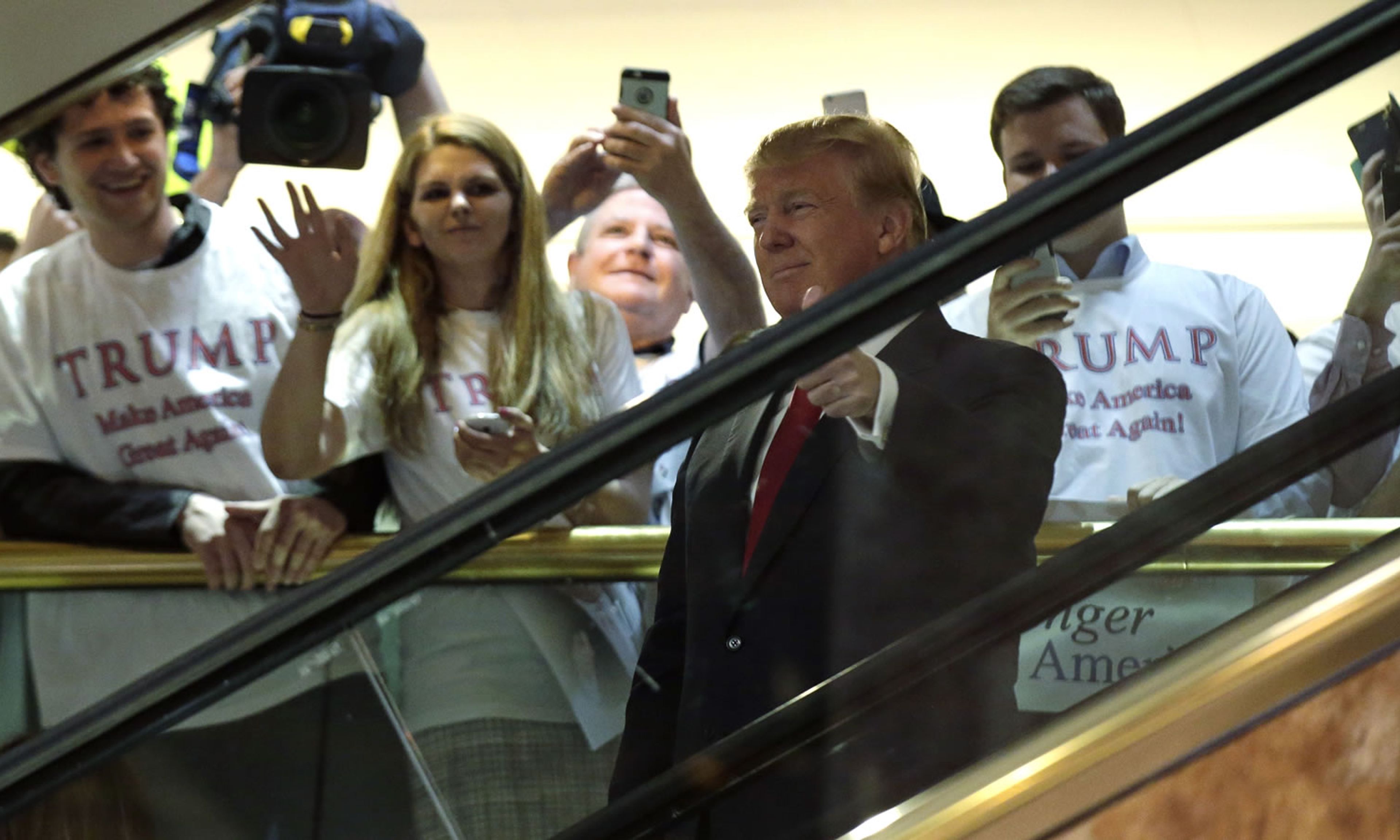
Since the Escalator, Donald Trump has been the avatar of the Left. They couldn’t find anyone on the bench to send in, so they chose the rival team’s most powerful player, and instructed the Faithful that it was Opposite Day.
A position to which they were so inexorably wedded that they impeached him after he had left office, in defiance of law, and common sense, daring the rational to object. Some gag.










Comments