Mexico City
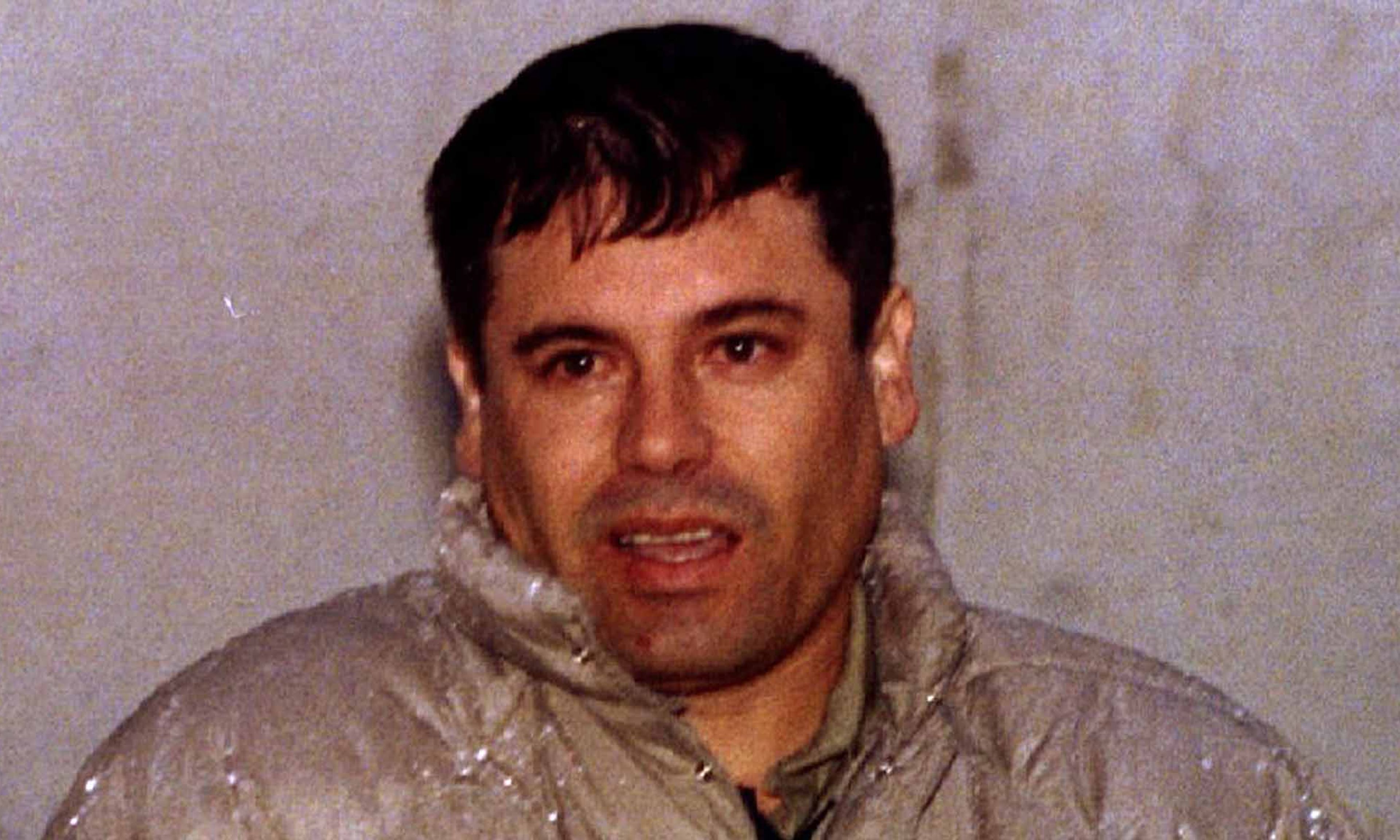
Archbishop Héctor González caused a mini-scandal in Mexico when he declared recently that the country’s most notorious drug baron, Joaquín “El Chapo” (“The Kid”) Guzmán, was living right outside a small town in the archbishop’s home state of Durango, and that “everyone except the authorities” knew it. No sooner had González apologized for what one commentator called an irresponsible “diffusion of gossip” than the bodies of two military-intelligence officers on an undercover surveillance operation turned up right where the archbishop had indicated, riddled with bullets from high-powered rifles. The bodies bore a characteristic warning: “Neither government nor priests will ever be able to take on El Chapo.”
It’s not an idle boast. Even the Pentagon has started to worry. Noting that Mexico’s governing institutions “are all under sustained assault and pressure by criminal gangs and drug cartels,” one recent Joint Forces Command study warned of the “serious implications for homeland security” of “any descent by Mexico into chaos.”
Ironically, Mexico’s struggle against the cartels is both a symptom and a symbol of the country’s increasingly successful march to modernity and affluence. After 15 years of steady growth, Mexico’s GDP per capita is now the highest in Latin America (and five times that of China), while unemployment is the lowest in the OECD. Today’s Mexico bears little resemblance to the country I visited 20 years ago. Here in Mexico City, packed bars and restaurants abound, and commerce seems frenetic. Cities such as Monterrey are brimming with industry, shopping malls, and Wal-Marts. But in other parts of Mexico, where drug cartels battle for control of trafficking routes and bases of operation, violence is rife, the streets are deserted, and entire police forces have disintegrated. With official corruption still ubiquitous, Mexicans have little confidence in their government, or in the rule of law.
Pres. Felipe Calderón has staked his legacy on changing that mentality — and we have a lot riding on his success. To protect the gains of recent decades — and because they truly believe that Mexico can achieve first-world status — Calderón and his predecessor, Vicente Fox, refused to turn a blind eye to the drug trade, as prior governments had done. Fox began prosecuting corrupt senior officials rather than merely pushing them out of their positions, and abandoned a policy against extraditions to the United States. Calderón has gone further: From his first days in office, he has made crushing the cartels and ridding the government of corruption the focus of his administration.
The results have been bloody. As cartel leaders have been captured and killed, exceedingly violent power struggles have ensued. According to Juan Zarate, Pres. George W. Bush’s deputy national-security adviser for counterterrorism, the cartels’ battle for control of key trafficking routes is terrorizing border cities like Tijuana and Juárez. There were nearly 6,000 drug-related assassinations in Mexico last year, about double the prior year’s number, heavily concentrated in areas where cartels clash. The vast majority of the victims were cartel members, but perhaps 10 percent were law-enforcement and government officials. As police forces are vetted and purged of corrupt elements, the cartels are forced to switch from bribery to intimidation, murder, and terrorism to keep them at bay.
Reducing drug use and even drug trafficking are, in a sense, secondary goals of Mexico’s drug war. The main goal is to break up the cartels themselves. The reason is simple: Their efficient organization allows them to leverage firepower and money on a scale large enough to threaten the state. But they have been hit hard by the government’s offensive: Most of their founding members are now dead or in prison, and in many cases, top-down leadership has disappeared altogether, giving way to atomized, horizontal structures, fleeting alliances, and chronic intramural conflict.
Most accounts put the number of Mexico’s major drug cartels at five or six. Each is thought to be based in a particular town or region, but they are present at production sources throughout Latin America and have distribution networks across the U.S. market.
Part of what has made the cartels so dangerous is their progressive militarization. The best example is the Gulf cartel, which, along with its paramilitary wing, the infamous Zetas, is thought to be the best-armed and most dangerous in Mexico. Years ago, a senior Mexican army officer disappeared and began recruiting Zetas from among Mexico’s military. The Zetas have developed the sort of platoon- and company-size tactical operations that one associates with full-blown insurgencies. They use these tactics to battle law-enforcement agents and army troops, destroy rival cartels, and murder, kidnap, or intimidate citizens who oppose them, including journalists.
A dizzying array of military firepower has been seized from this organization, including anti-tank rockets, rocket-propelled-grenade launchers, and hundreds of grenades and assault rifles. But after two of its leaders were captured and extradited to the U.S. in rapid succession, the cartel appeared to degenerate into a power struggle among perhaps eight different drug barons, several of whom have been captured or killed. Meanwhile, attrition has sapped the Zetas of their best-trained and most disciplined cadres.
At the same time, however, the cartels have managed, through a combination of intimidation and corruption, to bring about the disintegration of entire law-enforcement agencies. The best example is the Juárez cartel, based across the Rio Grande from El Paso, Texas. Last year, after it threatened to kill an officer every 48 hours until the police chief resigned, the Juárez police force simply fell apart, and Calderón had to send in some 8,000 army soldiers to patrol the streets. According to Juan Zarate, this has helped to break the cycle of corruption, but in many places the city remains a virtual ghost town. Meanwhile, hundreds of thousands of vehicles continue to cross back and forth between Juárez and El Paso every month, leading some in the U.S. to call for closing the border. But this is out of the question: Millions of jobs in both countries depend on cross-border traffic, and the cartels would simply find another way to get in. Indeed, they are already making increased use of the scores of illegal crossing points that have been identified by the Drug Enforcement Administration, which is woefully understaffed at the border.
The worst-hit cartels have responded by diversifying their sources of revenue. In far northwest Mexico, across the border from San Diego, the Tijuana cartel (whose travails were dramatized in the Steven Soderbergh film Traffic) has delved into human trafficking, prostitution, and brokering access to corrupt officials. As the territory it controls has shrunk to just the border towns of Tijuana and Mexicali, and as several of its major figures have deserted to other cartels, the resulting carnage has made Tijuana one of Mexico’s most violent cities, with more than 1,200 assassinations last year. At least 300 families there have reported missing persons, and many streets that once teemed with American tourists are now deserted.
One of the core competencies of the cartels is penetrating government institutions, both to secure police protection and to conduct espionage (particularly to keep abreast of ongoing investigations and planned operations). The organization of the Beltrán Leyva brothers — another major cartel — is infamous in this respect; a member of President Calderón’s bodyguard was recently indicted on charges of spying for the brothers on a monthly retainer of $100,000. Widely believed to have given El Chapo his start in the crime business, the brothers later reportedly broke with him and displaced his cartel from the Pacific state of Sonora in what one Mexican official described as a “bloodbath.” According to a U.S. law-enforcement official in Mexico City, this highlights one major result of the drug war: Cartel alliances are no longer rigid or lasting, but rather transactional, dynamic, and often violent.
Another result of Mexico’s war on the cartels resembles what happened to al-Qaeda after 9/11. Having lost much of their senior leadership, the cartels have reduced their vertical integration, adopting a more fluid horizontal model — a system of autonomous franchises that maintain mutual isolation for greater protection. The cartel that has managed this transition most effectively is the one widely seen to be Mexico’s most powerful: the Sinaloa “Federation” of Joaquín “El Chapo” Guzmán.
This cartel is based in the Pacific Coast state of Sinaloa; in combination with a few nearby affiliated organizations, chiefly the “Family” of Michoacán, it is also referred to as the “Pacific cartel.” According to Mexican law-enforcement officials, the Sinaloa cartel has the most resilient structure of any cartel in Mexico, and has managed to secure the best police and military protection in its areas of operation, which run from northern Mexico to the Yucatán Peninsula and Chiapas. It is present throughout the Western Hemisphere, from Argentina, Peru, and Colombia to the U.S. and even Canada. Last February, a massive raid against the cartel by U.S. law-enforcement agencies — dubbed “Operation Xcellerator” — netted some 750 arrests of Sinaloa foot-soldiers in 26 states across America.
Despite the beating they have taken, Mexico’s drug cartels remain entrenched, well armed, and fantastically well financed. Last year, hundreds of millions of dollars were seized from the cartels, more than the U.S. Congress appropriated for counter-narcotics efforts in Mexico. This year, El Chapo made it onto Forbes’s list of the world’s richest people (in an absurd touch, Forbes lists his industry as “shipping”).
The outcome of Calderón’s fight against the cartels remains very much in doubt — at least in the near term — and things could get much worse before they get better. According to one former Bush-administration official, the cartels may soon be able to “buy themselves an election” in Mexico, bringing to power an anti-American government tolerant of their activities and friendly to Venezuelan strongman Hugo Chávez.
On the other hand, the situation in Mexico today is not nearly as bad as the situation that faced Colombia ten years ago, when, according to the former Bush official, “the FARC was in a position to march on Bogotá” and the country was on the verge of becoming a narco-state. Presidential candidates were on the take and vulnerable to assassination, and they could be kidnapped with impunity: Consider the case of Ingrid Betancourt, who was held captive for more than six years in dense jungle. As Juan Zarate points out, the FARC controlled large swathes of jungle territory, and that jungle is one main difference between Colombia and Mexico: Impassable rainforest, which takes up about half the country, provided effective cover for terrorists and other criminal organizations. But in Mexico, according to one U.S. law-enforcement official, the difficulty of accessing remote areas is mostly logistical. Not many parts of the country are impassable, so a few advanced helicopters can make a big difference.
Helicopters have been the most high-profile element of the assistance the U.S. is providing to Mexico under the Bush administration’s Mérida Initiative, which President Obama has wisely embraced. The program has been compared to Plan Colombia, which helped that nation survive its years of civil turmoil, but a more apt comparison is to the “partnership capacity building” efforts that have guided U.S. policy in the War on Terror. The basic idea of “partnership capacity building” (a term coined by Douglas Feith, the former under secretary of defense for policy) is to ensure that partner governments are able to govern all of their sovereign territory. As we learned on 9/11, transnational threats thrive in weakly governed or ungoverned areas.
The policy consists of helping nations where transnational terrorist and criminal networks are present to build lawful and effective governance. Areas of assistance range from the military and law enforcement to legislation and even budget administration. As the phrase “partnership” implies, the U.S. seeks to build connections between its institutions and those of its partners. The idea of the Mérida Initiative is not to put U.S. personnel on the ground — as happened in Plan Colombia — but rather to help Mexico become fully effective in our common struggle against drug traffickers. According to one U.S. official in Mexico City, the Mérida Initiative has greatly changed the character of cooperation between the U.S. and Mexico. And the cooperation goes both ways: Mexican law-enforcement personnel are now sometimes embedded with U.S. agents hunting drug traffickers in the southern U.S., to help the agents understand what they are looking at.
But to be successful, such efforts require a steadfast commitment throughout the institutions of the partner nation. And while Calderón’s commitment is not in doubt, the scale of corruption in Mexico leaves a great deal of doubt about the rest of his government. The large number of senior officials under indictment for corruption and drug trafficking, including a former drug czar and a former federal police chief, is both good news and bad news. The good news is that they are being investigated, prosecuted, and punished; the bad news is that so many of them are corrupt in the first place. But with vetting programs such as “Operation Cleanup,” Calderón has made the fight against corruption a centerpiece of his administration. A few weeks ago, ten mayors were among dozens of officials arrested on drug-related charges in a single operation. Both the drug barons and the government officials in their pockets are visibly losing their “untouchable” mystique.
Another promising new effort is Plataforma México, an integrated law-enforcement network and database that will provide real-time intelligence to local, state, and federal law enforcement. Under the umbrella of the Mérida Initiative, the U.S. has furnished powerful computer servers, and a variety of U.S. agencies are assisting the effort. Perhaps even more important in the long run is a sweeping court reform that will replace Mexico’s antiquated and corruption-prone criminal-justice system with modern American-style criminal procedures.
The greatest challenges, however, remain local. While the national government is increasingly modern and effective, state and municipal governments remain ensnared in a culture of patronage that is resistant to reform and susceptible to corruption. In the southern state of Chiapas, one young resident of the beautiful town of San Cristóbal tells me that during her few years working in the town government, she was horrified at the extent of corruption — starting with that of the mayor, who would routinely instruct her to sign dubious requests for project funds from favored officials, even when it was clear that the project was merely a cover for graft. Calderón wants public office to be seen as a public service, but in Mexico it is still all too often seen as a lucrative asset.
The town of San Pedro — the Beverly Hills of Monterrey — is emerging as a leader in the effort to forge modern municipal government. While visiting Monterrey, I had several opportunities to meet with San Pedro’s mayor, former senator Fernando Margáin, who was chairman of the Mexican senate’s foreign-relations committee during the presidency of Vicente Fox. He tells me that after the town’s police chief was assassinated two years ago, local authorities visited the U.S., as well as several countries in Europe and the Middle East, to survey law-enforcement technologies and “best practices.”
Out of that effort came a modern “C4” (command, control, communications, and computers) center, which integrates images and communications from fixed surveillance cameras — as well as cameras onboard new American-style police vehicles — in a heavily armored building that can continue to function even if cut off from outside sources of electricity and water. Perhaps more important, half the members of the police force were let go after vetting, and the remainder were retrained while their wages were almost doubled — a policy that has also been used to good effect in Iraq. New recruits have to go through extensive background checks and must submit to routine lie-detector tests. Fernando Margáin reports that theft and other violent crime has plummeted in San Pedro, though drug trafficking has not fallen quite as far.
But there is a long road ahead. After one San Pedro police officer was assassinated in a gangland shooting, Margáin made a statement on television slamming the drug cartels as cowards and killers of innocent people. As he was driving home a short while later, his cell phone rang. “We are not cowards,” the voice on the other end said. “We don’t kill women or children. Why don’t you just let us work?” Mexican drug traffickers are surprisingly touchy about their reputations: Many view themselves as almost romantic figures, men of principle and property and even philanthropic inclinations. The lavish and faintly grotesque mausoleums they provide for themselves and their dearly departed receive visitors regularly, often daily. Like Pablo Escobar, the Colombian drug lord who was killed in 1993, some drug barons are local heroes.
This may seem quaint, but it is one more way that the cartels pose a deadly threat to Mexican society. As long as cartel members are respected, the state’s grip on legitimacy is weakened. Iraq and Afghanistan face similar problems, as did the United States itself in the days of the Wild West. Today we romanticize the outlaws of Sam Peckinpah’s The Wild Bunch, but it was a good and necessary thing that modernity closed in on them and swept them from the land.
The day before I arrived in Mexico, 44 members of the upper echelon of the Michoacán “Family” were arrested in church while attending a baptism. Once again, operational security was preserved, the suspects had no warning, and not a shot was fired. The subsequent photo op — which got the intended play on front pages across Mexico — seemed staged to deliver a message: The suspects were lined up in handcuffs in front of an imposing police helicopter, as if to symbolize the power of the state. Visible on the engine casing, just above their heads, was a legend both mundane and unmistakably modern: “To Protect and Serve the Community.”











Comments