Ypsilanti, Mich.
If you squint, the spray-painted words are still faintly visible on the white-brick façade of Sienna Women’s Health: “Free safe legal abortion now!” They appeared last year, following the leak of the Supreme Court’s Dobbs decision, in one of the first cases of a new wave of vandalism that has targeted pro-life pregnancy centers. “It happened right after Mother’s Day,” says Yarimar Cherney, who pauses to let the irony sink in. She runs the clinic, which sits in what she calls the “choice-minded market” of Washtenaw County, where more than three-quarters of the voters last November favored a statewide ballot proposal whose passage inscribed a sweeping right to abortion in Michigan’s constitution.
Inside Sienna Women’s Health, there’s nothing political: no bumper stickers for cars, placards for marches, or petitions for signatures. Instead, there’s just the usual stuff of a modern-day pregnancy center, such as a reception area with comfortable seating, a loose copy of What to Expect When You’re Expecting, and rooms for pregnancy tests, ultrasounds, and discussions of alternatives to abortion. “We define our success by being a safe space for women to consider their options and not to give in to what the culture is telling them, which is that abortion solves problems,” says Cherney.
Years ago, these types of outfits sometimes were called “crisis-pregnancy centers,” or CPCs, but most of them have stopped using the word “crisis,” as it arguably makes pregnancy sound like a threat. Even “pregnancy center” isn’t quite right, as the clients who patronize them often are not even pregnant but rather mothers with young children. Like many of these centers, Sienna Women’s Health doubles as a thrift store that stocks clothes for newborns, toys for toddlers, and high chairs for hungry kids. Mothers can acquire them by enrolling in parental-education programs, earning points that function as currency. The most striking feature of these rooms may be the fresh scent of the most popular items, which are disposable diapers. Last year, the center gave away 39,000 to the moms of young children.
Despite these charitable purposes, Sienna Women’s Health and similar clinics are under attack from more than isolated vandals. They’re in the crosshairs of an abortion-rights movement that likes to describe itself as “pro-choice” even as it crusades against groups that present pregnant women with choices other than abortion. The centers face accusations of tricking women who seek abortions with false advertising and even of “brainwashing” those who walk through their doors. “It’s time to crack down,” said Senator Elizabeth Warren, Democrat of Massachusetts, when she demanded last year that the Federal Trade Commission regulate the ads of pregnancy centers. “Deception is at the heart of the typical CPC’s business model.”
Cherney sees it differently. “We’re not trying to dupe women,” she says. Her center’s website even posts a clear statement: “We do not perform or refer for abortions at Sienna Women’s Health.” Their mission is to offer other services to women who wonder what to do about their pregnancies. “They’re often scared and alone,” says Cherney. “They’re looking for someone to tell them it’s okay to be a mom.”
In The Story of Abortion in America, published earlier this year, authors Marvin Olasky and Leah Savas trace the history of pregnancy centers to the orphanages and aid societies of the 19th century. The centers assumed their modern form in the 1970s, as the Supreme Court’s Roe v. Wade decision granted widespread access to abortion. Many pro-life activists responded to the ruling by recruiting and electing candidates, limiting government subsidies for Planned Parenthood and other abortion providers, and filing lawsuits that aimed to chip away at Roe. Yet others believed the times also called for a more local response, rooted in Christian faith and focused on helping individual women as they struggled with unintended pregnancies. Nobody knows exactly how many pregnancy centers operate today. Some are big and prominent, while others inhabit the cramped basements of little churches. According to most estimates there are at least 2,000 pregnancy centers in the United States, and some put the number twice as high.
Another one of them is the Center for Women in Jackson, Mich. Founded in a small house in 1988, it now occupies a former medical building, where five paid staffers and a dozen volunteers encourage women to continue their pregnancies. The executive director is Hannah Miracle. (“Yes, that’s really the name on my birth certificate,” she says.) Previously she had been a receptionist at a dentist’s office who felt called to do more than schedule cleanings: “I wanted to make an impact on women’s lives and in my community, something beyond the day-to-day.” She started out as a volunteer, took on more responsibility, and now has run the center for the last decade.
The Center for Women is open four days a week, and clients usually learn about it on their phones — through social media, search engines, or ads. They make appointments online. That’s why politicians like Senator Warren are so eager to regulate the web presence of these organizations.
In 2022, the Center for Women counted 163 clients, most of them in what Miracle labels “critical situations,” by which she means they were pregnant, in their first trimester, and not sure what to do but considering abortion. This combination makes them “abortion-vulnerable,” in the parlance of pregnancy centers. The overwhelming majority who come to the center are neither married nor in committed relationships. Their romantic partners often can be described as “friends with benefits,” but Miracle sees a bit of everything, including married women who haven’t informed their husbands, homeless drug addicts, and teenagers who fear the reactions of parents and friends. “We’re here for anyone who needs our help,” she says. The center promises confidentiality. It won’t share a client’s information with anybody, including the parents of minors.
Visitors who enter the facility through a reception area see a piece of wall art painted two years ago when the center moved into its current location. It’s a big tree that teems with life. More than 150 colorful birds, bees, and butterflies perch and fly among its brown branches and green leaves. They aren’t labeled, but they carry an important meaning. “Each one represents a woman who has chosen life,” says Miracle — in other words, a client who left the center saying she intends to give birth.
A typical visit begins with a free pregnancy test. Drugstores sell inexpensive at-home versions that are generally reliable, but the center offers an additional service: It can provide a letter that verifies a pregnancy, which secures eligibility for WIC, the food program for low-income women, infants, and children. (Women can qualify for WIC simply by claiming to be pregnant. To remain in the program, however, they need an independent verification.)
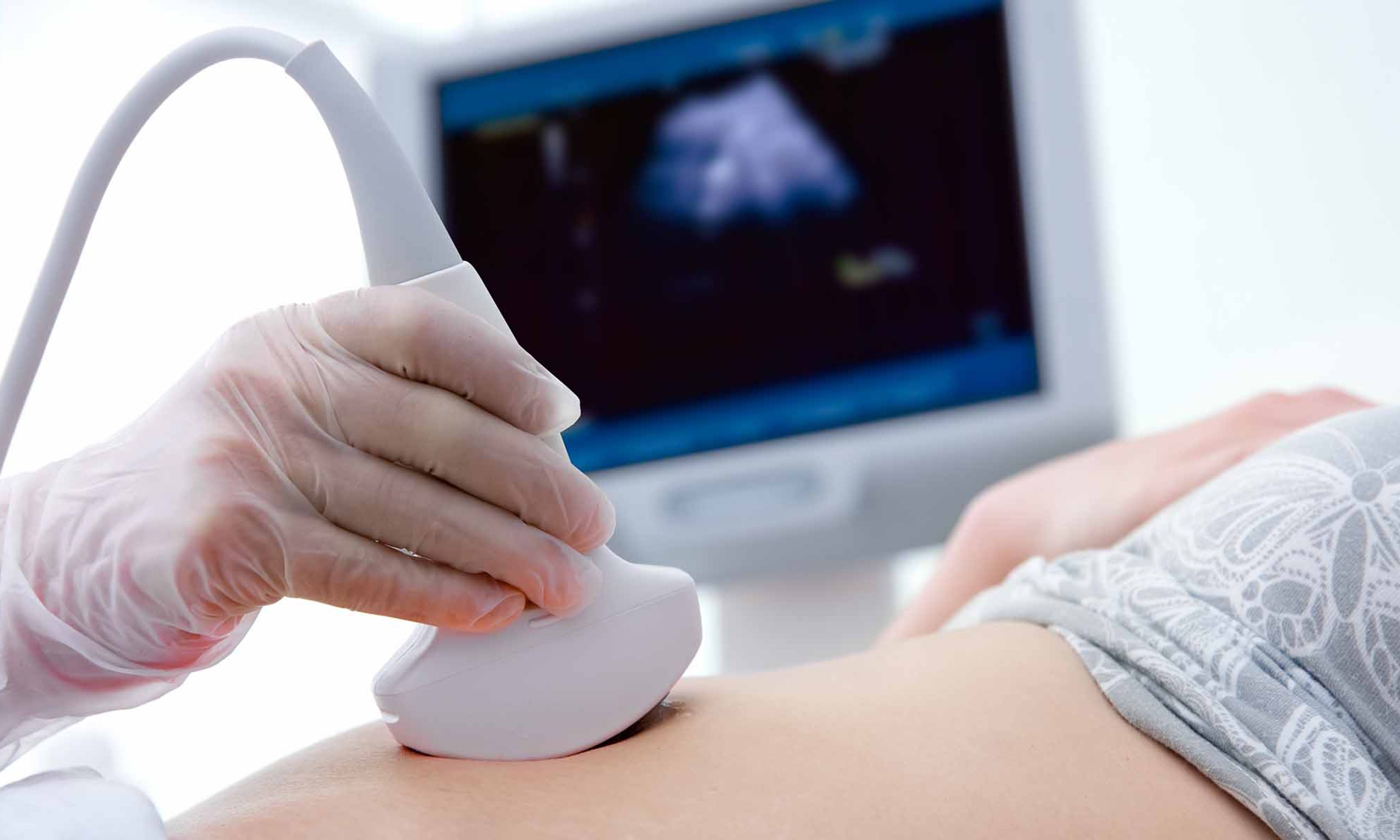
Following a confirmed pregnancy, a woman can receive a free ultrasound administered by a licensed technician. Proof of life is initially audible, as an ultrasound machine can detect the throb of a heartbeat at about six weeks after conception. Soon it becomes visual, as the machine converts sound-wave data into video images, which the Center for Women displays on a large flat-screen monitor mounted on a wall. “At seven weeks, it looks like a grain of rice,” says Jill DeDoes, the center’s sonographer. “Then it grows to a peanut. Every week, you see more, such as arms and legs. By the tenth week, you can see a lot of detail. By the 15th or 16th week, you can determine the sex.” The center prints pictures for clients to keep. It also can send clips of heartbeats and videos of unborn children as text messages to phones.
The experience of an ultrasound can be emotional and transformative, especially when its images reveal the likeness of a baby. “Women who are considering abortions sometimes think they’re just ending a pregnancy,” says Miracle. “This is where they see that an abortion would destroy a life.”
A generation ago, ultrasound machines were too costly for most pregnancy centers. As they’ve dropped in price, many centers have made it their goal to get one. Since 2009, the Knights of Columbus have supplied more than 1,500 through a matching-grant program with local groups. In 2019, pregnancy centers used their machines to conduct more than 486,000 free ultrasounds, according to the Charlotte Lozier Institute, a pro-life think tank. Several dozen took place last year in Coldwater, Mich., at the Beginnings Care for Life Center, which acquired its ultrasound machine in 2013. “We use the ultrasound as an occasion to celebrate a pregnancy,” says Jane Ford, its director. “It’s also the moment when a mother starts to bond with her child.”
Ultrasounds have become powerful tools for the pro-life movement, but they don’t always resolve the hard dilemmas of unplanned pregnancies. Even women who choose to continue their pregnancies often maintain firm convictions about the right to abortion. “Ultrasounds have made it impossible to think of unborn children as ‘blobs of tissue’ — no one believes that anymore,” says Ford. “Now there’s a sense that abortion involves a victim, but there’s also a powerful belief that abortion is a right.”
A common challenge, then, is to persuade pro-choice women to choose life. “We see three major reasons why women choose abortion,” says Cherney. “The first is a fear that motherhood means ‘My future is over,’” or at least a belief that the child endangers a mother’s educational or career aspirations. “The second is a fear of a bad life,” or the idea that the best interests of a child include not being born into a life of poverty or abuse. “The third is the fear of the public shame of an unplanned pregnancy, which involves the shame of failing to prevent it with contraceptives.”
Pregnancy centers respond by providing opportunities to talk about options. These conversations usually take place away from the ultrasound rooms, which can look like they belong in hospitals. The Center for Women, for instance, has decorated several counseling rooms with themes that feature vintage cameras and sports memorabilia. The thought is to help clients relax so that they can discuss big decisions.
The critics of pregnancy centers often claim that this is where the pro-life movement performs its dirty work as Bible-beaters intimidate women with threats of hellfire and damnation. This accusation annoys Cherney: “They seem to think that women are feeble-minded. We see them as brave and strong. Our movement is not about rhetoric. It’s about building relationships.”
That can happen only in a supportive environment, says Miracle. “We’re careful not to manipulate. We apply no pressure. We present options. We do talk about the risks of abortion, which can include the guilt that comes later. We offer to pray, but we pray only with their permission. We’re here to show the love of Christ, not to ram it down their throats. Of course we want them to choose life, but if that’s not what they choose, we want them at least to know that we care.”
This means having candid conversations. “There’s no easy way out of an unintended pregnancy,” says Ford. “There’s no erasure, no delete button, no backspace.” Yet pregnancy even in difficult circumstances doesn’t have to wreck personal ambitions. “We tell them that motherhood doesn’t mean they can’t get an education, just that it will look different from what they had imagined,” says Miracle.
The centers also try to assure pregnant women that they’ll stick with them following birth and as child-rearing begins. “There’s a misconception that we’re out to save the baby and don’t care about the moms,” says Miracle, who can point to her center’s lower floor, which is devoted to helping mothers of young kids by providing material goods and parental education. There’s also a program for fathers, encouraging them to be involved in the lives of their children even if they’re not married to the mothers. Finally, women who end their pregnancies are always welcome to return to the center for post-abortion support. Miracle sums up her mission: “We’re out to save women from heartbreak and grief.”
Women with unplanned pregnancies don’t have it easy, and the centers that hope to help them have plenty of ongoing challenges. Last year, after the defacing of Sienna Women’s Health in Ypsilanti, Cherney and her staff moved quickly to wipe out the graffiti. A volunteer power-washed the bricks and then scrubbed them with wire brushes and chemicals. After hours of effort, he finally pushed the pro-abortion message to the brink of invisibility. Since then, the center has added locks, alarms, and cameras. Cherney’s next goal is to cover the front of the building with a special coating that repels the paint of vandals. She’s studying options and taking bids — and becoming expert in a new kind of protection.












Comments