
When Mike Tyson was asked before one of his bouts with Evander Holyfield about his opponent’s plan for the fight, Tyson famously responded, “Everyone has a plan until they get punched in the mouth.” It’s a timeless bit of wisdom about conflict, especially when you’re up against a brawler who doesn’t respect the rules. In their first fight in 1996, the heavily favored Tyson sent Holyfield scurrying for the ropes the first time he hit him in the face, and added a late hit after the first-round bell. But that wasn’t the end: Holyfield answered with his own late hit and went on to win the fight. In their 1997 rematch, Tyson was disqualified for biting off part of Holyfield’s ear.
Ron DeSantis has finally entered the presidential race, and he was immediately punched in the mouth. An array of rivals — Donald Trump, the Democrats, and much of the political press, all of whom would prefer Trump as the Republican nominee — were waiting to take a shot. DeSantis’s eccentric decision to launch his campaign by chatting with Elon Musk on Twitter Spaces gave his detractors the ammunition to brand him an instant failure when a crowd of nearly 700,000 people tried to log on, crashing Musk’s audio platform for nearly half an hour. Musk hadn’t tested its capacity for an audience that big, and DeSantis apparently hadn’t required him to do so. His campaign tried to make the best of it by bragging that they broke the internet. When the conversation finally got rolling, it showed DeSantis engaged and in depth, but also deep in the weeds on topics, such as cryptocurrency, far removed from the concerns of ordinary voters.
Once he was suitably bloodied and got his first taste of the ropes, DeSantis started punching back with gusto. The rest of the evening and the next several days were devoted to a barrage of interviews with generally friendly outlets. DeSantis handled them with the tireless energy one might expect of a man 32 years younger than Trump and 36 years younger than Joe Biden. Since then, he’s been on the ground barnstorming Iowa, New Hampshire, and South Carolina.
With his prosecutorial demeanor, DeSantis can get only so far on charm; he has instead used interviews to display his deep knowledge of policy and governance and his relentless focus on using power to attain conservative goals. The core of the DeSantis message has been twofold, aiming to contrast the governor’s electoral and policy success in Florida with the performance of the rest of the GOP. First, the Republican Party needs to shake what’s become a culture of losing emblematized by the pre-Trump party, Trump’s 2020 defeat, and the failure since 2020 of Trump-endorsed candidates. Second, the party needs a leader with DeSantis’s understanding of the uses of power and with his will to employ it. As he told one Iowa crowd, “You have to understand the levers of power that are available to you under Article II of the Constitution, as well as under various statutes.”
His broader theme is that America’s institutions are broken but that we can’t just burn them down: Conservatives need to recapture some and replace others. That means confronting not just governmental institutions such as public-health bureaucracies, the FBI, state universities, and public schools, but also — less comfortably for traditional Republicans — Wall Street, banks, Big Tech, and entertainment companies such as Disney.
Organizationally, this appears to be the most impressive Republican campaign out of the gate since George W. Bush’s coronation march in 1999. DeSantis has rolled up an enormous number of early endorsements from state legislators and power brokers in Iowa and New Hampshire, including a growing number who are abandoning Trump. He raised $8.3 million in the first 24 hours, adding to a massive nine-figure war chest. The super PAC promoting his candidacy pledges to raise $200 million and spend half of that on knocking on the door of every potential DeSantis voter at least five times in Iowa and four times in New Hampshire, Nevada, and South Carolina.
All that said, for a while now the 1,234-delegate question has been whether DeSantis will attack Trump, and how. We saw in 2016 that some of Trump’s opponents, such as Ted Cruz and Marco Rubio, waited too long to confront him, while others, such as John Kasich and Chris Christie, conspicuously refused to try. Trump has made the decision easier by pounding DeSantis in sneeringly personal terms for months. As soon as he formally entered the race, DeSantis dispelled fears that he would lay off Trump, but how he has done so reflects the dilemma of attacking a former head of the party.
The Florida governor needs to convince some who supported Trump to abandon the ex-president, but he also must not forget that in some cases these voters supported him for seven years. That has meant going light on criticisms of Trump’s fundamental character and fitness, skirting direct criticism of his 2020 loss, and sidestepping January 6 — all lines of attack that remind Republicans of the scorn poured by liberals on anyone who supported Trump for the job in the first place.
Instead, DeSantis has bored in on Trump’s policy failures and bad hires. He has argued that Trump “turned the country over to Fauci” and went along with Covid lockdowns. He has attacked Trump for getting railroaded by his own appointed FBI head, Christopher Wray, for compromising with congressional Democrats on immigration, and for signing the First Step Act, which reduced some criminal sentences. He has moved to Trump’s right on vaccines, and (when asked) signaled some openness to pardons for some January 6 defendants — a terrible general-election message, but one on which DeSantis has left himself a good deal of wiggle room.
DeSantis also hit Trump on the simple fact that the former president would be eligible to serve only one term: “It really requires two terms to be able to finish the job. . . . I think we could bring George Washington back, and I don’t think he could do it in just one four-year term.” After Trump sniffed that he could do everything necessary in another six months, DeSantis responded, “Anyone that tells you all ‘I’ll take care of it, it’ll be done in one day or six months’ — you know, they’re selling you a bill of goods.” Left unsaid: Trump already had four years.
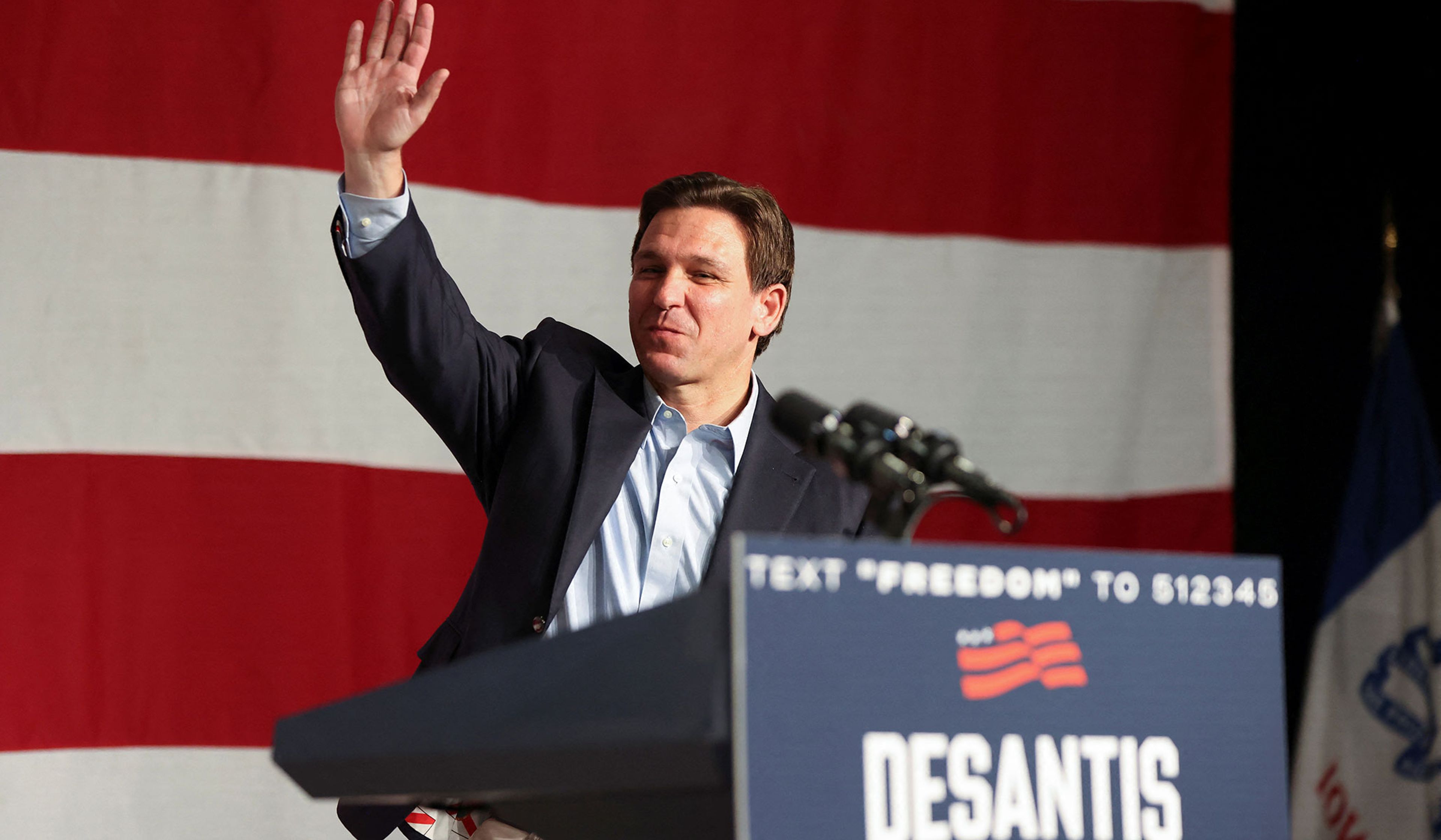

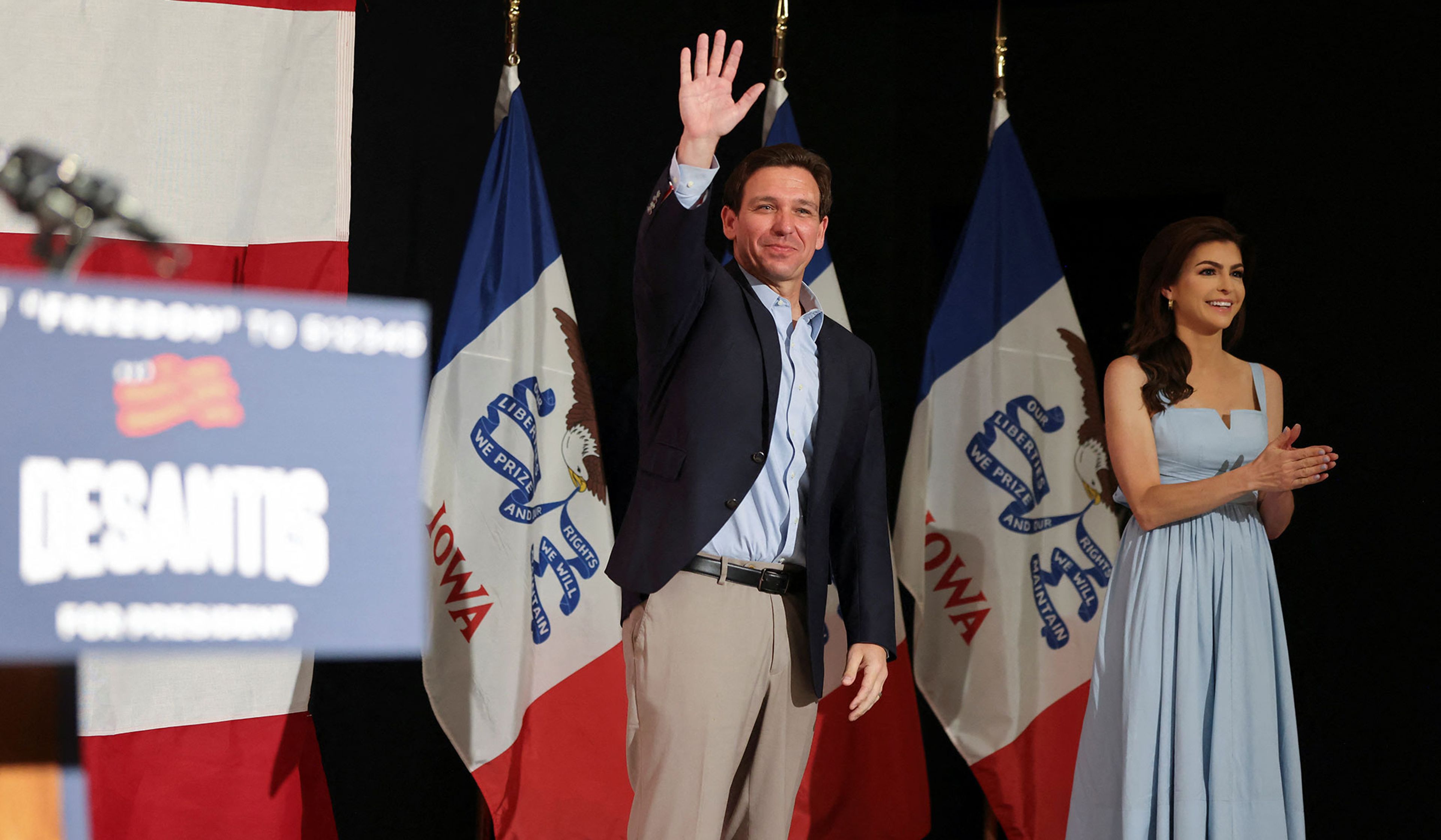
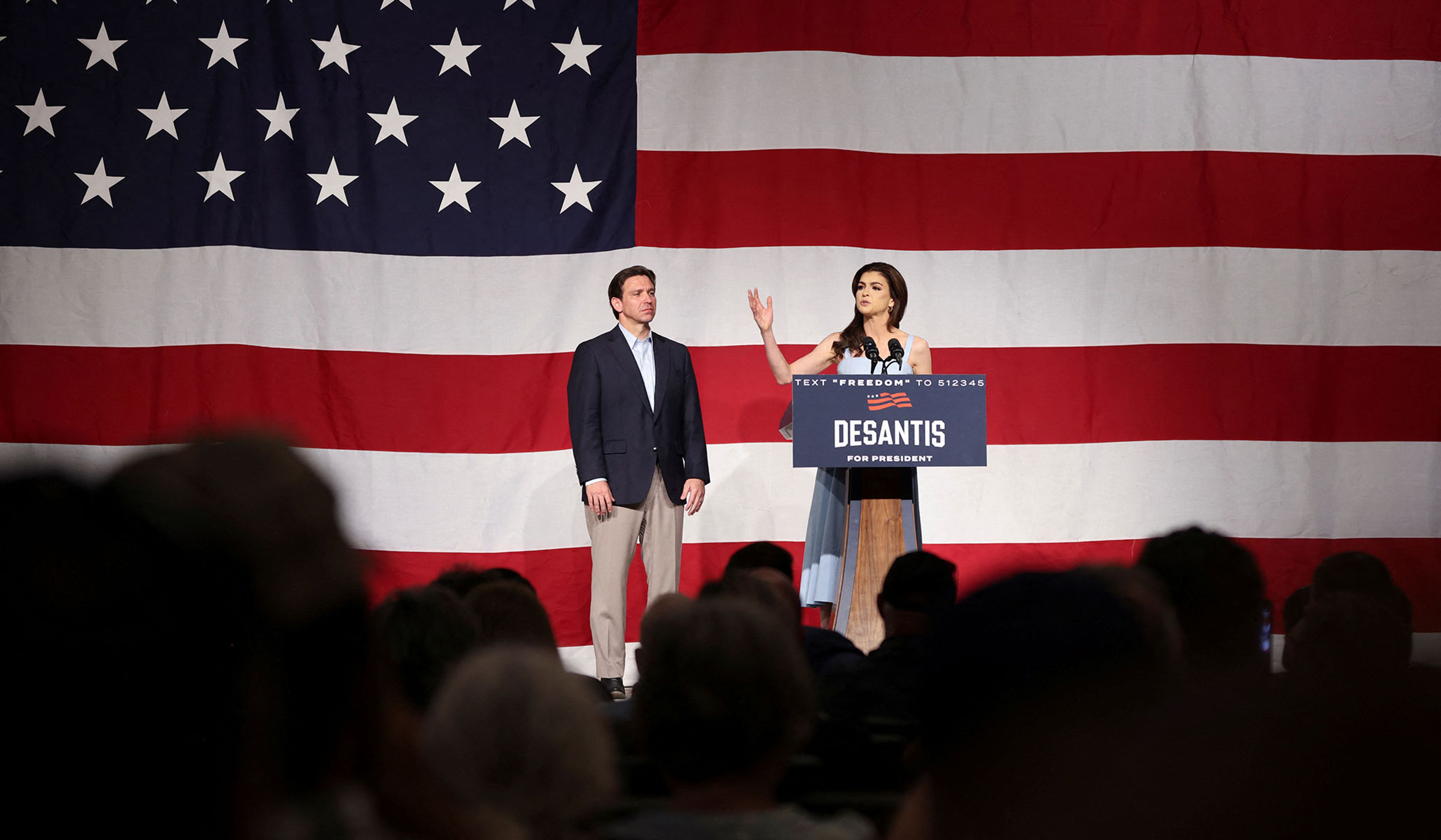
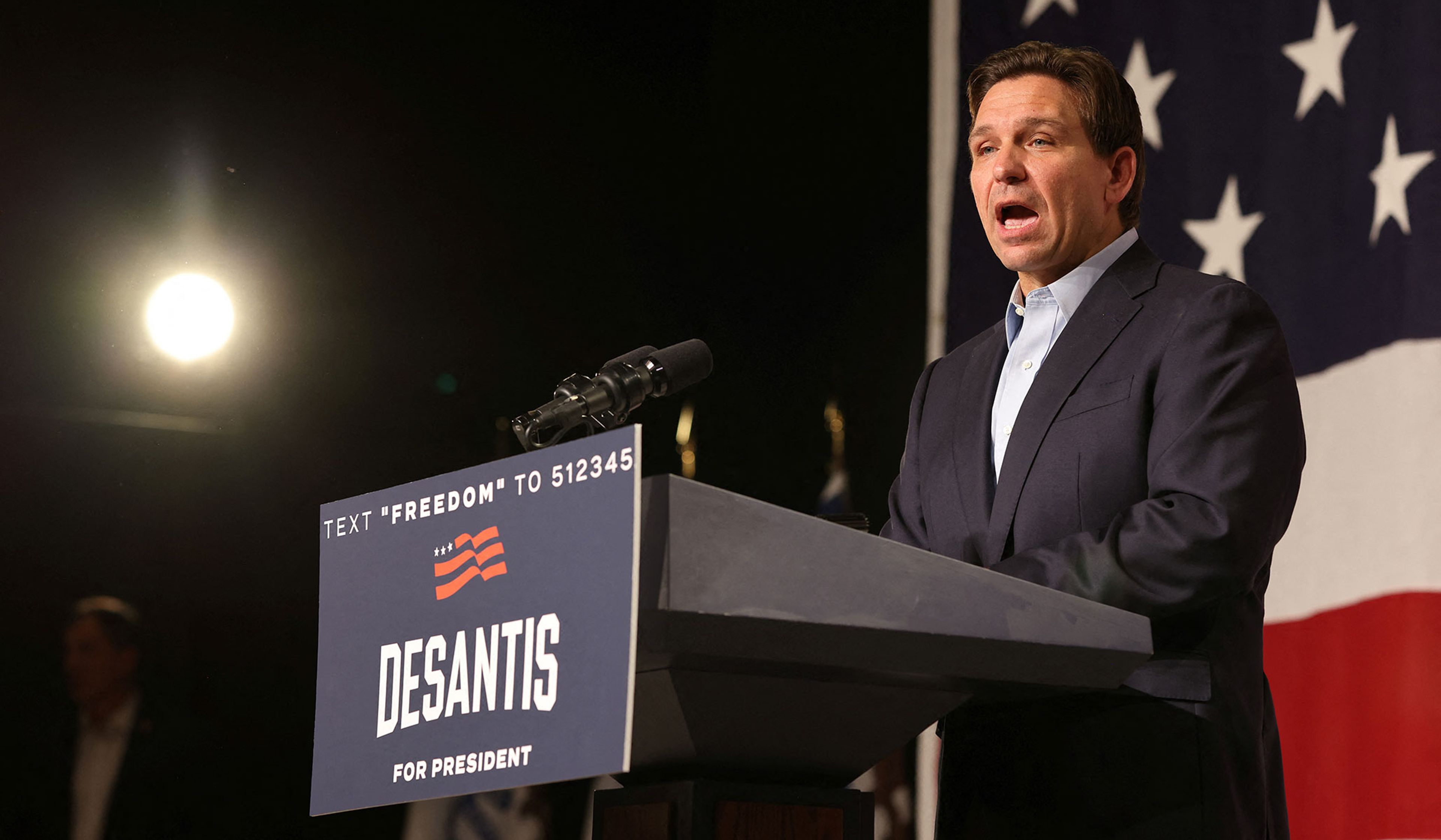
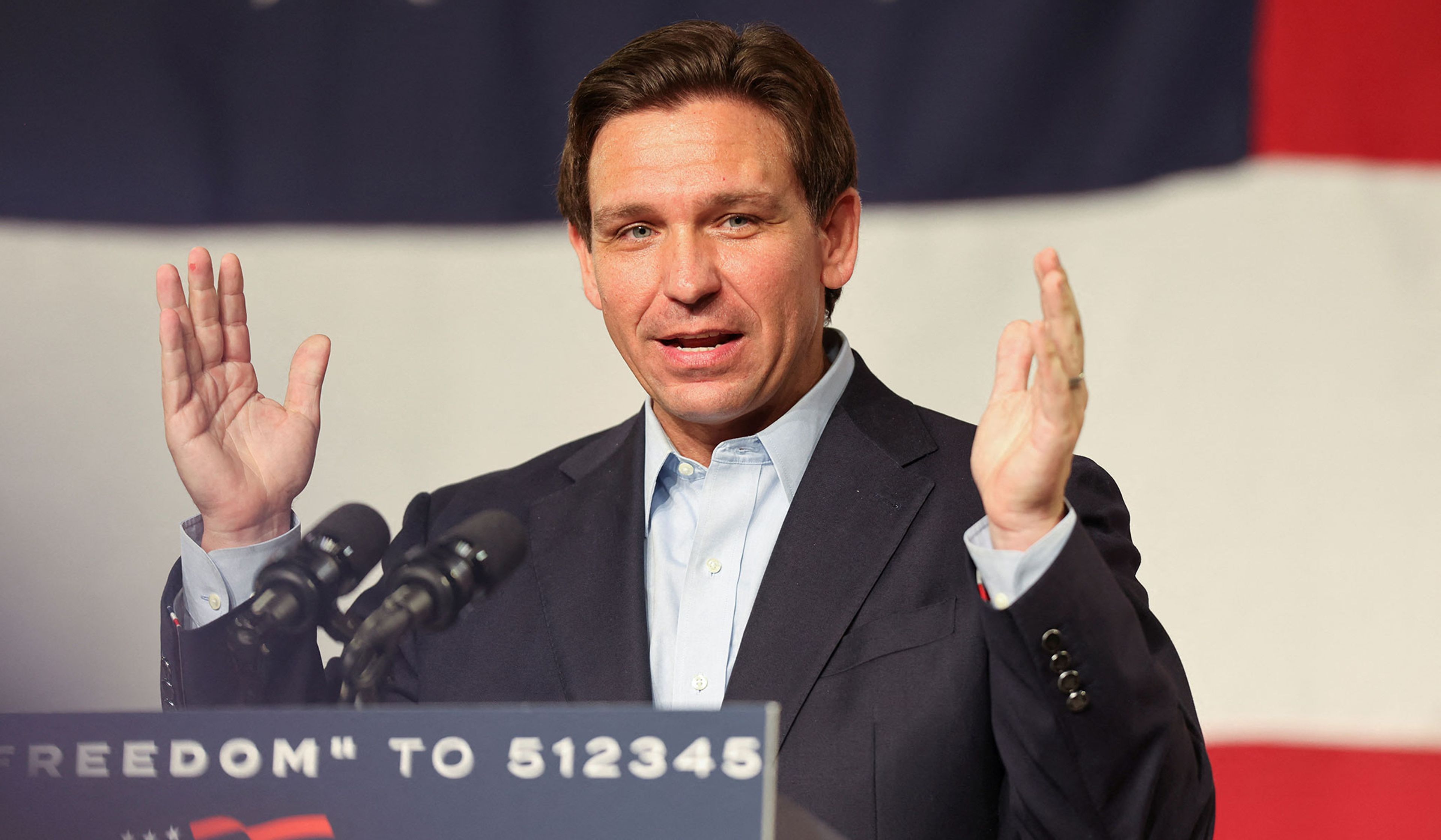
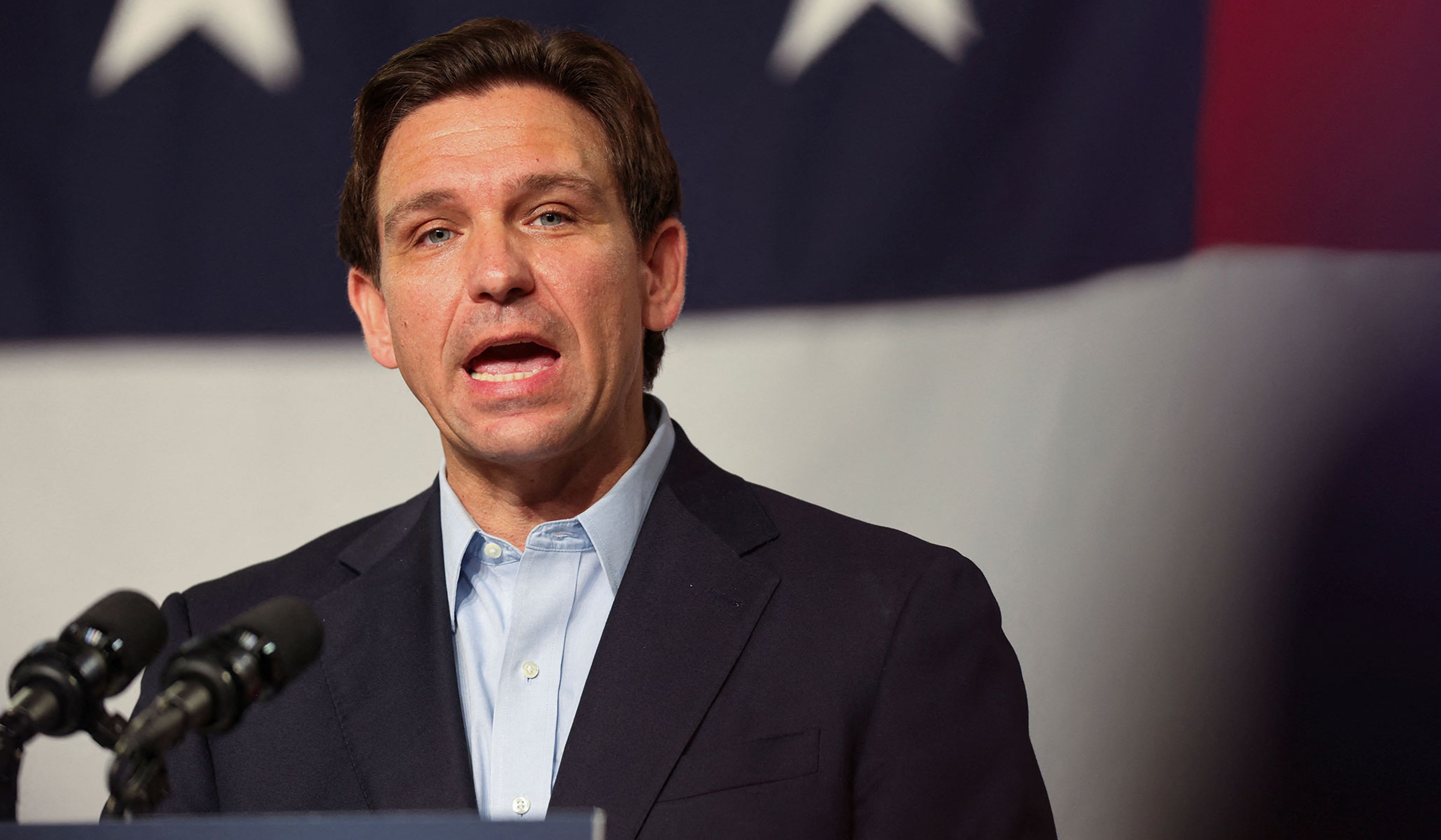
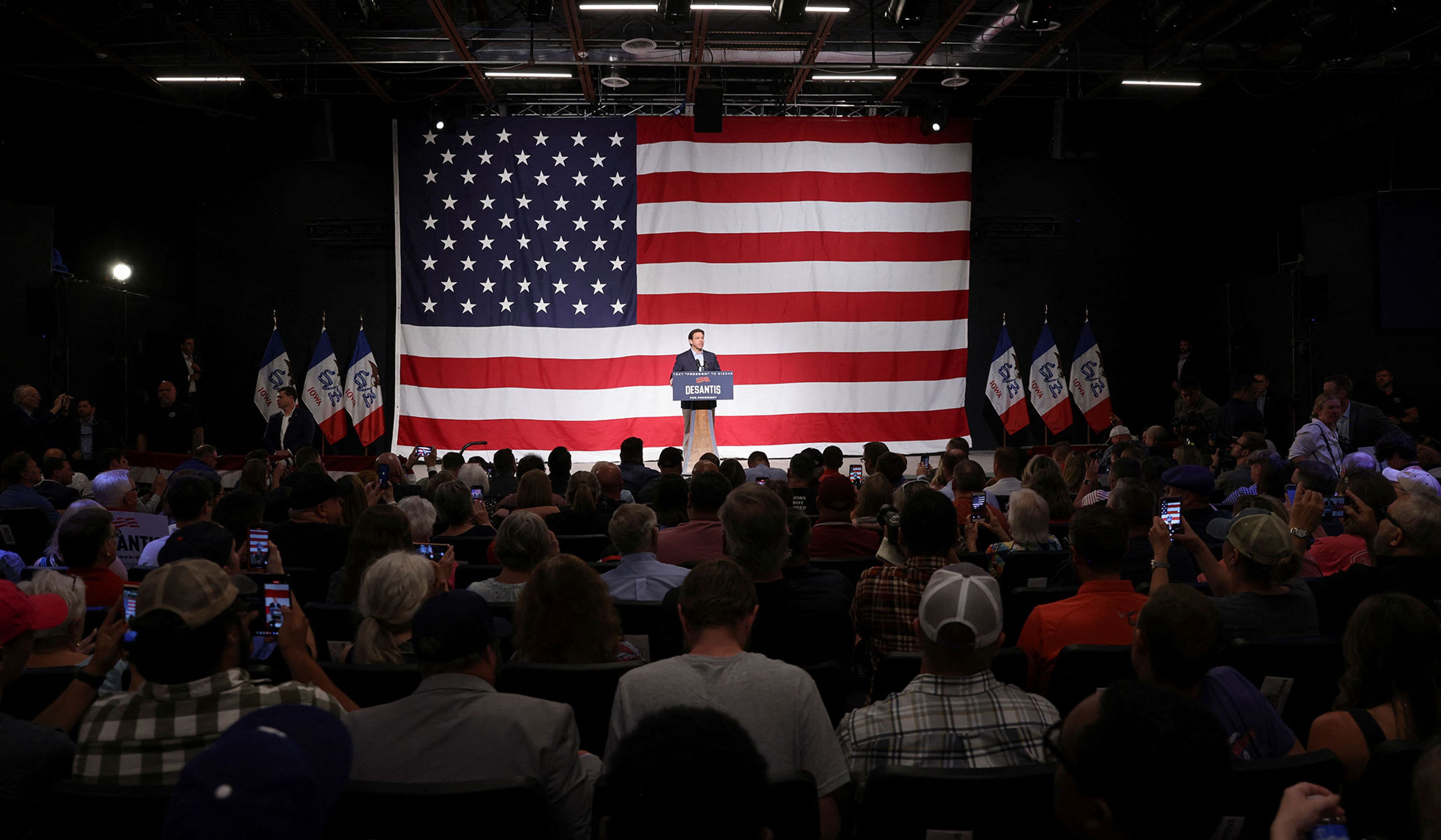
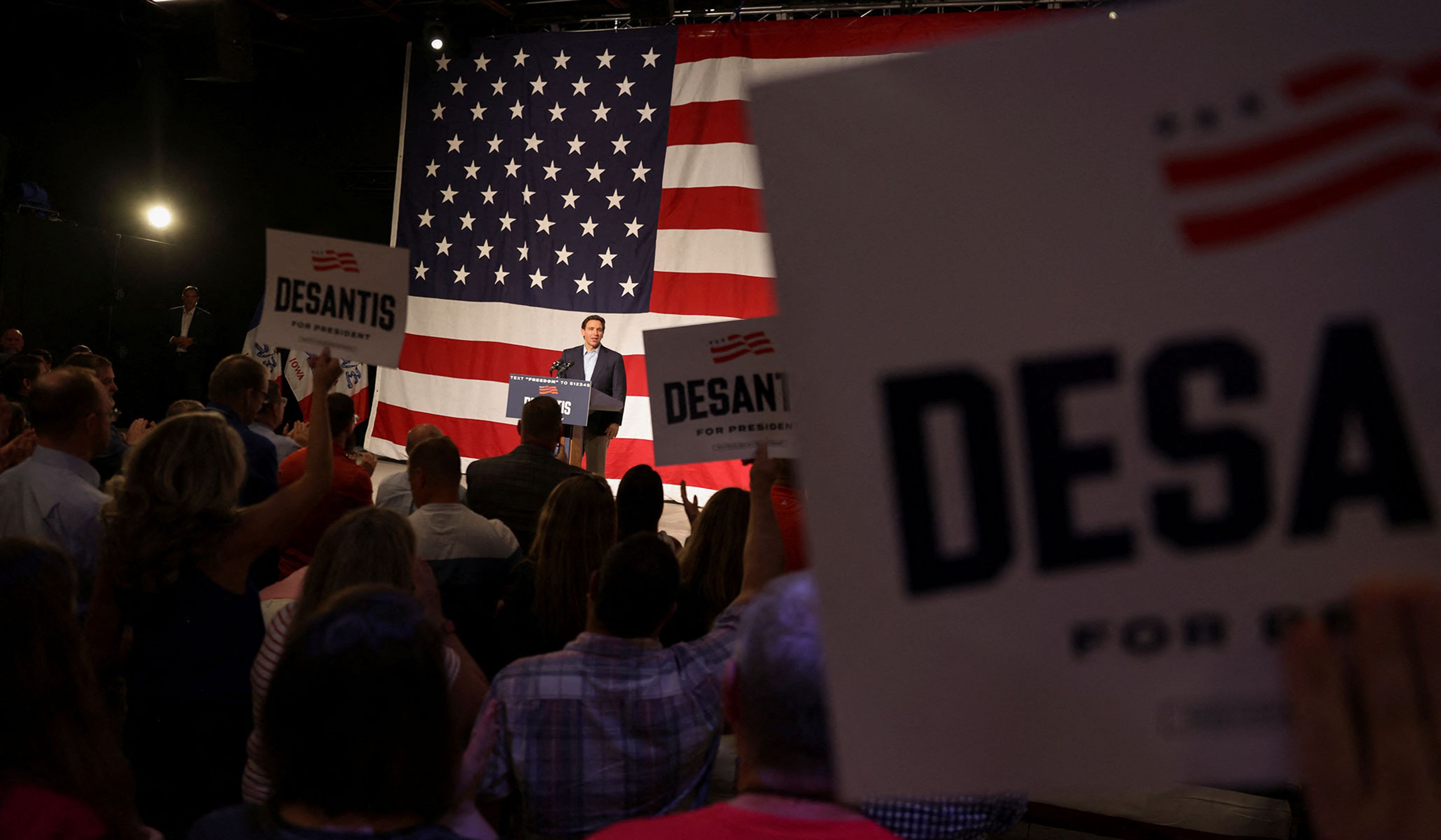
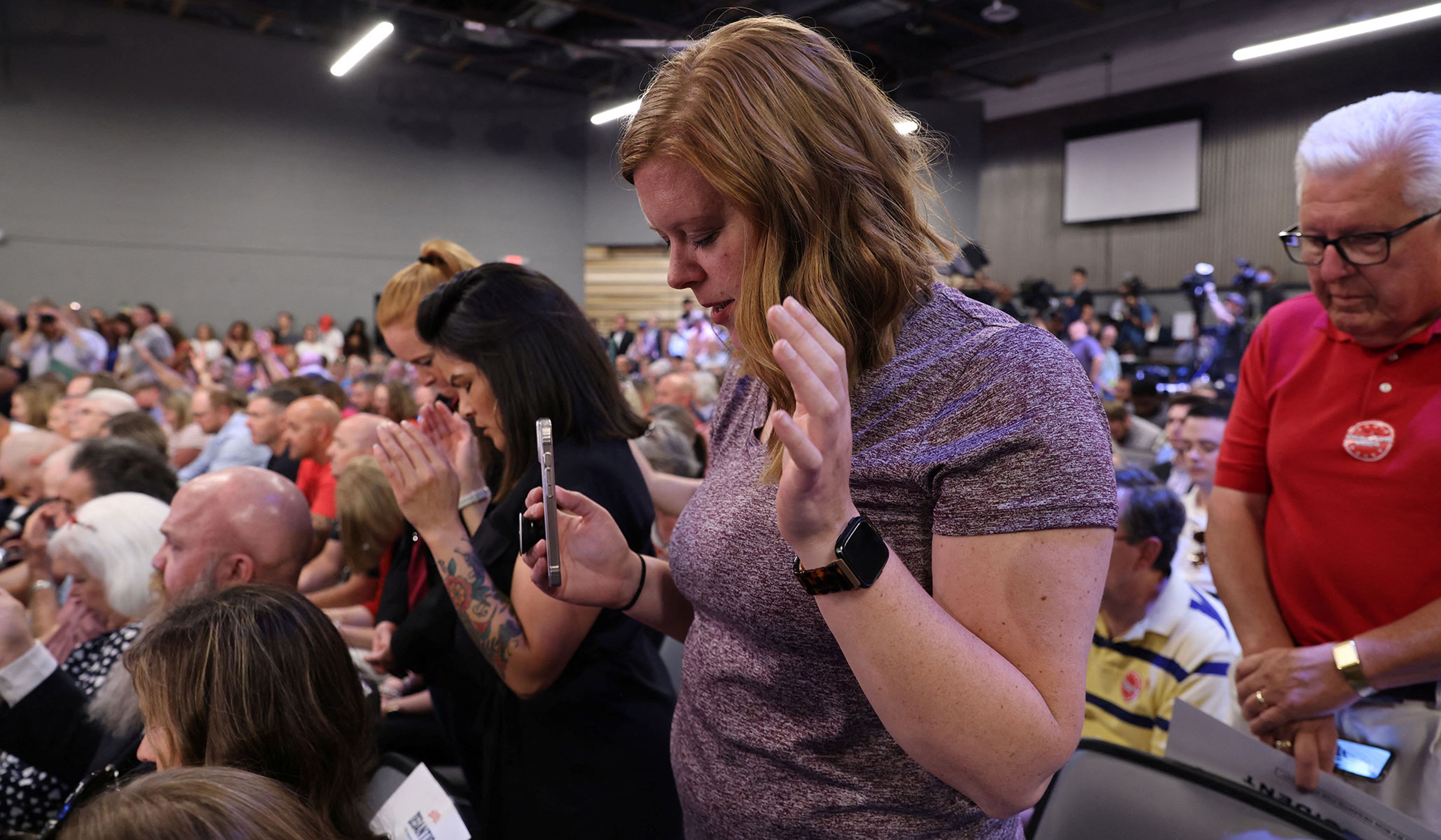
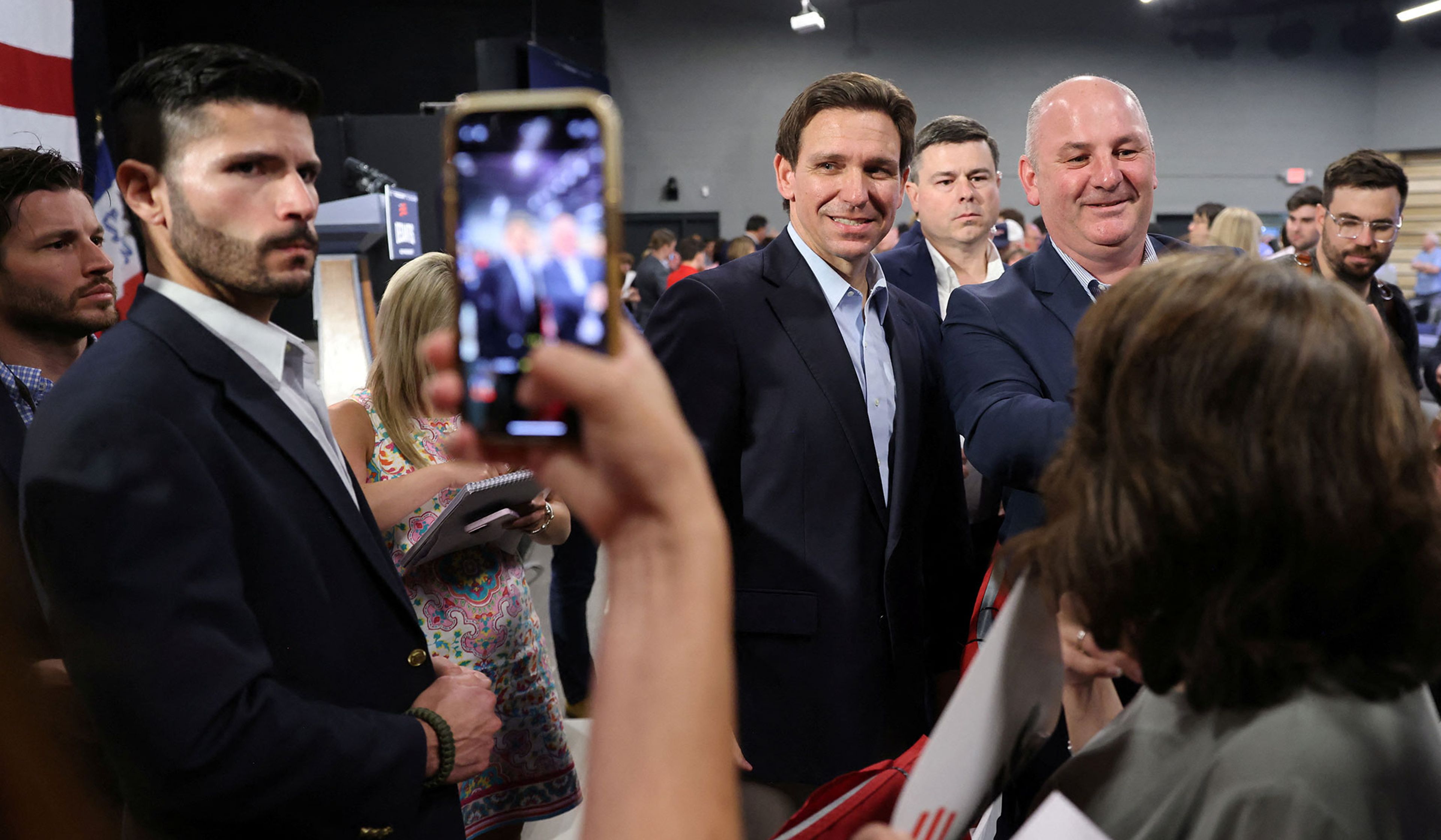
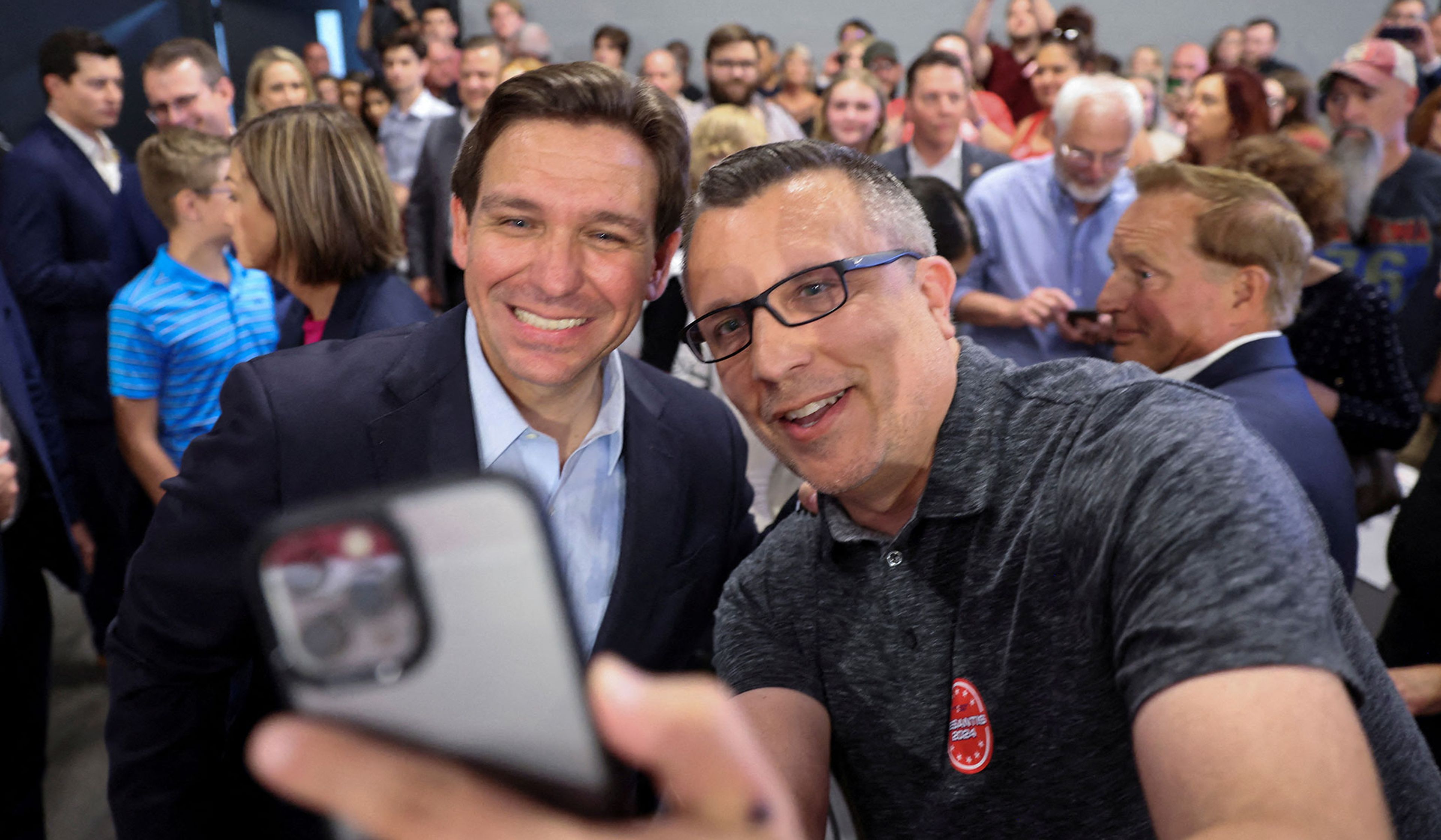
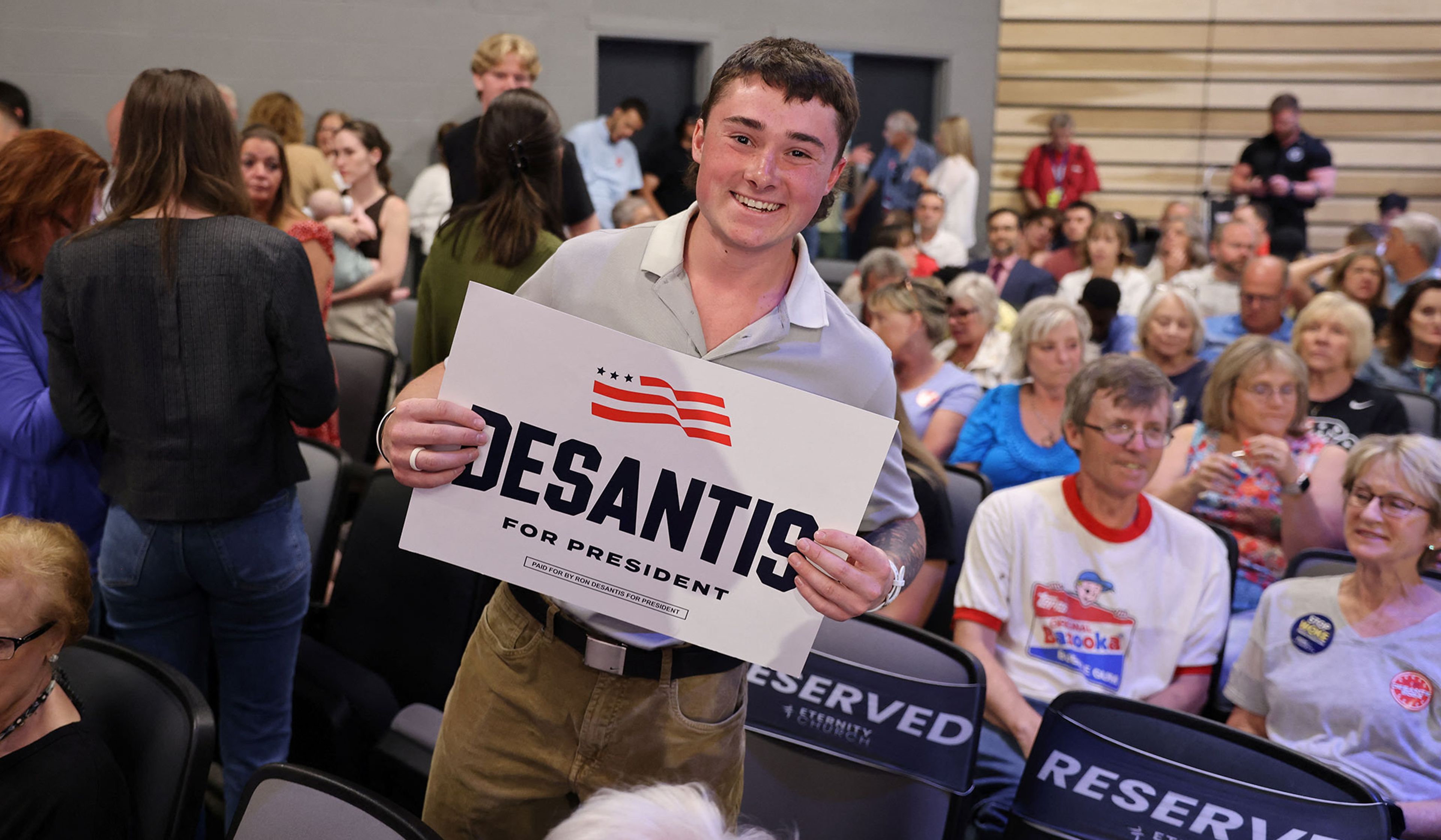
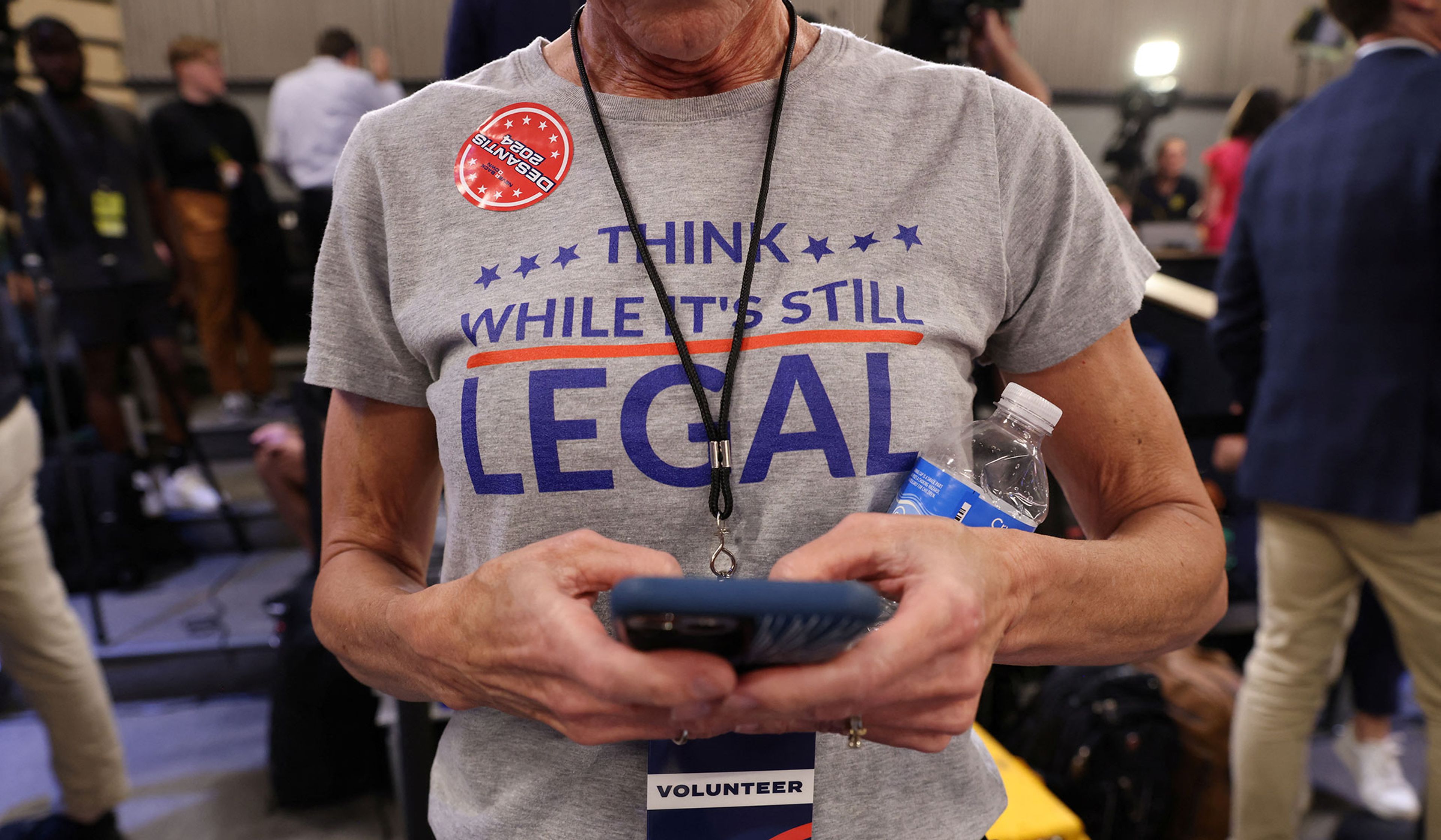
Florida governor Ron DeSantis arrives to kick off his 2024 presidential campaign at a rally at the evangelical Eternity church in West Des Moines, Iowa, May 30, 2023.
Scott Morgan/Reuters
The logic of the campaign will inevitably draw DeSantis into more direct combat. Asked about Trump’s habit of giving demeaning nicknames, he responded, “I think it’s so petty. I think it’s so juvenile. . . . And honestly, I think that his conduct, which he’s been doing for years now, I think that’s one of the reasons he’s not in the White House now.” He even implied that Trump let the 2020 election get stolen from him, not only noting Trump’s failure to stop Democrats from using Covid lockdowns as cover to change voting laws but adding: “I also look at how the federal government colluded with some of the tech companies to censor information like the Hunter Biden story — that’s election interference. It’s totally unfair. But I would also point out that was Donald Trump’s FBI and Donald Trump’s DHS that was doing that — he didn’t have control over his own agencies. If somebody in my government were doing that, they would’ve been fired the next day.”
While DeSantis is picking his spots in framing attacks on Trump, his staff on social media has opened both barrels without cease or mercy. Twitter may be a sideshow, but it is clear that neither Trump nor his surrogates have previously faced an opponent within the party operating at this level of aggressive gusto, self-assurance, and credibility with conservative and populist voters. This is a campaign that is prepared to be punched in the mouth — and to hit back.
Given what we’ve seen so far, one might ask, can DeSantis do better? It’s not realistic to ask him to run as someone he isn’t. Nor should he start focusing too heavily on his general-election message and strategy while there is still a challenging primary to win. But a few strategic choices could improve upon his initial approach.
One thing DeSantis could do better as the campaign proceeds is to field questions from less friendly outlets. His interview schedule thus far has been larded with conservative journalists who are sympathetic to his candidacy or have defended his record in Florida. That’s fine for an initial rollout. But DeSantis is often at his best when sparring with hostile press, and like it or not, even many Republican primary voters still get their information from the mainstream press, alternative sources such as podcasters, or more Trump-sympathetic outlets. A confrontational but right-leaning journalist such as Megyn Kelly, or an independent host such as Joe Rogan, could offer a good platform for DeSantis.
Moreover, as both Trump and Vivek Ramaswamy have illustrated, where Republican voters are concerned, there is still fund-raising and persuasion gold in bearding the dragon of the liberal press in its den. In 2012, Newt Gingrich won the South Carolina primary almost entirely because he confronted CNN’s John King at a debate. As far back as 1988, a pivotal primary moment was George H. W. Bush’s dressing down of Dan Rather on CBS News.
Similarly, DeSantis has yet to take open questions from voters in front of an audience, preferring to give talks and then chat with voters one-on-one. Again, that’s fine to start with, but especially for a man whose calling card is his preparation and combativeness rather than his charm, it will be important to give retail audiences in Iowa, New Hampshire, and South Carolina a taste of how deftly the governor works without a script.
A second thing DeSantis will need to do eventually is to put more policy meat on the bones of his rhetoric. Voters don’t demand detailed white papers, but they want forward-looking candidates who talk about what they can do, not just retrospectives on a good record. Former Wisconsin governor Scott Walker now says that his one regret in his 2016 campaign was focusing too much on his record instead of his proposals, while Trump was pledging to build a border wall.
DeSantis’s Florida record makes a strong introduction in giving voters a look at both his character and his policy priorities. Ultimately, however, he will need a platform. And while that platform will have to include some discussion of the cultural combat that raised his post-pandemic profile, it will need to foreground the bread-and-butter economic concerns that are central to every election. Unlike Trump, DeSantis knows what it is like to come from modest means and work his way through college — but as the leader of a booming Sunbelt state, can he match how Trump speaks to the insecurities of Americans in long-declining heartland communities?
Finally, when it comes to the debates, DeSantis should consider a reverse-Pawlenty strategy. Minnesota governor Tim Pawlenty saw his 2012 presidential campaign collapse after he ran attack ads against Mitt Romney but wilted when asked to repeat the same charges to Romney’s face. DeSantis should avoid telegraphing his best shots at Trump and instead save them for the debate stage. Force the 77-year-old Trump to react in real time to something he hasn’t heard before.
Maybe DeSantis will end up on the canvas with the rest of Trump’s opponents. But maybe he’ll be the guy who finally gets Trump to lose his cool and take one bite too many.











Comments