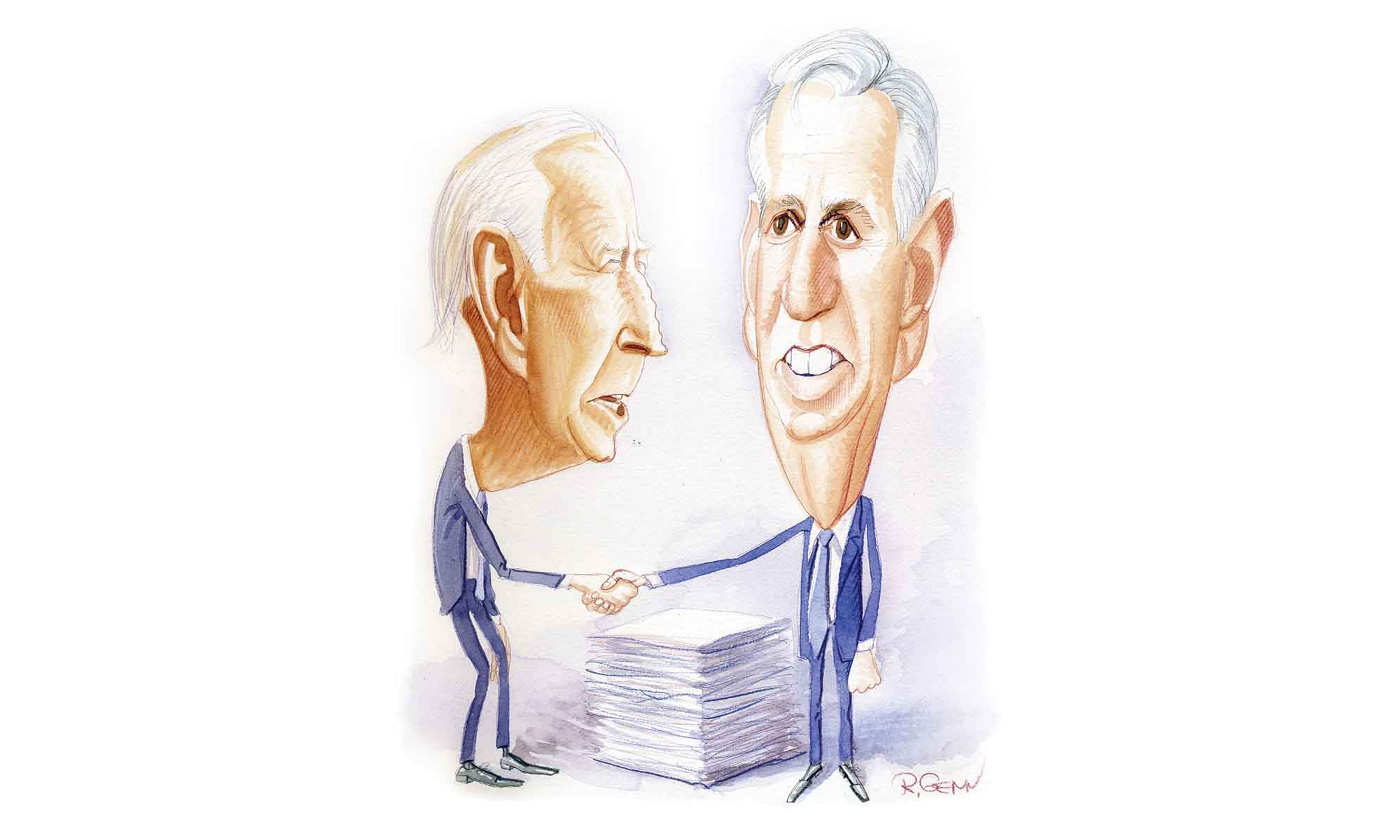
• Agreeing to allow more federal debt is pretty much Washington’s definition of a bipartisan accomplishment.
• “Terrorists,” “hostage-takers,” “blackmail,” “extortion” — we have a deal! President Biden and Speaker McCarthy came to terms on a rather milquetoast bipartisan agreement to raise the debt ceiling. It was Biden who at first insisted that negotiation was not an option, after House Republicans passed a bill at the end of April to raise the debt limit. Progressives and their allies in the media nonetheless claimed that Republicans were reckless obstructionists. Analogies to terrorism and extortion were common. Representative Pramila Jayapal (D., Wash.) tweeted about “Republicans’ economic hostage taking” just six hours before McCarthy announced the deal with Biden. The specifics of the agreement are underwhelming. It leaves entitlement spending, the main problem, untouched. But it is not clear how Republicans could have gotten more with only a slim House majority and with the presidency and the Senate controlled by Democrats. Avoiding default is a good thing, as was getting 165 House Democrats on the record in support of the handful of Republican priorities, such as work requirements, that made it into the deal. McCarthy played his weak hand as well as he could have, but the spending problem persists.
• Has Jamie Dimon, the CEO of JPMorgan Chase, been thinking about running for public office? Previously, he has ruled it out, but asked about it in a recent interview he replied, well, like a politician: “I love my country, and maybe one day I’ll serve my country in one capacity or another.” JPMorgan has now put out a lawyerly statement saying that Dimon “has no plans to run for office.” He is “very happy in his current role.” That wouldn’t rule out a change of mind about a run for the presidency at some future date, which, in our gerontocratic times, could be 2032, or even 2036. But he’s a Democrat, and it’s hard to see him winning many primaries in the party of Alexandria Ocasio-Cortez and Elizabeth Warren. Meanwhile, Trump has said that he doesn’t have “the smarts,” and the GOP field is crowded enough. A better bet might be to run as a Bloomberg 2.0 for the mayoralty of New York City, his hometown. More likely, however, he will stick with his current job, where he can play statesman and diplomat, accountable only to shareholders, who give him no trouble, rather than voters, who would.
• In May, the U.S. unemployment rate ticked up three-tenths of a percentage point, to 3.7 percent, but by historical standards that’s still quite low. Last October, while licking a waffle cone of Baskin-Robbins chocolate-chip ice cream, President Biden boasted, “Our economy is strong as hell.” But most Americans do not feel that way. The April CNBC survey found that “a record 69 percent of the public holds negative views about the economy both now and in the future.” The Gallup Economic Confidence Index is at negative 44, not all that far above that figure’s all-time low during the pandemic. And Pew Research found that only 19 percent of U.S. adults rate current economic conditions as excellent or good, while 46 percent say they are fair and 35 percent rate the economy as poor. Many variables shape perceptions of the economy, but the current gloomy mood is likely due to the longest bout of high inflation in 40 years, which continues. Consumer price inflation is 4.9 percent year over year at latest reading, grocery costs are still high, gasoline remains expensive by historical standards, supply-chain problems still crop up, private debt is skyrocketing, the average price of a new car reached $50,000 earlier this year, and the average 30-year fixed mortgage rate has been above 7 percent since last October. Yes, a low unemployment rate is something to cheer. But by itself it isn’t enough to get Americans feeling good about the state of the economy.
• Ken Paxton, Republican attorney general of Texas, was impeached on May 27 for a list of misdeeds that took 20 separate articles to unroll fully. Allegations of misconduct are nothing new to Paxton — he was indicted on felony securities fraud back in 2015, has maneuvered to avoid trial since then, and was reelected in 2022 with all this and more known to voters — but the pot reached a boil when his alleged illegal attempts to gain access to the FBI investigation of a friend caused the attorneys in his office to speak out publicly. In response he fired them, in contravention of whistleblower protections, and now he is asking the State of Texas to foot the bill for the inevitable multimillion-dollar settlement with his wrongfully terminated staff. Republican politics in Texas are complicated, and the overwhelming vote to impeach Paxton in the GOP-controlled house does not mean the GOP-controlled senate will convict. (His wife is a senator, and Donald Trump has already swooped in to endorse and defend Paxton.) But they should. Ken Paxton is a disgrace not only to Texas but to legal ethics writ large.
• Elections have consequences. Minnesota’s leftism has long been checked by divided government. In 2021–22, it had the nation’s only bicameral legislature in which each party controlled one chamber. But after the state senate went from 34–33 Republican to 34–33 Democratic-Farmer-Labor, the DFL Party set out to turn the state into a colder California. The recently concluded legislative session brought culture war married to big government. The state will now fund abortions and gender-transition surgeries but not counseling for abortion alternatives. Every possible restraint on abortion was abolished, even laws prohibiting coerced abortions or requiring that born-alive infants receive medical treatment. A new “ethnic studies” mandate compels “antiracist” education. Private colleges are forbidden to “require a faith statement” from enrolling students. The legislature gave driver’s licenses and state-funded health care to illegal immigrants, and the vote to convicted felons still on probation. It also went on a massive spending spree, blowing a $17.5 billion surplus in a single session and increasing government outlays by 38 percent over 2022 levels. Despite some short-term rebates, taxes on most Minnesotans will go up to pay for all this. There are heavy-handed new environmental and business mandates. There is little to stem the public disorder that has gripped the Twin Cities since 2020. The Mayo Clinic — the state’s largest private employer — had to threaten to pull billions of dollars of planned investments from Minnesota in order to stop a mandate that unionized nurses oversee hospital-staffing levels. Even Governor Tim Walz, who egged on most of these changes, finally drew the line at regulations that would have driven up ride-share costs. Expect more rides to be one-way, out of state.
• State Farm, the largest auto and home insurer in the country, announced it would not be selling any new home-insurance policies in California. It cited skyrocketing construction costs, exposure to wildfires, and a troubled market for reinsurance. A few days later, Allstate said the same, for similar reasons (word is still out on whether it will change its name to “Manystate”). While progressives blame climate change for the wildfires, they have no one but themselves to blame for a regulatory environment that makes construction so expensive and business so difficult to conduct. Allstate specifically mentioned the state’s rate regulations as a reason to get out, saying that it is prohibited by the government from adjusting prices sufficiently to compensate for increased construction costs. The logistics industry has also responded to California’s overzealous regulation by routing more shipments to ports on the East and Gulf Coasts. Even great weather will get you only so far in the face of misgovernment.
• In Michigan, a man was sentenced to 100 hours of community service after shooting an 84-year-old pro-life woman, Joan Jacobson, in the shoulder. Jacobson was campaigning door-to-door against a pro-abortion amendment to the state constitution that later passed. The man, Richard Harvey, claimed to have shot Jacobson by accident after she got into a disagreement with his wife. He pleaded no contest to felonious assault, careless discharge of a firearm causing injury, and reckless discharge of a firearm. Separately, the Baltimore Police Department is investigating an assault on two elderly pro-life men outside a Planned Parenthood clinic in Maryland. The police report says that there were two victims, a 73-year-old, who was tackled to the ground, punched in the head, and kicked with “extreme force” in the face, and an 80-year-old, who suffered a hand injury. The suspect expressed his support for abortion. You’re probably reading about these cases for the first time, which would not be the case if the political valence were reversed.
• Virginia joined the movement against credentialism by abolishing degree requirements for most state-government jobs. Governor Glenn Youngkin (R.) followed a trend that former governor Larry Hogan started in Maryland, and six other states followed before Virginia. Only 38 percent of Americans over the age of 25 had a bachelor’s degree or higher in 2021, according to the Census Bureau, and it rarely makes sense to exclude 62 percent of American adults from various kinds of employment simply because their acquisition of skills has not been validated by a piece of parchment. Private employers should be free to decide the job qualifications they are looking for. For most state-government jobs, there is no reason to prefer, by default, someone with a bachelor’s degree to someone who forwent college and served in the military, or someone who has a high-school diploma plus years of relevant job experience. Of the eight states that have championed this reform, four have done so under Republican and four under Democratic governors. This isn’t a polarizing issue, and it’s not a response to ideological indoctrination in universities (a separate problem). It’s just common sense, especially in an economy with millions more job vacancies than unemployed persons.
• College attendance has not rebounded since the pandemic effectively ended last year, according to the Bureau of Labor Statistics. The rate of college enrollment for recent high-school graduates in 2022 was 62 percent, as compared with 66.2 percent in 2019. The drop reflects a strong labor market, with rising wages for blue-collar and service workers in particular, and a willingness on the part of some employers to stop requiring college degrees when they’re unnecessary. Apprenticeships, in which workers are trained by prospective employers in a skilled profession, are also on the rise. When young people can find well-paying jobs without needing to spend eye-watering amounts on tuition, that’s good news — for everyone besides college administrators.
• It might seem obvious that federal labor law doesn’t empower striking workers to sabotage company property. But where the National Labor Relations Act is concerned, even the obvious needs stating by the courts. As described in the case of Glacier Northwest v. Int’l Brotherhood of Teamsters, striking Teamsters walked off the job after their trucks had been loaded with custom-mixed concrete. They knew that if the concrete hardened before delivery, it would be useless, and that if it hardened inside the trucks, the trucks would be damaged, too. Quick unloading saved the trucks, but the day’s haul of concrete was lost. An 8–1 Supreme Court has ruled that the NLRA doesn’t immunize the Teamsters from the company’s lawsuit: The statute protects the right to choose a time to strike, but a union must take “reasonable precautions” to protect the employer’s property from “foreseeable, aggravated, and imminent danger due to the sudden cessation of work.” As Justice Amy Coney Barrett observed, “by reporting for duty and pretending as if they would deliver the concrete, the drivers prompted the creation of the perishable product.” That common sense wasn’t shared by Justice Ketanji Brown Jackson, who argued that courts “should stand down” while the National Labor Relations Board considered the case, because “Congress has gifted our legal system with an expert agency that thoroughly investigates what happened.” That may be, but the Constitution has gifted us with a Supreme Court that can read statutes — in this case, accurately.
• The 1972 Clean Water Act aimed to purge pollutants from the nation’s “navigable waters,” defined as “the waters of the United States, including the territorial seas” — “WOTUS,” in bureaucratese. A 1977 amendment assumed that WOTUS might “includ[e] wetlands adjacent thereto.” What followed was a textbook example of federal mission creep. Regulators discarded any requirement of a connection to a navigable body of water and asserted such broad jurisdiction that even wet grass could qualify. For half a century, landowners were left to guess when they might face crushing fines or even prison time. Regulators treated WOTUS as a sword of Damocles rather than a rule, issuing voluminous manuals and instructing field agents to make case-by-case decisions. Now, in Sackett v. EPA, the Supreme Court has mercifully ended this regime. It unanimously rejected the EPA’s open-ended definition and ruled for landowners who had been fighting the agency for 19 years over whether they could move dirt and rock into water on the opposite side of a road from a non-navigable creek that feeds into a once-navigable lake, with federal jurisdiction premised on the “aggregate” effect of an unconnected fen. The Court split 5–4 over the precise rule: The majority required WOTUS to be permanent bodies of water or those adjacent to them, while four justices argued that water separated only by man-made or natural barriers could also be “adjacent.” As important as the exact definition is the fact that the Court settled on one. Law that is not definite and certain is not law at all.
• In early June while transiting the Taiwan Strait, a Chinese warship crossed the bow of the USS Chung-Hoon and the Canadian frigate HMCS Montréal at close range, in what the U.S. Navy called “an unsafe maritime interaction.” That the American destroyer was forced to take evasive action to avoid a collision in international waters, and that it was the second such incident in only a week’s time — a Chinese fighter jet almost collided with an American reconnaissance flight over the South China Sea in late May — indicates the growing aggression and recklessness of Chinese maneuvers. Beijing believes that the waters and skies of its near abroad are its domain alone, no matter international norms or maritime law. Americans would do well to remember both that freedom of navigation on the seas and oceans is foundational to our prosperity and that it is not in our tradition to give in to bullies.
• Malaysian authorities detained the Chinese cargo ship Chuan Hong 68 after it was discovered scavenging the wrecks of the HMS Prince of Wales and the HMS Repulse, two British warships sunk off the Malay coast by Japanese torpedoes in the days following Pearl Harbor. For years, Chinese scrappers have been illegally breaking up sunken warships to scavenge pre–Atomic Age steel and other metals, which, owing to low radioactive-isotope levels, are highly valuable in certain industrial and scientific applications. More than 800 Royal Navy sailors lost their lives in the action. They should be left to rest in peace, and their watery graves protected, by force if necessary.
• Iran and Saudi Arabia have extended their policy of détente by announcing a joint naval force — along with Oman and the United Arab Emirates — that will provide security in the Persian Gulf. It should surprise no Western observer that the announcement was made in coordination with China. As America’s role in the region shrinks, other countries move in and move on. Iran hopes to weaken American power in the Near East. The Saudis want to play China off against the United States in hopes of getting a better deal from both. The United States should keep the sea lanes open. As long as autocrats rule in Riyadh, Tehran, and Beijing, their interests will seldom align with ours.
• That the war crimes are constant is no reason not to notice them and decry them. Russian forces bombard Ukrainian civilians day after day. In Kyiv, a mother and her daughter, age nine, were killed trying to reach a bomb shelter. (Their names have not yet been released.) Ukrainians continue to fight back — Ukrainians from all walks of life. A ballet dancer, Rostyslav Yanchyshen, was killed wearing the uniform of his country. “Rostyslav was a very noble man,” said the head of his ballet company in Odessa. “An example of a true patriot.” In Germany, Chancellor Olaf Scholz was speaking at a festival when he was interrupted by hecklers who shouted “Warmonger!” at him. He answered back, saying that the warmonger is, in fact, Putin. “He invaded Ukraine with 200,000 troops.” Putin has “killed countless citizens” of Ukraine, including “children and elderly.” What’s more, he is sacrificing the lives of young Russians to fulfill his “imperialist dream.” Chancellor Scholz provided a welcome example of moral clarity. We ought to have more of this, from everybody.
• Just when you start to hope, however foolishly, that Britain’s endlessly disappointing Tories have run out of bad ideas, they come up with something else. Downing Street, Brits have learned, has dreamt up a scheme that retailers should agree to put a “voluntary” (for how long?) price cap on certain basic food items, such as bread and milk. With a general election less than two years away, inflation in the U.K. running at an election-losing 8.7 percent in April, and food inflation running at more than twice that, the increasingly desperate Conservatives — 13 points behind Labour in the polls — have turned to the tried and failed. Price caps don’t reduce inflation, and in the end they invariably lead to shortages.
• A headline in New York magazine laments, “Bud Light, Target, and a New Era of Corporate Caution.” Good. Corporate America is enduring a long-overdue reckoning for its partiality in the country’s culture wars. For a long while, social-media outrage mobs pushed companies only to the left; the mere prospect of a boycott by progressives could send CEOs scurrying and begging forgiveness. Meanwhile, fears of any boycott by conservatives were few and far between. Now, Bud Light is buying back unsold spoiled inventory and, in some situations, literally giving the beer away for free — all over a can featuring transgender influencer Dylan Mulvaney and a marketing executive’s lament about the brand’s previous “fratty, kind of out-of-touch humor” in commercials. Target is belatedly realizing the marketing consequences of letting a brand that had Satanist merchandise participate in its “Pride” collection. Advertising executives’ disdain for the views of large swaths of their existing customer base echoed Hillary Clinton’s arrogant dismissal of Trump supporters as a “basket of deplorables.” Michael Jordan famously observed, “Republicans buy sneakers, too.” Apparently too many C-suite executives forgot or believed otherwise.
• Last year, the Saudi dictatorship started its own golf tour, known as “LIV Golf.” It is funded by the country’s sovereign wealth fund, whose chairman is the crown prince, Mohammed bin Salman. Many PGA Tour players jumped to the new tour, for huge paydays. One of them was Phil Mickelson, who made an admission to his biographer: “They’re scary motherf***ers to get involved with. We know they killed Khashoggi and have a horrible record on human rights. They execute people over there for being gay.” Critics of the new tour spoke of “sportswashing.” Pressed on these matters in an interview, Greg Norman, the Saudis’ CEO for the new tour, said, “Every country has got a cross to bear.” The PGA Tour forbade LIV golfers to play PGA Tour events. But the PGA Tour continued hemorrhaging players, who went for the money. On a recent Tuesday morning, the PGA Tour commissioner, Jay Monahan, and the Saudis’ Yasir al-Rumayyan made a shock announcement: The two tours would merge. From now on, it would be Saudi money for all. So, money has spoken — but it is still well to remember the political prisoners, innocents who are tortured sometimes to death.
• CUNY Law School hosted a graduation speaker whose antisemitic speech went viral. Fatima Mohammed, who was elected by her peers, told the Class of 2023 that “Israel continues to indiscriminately rain bullets and bombs on worshipers, murdering the old, the young, attacking the funerals and graveyards as it encourages lynch mobs.” Mohammed said she believed that law school is a place to learn how to dismantle the “white supremacist” rule of law, along with “capitalism, racism, imperialism, and Zionism around the world.” She has since been condemned by multiple Jewish organizations and by CUNY itself. To the extent her description of the purpose of many law schools is accurate, it’s an indictment of them.
• Good news finally from the academy. George Washington University has been wrestling with the nickname of its sports teams, “the Colonials.” Too like those evil ofay settlers, some students felt. So a GW “moniker advisory committee” met and came up with “the Revolutionaries.” To which any American must say, “Huzzah!” There is a powerful strain of American conservatism, grounded in Edmund Burke and articulated by Russell Kirk, that looks with the deepest suspicion on revolution. Order is precious, life more so, not to be wasted in utopian upheavals. But the order Burke defended had been solidified by the Glorious Revolution of 1688, and the American Revolution, 90-odd years later, was not just a dynastic correction and monarchical downgrade but an assertion of liberty for all time, and potentially for all men. As Colonel John Trumbull, artist and vet, wrote, it gave “the present and future sons of oppression and misfortune . . . glorious lessons of their rights, and of the spirit with which they should assert and support them.” Go, GWU!
• “I don’t agree with making fun of other people’s religions,” Clayton Kershaw told Jack Harris of the Los Angeles Times. Kershaw, the Dodgers’ pitching ace, spoke for many when he described his response to the club’s decision to honor the Sisters of Perpetual Indulgence, an organization that combines fundraising for charity with street performances in which drag queens in the guise of flamboyant nuns mock the Catholic Church. The front office announced that it would present an award to SPI on the Dodgers’ annual Pride night. Politicians, clergy, ballplayers, fans, and fair-minded bystanders were quick to roar their disapproval. The Dodgers disinvited SPI but then reinvited them after taking heat from the other side of what had become a battle in the culture war. As the initial critics resumed their booing, Kershaw worked with the club to expedite the announcement of Christian Faith and Family Day, to be held at Dodger Stadium on July 30. “This has nothing to do with the LGBTQ community or Pride or anything like that,” he explained, choosing to be constructive. “This is simply a group that was making fun of a religion. That, I don’t agree with.” Well said, perfectly pitched.
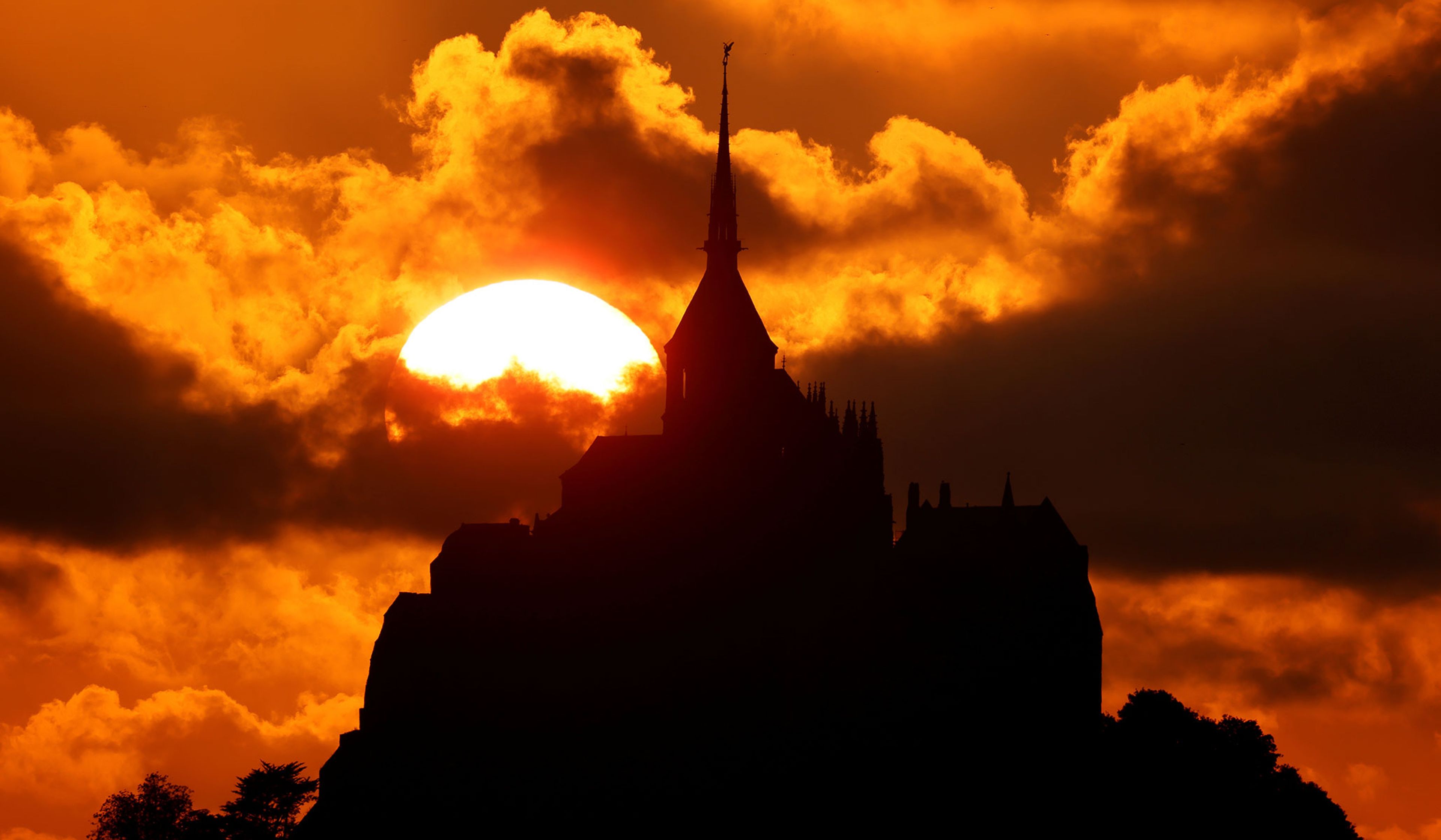
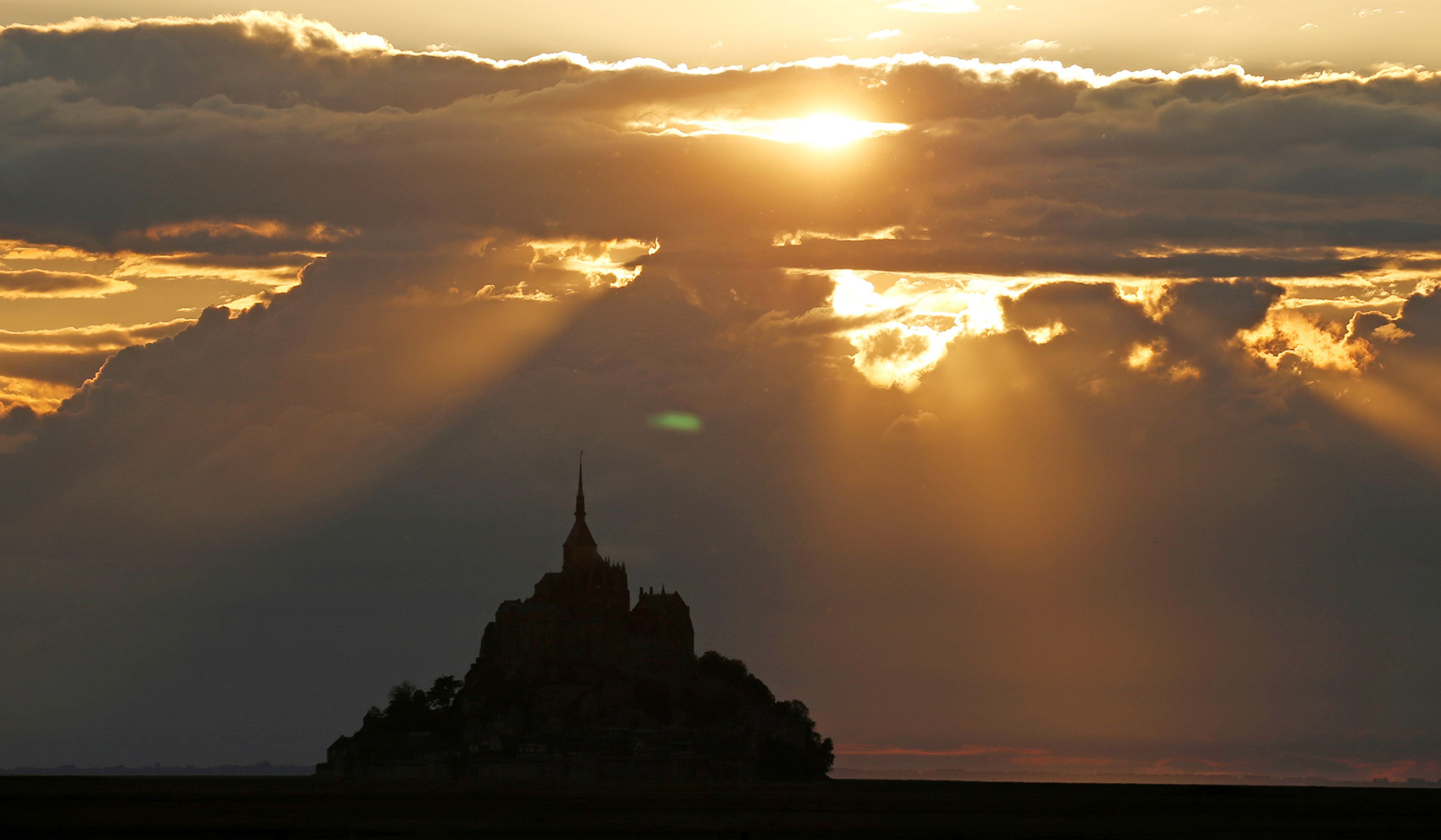
• Mont-Saint-Michel is a gigantic lump of unshapely rock off the coast of Normandy, a most unlikely setting for what is probably the most spectacular monument in France. According to legend, the rock in 708 became a place to venerate Saint Michael because the archangel had appeared to Aubert, bishop of Avranches. The rock has no flat surfaces, so it was a conspicuous act of faith to build a Benedictine monastery anywhere on it. The monastery is dated from 1023 and is therefore celebrating its thousandth anniversary. The rock was famous for its pilgrimages, but also for cells reserved for political prisoners. In the revolutionary year of 1791, the Benedictines were forced out, and the rock soon became national property. The approach to it today is via a pedestrians-only causeway leading to an incredible architectural jumble of styles and to the abbey church, the cloisters and refectory. The monument’s survival not only of the Revolution but of the Hundred Years’ War and World War II may be providential.



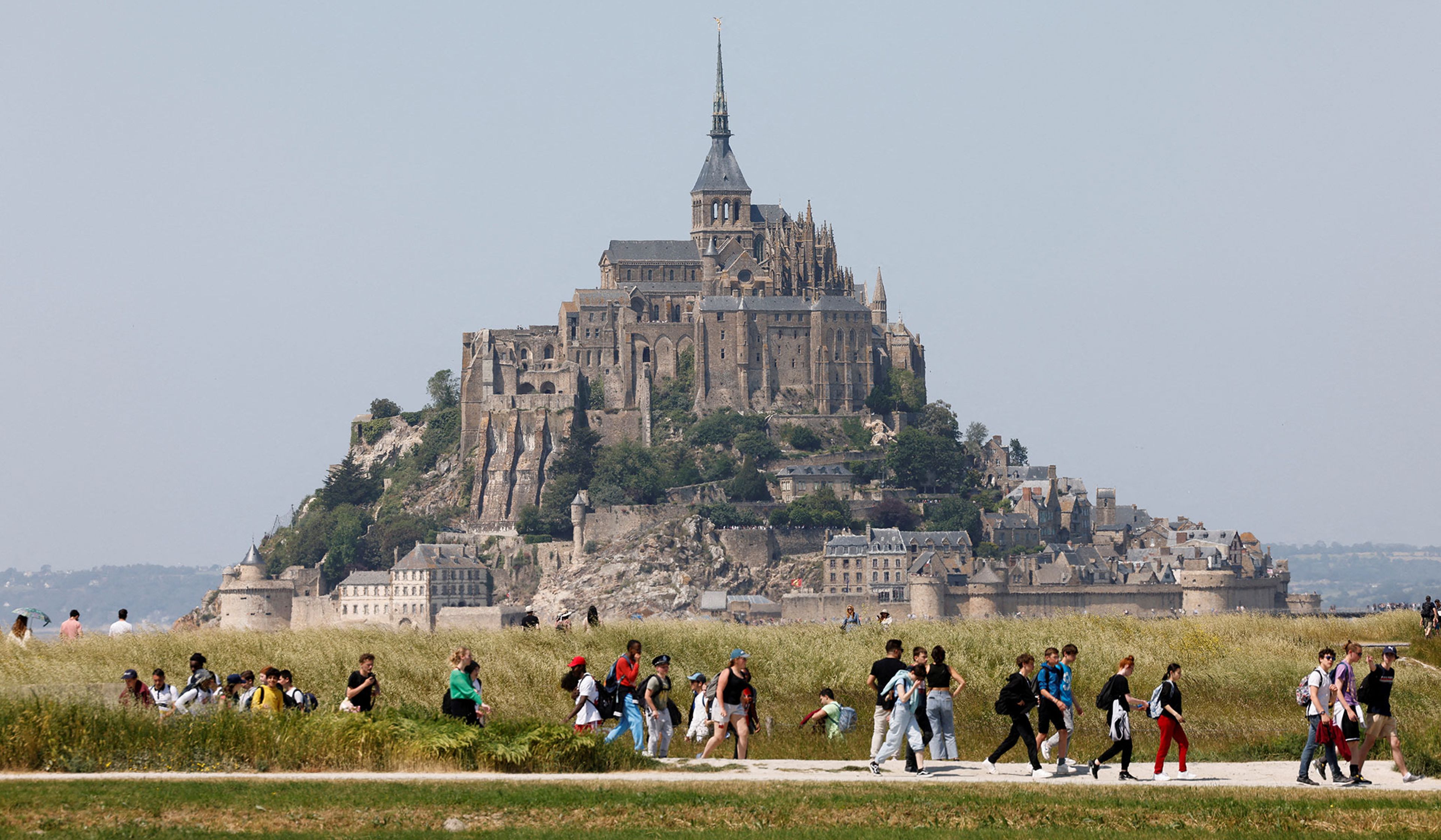
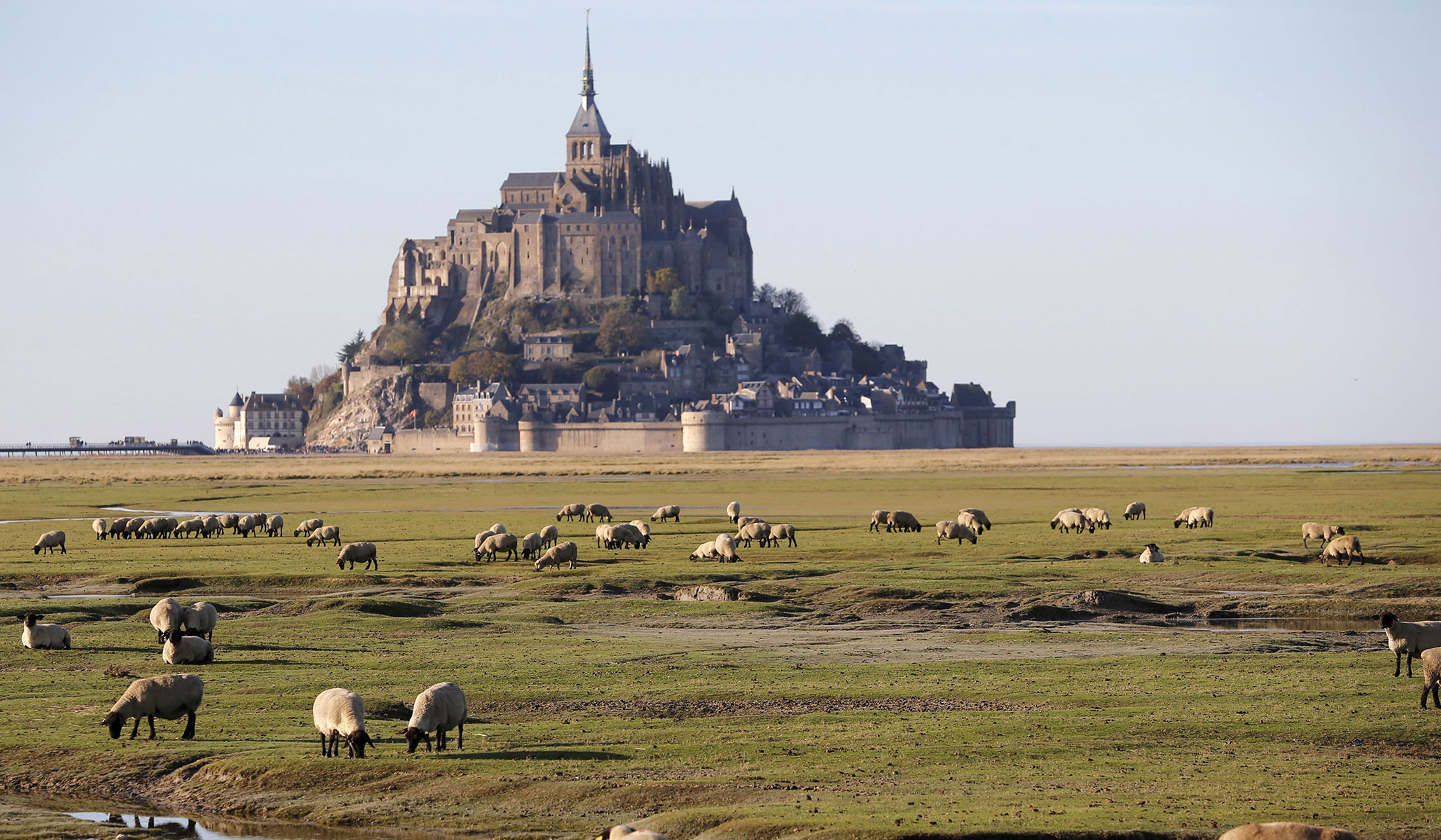

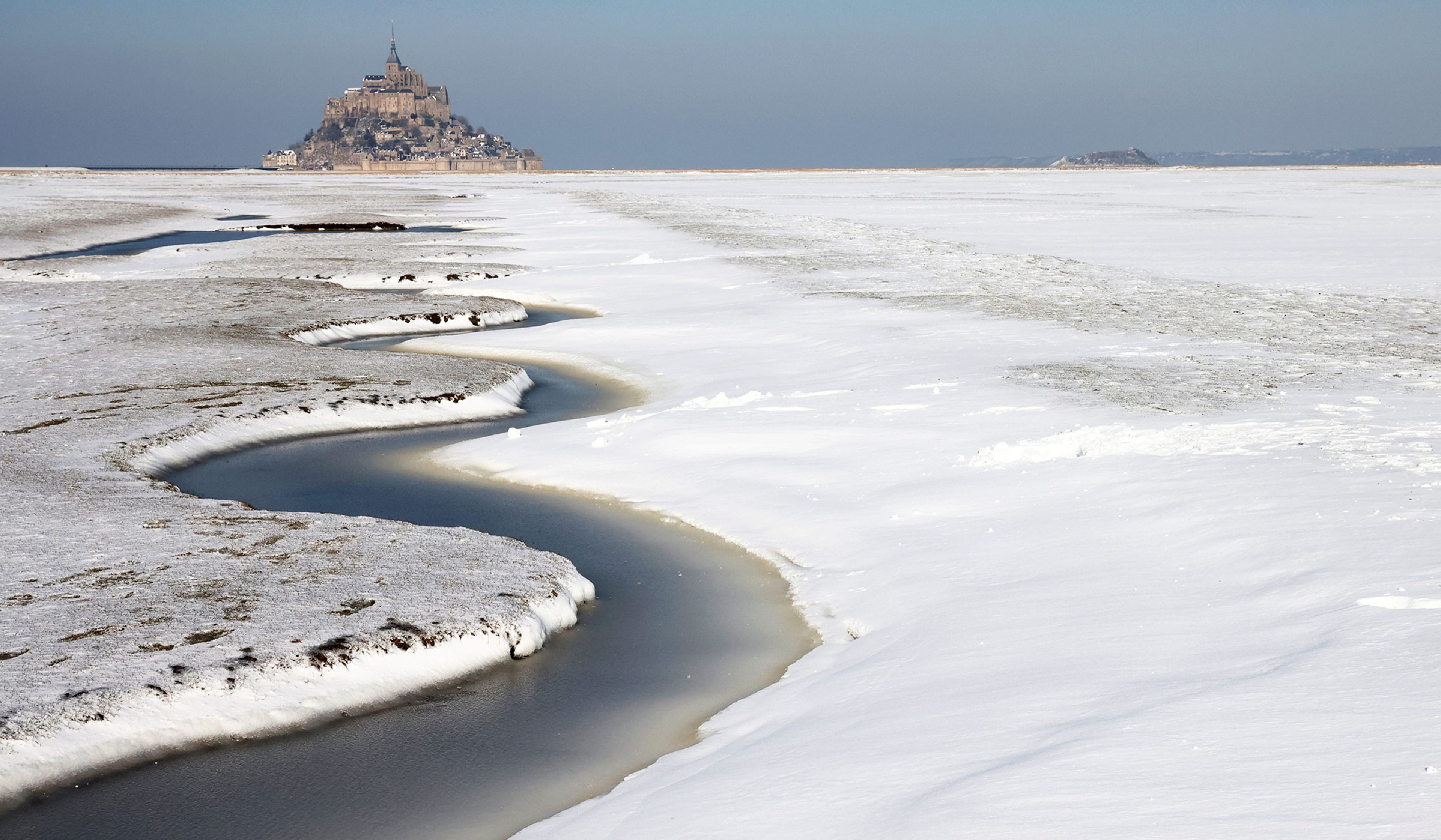



Aerial view of the deserted Mont Saint-Michel in Normandy, France, during a lockdown to slow the spread of the coronavirus, April 17, 2020. Picture taken with a drone.
Pascal Rossignol/Reuters
• Dayton, Ohio, has contributed much to the world: not just cash registers and planes, but that delicious snack the Cheez-It. This flavorful delight was preceded by World War I rations known as “the Dayton Cracker,” produced by the Green & Green Company. According to Smithsonian magazine, after the war, “the hard butter-cracker was a local treasure,” but “customers yearned for a delicate, flakier treat.” The article points out that the snack draws its origins from the Welsh food rarebit, a type of “cheese sauce spread on toast.” Now over 100 years old, the Cheez-It has been honored with a large statue at a Dayton brewery.
• Move over, pileated woodpeckers — there’s (potentially) a bigger tree-knocker (back) in town. The ivory-billed woodpecker was last spotted alive in 1944, and in 2021 a proposal was put forward to declare the bird extinct. Feathers were ruffled in the birding community recently, however, with reports that the bird is very much alive and hiding out in the swamps of Louisiana, with some researchers doubting it and others insisting they have glimpsed the bird in flight. Grainy video and sketchy photographic evidence are adding to the tension. Whether this bird is declared extinct or continues to be listed as critically endangered matters from a scientific standpoint, as it will determine whether time, energy, and research money is spent tracking it down and preserving it.
• Robert Hanssen once seemed to be a pious Catholic father and dutiful FBI agent. He belonged to the lay religious order Opus Dei, and to Bureau colleagues he professed an anti-communism informed by his faith. Specializing in Soviet, then Russian, counterintelligence, he lived a double double life. He frequented strip clubs, ostensibly to convert their employees, and shared private videos of his sex life. His professional life was even more deceptive. In 1979 he began to spy for the Soviets, passing along highly classified information, such as the identities of several high-level American assets, who were then executed. Hanssen continued in that vein through the Cold War’s end, amid mounting interagency suspicion. On February 18, 2001, he was arrested while furtively depositing classified information in a park near his home in northern Virginia, ending one of the worst intelligence disasters in U.S. history. He faced the death penalty but in 2002 was sentenced to life in prison without parole. A man of blatant contradiction — to his arresters, he said, “What took you so long?” — and inscrutable motives defied his faith and professed political convictions to maintain a life of sin and treason. Dead at 79. Deus misereatur animae suae.
• Annie Mae Bullock was born a sharecropper’s daughter in rural Tennessee in 1939 and grew up into a singer with a brassy voice as big as all outdoors. She passed away on May 24 as Tina Turner, a star whose story had become synonymous with endurance in the face of personal trials. Her meal ticket out of obscurity was a chance meeting with bandleader Ike Turner, who heard her commandeer a microphone during a break in one of his shows and instantly found both a protégée and a wife. But while iconic hits followed — “It’s Gonna Work Out Fine,” “River Deep–Mountain High,” and a cover of “Proud Mary,” among others — they came at the cost of a horribly abusive relationship with her husband. Finally gathering the courage to leave him, she struggled alone throughout the late Seventies, until staging a commercial rebirth in the Eighties with songs such as “What’s Love Got to Do with It?” and “We Don’t Need Another Hero.” Seven years ago, with failing kidneys, she considered assisted suicide; her devoted husband convinced her to take one of his kidneys instead. Here’s to Tina Turner, a woman who refused to be defined by the hand that life dealt her and instead defined herself as a survivor. R.I.P.
• Robert Zimmer, professor of mathematics and president of the University of Chicago from 2006 until 2021, succumbed at 75 to the glioblastoma that had forced his retirement. He leaves behind a legacy as the most consequential academic defender of free inquiry so far in the 21st century. In 2014, Zimmer saw an oncoming threat to intellectual freedom and issued the “Chicago Principles,” a stirringly blunt affirmation of the university’s refusal to accept either claims of emotional trauma or a heckler’s veto as substitutes for meeting unpopular ideas with discussion and debate. The principles have served well at Chicago and the 84 other schools that have adopted them. Some elite institutions, such as Stanford and Yale, are only tardily affirming the core of the principles as the chaos on their own campuses spins out of control. Rest in peace, Professor Zimmer, having stood athwart the tidal wave of intellectual censorship rolling through academia, yelled “Stop,” and in so doing dammed the floodwaters.
• For generations, reporters have been described as “intrepid.” It is a cliché, sometimes a joke. But Claudia Rosett really was intrepid — an intrepid reporter. She demonstrated this when covering the first Chechen war and the U.N.’s oil-for-food program in Iraq. Above all, she demonstrated it in Tiananmen Square after the Chinese government committed its massacre. She worked mainly at the Wall Street Journal, where she was mentored by Robert L. Bartley. Her father, Richard Rosett, was an economist and dean of the University of Chicago business school. His daughter said that she believed in “free markets and free men.” The intrepid, wonderful Claudia Rosett has died at 67. R.I.P.
A Quickly Crowding Field
Ron DeSantis tossed his hat in the GOP ring just as NR went to press last time. His glitch-plagued Twitter interview with Elon Musk has already faded, along with Bush 41’s third-place finish in Iowa in 1988, Reagan’s second-place finish there in 1980, and Eisenhower’s “running like a dry creek” in August 1952 (all three rolled on to the White House).
DeSantis made a swing through early primary and caucus states. He was given a slogan when Daily Beast editor Katie Baker called his wife, Casey, a “Walmart Melania.” The snark was meant to mock a black leather jacket Mrs. DeSantis wore to a biker rally, showing thereby, as Baker would have it, her sympathy, akin to Mrs. Trump’s, for “fascists.” The smear should instead be printed on hats, shirts, and banners towed by prop planes. The DeSantises, even their enemies admit, are like Walmart shoppers! (Which, obviously, the Trumps are not.)
DeSantis also attacked Trump for adding $8 trillion to the national debt, for piecemeal granting of immunities to illegal immigrants, and for following the Covid advice of Anthony Fauci. The last point, like DeSantis’s saying he would “consider” pardoning those sentenced for the January 6 Capitol riot, was at best a too-cute signal to Trump’s hard core (“I’m with you even though I’m not him”). Over-masking and too-long lockdowns should not be conflated with the Covid vaccines; and while January 6 defendants, like any others charged with crimes, should have the chance to make their case for clemency, the riot itself was a Trump-inspired political and moral disaster.
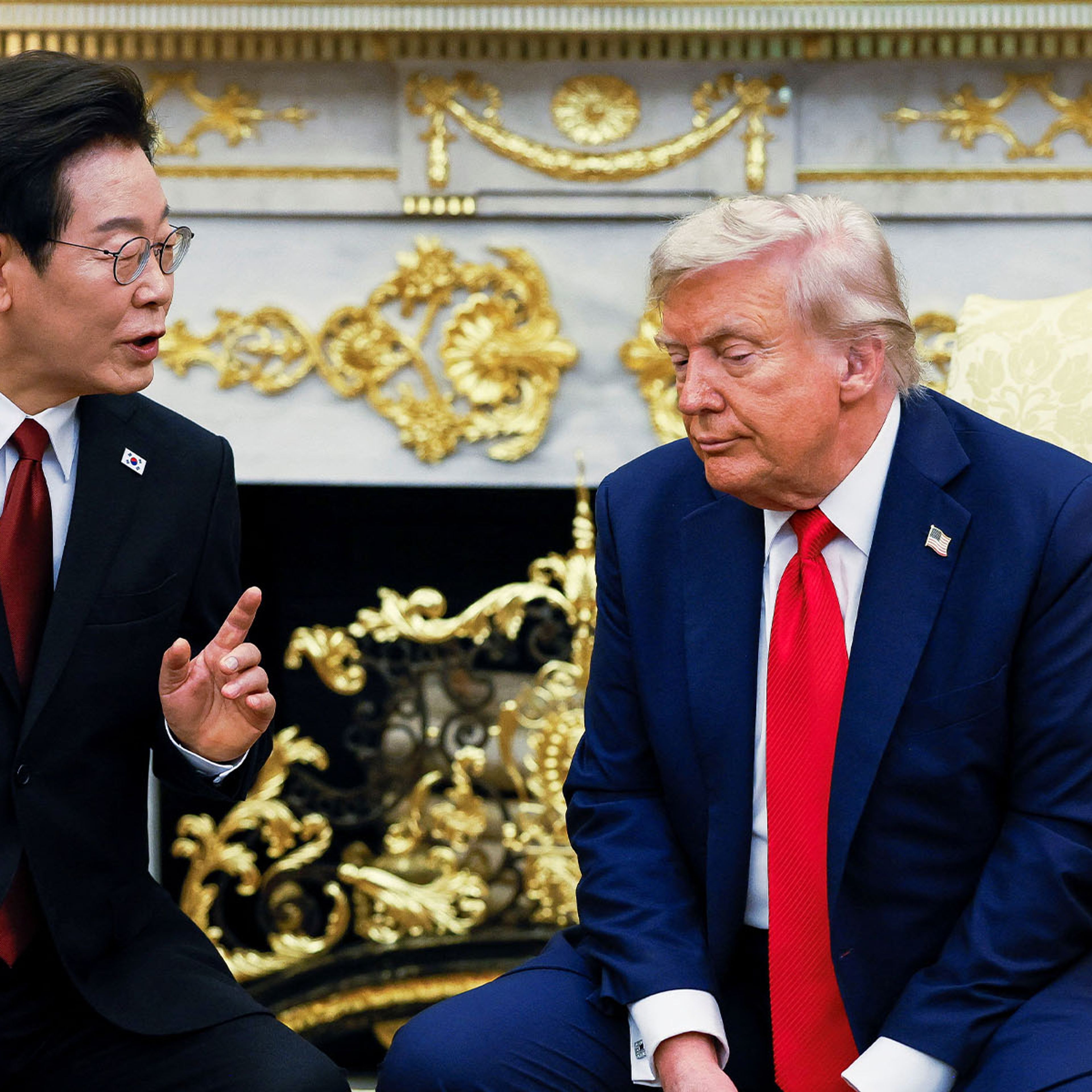
DeSantis faces a tricky double assignment: showing that he can win votes and govern the country while simultaneously excising the Trump-shaped tumor from the GOP. The former president showed in his first term that he was irregularly incompetent, and, after his 2020 loss, that he was utterly immoral. His campaign may now be showing that he has lost his marbles. There was a sense, in 2016, that he knew what he was doing — that his offensive or outlandish remarks, though they expressed his character, were under his control and deployed for a purpose. Now they shoot from him as from a broken lawn sprinkler. Kayleigh McEnany, most loyal of spokespeople, gets reamed because, as a Fox host, she presented a poll result in a way he did not like. DeSantis is subjected to endless posts about supposed inconsistencies in pronouncing the first syllable of his surname. Kim Jong-un, loathsome tyrant, is congratulated when his prison-nation wins a slot on the executive board of the World Health Organization. Trump debuts what reads like a chant for a primary-school kickball team (“WE ARE MAGADONIANS, WE ARE VERY SMART, WE STICK TOGETHER AS ONE . . .”).
The president, as all the world saw, tripped and fell over a sandbag after leaving the lectern at the graduation ceremony of the Air Force Academy. No matter that he had mixed fine with the cadets or handed out diplomas for two hours. His gait shows his years, and he suffered the consequences. What might a second fall do to a knee or a hip? What might it do to a campaign in October 2024? A long New York Times piece on Biden’s health, while giving him every possible excuse, reported that Democratic donors when among themselves talk about nothing else. Saddled as they are with a deeply disliked veep, they are right to worry.
Away from the clash of titans, Chris Christie and Mike Pence also formally announced their campaigns. If DeSantis has to overcome Trump, these two new entrants must overcome both men. Meanwhile Pence seems dedicated to showing that he was a compleat Trumper who nevertheless obeyed the law. We already know that about him. Christie seems eager to be the agent of mayhem, as he was in 2016. We already know that too. Yet we must sit through the replay.








Comments