Every week, a few more Democrats are announcing presidential runs — and every week, leading presidential candidates are taking big steps to the left of where their party had previously been. It’s Democrats’ year of living dangerously.
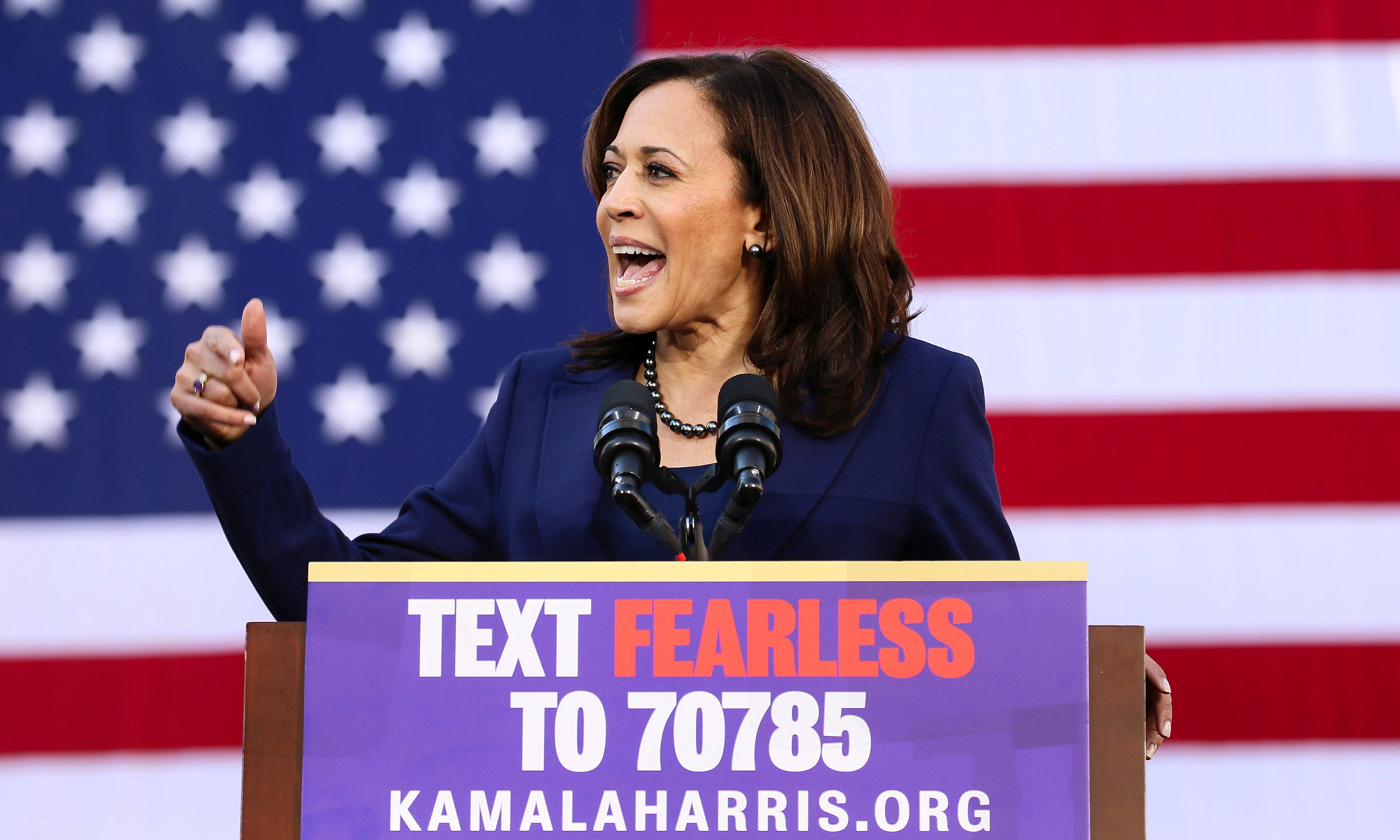
The week she entered the race, Senator Kamala Harris of California said we should get rid of private health insurance: a goal that the “Medicare for All” bill sponsored by self-described socialist Bernie Sanders, another potential contender, would almost entirely accomplish. Soon afterward, Senators Cory Booker of New Jersey, Kirsten Gillibrand of New York, and Elizabeth Warren of Massachusetts joined Harris and Sanders in supporting a “Green New Deal” that commits the country to an extremely rapid shift away from fossil fuels and, at the same time, to “economic security for all.” Then Beto O’Rourke, a former representative from Texas who may also enter the Democratic primaries, declared that he opposes not only President Trump’s “wall” on the southern border but the existing physical barriers there. His comment followed the logic of Speaker of the House Nancy Pelosi, who had said, “A wall is an immorality.”
Progressives sometimes say that the new energy on the left wing of the Democratic party is a response to changes in the national condition. There is some truth to the explanation. The financial crisis and the slow recovery damaged the reputation of capitalism, especially with the young voters who suffered the most economic misfortune. Less persuasively, progressive activists contend that the last decade’s health-care debate demonstrated the low cost of going for broke. They believe that Obamacare was an exquisitely moderate compromise that Republicans attacked as though Fidel Castro had come up with it: So why not try for truly socialized medicine?
That’s the kind of argument partisan hotheads always make. If it’s finding an audience, it’s because of trends that have been gathering force for two decades. Already by 2016, Hillary Clinton was running a campaign positioned to the left of her husband’s administration on many issues. In the mid 1990s, President Bill Clinton signed a law that cut capital-gains taxes; in 2016, Hillary Clinton proposed raising them. He said abortion should be “safe, legal, and rare,” while she ran on a platform explicitly calling for taxpayer subsidies for it.
The logic of political polarization explains much of this ideological shift. Conservative Democrats have become Republicans while liberal Republicans have become Democrats. There are fewer conservatives inside the Democratic coalition, among either voters or politicians, to act as a restraining force. So the Democrats move left, and drive more of the remaining conservatives away. Today’s polarization also has a heavily negative character: Each party’s coalition is held together more by antipathy toward the other side than by its own internal agreement on philosophy or policy. Thus one side’s support for a policy becomes a reason for the other to reject it.
The Democrats have also convinced themselves — they feel as well as think — that the future is theirs. A temptation to think that way is probably built into progressivism, as that label suggests. But the Democrats’ record of winning more votes than Republicans in six of the seven presidential elections held since the end of the Cold War has made it irresistible. So have demographic changes that appear to portend future political gains for the Left, such as the growth of the Hispanic and Asian population and the decline of formal religion. The “coalition of the ascendant,” progressives have sometimes called their voting base.
Abortion and immigration, two of the most divisive issues in our politics, illustrate how these changes have affected the Democrats. Many of the voters who once moved Democrats to declare themselves pro-life, or at least to vote for some restrictions on abortion, are no longer available to Democratic politicians. Partly as a result, the issue now engages partisan emotions to a higher degree than it used to do. Restrictions that would once have seemed mild now seem, to many influential Democrats, oppressive and backward. They seem, that is, like something the terrible people on the other side would impose.
As immigration has risen in prominence as a political issue, it too has become more of a partisan dividing line. Democrats came to think of support for immigration control as an intolerant right-wing position. President Trump accelerated their movement by linking the cause of immigration control to rhetoric that treats illegal immigrants as though they were predominantly rapists and murderers. The white working-class voters who are disproportionately concerned about illegal immigration, meanwhile, seem less politically important (since they are dwindling as a share of the population) and less politically sympathetic (since there are fewer of them inside the Democratic tent). Both the position and the constituency feel more and more to Democrats as if they were embers of a benighted past.
The Democrats do not seem to be worrying much about the risks of having moved left on both economic and cultural issues. One might have thought that the 2016 election provided ample evidence that those risks are large. For example: Democrats would have won the electoral votes of Florida, Michigan, and Wisconsin, and thus the presidency, if they had not slumped as much as they did among Evangelical and born-again Christians between 2012 and 2016.
Democrats are not moderating on issues such as abortion and religious liberty to regain ground among Evangelicals or Catholics. They are not moderating on immigration or guns to make inroads among working-class white voters, either. And their newly aggressive stance on economic issues could threaten their recent gains among college-educated white voters too.
Voters of all kinds have shown themselves wary of politicians who threaten to upend their health-care arrangements. It’s an impulse that inflicted severe political damage on Bill Clinton in 1994, Newt Gingrich in 1995, Barack Obama in 2010, and Donald Trump in 2017. The amount of disruption that Senator Harris is promising would dwarf anything those earlier politicians proposed. According to the Census Bureau’s latest estimate, 217 million Americans are enrolled in a private health plan. More than 18 million people are enrolled in privately administered Medicare Advantage plans, which would also be abolished by the legislation that Senators Harris and Sanders support.
President Trump’s persistent unpopularity has made the risks for Democrats look smaller. In the RealClearPolitics average, more than 50 percent of the public has disapproved of his job performance, and less than 45 percent has approved of it, every day since March 18, 2017. The more averse Americans are to voting for Trump in 2020, the more room Democrats have to run to the left. But Hillary Clinton thought the same thing: Trump was unacceptable, and Republicans and swing voters could be asked to vote for a Democratic candidate solely on that basis.
Perhaps it will work for another Democrat. No, really: It may be that another Democratic candidate, with greater skills and less baggage, will be able to take advantage of Trump’s flaws even while running to Clinton’s left. Or perhaps former vice president Joe Biden or Senator Amy Klobuchar will be able to win the party’s presidential nomination while resisting the tug of the party’s increasingly assertive left wing. But that assertiveness is raising the probability that the Democrats will beat Trump narrowly — or lose to him once again.












Comments