As the battle for Ukraine began, NPR reached out to the people who might suffer consequences from hearing unnerving news:
“Russia’s attack on Ukraine means there’s a stressful news cycle ahead of us,” read a tweet. “The reality of conflict is always a shock to the system. Here are 5 ways to cope.”
One of them was “Breathe.” Thanks for the tip, guys; certainly explains why I went blue and fell over the other day. Another was “Nourish yourself” — something with which the NPR audience is no doubt familiar — and “Maybe this is the time that you finally recreate a family recipe, or maybe you learn how to make a prettier pie, or maybe you just lose yourself to a kitsch reorganization.”
You can imagine someone huddled in a Kyiv subway station, waiting for the howling sirens to fall silent, looking at this tweet and passing the phone to a friend: Read this.
“Well, what do you think? I worry that they won’t take the advice, and will scroll through Twitter when they should be upping their pretty-pie game.”
(The walls shake; dust falls from the ceiling.)
“I know! They’re so fierce. So dedicated. But what happens if they’re sitting calmly, doing re-centering breathing exercises — ”
(A muffled thud above knocks some tiles off the wall.)
“ — and they get a text alert from Vox.com about a piece that tries to square support for a Jewish leader of Ukraine with the necessity for continued resistance in occupied Palestine? They might start to take shallow breaths.”
“The dog might whine with anxiety,” says the man, remembering the family dog who ran away when the shelling started.
“I worry for them,” says the friend. “But I admire their willingness to reorganize kitsch in times like these.”
Yes, you wonder why Putin thought the West was weak.
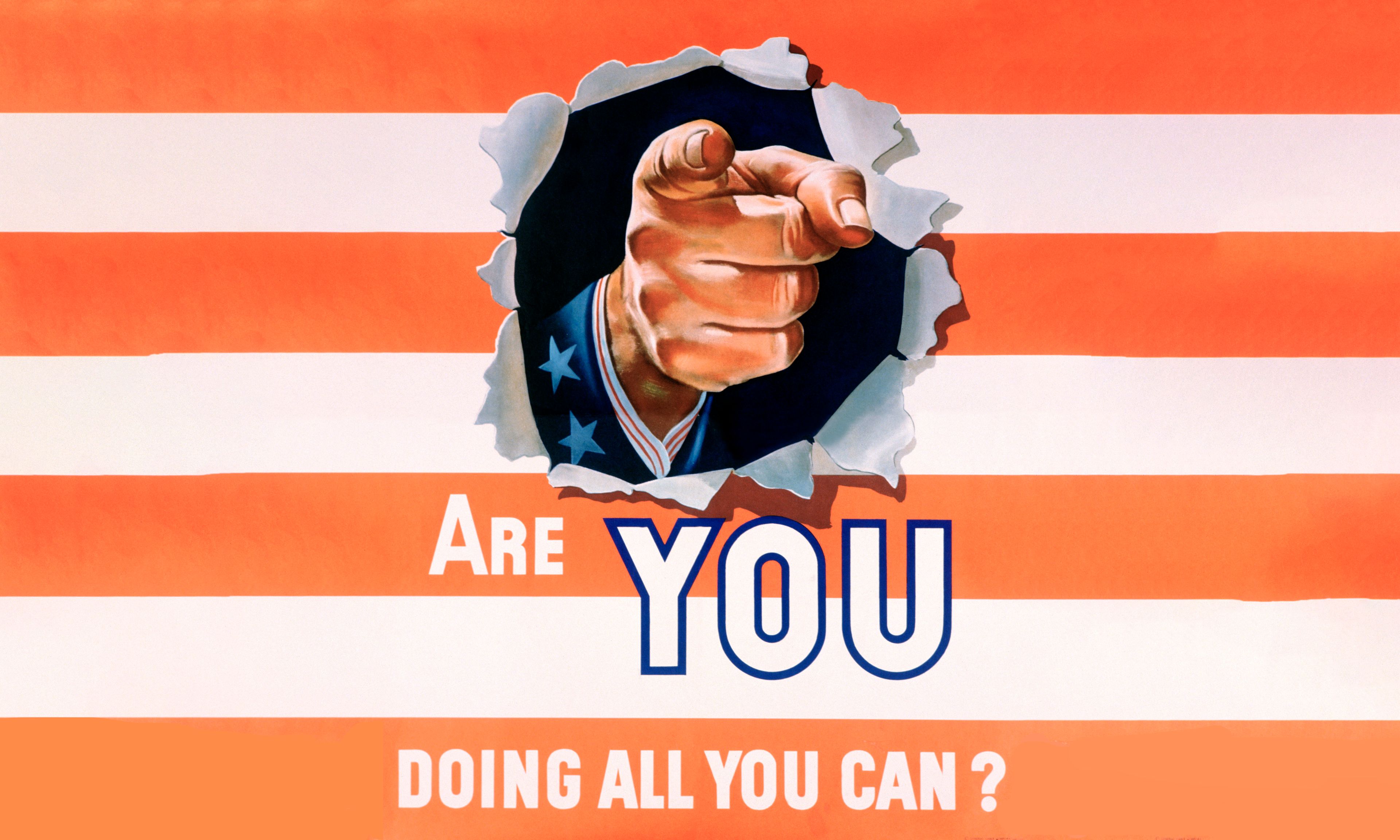
Compare this with the messages sent to the culture in the early ’40s. World War II advertising was relentlessly upbeat and martial. Every aspect of society was conscripted into the fight. Spam Goes to War! Most of the ads in the depths of the struggle noted that the product could not be had at the moment because it was busy pasting the Axis. (Illustration of an anthropomorphic fountain pen punching Hitler, Tojo, and Mussolini, all of whom had Xs for eyeballs.)
The ads right before the war have a different character. They constantly emphasize preparedness. They don’t say what we’re preparing for; they don’t have to.
A typewriter company would set its ad on an aircraft carrier, reminding you we had such things. A shoe ad would be set in an Army camp, with a GI expressing gratitude for this quality footwear. Radio ads would remind you that this model could pull in foreign news. Why? Oh, no reason.
They were upbeat, sunny, cocky, and reassuring, and left the impression that anyone who tried to provoke this capable colossus would be nuts. The truth of the public mood was a different story. War anxiety was high, and indistinct. Something was going to happen. It wasn’t really a reassurance to find the candy-bar ads suddenly switch to stars-and-stripes tableaus of uniformed men biting off a piece of a Milky Way to get some fightin’ energy, or to see Chesterfield dump the showgirls and actresses for soldiers and guys with rivet guns. It’s like your doctor saying, “Your results are back, everything’s fine, and here’s the number for an attorney friend of mine who specializes in wills.”
You felt a bit unpatriotic if you weren’t prepared. You should be like John, the lunchpail line worker who goes to the job with a bright smile because he had, oh, Toasted Bran Slabs. The ad copy would go something like this:
“John’s got new energy for a new day — every day! Yes, he knows that whatever may come, Toasted Bran Slabs will keep him bright-eyed and alert, turning out the things that make America great.” Subtext: Toasted Bran Slabs guarantee a bowel movement during his lunch hour — no wasted time that could be spent on the line, making vehicles that will slog through the muddy hell of a shell-blasted battlefield.
They didn’t say that; didn’t have to. Then there were the home-front exhortations. If the ads had been honest, they would’ve read like this:
“Jane’s up and early with a fortified breakfast of Toasted Bran Slabs, because she knows there’s work to be done! Whether it’s seeing John off to work, sending the kids to school, or organizing the gals into a group that can spring into action if something happens, God knows what, some think it’ll be the Germans, Mary says the Japs will put subs off the shore in Oregon, she has a sister there who says everyone’s nervous — well, Jane knows that Toasted Bran Slabs won’t let irregularity make her feel sluggish and susceptible to downbeat news about the inevitability of a Fascist assault on a nation struggling to shake off the industrial lethargy of a ten-year economic contraction! Buy some today, before it’s rationed!”
People had two years of such messages before the war finally came to America. Perhaps it prepared people for the fight ahead. Perhaps it wore them down into a state of perpetual anxiety and they found the actual outbreak of war a form of malignant relief: Having started, we can conceive of the end.
But now the smart set is concerned with self-care first. Next up from NPR: Russian violations of Polish airspace put World War III back on the table. Here are four aromatic herbs Brazilian Amazon tribes used for ritual suicide. Bonus: They’re sustainably grown, and responsibly harvested.










Comments