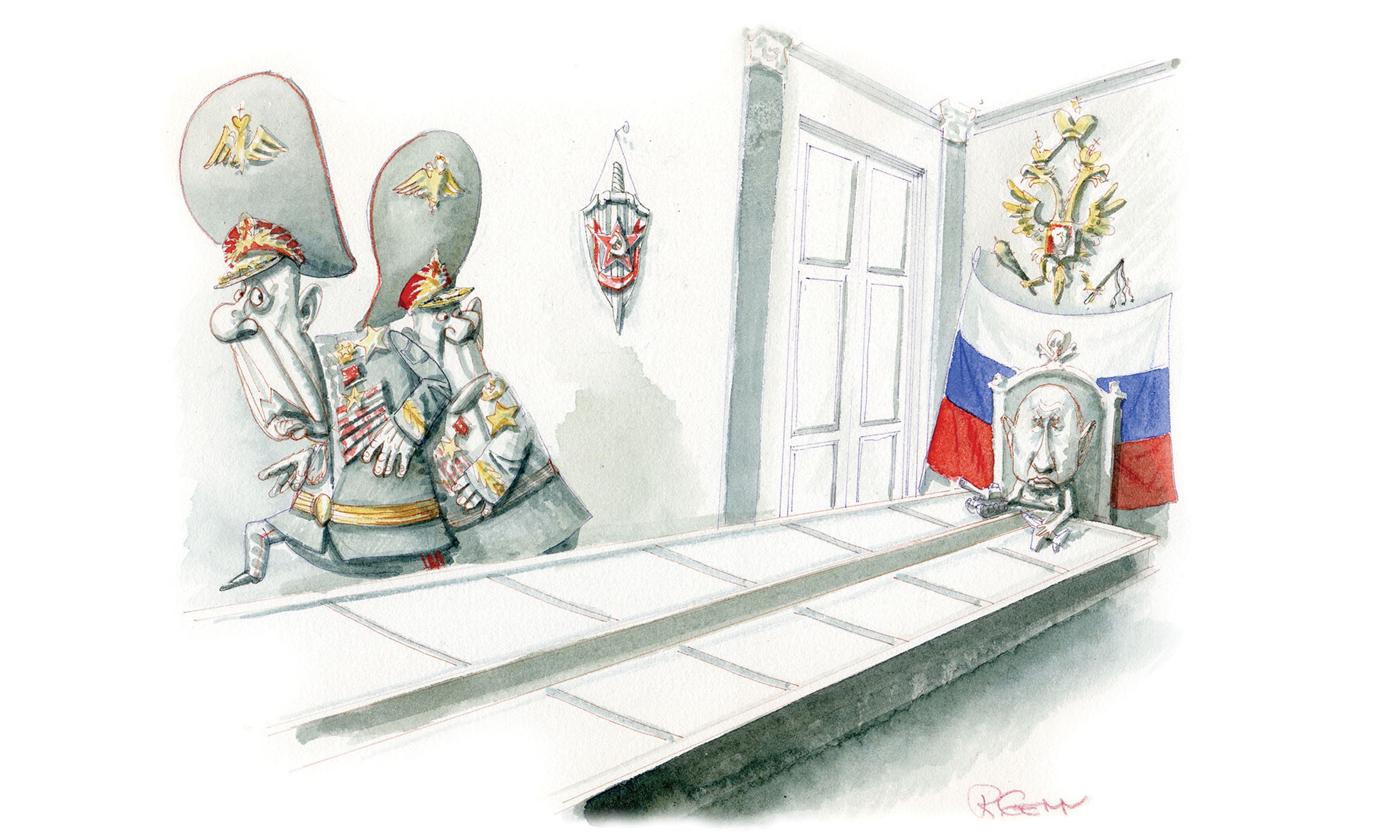
• It may not be “Give me liberty or give me death,” but “Russian warship, go f*** yourself” has a certain poetry, too.
• President Biden headed into his State of the Union address in deep political trouble. His inept handling of mounting crises has left his approval rating struggling to stay above 40 percent — a number that sets Democrats up for potentially devastating losses in November’s midterm elections. Yet given the major stage of a joint session of Congress and a national audience, Biden made no effort to significantly change the trajectory of his presidency. Instead, he acted as if his first year in office had been a smashing success and desperately tried to resell a dead agenda. Biden launched into a long defense of the trillions of dollars in spending programs he passed last year as part of the “Covid-relief” package and the infrastructure law. Instead of outlining a legislative strategy to move beyond the Build Back Better bill, which Senator Joe Manchin (D., W.Va.) killed late last year, Biden absurdly rebranded it as a “plan to fight inflation” and claimed it would lower costs and reduce deficits. In reality, government subsidies do not reduce actual prices, and the CBO found that his plan would add $160 billion to the deficit. Biden outdid himself a few moments later when he called for a $15 minimum wage. He then tried to take credit for getting us back to normalcy from Covid despite having pushed masking until last week and supporting the teachers’ unions in their fight to delay school reopenings. If this speech was any indication of how Biden intends to make the case for himself and his party in the run-up to the election, Republicans are being handed an incalculable political gift.
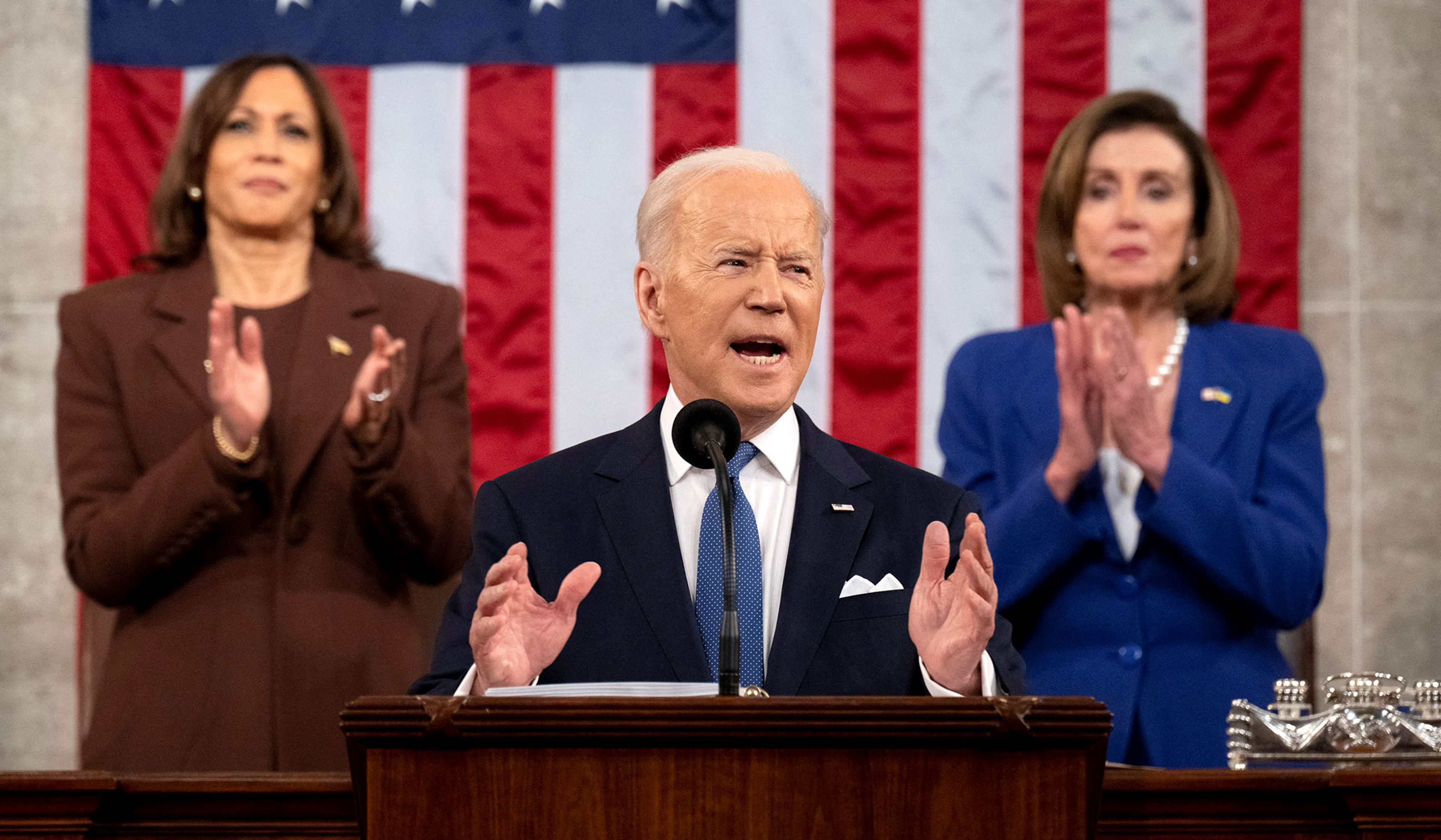
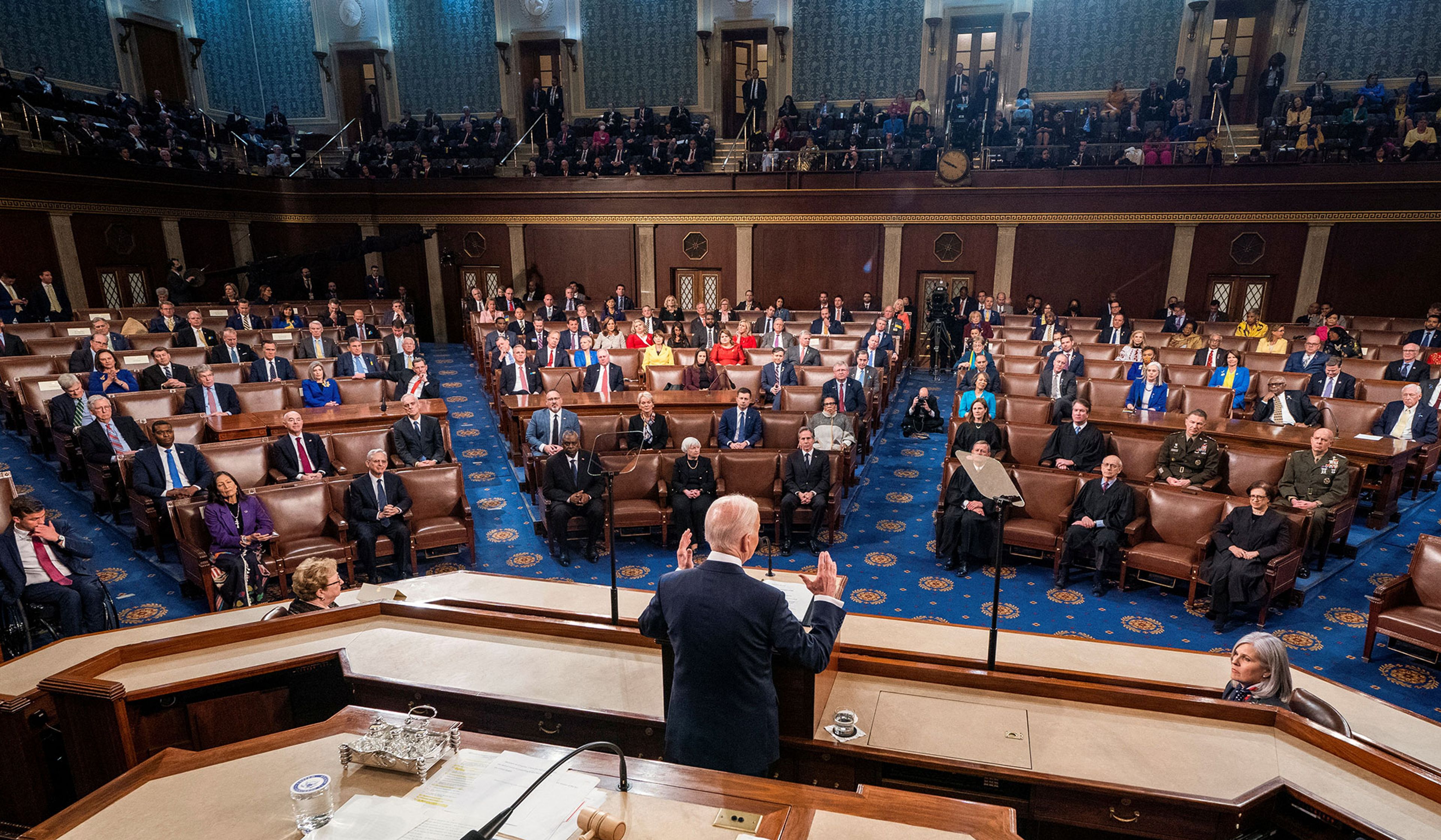
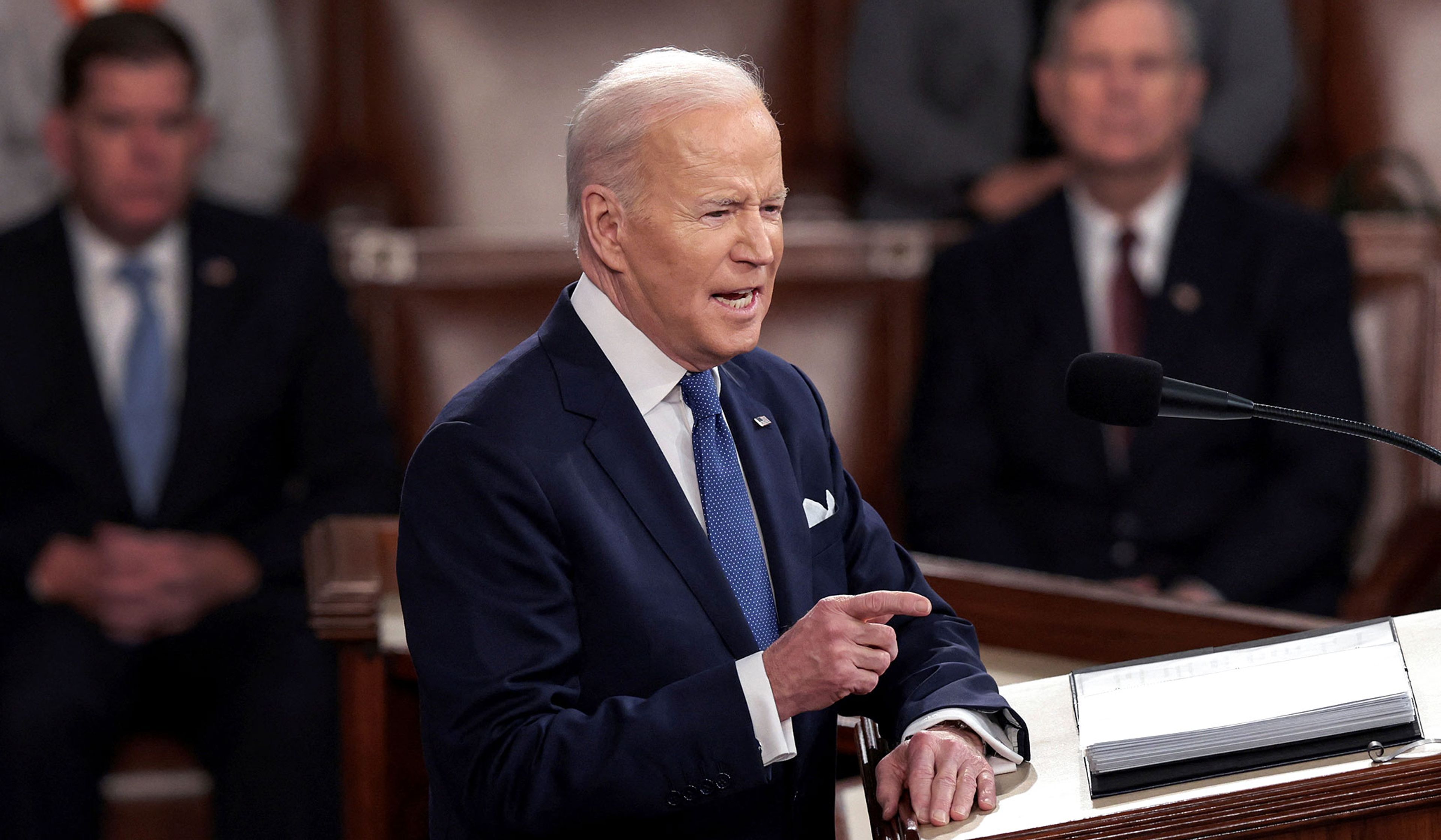
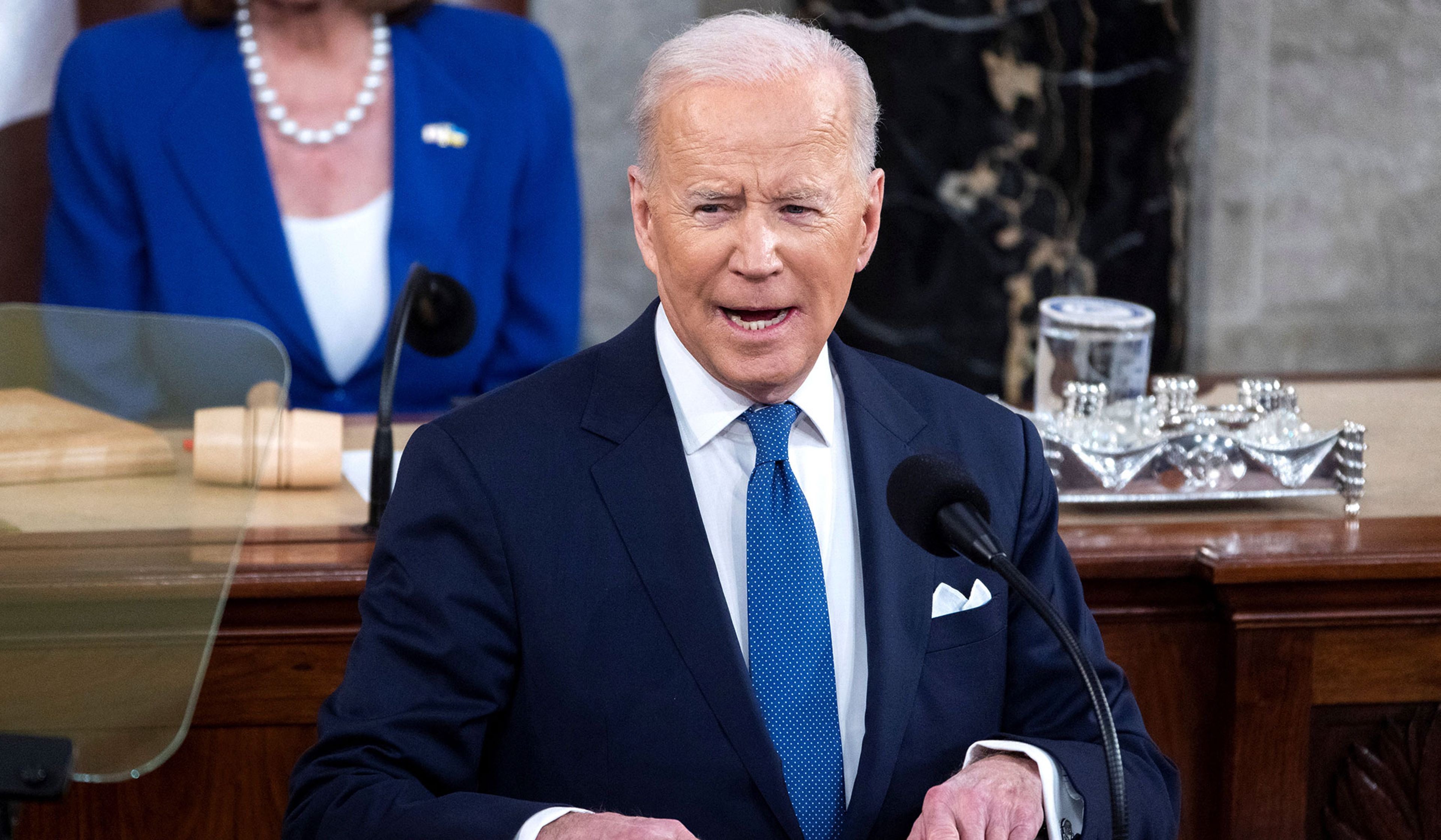
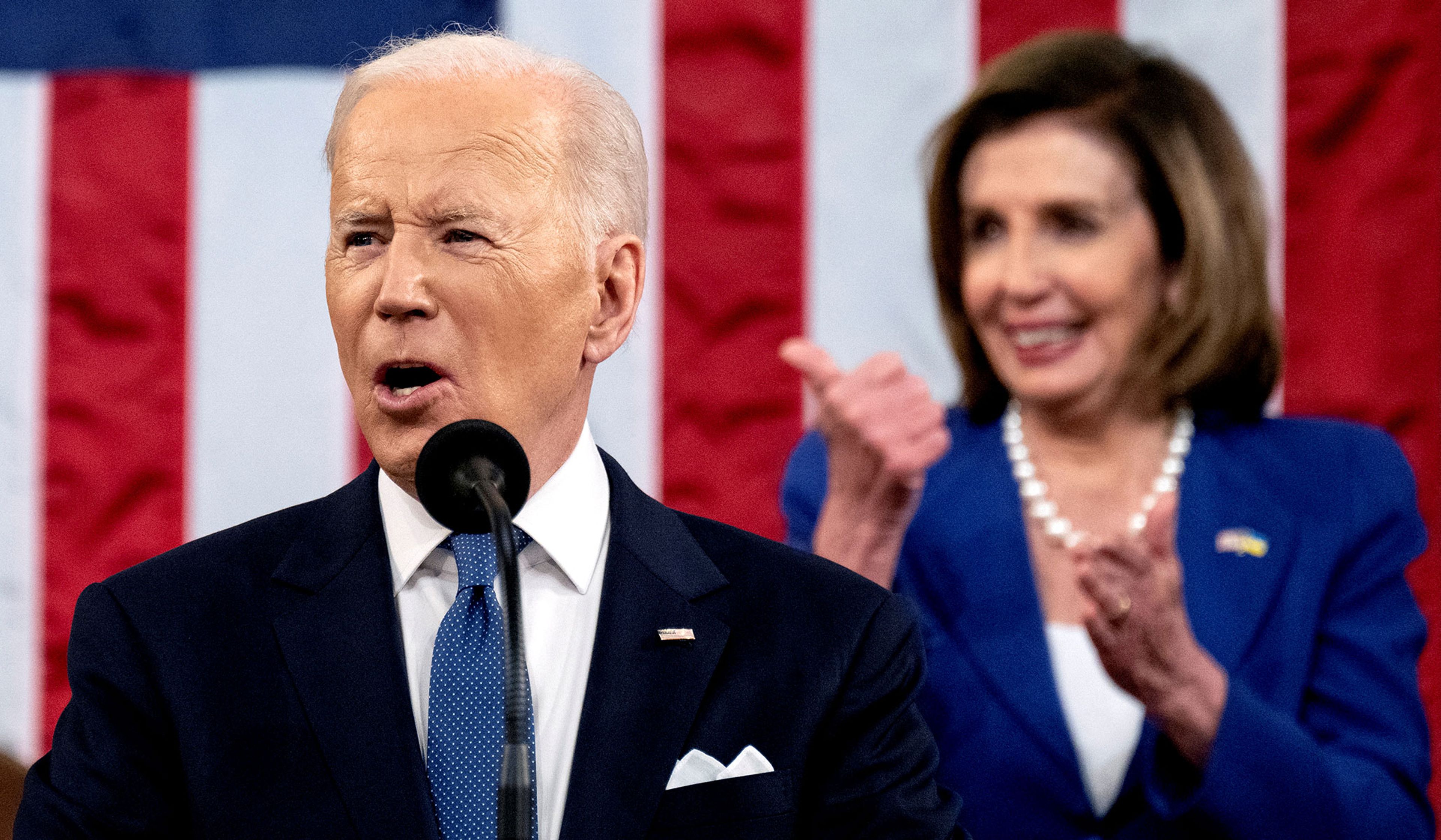
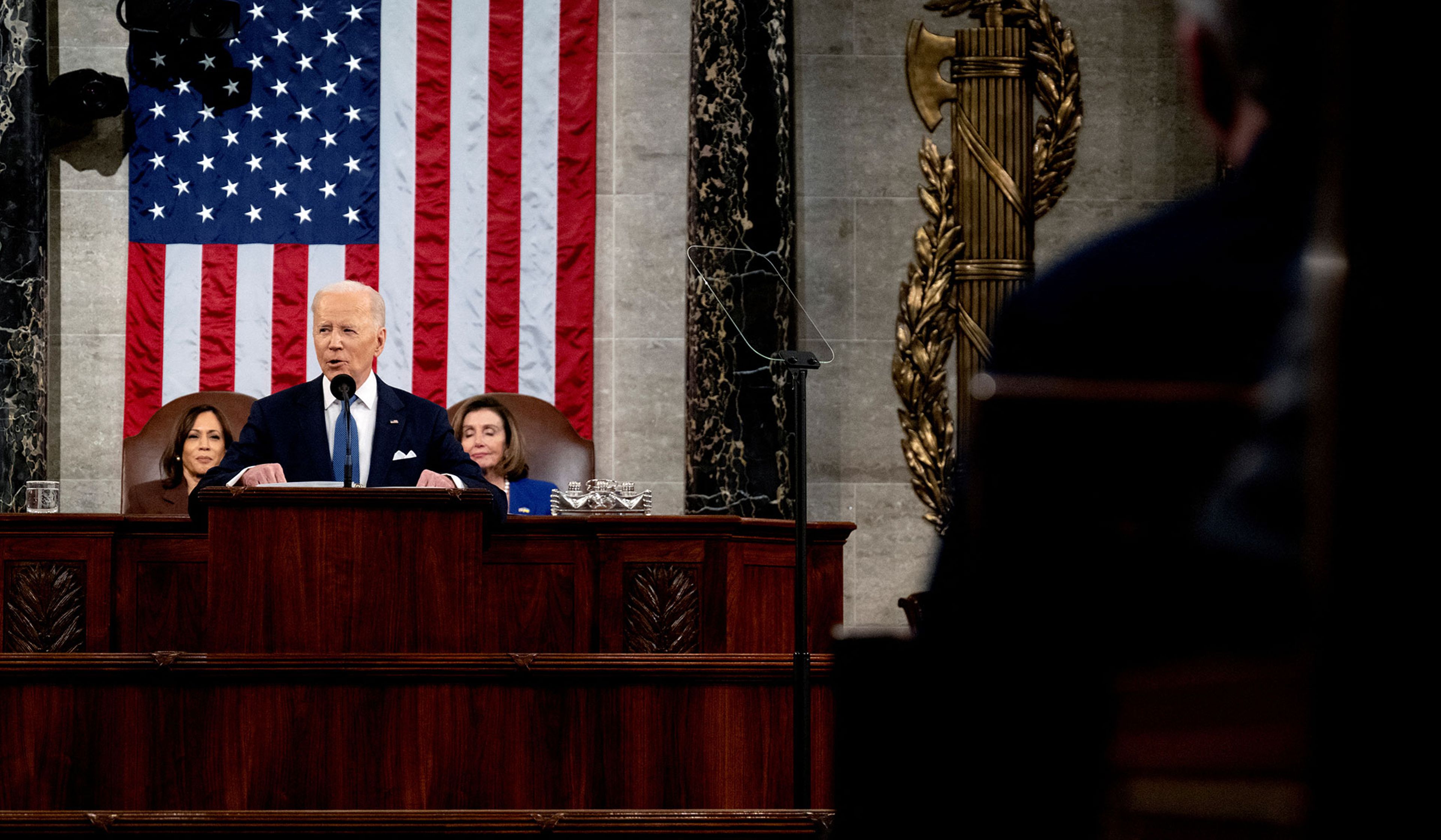
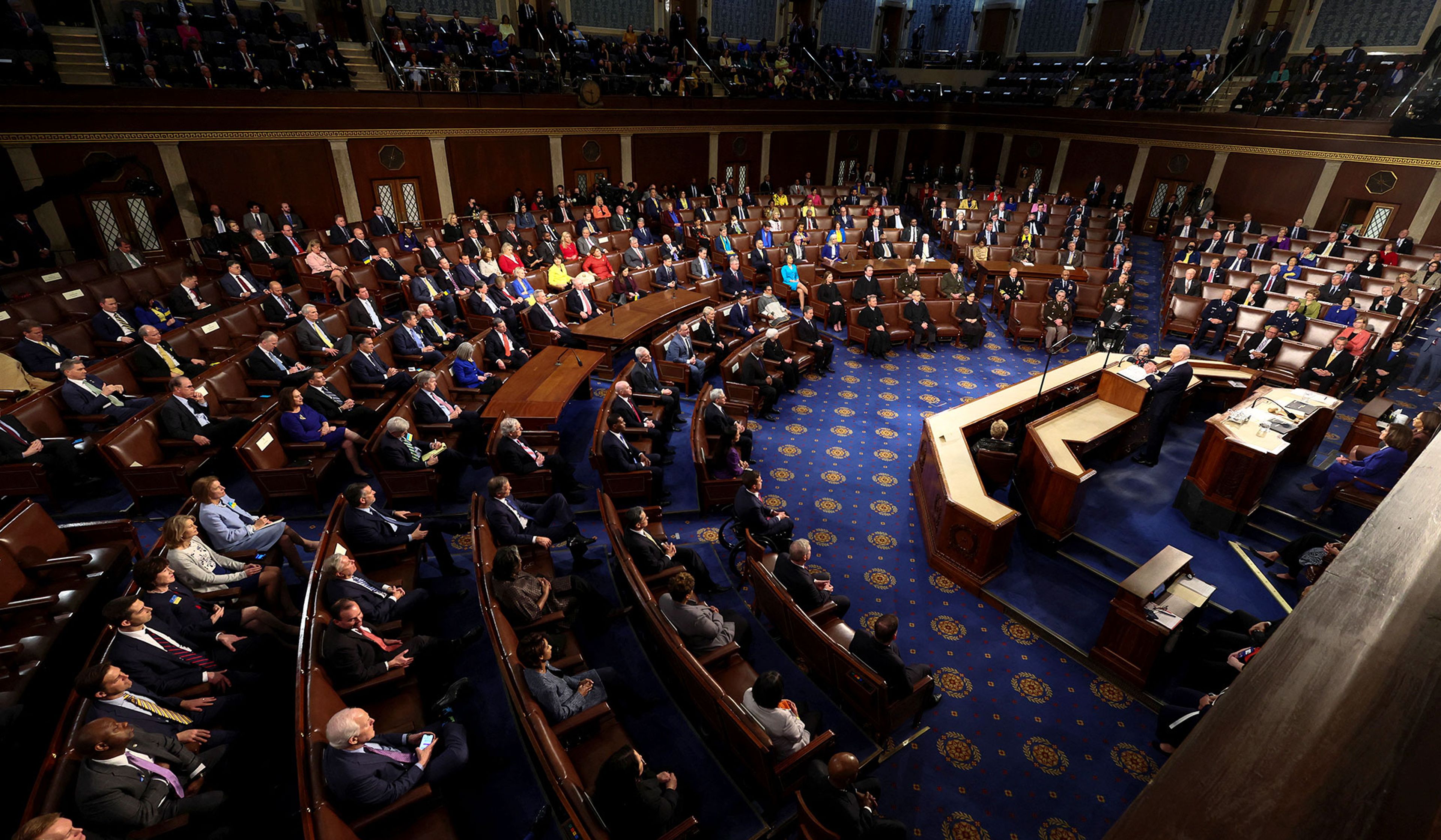
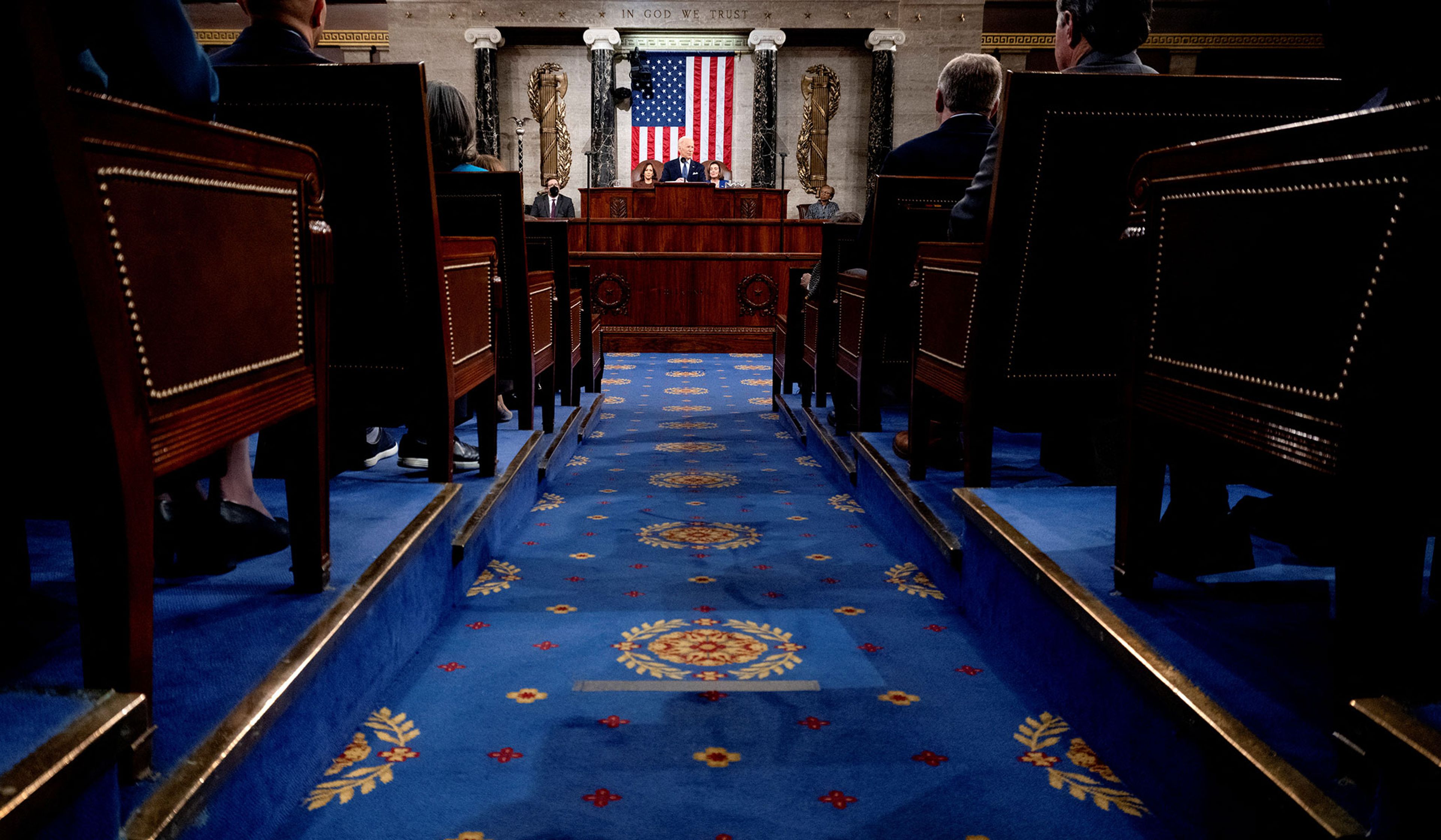
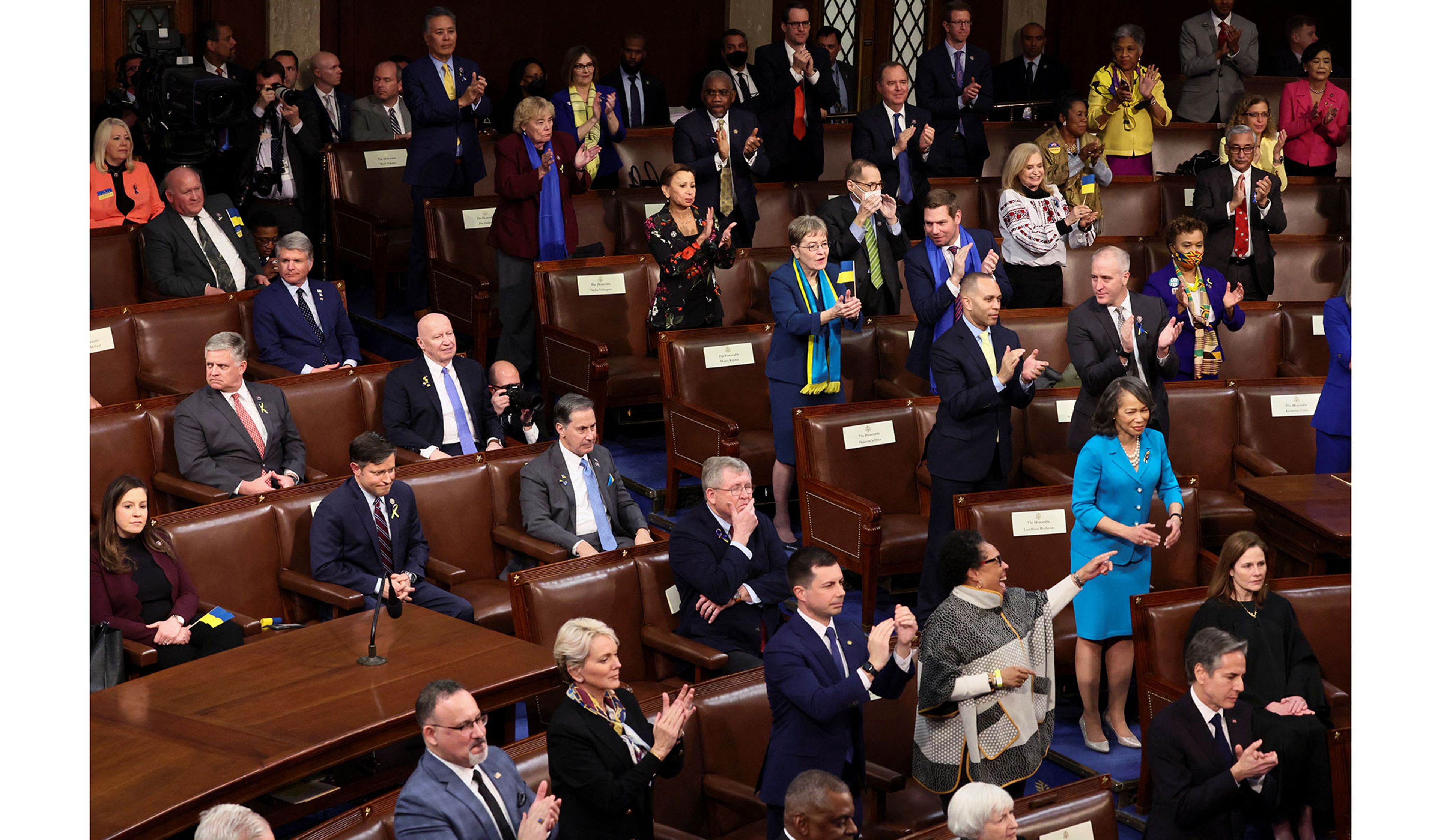
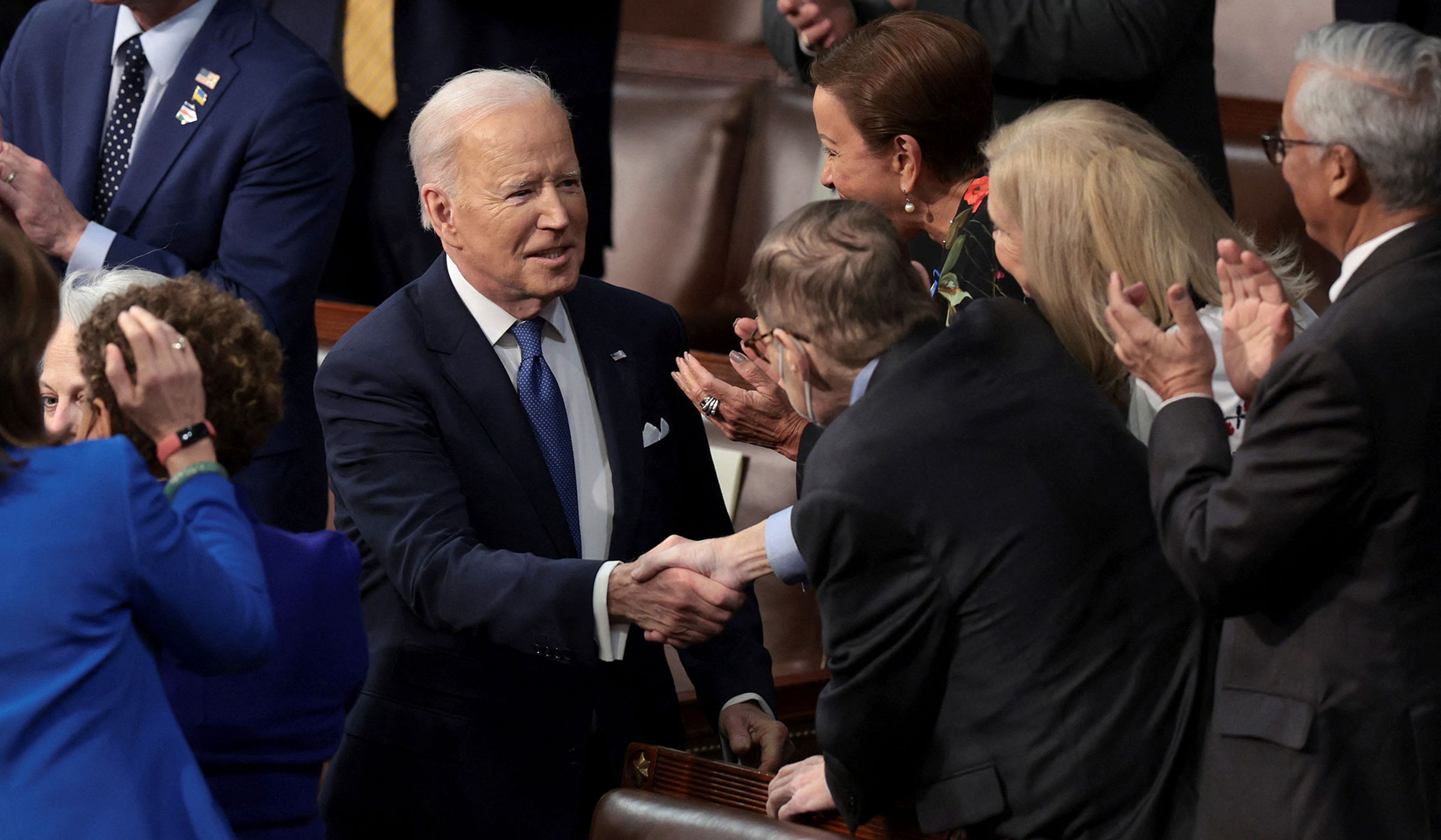
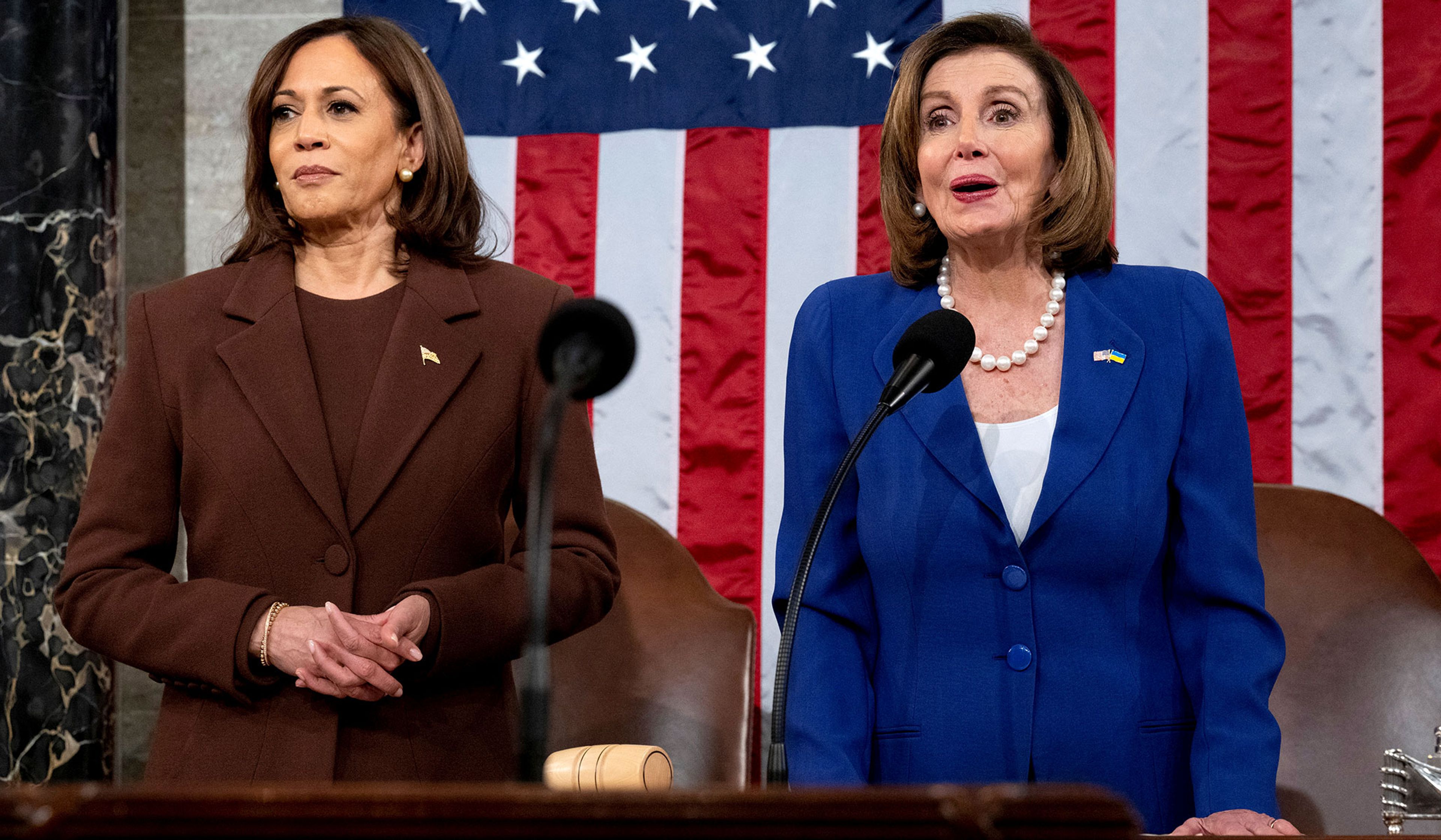
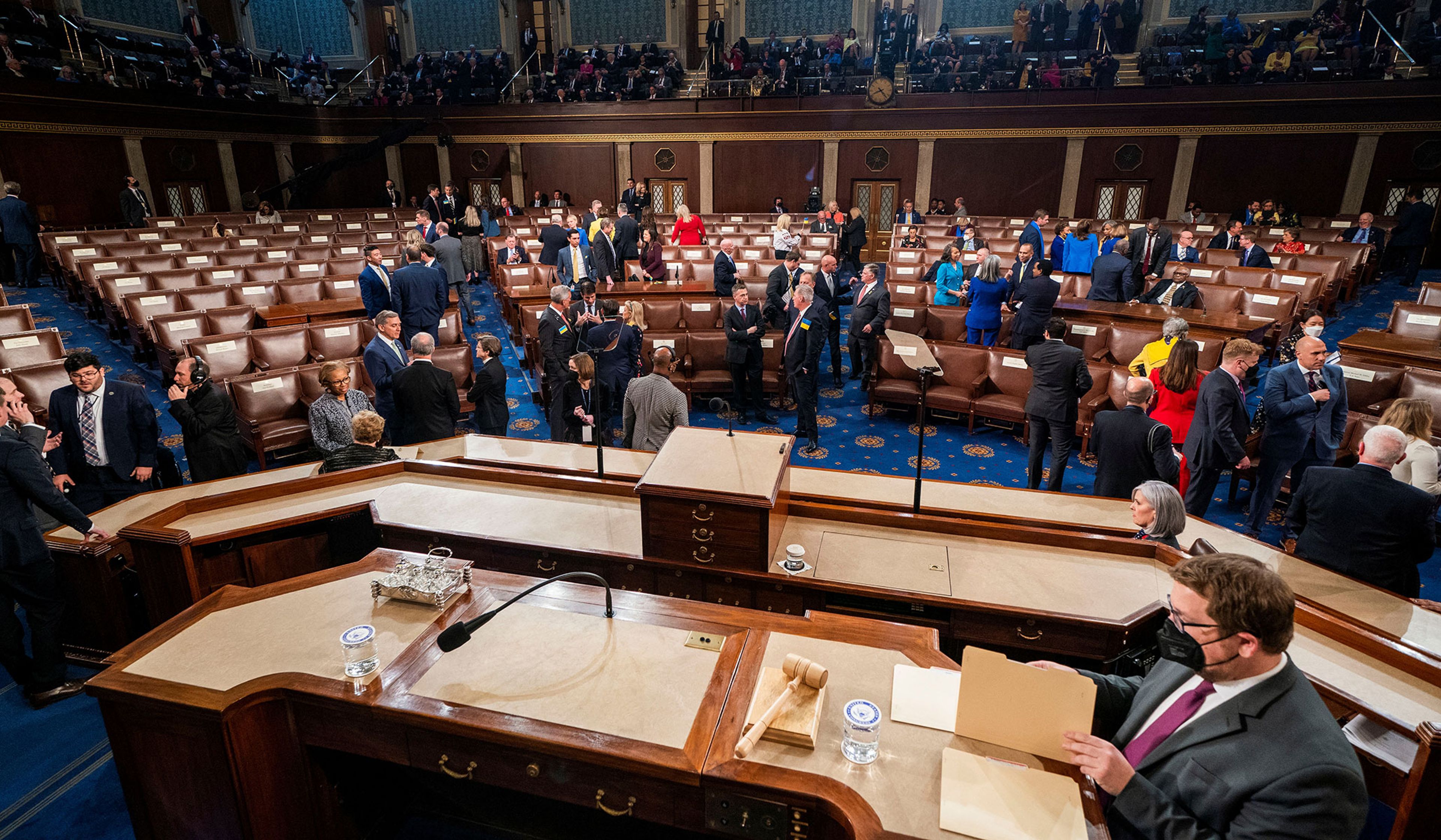
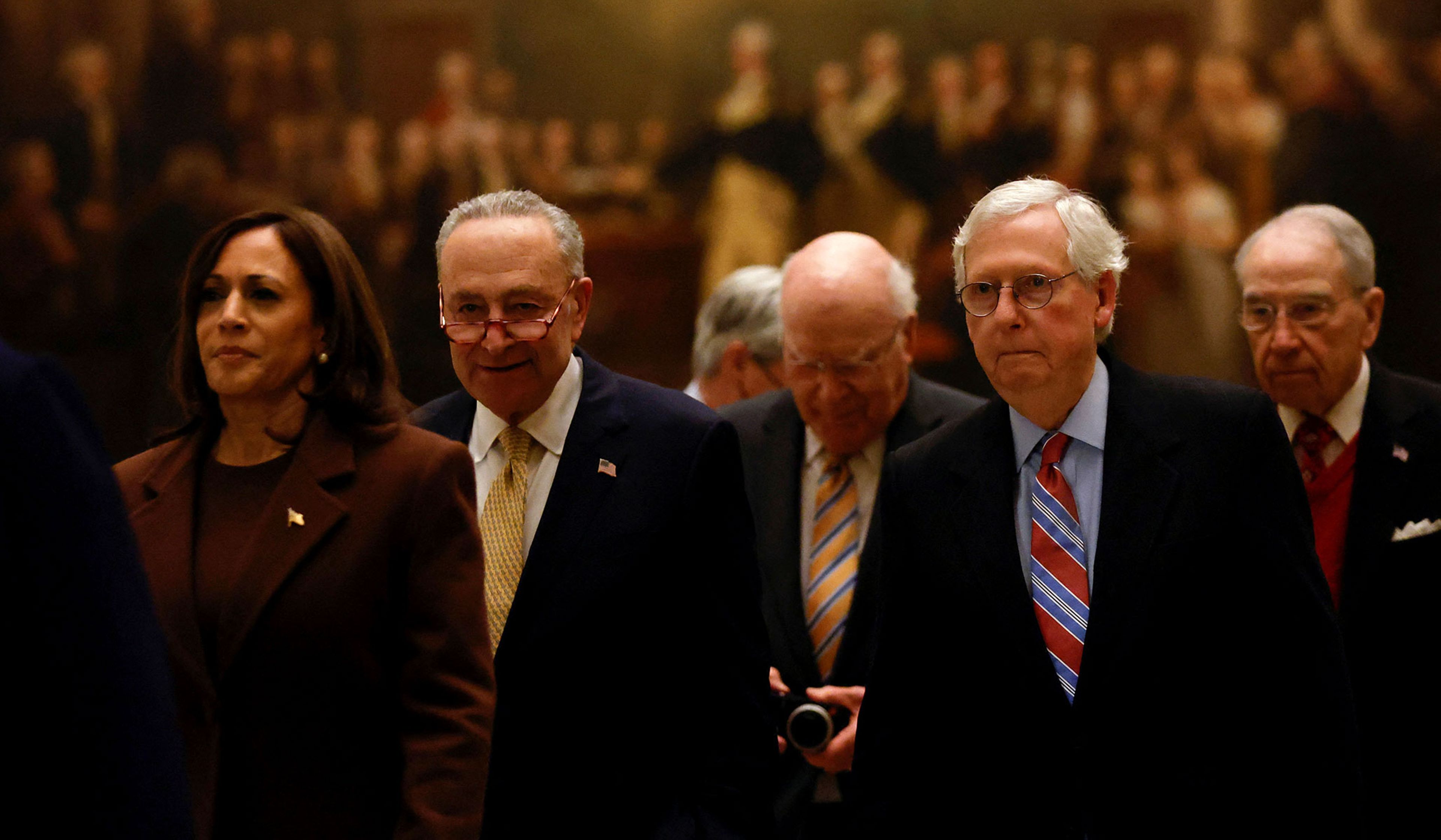
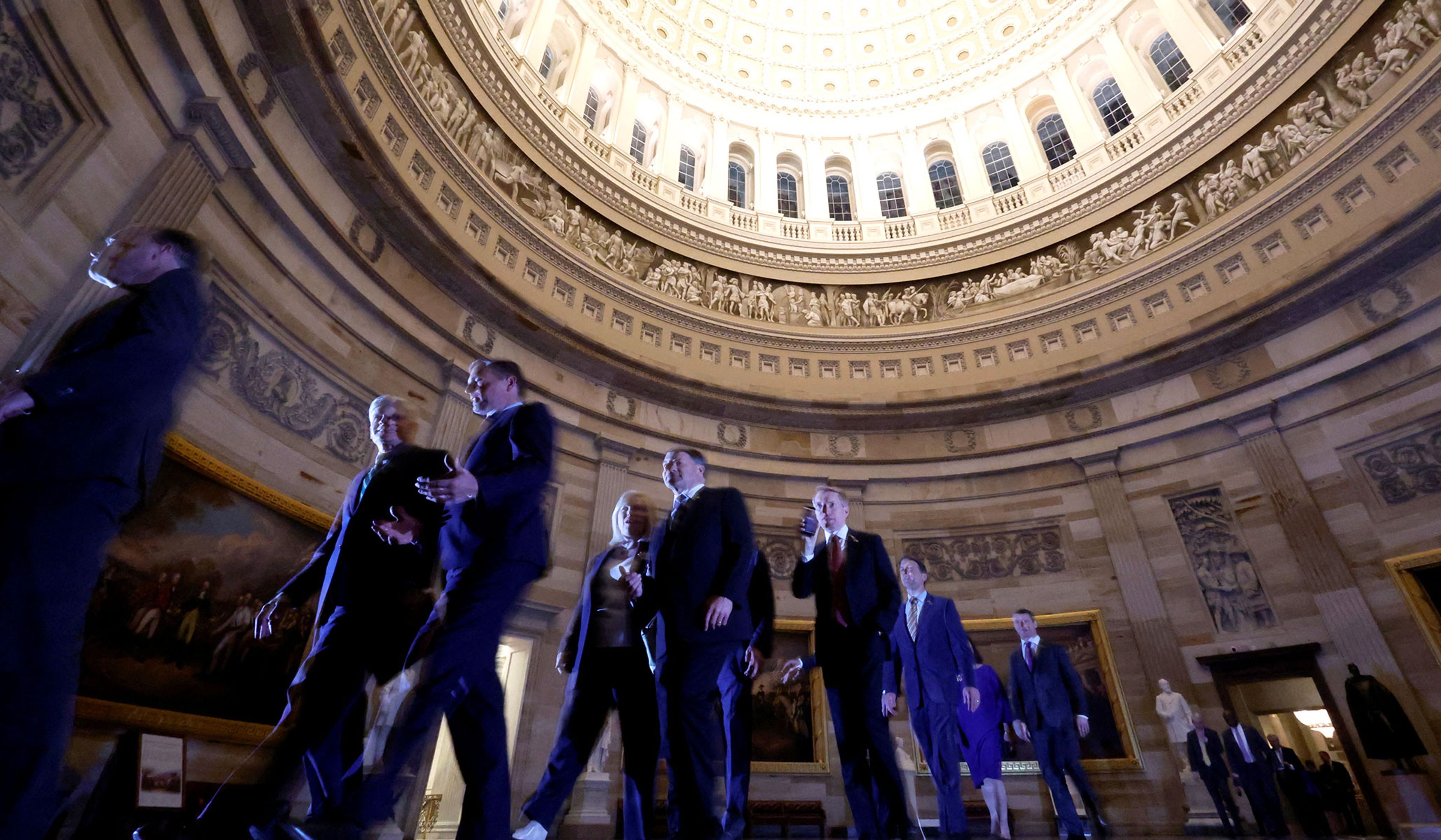
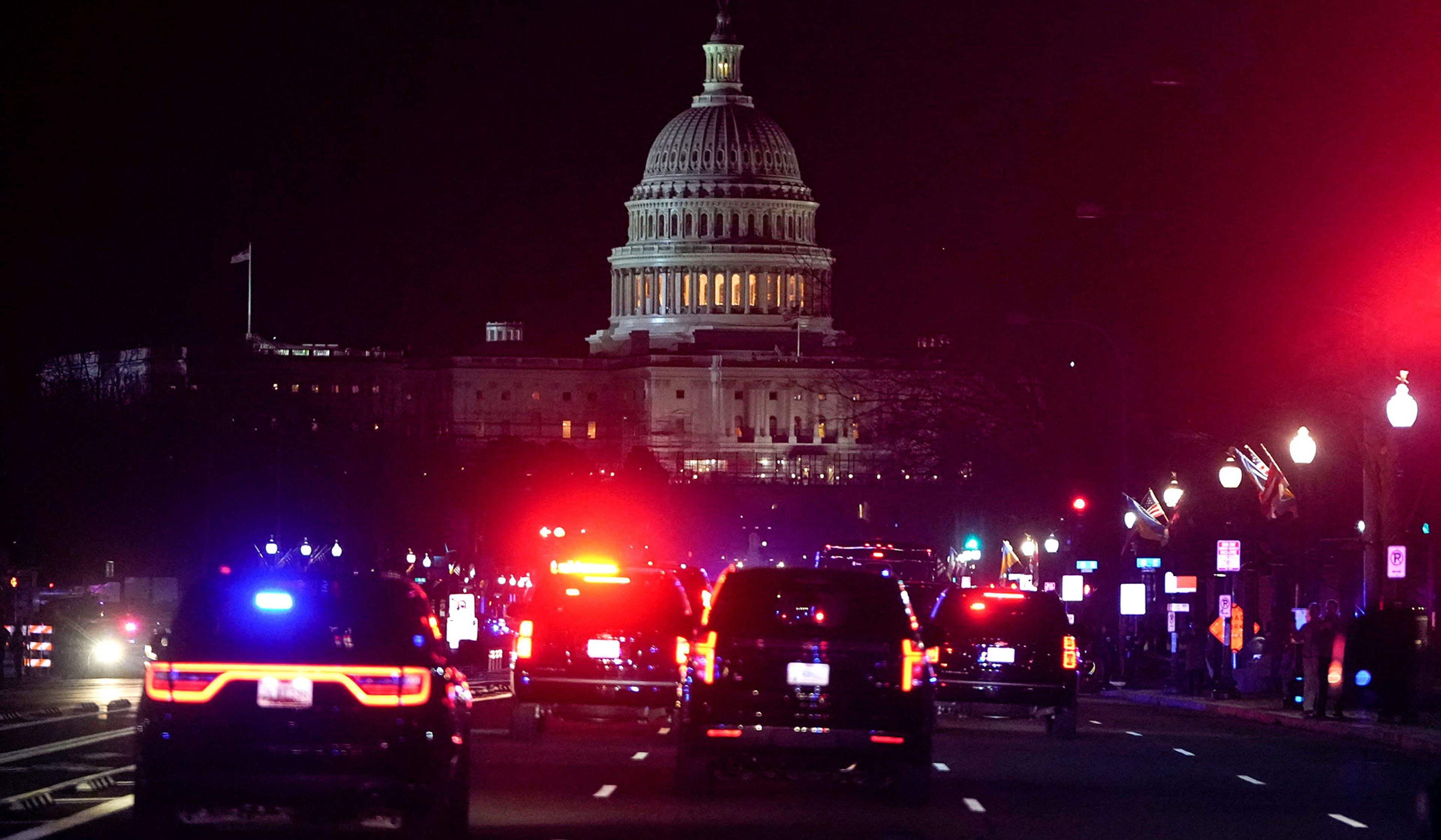
President Joe Biden delivers his State of the Union address to a joint session of Congress at the U.S. Capitol in Washington, D.C., March 1, 2022.
Saul Loeb/Pool via Reuters
• Weighing the downsides of U.S. support for Ukraine — even when support falls short of U.S. military action, as ours should and very likely will (see “Glory to Ukraine,” p. 8) — is noble work. Responsible statesmen in the West must think through how a nuclear power can save face even if its aims must be thwarted. Most Republican voters and politicians are rooting unabashedly for Ukraine, seeking ways to aid its defense, and proceeding with sobriety. A vocal minority of Republicans is, alas, offering a very different kind of commentary. Trump’s initial public statement praised Putin’s “genius” and “savvy” without condemning his invasion or saying a word in defense of Ukraine. His follow-up statements were not much better. Candace Owens of the Daily Wire recommended that Americans get the straight story by listening to Putin’s deranged historical revisionism about Ukraine. Tucker Carlson told Fox viewers that Americans had been whipped up into an irrational hatred of Putin. As polls have clarified that Republican sentiments are strongly anti-Putin, Carlson has modulated his tone. He is now saying that it’s “understandable” that Americans despise Putin. There’s an honorable case against American assertiveness abroad, but it can have no truck with apologetics for our enemies.
• Nick Fuentes led a boisterous America First Political Action Conference. “Can we give a round of applause for Russia?” he asked his crowd. The crowd responded with tumultuous applause. Some started to chant, “Putin, Putin.” Fuentes responded, “Absolutely, absolutely.” He further said, “And now they’re going on about Russia and ‘Vladimir Putin is Hitler’ and — and they say it’s not a good thing.” Fuentes was not the star speaker at his conference. That was Marjorie Taylor Greene, the Republican congresswoman from Georgia. Also participating, by video hookup, was another GOP House member, Paul Gosar of Arizona. Asked later for comment, Kevin McCarthy, the Republican House leader, said, “There’s no place in our party for any of this. This is unacceptable.” How to prove such a thing? McCarthy has endorsed the primary opponent of Liz Cheney, the GOP congresswoman from Wyoming. He is clearly not averse to trying to unseat his own members. He really ought to endorse opponents of Greene and Gosar.
• “Energy independence” has always been a pipe dream, even for major petroleum producers such as the United States. But the self-inflicted energy disability of much of Europe — most notably Germany — has unnecessarily limited the range of strategic and economic options available in the foreseeable confrontation with Moscow. Germany’s mistakes, in particular, have been large and notable, including its decision to abandon nuclear power. And many of Germany’s allies were none too happy to see it attempting to deepen its energy entanglement with Moscow via Nord Stream 2, the gas pipeline that would have made Russia an even bigger player in the German market while cutting out Ukraine. But Germany is not the only offender: Europe imports that Russian gas in part because EU countries such as Spain have refused to develop their own gas resources, which are substantial. Even before the Russian invasion of Ukraine, the European Commission had begun to see the light, reclassifying nuclear energy and natural gas as transitional fuels eligible for green investments as part of the EU’s decarbonization program. A sensible security approach would reduce reliance on belligerent blackmailers such as Vladimir Putin; a sensible climate approach would jump at the opportunity to reduce emissions by replacing coal with relatively clean gas and with nuclear power. Germany has been spooked into rethinking its defense spending. Policy-makers in Brussels — and Washington — should give at least as much thought to energy policy.
• You can tell that the Biden administration is not serious about its climate-change diplomacy from the fact that John Kerry was put in charge of it. As the Russian army marched into Ukraine, Kerry was the opposite of diplomatic. He lamented that the war would be a distraction from the all-important climate issue, that the war itself would be a source of greenhouse-gas emissions, and that the war would hinder the work of achieving a “united effort to try to deal with the climate challenge.” Senator Ben Sasse (R., Neb.) was succinct in his reaction, telling National Review: “Now’s not a great time, John.” We are not sure that it ever is a great time to hear from Kerry.
• Among U.S. politicians, Mitt Romney has stood particularly tall on the matter of Ukraine and Russia. He is not entirely comfortable with the word “war” to describe what is happening to Ukraine. “This is a brutal invasion of a free democratic people by an authoritarian thug.” He also says, “I join the world in awe of true heroes: the courageous President Zelensky, the brave Ukrainian soldiers, the citizen armies, the mothers cradling frightened children, and the journalists risking their lives to bring us truth.” Republicans may not all know it, but Romney is a credit to their party.
• When Stephen Breyer announced that he was retiring from the Supreme Court, we immediately knew two things about Joe Biden’s nominee to replace him: Biden would limit his search to an African-American woman, wrongfully excluding many qualified candidates for no reason other than their race and sex. And Biden would pick someone Democrats could expect to deliver liberal rulings, regardless of what was written in the Constitution and laws of the United States. Biden has met both criteria by nominating Ketanji Brown Jackson. Jackson, a federal district judge until her elevation to the D.C. Circuit in 2021, has spent most of her professional career in D.C. She checks the appropriate boxes for elite ivory-tower credentials, having clerked for Breyer, attended Harvard College and Harvard Law School, and served on Harvard’s Board of Overseers — a role that will almost certainly require her to recuse herself from the pending challenge to Harvard’s racially discriminatory admissions policies. Credentials aside, however, Judge Jackson has not distinguished herself with scholarship or the quality of her legal writing, and she has a discouraging record of having high-profile decisions being reversed even by fellow liberal judges. Progressives championed her in part because of her work as a federal public defender, seeing her as an advocate for soft-on-crime approaches to sentencing and the criminal law. Liberals cheered her for rulings against Donald Trump. Nobody has attempted to present her as a faithful steward of the law. Expect to hear a lot from Democrats about race, sex, sympathy, and empathy. It will fall to Republicans to talk about the Constitution.
• In a new book, William Barr, President Trump’s last confirmed attorney general, says that Trump “has neither the temperament nor the persuasive powers” a leader needs, that he lost the 2020 election, and that it would be “dismaying” if he ran again. Liberals say Barr is speaking out too late, which gives him too little credit for declaring in December 2020, while in office, that there was no evidence of wide-scale fraud that would call the election result into question. Incoming fire from Mar-a-Lago is expected. Barr may find himself consigned to the “deep state,” never mind his long career of championing conservatism and thwarting bureaucratic liberalism. If Barr has turned on Trump, it is because, like so many of Trump’s able servants, he found himself unwilling to do everything Trump asked, and disillusioned by his asking for it.
• On February 28, the U.S. Senate voted for the first time on a barbaric bill that would enshrine in federal law a nearly unlimited right to abortion through all nine months of pregnancy. The bill would effectively wipe almost all state laws on abortion off the books — including many health and safety regulations, parental-consent laws, and meaningful limits on late-term abortion. The bill would create an absolute right to abortion before viability, and even afterward it would prohibit any state from protecting a baby’s life if a single “health-care provider” determines that a pregnancy poses a “risk” to the mother’s “health,” a term that would certainly be interpreted by the courts to include mental and emotional health. Senate majority leader Chuck Schumer held the vote in anticipation of a Supreme Court ruling this summer overturning or paring back Roe, but the legislation goes beyond Roe by attacking conscience protections in existing law. Those provisions were too extreme for Susan Collins of Maine and Lisa Murkowski of Alaska, the two GOP senators who support a right to abortion. One Democrat, Joe Manchin of West Virginia, joined every Republican present in opposing the bill. But if Democrats gain two Senate seats and hold the House of Representatives in November, they will have the votes to end the filibuster to enact this radical abortion bill.
• It’s a new season in the pandemic: election season. And just in time for President Biden’s State of the Union address, the CDC loosened its masking guidance, following many states that had acted on their own to remove mask mandates in the preceding weeks. Significantly, the CDC finally ended its universal-masking guidance for K–12 schools, bringing the U.S. in line with most of the rest of the world. The Omicron wave especially demonstrated that masking makes little to no difference for Covid spread, as states that had mask mandates did not see significantly different outcomes from those of states that didn’t. Plenty of Americans, even many schoolchildren, have been living unmasked for months. The CDC isn’t changing policy as much as it is catching up with reality — a welcome development, to be sure, but one that should not have taken so long.
• Florida senator Rick Scott, chairman of the National Republican Senatorial Committee, released an eleven-point plan on what Republicans would do if they retook the Senate this year. It included wishful thinking (“finish building the wall, and name it after President Trump”) and simply bad ideas. The worst: “All Americans should pay some income tax to have skin in the game, even if a small amount.” Implementing that proposal would mean imposing taxes on the approximately half of American taxpayers who currently, after deductions and refunds, pay no income tax. That they do not is something to celebrate, not to bemoan, a victory hard won in decades of tax-policy debates in Congress. As for Scott’s point about “skin in the game,” it simply isn’t true. Taxpayers who don’t pay income tax still pay the payroll tax, excise taxes, and the consumer incidence of the corporate tax, in addition to any number of state and local taxes. Civic worth is not measured by the amount of money someone sends to the Treasury. Let progressives complain about Americans’ not being taxed enough.
• For Wall Street, the Texas two-step is not a dance. It is a bankruptcy strategy. The state’s permissive laws allow businesses that have lost large lawsuits to split into two separate entities. One assumes all of the unpleasant liabilities and then goes bankrupt. The latest Texas two-stepper is Johnson & Johnson, which has used the maneuver to partially protect itself from claims related to talc baby powder. Other firms have done the two-step to wall themselves off from asbestos liabilities. Bankruptcy laws are one of the great underappreciated achievements of the American system, enabling entrepreneurship and risk-taking without exposing individuals to ruinous unpayable debts from failed businesses and bad investments. It is a system that normally works quite well, though it is, like any legal arrangement, subject to abuse. The Texas two-step does not allow firms to simply walk away from their liabilities, but it puts them in a more desirable negotiating position with their creditors, and does so in an underhanded way. Bankruptcy law is federal, and Congress proposes to stop these splitting maneuvers. It would be right to do so. If companies are too vulnerable to abusive lawsuits, the answer is tort reform, not a sneaky legal work-around.
• Florida’s House of Representatives passed a bill for parental rights in education. Under its provisions, “classroom instruction by school personnel or third parties on sexual orientation or gender identity” in kindergarten through grade three is prohibited. The bill also requires schools to notify parents if they become aware of changes in a child’s mental, emotional, or physical health. And the legislation lets parents bring action against the school district should this transparency standard not be met. The bill’s wording is overbroad in places, and may invite frivolous lawsuits. Progressive activists decried the legislation as a “Don’t Say Gay” bill, a bigoted attempt to “erase” gay people from American life. It is, instead, an attempt to protect another group from erasure: parents.
• Texas governor Greg Abbott (R.) instructed his Department of Family and Protective Services that adults facilitating the “sex change” of minors are committing “child abuse” under existing state law. He also recommended that parents of children “subjected to these abusive gender-transitioning procedures” should be investigated. Abbott’s letter supported Texas attorney general Ken Paxton’s opinion that “sex change” procedures and treatments “can legally constitute child abuse” under the Texas Family Code. It is easy to imagine government officials acting with too heavy a hand in these matters. But it cannot be wrong in principle for government to try to bar the mutilation of children.
• When voters in San Francisco think you’ve gone too far left, it’s significant, and that’s what we saw in the recall elections for the city’s school board. Three members, including the president and vice president, were recalled by majorities of more than 70 percent. Mayor London Breed, the San Francisco Examiner, and the San Francisco Chronicle supported the recalls. The pro-recall side drew strength from across the political spectrum, which in San Francisco means from mainstream Democrats to radical Democrats. The reason: progressivism run amok. Throughout the epidemic, voters have seen the school board as more concerned with social-justice issues than with reopening schools. While schools were closed, it introduced plans to rename some of them, including ones named for George Washington, Paul Revere, and Abraham Lincoln. Asian Americans voted in large numbers in the recall election, presumably to register their displeasure at one board member’s anti-Asian tweets in 2016 (she had accused them of using “white supremacist thinking” to get ahead, among other things) and at plans to end merit-based admission to magnet schools. If Democrats nationally don’t get the message from these election results, they’re ineducable.
• Black Lives Matter Louisville and the Louisville Community Bail Fund posted $100,000 in bail for Quintez Brown, a 21-year-old senior at the University of Louisville. Brown is being charged with the attempted murder of Louisville mayoral candidate Craig Greenberg and with shooting at Greenberg’s staff. Brown is a well-known activist in Louisville. He participated in BLM protests in the wake of the Breonna Taylor shooting in 2020 and has advocated gun control. His lawyer claimed that he suffered a “mental-health breakdown.” Chanelle Helm, the co-founder of Louisville’s BLM chapter, said she was “concerned for his mental health.” She also said: “As many activists and organizers discover, battling racial trauma as a young person is hard when many of our communities don’t know how to practice healing.” Greenberg, whose sweater was grazed by a bullet, said that Louisville’s criminal-justice system is broken: “It is nearly impossible to believe that someone can attempt murder on Monday and walk out of jail on Wednesday.” This young man doubtless has serious mental-health issues. Perhaps, just perhaps, participating in BLM is not helping them.
• The resignation of two senior prosecutors appears to be the death knell for the Manhattan district attorney’s investigation of Donald Trump. The case’s weakness was manifest in last year’s indictment of the Trump Organization and its CFO, Allen Weisselberg, on puny tax charges. At the time, the DA’s office reportedly advised Trump’s lawyers that Trump was unlikely to be charged. Then, COO Matthew Calamari was similarly told he would not be indicted. A telltale sign has always been the lack of interest of Manhattan’s notoriously voracious federal prosecutors in the Southern District of New York. The probe was initially theirs, based on Trump “fixer” Michael Cohen’s hush-money payments to two women who claim to have had affairs with Trump. The SDNY never cut a deal with Cohen, who was sentenced to prison after pleading guilty, and the Trump investigation was dropped. Former Manhattan DA Cyrus Vance tried to revive it, finally acquiring Trump’s financial records after two trips to the U.S. Supreme Court. But a fraud prosecution, apparently built on the not-uncommon business practice of varying asset values for tax, insurance, and mortgage purposes, seems to have been a white whale. Vance’s successor Alvin Bragg, though a celebrated progressive himself, apparently decided to cut his losses.
• Sarah Palin lost her libel case against the New York Times, but not without some judicial legerdemain. In 2017, after a radical-leftist gunman nearly killed Republican lawmakers practicing for a charity baseball game, the Times baselessly smeared the former Alaska governor as an inciter of right-wing violence. It was the second time in six years Palin had been subjected to this vicious lie by the media–Democratic complex. At trial, the Times conceded the falsity of the allegation but claimed it was an honest mistake. Mostly the paper relied on the Supreme Court’s libel test, which requires a public figure alleging libel to prove actual malice or reckless disregard for the truth. The judge, progressive darling Jed Rakoff, found Palin’s evidence insufficient. His conclusion may be defensible, but it is a jury question unless the court finds that a verdict for the plaintiff would be irrational. Here, it was a close call. Hedging his bets, Rakoff outrageously kept the jury deliberating as he announced his ruling. The resulting burst of publicity predictably caused some jurors to learn of Rakoff’s decision. Soon — surprise! — the jury found in favor of the Times. Even before appealing, Palin is seeking a new trial and Judge Rakoff’s disqualification.
• Facing pressure from civil-rights groups and China doves, the Justice Department scrapped its “China Initiative,” a program dedicated to prosecuting China-focused cases. In recent months, the department had had a few setbacks, including the acquittal of University of Tennessee professor Anming Hu. Critics had argued that the initiative went only after low-level offenses involving improperly filed paperwork for research grants. DOJ official Matthew Olsen said that the program would be renamed and refocused on crimes committed on behalf of a range of foreign actors, including China, Russia, and North Korea. The Justice Department has already done some fine work on this front, indicting everyone from Iranian agents who wanted to kidnap a journalist in Brooklyn to Chinese officials who harassed dissidents on U.S. soil. In fact, Olsen’s comments didn’t make it seem like the DOJ was backing down from prosecuting China-related national-security crimes; it sounded as though Justice was responding to complaints from progressive activists who equate anything the U.S. does to counter the Chinese Communist Party’s malign activities with anti-Asian racism. But those activists won’t be satisfied, and they shouldn’t be the department’s priority anyway.
• The Winter Olympics in Beijing were a ratings disaster, down by nearly half from the previous Games. This time around, disappointingly, not even the lure of championship curling was enough to attract many viewers. Excuses abound: the time difference, a Covid-weary world, and an ever-growing plethora of other things to watch. Still, the consensus was that these Games were pervaded by a general sense of dreariness for all concerned: spartan accommodations, lousy food, and even warnings from free-world governments for visitors to avoid using cellphones, since they were certain to be tracked by the Chinese Communist Party. To be sure, there were plenty of inspiring performances, but nobody on the scene seemed to be enjoying themselves. China shows that while a totalitarian nation can do a halfway decent job of mass-producing goods, it can’t manufacture fun.
• Phil Mickelson, the golf star, has always been a pretty candid guy, and a great interview. He confessed to an interviewer that he was flirting with a Saudi-funded golf league as a way to gain leverage over the PGA Tour. Said “Lefty,” “They’re scary motherf***ers to get involved with. We know they killed Khashoggi and have a horrible record on human rights. They execute people over there for being gay. Knowing all of this, why would I even consider it? Because this is a once-in-a-lifetime opportunity to reshape how the PGA Tour operates.” When his remarks were made public, Mickelson was immediately dropped by his longtime sponsors — starting with KPMG, the accounting giant, a company that has three offices in Saudi Arabia. Mickelson blurted out the truth about the Saudis, which appears to be the impermissible thing.
• Spring training is postponed as officials from Major League Baseball and the players’ union negotiate a new collective-bargaining agreement. The owners imposed a lockout after the previous agreement expired in December. The union has sought reductions in revenue sharing among teams and in the competitive-balance tax, which penalizes clubs for high payrolls. Both practices are intended to narrow the gap between the purchasing power of bigger-market front offices and that of their peers in smaller markets, where general managers find themselves priced out of most bidding wars for top talent. Record-high contracts have been awarded in recent years as industry revenue has grown (at least before the pandemic), but the average annual salary has not risen. While the amounts at issue elicit scorn from fans who might otherwise root for labor, the union’s aim of more compensation for the bottom half of its constituency is fair enough. Alas, to pay for the raises, both sides may agree to expand the playoff format, already too crowded, from ten teams to twelve. Meanwhile, MLB threatens to cancel regular-season games if the contest between owners and players goes into many more extra innings. May either team soon break the tie.
• In 39 moves, 16-year-old chess prodigy Rameshbabu Praggnanandhaa beat Magnus Carlsen, the world’s top-ranked player. The India native, who goes by Pragg, is the youngest player to best Carlsen, who has been the world champion for nine years. Pragg attained the title of grandmaster at age ten, and is the fourth-youngest person so far to hold it. During the Airthings Masters rapid-chess tournament, which was held virtually, Pragg struggled at the beginning with three straight losses. His match with Carlsen, however, saw the world champion make some tactical errors, which Pragg used to his advantage. Carlsen suffered several losses during the tournament, and said he believes lingering effects of Covid hurt his focus. Pragg ended the tournament in eleventh place and should be proud of his accomplishment.
• As winter fell on South Lake Tahoe, tales began to circulate of a gigantic bear with a prodigious appetite, nicknamed “Hank the Tank,” who by February had broken into dozens of homes (52, by one count) and helped himself to the available food. Police called in the forensics lab, which determined (using DNA evidence, just as on TV) that the break-ins were the work of three bears, not just one. Nobody was sure whether this made the situation better or worse. If it’s any consolation, the bears did not attack humans, but only made a bear-size mess in their kitchens. Current plans are to tranquilize Hank and his brethren, tag them, and move them to a place with few people. Ronald Reagan would not be surprised to learn that there’s a bear in the woods, and that his intentions are not good.
• “God gives us humans everything we need, but he’s not the one who’s supposed to divvy up the loot,” said Paul Farmer. “That charge was laid on us.” Farmer sought out people living in extreme poverty and delivered loot to them in the form of medical care. Though a professor, an anthropologist, the author of several books, and a student of liberation theology, he was “an action kind of guy,” as he called himself — twice a doctor (M.D., Ph.D.), but specifically “a poor people’s doctor.” Between college graduation at Duke and medical school at Harvard, Farmer volunteered at a hospital in Haiti. There he later co-founded Partners in Health, a nonprofit that builds hospitals in impoverished communities and trains medical personnel. PIH now operates in Africa and Asia as well as Latin America. Farmer won a MacArthur Fellowship in 1993 and from the proceeds established the Institute for Health and Social Justice, whose name sums up its mission. In Rwanda, at 62, he died on the grounds of two institutions he helped establish, a hospital and the University of Global Health Equity. R.I.P.
• The tentacles of the supply-chain crisis have reached NR. In February, a combination of labor issues, the long-term trend of paper mills retooling for the production of corrugated-cardboard boxes (thank you, Jeff Bezos), and weird, recent changes in the demand for paper (during the pandemic, for example, sales of print books dramatically and unexpectedly increased) led to a worldwide paper shortage. Our publishing department is working overtime to make sure that this magazine can always go to press, but NR has had to adapt by cutting a few pages out of our print issues in order to make our paper supplies stretch. The editors apologize for this inconvenience to our readers.
Glory to UkraineOn February 24, Russian forces invaded Ukraine. Russia has been aggressing for eight years, having annexed Crimea in 2014 and fostered rebellions in the eastern Donbas region. But the new attack, consisting of massive strikes across multiple fronts, represents the largest land war in Europe since 1945.
If the Russians hoped for a quick incursion, decapitating Ukraine’s leadership and substituting a puppet regime, they failed. Bad planning, bad logistics, and clumsy execution slowed Russian advances in Ukraine’s north to a walking pace. The war is still in its early days, however. Russia showed a willingness in Chechnya and Syria to level recalcitrant cities with artillery and rocket fire. Sheer mass is still on its side. Russia has also reminded the world of its nuclear arsenal — Soviet-style saber-rattling, though we must watch lest it threaten more.
Vladimir Putin did not choose this war because he has lost his mind. He has complained for years, most recently in his pre-war speech, that Russia, humbled and split by the break-up of the Soviet Union, has been surrounded by hostile rivals. Those supposed rivals bought his petroleum exports and turned a blind eye when he bullied Georgia and Moldova, as well as Ukraine, and arrested and murdered critics at home. But his own power, and personal fortune, depend on his depicting himself as the champion of a beleaguered homeland. Years in the company of yes-men have additionally blunted his ability to calculate risks.
The world’s response has been, in the main, remarkable. The man of the hour has been Ukrainian president Volodymyr Zelensky, the Jewish entertainer elected as a larky change candidate, who stepped into history. His words rejecting an American offer of evacuation — “The fight is here, I need ammunition, not a ride” — are for the ages. He has been sustained by ordinary Ukrainians, stirred to patriotic passion by Russia’s grotesque attack.
Honorably backing them are Russia’s neighbors — the nations of eastern Europe, offering weapons and harbor for refugees; Finland and Sweden, doing the same and knocking on NATO’s door; Taiwan, target of the other brutalitarian state, showing solidarity.
Among Ukraine’s bravest friends are the ordinary Russians who took to the streets to protest Putin’s bloody adventure. Ukrainians will die at home, alongside comrades. But these protesters risk the wrath of a police state in sticking up for its foreign victims. Any judgment of Russians for their supposed love of despotism must take account of these men and women.
Economic sanctions, particularly those levied on Russia’s banks, made the ruble a non-currency almost overnight. This will hobble the fortunes of Putin and his cronies — at the cost of inflicting suffering on ordinary Russians. It is also a step to demoting the dollar as the world’s reserve currency. Talk of regime change in Russia is surely wishful. If the junior powers that be should throw Putin off, it may be for some younger thug. And yet what sort of off-ramp can the world offer a man so steeped in blood? Status quo ante, plus pin money for his palaces?
For Americans, the temptation is to see the Russian invasion as a consequence of American actions and inactions: It’s Hunter Biden’s fault, or Paul Manafort’s. The disorderly retreat from Afghanistan may have sped up Putin’s timetable, but he has advertised his intentions for a long time.
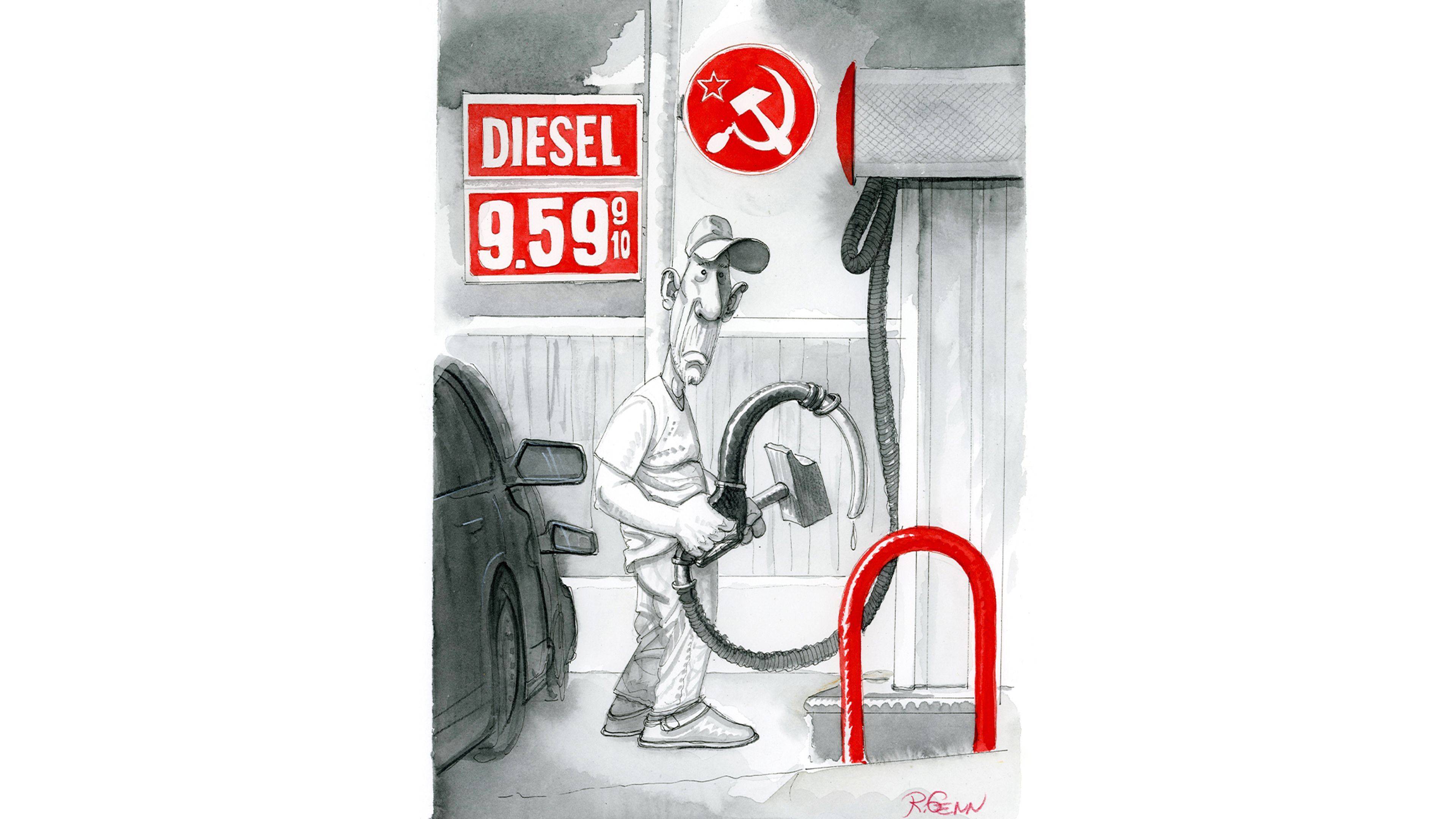
President Biden has so far been quietly solid. He has rallied NATO allies, and he has stopped stage-whispering for the time being. His refusal to reconsider his green agenda, which has boosted the value of Putin’s petroleum, has been his major failing. High gasoline prices are Putin’s friend.
Donald Trump’s impulsive and narcissistic comments show, yet again, why Americans rejected him in 2020. Worse perhaps are the mini-Trumps he has sown in the GOP, who may be divided into outright crackpots and bigots, and doughfaces who aspire to be mainstream. The last-minute scurrying of the latter to pro-Ukrainian slogans shows that the bulk of the GOP has its morals and its geopolitical sense in the right place.
The story does not end here, and no happy ending is promised. Ukrainians are fighting for freedom and self-rule. They have won glory. Glory to Ukraine.











Comments